With A Three-Fold Increase in Cat Thefts, UK Chooses Microchip Mandate

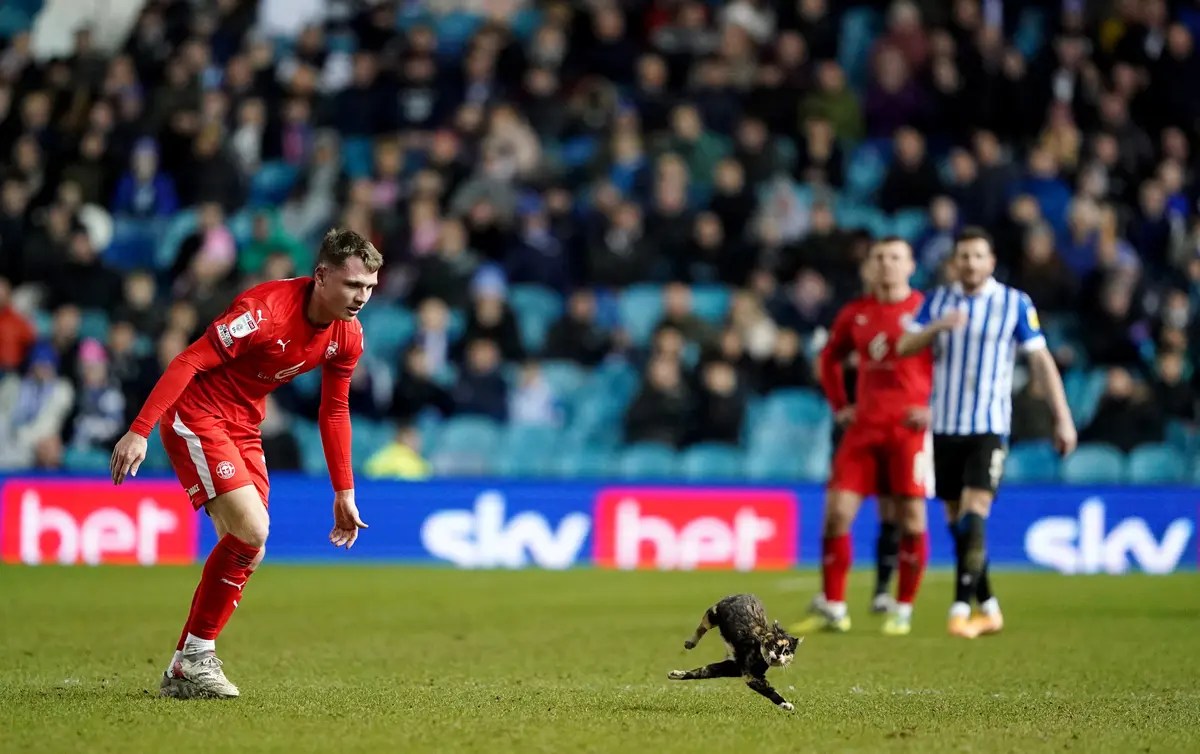
With breed cats commanding prices in the thousands, thieves see pet theft as a quick score. Lack of prosecution has made it an almost zero-risk crime in the UK.

Mandates in the wake of COVID-19 haven’t been especially popular with a weary public, but surveys show one proposed directive has almost universal support in the UK: Requiring all cat owners get their pets microchipped.

Cat thefts in the UK have tripled in the last five years, with the pandemic contributing to the increase since early 2020, police say. Authorities say they hope compulsory microchipping — and consolidating the many chip ID databases into one — will help discourage people from stealing while making it easier to reunite felines with their families.

Thieves mostly target pedigreed kitties over moggies, with Bengals as the most commonly-stolen cats, followed by British Shorthairs and Persians, according to police statistics. Thieves try for breed cats because of resale value, police say.

Dog thefts have skyrocketed as well, with thieves targeting Chihuahuas, Jack Russell Terriers and German Shepards, among other popular breeds. The price of breed dogs has ballooned by as much as 89 percent since the beginning of the pandemic, when demand for new pets and a slowdown in breeding created a boom market.

For context, an estimated 3.2 million British families welcomed new pets, mostly cats and dogs, into their homes since the first lockdowns in late winter and spring of 2020, the BBC reported. Like their counterparts here in the States, UK shelters experienced unprecedented adoption rates as people battled loneliness and depression during the initial COVID waves and last year’s long winter when the virus came back with a vengeance.

“The number one reason behind pet theft is because the prices for pets have gone up drastically,” Becky Thwaites, spokeswoman for UK pet charity Blue Cross, told SWLondoner. “This happened exponentially over lockdown, as responsible breeders stopped breeding due to social distancing guidance, but more people were wanting pets.”

Despite the spike in animal thefts, only about one percent of all such crimes have led to an arrest, according to a public information request by a UK animal welfare group. 

Police have been reluctant to pour resources into those cases, partly because the law lacks serious consequences for people who steal animals. While the maximum sentence for stealing a pet is seven years in jail, under current UK law sentences are pegged to the value of the stolen item. (Unlike the US, the UK does not make a distinction between prison and jail.)

But for people who love their cats, it’s not about the monetary value — it’s about sentiment, love and the distress to human and animal when they’re separated.

Abductions instead of thefts

To change that, a new pet theft task force — set up earlier this year to study the growing problem — recommended a change in the law. Instead of treating pet thefts as property thefts, under the proposal they would be treated as abductions, with all the increased charges and consequences that come with the classification.

Treating animal thefts as abductions “acknowledges that animals are far more than just property and will give police an additional tool to bring these sickening individuals to justice,” UK Home Secretary Priti Patel told the BBC.

Advocates say treating pet thefts as abductions makes sense not just as a legal adjustment, but also as a reflection of the way cats and dogs are stolen. While some thieves stalk dog parks and lure pets away with treats, others have taken to more brazen and violent means like taking animals by force and jumping people while they’re walking their dogs.

The change would require owners to have their kittens chipped by 20 weeks and adult cats chipped upon adoption from a shelter or rescue.  Failure to microchip a pet would result in a warning and a three-week grace period. After that, cat owners would face a steep fine of £500, equal to $660 in USD.

Consolidating chip databases

There are about 10.8 million pet cats in the UK, although widespread chipping alone won’t solve the problem of pet thefts and lost pets flooding shelters. There are currently 16 different microchip databases in the UK. They don’t always share information and scans don’t cover each of the databases, so even if a cat is recovered, brought to a shelter and scanned, there’s no guarantee the kitty will be returned home.

The existence of so many non-cooperating databases operated by private companies “can pose a huge barrier to successful reunification of pets” said the British Veterinary Association’s Malcolm Morley.

UK authorities and the animal welfare groups pushing for the change are cognizant of the problem and want to streamline the 16 existing database into one central repository of cat microchip registration. That will take time and will have to include compromise on the part of the various private companies running the existing fractured databases.

“Every day, we see how important microchipping is for cats and for the people who love them,” said Pet Protection’s Jacqui Cuff, “whether it’s reuniting a lost cat with their owner, identifying an injured cat, or helping to ensure an owner can be informed in the sad event that their cat has been hit and killed by a car.”

Reason #488 To Keep Your Cats Indoors: They Hunt Whether They’re Hungry Or Not

Cats who have regular outdoor access and hunt wildlife still get 96 percent of their nutrition from pet food, a new study found, suggesting their predatory behavior is driven by instinct, not hunger.

A new study from the UK debunks the claim that cats need access to the outdoors to supplement their diets with wild kills.

Cats who spend a significant amount of time outdoors and regularly kill local wildlife still get 96 percent of their nutrition from meals provided by their humans, according to research by a team at the University of Exeter.

The scientists connected with cat owners through ads on social media, TV and in print publications, specifically seeking out “cat owners living throughout southwest England whose cats regularly captured wild animals and brought them back to the house,” the study’s authors said.

They gave the owners a questionnaire to collect some basic information on the kitties — age, sex, breed, whether they had unrestricted access to the outdoors, and how much time they spend outside — then split the 90 participating cats into six groups.

Cat hunting
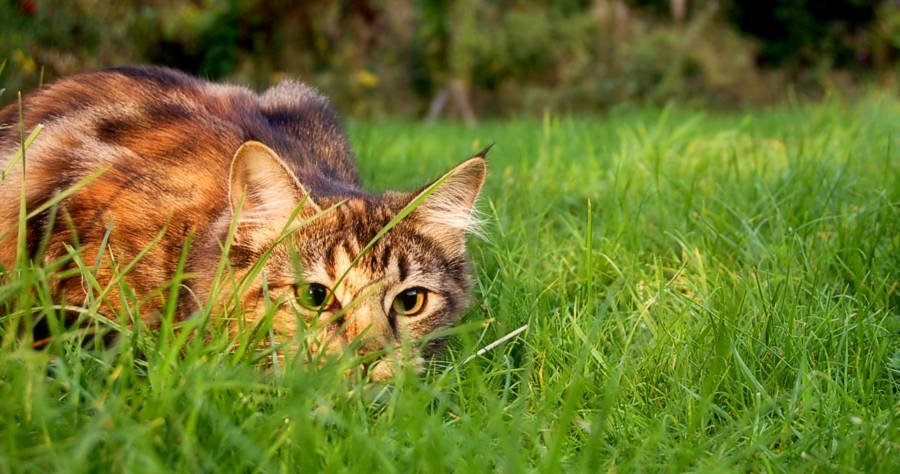
A domestic tabby cat stalking in the grass. Credit: Wikimedia Commons

To set a baseline, the scientists trimmed small sections of whisker from each of the cats, then trimmed a second sample at the end of the study.

By comparing stable isotope ratios in the whisker samples, they were able to determine what the cats were eating. Despite regular access to the outdoors and successful hunts, pet food accounted for the vast majority of their diets.

As a result, the researchers concluded, outdoor cats hunt because they’re driven by predatory instinct, not hunger.

“When food from owners is available, our study shows that cats rely almost entirely on this for nutrition,” said Martina Cecchetti, the study’s lead author.

“Some owners may worry about restricting hunting because cats need nutrition from wild prey, but in fact, it seems even prolific hunters don’t actually eat much of the prey they catch,” Cecchetti said. “As predators, some cats may hunt instinctively even if they are not hungry – so-called ‘surplus killing’ – to capture and store prey to eat later.”

A second component of the study was designed to find the best mitigation strategy to change the behavior of outdoor cats.

Each group was given a different strategy: In one group, cats were outfitted with bells on their collars, while another group wore reflective break-away collars and cats from a third group were fitted with BirdBeSafe collars. The other groups were told to make habit changes inside the home. For example, one set of cats was fed a higher-protein diet without grain filler, another group was fed with puzzle feeders, and the last group was given extra interactive play time.

While high-protein diets and play time helped cut down on hunting, the BirdBeSafe collars had the biggest impact on hunting success. The collars come in bright colors designed to stand out to avian eyes, taking away stealth and the element of surprise from cats.

The study was sponsored by Songbird Survival, a British non-profit that funds bird conservation research and looks for ways to mitigate the dwindling numbers of many avian species.

Susan Morgan, Songbird Survival’s executive director, said her group hopes cat owners will do their part to help: “Pet owners can help us reverse the shocking decline in songbirds via three simple, ‘win-win’ steps: fit collars with a Birdsbesafe cover; feed cats a premium meaty diet; play with cats for five to ten minutes a day to ‘scratch that itch’ to hunt.”

Of course there’s an obvious solution the study didn’t include: Keeping cats indoors. While keeping cats indoors is common in the US, cat ownership culture in the UK is different — another subject for another post.

Read the full text of the study here. Header image credit Pexels. Body images credit BeSafeCollar.

Previously:

1024px-Florida_panther_kittens
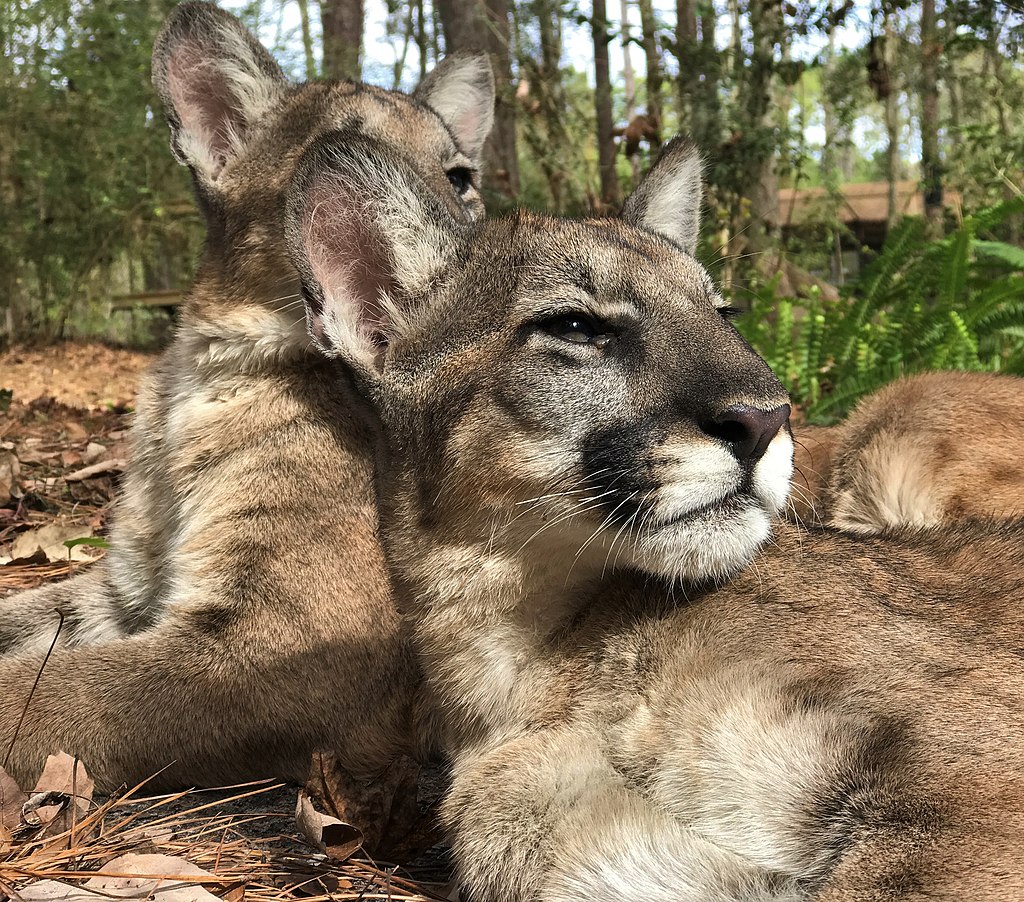
A pair of young mountain lions in Florida. Credit: Wikimedia Commons/WOConservation

Here Are Some Cats Singing The Imperial March From Star Wars, Plus Some Feel-Good Cat-Human Reunions

Stories from the past week in kitty-related news.

Since we featured some sad news in our last post — though tempered with some really good news from a Portland cat cafe — we’ll wrap up the week with some humor, absurdities and science, all cat-related of course:

  • Do you have two cats? If so, you can help researchers from UC Davis and the University of British Columbia, who are studying the ways cats interact with each other in human homes. All you have to do is watch a few cat videos online, then answer a handful of questions about the behavior of the cats in those clips, as well as the behavior of your own kitties. With enough data from participants, the research teams hope they can better understand the often-inscrutable interactions, squabbles, truces and social hierarchies that define relationships between domestic felines sharing the same home territory. “Ultimately, we hope this research can help identify gaps in owners’ knowledge of cat behavior,” U of BC’s Sherry Khoddami told Gizmodo. “The welfare of cats in the home is an under-researched area.”

  • Yes, cats do have a long and distinguished history of “messing shit up,” and they simply don’t care. Maybe that’s why cats singing the Imperial March from Star Wars — okay, cats sampled and pitch-shifted to the Imperial March’s melody — feels appropriate. Our fluffballs are inevitable.

This week brought us stories of two cats who were reunited with their humans after more than a decade apart, both in the UK.

  • Tom, a tuxedo in Cardiff, Wales, went missing in 2009. He spent most of the past decade-plus living with another cat in the safety of a cemetery with the help of a nearby family, who kept them well-fed. It wasn’t until recently that someone tipped off a local rescue to the presence of the two “strays,” and finally Tom’s microchip was scanned. On Friday, Tom’s human, Donna, was overcome with emotion when she reunited with the little guy at Anna’s Rescue Centre of Cardiff, fighting back tears as she stooped down to stroke his fur. Donna also adopted Tom’s longtime companion from the cemetery. (Click the link for video, which we were not able to embed.)
  • Meanwhile in Aberdeen, Neil and Lucy Henderson were reunited with their tabby, Forbes, who had gone missing in 2011. Neil Henderson was so shocked, he had to pull over and stop his car when his wife told him Forbes had been located by the SCPA. “I was completely unprepared for what I was about to be told and hearing that Forbes had been found left me completely astounded,” he told the BBC. Forbes was picked up by an animal control officer who realized he was very friendly and had a microchip. The Hendersons “have no way of knowing where Forbes had been all this time or what adventures he might have been on,” but they’re ecstatic that he’s back home.

Forbes the cat's missing poster
The original missing poster created by the Hendersons when Forbes disappeared in 2011.

Sanctuary Jaguar Gives Birth To Beautiful Melanistic Baby, You Can Help Name Her

A rare melanistic jaguar was born at a UK sanctuary.

The Big Cat Sanctuary of Kent, UK — not to be confused with Florida’s Big Cat Rescue — is welcoming a newborn melanistic jaguar, and everyone from the vet staff to the caretakers are fussing over her.

The as-yet-unnamed baby was born to mom Keira and dad Neron in a big-cat breeding program designed to ensure the species survives as wild populations plummet due to habitat reduction and poaching. Staff at the UK sanctuary say the baby opened her eyes the day she was born and was walking by two weeks. That’s an unusually quick development for most cats, but apparently not for jaguars, who live in the deepest jungles of the Amazon.

jaguarbaby4
The Big Cat Sanctuary’s newest addition. / Credit: Alma Leaper

The sanctuary is allowing the public to pick the baby’s name from among three choices as part of a fund-raiser.

The choices are Inka (Inca) after the Inca people and their empire, Inti, a Quechuan (pre-modern Peruvian) word meaning “Sunshine,” or Killari, a word from the same language that means “Moonlight.” I’m partial to the latter, especially for the image it evokes of the world’s largest black panther — and the largest cat in the Americas — stalking the jungle on a moon-lit night.

The term “black panther” is a catch-all for any felid with melanism. Both jaguars and leopards can have the black color morph, as can domestic cats. Cats with melanism retain their spots, and if you look closely you can see they’re a shade darker than the rest of the cats’ black fur.

Check out the video below to see the little one behaving just like any other kitten.