Scientists Finally Figure Out Why Some Cats Are Orange, PLUS: Are Street Cats Really ‘Taking Over?’

More Americans say they can’t afford to keep their cats because of inflation, leading to an increase in surrendered and dumped cats in some places.

More than 110 years ago, American geneticist Clarence Cook Little developed a theory explaining why some cats have orange coloring and some don’t.

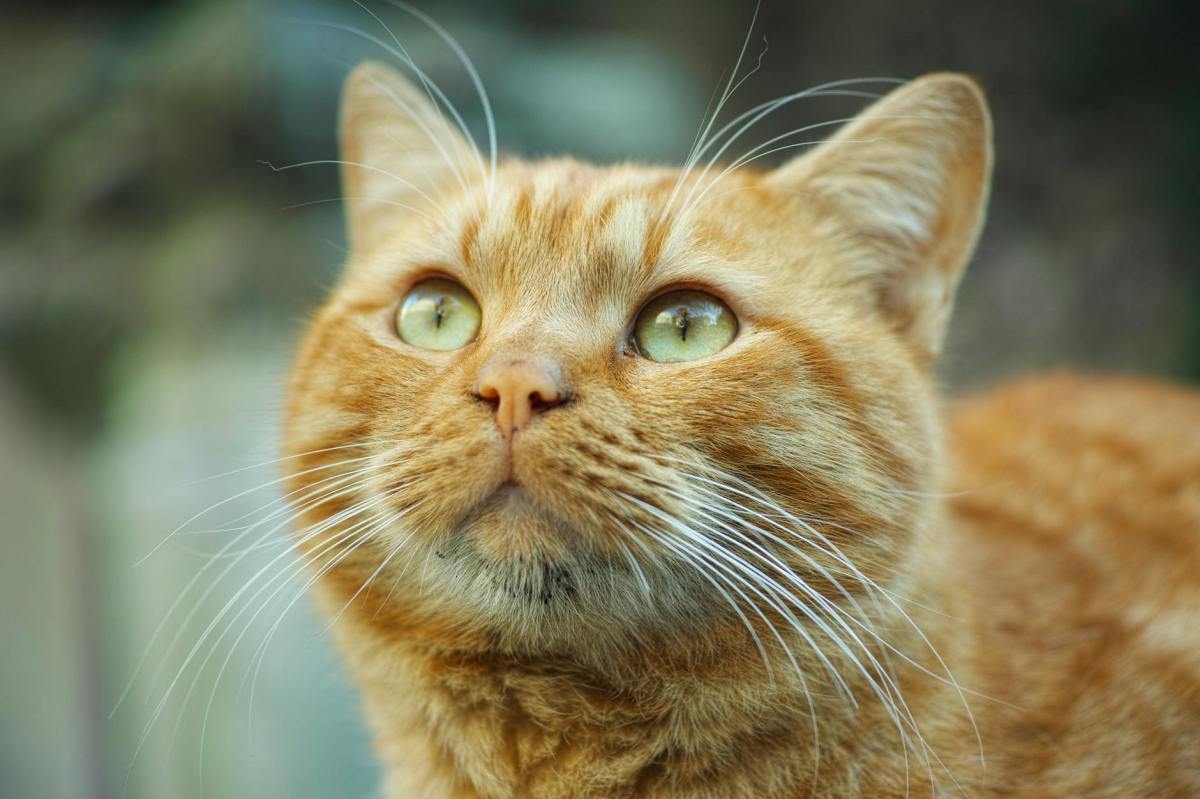
Now Little has been proven correct thanks to the work of separate teams in Japan and the US, which discovered the mechanism that leads to orange coloring, including fully ginger felines as well as calicos and tortoiseshells.

The explanation may be a bit too heavy on genetics for some readers, but essentially the researchers found the specific gene that leads to the growth or orange fur. They’ve known about the gene for a long time, but didn’t realize the totality of its function. Its official name is ARHGAP36, but for the sake of simplicity, scientists are calling it “the orange gene.”

“The orange gene has a known role in hair follicle development, but scientists didn’t previously know it is also involved in pigment production,” a team of geneticists and biotechnologists wrote in The Conversation, a science publication. “This means that a new pathway for pigment production has been discovered, opening the way for exciting and important research into a basic biological process.”

calico cat relaxing on wooden bench outdoors
In partially orange cats like calicos and tortoiseshells, the blotches of color are the result of imperfect gene copies and a secondary pigment-related gene switching “on and off.” Credit: Mehmet Guzel/Pexels

Ginger cats are usually male, but the pigmant can also appear in female cats due to an error in gene copying which deletes one segment of the orange pigment-producing genetic code.

That’s why calicos and tortoiseshells have orange blotches or mixed orange fur. “[T]he orange gene is persistently switched on in orange areas but is mostly switched off in non-orange areas of a cat’s coat,” the authors wrote.

Are there more strays in 2024?

Time magazine has a story examining the problem of stray cats in America’s urban and suburban population centers, why it’s happening, and what can be done about it.

First, might as well get this out of the way: We don’t know if there are “more” cats. The claim that there are more relies on anecdotes, and there’s no hard data to back that up. You have to be highly motivated to invest the time and money into a proper census like the D.C. Cat Count, and it’s an understatement to say most towns and cities are either not willing to do that, or don’t have the resources.

What we do know is there may be more cats in certain areas, with individual shelters in some places reporting record numbers of surrenders and cats scooped up by animal control.

close up of a stray cat on the metal railing
Rescuers say people who can’t afford food, supplies and veterinary care are surrendering or dumping their cats in larger numbers than in years past. Credit: Dou011fu Tunce/Pexels

The story quotes rescuers who say they’ve seen more surrendered pets, as well as data from Shelter Animals Count, which tallies self-reported information from shelters and rescues. The latter says 32 percent of cats taken in were owner surrenders in 2024, compared to 30.5 percent in 2019.

“It’s a combination of people surrendering their pets and people not adopting because they’re not sure they can take on the financial commitment,” Animal Care Centers of NYC’s Katy Hansen told Time.

Rescuers say that’s reflected in their experiences trapping the felines, who are friendly and acclimated to humans.

The people surrendering their pets cite inflation, not only impacting the cost of essentials like food and litter, but also more expensive veterinary care.

The story additionally includes this eye-popping detail:

“At Veterinary Care Group, a private equity-owned practice in Brooklyn, the cost of spaying or neutering a cat has soared to $850 per animal. By contrast, at the nonprofit veterinary clinic Zweigart recently founded in Brooklyn, the cost of spaying or neutering a cat is $225 and a mid-sized dog is $300.”

The lesson here: Steer well clear of veterinary clinics that aren’t vet-owned or are obtuse about their ownership. Private equity groups don’t buy clinics out of love for animals.

a close up shot of a tabby cat
The cost of spay/neuter procedures ranges dramatically at different veterinary practices. Credit: Tima Miroshnichenko/Pexels

As for solutions to local spikes in stray populations, the story doesn’t offer any. It mentions TNR (trap, neuter, return) but only in the context of a lawsuit against the San Diego Humane Society for its neuter/vaccination program.

That said, there probably isn’t a one-size-fits-all technique. What works for a small town won’t necessarily work in a city, and there are dozens of factors that could influence the prevalence of stray cats and colonies. Still, city councils and town boards don’t need to reinvent the wheel. Chances are if they look, they’ll find a municipality similar to their own where locals have successfully stabilized feline populations.

As for the Buddies, I’d live in my car before giving Bud up. He wouldn’t be thrilled about that situation, and we’d have to head south because the winters here are brutal, but as long as Bud has his servant, he’s good.

A previous version of this post incorrectly described cat chromosomes. The story has been updated to remove the error.
Local Politicians Have No Clue How To Manage Cats

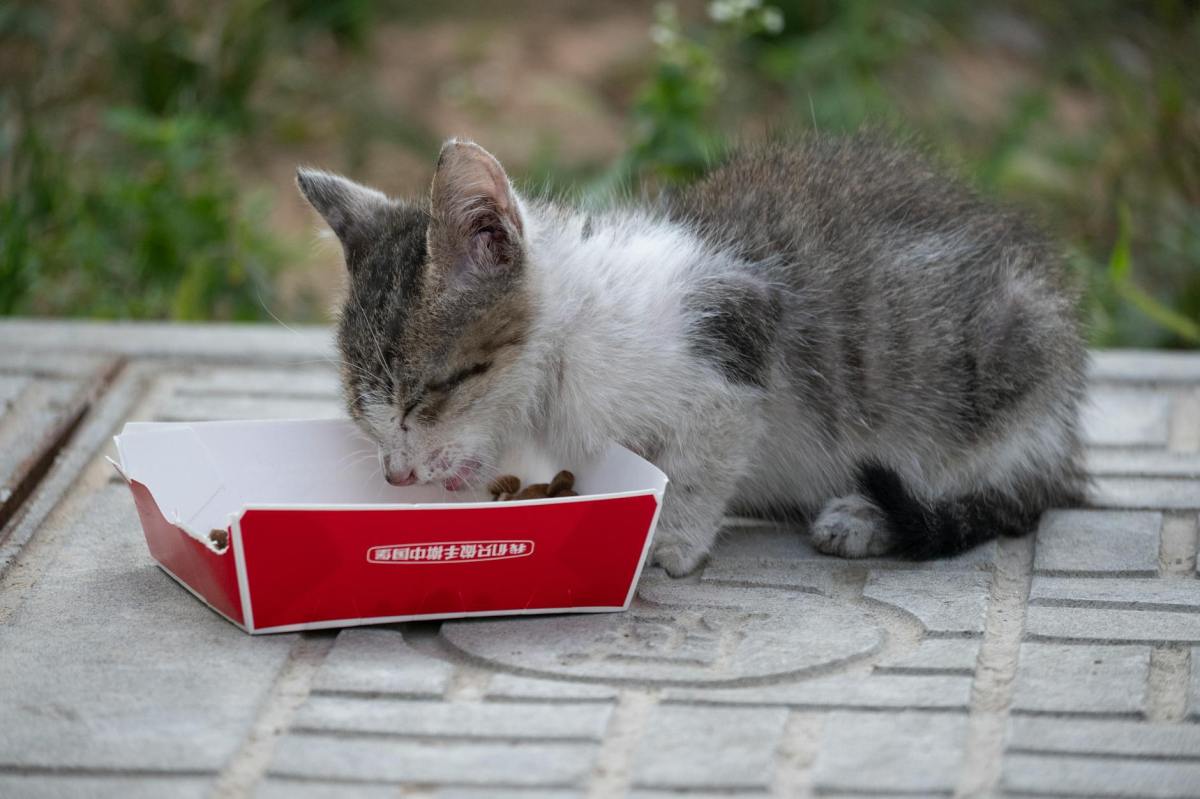
Feeding strays is now punishable by a $150 fine in an Ohio town, the latest municipality whose elected leaders chose to ignore expert guidelines on managing feline populations.

Every time the stray cat issue comes up, local town boards and city councils act as if they need to reinvent the wheel.

Imagining that they are the first to deal with this extremely common problem, they make decisions from positions of ignorance, dismissing the concerns of people who actually work with cats. Or they “do the research” and come up with their own ineffective policies instead of simply looking at what other towns and cities have tried in the past.

At least that way, you know what works and what doesn’t, and how much your decision’s going to cost taxpayers.

But that would be the smart thing to do, which is why our local elected leaders don’t do it. Instead they pull stunts like the village board of Mogadore, Ohio, a town of 3,700 about 10 miles east of Akron.

The Mogadore board just passed a law that makes feeding strays and ferals punishable by a fine of up to $150, as if that will stop cats from finding food and breeding.

Tellingly,  Mogadore’s elected leaders say their ordinance applies to “wild, stray, or un-owned” cats, which means they don’t understand they’re all the same species.

Apparently neither do the reporters at WOIO, a local news station in Cleveland. A story from the station is confidently incorrect in telling readers “[d]omestic cats that have become wild, meaning live outdoors, roam free, and rarely interact with humans, are also considered feral.”

Stray cat and kitten
Credit: Sami Aksu/Pexels

Felis catus is a domestic animal. By definition a domestic cat is not wild and cannot become wild. Evolution cannot happen to a single animal.

While evolution is a constant process, speciation — wolves becoming dogs, wildcats becoming house cats, wild boar becoming docile farm pigs — is a species-wide shift that takes at least a few hundred years but often much longer, “from human-observable timescales to tens of millions of years” depending on the species.

The whole process results in changes at the genetic level. The transition from wildcats to domestic cats, for example, involved changing only 13 genes.

This is not rocket science, it’s basic stuff we all learned in high school science classes.

But that’s almost beside the point.

Fining people for feeding stray cats, including caretakers who voluntarily manage cat colonies, will not solve the problem. It doesn’t work. It has never worked in any town anywhere in the world.

It also creates a needlessly adversarial relationship with the passionate people doing the hard work of managing the feline population, often thanklessly and at their own expense. Why make enemies of them when they’re doing a public service?

Mogadore’s village board had a representative from Alley Cat Allies and people from local rescues on hand to inform them that fines don’t work, and to offer the humane and effective option of trap, neuter, return. TNR may not be perfect, but it’s better than anything else people have tried.

Mogadore’s board and mayor ignored the experts and went ahead with their plan to fine people instead.

They’re not alone. This happens thousands of times across the US, Europe, Australia and most other places where domestic cats live. Japan and Turkey take a more humane approach, and they’re better for it. But here in the US, we often deal with issues by ignoring precedent and engaging in wishful thinking.

If the residents of Mogadore are lucky, their elected officials will realize their mistake sooner rather than later.

Stray cat eating
Stray and feral cats already have a difficult existence without ill-advised laws making it illegal to care for them. Credit: Mehmet Fatih Bayram/Pexels

NY Cat Eats At The Table With His Humans, Plus: More Kittens And Climate Change!

A cat eating at the table with his humans? Let’s hope Bud doesn’t get any ideas!

File this under “Information that must be hidden from Buddy at all cost, lest he get ideas.”

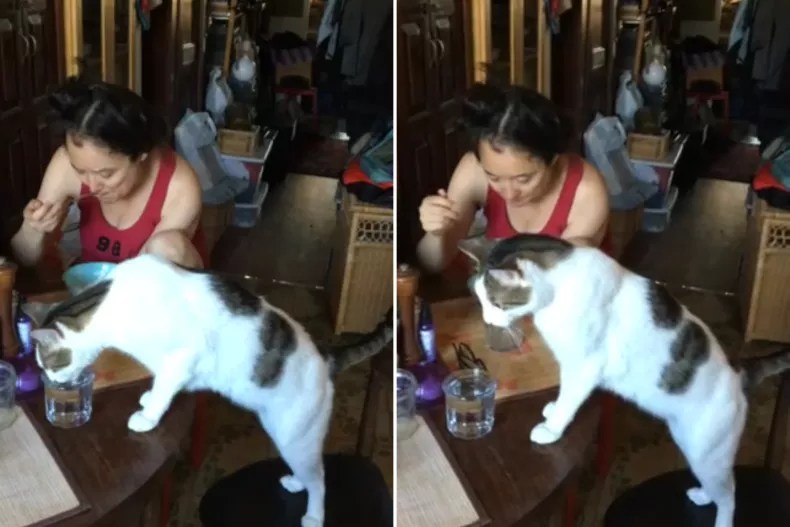
Franklin, a cat who lives in Brooklyn, has gone from fending for himself on the streets of New York to a very comfortable indoor existence with two humans who are happy to let him sit at the table with them for meals. Bowls? Pfffft. Franklin drinks from his own glass:

Franklin the cat
Credit: Andrea and Alice via Newsweek

As the dutiful servant to a cat who most definitely believes he’s a human — or should have all the privileges and none of the responsibilities of one — this makes me uneasy. If Bud were to somehow find out about this, all hell would break loose and before I know it he’ll be demanding custom cutlery and a silk pillow on which to rest his behind and elevate him to the level of the table.

As a vegetarian I don’t necessarily have to worry about Bud eating my food, but he sure does love sticking his face in it and giving it an exploratory lick or three.

“Is that…? Dude, let me in there, I just wanna stick my face in your mashed potatoes and confirm I don’t like them,” I imagine him saying. “Yep. Still don’t like them. Oh stop being so dramatic, you can pick the fur out!”

A reasonable take on the kitten/climate change claims

The Grist has a new story about the alleged connection between an “increase” in kittens and climate change, and while it unfortunately links to one of the bunk studies that uses meta-analysis to make wild claims about feline impact on the environment, it does include the most measured and reasonable take so far on the claims:

“Others, like Peter J. Wolf, a senior strategist at the Best Friends Animal Society, think the increase comes down to visibility rather than anything biological. As the weather warms, Wolf said people may be getting out more and noticing kittens earlier in the year than before. Then they bring them into shelters, resulting in rescue groups feeling like kitten season is starting earlier.”

As we noted on Sunday, the claim that there are more kittens, or that kitten season is longer, is entirely dependent on anecdotal evidence. Unfortunately no one has any data for baseline population numbers when it comes to cats in the US, let alone historical data that allows us to say there are more kittens born in recent years.

The best we’ve got is the excellent but single-city DC Cat Count, and to establish a convincing link between climate change and kittens we’d not only need hard data, but we’d also need to eliminate dozens of other potential factors like ever-increasing light pollution, urban heat islands and wave effects from 2020, when society went into lockdown and animals were mostly left to their own devices.

Once again, there’s only one measurement that really matters in the end, and that’s the number of cats euthanized annually because there aren’t homes for them. Spaying/neutering and education efforts have driven that number down dramatically over the past 20 years, and ultimately that’s the best solution we have.

Some Cat Advocates Claim Kitten Season Is Getting Longer Due To Climate Change

Is there any evidence to support claims of a longer kitten season?

Is kitten season getting longer because of climate change?

Some rescuers in California think so, according to a story in Santa Rosa’s Press-Democrat.

“Heat and warmth is what it’s all about,” said Mary Pulcheon, trapping coordinator for Forgotten Felines of Sonoma County.

Pulcheon and the executive director of Forgotten Felines, Pip Marquez de la Plata, told the Press-Democrat that strays in their care had given birth as late as December in 2023 when kitten season generally runs from late March through October.

They say the typical kitten season has shifted and is now longer due to rising temperatures caused by climate change.

It’s an unverifiable claim for several reasons.

First, we don’t have reliable estimates for how many cats there are in the US, let alone stray and feral cats. Any estimates are guesses, and they vary wildly from 20 million on the low end to 120 million, which seems an excessive and unrealistic number.

To date there’s been a single comprehensive feline census in the US, the D.C. Cat Count. It took three years, several million dollars, hundreds of trail and trap cameras, and the efforts of an army of volunteers and staff.

The final tally: 203,595, with only 6,533 unowned cats fending for themselves and drifting between managed colonies.

adorable tabby kittens
Credit: Ejov Igor/Pexels.com

The DC Cat Count is historic and has already proven its value by facilitating informed debate, showing rescuers/TNR volunteers where to direct their efforts, and yielding valuable data on local ecological impact.

Alas it’s a one-off, so we don’t know anything about how the population has changed over time.

Secondly, while there absolutely is scientific consensus that human activity is driving global temperatures up, there’s debate about how much temperature flux is directly attributable to modern civilization. We’re also looking at planetary timescales here, tracking changes that happen not just over decades, but centuries and millennia.

Attributing shifts in kitten season to climate change is a bit like attributing single storms to climate change. These are single data points from which we can’t draw conclusions.

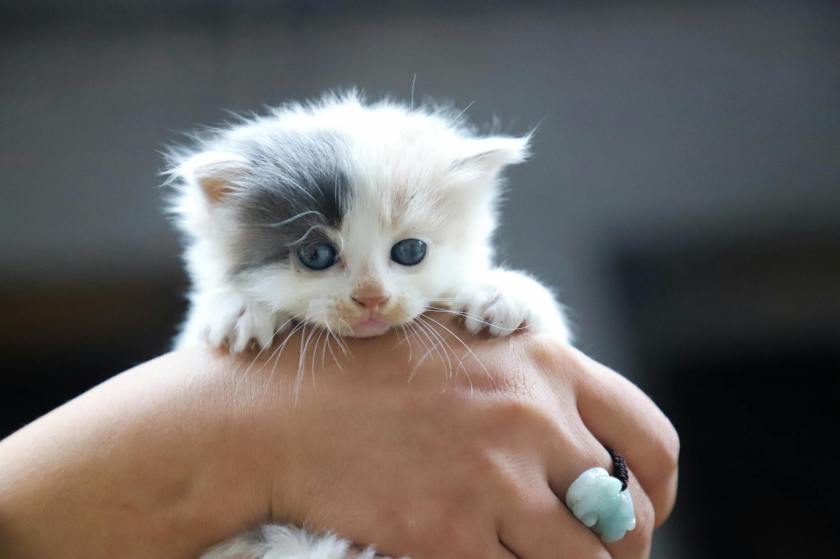
close up photo of person holding white kitten
Credit:Cats Coming/Pexels

Lastly, there could be dozens of factors skewing “normal” kitten season, and that’s assuming the March through October season is normal by historical measurements. We don’t know that for sure, and we can’t know it without data.

I’m limited by a lack of imagination here, but changes in kitten season could be regional, reflect non-climate weather patterns, or adjust according to cyclical patterns. Things as seemingly unimportant as ambient light pollution can have a profound effect on animal behavior, and it always helps to remember that felines are sensitive to stimuli that we literally cannot detect. Cats can pick up high frequency sounds we can’t hear and smell things beneath the notice of our own weak noses. They even have a second form of olfactory input, a literal sixth sense that is unmatched by anything in human biology.

We understand very little about how those things impact feline behavior.

With all things considered there could be hundreds of reasons for changes in kitten season, and that’s assuming the changes are real and people aren’t mistaking outliers for trends.

Ultimately we don’t need to draw conclusions about whether there are more kittens born each season. We know TNR, while imperfect, is the best way to humanely reduce stray and feral populations, and we still have a way to go before cats are no longer euthanized because we can’t find homes for them.

Woman Loved Stray She Met On Vacation So Much, She Spent $1k To Transport And Adopt Her

A UK woman said she couldn’t bear the thought of leaving the cat behind on the Greek islands.

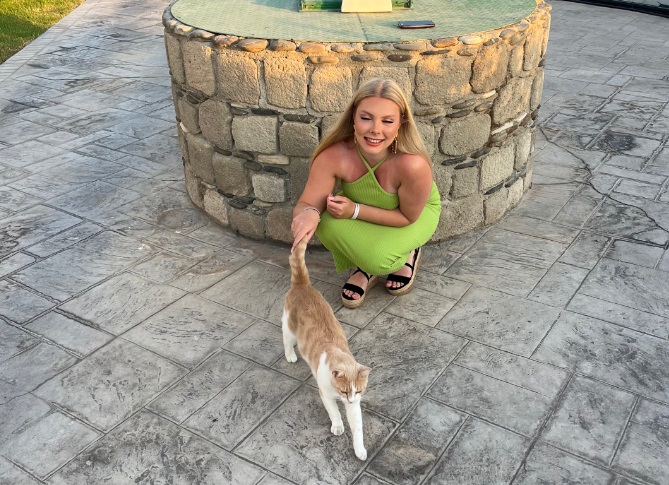
Jessica Addis met the friendly stray on the Greek island of Kos.

The UK woman vacationed on the Aegean island for sandy beaches, crystal blue water and the stunning ruins of classical Greek temples, but she fell in love a little white cat with ginger tabby markings.

Addis named the little one Zia after a sleepy Greek village on the slopes of Mount Dikaios, and began feeding the stray every day during her time on Kos this past September. Zia, who lived under a palm tree and depended on the kindness of tourists, liked her new human friend so much that she followed Addis back to her suite and began greeting her every morning.

addiszia1
Addis with Zia on the Greek island of Kos in September. Credit:

Leaving Zia at the end of her vacation wasn’t easy for Addis.

“I gave her the last of the cat biscuits and food and a last fuss, before I left,” she told Newsweek. “It broke my heart to leave her not knowing what would happen to her.”

When she asked hotel staff if anyone would care for the friendly moggie, she got a noncommittal answer. Greece lacks the extensive shelter infrastructure and trap, neuter, return (TNR) efforts of other western nations, and the result can be seen in the streets and the edges or human habitation, where a large population of strays eke out an existence by eating from garbage cans and hunting what they can.

“The hotel was closing for the season at the end of October, so I knew she then wouldn’t have the tourists to feed her,” Addis told Newsweek.

She said she was “heartbroken” thinking about Zia on her own without anyone to care for her or feed her during the off season.

“I knew straight away I needed to get her back to the U.K. I told my partner as we were on the bus to the airport that I was going to get Zia home. As soon as I got home, I started sorting everything to get her back to me.”

She enlisted the help of a Greek rescue group whose members wrangled Zia into a carrier, got her vaccinated, microchipped and onto a UK-bound plane with the appropriate paperwork. In all, it cost Addis $1,020, money well spent.

addiszia
Addis with Zia after the latter was brought to the UK with the help of a Greek animal rescue group.

She welcomed Zia to her forever home over the holidays, but says the Greek kitty still hasn’t quite grasped that she’ll be fed and cared for.

“She is happy, content and has a belly full of food,” Addis wrote on a social media post that contained a slideshow of her with Zia on vacation in Greece, then later in her home in the UK. “Zia loves treats, playing with her bird feather catcher and having endless naps snuggled up with her blanket. Although she still thinks she’s stray, as she always wants food! She now has a loving home for the rest of her life.”

Top image credit: Angela O’Brien/X