As Registration Deadline Looms, Big Cat ‘Owners’ Face A Reckoning

The days of tiny backyard enclosures for big cats are over.

The passage of the Big Cat Public Safety Act has been a massive win, resulting in the end of the wild cat trade in the US and the cruel practice of taking cubs from their mothers for use in roadside zoo petting attractions.

But there’s another, often-overlooked component of the new law that’s about to result in big changes for captive tigers, jaguars, pumas and other wild cats.

While current “owners” of big cats were grandfathered in under the BCPSA, they have until June 18 to register with the federal government, and with registration comes requirements, inspections and minimum standards of living for the wild felids.

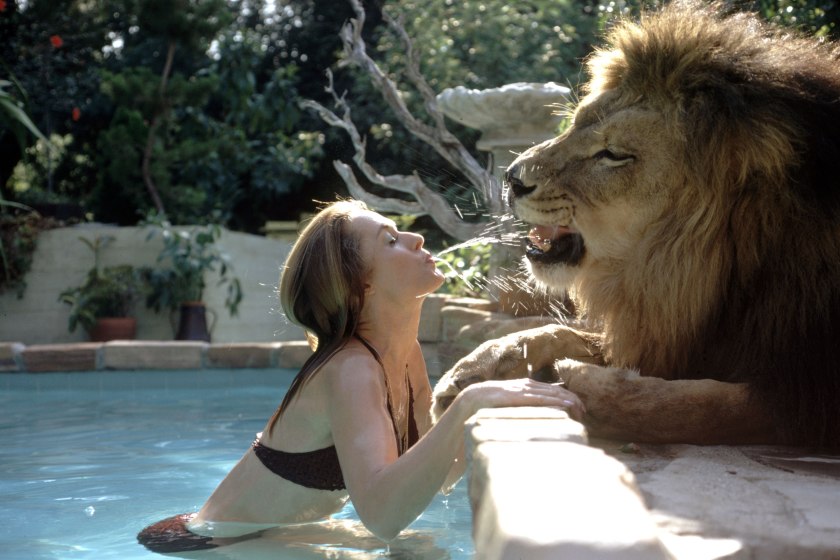
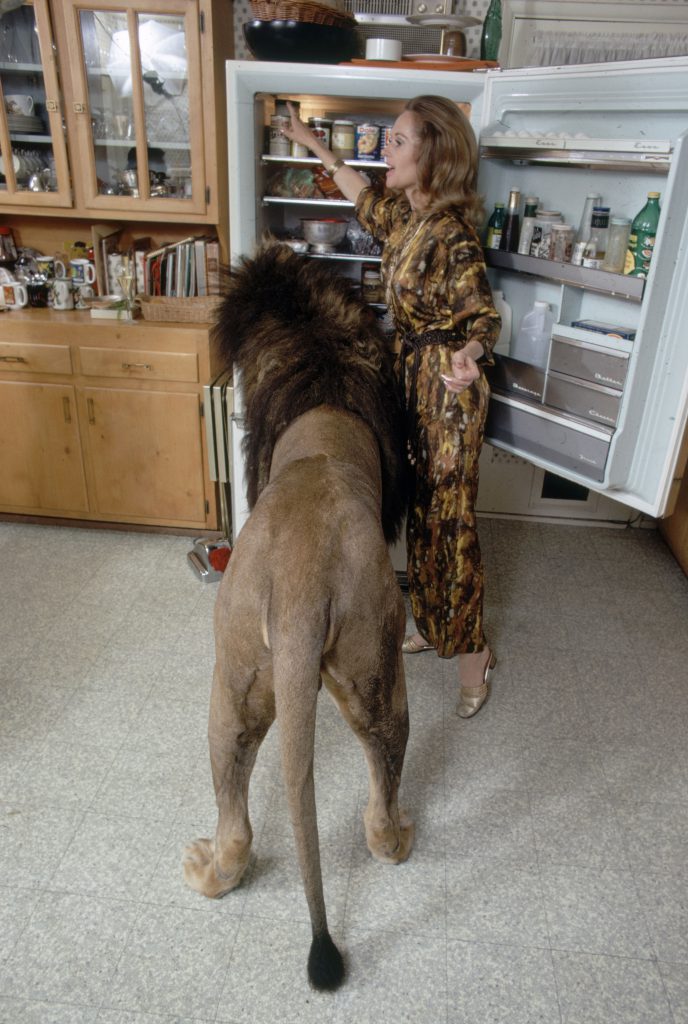
In other words, most of the people who “own” the estimated 20,000 privately held big cats are about to get a rude awakening. The days of tiny makeshift enclosures in backyards are over, as is the practice of keeping big cats in the home as if they’re domestic felines. (With apologies to Tippi Hedren, who once owned as many as 60 lions and tigers, and at 93 years old still has “13 or 14” big cats, according to her granddaughter, actress Dakota Johnson.)
141028-neil-lion-12-688x1024
Tippi Hedren with one of her lions in a vintage LIFE magazine photo. Hedren kept the lion and other big cats as pets in her home.

If people who have possession of big cats don’t register with the U.S. Fish and Wildlife Service, they’ll have their animals taken away. Likewise for people who don’t provide adequate enclosures that not only provide enough space, but are built to contain the apex predators.

As a result, sanctuaries are bracing for an influx of tigers, lions, jaguars, leopards, cheetahs, snow leopards, clouded leopards and pumas, all of whom are protected under the Big Cat Public Safety Act.

Experts anticipate a significant number of big cat “owners” could try to part with their animals if they can’t or won’t provide adequate enclosures, and the government is already cracking down on people who are trying to sell their “pets.”

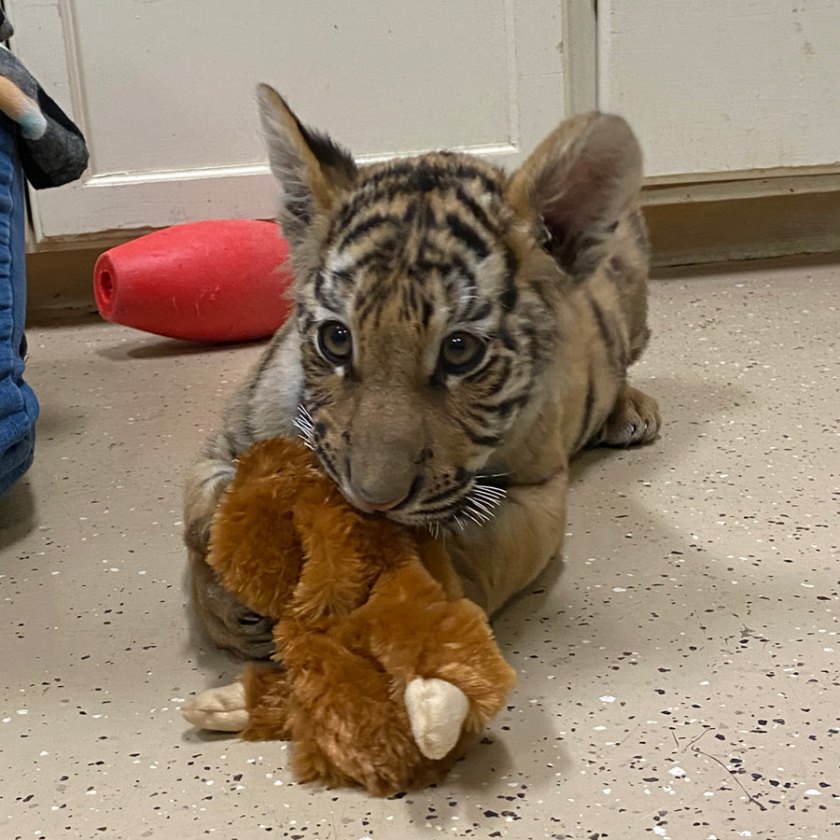
A tiger cub named Indy is one of the first to be taken out of private hands and placed in an accredited sanctuary. Indy was recently sold by her original “owner” and the man who purchased her for $25,000 tried to flip her, advertising the cub online.

Authorities moved in and found Indy in a dog kennel in a closet inside the man’s Arizona home. Police, who said they could hear Indy “moaning” from inside the closet, also seized an alligator and a dozen snapping turtles.

Tammy Thies, founder of the Wildcat Sanctuary in Sandstone, Minn. — Indy’s new home — said the cub is lucky she wasn’t confined to the small space for long.

“Many of the cubs we get are suffering from metabolic bone disease, malnutrition, sometimes they have such long confinement that they don’t have use of their back end, so Indy’s a lucky one,” Thies told WKQDS, the local Fox affiliate.
indytiger
Indy was found in a tiny cage in a man’s closet. Now she’s enjoying sunshine in an accredited sanctuary. Credit: Wild Cat Sanctuary

Indy arrived in May and has adjusted well to her new home in less than a month, according to the sanctuary. A page dedicated to tracking her progress has photographs of her meeting another tiger cub for the first time and playing in the grass.

As the deadline fast approaches, we hope Indy’s story is just one of many, and big cats who have suffered for years in tiny enclosures, under the “care” of people who aren’t qualified to keep them, find their way to accredited sanctuaries so they can live out the rest of their lives in sunshine, feeling grass and earth underneath their paws, with enrichment programs created by professionals who care about their well-being.

It’s about time.
tiger in shallow photo
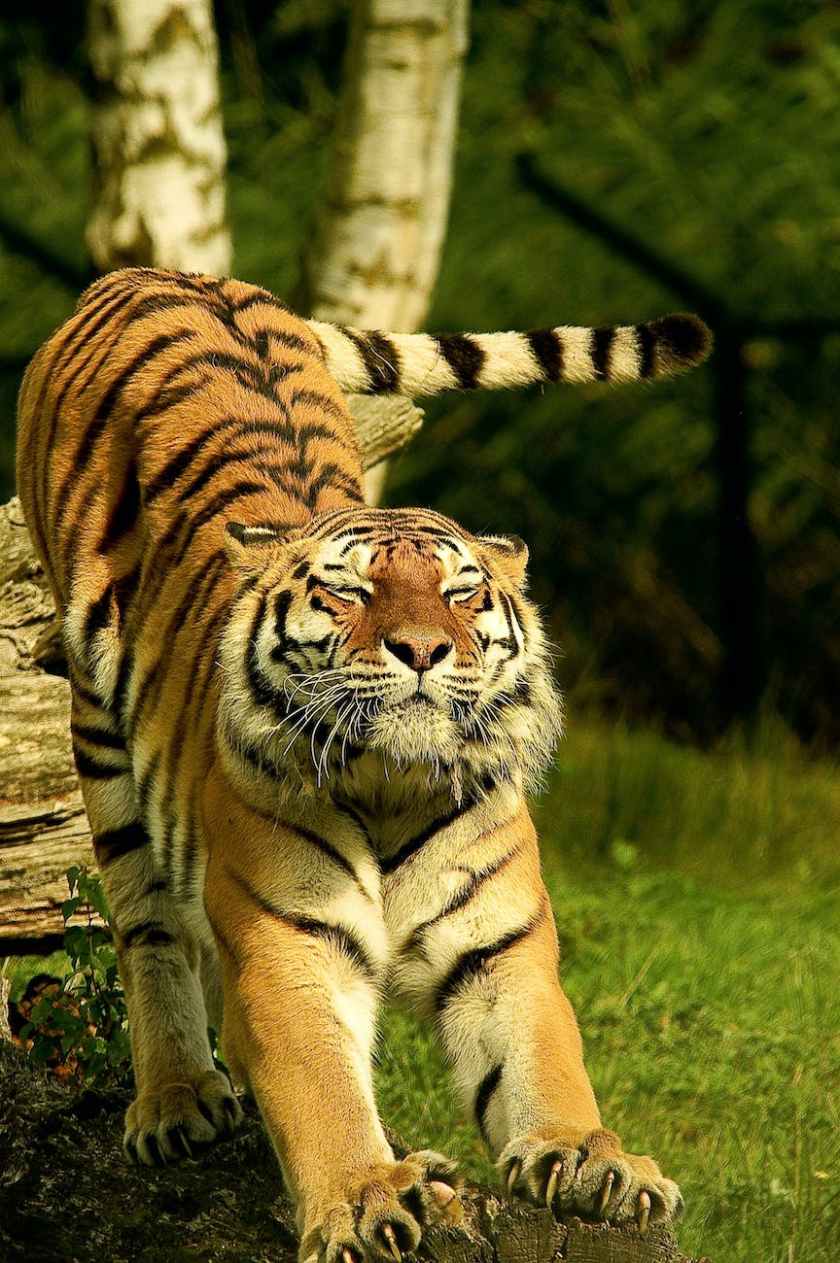
Credit: Richard Verbeek/Pexels.com

New York Times: Wild Cats Are Glamorous, Chic Pets

Shelter pets? Ew. Ain’t nobody got time for that!

Sometimes it seems like writers at the New York Times are in a competition with each other to prove who’s the most out-of-touch.

The latest effort comes courtesy of Alexandra Marvar, who begins her profile of a designer cat breeder by reminiscing about the good old days when those lacking sense or self-awareness could be fabulous by keeping wild animals as “chic pets”:

Not so long ago, wild cat companions were associated with glamour, class and creativity. Salvador Dalí brought his ocelot to the St. Regis. Tippi Hedren lounged with her lions in her Los Angeles living room. Josephine Baker’s cheetah, collared in diamonds, strolled the Champs-Élysées. In their time, these wild creatures made chic pets.

But, Marvar writes, those animal welfare activists had to come and ruin things for fabulous people:

But by the mid-1970s, a wave of awareness and wildlife protection legislation changed both the optics of owning a big cat, and the ability to legally purchase one.

Killjoys. Don’t they know Dali, Hedren and Baker were just being fabulous? They were being classy and creative! Who has time for people who claim it’s wrong to keep a wild animal that ranges 50 miles a day confined in a living room? They have gilded cages, diamond collars and meals of filet mignon!

1200536.jpg
Hedren being fabulous with one of her fabulous lions in 1971. Credit: Michael Rougier/LIFE

Now that wild cat ownership has been relegated to mulleted felons and gun-toting Texans who keep exotic cats to hold on tight to “muh freedoms” — stripping the practice of all glamour, class and fabulousness — where can the wealthy turn when they don’t just want pets, but status symbols?

The creators of the latest designer breeds, Toygers and Bengals, of course. Meet our heroes, the late breeder Jean Mill and her daughter, Judy Sugden:

Meanwhile, a cat breeder named Jean Mill was working on a more practical alternative: her leopard-spotted companion was just ten inches tall. At her cattery in Southern California, Ms. Mill invented a breed of domestic cat called the Bengal, which would offer wild cat admirers the best of both worlds: an impeccable leopard-like coat, and an indoor-cat size and demeanor.

Note: If you think a Persian makes you fabulous, surrender that cat to the nearest shelter immediately. Persians are so 2013!

[A Bengal cat breeder] recalled there used to be “tons” of ads for Persian cats in the back of Cat Fancy magazine. But the Persian’s prim, manicured aesthetic is no longer en vogue. “That look doesn’t say, ‘I can survive in the jungle,’” Mr. Hutcherson said. “It says, ‘I need somebody to open this can of cat food because there’s no way this cat is catching a mouse.’”

Carole Baskin, the founder of Big Cat Rescue and a star of Netflix’s “Tiger King,” has called toyger owners “selfish” and said creating new breeds is “strapping a nuclear warhead to the feral cat problem.” Others might argue that compared with shelter pets, designer species (the rarer of which may cost as much tens of thousands of dollars per kitten) are a different beast altogether.

Others might argue! Who are those others? Uh, Marvar and…and…nevermind. The important thing to realize is that there are cats — the riff-raff adopted from animal shelters by plebs — and there are chic, elegant, glamorous beasts. To compare a shelter pet to a Toyger would be like comparing a Geo Metro to an Aston Martin.

bakercheetah
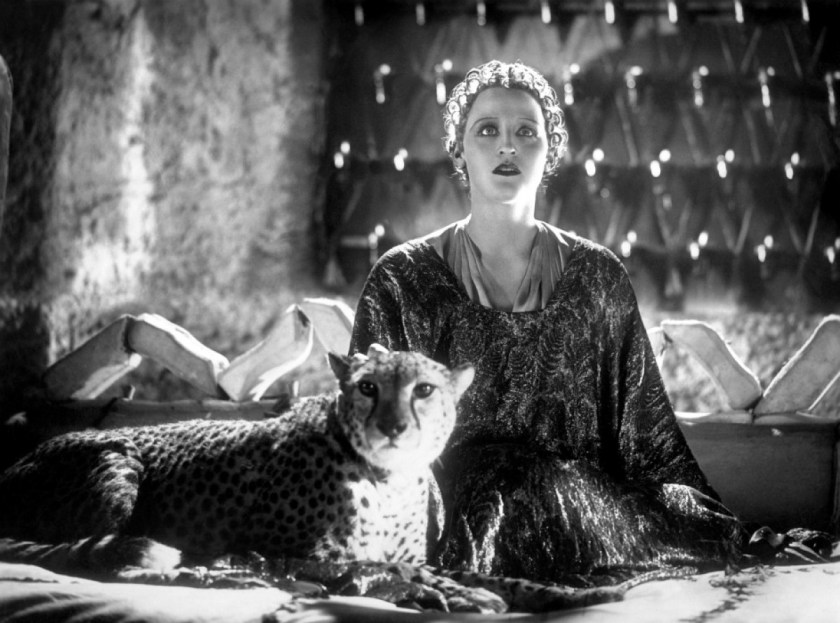
Brigette Helm being fabulous with her cheetah in 1932.
JosephineBakerStory-1991-paris-1920s-cheetah
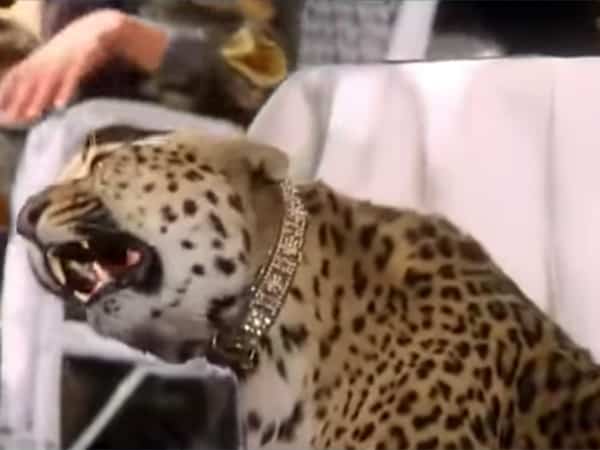
A close-up of Josephine Baker’s cheetah, Chiquita, and her diamond collar, photographed in the 1920s. Credit: FrockFlicks

In the glowing profile of Mill’s daughter, the toyger breeder — whose cats the Times compares to the Mona Lisa and whose work it describes as a “creative effort” in “cultivating” perfect “beasts” — the newspaper devotes a single line to those who object to the industrial manufacture of designer pets when shelters are forced to euthanize cats who aren’t adopted:

…the designer cat market is a thriving one where supply rarely meets demand, and in its service, more than 40,000 registered house cat breeders around the world are devoted to supplying pet owners with Ragdoll, Sphynx and other prized breeds. (PETA has argued this clientele should instead adopt cats from a shelter.)

The fact that 1.4 million pets are put down every year in the US wasn’t considered important enough to mention in the Times story. Too much of a buzzkill. Ain’t no one got time for that!

The rest of the Times’ editorial staff and its stable of contributors will have a tough time topping Marvar’s masterpiece. But as they try — and try they will — remember these are the same people who want to teach the rest of us about privilege and inequality in modern society as they social distance in their Scarsdale homes and file their stories from their couches next to their $10,000 pets.

hedren2
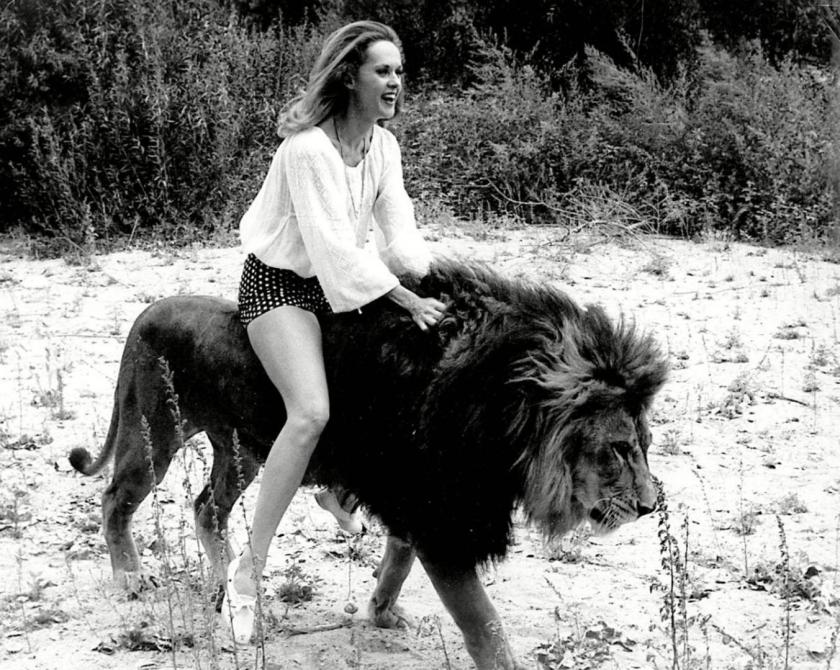
Hedren enjoying a fabulous ride on one of her chic, fabulous lions in 1971. Credit: LIFE
Tontos-man-1
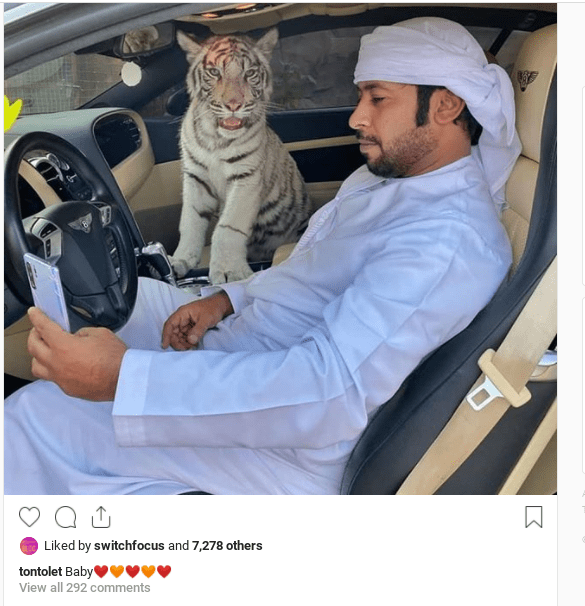
Wild cats are the preferred fabulous pets of ultra-wealthy twats who want to show off their wealth on social media.
hilton2
More than 3 billion people live on less than $2.50 a day, while Paris Hilton’s dog lives in a two-story air-conditioned mansion.