Review: Civil War Is A Warning To America

Alex Garland’s latest film is a road trip through the ruins of America as the nation is engulfed in a modern day civil war. It wasn’t so long ago that such a scenario would be unthinkable. Now we wonder if it’s an inevitability.

There’s a moment in Civil War when Kirsten Dunst’s world-weary photojournalist sits down in the ruins of a US industrial park, with tracer fire lighting up the night a few miles away, and turns to Stephen McKinley’s print scribe.

“Every time I got the photo and survived a war zone,” Dunst’s character tells him, “I thought I was sending a warning home: don’t do this. And yet here we are.”

In a movie that works on every level as a warning to the American public not to throw away what we have, what we take for granted, that one quiet moment feels like director Alex Garland speaking directly to the audience, making sure no one can miss the point. Don’t do this.

civilwar08
Dunst, left, and McKinley share a quiet moment in an industrial park as a battle rages a few miles off. Credit: A24

The sad truth is, the United States now seem more divided than at any other point since the original civil war. We’re dangerously close to the abyss, and the people dragging us there are the most ignorant of us. They’re the people who can’t tell you the name of their own congressman and can’t articulate what the three branches of government do (or even what they are), but insist everyone listen with rapt attention as they screech incoherently about politics and demonize those whose views differ.

They’re the people who return the zealots to congress, who populate the extremes and openly fantasize about purging the country of the ideologically impure.

Civil War: Dunst and Spaeny
Kirsten Dunst, left, and Cailee Spaeny in Civil War. Credit: A24

They’ve sworn fealty to ideology, abdicating their responsibility to think about things for themselves. Because, frankly, it’s easier to pick a pundit and an alignment, construct a filter bubble in which they never have to be confronted with a fact they don’t like, and be constantly reminded how they should feel about everything from petty culture war issues to conflicts happening a comfortable distance away. That way everything remains neatly in the abstract, and the consequences are someone else’s problem.

But not this time.

Civil War’s cast is phenomenal, but much of the film’s power comes from seeing the familiar become the horrific. Garland illustrates the banality of evil by taking his characters on a journey through the war-torn east coast, past shopping plazas cratered by rocket propelled grenades, waterways filled with bodies and playgrounds on fire. One highway overpass is vandalized with a spray-painted “Go Steelers!” while the bodies of two Americans sway on ropes beneath it.

Civil War: Go Steelers

In refugee camps in Pennsylvania and Virginia, people who could be our neighbors talk quietly around fires while their kids play with soccer balls and chase each other. The film’s main characters, a quartet of journalists trying to get to Washington, DC (where we’re told presidential loyalists shoot members of the press on the spot), marvel when they ride through one idyllic small town where people walk their dogs and hang out in coffee shops as if the country isn’t tearing itself apart.

It’s only when they stop to talk to the proprietor of a small shop that they realize the illusion of normalcy is maintained by an army of sharpshooters keeping watch from the rooftops.

Garland wisely stays away from the specific ideological reasons for the civil war in favor of showing us the fallout.

The president is on his third term. He’s authorized airstrikes on fellow Americans, imprisoned dissidents, put a bounty on journalists and hasn’t offered the public anything more than teleprompter-fed remarks in more than a year. But his authoritarian grip on power is finally fractured when two fed-up coalitions of states break away from the union. The more powerful of the two, the so-called WF (Western Forces), is extremely well-equipped: a shot of one of their camps shows F-35 Raptors, mechanized infantry and heavy lift helicopters.

civilwar01
Dunst’s character in a Western Forces camp. Credit: A24

These aren’t people living on the margins of society, armed with civilian versions of AR-15s. They’re US military, entire divisions defected in opposition to Washington with all the firepower and logistics capacity that entails. Separately, another secessionist coalition led by Florida is making its way up the east coast, seeking to turn the Carolinas and other states to their cause.

The noose is tightening around the president’s neck, even as he insists “the greatest military campaign in American history” under his command has defeated the secessionists, like Baghdad Bob in the Oval Office.

Civil War: Nick Offerman
Nick Offerman plays the authoritarian, three-term president who has ordered airstrikes on American citizens and had journalists executed. Credit: A24

As the Western Forces and Florida Alliance push toward D.C., there’s a renewed sense of urgency in symbolism. The president, Wagner Moura’s Joel says early in the movie, will be “dead inside a month.” Both coalitions are intent on reaching Washington and ending the war on July 4th.

“The optics,” Joel tells the other journalists, “are irresistible.”

Thus, the reporters decide to go after “the only story left,” which is to attempt to interview and photograph the president before he’s deposed or killed, despite the very real possibility they’ll be executed on the White House lawn before they can ask a question.

The film’s central characters are Dunst’s Lee Smith, a celebrated photojournalist who has seen it all, Moura’s Joel, the reporter who is partnered with Lee, McKinley’s Sammy, a reporter for “what’s left of the New York Times,” and Cailee Spaeny’s Jessie, a green but fearless 23-year-old who wants to be a war photographer like Lee.

Lee and Jessie meet at the beginning of the film in Manhattan, where both are photographing unrest as people crowd a disaster relief tanker, hoping to fill their containers with water. The fact that one of life’s most essential needs is no longer guaranteed, in New York City of all places, is just the first sign of how bad things have gotten.

Jessie moves in, snapping away as the crowd pushes toward the tanker and NYPD officers try to maintain order. When several people rush the tanker, Jessie gets hit in the face by someone swinging a bat.

Reeling, she stumbles away from the crowd, and Lee immediately mothers her, taking the young woman a safe distance away. She takes off her bright yellow press jacket and gives it to Jessie, then tells her: “If I see you again, you’d better be wearing Kevlar and a helmet.”

Civil War: Cailee Spaeny and Kirsten Dunst
Spaeny, left, and Dunst. Credit: A24

They do meet again, the next morning. Lee is surprised to see the younger woman in the back seat of their truck next to Sammy. Furious, she pulls Joel aside. He explains that Jessie had approached him late the previous evening, asking to tag along with him, Lee and Sammy on their trip to DC.

Joel argues that Lee was Jessie’s age when she began her career, but he’s not acting out of the kindness of his heart. He is a man, Jessie is a beautiful young woman, and he has ulterior motives.

Lee’s mouth twitches in disapproval. She sees this fresh-faced, naive 23-year-old, and sees herself before she’s become jaded from a career of documenting humans doing horrific things to each other.

Civil War would be a road trip movie, if road trip movies illustrated camaraderie by shared trauma. Pockets of violence are everywhere. Some involve presidential loyalists fending off advance elements of the Western Forces, but some are civilians who see an opportunity to kill, torture and pillage with impunity.

Dunst is magnificent as Lee, wearing the war photographer’s trauma like armor, her disgust with humanity apparent in her tired eyes. McKinley is the old-school print scribe who can’t quit, even as his body fails him.

“You’re worried I’m too old and too slow,” he tells Lee and Joel early in the film as they drink in the lounge of a Manhattan hotel, imploring them to let him accompany them south to D.C.

“You aren’t?” Lee answers.

“Of course I am,” he admits. “But are you really going to make me explain why I have to do this?”

Civil War: Wagner Moura
Wagner Moura’s Joel screams in frustration and rage after a particularly traumatic scene. Credit: A24

Here again, so much of the movie’s power is showing America in a state we only see from a distance through the dispatches and footage of war reporters. As the three of them sip their drinks in the hotel bar, waiting for their stories and photos to transmit over glacial wifi, the power drops.

“That’s every night this week,” Lee sighs.

“They’ll switch to the generators,” Sammy says.

They’re not in the shell of a formerly grand hotel in Baghdad or Damascus, relying on juice from old car batteries. They’re in New York, America’s greatest city, the cultural, media and finance capital of the world, a metropolis that operates on 11 billion watt-hours a day. A devastated, eerily quiet New York which resembles the early days of the COVID lockdown, yes, but New York all the same.

Civil War
A sniper is pinned down by a civilian who has taken advantage of the lawlessness and chaos to kill fellow Americans. Credit: A24

After watching Civil War, I was disheartened to see the usual rage and incrimination in discussions about the film. Depending on their political backgrounds, people are sure Garland — a native and citizen of the UK — is “a lib” or “a MAGAtard.” Opportunities for thoughtful discussion are derailed in favor of the usual talking point regurgitation.

But the hope is that the sensible are the silent majority, that we aren’t so fattened by domestic stability, security and a feeling of invincibility that we can’t see what’s right in front of our faces. We would do well to remind ourselves that the scenarios we experience only in the safety of fiction still happen all over the world.

As you read this, people are dying of exhaustion and suffering pointless deaths in North Korean and Russian hard labor camps so brutal that we don’t even have a way to place them in context. The people of Haiti are terrorized nightly by ultra-violent gangs who have filled the power vacuum, raping and executing with impunity. Gaza has been bombed to rubble, and its rubble has been bombed to sand. People hoping to escape abject poverty embark on the hard journey to America only to find themselves sold into sexual slavery. Men and women in Asia, desperate to find jobs, arrive at what they think are interviews only to be kidnapped and spirited away into compounds in lawless Myanmar, where they’re forced to sit in front of screens for 20 hours a day running “pig butchering” romance scams on lonely American retirees. If they try to flee, they’re shot.

And just yesterday, a man walked up to a golf course in Palm Beach county, pointed the muzzle of an AK-47 through the chain link fence and tried to assassinate a major party American presidential candidate — the second assassination attempt in three months.

The people who most need to hear Garland’s message are those least likely to heed it, but we can hope. Reality has a funny way of obliterating fantasy, and it’s better for all of us if our delusional countrymen don’t find out the hard way that war is neither fun nor glorious.

Let’s hope Civil War remains a movie, and not a prescient preview of things to come.

Civil War is currently streaming on HBO Max and is available to rent via Apple, Amazon and other online streaming platforms.

Header image: Western Forces units fire rocket propelled grenades at White House loyalists using the Lincoln Memorial for cover. Credit: A24

buddy_thebuddinesetiger

If you like reading content from PITB, please consider whitelisting us in your browser’s ad block. All proceeds from PITB go toward Buddy’s turkey fund.
The Ashera Cat Scam: How One Man Invented A ‘Luxurious’ Breed And Cashed In

Although the original perpetrator of the scam was exposed, there are still opportunists selling “Ashera cats” to unsuspecting buyers who have their hearts set on hypoallergenic pets.

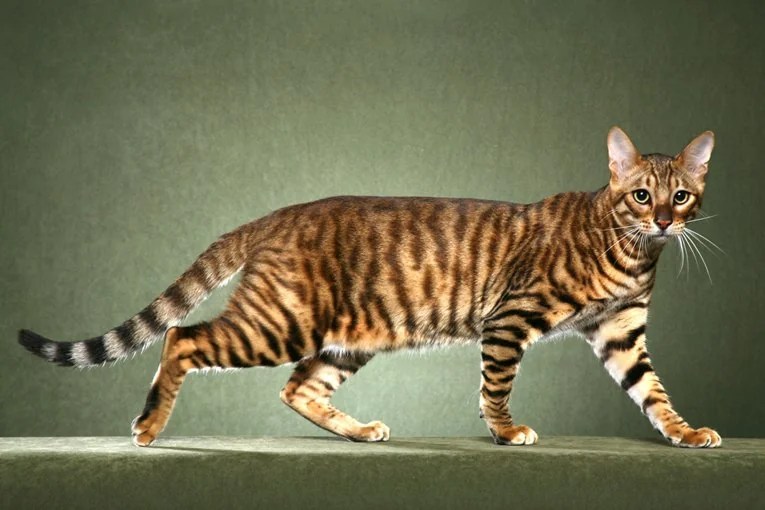
Pet site listicles name the Ashera cat as “luxurious,” one of the most expensive and rare breeds ever. Videos show surprisingly large, exotic-looking felines with leopard-like rosettes and a calm demeanor.

In media reports a man named Simon Brodie talks the breed up, presenting himself as the CEO of a biotechnology company that “developed” the Ashera through careful genetic manipulation, selecting only the most positive traits. For a few thousand dollars more, Brodie promises, they come in hypoallergenic versions too.

Brodie often sounded like he was describing the newest iteration of a tech product rather than a cat, calling the Ashera “a status symbol” and listing its optional features the way a car salesman talks about leather and heated seats.

“It’s exotic, but under the skin it’s a domestic house cat, very easy to take care of and extremely friendly,” he told Reuters. “Everybody has thought at one time, wouldn’t it be great to have a leopard at home, or a tiger? Obviously, you can’t and this is about the nearest thing to it.”

Brodie conjured images of engineers poring over genetic data and working with gene-editing equipment in a laboratory to create the perfect pet.

“Anybody can throw the ingredients in, but unless you know what ingredients are the best ingredients in the best percentages, you’re not going to produce the same final product,” Brodie told the U.K. wire service.

The problem? The Ashera doesn’t actually exist, and there’s no evidence Brodie has ever been in a lab, let alone spearheaded the creation of a new breed of feline.

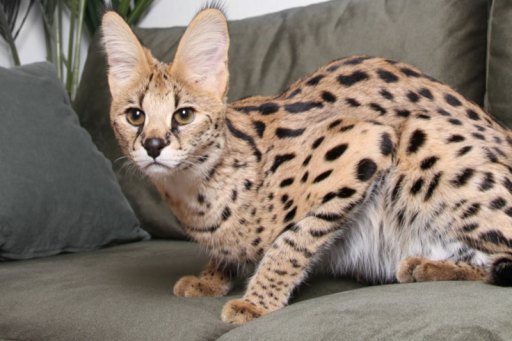
Not an Ashera cat
A Savannah cat with clear Serval lineage is shown as an example of an “Ashera cat” on several websites about the fictional breed.

Sadly, people might not realize that right away because of the publish-now, verify-never nature of web publications. Catster maintains a current page for the “breed,” citing its “outstanding lineage” and its supposed status as “one of the rarest and most expensive cats in the world,” potentially setting back its owners $100,000 or more per cat. You have to scroll down before the site warns about the “controversy and skepticism regarding the breed’s origins,” as if there’s still a debate whether the Ashera is a real breed.

Sites I’d rather not link to include the Ashera in their lists of “most exclusive” and “rare” breeds, and recent Reddit threads claim their price owes partly to their rarity because the company “only breeds about 100 cats a year.” When’s the last time you heard cats didn’t breed enough?

There are even “Ashera cat communities” designed to make it look like there are large online groups of happy owners, and Youtube channels featuring videos of Savannahs labeled as Asheras.

A sketchy operation

But dig a little deeper and you’ll find the truth. The Savannah Cat Association calls the Ashera a hoax, says the cats are Savannahs with fancy marketing, and details experiences people have allegedly had with Brodie. His company appeared to be a one-man operation with a voice mailbox, and people who purchased the pets said they were told to wire down payments to an account in the United Arab Emirates.

There are even claims Brodie was drop-shipping the cats, with customers saying they were delivered directly from an Oklahoma breeder of Savannahs.

And the people who saw an opportunity to have a pet cat despite severe allergies? They weren’t happy either, even those who negotiated deep “discounts” with Brodie.

“I don’t think any cat is worth $4,000,” a customer named Mike Sela told Columbia Journalism review, “but this seemed like a magical opportunity, especially with parents trying to get something for kids. You never thought you could get a cat and this is your chance.”

A group of angry customers who were promised hypoallergenic pets contacted ABC News, whose Lookout team enlisted the help of a biotechnology company to test cats purchased from Allerca, Brodie’s company. The tests showed the Ashera cats had the same amount of Fel d 1, the primary allergen in feline saliva, as the typical cat and could find no evidence of Brodie’s claims that he’d engineered an exotic cat sans allergens.

CJR took mainstream and legacy press outlets to task for reporting uncritically on Brodie’s claims despite the lack of any documentation, peer-review studies proving gene-edited hypoallergenic cats are possible, and for a complete lack of due diligence on the man himself. Per CJR:

“What Time, National Geographic, and other major outlets, including The New York Times, missed was that Brodie has no background in genetics—but he does have a well-recorded background in running scams. He was arrested in England, his native country, for selling shares in a non-existent hot-air balloon company. In the United States, he has left a wake of evictions, unpaid loans, and suits by unpaid employees. One judgment against him that stands out is by a company called Felix Pets, founded about a year before Allerca with the same goal of breeding hypoallergenic cats by eliminating the Fel-D-1 gene.”

Indeed, as the complaints piled up and Brodie’s deceptions began to catch up with him, the San Diego Union Tribune reported Allerca had been evicted from its “offices” — Brodie’s home address.

Ashera cats scam
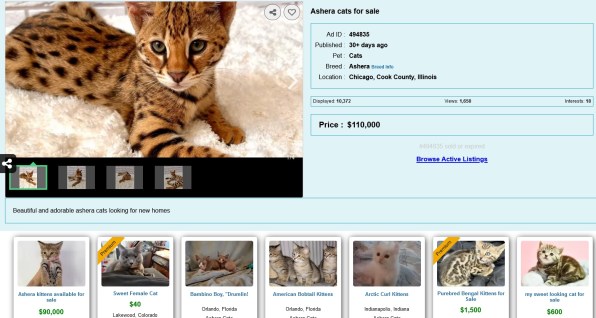
A listing for an Ashera cat and a second listing for Ashera kittens, bottom left.

News stories say Brodie has changed his name numerous times and if he’s still out there, he’s almost certainly not Simon Brodie anymore. But the Ashera cat scam isn’t dead.

We found dozens of sites offering “Ashera kittens,” and online marketplaces for animals still have regularly-updated listings from people claiming they’re selling “genuine” Ashera cats in 2024. There’s also at least one group claiming they’re “officially licensed Ashera cat breeders,” touting a lofty “mission” not only of providing cats for people with allergies, but also “preserving exotic wildlife.”

The myth of hypoallergenic cats

Although there have been recent efforts to neutralize Fel d 1, they come from actual scientists who have published their work for peer review, or from public pet food companies that have paired with scientists to create kibble they claim reduces the Fel d 1 allergen in cats who eat it. They’re also focused on attacking the protein, not breeding or creating cats that lack it in the first place.

People with allergies should understand that despite what they may read online, hypoallergenic cats do not exist. No one has been able to “engineer” a feline without the Fel d 1 protein.

There’s serious debate among geneticists about whether trying it is ethical, as no one knows exactly what function Fel d 1 serves or what the potential consequences may be for editing it out of feline genetic code.

So if you’re looking for a “luxury cat” or you just want a cat that won’t trigger your allergies, beware before you’re separated from your hard-earned cash. As always, if something sounds too good to be true, it probably is.

A Cat Really Did Bring Her Kitten To An ER In Instanbul

It happened in Istanbul, a city ruled by cats.

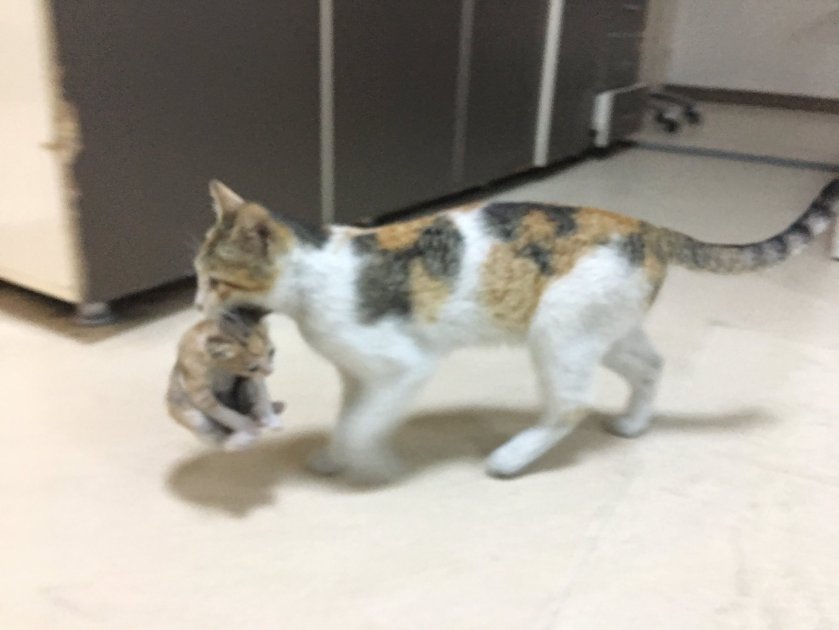
Buddy and I were a bit skeptical when we first heard the story of a cat who padded into the emergency room of a hospital, carrying her kitten by the scruff of the neck, to plead for help for the little one.

The story first appeared on Reddit without any details, but we were able to track down some of the people involved to fill out the narrative and answer some questions.

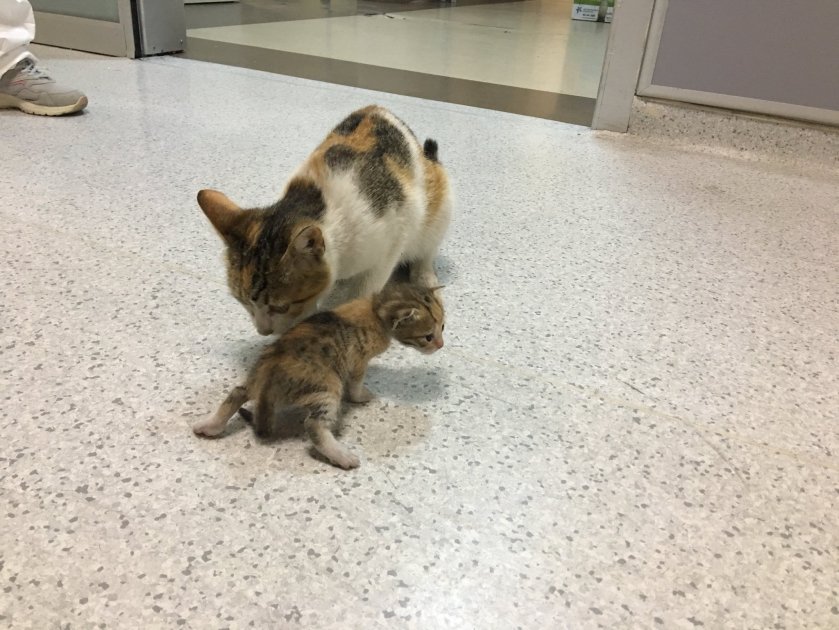
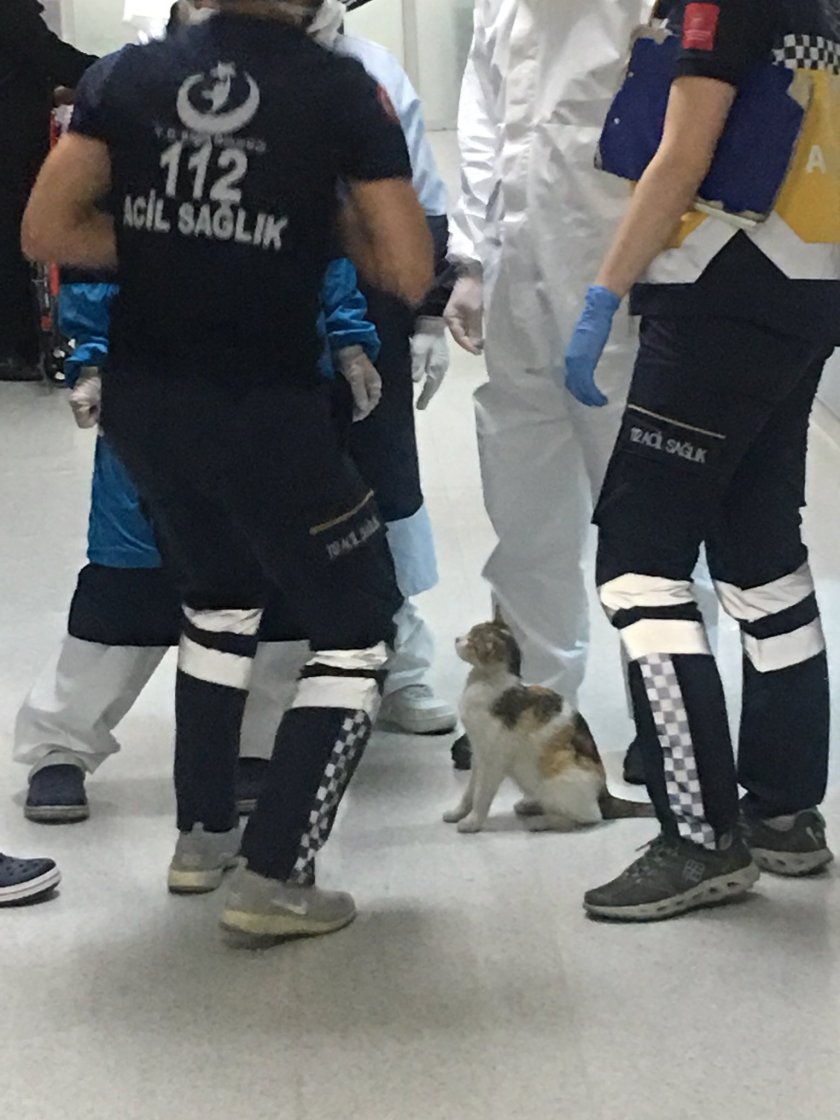
A woman was waiting in the emergency room of Kucukcekmece Hospital in Istanbul at about 5 p.m. on April 27 when the cat dragged her baby through the open doors.

istanbul_hospital

istanbul_hospital34jpg
A mom cat brings her sick baby into an ER in Istanbul. Credit: Merve Özcan

The witness, Merve Özcan, described the kitten as “a little bit mischievous” in Twitter posts about the incident.

An article in Sözcü, a daily newspaper whose name translates to “spokesperson,” said the mother cat brought her kitten right up to the blue-gowned hospital staff, meowing for attention.

Hospital staff immediately helped — more about that below — and the cat mom followed them, keeping her eyes on her baby as they brought the kitten into a room for treatment.

“While the kitten was being cared for, the mother cat was given milk and food,” the newspaper reported. “Hospital staff ensured full treatment by passing them onto a veterinarian after their intervention.”

istanbul_hospital5
Staff take the kitten as the mother watches. Credit: Merve Özcan

The story doesn’t say exactly what was wrong with the kitten, and Özcan did not know either.

While this story would seem insane to most of us, it starts to make a lot more sense when you consider where it happened: Istanbul, a city famous for its massive cat population, and the humans who revere those felines.

From the Legal Nomads travel blog:

Cats are the most beloved animal in Istanbul and the living attraction of this huge city. They are extremely friendly, come in all sorts of cuddly colors and sizes, and always respond with a greedy “meow.” Stray cats usually take the best seats at cafes and restaurants in Istanbul without anyone even bothering moving them. They maneuver around tables and customers, inside and out of the buildings in search of the most comfortable spot.

Caring for the city’s hundreds of thousands of cats is a community effort: People feed them, pet them, bring them to veterinarians when they’re injured, and even build little dwellings for them.

With that in mind, it makes sense that a cat in Istanbul would know to approach humans for help, and to go to a hospital. If the mom cat lives in the area, undoubtedly she’s seen the sick and injured walk through those doors many times.

“Money is not an issue to some people when it comes to cats,” Ozan, a pet shop employee, told Reuters. “They take in cats with broken legs, blind ones or ones with stomach problems and bring them to the clinic. When they see that they are healed, they let them live on the street again.”

In an article titled “Istanbul: The City of Cats,” Goran Tomasevic of Reuters describes the relationship between the city’s inhabitants and their feline friends:

They are so ubiquitous that no one bats an eye at a cat padding across the lobby of a high-rise office building, or when one curls up to sleep on a nearby barstool. Shop owners and locals often know their neighbourhood cats by name and will tell tales about them, as if chatting about a friend.

instanbulcats
A cat house next to water and food bowls on an Istanbul street. Credit: Reuters

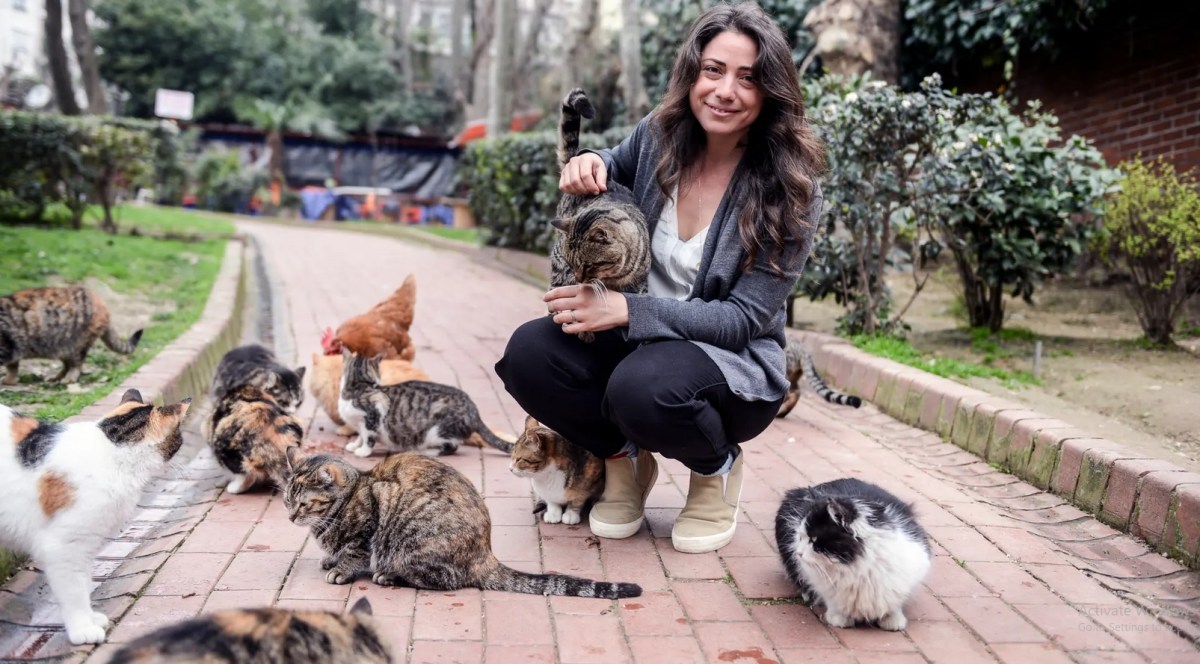
A 2017 documentary, Kedi (Turkish for cat), explores the world of Istanbul’s street cats and the people who love them. Pictured at the top of this post is Kedi director Ceyda Torun, posing with cats in Istanbul.

You can watch a trailer for the documentary here: