Case Dropped Against Alabama Cat Ladies After Appeal

Prosecutors dropped charges against Mary Alston and Beverly Roberts 10 months after their arrest for caring for a local cat colony.

Prosecutors in Alabama have dropped their case against two women who appealed after they were convicted for feeding and trapping cats in their hometown.

Mary Alston, 61, and Beverly Roberts, 85, were arrested on June 25, 2022 after a bizarre confrontation in which four police officers pulled up in three squad cars and treated the longtime stray caretakers like hardened criminals.

The women were convicted of related charges in December and vowed to appeal the ruling, with their attorneys calling it a case of retributive and petty small town politics.

On Wednesday, Elmore County Circuit Court Judge J. Amanda Baxley accepted a motion by prosecutors to drop the case against Alston and Roberts.

It took their attorneys four months to get the body camera footage from the Wetumpka Police Department, but when they finally obtained and released it to the public in October, Wetumpka became the subject of national scorn for the way its police treated the women.

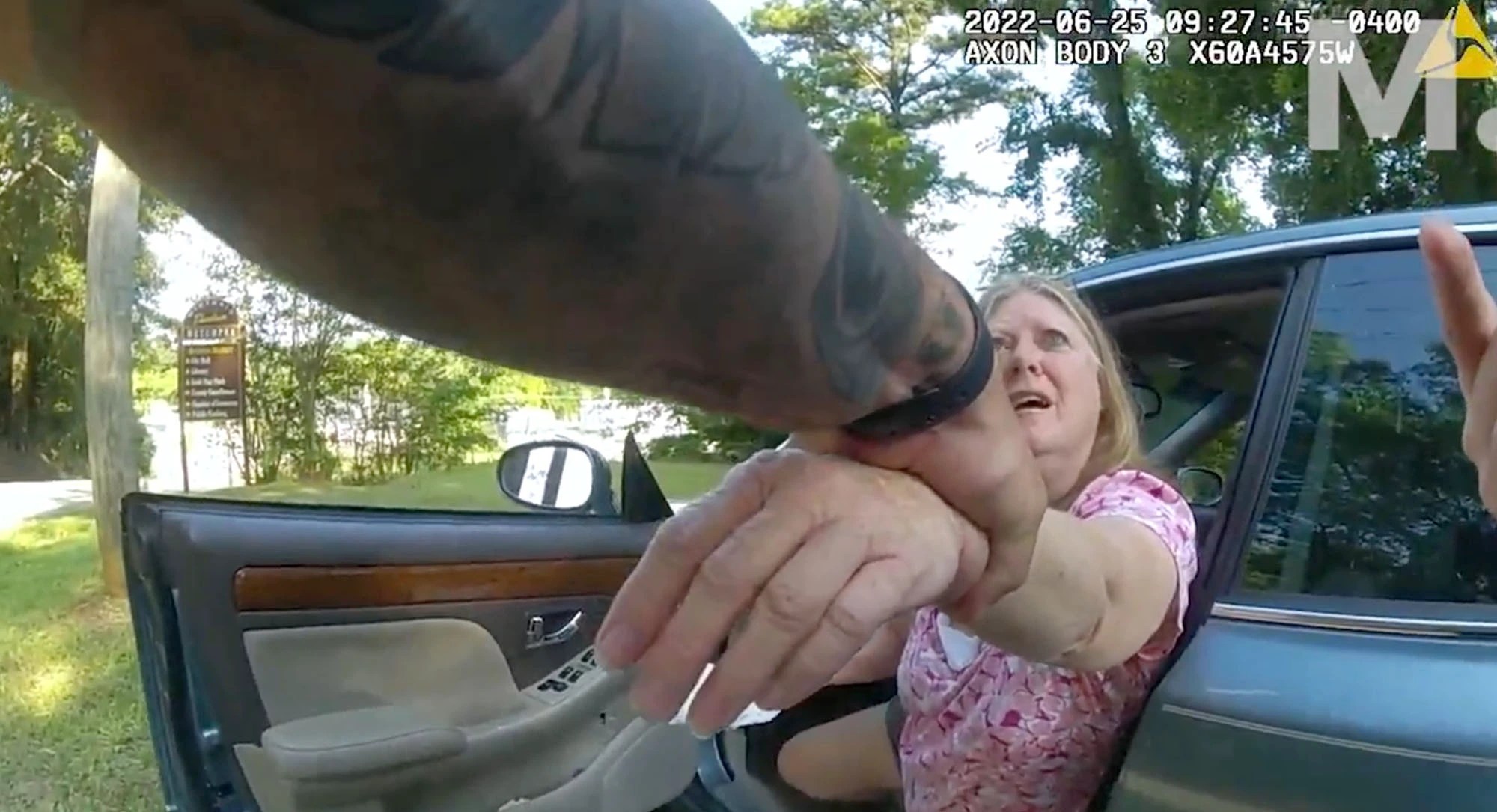
The footage showed the officers grabbing Alston by her wrists and pulling her out of her car, cuffing Roberts and berating the women for not moving fast enough when they were ordered to collect their traps and leave a wooded area on public land.

Wetumpka cat arrests
A police officer pulls Alston from her car on June 25 before arresting her for trespassing.

When Alston and Roberts expressed shock that police were hassling them, much less threatening them with arrest for managing a cat colony, one officer yelled at Roberts.

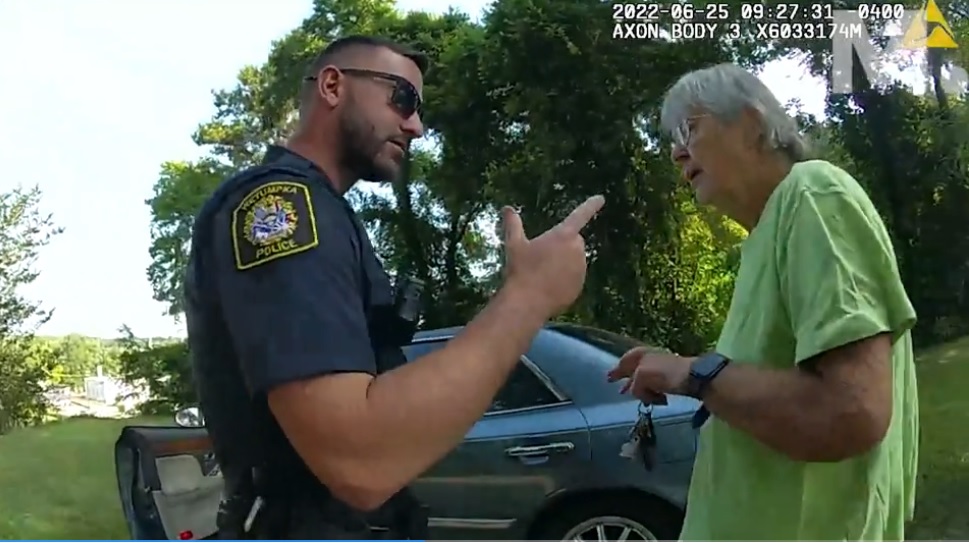
“It’s gonna get ugly if you don’t stop,” the cop said, jabbing a finger in Roberts’ face before cuffing her.

One officer told the women they were “too old to be acting this way,” and the footage captured audio of the officers laughing after one of them remarked that it was good there were no witnesses because they would have seen “a bunch of cops beatin’ up on some old ladies.”

There are no laws on the books against feeding cats in Wetumpka, so police charged the women with two misdemeanors each for disorderly conduct and resisting arrest.

Roberts and Alston argued that they were performing a service for the town by caring for the colony of strays. They were conducting TNR (trap, neuter, return) operations in cooperation with local shelters, often at their own expense, to stop the cats from continuing to breed.

Despite the fact that TNR is widely accepted as the most humane and effective way to manage stray cat populations, Wetumpka officials stuck to their allegations that the women were exacerbating a nuisance.

Wetumpka Mayor Jerry Willis doubled down after his department received overwhelmingly negative feedback over the arrests, and in a December trial witnesses described an ongoing argument between Willis, Roberts and Alston over the stray cat issue.

During the trial it was revealed that it was Willis himself who called the police when he spotted Alston’s car near the wooded area. Willis claimed he did not tell the police to arrest the women, but Officer Jason Crumpton testified that he was indeed told to arrest them.

Despite that, municipal Judge Jeff Courtney — who was appointed to his position by Willis and was not elected — found Alston and Roberts guilty of all four charges.

Prosecutors did not say why they dropped the charges on Wednesday, and it was not immediately clear if Roberts and Alston will be allowed to return to caring for the cats, who live in a wooded area on public land not far from the same municipal courthouse where they were earlier convicted. PITB has reached out to the women for comment.

“We are very worried about them,” Roberts told PITB in December. “A few animal lovers have said they would help, but we are not sure this will happen. I’m not sure there is enough food available to hunt. The weather is getting colder, and they need protein.”

Alabama Cat Ladies Raise $85k For Legal Appeal, Plan To File Civil Suit

Mary Alston and Beverly Roberts will return to court for an appeal on February 23 after they were convicted in December of charges associated with managing a cat colony.

Two women who managed a cat colony in their Alabama hometown — and were rewarded with an infamously tone-deaf arrest and criminal conviction for their efforts — have raised $85,000 for their appeal.

This time, their fate won’t be decided by a small-time judge appointed by the same mayor who ordered police to arrest the women in the first place.

Mary Alston and Beverly Roberts of Wetumpka, Ala., were arrested on June 25 after three police cars pulled up and four officers surrounded them on public land, demanding they stop their efforts to trap feral cats and leave the area immediately.

Alston and Roberts, who were in disbelief that four officers had been dispatched and were treating them like hardened criminals, didn’t move fast enough for the cops, who berated them and placed them both in handcuffs before charging them with a pair of misdemeanors each.

Their attorneys fought for months to obtain a copy of the police body camera videos of the arrest, and when they finally obtained that copy, it became apparent why the Wetumpka Police Department fought to keep it out of their hands.

The footage shows officers warning the women the confrontation was “going to get ugly,” insulting them and joking that they were “a bunch of cops beatin’ up on some old ladies.” It showed the police escalated the situation and had little regard for two women who were doing their hometown a service by managing a stray cat colony and conducting TNR — trap, neuter, return — to prevent the cats from breeding and multiplying.

They were convicted in a December trial that was followed by local and national media.

Now Roberts, 85, and Alston, 61, have raised $85,195 for their appeal via GoFundMe, with more than 3,000 donors across the US contributing to the fund.

After filing an appeal on Dec. 19, the women have been notified that their first hearing is set for Feb. 23 in front of 19th Judicial Circuit Court Judge Amanda Baxley, said Mary King, Roberts’ daughter. Baxley was sworn in earlier this month and begins her tenure on Jan. 17 after she was elected to the post in November.

bravecop
A Wetumpka police officer wags a finger at Roberts, who was 84 years old at the time, before handcuffing her hands behind her back and rifling through her personal possessions.

In a December trial, attorneys for Alston and Roberts revealed it was Wetumpka Mayor Jerry Willis who personally dispatched the officers by calling the assistant chief after spotting Alston’s car parked near a wooded area owned by the county. The lawyers also questioned Willis on his history of feuding with the pair on animal-related issues.

Although Willis testified that he did not tell police to arrest the women, Officer Jason Crumpton testified that he was indeed instructed to make the arrests before he arrived and determined what the women were doing.

Despite the fact that Wetumpka does not have laws against feeding or trapping cats, municipal Judge Jeff Courtney, who is directly employed by the town instead of being answerable to voters, found Alston and Roberts guilty of two misdemeanors each, sparking an outcry in local and national media. Courtney found Roberts guilty of trespassing and disorderly conduct, while he found Alston guilty of trespassing and interfering with governmental operations, an analogue for resisting arrest.

“I thought that they surely had more pressing issues to attend to,” Roberts told PITB in December. “I really thought the judge would dismiss it and tell the city to work it out.”

The arrest and conviction were widely panned by observers, including Alabama Political Reporter’s Josh Moon, who called the drama an “utterly absurd” spectacle that “reeks of small town politics.”

Roberts and Alston hope Baxley will give them a fair trial, which they believe they did not receive under Courtney in Wetumpka.

In the meantime, the colony cats in Wetumpka remain on their own. Willis, who has not responded to requests for comment by PITB, allegedly rejected offers by animal welfare groups in neighboring towns to care for the cats.

“We are very worried about them,” Roberts told PITB last month. “A few animal lovers have said they would help, but we are not sure this will happen. I’m not sure there is enough food available to hunt. The weather is getting colder, and they need protein.”

Alabama Women Who Fed And Trapped Cats Found Guilty Despite National Outcry Over Their Arrest

Since there are no laws against trapping, feeding cats or managing colonies, authorities charged the women with trespassing.

Despite widespread condemnation at the arrest and treatment of two Alabama women who were caring for a cat colony, a town judge found the women guilty after a trial Tuesday.

Beverly Roberts, 84, and Mary Alston, 60, were arrested on June 25 after a group of police officers pulled up to a park in three vehicles and ordered the women to leave.

Exasperated at the disproportionate police response — and the non-negotiable demand that they leave a public park during daylight hours — the women protested, and things grew heated when the police told them not to question their authority.

“I’m teetering on going to jail for feeding cats?” an incredulous Alston asked the officers in footage of the arrest, which was released by attorneys representing the women after they fought to obtain it from the Wetumpka Police Department.

Shortly afterward, one of the officers lost his patience when Alston said she needed to collect her traps before leaving.

“You aren’t doin’ it fast enough and now you’re going to jail!” he said, grabbing Alston by the wrists and yanking her out of her car.

The two women had tried explaining to the police that they were caring for a colony of stray cats and that they were using their own funds to conduct trap, neuter and return services, a common activity among cat lovers who care for strays and ferals in towns across the country. In most places, the authorities work with volunteers and local rescues, understanding that TNR programs help control cat populations.

Roberts wasn’t moving fast enough for the police either, and one officer jabbed a finger at her, raising his voice.

“It’s gonna get ugly if you don’t stop!” he said.

Wetumpka cat arrests
A police officer pulls Alston from her car on June 25 before arresting her for trespassing.

Despite complaints from across the country, widespread coverage in local media and national animal-related news sites, Wetumpka Police Chief Greg Benton doubled down on his officer’s response, insisting the cats are a “nuisance” and Roberts and Alston were making the situation worse by managing the colony.

During Tuesday’s municipal trial, it became clear why Wetumpka police had acted so aggressively: They were called by Wetumpka Mayor Jerry Willis, who saw Alston’s parked car near the park and directly phoned the assistant chief of police.

Despite that, and despite admitting he’d had arguments with the women in the past about managing the colony, Willis told Judge Jeff Courtney he didn’t tell the police to respond and didn’t order the arrests.

“They have a right to make those decisions,” Willis said. “I don’t make those decisions for them.”

When attorney Terry Luck directly asked Willis if he’d ordered the arrest or played any part in the trespass order, Willis simply said “I did not.”

However, Officer Jason Crumpton said under oath that the assistant chief told him and the other officers to arrest the women.

After Roberts said, per the Montgomery Advertiser, that she was “not the first person in Wetumpka to feed cats,” merely the first to get caught, Courtney said the women “weren’t convicted for feeding cats.”

“I know,” Roberts said, “because that’s not illegal!”

There are no laws against managing cat colonies or feeding cats in Wetumpka, so police charged Roberts with criminal trespassing and disorderly conduct, and Alston with criminal trespassing and interfering with governmental operations, a charge tantamount to resisting arrest in many states. The charges are misdemeanors. Courtney suspended the 10-day jail sentences that come with convictions at that level and sentenced Roberts and Alston to two years’ unsupervised probation, a $100 fine each and court costs.

Attorneys for Roberts and Alston say they plan to appeal.


Police Chief Doubles Down On Cat Lady Arrests, Trial Postponed

Despite a torrent of criticism, an Alabama police chief says his officers were justified in arresting two women who were managing a cat colony.

You might think if you were the police chief of Wetumpka, Alabama, you’d be embarrassed to learn your officers arrested and cuffed two women — one of them 85 years old — for the alleged crime of managing a cat colony.

Heck, you might be outright mortified that the public saw a video of that outrageous arrest, with your officers laughing about “a bunch of cops beatin’ up on some old ladies” after treating the aforementioned ladies like hardened criminals instead of good local people you’re sworn to protect and serve.

Lastly, you might be furious at your officers for demonstrating abysmal judgment by escalating a situation instead of keeping the peace.

Especially if video of the incident proceeded to go viral, drawing widespread mockery and condemnation of your entire police department

But if you’re Wetumpka Police Chief Greg Benton, apparently none of those things would occur to you.

Instead of apologizing to his community for traumatizing two women doing trap, neuter return (TNR) work in a public park, Benton is doubling down.

Benton told the Montgomery Advertiser that Mary Alston, 60, and Beverly Roberts, 85, were exacerbating a “nuisance” by spending their own money to spay/neuter strays, working with local shelters to find homes for them, and managing a stray cat colony that others were content to ignore.

Benton says the women were warned that they were “trespassing” in a public park — built and maintained with their tax dollars — and were warned not to feed the cats.

bravecop
A Wetumpka police officer wags a finger at Roberts, who was 84 years old at the time, before handcuffing her hands behind her back and rifling through her personal possessions.

The women were arrested on June 25, but the media and public are just now learning the details because police pushed back on local media freedom of information requests for copies of the body camera footage.

Apparently Benton does not understand the distinction between tossing treats at strays and managing a colony at personal expense to reduce the stray population and get the cats adopted. Or maybe he’s one of those guys who thinks the solution is to kill the cats.

Either way, he’s chosen to ignore policing best practices, disregarding time-honored — and evidence-supported — protocols of community policing by endorsing the sort of behavior his officers engaged in.

Instead of charging into a public park, practically screaming “I am the law!” and gleefully cuffing two women while telling them “You’re too old to be acting this way,” a minimally-trained, minimally decent rookie cop almost anywhere else in America would immediately understand Alston and Roberts are not criminals.

That cop would understand the women are part of the community, they have to live with these people, and the productive thing would be to get the police chief, animal control officer, colony managers and local shelter supervisors together, so they can figure out how to support each other and combine their resources to humanely manage local cat colonies.

Instead, we have police moving forward with misdemeanor charges against the women. They’re both charged with criminal trespassing, while Alston faces an additional count of interfering with government operations, and Roberts faces a disorderly conduct charge.

Their attorney, Terry Luck, told the Advertiser that he believes the charges are baseless. Alston and Roberts were originally scheduled for an Oct. 20 trial, but it’s been postponed due to scheduling conflicts. A new date hasn’t been set yet.

Sunday Cats: Eurasian Lynx Captured On Long Island, ‘Loneliest Cat’ Has Been Returned To Shelter Twice

SPCA staff and veterinarians believe the well-socialized wildcat was the illegal pet of someone living in or near Central Islip.

The saga of a “big cat” spotted on Long Island this week has come to an end with the animal’s capture.

Authorities believe the cat is a Eurasian Lynx and was a pet who escaped or was abandoned by his owner. The frightened feline was first spotted on Wednesday in Central Islip, Long Island, a suburb that stretches for 118 miles just south of New York City.

“Scared the daylights out of me,” Diane Huwer, a self-proclaimed cat lover who was the first to encounter the lynx, told the local ABC affiliate.

The area encompasses two counties and is one of the most densely populated places in the U.S. with more than 7.6 million people. It’s one of the worst places in the world for a wild cat to be abandoned, with heavy traffic, ubiquitous environmental noise and endless shopping plazas surrounded by labyrinthine residential neighborhoods.

It’s illegal to own wild animals in New York, and the cat’s “owner” likely would have kept it without a proper enclosure to avoid attention from authorities.

The lynx’s sightings made the headlines in the New York papers, as well as coverage by local TV news and online publications. It went viral on social media, with users trying to determine what kind of cat it was from the handful of blurry photos witnesses were able to snap. Some media coverage suggested it was a true big cat. (Here at PITB, we thought it was possibly a Savannah cat or an American lynx.)

lynxleonardo
Authorities said the Eurasian Lynx was clearly socialized and wasn’t aggressive when they finally caught him. Credit: SPCA

Local authorities searched fruitlessly for three days and were about to give up early Saturday morning when someone spotted the wild cat in a residential neighborhood and called police.

The hungry feline was pawing through garbage cans next to a house in Central Islip. Authorities said the young lynx was friendly and socialized to humans.

“He was rubbing his face on the cage, looked like he was a friendly cat and from the tips we’ve gotten,” Frankie Floridia of Strong Island Animal Rescue said. “It seems these people have had him since he was a baby.”

Veterinarians have named the lynx Leonardo de Catbrio and said he’s about a year old. Despite his ordeal, the 40-pound cat was not malnourished or dehydrated, and the vets who gave him a check-up said he’s in good health. They’re waiting on lab results to confirm his species.

“Someone obviously had it as a pet,” the SPCA’s Roy Gross told Newsday. “These are wild animals, not the type of animals anyone should have. … They don’t belong in captivity this way.”

In the meantime, police, the state Department of Environmental Conservation and the SPCA are looking for Leonardo’s “owner,” who faces misdemeanor charges and a fine of up to $1,000 if he or she is convicted. They’re sure to have questions about how the person acquired a wild cat, let alone a non-native species. It’s been illegal to “import” wild animals since the Wildlife Act of 1976, and the illegal wildlife market has been a scourge on law enforcement and conservationists alike.

“I know everybody wants something that’s exotic,” Gross said. “They want something cool. It’s not cool.”

Header image of Eurasian Lynx courtesy of Pexels

A lonely cat in the UK needs a forever home

Eleven is a silver tabby who’s been returned to the shelter twice by would-be adopters, and staff at the shelter are appealing to the public to find her a forever home with patient humans.

The four-year-old with bright green eyes has been with Battersea Cats and Dogs in south London since April. Her rescuers say she takes a while to adjust to new surroundings, and they believe that’s why Eleven was returned twice within days. If Eleven’s failed adopters had been more patient, shelter staff said, they would  have discovered she’s a loving lap cat once trust is established.

Eleven the Cat
Eleven the Cat takes a while to warm up to new people. Credit: Battersea Cats and Dogs

They hope to place her in an “understanding home” with people who “will give her the time and space to settle in, as she would be a wonderful addition to a home.”

“Eleven needs her own space when she’s settling in, so she can hiss and swipe if pushed into interactions that she is not ready for,” a shelter spokesman told the Mirror. “She expects respect, but once given she will reward you with plenty of love. She is a super clever cat, who enjoys learning and she will sit on command for a treat of course.”