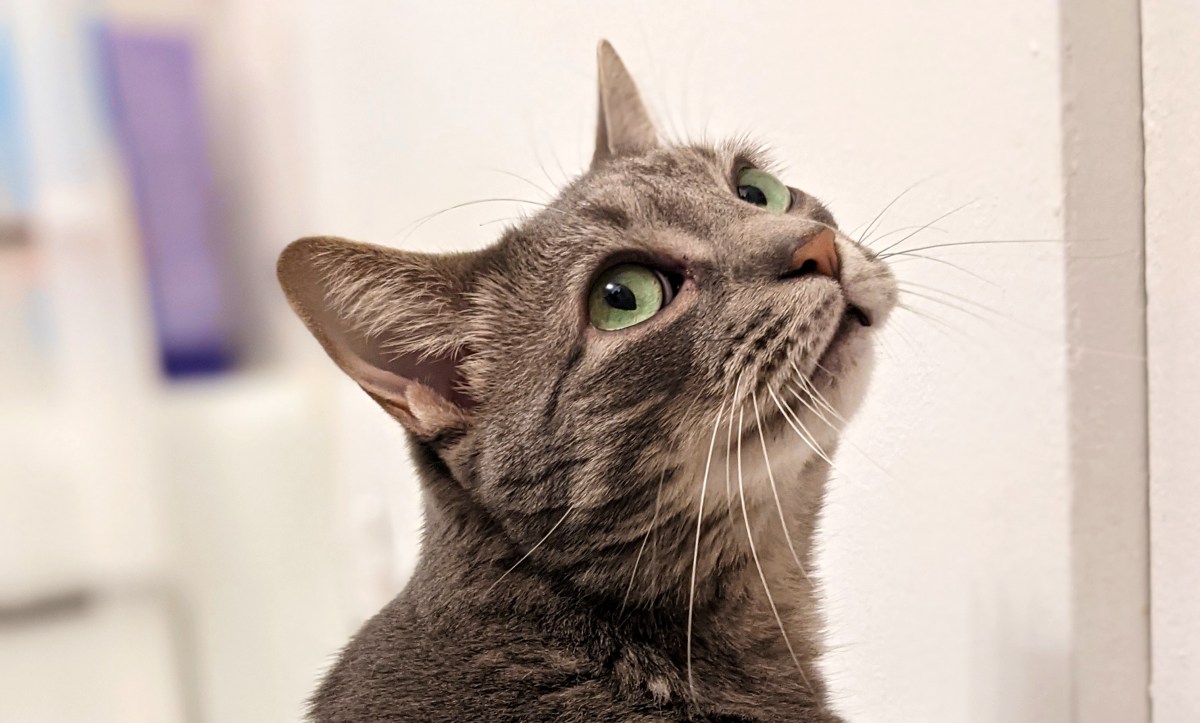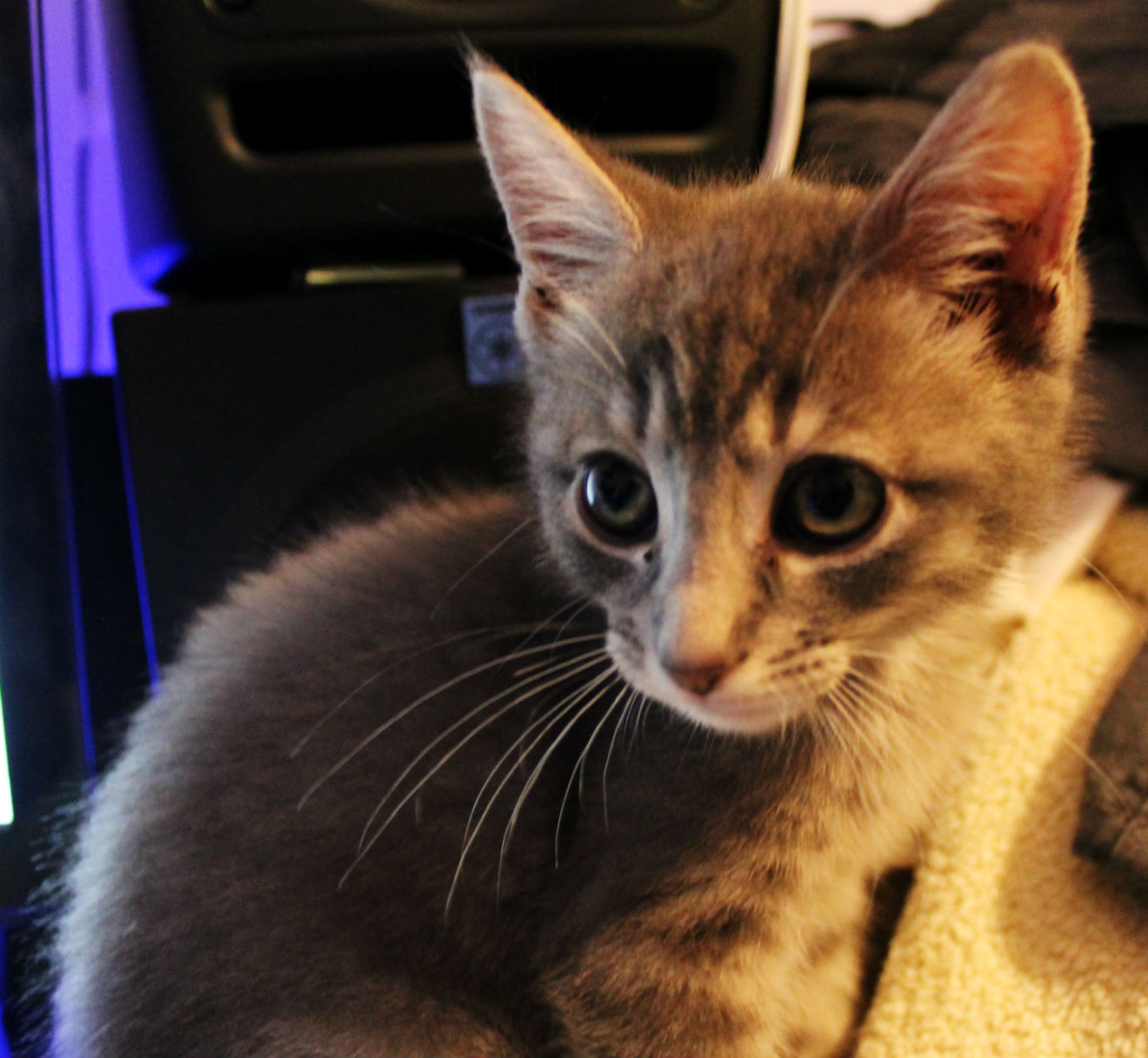
MeowTalk Says Buddy Is A Very Loving Cat!

A new app aims to help us better understand and communicate with our cats.

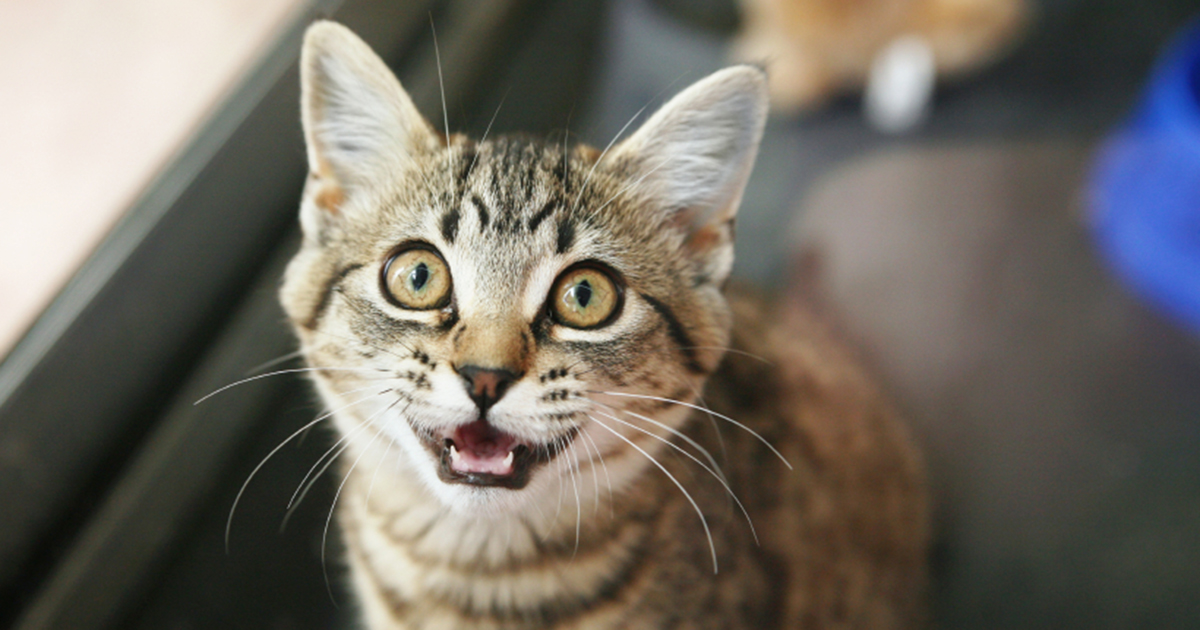
A while back I wrote a post about MeowTalk, a new app that uses AI — and input from thousands of users sampling their cats’ vocalizations — to translate meows, trills and chirps for the benefit of those of us who don’t fluently speak cat or might need some clarity on what our furry friends are trying to say.

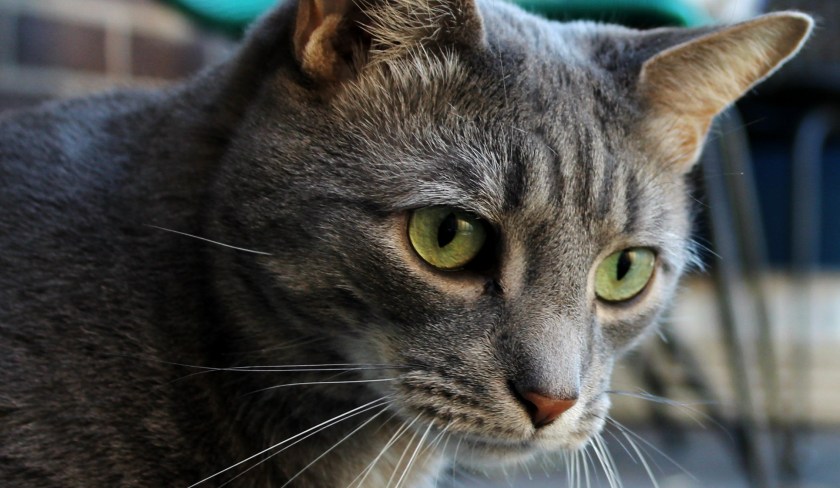
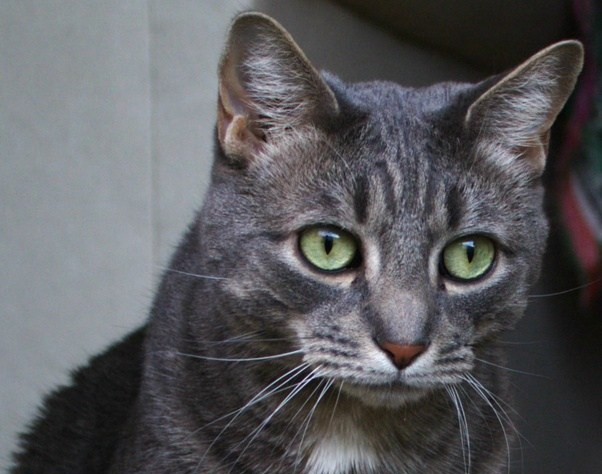
Now that I’ve finally had the opportunity to give MeowTalk a spin, it turns out Bud is a much more polite cat than I thought he was!

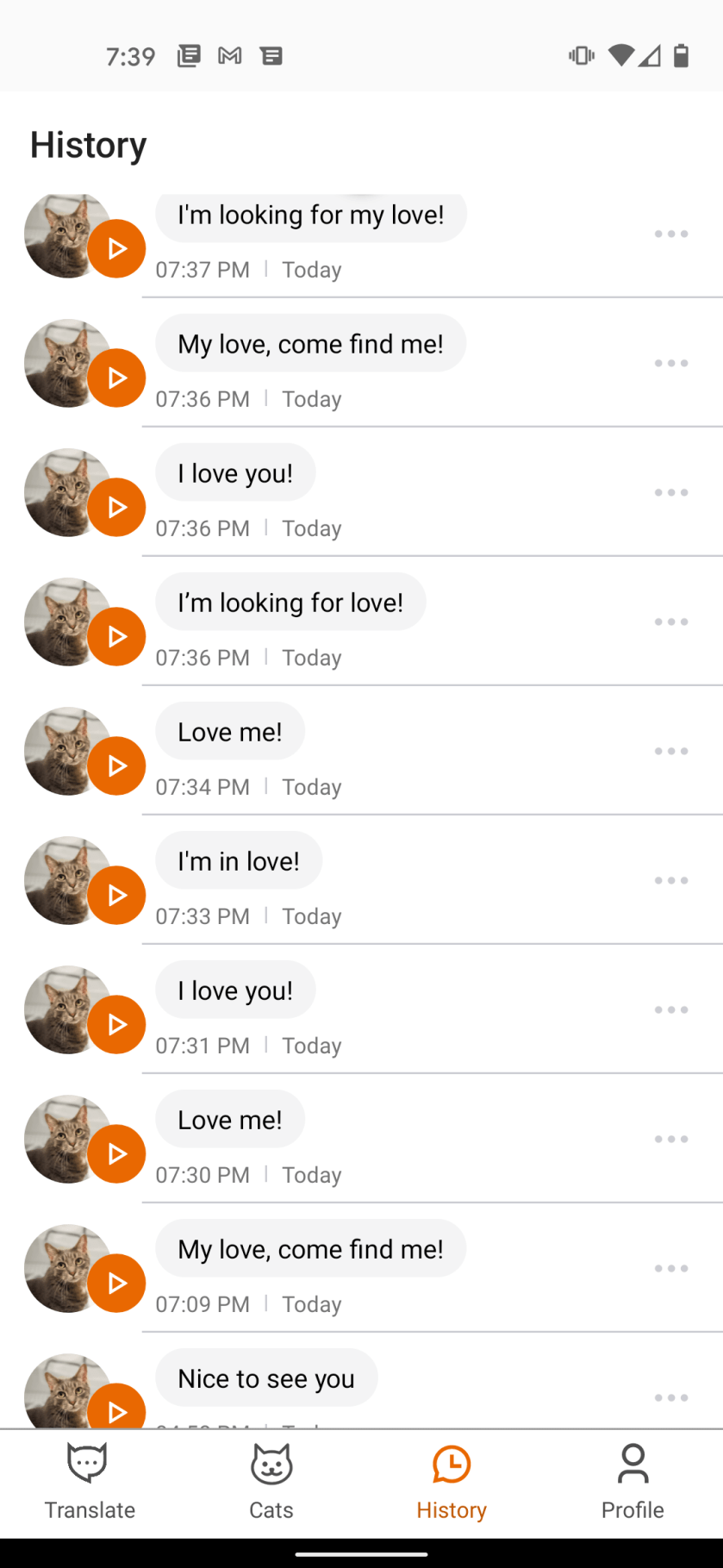
What I thought was an unenthusiastic “I acknowledge your presence, human” turned out to be “Nice to see you!” according to MeowTalk.

Buddy’s next meows were “Love me!” and “I love you!”, the app informed me. Weird. I thought he was complaining that I was only half-heartedly simulating prey with his wand toy while watching Jeopardy.

After Jeopardy I headed to the bathroom, which was the real test.

I intentionally closed the door before the little stinker could sneak in the bathroom with me, then held up the phone to capture his muted vocalization. I was sure Bud was saying “Open the door!” but the app told me Buddy was saying “I’m in love!”

Awww. What a good boy. How could I not let him in?

Once inside, Buddy began talking again as I knew he would. He’s a vocal cat.

“I’m looking for love!” the app translated as Bud pawed at the door, demanding to be let back out again. “My love, come find me!”

MeowTalk Screenshot

What was going on here?

Was Bud really professing his undying love for me, his human, or was he workshopping cheesy dialogue for a feline romance novel he’s been secretly working on?

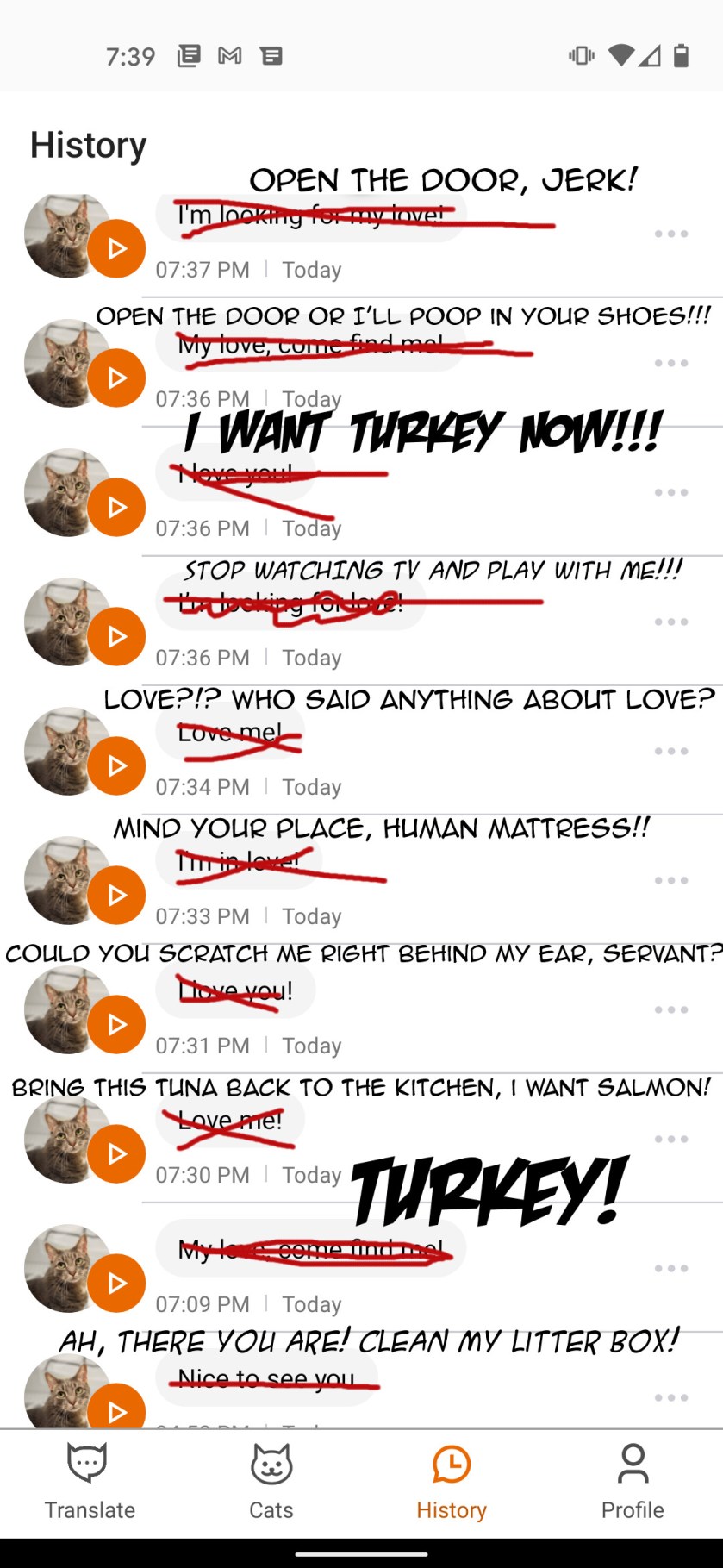
Thankfully, MeowTalk allows you to correct translations if you think the app’s gotten them wrong. This looks more like it:

The Translated Buddy
Translation from the original Buddinese language.

MeowTalk is in beta, and it can only get better as more users download the app, make profiles for their cats and make an effort to tag vocalizations with their correct meaning.

The app was authored by a software engineer who was part of the team that brought Amazon’s Alexa to life, and the algorithms that power it already show promise: When the app is listening (which it does only actively, after you have explicitly given it permission to do so), it does a great job of distinguishing cat vocalizations from background noise, human chatter, televisions and other incidental sounds. Even my fake meows were unable to fool it.

Each vocalization is sampled and saved to the history tab of your cat’s profile, so you can review and adjust the translations later. If you’ve got more than one cat you can make profiles for each one, and the app says it can tell which cat is talking. I wasn’t able to test this since the King does not allow interlopers in his kingdom, but given MeowTalk’s accuracy in distinguishing meows from every other sound — even with lots of background chatter — I have no reason to doubt it can sort vocalizations by cat.

In some respects it reminds me of Waze, the irreplaceable map and real-time route app famous for saving time and eliminating frustration. I was one of the first to download the app when it launched and found it useless, but when I tried it again a few months later, it steered me past traffic jams and got me to my destination with no fuss.

What was the difference? Few people were using it in those first few days, but as the user base expanded, so did its usefulness.

Like Waze, MeowTalk’s value is in its users, and the data it collects from us. The more cats it hears, the better it’ll become at translating them. If enough of us give it an honest shot, it just may turn out to be the feline equivalent of a universal translator.

And if it’s successful, its creator wants to make a standalone version as a collar, which would translate our cats’ vocalizations in real time. As far as I’m concerned, anything that can help us better understand our cats is a good thing.

Check out the free-to-use MeowTalk on Google Play and Apple’s app store.

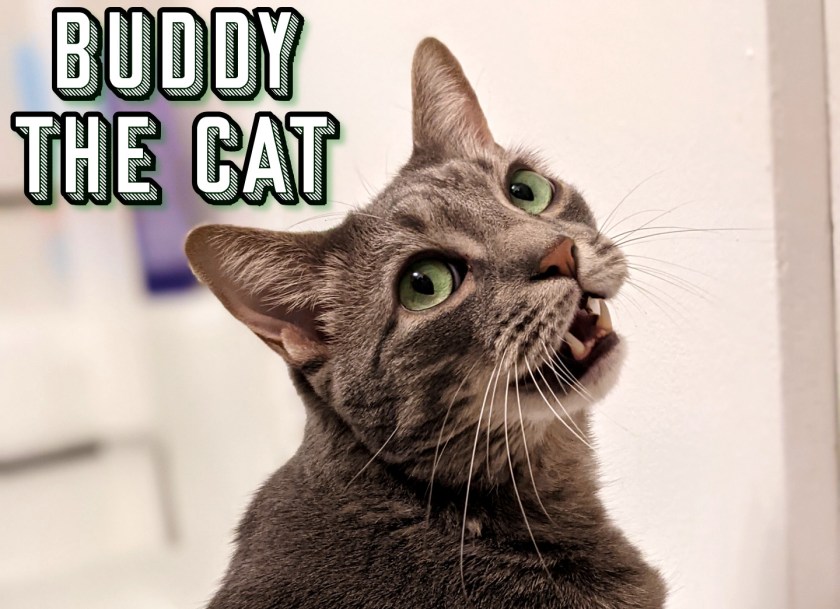
Buddy the Cat
“Okay, fine. I love you human. But that doesn’t mean you can slack off with the snacks.”

New App Translates Your Cat’s Meows

MeowTalk uses machine learning and algorithmic AI to learn cat vocalizations and what they mean.

It’s gonna be the future soon, and I can’t wait!

It was only a matter of time before someone leveraged machine learning and algorithmic AI to parse cat vocalizations, and thanks to Javier Sanchez, translating your cat’s meows — and trills, huffs and chirps — is now a reality.

Sanchez was a member of Amazon’s machine learning team contributing to the development of Alexa, the now-ubiquitous virtual assistant operated by voice commands.

“I got to see how the sausage was made, how they train their models and work with all the data science platforms,” Sanchez said. “So I was fresh off the heels of that and I was thinking, ‘Well, we could do something similar with cats and it could be an app.’”

javiersanchezcat
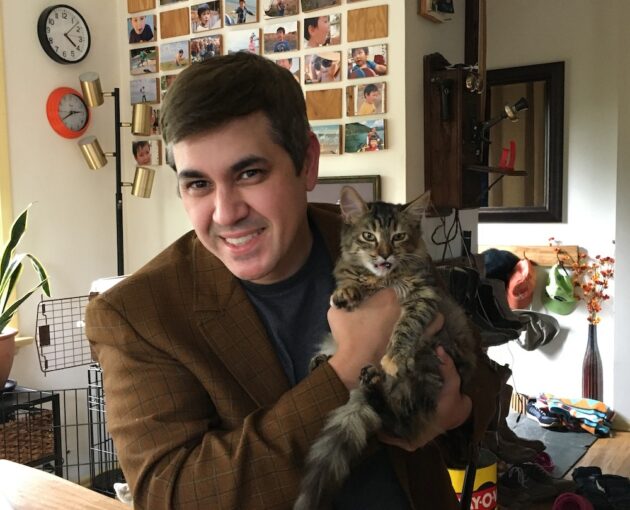
Sanchez with his cat.

Sanchez’s new employers at the tech firm Akvelon saw promise in the idea and gave him the green light.

The resulting app, MeowTalk, is now available on iOS and Android.

There are two layers to the concept: The first one involves nine or 10 “intents” common to all or most cats. They include vocalizations for “Feed me,” “Hey human!”, “Let me out,” and “Pay attention to me,” among others.

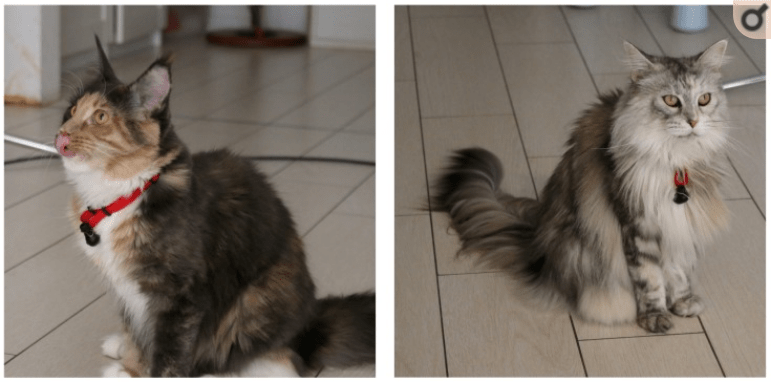
Sanchez didn’t guess or intuit the meanings — they’re based on research by a team at the University of Milan, who built a data set of cat vocalizations by attaching tiny microphones to cats and recording everything the fluffsters say. Each feline utterance was analyzed and catalogued by frequency, rhythmic quality and context, among other traits.

Screenshot_2020-11-12 Automatic Classification of Cat Vocalizations Emitted in Different Contexts
Two cats who participated in the University of Milan study: Note the small black microphones on their collars.

The second layer is where it starts to get really interesting: By using MeowTalk like Shazam, the app will start recording your cat’s particular trills, chirps and meows and — with your help — eventually piece together what they mean.

As with dictation software and machine learning in general, the more data the app gets, the better its translations become.

This is important because, while cats share many sounds, each cat develops its own unique vocalizations:

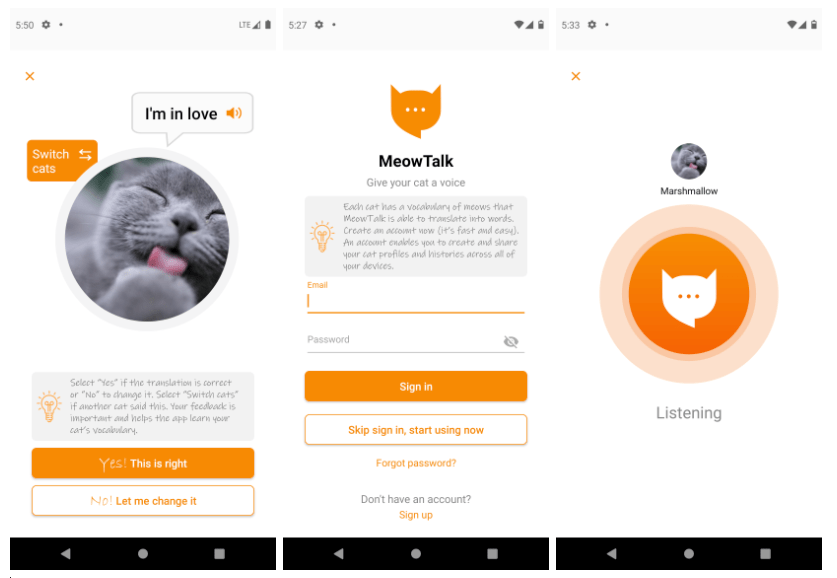
With MeowTalk, you can create a profile for your cat and start using its auto-recognition to translate your cat’s meows and start mapping its language. While some translations are built-in and inherent to the app, translations specific to your cat require you to train the app to recognize your cat’s specific vocabulary and intentions. Translations you deem to be incorrect can be corrected via the app. MeowTalk is not static; instead it learns and evolves with each translation that you confirm, adding to its corpus, just as we would add new words into our own memory banks or language processing programs.

At the same time thousands of other cat owners are also using the app, feeding the algorithm more data, which the app uses to improve itself. Development is ongoing, with future changes reflective of user (and cat) feedback.

“A tool like this can help certain people bond even more with their cats, especially if they can’t be in contact with other people on a regular basis,” Sanchez said. “So this could be a real game changer for a key demographic that have cats.”

Screen-Shot-2020-11-02-at-4.19.06-PM
MeowTalk’s user interface.

Applying what they’re learning via the app, Sanchez and his team are also working toward their next goal: Giving your cat a human voice. They’re developing a small device that clips on a cat’s collar and translates meows into human speech in real time.

That tech has the potential to give me nightmares. Imagine Buddy having a human voice and saying “Gimme snacks now, servant!” “Open the door, butler!” “You’re 23 seconds late with dinner!”

Maybe I’ll pass on the collar device. In the meantime I plan to download the iOS version of MeowTalk and give it a spin. I’ll report back in a week or two after giving it some time to adjust to the Budster. If any of our readers give it a shot, we’d like to hear your impressions as well.

superhandsomebuddy1
Did you know? The Buddinese language includes 22 separate words for “jerk” and 37 different ways of demanding food.

Dear Buddy: Why Do You Sound Like Elmo Singing In Falsetto?

Listen to a recording of Buddy’s meows as he proves to a doubter that he sounds exactly like a roaring tiger!

Dear Buddy,

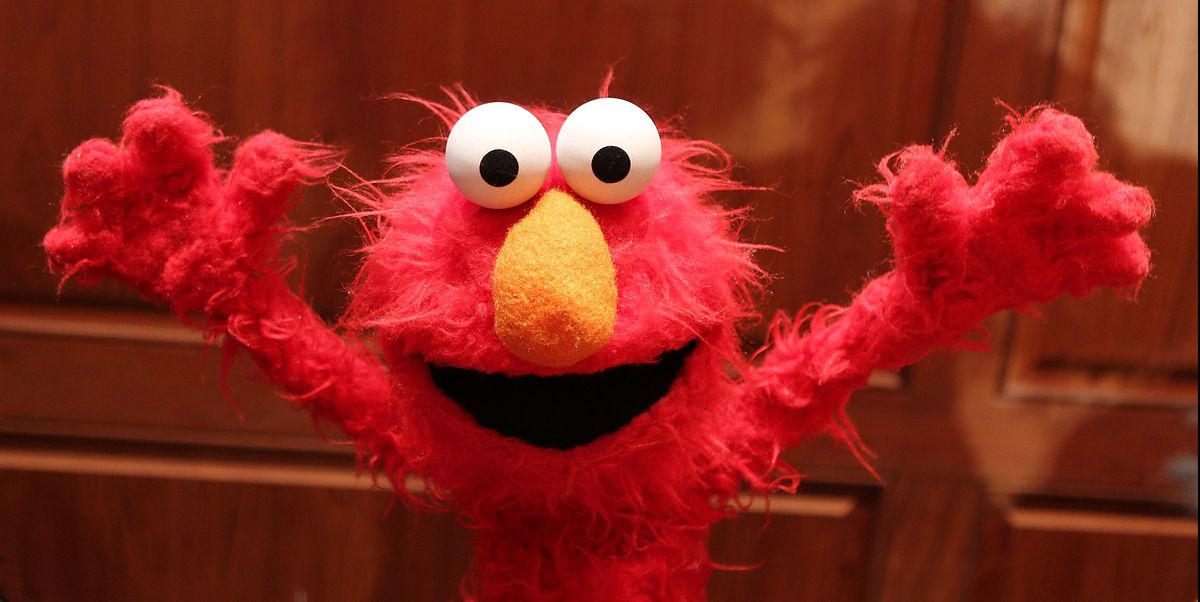
Why do you sound like Elmo singing in falsetto?

Laughing in Laramie


Dear Laughing,

Who is Elmo and what is falsetto? If Elmo sounds like me, he must be mighty and have the roar of a tiger!

Buddy


Buddy,

You’ve never heard of Elmo? Here, have a listen:

Laughing in Laramie


Dear Laughing,

Haha, very funny. I don’t sound anything like Elmo. This is what I sound like: (Editor’s note: This is an actual recording of Buddy, with Big Buddy interjecting with his imitation meows. Although the sound of Buddy’s roar is undoubtedly intimidating, try to remain calm. He is friendly.)

Buddy


Dear Buddy,

Was that you or another recording of Elmo? I couldn’t tell. Well if your career as a supposedly fearsome cat doesn’t work, you can always get work as an Elmo impersonator!

LOL


Dear Buddy,

He’s wrong, you don’t sound like Elmo…you sound like Elmeow! Ahahaha!

Giggling in Galicia

It’s difficult to believe such a mighty roar can come from such a cute little guy, isn’t it?

Have You Decoded Your Cat’s Meows?

Each of us has a private “language” we share with our cat(s).

We’ve learned a lot about how cats see the world in the past two or three years thanks to some breakthrough research.

We know the meow originates as a way kittens communicate with their mothers, and adults generally don’t meow to each other. In fact, the iconic vocalization — which is the cat’s actual name in some languages — is a feline’s attempt to communicate with us, their human caretakers.

Give the little stinkers the credit they deserve: They know we don’t read tail, whisker, ear or even feline facial expressions very well, and they know we communicate verbally, so they meow to us.

We also know house cats develop exclusive “languages” with their favorite humans, forming personal and proprietary ways of exchanging information.

They’re even capable of meowing at the same frequency as a human baby’s cries by embedding the infant-like call in their purrs: Because we humans are hard-wired by evolution to respond urgently to those frequencies, our feline friends quickly realize their “solicitation purrs” are the most effective way to get our attention.

Clearly they’re manipulating us, not the other way around.

Have you decoded your cat’s repertoire of meows and other vocalizations? In addition to the meow — which comes in several different types and forms — cats can chirp, trill, chatter, growl, chirrup and purr.

Buddy is a very vocal kitty, and he likes to use trills to communicate. Here are Buddy’s favorite “words” and sentiments:

Hrrrruuuhh – “Okay then”/”I have no idea what you’re talking about”/”Sorry, not interested”

Brrrrr! Brrrrt! – “I don’t like this!” or “I don’t know about this!” (Heavy trill sound.)

(The brrrrt sound goes all the way back to Bud’s babyhood, when he wasn’t litter box trained and got nervous every time he had to eliminate. To this day, he makes that sound when he’s nervous and unsure of what to do.)

Brrrrruuuup! – “I’m fast! Watch me run! I’m running!”

(A vocalization that serves as a prelude to an energy-expending burst of activity.)

Rrrrooow! – “No!”/An expression of annoyance. May also mean “Get away from me!” in certain contexts.

Ahhhhmmmm – “Interesting!” High-pitched.

Hurrrrr – Affirmation. “Bud, do you want turkey tonight?” “Hurrrrr!”

Mmmmohhh! – “Oh, but I want to!” (Reserved for when he’s told not to do something, like scratch the couch.)

Excited chatter – About to receive catnip or one of his favorite foods.

Mrrrump! – Straining or jumping down. Often heard as he hits the ground when jumping down from a couch or bed.

Nyeeea – Okay, I’m awake!

Mmmyeoowww! – I WANT FOOD!

Mrrrrrrrooww! – I WANT FOOD!

Mrrooww! Mrrooww! – FOOD NOW!

Bah! Bah! – You jerk!

Mnyakk ak ak! – A chattering sound. “I see birds! I see birds and I can’t attack them!”

Incessant crying – Open the door so I can come in, and after five minutes I’ll cry again until you let me out. Then I’ll do it again until you let me in…

You, dear reader, have your own private language with your cat(s) too, whether you’re consciously aware of it or not. If you haven’t given it much thought, pay close attention to the sounds your cat makes and the ways you respond…and don’t get too freaked out when you realize who really runs your home. 🙂

littlebabybuddy
“I’m an OG brrrruppp-er, dude.”

Buddy’s Mailbag: How Do I Open Doors?

Thousands of years ago an evil human was looking for a way to annoy cats and invented the first door.

Dear Buddy,

What is the sick human fascination with doors? Who invented these vile things?

Better yet, how do I get them to open?

I hate doors!

– Hater in Honolulu


Dear H in H,

Welcome to the club, hermano!

No one really knows for sure where doors came from. Our best scientists have a working theory that humans invented doors thousands of years ago as a way to torture us cats.

It worked.

Not much foils us, mind, but doors are a uniquely anti-feline feature of human homes, and we all loathe them. But take heart! They can be defeated.

The Handle Twist
Doors with handles are the easiest to open!

If the doors in your home have handles instead of knobs, and they’re low enough that you can reach them without jumping, then what are you writing to me for? Go open them!

However, if your humans were evil enough to buy doors with knobs, or if reaching the handles requires you to jump, you’re going to need a little more finesse, my friend.

I call it the jump-and-twist. You’re going to need to leap up toward the knob while at the same time twisting your body in mid-air — a trivial move if you’re muscular like I am — so that your back feet catch the door frame. Then use the leverage from your back paws to push while keeping your front paws on the knob. Make sure you turn it!

cat-door
A kitty successfully completes the jump-and-twist and even manages to avoid the water trap his evil humans have laid for him. Kitty 2, Humans 0.

Finally, if you’re not athletic or the door is too difficult to open (or if you’re just lazy), you can employ what I like to call The Buddy Special.

The Buddy Special is very easy: Simply stand next to the door and cry, making your meows more pitiful-sounding by the second. Be sure to hit the sweet spot frequency that mimics a human baby’s cries: Humans are compelled to get up and investigate when they hear that sound!

Good luck and stay Buddy, my friends!

– Buddy the Wise

Under the door
Not proper technique: Going under the door is a good way to get stuck! However, a single paw under the door is a good way to remind human that you are watching them poop.