Journalists Need To Stop Citing The Bunk Studies Blaming Cats For Annihilating Wildlife

Free-ranging cats do have a negative impact on wildlife, but we’re not going to solve the problem by demonizing them and culling them by the millions.

The Literary Hub story starts off with a provocative question: what if cats ruled the world?

This is a question I find amusing to ponder, so instantly my mind was filled with images of cats scandalizing foreign heads of state by insouciantly swiping gifts off tables, angering diplomats by yawning and nodding off during summits, and financing the construction of massive and unnecessary coastal walls, on the off chance the ocean decides to move inland and get them wet.

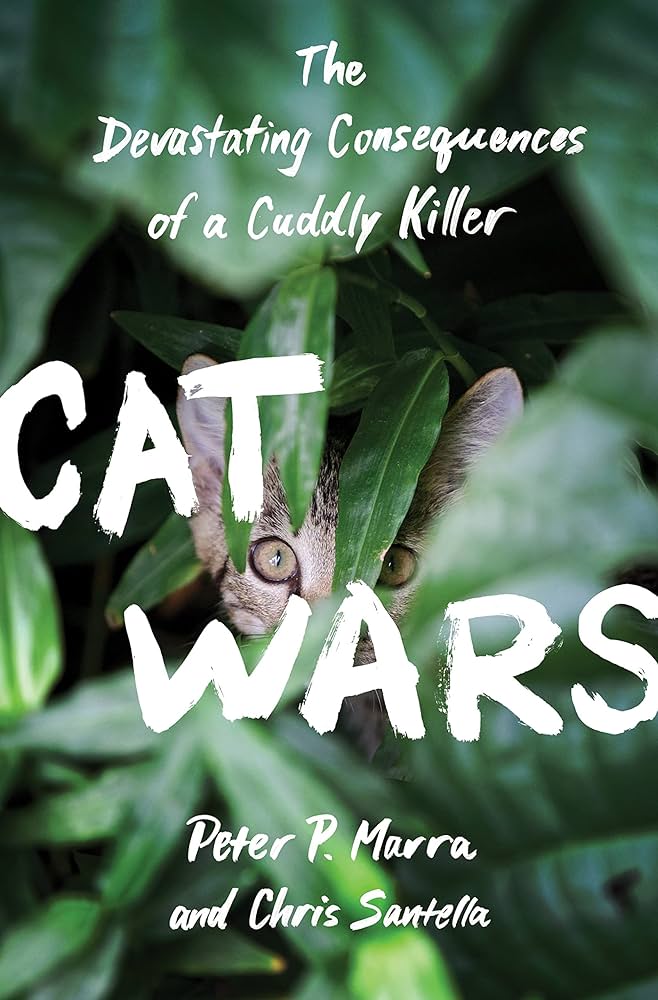
Then the writer cited the repeatedly-debunked “study” that credulous media of all stripes still reference without bothering to read the text — that infamous 2013 Nature Communications paper, published by birders who author books with titles like “Cat Wars: The Consequences Of A Cuddly Killer.”

Some journalists don’t know any better, some are overworked, and some are frankly too lazy to read the study with a critical eye, but I think one of the more likely reasons people continue to cite the paper is because it’s easier to blame felinekind for wildlife extirpation than it is to admit we’re the primary culprits. After all, according to the WWF’s most recent annual review, we’ve killed off 73 percent of Earth’s wildlife since 1970, and we certainly didn’t need house cats to help us push elephants, rhinos, every species of higher non-human primate, and innumerable other species to the brink of extinction.

We did that. We did it with our relentless development, consuming and fracturing wild habitats. We did it with careless industrialization, by dumping chemicals and garbage into our rivers and lakes until more than half of them were rendered too polluted to swim in or drink from. We did it by bulldozing old growth forest and jungle, by exploiting species for fur, folk medicine, ivory, sport hunting and in the illegal wildlife trade.

Cheetahs are critically endangered, and they’re being driven to extinction even faster by poachers, who sell them to wealthy buyers in oil-rich gulf states where they’re trendy pets. Credit: Riccardo Parretti/Pexels

More than 47,000 species — that we know of — are headed toward extinction. It’s so much easier to blame it on anyone or anything else than admit we need to make major changes to our lifestyles and policies.

But don’t take my word for it. Here’s what Alley Cat Allies has to say about the 2013 meta-analysis and its derivative papers:

The Smithsonian-funded study published in Nature Communications is not rigorous science.
It is a literature review that surveys a variety of unrelated, older studies and concocts a highly speculative conclusion that suits the researchers’ seemingly desperate anti-cat agenda. This speculative research is highly dangerous. It is being used by opponents of outdoor cats and Trap-Neuter-Return (including the authors) to further an agenda to kill more cats and roll back decades of progress on TNR. And it is being spread unchecked by the media.

Here’s what a group of ethicists and anthropologists wrote about the claims against cats in the journal Conservation Biology, lamenting the lack of nuance and danger in arguing that cats must be stopped “by any means necessary.” The drive to blame felines, they argue, has “fueled an unwarranted moral panic over cats”:

“Contrary to Loss and Marra’s claims that the scientific consensus is consistent with their views that cats are a global threat to biodiversity, the actual scientific consensus is that cats can, in certain contexts, have suppressive population-level effects on some other species (Twardek et al. 2017). This is something that is true of all predators, native or not (Wallach et al. 2010). Thus, cats should not be profiled as a general threat a priori and without reference to important factors of ecological context, situational factors, clear definition of harms, and evidence thereof.”

“There are there are serious reasons to suspect the reliability of the new, extreme cat-killer statistics,” wrote Barbara J. King, retired chairwoman of the department of anthropology at The College of William and Mary.

Feline predatory impact varies by local conditions. Free-ranging cats in cities and suburbs kill rodents, but have minimal impact on other animals, data shows. Credit: Patricia Luquet/Pexels

Like we’ve often noted here on PITB, the authors of the Nature Communications study can’t even say how many free-ranging felines exist in the US. They say it’s between 20 and 120 million. That’s a 100 million difference in the potential cat population! How can they tell us how many birds and mammals are killed by cats if they can’t even tell us how many cats there are? No amount of massaging the numbers can provide an accurate picture if the initial data is shaky or nonexistent.

Furthermore, the nature of a meta-analysis means the authors depend on earlier studies for estimates on predatory impact, but the 2013 Nature Communications paper does not include any data —not a single study — on feline predatory impact. In other words, they have no idea how many animals free-ranging cats actually kill.

In authentic studies that actually do measure predatory impact, the data varies widely in geographic and demographic context. Data derived from the D.C. Cat Count, for example, shows that cats living more than 800 feet from forested areas rarely kill wildlife, and are much more likely to kill rodents.

Those who cite the bunk study and its derivatives are “demonizing cats with shaky statistics,” King wrote, adding she was alarmed by “an unsettling degree of uncertainty in the study’s key numbers.”

Free-roaming populations are reduced when cat colonies are managed, and the animals are fed and fixed. Credit: Mia X/Pexels

Ultimately, we agree with Wayne Pacelle, former president of the Humane Society of the United States.

The meta-analysis authors “have thrown out a provocative number for cat predation totals, and their piece has been published in a highly credible publication, but they admit the study has many deficiencies. We don’t quarrel with the conclusion that the impact is big, but the numbers are informed guesswork.”

Cats do have a negative impact on wildlife, it varies according to local circumstances, and those of us who love cats have a responsibility to keep our pets indoors and help manage free-ranging populations.

But cooler heads must prevail, approaches to managing cats must be evidence-based, and the effort requires people of all kinds working together — which becomes much more difficult when agenda-driven pseudoacademics whip people into a frenzy by portraying felines as bloodthirsty, invasive monsters who need to be wiped out “by any means necessary.”

When that kind of rhetoric drives public policy, you get countries like Australia killing two million cats by air-dropping poisoned sausages, vigilantes gunning down cats with shotguns in public parks, and local governments offering cash prizes to children who shoot the most cats and kittens. Those efforts aren’t just cruel and inhuman, there’s not a shred of proof that they do a damn thing to help other species.

Solving the problem of free-ranging cats requires us to own up to our own role in species extinction and to take measured, evidence-based steps to protect vulnerable wildlife. Otherwise, we’re inflicting a whole lot of suffering on sentient creatures and accomplishing absolutely nothing.

The Result Of Birder Fearmongering: 50 Cats Likely Poisoned, 26 Dead In Texas

The kittens died “foaming at the mouth, throwing up bright green.” Acts of vigilantism against cats are happening more frequently as junk science about their hunting habits spreads via news reports.

Cat rescuer Erica Messina was trapping stray kittens to get them out of the cold and into homes before winter, hoping the young cats would have better lives.

Instead, they died horribly shortly after she successfully trapped them from a lakeside colony in October.

“All of the 13 kittens that I had all passed the same way,” Messina told KBTV, a Fox affiliate in Beaumont, Texas. “They were foaming at the mouth, they were throwing up bright green and peeing bright green.”

Two weeks later, per KBTV, a dozen adult cats from the same colony died the same way the kittens did, “some with chemical burns on their noses.”

“I was upset. I was at work when I found out and I came out here and started asking people, you know, what the problem was,” Messina told the station. “I got no answers.”

Like others who have cared for large colonies of strays who were killed by overzealous birders, Messina says she now has PTSD as she’s trying to save the lives of the remaining cats. She’s managed to catch all but four of them with the help of other local cat lovers and rescue organizations.

They’re getting no help from the authorities. Police referred Messina to Beaumont Animal Care, who told her they can’t help unless she can prove the cats were intentionally harmed. Not only are they putting the burden of proof on the victims in this case, but the victims can’t speak for themselves.

‘A bird-watcher’s paradise’

The colony lived in Collier’s Ferry Park, a lakeside park that also borders marshes where migratory birds spend time alongside native species. Indeed, Beaumont, a coastal Texas city of 115,000, markets itself, and Collier’s Ferry Park in particular, as a prime bird-watching spot.

Colliers Ferry Park
Collier’s Ferry Park in Beaumont, Texas, where 25 cats were killed in an alleged poisoning. Credit: National Parks Service

A 2013 story in the local newspaper, the Beaumont Enterprise, detailed how local officials and business owners were promoting the park as a bird-watching paradise, noting that “[b]irders in particular are a lucrative market” driving tourism in the city. The story explains how the park is ideal for birds and those who like to watch them, details prized species found there — including herons, the least grebe and cinnamon teal — and includes input from a zoologist with a focus on birds, along with a local businessman who leads guided bird tours on the lake.

Collier’s Ferry Park is also listed on a site for “birding hotspots” while Texas Monthly calls it “one of the country’s best bird-watching spots.”

It is precisely the sort of place misguided bird watchers, driven to rage by widespread junk science blaming cats for declines in bird population, tend to dispense what they believe is vigilante justice. It stretches credulity to imagine anyone but a self-styled conservationist who blames cats for bird extinctions would risk a criminal conviction to poison a colony of cats, especially in a well-known hotspot for bird watchers.

Junk science blames cats for declining bird populations

We’ve written our share about the disingenuous and agenda-driven activism that passes for research, most of it published by Peter Marra, a Georgetown avian ecologist who also authored the book Cat Wars: The Devastating Consequences Of A Cuddly Killer. The book advocates a “war” on cats and says they must be extirpated “by any means necessary” to protect birds and small mammals.

It does not, notably, put the blame on human activity, including but not limited to habitat destruction, the widespread use of harmful pesticides, wind farms, sky scrapers and all the other man-made structures, chemicals and machines that have contributed to a 70 percent decline in wildlife in the last 50 years.

catwars2

But don’t take our word for it. Vox Felina calls Marra “a post-truth pioneer” who has claimed cats “kill more birds than actually exist,” while Alley Cat Allies echoes our own criticism by pointing out that Marra’s studies are composites of “a variety of unrelated, older studies” which his team uses to concoct “a highly speculative conclusion that suits the researchers’ seemingly desperate anti-cat agenda.”

“This speculative research is highly dangerous—it is being used by opponents of outdoor cats and Trap-Neuter-Return (including the authors) to further an agenda to kill more cats and roll back
decades of progress on TNR. And it is being spread unchecked by the media.”

In an NPR piece criticizing the studies blaming cats, Barbara J. King shares many of our own criticisms, chiefly that Marra and company have done no original research, relying instead on older studies, most of which have nothing to do with feline predatory habits, and none of which actually measure bird deaths from cats. King also notes, as we have, that it’s impossible to arrive at anything resembling a precise figure for feline ecological impact when Marra et al admit they don’t know how many free-ranging cats there are in the US, offering a uselessly wide estimated of between 20 and 120 million.

She also points out that the research team conducted “statistical perturbations” to massage the data into something fitting their agenda, which is activism, not science.

The researchers are guilty of “violating basic tenets of scientific reasoning when making their claims about outdoor cats,” bioethicist and research scientist William Lynn wrote.

“Advocates of a war against cats have carved out a predetermined conclusion,” Lynn noted, “then backfilled their assertions by cherry picking an accumulation of case studies.”

The war on cats

Across the world, people are using these studies and those of Marra’s acolytes to justify cruel cat-culling programs, like the recently-canceled cat hunt that would have rewarded children for shooting felines in New Zealand, and Australia’s widely-condemned mass culling that used poisoned sausages to kill millions of cats.

Stories of stray and feral cat poisonings in the US abound. Here at PITB we wrote a series of stories exposing how a government biologist in California took it upon himself to hunt cats under the cover of night, killing them with a shotgun and later celebrating in emails to colleagues, calling the dead cats’ bodies “party favors.”

Indeed, one of Marra’s own proteges, Nico Arcilla — formerly Nico Dauphine — went vigilante. Arcilla, who shares author credits with Marra on studies claiming free-ranging cats kill billions of birds, was a working for the Smithsonian National Zoo in Washington, D.C., when she was convicted in 2011 of attempted animal cruelty. The managers of a local colony, suspicious after strange substances began appearing in the feeders they’d set up for the strays, set up cameras which caught Arcilla placing poison on the food left out for the cats.

Back in Beaumont, Texas, a familiar story plays out: people who manage cat colonies out of love for the animals are working with local rescues, pooling together limited resources to save the remaining strays and hoping for justice.

“It’s terrible, you know? There are some people that just hate cats,” said Vyki Derrick, president of local rescue Friends of Ferals. “The rescuers have been trying to pull them out of the colony and it’s just sad that people want to interfere with that when the problem, ‘problem’ is being taken care of.”

Header image credit: Pexels