Australia announced the plan after a new report called cats the greatest driver of extinction in the country.
While their neighbors in New Zealand called for “woah on feeral kets” earlier this year, Australia is planning its own nationwide effort to wipe out free-roaming cats in an attempt to prevent the extinction of local wildlife.
The “war” announcement, made on Wednesday by Australia’s Environment Minister, Tanya Plibersek, comes on the heels of a report that calls “invasive animals” like cats the primary force behind species extinction in most of the world, including Australia. The report was released by a group of academics from 143 countries who make up the Intergovernmental Platform on Biodiversity and Ecosystem Services (IPBES), which advises the UN and sovereign states on wildlife policy.
“They played a role in Australia’s two latest extinctions … they are one of the main reasons Australia is the mammal extinction capital of the world,” she said.
In addition to targeting felines on the mainland, Plibersek said Australia’s government would attempt to completely purge Christmas and French islands of their cat populations.
I have not had the opportunity to read an advance of the report, which was just released, and it will require careful reading as well as additional research before I’d feel comfortable commenting on the claims. That said, the numbers bandied about in press accounts (which claim cats kill more than 2.6 billion animals a year in Australia) are similar to the claims we’ve heard before, so unless there’s original research here and not a rehash of the same meta-analyses frequently cited in stories about cats and their impact on biodiversity, it doesn’t change the simple fact that it’s bad policy to act without reliable data.
I’m talking about an actual effort to count the feral and stray cat population in defined areas, as the Washington, D.C. Cat Count did using trail cameras, monitors and other methods. Obviously that can’t be applied to an entire country, but it can be done in different locations and provide a baseline to work with. Without that effort, the estimates of feline impact are nothing more than guesswork by professors sitting behind desks often entire continents away from the locales in question, plugging invented numbers into formulas intended to extrapolate totals for birds, mammals, lizards and insects killed by felis catus.
While similar studies estimated the number of cats in the US at between 25 and 125 million, Australia’s federal government says there are between 1.4 and 5.6 million cats in the country. If that’s true, it means each free-roaming cat in Australia kills between 500 and 1,850+ animals a year. It’s also difficult to accept estimates of predatory impact when the corresponding estimates of total cat population are so vague.
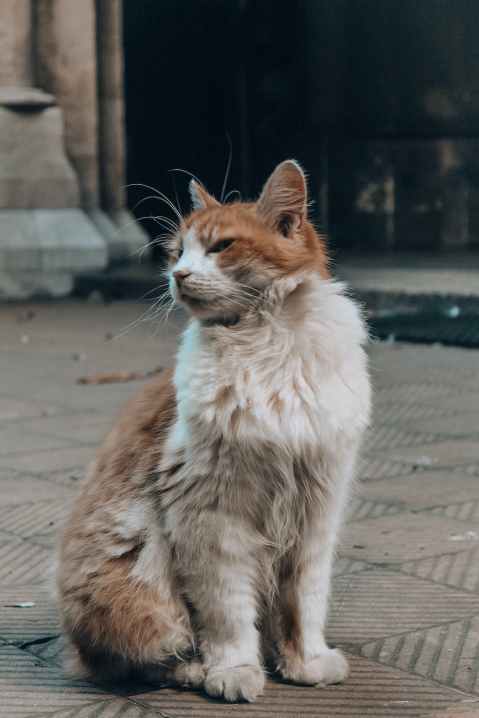
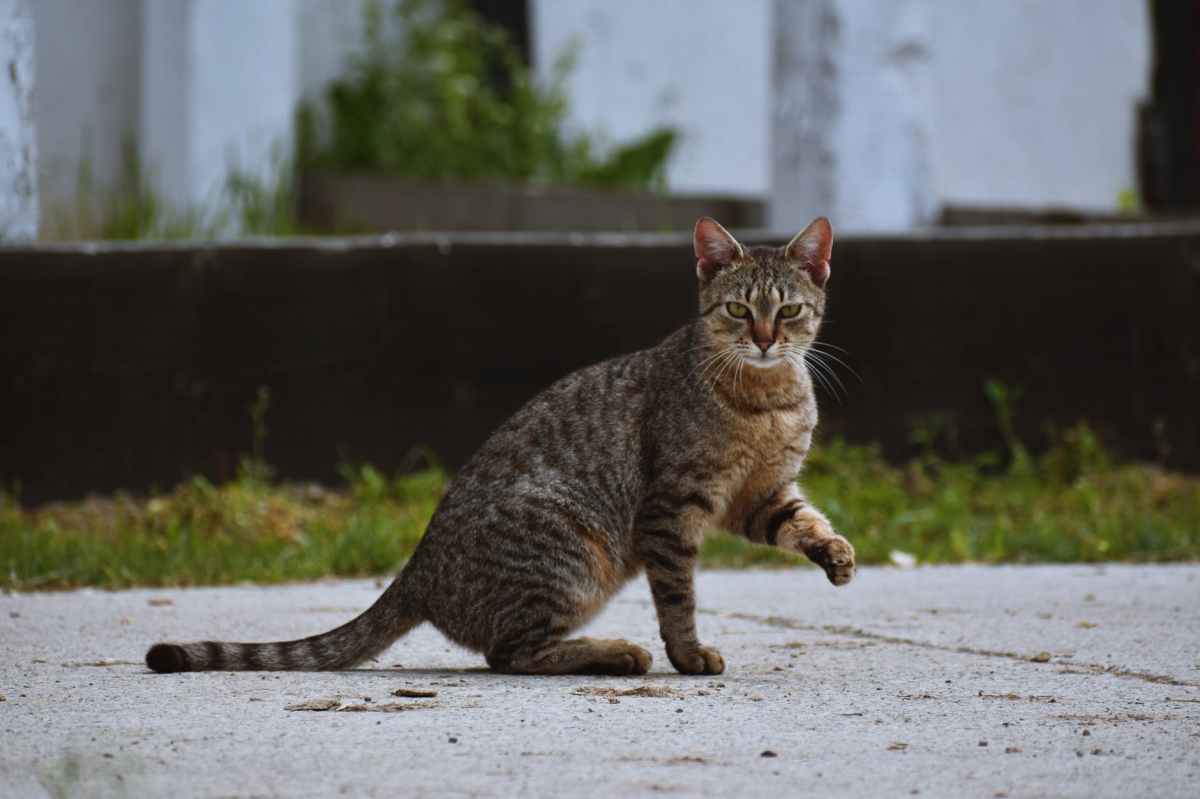
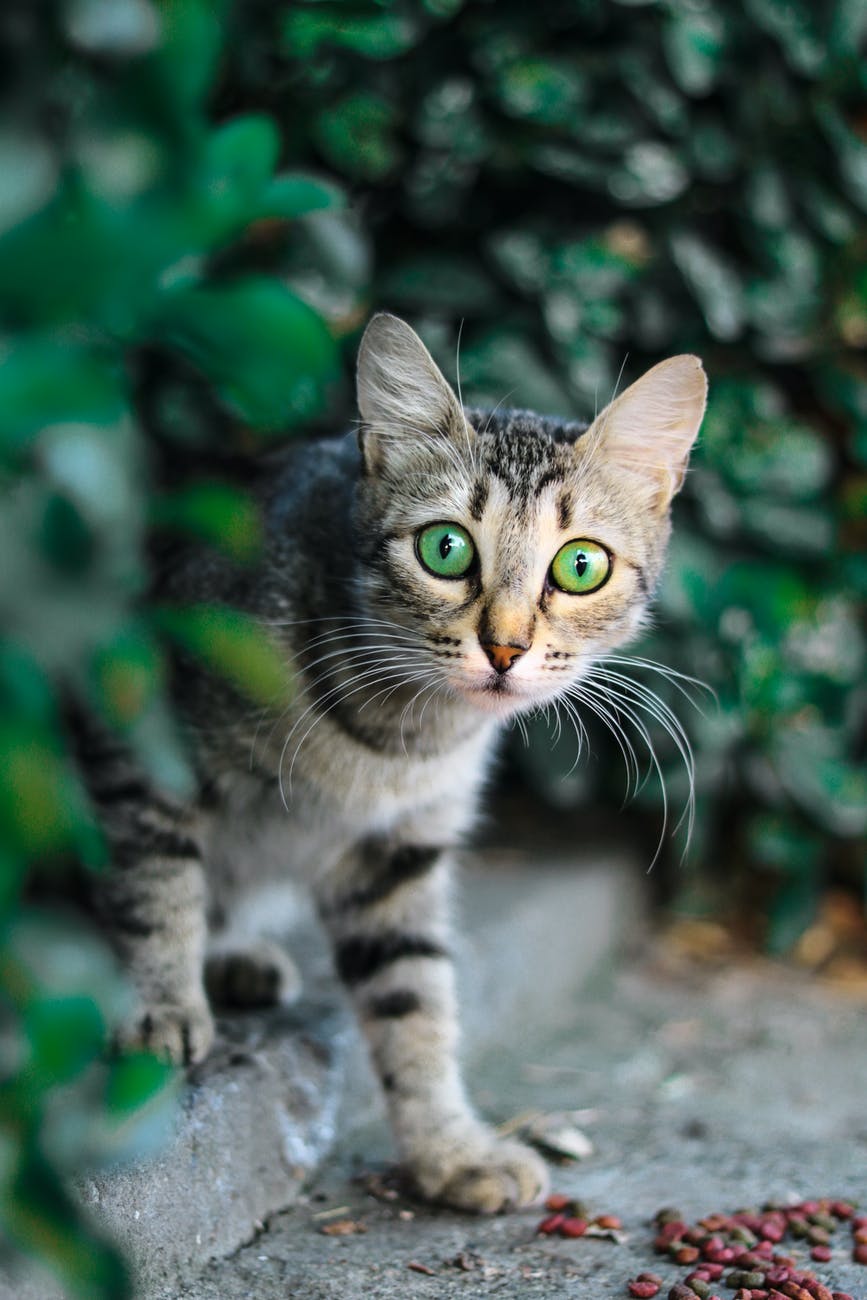
A “feeral ket.” Credit: Ferhan Akgu00fcn/Pexels
Still, as I’ve written in earlier posts, government intervention was inevitable without proactive measures. Australia’s cat lovers and caretakers would do well to voluntarily keep their pets inside, and to double their efforts to catch, spay/neuter and find homes for as many strays as they can.
If you live in Australia, you have until December to provide feedback to the federal government, and it’s probably a good idea to check with your local animal welfare groups, which are undoubtedly composing their own responses to the plan.
This is why we always say it’s better for cat servants to regulate themselves than allow the government to get involved.
A Karen in Australia issued a $280 fine to a homeowner for allegedly allowing his cats to roam — after she lured the kitties onto the street herself.
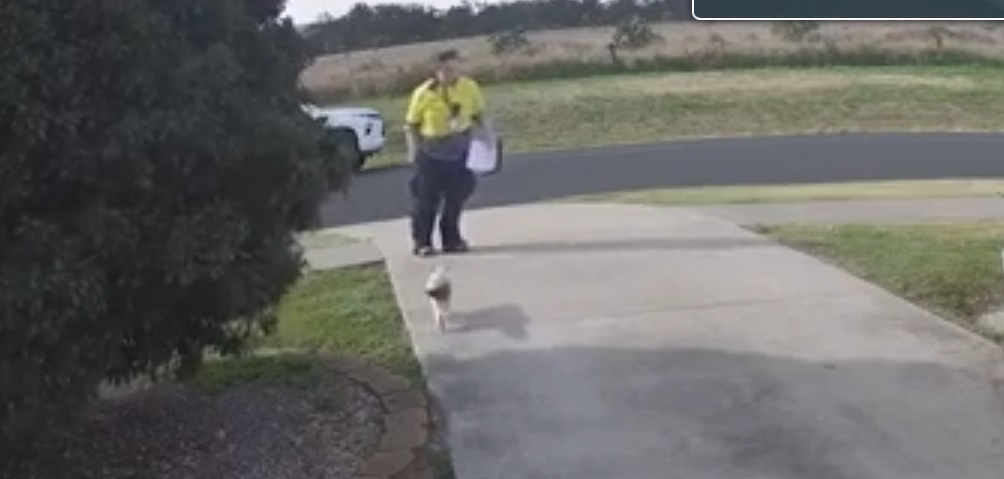
The entire bizarre spectacle was captured on security cameras at the home of Julie and Steven Stephens, a couple in Toowoomba, about 80 miles west of Brisbane. The uniformed Karen, who is employed by the Queensland council, totes a clipboard in one hand as she walks up the Stephens’ driveway in broad daylight.
As one of the curious cats approaches, Karen reaches for a pen in her pocket and starts scribbling on her clipboard, apparently eager to get started on the paperwork, before slowly backpeddling so the kitty will continue to follow her. When the cat reaches the sidewalk, the unnamed woman scoops it up and walks to her government-issued vehicle parked in front of the Stephens’ home.
Steven Stephens was watching the episode unfold via his camera system and bolted outside to stop the government employee from taking his cat, he told Yahoo News Australia.
The Karen wasn’t able to “impound” the cat, but she wrote Stephens a hefty fine for “allowing his cat to roam,” and promised she’d be back to inflict more misery.
“She said she would be back in two weeks with the police to take all but two of our dogs,” Mr Stephens said.
A municipal employee from the Queensland council is seen luring a cat away from its home in this still shot from surveillance video. Credit: Steven Stephens
We’re unable to embed the video, but you can watch it at Yahoo News Australia.
Unbelievably, Toowoomba Regional Council “CEO” Brian Pidgeon doubled down and quoted the relevant section of law on pet roaming when a local newspaper asked him about the incident. Pidgeon did acknowledge his employee was accused of luring the Stephens’ cat, but said he couldn’t talk about that because he’s conducting an “internal investigation,” which is bureaucrat-speak for figuring a way to worm his way out of the situation. There is, after all, clear video showing the Karen luring the cat away. There is nothing ambiguous about what happened.
Stephens admitted he and his wife have “too many” dogs according to local law, which has set arbitrary limits on animal custodianship, but said there are good reasons for that. The dogs sooth his wife, he said.
“A few years ago she had a severe car accident, her partner at the time died, she has a metal plate in her head and now has severe depression and anxiety,” Stephens said. “The dogs help with her anxiety.”
The family has been so rattled by the incident, and apparently has so little faith in their local government to treat them fairly, that they told Yahoo News they’re looking to sell their home and move to “a larger parcel of land in the bush.”
That in itself is an extraordinary admission, indicating they don’t expect basic courtesy, honesty or professionalism from the local authorities.
Now imagine how this would have played out if the Stephens family did not have security cameras. The council worker would have said their cats wandered off the family’s property of their own accord, and that would have been it. The Stephens would be forced to pay the fines, have a legal battle on their hands to get their cats back, and would be fretting over the impending confiscation of their dogs.
I know I sound like a broken record with regard to how local governments, guided by bunk “research” studies, impose themselves on pet caretakers, especially those of us who have cats. That’s why it’s important not to give them any reason to interfere — and to make sure everything is recorded, as the Stephens family wisely did.
Who knows what the government Karen’s motivations were. Was she trying to meet a quota? Does she dislike animals? Does she enjoy flexing the little bit of power she has, or inflicting misery on others? By preempting legislation on cat ownership and roaming, we can avoid putting ourselves at the mercy of such people in the first place, which is in the best interest of cat caretakers, and most importantly cats themselves.
Feline fact fail
I’m sure Nigel Barber, PhD., is a nice guy. I don’t mean to give him any grief. But when you present yourself as an expert on a topic and you write an authoritative column on a trusted site that has millions of readers, you really should make sure you’re not spreading misinformation or providing a picture of a situation that is decades behind the current science.
In a column for Psychology Today titled “Does Your Cat Love You?“, Barber rattles off a list of cliches, half-truths and outright falsehoods about cats, the kind of thing you might have expected 20 or 30 years ago before a wealth of research helped us dispel incorrect assumptions about felis catus.
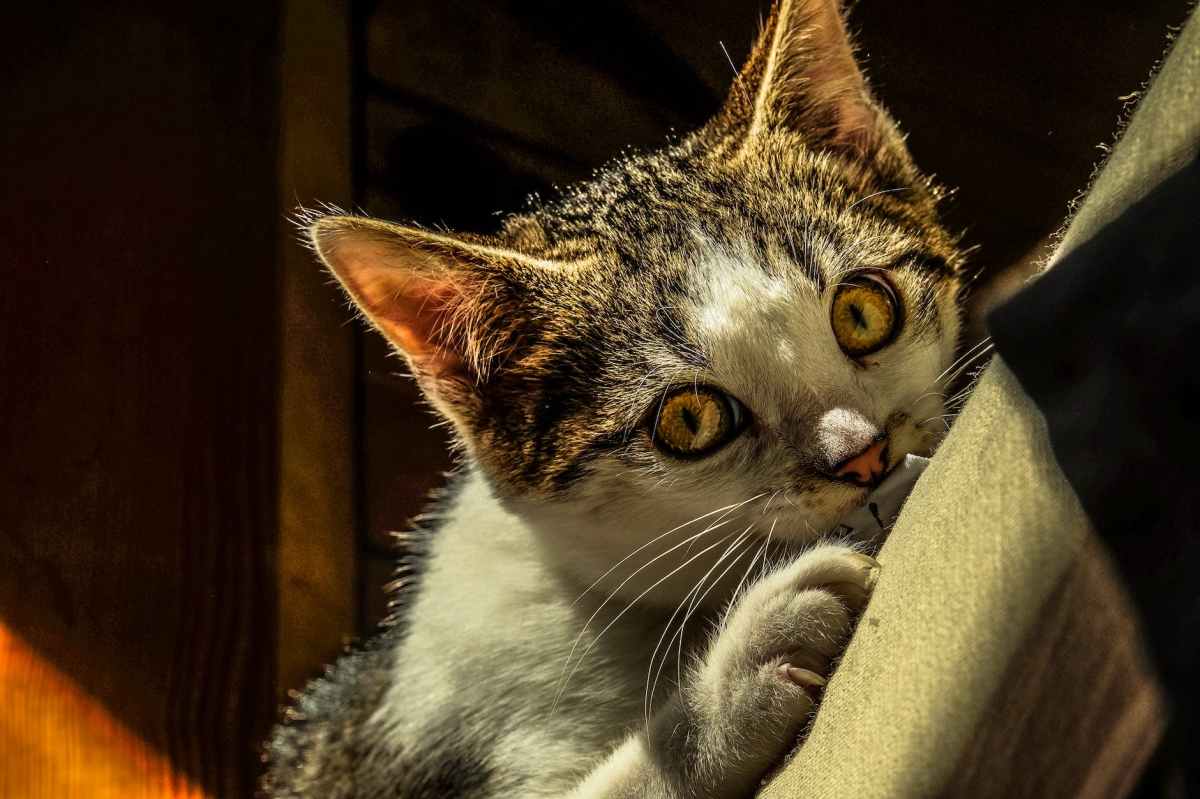
Credit: Sevra Karakuu/pexels
After mucking up the domestication timeline, Barber says cats are “fearful of people,” “tend to withdraw from strangers,” and paints an outdated picture of aloof animals who technically don’t need human care to thrive. He also says cats attack people, including their caretakers, without warning or provocation.
Then there’s this nugget:
“As essentially wild predators, cats can be quite unpredictable. Many owners who are devoted to their cats complain that the cat often scratches them unexpectedly. One acquaintance had the cat declawed and found that the pet reverted to using its teeth on her!”
Can you believe it?!?! A woman had her cat declawed, and the cat bit her!
It’s not just that we know cats give off plenty of nonverbal warnings when they’re uncomfortable, or that declawing makes a cat much more likely to bite. Organizations like the Humane Society, SPCA, The Paw Project and others have been saying that for years.
It goes well beyond that — studies, including the most comprehensive study to date on the effects of declawing, have proven without a doubt that cats are much more likely to bite when they’re subjected to the cruel and painful declawing procedure. (See “Pain and adverse behavior in declawed cats,” a 2017 paper in the Journal of Feline Medicine and Surgery.)
That’s because declawing a cat not only inflicts a lifetime of physical pain and psychological trauma, it robs felines of their primary defense mechanism, making them feel much more vulnerable. Without claws with which to warn off unwanted handling, the poor declawed cats have only one defensive weapon available to them — their teeth.
An evolutionary psychologist should understand that, and should also understand that scratching is a natural and necessary behavior for cats. It’s not right or wrong, it’s cats being cats. Mutilating innocent animals to protect inanimate objects like furniture is objectively wrong and cruel. When you adopt a cat, scratching comes as part of the package along with all the positives like unconditional love, amusing antics and calming purring.
There are ways to dissuade and train your cats to mostly avoid scratching furniture, but no one should expect their cats will never put a claw on their couches. If you don’t want your furniture scratched, don’t get a cat. End of.
Thousands of cat servants are suddenly feeling inadequate after a Twitter user showed off photos of their cat’s own custom bedroom, complete with an appropriately-sized bed, a bucket of toys and a TV.
“He actually goes in to nap and to watch birds on Youtube,” user Cinnamonbear9 tweeted, sharing photos of the unnamed tuxedo lounging on his own bed while watching TV.
Cinnamonbear9 said the project was just finished on April 12.
Thankfully, Buddy seems uninterested. Why would he want to downgrade to a tiny bedroom when my bedroom has essentially become his?
A California parks district is under fire for killing cats that allegedly strayed too close to protected marshland where birds winter.
Employees of a parks agency in California’s Bay area killed almost four out of every 10 cats that may have strayed close to protected wildlife areas, newly released documents show.
The East Bay Regional Park District (EBRPD), an independent government district that manages parks in Contra Costa and Alameda counties, found itself at the center of a growing controversy earlier this month after admitting its employees were shooting cats they claimed could be a threat to local wildlife.
When more than a dozen cats went missing, several local volunteers who care for colony cats in the area contacted the EBRPD for an explanation. Staff at the EBRPD initially told the caretakers they’d trapped the cats and brought them to local shelters.
But when Cecilia Theis, one of the cat caretakers, contacted staff at nearby rescues and shelters, they said they hadn’t taken in any strays from the EBRPD.
“I immediately stopped what I was doing and searched for them,” Theis wrote in a letter to the EBRPD. “The cats I cared for were never taken to the shelter. [An EBRPD employee] even described the cats.”
It wasn’t until KGO, the local ABC news affiliate, began asking questions that the EBRPD admitted its “conservationists” had shot and killed the cats, claiming the stray felines ventured too close to a protected marshland where endangered bird species migrate for the winter. The marshland is located within the Martin Luther King Jr. Shoreline, a regional park managed by the EBRPD.
The Martin Luther King Jr. Shoreline / Credit: Bay Nature Institute
News of the district’s cat culling first broke on Dec. 8 when KGO aired a segment on the controversy. The EBRPD told the news agency that it had the right to cull animals that represent a threat to wildlife, per an old policy that local rescues, shelters and colony managers weren’t aware of.
District staff eventually admitted they killed 18 cats in 2020.
Despite press enquiries and public records requests, the district still has not provided details about the cat culling. It’s not clear how the district’s staff determines whether an individual cat represents a threat to local wildlife, whether there are protocols or standards governing the use of lethal force against stray domestic animals, or even what kind of firearms were used.
“I was heartbroken,” Ann Dunn of Oakland Animal Services told KGO. “Yeah, I was heartbroken, just knowing that that there’s no reason that that needed to happen.”
“We certainly didn’t realize they were doing what they were doing, otherwise we would have reached out sooner,” Dunn added.
The EBRPD has not responded to public records requests by KGO. Government agencies in California are required by law to respond to public records requests within 10 days. If they decline to release the requested records, they must provide a compelling reason why the information cannot be shared with the public, per open records laws and government transparency best practices.
Open records laws are arguably the most crucial tool used by media organizations, public interest groups and regular people who want to keep tabs on what their tax dollars are used for and how government offices are run.
Additionally, records provided by the EBRPD are incomplete. A document that is supposed to provide a full accounting of animals killed, trapped and caught by the EBRPD over the past three years is missing details on many of the incidents, and the numbers don’t add up with the district staff’s public statements.
The data was obtained through a public information request by Theis and shared with this blog. Additional public information requests are pending.
DOCUMENTS: PDF of the East Bay Regional Parks District records on cat culling: (Click to view full size)
Between 2018 and mid-December of 2020, the EBRPD dealt with 62 incidents involving cats. The district’s records say its “conservationists” shot and killed 24 of those cats. The remaining 38 were caught or trapped, meaning 39 percent — about four in 10 — of cats identified as potential threats to local wildlife were shot rather than trapped or caught by hand.
However, the documents list only 14 cat shootings in 2020, and only 13 during the time period when officials say they killed 18 strays. The documents list one cat shot in 2018 and eight cats shot in 2019.
Others have noticed the discrepancies as well. A Change.org petition started by Cassidy Schulman has almost 46,000 signatures and includes statements urging the EBRPD to come clean on the controversy.
“How can they claim that they communicate openly and honestly with the public they serve when they (separately and on more than one occasion) told Cecelia and another colony caretaker that they had not killed the cats, but had taken them to shelters in Oakland and Dublin?” Schulman wrote on the petition page. “Most of the colony cats were not only spayed, neutered and vaccinated – they were also microchipped by Fix Our Ferals. Had even a single one arrived alive at any shelter or veterinary hospital, they would have immediately been scanned for chips, and the organization would have been notified.”
In her letter to the EBRPD, Theis complained that a staffer there “even went so far as to pretend she was looking for paperwork” when pressed about what happened to the colony cats. Another employee told Theis the paperwork hadn’t been sent to the shelters because of COVID restrictions. That same employee told Theis four cats “had to be shot” because they were sick.
But those explanations were abandoned by the EBRPD when KGO’s reporters began asking about the fate of the cats. That’s when the staff admitted they’d killed 18 cats, including 13 at the Martin Luther King Jr. Shoreline.
While the EBRPD itself said it won’t rule out killing more cats, members of the board that oversees the EBRPD have pledged to end the practice.
“The Park District appreciates all animal life but is required by law to protect threatened and endangered wildlife living in District parklands,” EBRPD spokesman Dave Mason told SFGate. “It is imperative that the public understands that feral cats are not part of a healthy eco-system and feeding them only serves to put endangered wildlife at risk.”
The EBRPD’s cat-killing policy — and similar efforts by states and municipalities in the US and other countries — are influenced by a series of studies claiming cats are one of the biggest factors leading to the extinction of endangered species of birds and small mammals.
However, the claim that cats are a major contributor to bird extinction is controversial.
“Conservationists and the media often claim that cats are a main contributor to a mass extinction, a catastrophic loss of species due to human activities, like habitat degradation and the killing of wildlife,” a trio of academics wrote this summer. “As an interdisciplinary team of scientists and ethicists studying animals in conservation, we examined this claim and found it wanting.”
Other scientists challenge the claims that cats are the primary cause of species extinction among birds and small mammals.
There is no direct evidence that felis catus — domestic cats — are a major driver of extinction. A handful of studies that purport to show a connection are not based on observational or even secondary data. Instead, they rely on guesswork and numbers cobbled together from unrelated studies.
Most of the studies use aggregate data taken from earlier studies that did not measure the ecological impact of stray, feral and outdoor cats. For example, one paper used GPS data from an earlier study in which cats had devices affixed to their collars to track their movements.
But that earlier study did not include any information about the cats’ hunting activities, so the authors of the meta-analyses handed out questionnaires to cat owners asking them to rate their cats’ hunting skills on a five or 10-point scale.
The authors took the GPS data and the questionnaire results, calculated an estimated number of prey animals killed per cat annually, then extrapolated that data based on an estimate of more than 100 million stray/feral cats living in the US, even though that number could be off by as much as 80 million.
The result — a claim that cats kill up to 20 billion birds and small mammals in the US each year — is based on so much guesswork and arbitrarily plugged-in numbers that it’s worthless from a practical perspective. Yet that hasn’t stopped credulous press outlets from reporting the numbers as fact, or authorities from using such studies to justify extreme measures against stray and feral cats.
Because lives hang in the balance, and public policies are directly influenced by these studies, cats deserve better than guesswork.
CORRECTION: Earlier posts incorrectly labeled the East Bay Regional Park District as a California state agency. It is in fact a special district founded in 1934, and serves Alameda and Contra Costa counties.
Wildlife conservationists should work with cat lovers instead of making enemies of them in the ongoing quest to protect small wildlife from felines. Cat owners, in turn, can show good faith by being more responsible about spaying and neutering, and by keeping their cats indoors.
Wildlife conservationists are worried, and they have a right to be.
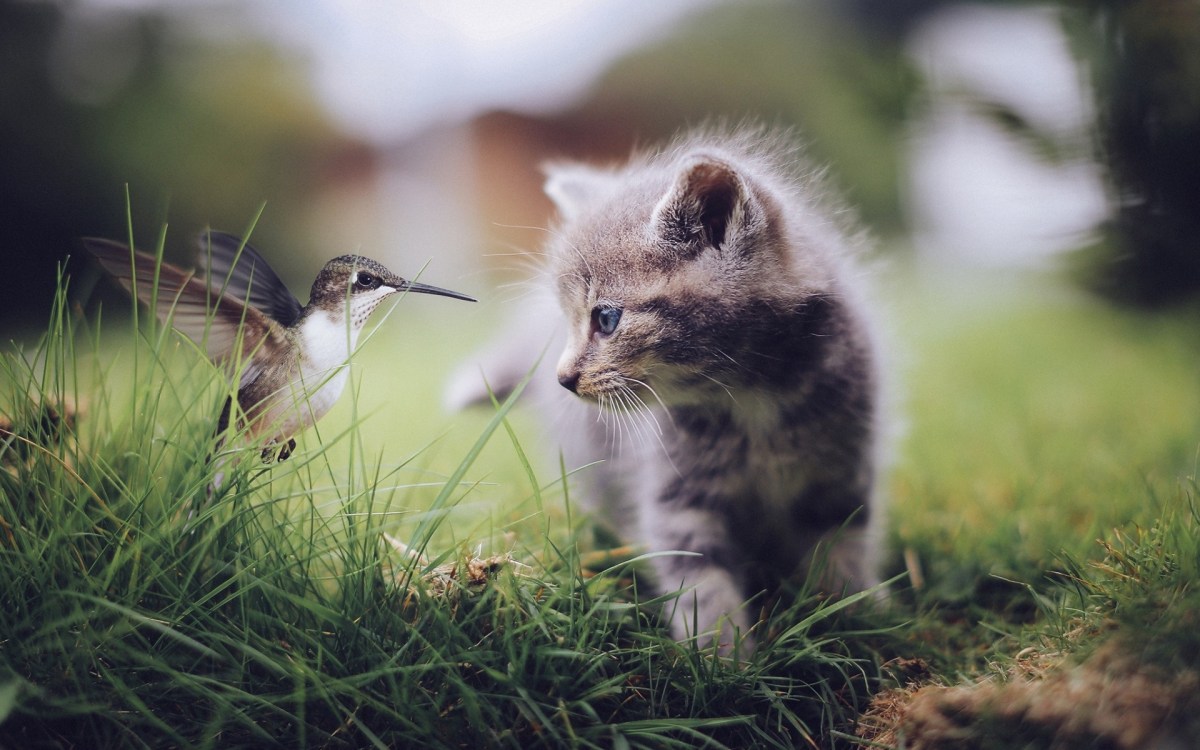
In addition to the billions of animals we humans kill every year in our ruthless exploitation of life on this planet, our pet cats have their own separate impact, killing birds and small mammals in significant numbers.
Yet conservationists aren’t making headway with cat lovers, primarily because their approach frequently relies on shaming and drastic, often cruel proposals: Some Australian states are outright culling cats, offering $10 a head for adults and $5 for kittens, for example, while a pair of academics from the Netherlands advocate criminally prosecuting cat owners who let their pets outside combined with a policy of euthanizing millions of cats. Extremists in the US are pushing for similar measures, arguing that TNR (trap, neuter, return) isn’t an effective way of managing cat populations.
Something has to be done, and a few smart conservationists are realizing the accusatory, Richard Dawkins-style of engaging “the enemy” just causes people to withdraw, not to listen and cooperate.
“I get quite sick of the conflict focus of some conservation biologists,” Wayne Linklater, chairman of the environmental studies department at California State, tells New Scientist. “The solutions lie with the people who care most about cats, not with the people who don’t care about them.”
Great. Now there are a few things conservationists should know as they engage with people who care for cats:
Most of us want what you want: We want cat owners to keep their pets inside. Cats aren’t wild animals. They have no “natural habitat” and contrary to misconceptions, they don’t belong outside. They’re not equipped to provide for themselves, and they face dangers from traffic, predators like coyotes and mountain lions, fights with other cats, and perverse humans who kill and torture them for fun. Strays and ferals live short, brutal lives (living to an average of 3.5 years) while indoor cats live 17 years on average. The “cats belong inside” angle is common ground from which to start a dialogue.
Stop repeating bunk studies as fact! The idea that cats are an all-consuming plague on wildlife came about as a result of a handful of studies, yet all but the most recent of them are based on old data and manipulated numbers compiled by people with an agenda. One of the earliest studies, which claimed cats kill up to 3.7 billion birds and 20.7 billion mammals annually, relies so heavily on invented numbers and massaged data that it’s worthless and outright dangerous to informed discourse on the topic, yet it’s repeated as fact by credulous conservationists and the press. Knowing the true scope of the problem is key to understanding whether mitigation efforts really work. Misinformation only sabotages those efforts.
Come get your people: Peter Marra is one of the co-authors of the bunk 2013 Nature Communications study with the above oft-cited numbers, and he’s also the author of the shrill Cat Wars: The Devastating Consequences of a Cuddly Killer. Marra is an advocate of using taxpayer money to kill millions of cats. He also says that anyone who questions his claims about cats — a group that includes major animal rescues, welfare organizations, and many academics — is tantamount to climate change deniers and tobacco companies that denied for decades that cigarettes have a negative effect on health. Marra’s major contributions amount to sowing misinformation, polarizing the issue and inflaming opinions on both sides. Everything about his behavior indicates he wants to sell books and promote himself, not save wildlife from predatory domestic cats. He should not be taken seriously and his research should not be reported as fact.
Cat lovers are, by definition, animal lovers. They’re people who care about wildlife and domestic animal welfare. It shouldn’t be difficult to engage with them.
At the same time, cat advocates need to purge the crazies out of their ranks as well. Sending death threats to scientists (see the New Scientist link up top) is way out of order, it’s inhuman behavior and it only hurts the legitimacy of our cause.
A good first step toward reconciliation could involve enlisting cat owners in an effort to properly study feline impact on small wildlife, producing reliable data to facilitate a measured, fact-based approach that doesn’t begin and end with the notion that cats are hellspawn.
If all sides engage in good faith, there’s no reason why we can’t protect wildlife and cats.









 Pain In The Bud