
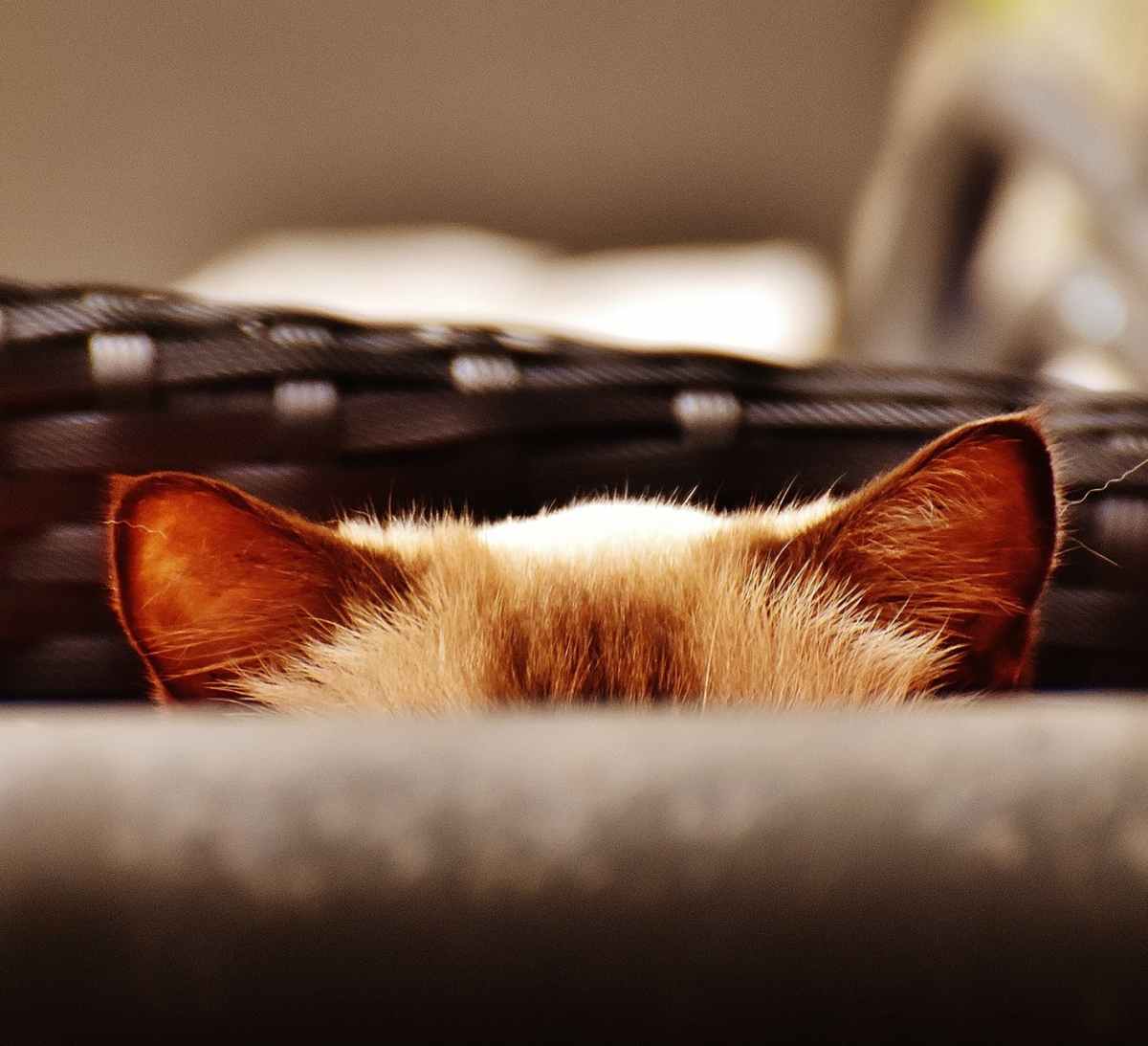
Quite a few of our “spot the cat” posts require eagle eyes, but today we’re cranking up the difficulty by orders of magnitude.
You might ask yourselves, “Is there really a kitty in this picture?” I’m stumped!
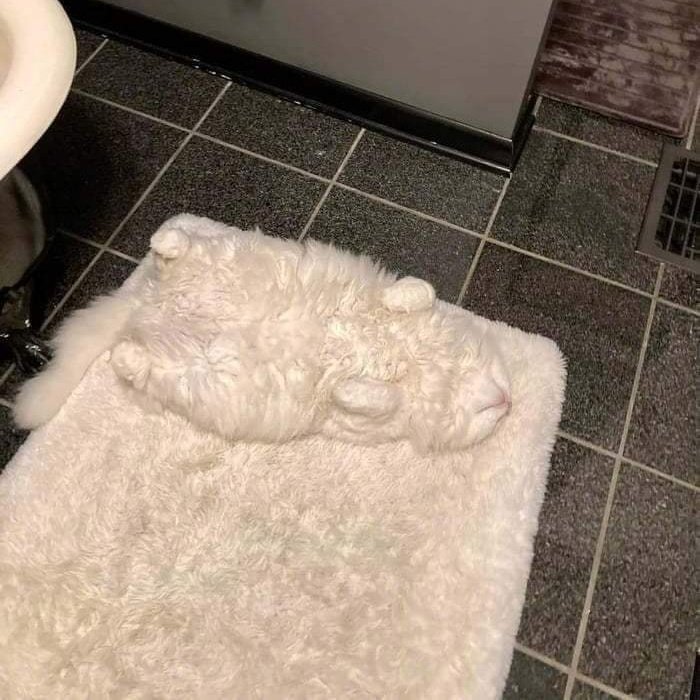
Find the cat yet? He’s clearly a ninja!
Only one in a thousand people are able to find the cat in this photo.
Quite a few of our “spot the cat” posts require eagle eyes, but today we’re cranking up the difficulty by orders of magnitude.
You might ask yourselves, “Is there really a kitty in this picture?” I’m stumped!
Find the cat yet? He’s clearly a ninja!
AI can create photorealistic images of cats as well as humans.
After a few days of patiently waiting, we finally have a winner in our unofficial contest from earlier this week.
Reader Romulo Pietrangeli got it right: None of the cats pictured in our April 13 post are real felines.
All nine images were created by the machine learning algorithm that powers the site This Cat Does Not Exist, a riff on the original This Person Does Not Exist, a site that uses generative adversarial networks (GANS) to create stunningly realistic images of people on the fly.


(Above: All six images above are computer-generated using the same technology behind ThisCatDoesNotExist.)
Phillip Wang, the 33-year-old software engineer behind both sites (and a few others using the same tech and concept), explained to Inverse in an earlier interview why he created ThisPersonDoesNotExist.
“I’m basically at the point in my life where I’m going to concede that super-intelligence will be real and I need to devote my remaining life to [it],” Wang said. “The reaction speaks to how much people are in the dark about A.I. and its potential.”
Because the internet is ruled by cats, it was only a matter of time before a feline-generating version of the human-creating algorithm was brought online.


(Above: More artificially-generated cats. Artefacts in the images can sometimes give away the fact that they’re fake, such as the third image in the second row, where part of the cat’s fur is transparent.)
A CNN article from 2019 explains how GAN technology works:
In order to generate such images, StyleGAN makes use of a machine-learning method known as a GAN, or generative adversarial network. GANs consist of two neural networks — which are algorithms modeled on the neurons in a brain — facing off against each other to produce real-looking images of everything from human faces to impressionist paintings. One of the neural networks generates images (of, say, a woman’s face), while the other tries to determine whether that image is a fake or a real face.
Wang, who said his software “dreams up a new face every two seconds,” told CNN he hoped his creations would spark conversation and get people to think critically about what they see in front of them. It looks like he’s achieved his goal.
Christopher Schmidt, a Google engineer who used the same technology to create fake home and rental interiors, agreed.
“Maybe we should all just think an extra couple of seconds before assuming something is real,” Schmidt told CNN.
Pietrangeli, for his part, says he can tell the difference: “All of the animal images,” he wrote, “lacked ‘aura.'”
How can you tell a rel cat from a computer generated cat?
There’s a new tool that uses algorithmic artificial intelligence to create random images of cats, and the results are virtually indistinguishable from the real thing.
Can you tell which cats are real and which ones are computer-generated? (Kindly share your answers in the comments, numbering them from left to right. The person with the best score gets bragging rights!)


We’ll follow up with the answers after everyone’s had a day to make their guesses or informed choices, as it were.
The algorithm was created by a process called machine learning, which you’ve probably heard at some point even if you haven’t sought out information about artificial intelligence.
In simple terms, machine learning means the creators fed massive amounts of data — millions of photos of cats — to the software algorithm. The algorithm analyzes the data and learns how patterns in the data create accurate images of felines.
Crucially, the algorithm never learns what a cat actually is. It doesn’t know a cat is an animal in the real world. It doesn’t know what the real world is, and it doesn’t know what animals are. All it knows is that data, organized a certain way, produces images that look like the photos it’s been fed.
That’s a key difference because, while we have made huge strides with machine learning, that’s not the kind of artificial intelligence the Elon Musks of the world freak out about when they smoke pot and watch The Matrix. We’ll never have to worry about our cat-generating algorithms rising up and eliminating humanity. 🙂
Artificial general intelligence — or AGI — is the potentially dangerous form of AI, but that’s a whole other piece of business: It involves recreating consciousness and the mind on a machine substrate.
We can’t even define consciousness and we know shockingly little about how the brain works, so that’s not happening any time soon. And even if we could it off, there’s a growing body of evidence supporting the concept of embodied cognition. That’s the idea that the mind cannot be separate from the brain, and the brain cannot be separate from the body, as well as a recognition that everything from pain signals to gut flora has an effect on our cognitive routines.
The bottom line: “AI” can get pretty good at making pictures of cats, but it’s not taking over the world any time soon.
Buddy wants YOU to feature your cat on Pain In The Bud!
The only thing better than cats is, well, more cats.
That’s why we’d like to introduce a new feature in which we profile our readers’ little buddies. It’s a win-win: You get your unique kitty featured on the blog, and the rest of us get to see more cats.
Buddy, in his infinite wisdom and generosity, has allowed me to implement this feature, “as long as the other cats don’t upstage me.” I also had to bribe him by promising to buy him a pirate eyepatch and a plush canary for his shoulder.
Interested in having your kitty featured? Head to the contact page, say hello and tell us a little bit about your cat. We’ll respond with a handful of questions. We’ll also need at least three good, high-res images of your cat, so have them ready to send when we correspond. (Don’t worry if they’re not pro quality! Mostly we’re looking for clear, close shots.)
That’s it! Right now the plan is for this to be an occasional feature, but if we get enough responses we’d be delighted to make this a regular weekly or twice-weekly thing.
All photos in this post courtesy of Pexels.


Kitty does NOT want a hug.
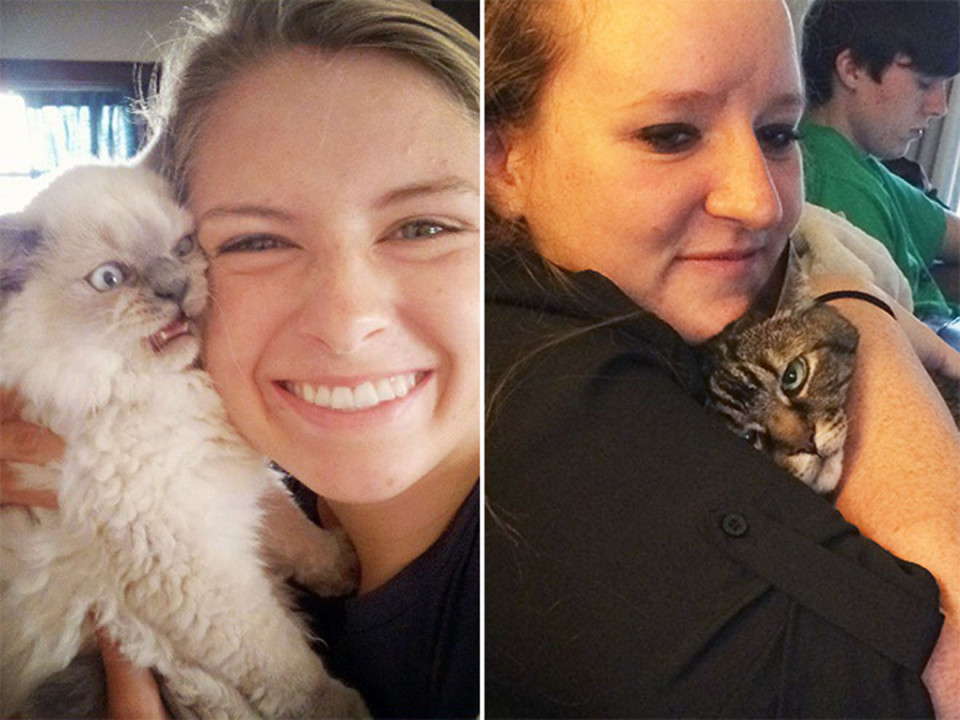
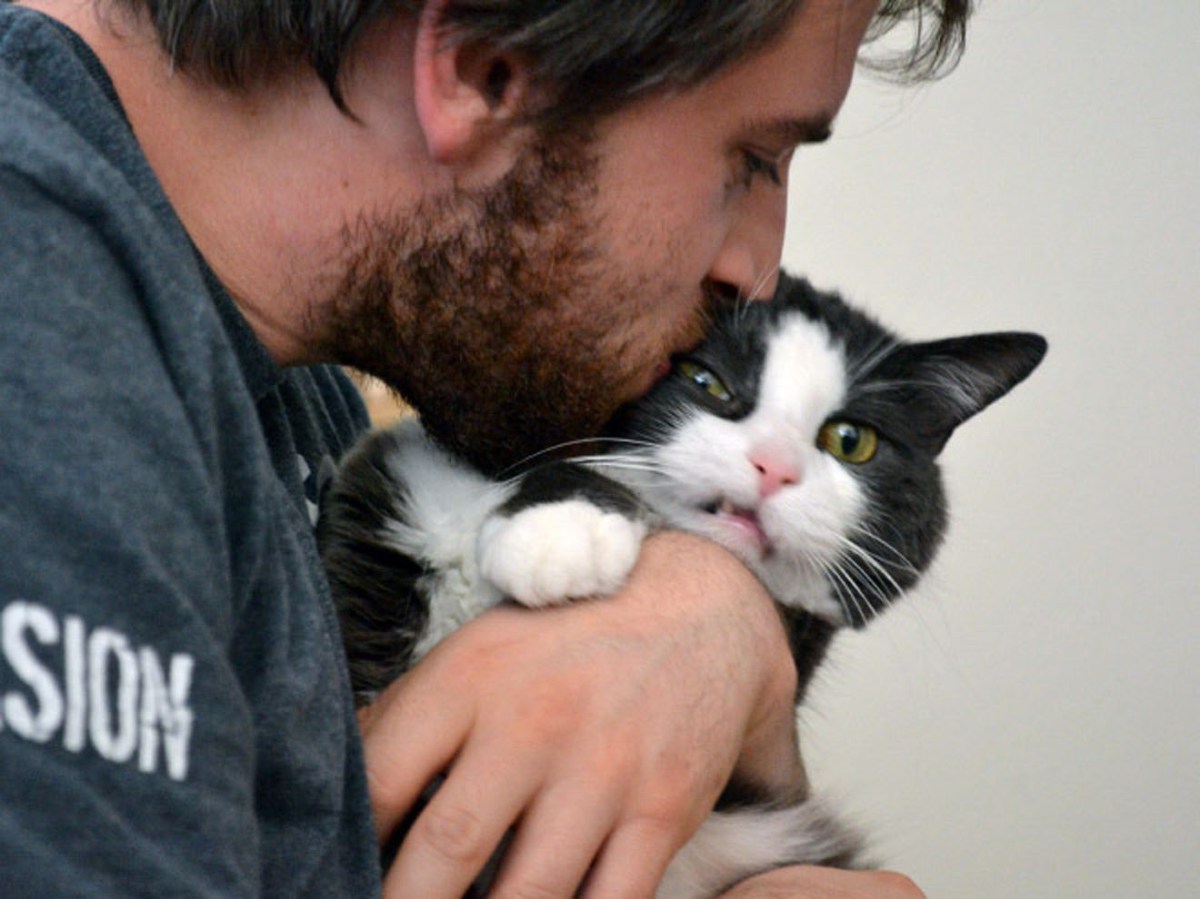
The Daily Mail has an amusing photo gallery of cats looking annoyed as their human servants pull them in for hugs.
Some of the cats have unmistakably disgusted looks on their faces, some use their paws to push their people away, and a few even sink their teeth into their humans when the latter prove themselves oblivious to every other form of communication.
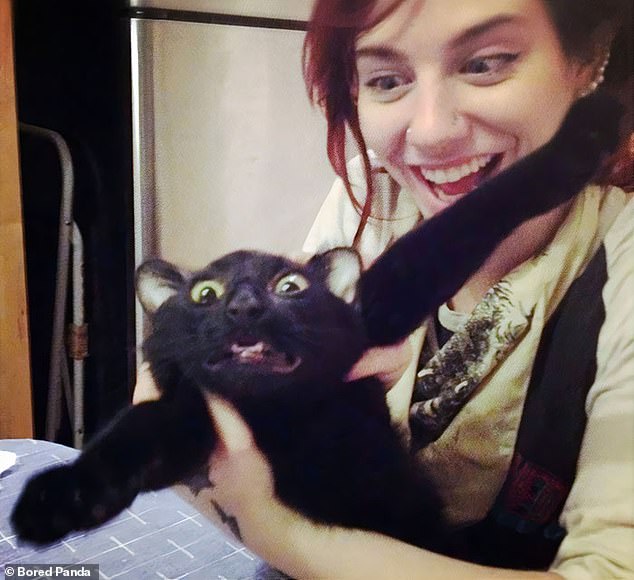
I’d like to think most of the people pictured aren’t experienced caretakers, because while every cat is different, as a general rule cats aren’t fond of hugs. That should be apparent almost immediately to anyone who bonds with a cat.
Why? Because cats don’t like feeling restricted, and to them, a hug is an animal 10 to 25 times their weight manhandling them and preventing them from leaving under their own power.
Cats aren’t comfortable with that for the same reason they don’t like being cornered and having their escapes blocked.
Of course we all understand the impulse to hug cats. They’re small, cute, fluffy little animals who behave a lot like furry toddlers and amuse us with their endearing quirks.


But as with petting, if you want your cat to enjoy hugs, your best bet is to allow kitty to come to you and seek affection on her own terms.
In short, treat them like the living beings they are and respect their feelings. They’re not pillows.
I try to limit my unsolicited petting to a quick chin-scratch or head rub in passing. If Bud wants more, he lets me know. By respecting his boundaries I’m also letting him know that approaching me when he does want affection will result in a stress-free experience: The little dude will climb onto my shoulder or pad up onto my chest, his entire body vibrating with his powerful purring, and nuzzle his cheek against me.


That’s his way of letting me know he’s in the mood to have his head and cheeks rubbed and his chin scratched. Often I’ll just hold out a hand at first, letting him guide my hand to the top of his head.
That builds trust so that when Bud is relaxed and lays down on my chest, I can hold him for a few minutes and rub his head as he purrs. He knows I’m not going to stifle him.
That’s how you hug a cat. Many dogs seem to enjoy getting scratches and pets any time, indefinitely. Cats don’t.
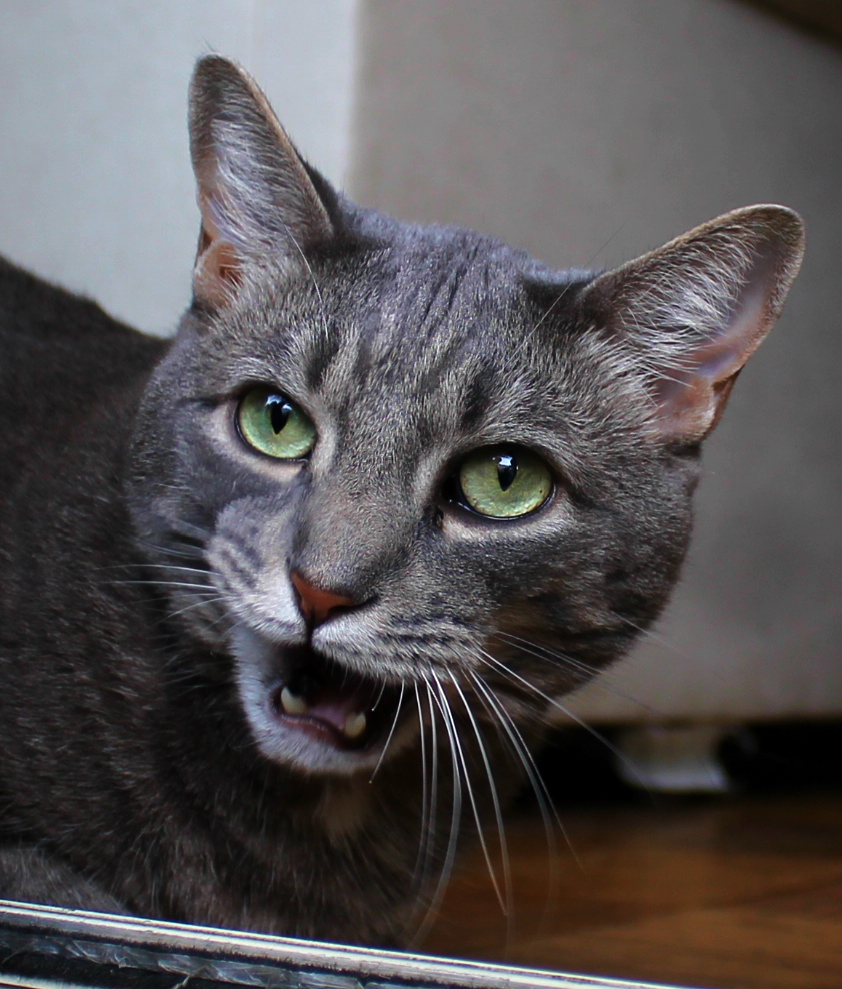
Again, cats are like humans — they each have their own personalities, likes and dislikes. Learning them shouldn’t be difficult, but one thing is universal in feline-human relationships: The more trust you build, the more your cat will seek you out and want to spend time by your side.

 Pain In The Bud