This Cat Loves Corn Like Buddy Loves Turkey

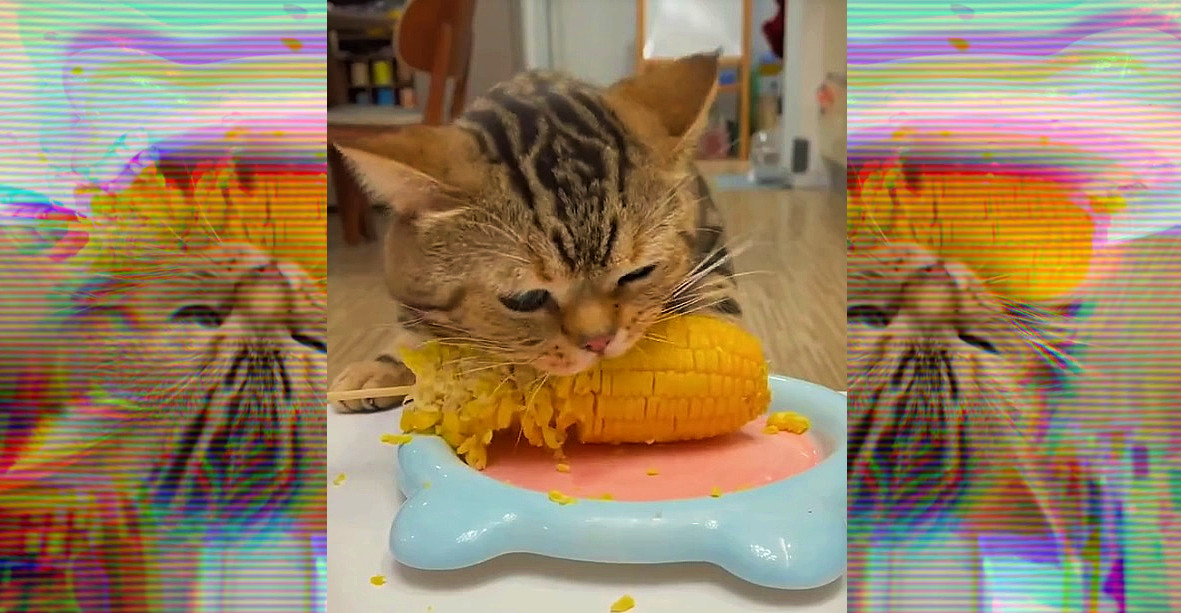
The English language does not provide the means to properly state how much this cat loves corn. To quote Dave Chappelle: “Look at him, he loves it!”

This isn’t just a video of a cute cat eating corn.

It’s a video of a cute cat who gives a cry of joy when he sees his human plop corn a cob of corn onto his plate, then tears into it with such gusto that he half-purrs, half-growls as he devours his yums. Seriously, make sure you turn the volume on, it has to be heard to be believed:

The Corn Kid, famous for declaring “When I tried it with butter, everything changed…I can’t imagine a more beautiful thing!” might be given a run for his money by this cat.

And if you haven’t heard about the Corn Kid, well, make your day brighter by checking out this songified version by the same guys who created a ridiculously catchy pop song out of the Bed Invader news segment back in 2010:

In case you’re wondering, corn won’t kill your cat. In fact, as veterinarians point out, your cat probably eats corn regularly because pet food companies use the stuff as filler in cat food despite the fact that, as obligate carnivores, cats don’t really get any nutritional value by eating it. However, it’s not meat, so if your cat likes corn, you should give it to kitty only in moderation as too much can cause an upset stomach and digestive problems.

Yes, It’s Safe For Your Feline Friend To Eat Catnip

It turns out catnip has a different effect when cats eat it instead of sniffing and rolling around in it.

Is it safe for a cat to eat catnip, and does eating it instead of sniffing it make any difference to the kitty?

I wondered about that while watching Buddy enthusiastically lap up some silver vine and ‘nip yesterday afternoon before he drifted off to nirvana.

If you’re worried about whether it’s safe, don’t be. While most cats tend to sniff or roll around in the stuff, there’s nothing in catnip that can harm them according to veterinarians.

The worst that can happen is a mild stomach ache from eating too much of the good stuff.

As for whether ingesting vs sniffing makes any difference, it turns out it does.

When catnip hits the olfactory receptors, it works as a stimulant, prompting energetic, playful behavior.

But when it’s ingested, catnip has the opposite effect, working as a sedative. Felines who eat the ‘nip become more relaxed, often drooling or drifting off for a nap.

Buddy on catnip
“I think…I’m pretty sure I’m feeling it. Oh yeah! Break out the laser pointer and the snacks!”

That makes perfect sense given my own observations. As a feline who eats catnip, Bud will still play, but he’s lazy about it. Instead of ambushing and tackling his wand toys he’ll just pad up to them, drop to the floor and lazily paw at the plush toys at the end of the string, occasionally biting or rabbit-kicking them.

When all else fails, the laser gets him moving.

Regardless of whether your cat sniffs or eats the good stuff, the effects are relatively short-lived and wear off after about 15 minutes.

Catnip is safe for your furry friends and it’s a great way to help make an indoor cat’s life more exciting.

A Woman Wanted This Gorgeous Kitty Euthanized For Litter Box Issues

A veterinarian realized kitty was healthy and put her in the care of a local no-kill shelter, where she remains while hoping for a forever home.

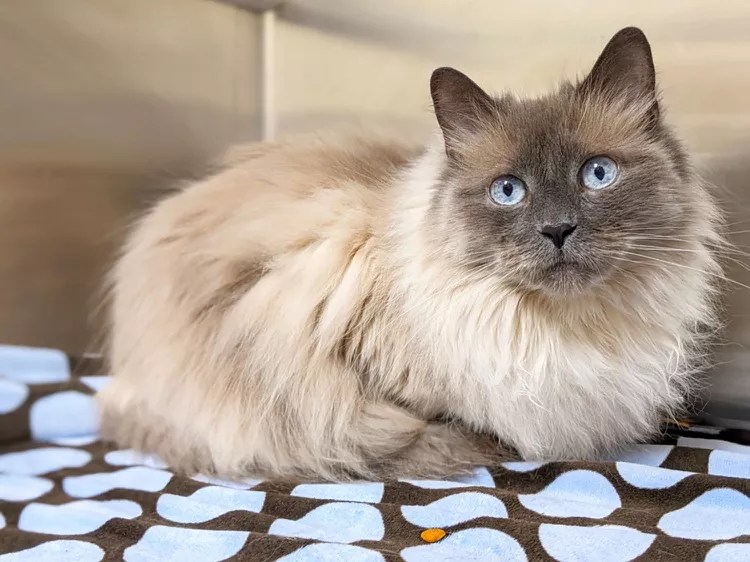
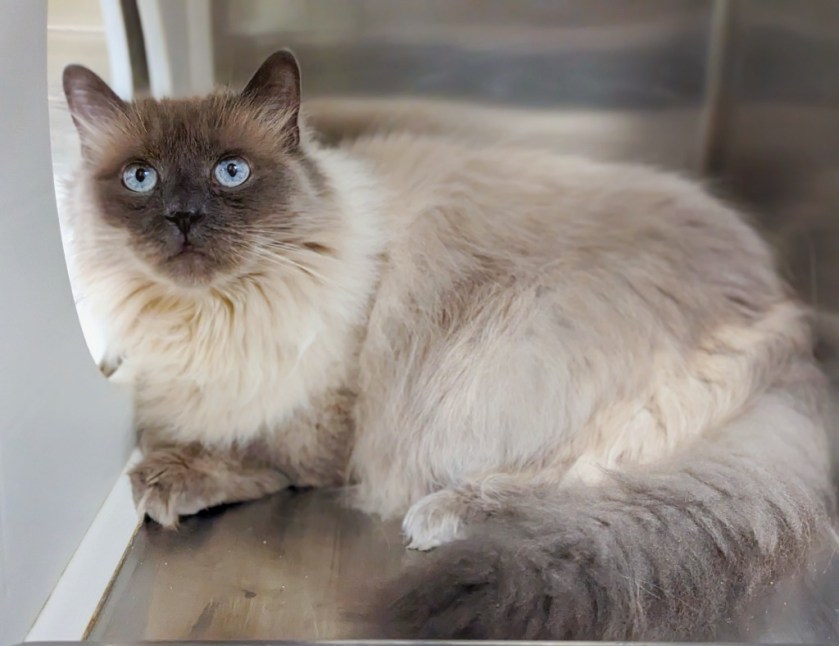
Lulu is 13 years old and began eliminating outside her litter box last year after a long life of doing her business properly.

Instead of realizing that a change in behavior was almost certainly precipitated by health issues — and attempting to get those issues sorted out — Lulu’s “owner” brought her to a veterinarian to be euthanized.

The vet realized Lulu was healthy and her issues were easily remedied, wisely persuaded the woman to sign over ownership of Lulu and brought the Himalayan to the local SPCA. She’s been there since December.

Lulu had urinary crystals which were remedied after a change in diet, and she hasn’t had an “accident” in months.

Staff at the SPCA want people to know that they don’t have to surrender a cat for litter box issues or other behavioral changes even if they think they can’t afford veterinary treatment.

“If your pet is not behaving or their behavior has changed, the first step is to get them to a vet to see if something is medically wrong. Even if it is not a medical condition, there are numerous resources — many available at Dutchess County SPCA — to help resolve the issue and avoid both euthanasia and surrender to a shelter,” Lyne Meloccaro of the Dutchess County SPCA told People. “Medical assistance, expert guidance, and management plans, and training referrals are all available for you.”

Lulu
Lulu has a regal bearing, an epic coat and beautiful coloring. Credit: Dutchess County SPCA

Dutchess County, which is about 75 miles north of New York City, happens to be the former college stomping grounds of Big Buddy. I graduated from Marist College and lived in the area for some years after. The SPCA there does good work, and its law enforcement division has handled some high profile animal-related crimes over the years.

It’s sad that Lulu lost her home after 13 years, but maybe it’s for the best if she ends up with a devoted servant who will really love her. Her caretakers at the SPCA say she’s stubborn, demands affection on her own terms and wants an “emotional support human.”

Lulu is still available for adoption. The SPCA says she’ll do best as an only cat in a quiet household, and we have no doubt she’ll bring joy to the lucky person who brings her home.

Maryland Joins New York In Banning Barbaric Declawing Procedures

Two down, 48 to go.

Two U.S. states have now banned declawing as ‘Merica inches closer to joining the rest of the civilized world in prohibiting the brutal practice.

With a stroke of Gov. Larry Hogan’s pen, Maryland became only the second state to ban declawing, joining New York, which outlawed the practice in 2019. Like New York’s version, the new Maryland law prohibits declawing unless it’s deemed medically necessary.

As most cat lovers know, declawing isn’t the manicure-like operation it sounds like. It’s the totally unnecessary, horrific amputation of a cat’s toes up to the first knuckle.

Declawing inflicts a lifetime of pain on cats, changes feline gait and posture, leads to early arthritis and causes a long list of secondary problems. For example, declawed cats are much more likely to bite because they have no other form of defense when they feel threatened, and they’re also much more likely to stop using litter boxes because it hurts to walk on the sand-like and granule texture of the litter with half-amputated toes.

The fact that so much misery is inflicted on innocent animals to protect furniture is indefensible.

The law goes into effect on Oct. 1, and veterinarians who perform the procedure after that time face fines of $1,000 and disciplinary action by the state veterinary board. We’d have preferred immediate implementation and stiffer penalties to prevent a last-minute rush on declawing appointments and discourage anyone considering breaking the law, but a win is a win, and all the major animal advocacy groups are celebrating, as they should.

Now we’ve only got 48 states to go.

buddy_stretching
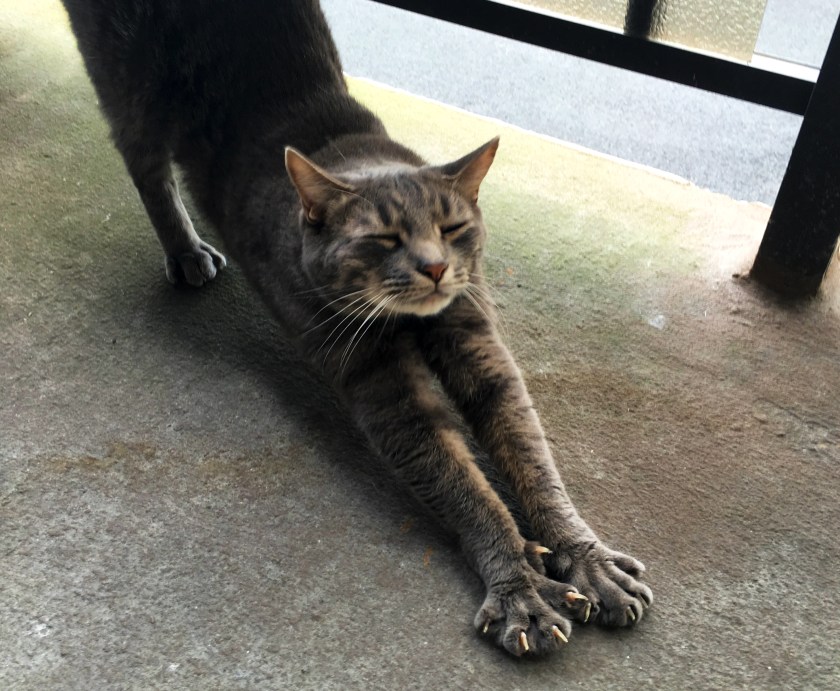
Buddy and his Claws of Cosmic Doom.

Reason #22 To Keep Your Cats Indoors: Bubonic Plague!

A cat in rural Colorado has tested positive for the Bubonic Plague. Health authorities say it was probably the result of an encounter with an infected rat.

A cat in Colorado has tested positive for the Bubonic Plague.

You read that right. The same bacterial infection that was called the Plague of Justinian back in the 6th century BC, killed one out of every four people living in the Mediterranean, then flared up occasionally every century or two before returning with a vengeance in 14th century Europe, where it was called the Black Death and killed a third of the population on the continent.

That plague.

The kitty ranges near a public park and likely caught the infection from a rat, local health authorities told KUSA, an NBC news affiliate.

Like many infections, it was never completely eradicated, and WHO statistics show about 100 people die annually of plague.

“While plague is a serious disease, and cases of animal-borne disease in household pets is never something we like to see, it is normal and expected for some animals to contract plague in Jefferson County each year,” said Jim Rada, director of Environmental Health Services for the county. “The good news is that modern antibiotics are effective against plague, and as long as it is treated promptly, severe complications, illness or death can be avoided.”

When we think of outdoor dangers to cats, we tend to think of abusive humans, vehicle traffic or poisons, but this is a reminder that nature can be lethal as well.