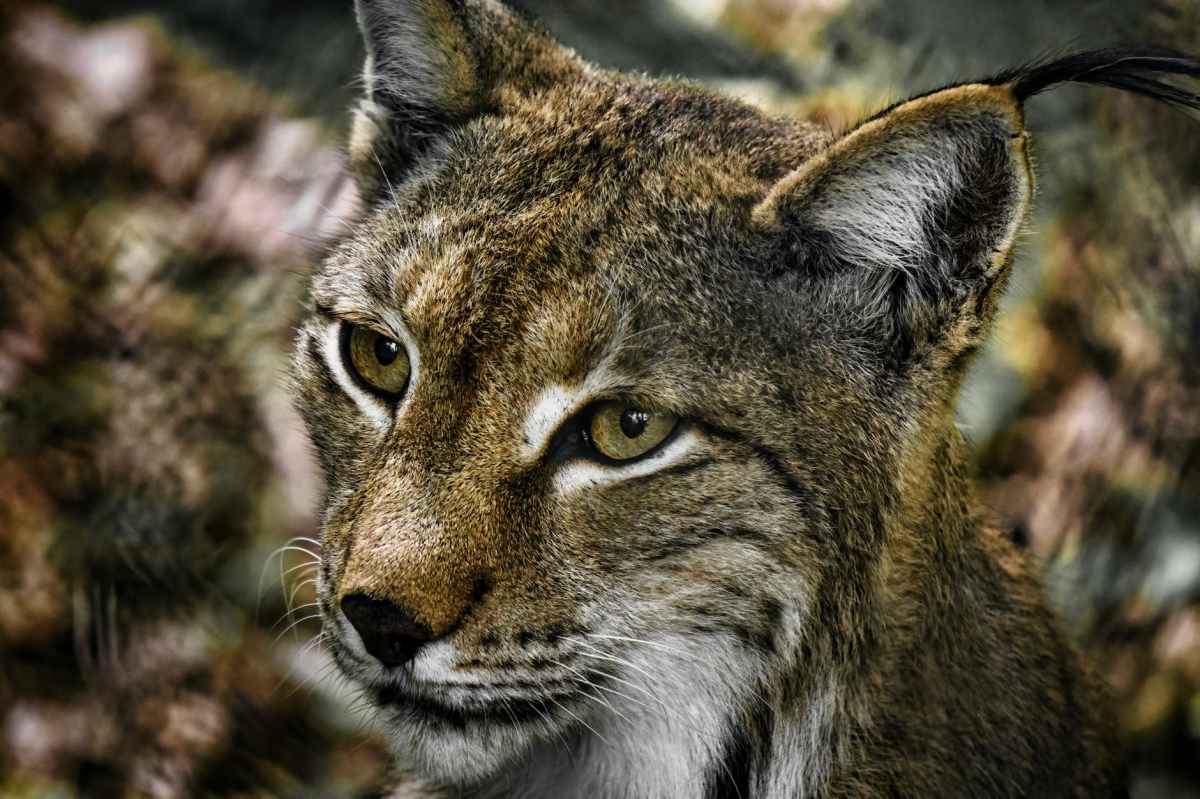
Reason #488 To Keep Your Cats Indoors: They Hunt Whether They’re Hungry Or Not

Cats who have regular outdoor access and hunt wildlife still get 96 percent of their nutrition from pet food, a new study found, suggesting their predatory behavior is driven by instinct, not hunger.

A new study from the UK debunks the claim that cats need access to the outdoors to supplement their diets with wild kills.

Cats who spend a significant amount of time outdoors and regularly kill local wildlife still get 96 percent of their nutrition from meals provided by their humans, according to research by a team at the University of Exeter.

The scientists connected with cat owners through ads on social media, TV and in print publications, specifically seeking out “cat owners living throughout southwest England whose cats regularly captured wild animals and brought them back to the house,” the study’s authors said.

They gave the owners a questionnaire to collect some basic information on the kitties — age, sex, breed, whether they had unrestricted access to the outdoors, and how much time they spend outside — then split the 90 participating cats into six groups.

Cat hunting
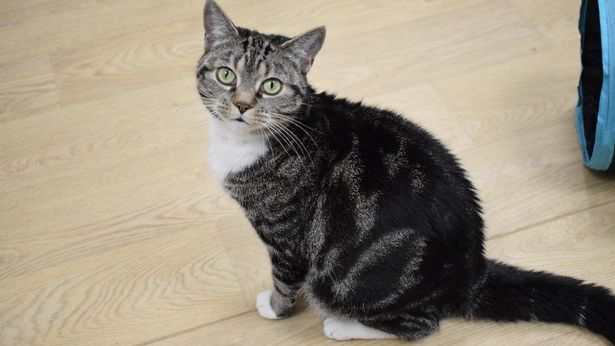
A domestic tabby cat stalking in the grass. Credit: Wikimedia Commons

To set a baseline, the scientists trimmed small sections of whisker from each of the cats, then trimmed a second sample at the end of the study.

By comparing stable isotope ratios in the whisker samples, they were able to determine what the cats were eating. Despite regular access to the outdoors and successful hunts, pet food accounted for the vast majority of their diets.

As a result, the researchers concluded, outdoor cats hunt because they’re driven by predatory instinct, not hunger.

“When food from owners is available, our study shows that cats rely almost entirely on this for nutrition,” said Martina Cecchetti, the study’s lead author.

“Some owners may worry about restricting hunting because cats need nutrition from wild prey, but in fact, it seems even prolific hunters don’t actually eat much of the prey they catch,” Cecchetti said. “As predators, some cats may hunt instinctively even if they are not hungry – so-called ‘surplus killing’ – to capture and store prey to eat later.”

A second component of the study was designed to find the best mitigation strategy to change the behavior of outdoor cats.

Each group was given a different strategy: In one group, cats were outfitted with bells on their collars, while another group wore reflective break-away collars and cats from a third group were fitted with BirdBeSafe collars. The other groups were told to make habit changes inside the home. For example, one set of cats was fed a higher-protein diet without grain filler, another group was fed with puzzle feeders, and the last group was given extra interactive play time.

While high-protein diets and play time helped cut down on hunting, the BirdBeSafe collars had the biggest impact on hunting success. The collars come in bright colors designed to stand out to avian eyes, taking away stealth and the element of surprise from cats.

The study was sponsored by Songbird Survival, a British non-profit that funds bird conservation research and looks for ways to mitigate the dwindling numbers of many avian species.

Susan Morgan, Songbird Survival’s executive director, said her group hopes cat owners will do their part to help: “Pet owners can help us reverse the shocking decline in songbirds via three simple, ‘win-win’ steps: fit collars with a Birdsbesafe cover; feed cats a premium meaty diet; play with cats for five to ten minutes a day to ‘scratch that itch’ to hunt.”

Of course there’s an obvious solution the study didn’t include: Keeping cats indoors. While keeping cats indoors is common in the US, cat ownership culture in the UK is different — another subject for another post.

Read the full text of the study here. Header image credit Pexels. Body images credit BeSafeCollar.

Previously:

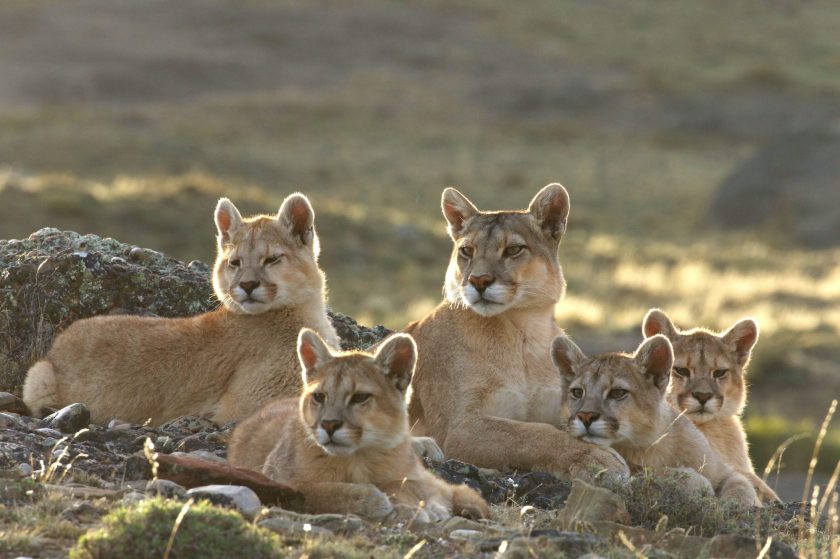
1024px-Florida_panther_kittens
A pair of young mountain lions in Florida. Credit: Wikimedia Commons/WOConservation

Sanctuary Jaguar Gives Birth To Beautiful Melanistic Baby, You Can Help Name Her

A rare melanistic jaguar was born at a UK sanctuary.

The Big Cat Sanctuary of Kent, UK — not to be confused with Florida’s Big Cat Rescue — is welcoming a newborn melanistic jaguar, and everyone from the vet staff to the caretakers are fussing over her.

The as-yet-unnamed baby was born to mom Keira and dad Neron in a big-cat breeding program designed to ensure the species survives as wild populations plummet due to habitat reduction and poaching. Staff at the UK sanctuary say the baby opened her eyes the day she was born and was walking by two weeks. That’s an unusually quick development for most cats, but apparently not for jaguars, who live in the deepest jungles of the Amazon.

jaguarbaby4
The Big Cat Sanctuary’s newest addition. / Credit: Alma Leaper

The sanctuary is allowing the public to pick the baby’s name from among three choices as part of a fund-raiser.

The choices are Inka (Inca) after the Inca people and their empire, Inti, a Quechuan (pre-modern Peruvian) word meaning “Sunshine,” or Killari, a word from the same language that means “Moonlight.” I’m partial to the latter, especially for the image it evokes of the world’s largest black panther — and the largest cat in the Americas — stalking the jungle on a moon-lit night.

The term “black panther” is a catch-all for any felid with melanism. Both jaguars and leopards can have the black color morph, as can domestic cats. Cats with melanism retain their spots, and if you look closely you can see they’re a shade darker than the rest of the cats’ black fur.

Check out the video below to see the little one behaving just like any other kitten.

Can You Spot The Cat? Mountain Lion Edition!

A photo shows why mountain lions are so elusive. Can you find the hidden puma?

This is the real deal, friends. Not a cheesy low-res photo or an intentionally obtuse shot with three pixels of a tail visible.

There’s a cat in this photo — a puma to be exact — and finding it is a good reminder of how awesome these elusive felids are, as well as how well they hide themselves from humans and fellow wildlife alike:

Hidden mountain lion in Nevada
Credit: John Tull, US Fish and Wildlife Service

The photo comes courtesy of the US Fish and Wildlife Services and eagle-eyed photographer John Tull, who spotted the well-hidden cat in rural Washoe County, Nevada.

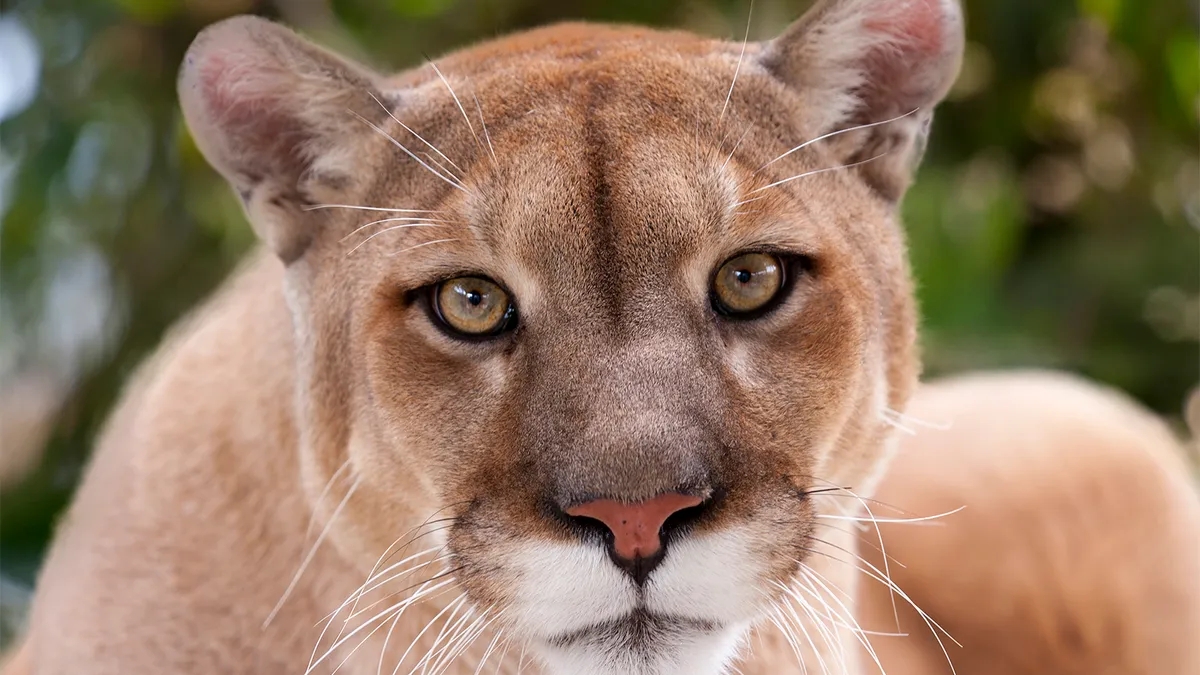
Mountain lions are the second-largest cats in the Americas behind jaguars, and although they look like lionesses, they pose little danger to humans. About 15 people have died in conflicts with mountain lions over the past 100 years. Dogs, by contrast, kill between 30 and 50 people a year.

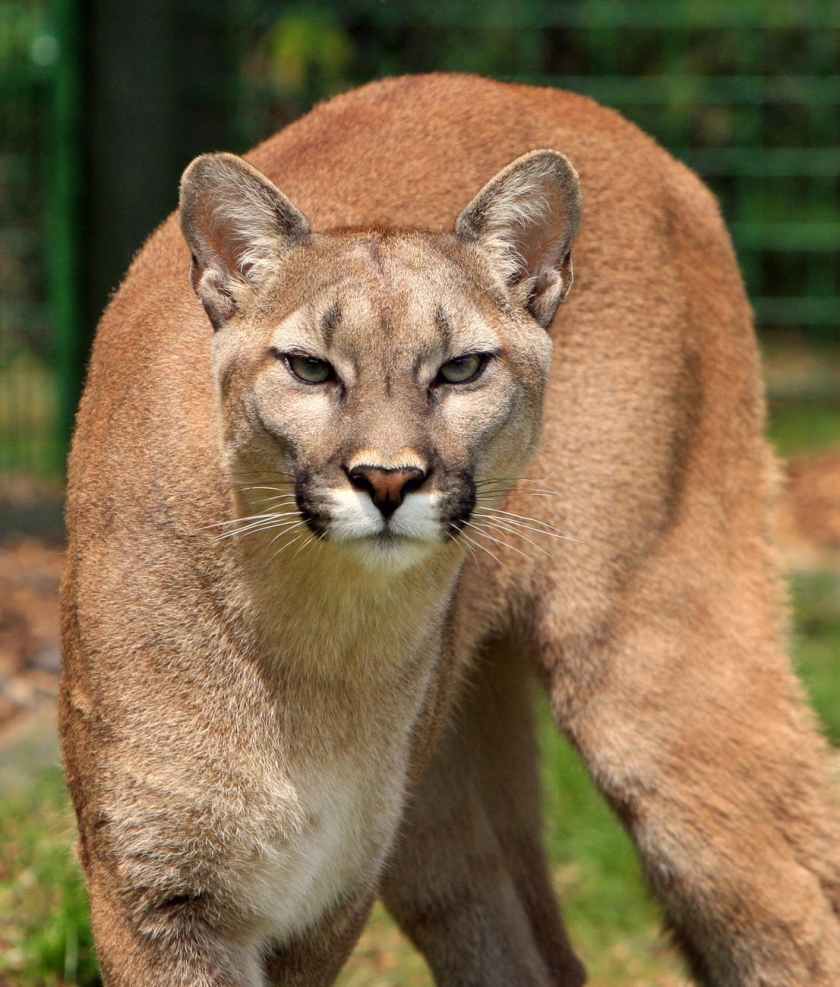
Mountain lions are also known as pumas, cougars, catamounts and panthers, among other names. The word “panther” is a nonspecific word for large cats and is often used in association with jaguars and leopards.

Known scientifically as puma concolor, these mysterious cats are more closely related to small cats (felis) than big cats (panthera), and have the distinction of being the largest cats who can meow.

Cat Defends His Territory From An Elephant In Thailand

A domestic cat bravely stares down an elephant near a home in Thailand.

So this story about a cat fearlessly staring down an elephant in Thailand has gone viral, and the photo is admittedly pretty incredible. Bud would’ve soiled himself and bolted, but this cat is truly brave.

“This is my territorah!” we imagine the cat declaring. “Find your own trees!”

The cat’s name is Simba, he’s three years old, and the photos were taken on the night of Nov. 17 in Thailand’s Nakhon Nayok province, about 112 km (70 miles in the Proper American Method of Measuring Distance™) northeast of Bangkok.

Beyond that, though, it’s actually a sad story: You know things are truly dire when we’ve destroyed so much wildlife habitat that elephants are coming up to people’s houses and eating the trees and shrubs in their gardens. Elephants usually do everything they can to avoid humans, and for good reason: Conflicts almost always end poorly for the elephants.

We hope this photo draws the attention of the right people, who can perhaps mitigate the situation or put resources into moving the elephants to a more suitable range.

catandelephant

P.S. Buddy disputes any and all allegations that he would have soiled himself or run away from elephants. In fact, the elephants are lucky they don’t share a continent with Buddy!