Did A Japanese Scientist Really Double Feline Lifespans?

A new story claims a Japanese immunologist has “created a miracle” with his treatment for cats.

The cat world is abuzz with a new report that hails the efforts of a Japanese scientist, claiming he’s “created a miracle” that can extend cat lifespans to 30 years.

The story on Bored Panda claims the drug has “astounding potential,” boasting “a level of efficacy that has exceeded all expectations and has the potential to revolutionize feline healthcare.” According to Bored Panda, we’re headed toward a gleaming future and “soon we will be able to grow old with our beloved pets and be grey together.”

“Cat Lovers Rejoice As New Medicine Will Extend Cat Lifespan To 30 Years,” the headline declares.

Okay, let’s dial it back a bit and break down what’s true and what’s not.

First and most obvious, the story oversells the treatment and if you’re counting on your cat living to 30, you’ll need to readjust your expectations.

That’s unfortunate because there’s a good story at the heart of this, and there may be real benefits to cats eventually.

Toru Miyazaki is an immunologist who discovered a protein that helps the kidneys flush out toxins. Eight years ago, he realized the protein — apoptosis inhibitor of macrophage, or AIM — doesn’t always work properly in felines, which is why so many cats are susceptible to kidney failure, especially when they reach age 10 or so.

The AIM protein, Miyazaki explained, launches from immunoglobin antibodies “like a jet fighter from an aircraft carrier,” removing waste and debris from the kidneys.

But in cats, sometimes the AIM protein — the fighter jet — is “too tightly bound” to the antibodies, meaning it doesn’t “launch” in the first place and can’t do its job of flushing out toxins.

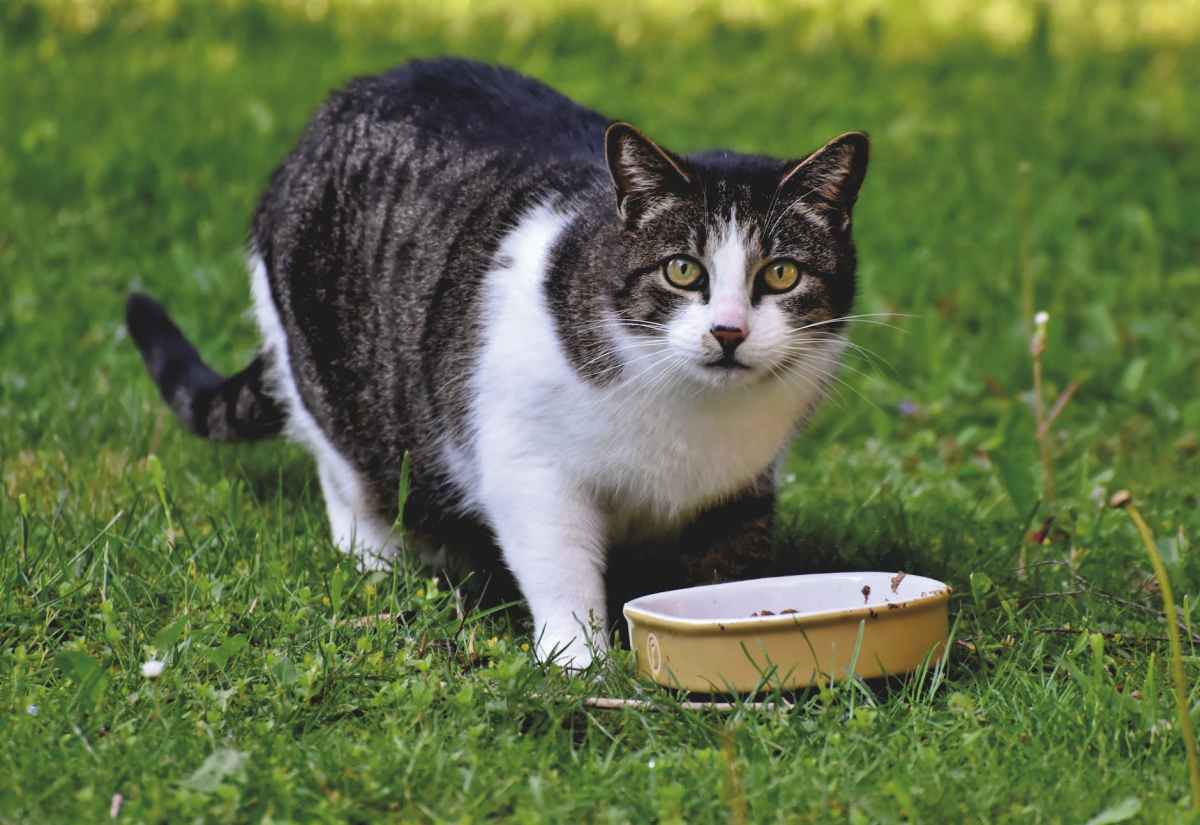
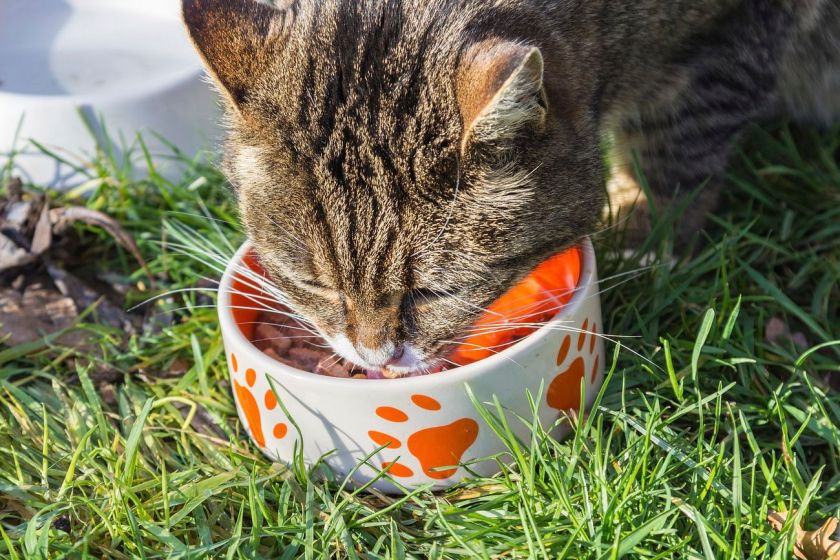
Free cute european shorthair cat

Miyazaki was continuing his research into feline kidney failure while he was a professor at the University of Tokyo, but funding dried up in 2020 as the lion’s share of research money in immunology was directed toward addressing SARS-CoV-2 and the disease it causes, COVID-19.

When a Japanese newspaper published a story about Miyazaki having to abandon his research, donations came pouring in. Cat lovers across Japan donated an astounding $2.3 million, prompting Miyazaki to leave his post at the University of Tokyo and found a non-profit dedicated to tackling kidney disease in cats.

As of September 2023, Miyazaki’s organization is running clinical trials on his AIM therapy, and it has partnered with a Japanese pet food company on new food that is supposed to reduce the possibility of kidney disease.

There’s not enough data yet to make any definitive statement, and even if the data existed, the AIM therapy is not a cure: Miyazaki says if all goes well, kittens who are given AIM therapy injections from an early age, and eat a diet with the AIM-enhancing formula, could have their risk of developing kidney problems reduced and potentially live longer lives.

That’s a far cry from Bored Panda’s image of cat lovers dancing in the streets, joyous with news of a miracle pill that will allow Socks and Oreo to run around like kittens for three decades.

While it’s natural to be excited about the potential of AIM therapy, calling it a “miracle” that will “revolutionize feline healthcare” and allow us to grow old with our cats can give people false hope.

Even if the trials go perfectly and AIM therapy breezes through the approval process, the soonest the injection therapy could be available in Japan is 2025. The US, UK and Europe have their own regulatory agencies and clinical data requirements. That means it might help kittens born years from now, but it won’t double the lifespans of the cats we love now.

It’s also worth mentioning that not everyone is thrilled to hear Miyazaki has partnered with a pet food company that sells ultra-processed kibble. Over at bark&whiskers, Karen Shaw Becker — a veterinarian who specializes in preventative care — points out that ultra-processed dry food is thought to be a major contributor to the feline kidney problems, with the ingredients, rendering methods and lack of moisture (water) all posing health hazards to cats. Cats have low thirst drives and get most of their hydration from meat.

While Becker writes she’s watching the trials closely, like other veterinarians, she recommends cat lovers continue to feed their furry friends wet and/or fresh food with high quality ingredients, no fillers and lots of protein.

The People Who Clone Pets Want To Bring Back Extinct Species — And Clone Animals For Their Organs

Genetics, gene-editing and cloning have rapidly matured since the days of Dolly the Sheep, which means we have less time than we think to grapple with some heady moral questions.

Should scientists resurrect long-extinct species? Is it ethical to clone thousands of animals who will not live, but have their organs harvested for human patients?

Those are some of the questions people are asking as the cloning industry — once relegated to producing one-off copies and genetically identical versions of deceased pets for wealthy clients — is expanding with new capabilities.

This story by the BBC’s David Cox provides an informative, brief history of cloning before pivoting to the current state of the industry and how it could continue to evolve.

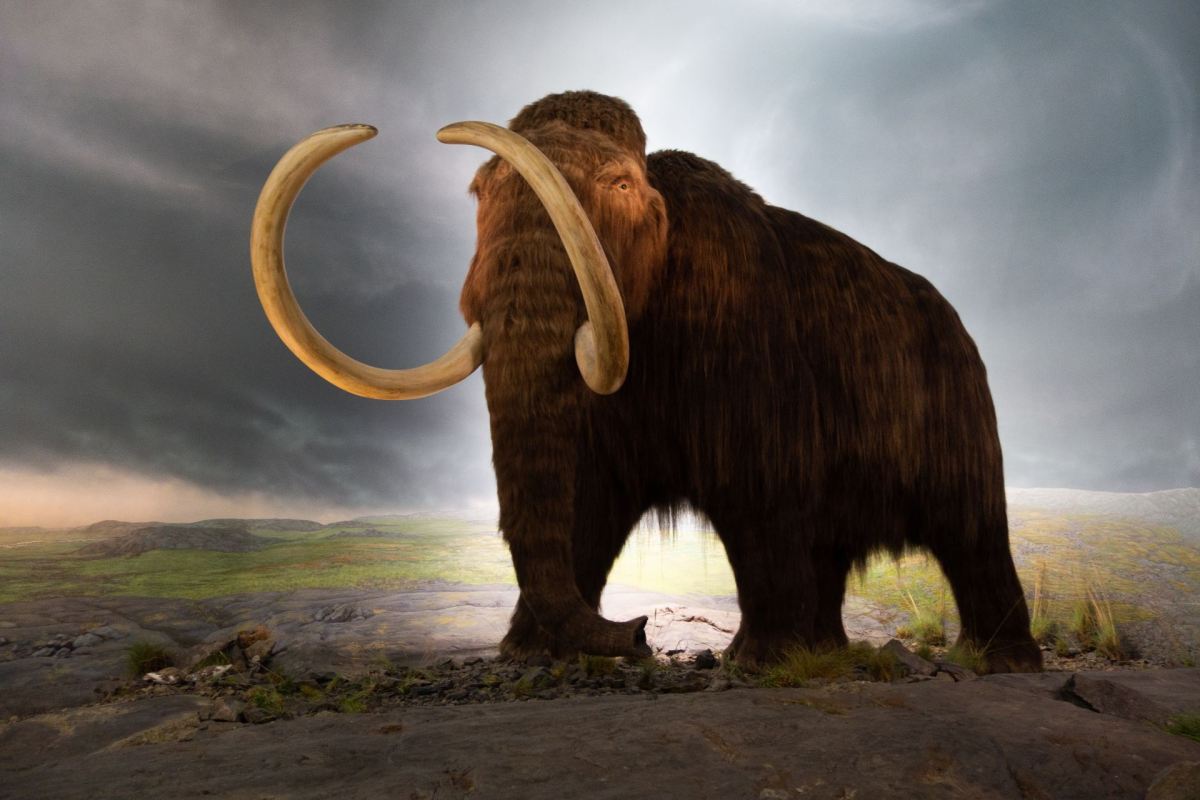
Two of the most fascinating prospects have to do with conservation. One company, Colossal, is working on bringing back the extinct woolly mammoth, while other scientists are turning to cloning as a way to prevent the extinctions of species like the white rhino, which is functionally extinct without any breeding pairs left living.

Dolly_face_closeup
Scottish scientists shocked the world when they cloned Dolly the Sheep in 1996.

As with anything in science, innovations in cloning unlock new applicative branches, and scientists have partnered with the medical field to address human health concerns. Some, like the practice of editing genes to prevent diseases in newborns, tend to fly under the radar. But others, like the push to adapt organs from animals like pigs so they can be replacements for human organs, are much more controversial and have met opposition from animal welfare groups.

Then there’s the elephant in the room, no pun intended. What about cloning humans?

Right now no one’s gone down that route, at least not publicly, because of the inevitable backlash. What’s happening deep in the bowels of clandestine medical facilities in nations with murky ethics laws is another question entirely.

I am opposed to human cloning, but I don’t believe it will remain the immutable taboo some people think it is. Someone will break the dam, and while that pioneer will likely get raked over the coals, the bell cannot be unrung. Things change so fast these days that what’s shocking one day merits a shrug the next, and it’s possible the world will be introduced to a man or woman one day before it’s revealed the person is, in fact, a clone. (Not unlike the way the world was introduced to Imma, a Japanese influencer and model who exists only digitally.)

Imma
Imma has more than 400,000 Instagram followers, she models the latest fashions and she appears in adverts for products like beverages and watches, but she doesn’t exist. She’s a digital creation.

They’ll be the Dolly the Sheep of the human race, and ethicists won’t get a say in whether they should exist because it’s already been done.

“See how normal they are?” people keen on cloning will say. “They’re just regular people. Are you going to tell them they shouldn’t live?”

But before that, it looks like the movie Gattaca will become reality, and people will order up a great baseball player or a child with intuitive musical genius just like they might commission a piece of art or a custom car job. Gene editing with CRISPR is surprisingly trivial.

Of course, it won’t be lost on people that we’re cloning humans when there are millions of unwanted, uncared-for street kids in the third world, not to mention people who live without the consideration of their fellow human beings in every nation. Just like it hasn’t escaped the notice of activists that South Korea and China are leaders in cloning pets, yet dogs and cats are also food in those countries.

What separates the dogs and cats bound for restaurant kitchens from the dogs and cats having their cells preserved for cloning?

Nothing except for their individual value to humans, just like pure luck separates a cat who finds a loving home from a cat who ends up euthanized with a needle. We are a fickle species.

Yet both the beloved pet and the unwanted shelter cat are sentient, experience intense emotions and have their own thoughts. That’s not conjecture, it’s fact as confirmed many times over experimentally, but it shocks a lot of people. Our education system has not done right by the billions of non-human minds we share our planet with.

Cloned monkeys
These rhesus macaque infants were cloned in a lab in China. The remaining barriers to human cloning are ethical, not technological.

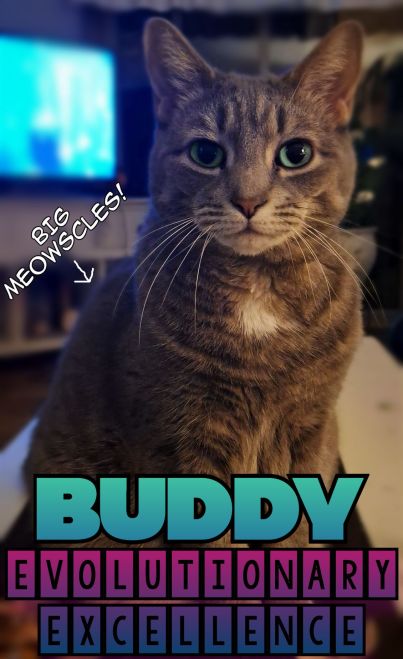
I’ve thought about what might have happened if Buddy had been adopted by someone else, and what his fate may have been. I love the little guy, but it’s possible that someone else may have viewed him as an annoyance, a loud and incessantly chatty cat who needs an inordinate amount of attention and affection, sometimes lashes out, and needs to be surrendered.

Likewise, unwanted cats have languished in shelters for months before viral posts spark interest in them, and suddenly offers to adopt come in by the hundreds from across the globe. Nothing about those cats changed, but humans formed an emotional attachment to them after learning their stories.

Of course, the ethics of how we treat and consider animals can change depending on where you’re sitting. If you’re young, healthy and energetic, your view may be radically different than the person sitting on an organ donation waiting list, knowing their time may be up before a new liver or kidney becomes available. Suddenly a seemingly simple moral calculus becomes murky and complex.

There’s strong evidence that people who take the first steps toward cloning their beloved cats and dogs spend time wrestling with the ethics of the decision as well. Texas-based ViaGen, the western leader in commercial cloning, told the BBC that 90 percent of its clients are not people who have gone through with cloning, but have only taken the initial step of preserving their pets’ cells for $1,600.

And what of the mammoths? Bringing them back from extinction isn’t as simple as filling in the gaps in their genome, implanting gene-edited eggs in female elephants and hoping gestation takes care of the rest. Mammoths are social animals. Will an elephant mother raise a mammoth baby? Where does that mammoth baby belong? Without a herd of its own kind, can it be happy?

We can’t ask the mammoths, and even if we could, it might not be up to them anyway. As one paleogeneticist put it to NPR last year: What if the technology isn’t used to resurrect the mammoth, but to save the elephant? Does the end justify the means in the latter situation, but not the former?

Mammoth, Dolly the Sheep and rhesus macaque images credit Wikimedia Commons


What Is Schrödinger’s Cat?

Cats are at the heart of one of the most famous thought experiments in science.

If you’ve spent time around physics types, listened to media appearances by science educators like Michio Kaku and Brian Greene, or even watched episodes of The Big Bang Theory, you’ve almost certainly heard of Schrödinger’s cat.

But what is it, why is it important, and what does it really have to do with cats? Most importantly, if you’re a cat lover, does it involve harming cats?

I promise you, if you stick with me and have a little patience, you’ll not only understand Schrödinger’s cat, but a hugely important element of physics will be demystified for you.

QuantumEntanglementCat

Let’s take a step back. First, we all learned in school that Isaac Newton was the “father of physics,” and Albert Einstein came along about two centuries later, revolutionizing physics by adding to Newton’s work and coming up with his own, more accurate model.

To this day, Newton and Einstein are in a class by themselves among physicists because they single-handedly changed everything we know about the natural world.

We all remember the famous story about Newton watching an apple fall from a tree, wondering why the apple fell down instead of up, and eventually developing his theory of gravity. Newton went on to develop his theories, which describe everything we see in the natural world, from that apple falling to the complexities of orbital mechanics.

Everything seemed to work perfectly, until a physicist named Max Planck came along in 1905 and published a paper introducing quantum physics.

What is quantum physics?

Now the word “quantum” has been incorporated into practically everything these days and has been so utterly abused as a marketing buzzword, a way to add a veneer of science to things that are otherwise nonsense, that it’s essentially a meaningless word to most people. Practically everything is described as quantum, from deodorants to claims of psychic telepathy.

But the gist of it is this: While Newtonian physics does indeed describe everything we see with our own eyes accurately, it does not accurately describe things at the subatomic level.

In other words, there are two sets of rules in our universe. Everything larger than an atom behaves according to one set of rules in our universe, and everything the size of an atom or smaller — which includes subatomic particles — behaves according to a different set of rules.

Not only that, but at the quantum scale, things get really, really weird.

They behave in ways that are completely at odds with everything we intuitively understand about reality, so much so that even Einstein himself was disturbed by what he found. Einstein famously described quantum entanglement — the ability of two different objects to be linked and share properties, regardless of how far apart they are — as “spooky action at a distance.”

So what the hell does this have to do with cats?

Ready to get even weirder?

Thanks to Planck, Einstein, John Stewart Bell and innumerable physicists — who are still studying these concepts, and still winning Nobel prizes for them in 2022 — we know that two particles can be “entangled” and will remain that way no matter how far apart they are.

You could take one particle, transport it 10,000 light years away, and it would still be entangled with the other particle.

But it gets even stranger than that.

Schrödingerscat

Our entangled particles have certain properties, such as their spin, which are unknowable until we measure them. In fact, they exist simultaneously in all possible states until the moment when we observe them, at which time the wave function “collapses.” It’s called quantum superposition.

Not only that, but when we measure one particle in an entangled pair, the second particle’s wave also “collapses” (settles on a certain state) and we know its spin instantaneously, regardless of how far apart the particles are.

If I measure an entangled particle here on Earth and find its spin is up, I know the corresponding particle that’s been moved to, say, Epsilon Eridani, 10.47 light years away, is spin down.

You can see why this would be profoundly disturbing to scientists. It violates the speed of light, and it’s completely counterintuitive. How can the mere act of observation change something in the physical world, and how can it change something else potentially thousands or millions of light years away? Everything we know, every gut instinct we have, screams that this should not be true.

But it is true.

These aren’t just ideas kicked around by scientists smoking the sticky stuff, by the way. They’ve been proven experimentally many times over. No matter how much we might dislike the idea, no matter how weird or spooky it may seem, it’s true.

Schrödingerdeadalive

Enter Erwin Schrödinger, an Austrian physicist. He devised a thought experiment that goes like this:

Imagine you have a sealed box with a cat inside. Inside the box are two buttons: One button feeds the cat a yummy treat, the other button kills the cat. There is an equal (50/50) chance of the cat pressing either button. (Other versions use a more complex system involving radioactive material, or poison, that could kill the cat, again with a 50/50 chance.)

We don’t know if the cat is alive or dead until the moment we open the box. So in this thought experiment, we can think of the cat as both alive and dead until we “measure” or “observe” by opening the box.

That’s what’s happening in the above example of quantum entanglement and the idea that a particle is neither in one position or another until we measure it.

Why is measurement the key here? No one knows. Scientists are still arguing about that. Some believe that there’s some special quality of consciousness that interacts with the universe, so the mere act of observing something can change physical reality.

Others scoff at that idea and insist we’re missing something, that it’s not the act of observation that determines the final state of a particle at all.

Regardless, the important thing here for cat lovers is that Schrödinger’s cat is just a thought experiment.

Schrödinger never had a cat, as far as anyone has been able to ascertain, and no one has used an actual cat in an attempt to reconstruct the thought experiment because 1) You wouldn’t learn anything, since cats are not subatomic particles, and 2) Anyone intelligent enough to be a physicist is presumably intelligent enough to understand how absurd, pointless and cruel it would be to use a living being in an experiment that can’t give you any answers.

For those of us who aren’t geniuses, here’s Sheldon explaining the thought experiment as a child (in Young Sheldon) and as an adult (in The Big Bang Theory):

Study Says We Should Use Baby Talk With Cats, Buddy Disagrees

It’s the latest of several studies indicating animals including cats, dogs and horses respond better to higher-pitched, softer voices.

Cats are more responsive when their humans use “baby talk” to address them, a new study claims.

A research team from Paris Nanterre University played a series of recordings for cats. One set of recordings featured a stranger addressing each cat, while another set featured the cat’s human servant calling to the cat.

Each set also had clips in two different tones of voice: one in which the humans spoke to the cats in a tone normally reserved for addressing fellow adults, and another in which they baby-talked their felines.

Not surprisingly the cats were mostly content to ignore the strangers calling them by name even when the strangers used higher-pitched tones, but “displayed a constellation of behaviors suggesting increased attentiveness” when they heard audio of their humans calling them.

The kitties were even more responsive when their humans used the “sing-songy” tone of voice many people reserve for pets, babies, young children and Texans. (Sorry, couldn’t help myself! I’m still salty over my Yankees getting swept by the Astros.)

The research team said the study, which was published today in the journal Animal Cognition, was yet another piece of evidence showing felines are not the ultra-stoic, emotionless animals they’ve been portrayed as for as long as anyone can remember.

“For a long time it has been thought that cats are very independent creatures, only interested in [humans for] eating and shelter, but the fact that they react specifically to their owner, and not just anybody addressing them, supports the idea that they are attached,” said Charlotte de Mouzon, the paper’s lead author. “It brings further evidence to encourage humans to consider cats as sensitive and communicative individuals.”

Although the study included just 16 cats — sample size is a recurring problem in feline-related studies, since researchers often have to travel to the homes of house cats to study their normal behavior — it’s just the latest bit of research on tone in human-cat communication.

Those studies tend to use terms like “pet-directed speech” and “kitten-directed speech” instead of baby talk.

As I wrote last year, I don’t use baby talk with Buddy, and I tend to think of him as, well, my little buddy instead of my “child,” as so many “pet parents” do. That’s not to say I think people who view their pets that way are doing it wrong, or that I don’t have parental feelings toward Bud. Of course I do.

But as I also wrote, Buddy does not tolerate baby talk. I joked that he’d paw-smack me if I spoke to him that way, and indeed he has nipped at me and dispensed warning slaps the handful of times I’ve come close to addressing him that way.

Bud Da Widdle Baby
“Aw! Widdle Buddy is angwy, huh?”

I think it’s because of the way I raised him. He’s not accustomed to it, and he finds it annoying. That makes sense, and it comports with the study authors’ suggestions that the one-on-one relationship between feline and human is an important factor in many facets of cat communication.

But maybe if I’m prepared to dodge a few angry paws I can use the threat of baby talk to nudge Buddy toward being more responsive during those times when he doesn’t feel like coming when called or stopping some important work he’s engrossed in, like chattering away at birds outside.

“Bud! Hey, Bud! Listen to me. I’m talking to you,” I might say. “Okay, have it your way. Who’s da little Buddy wuddy who isn’t wistening to me, huh? Who’s da widdle cwanky boy?”

I’m pretty sure he’ll launch himself at me with a derisive “Mrrrrppp!” and take a big swipe. Haha!

But maybe, just maybe, he’ll be more inclined to listen. Do you baby talk your cats?

Redditor’s Girlfriend Stole And Abandoned Cat After Argument

Studies have shown that when people who have pets are victims of domestic abuse, the pets often become victims too.

A Redditor says her beloved cat, Midnight, is missing after her girlfriend stole the innocent kitty and dropped her off on a random road on Friday as a revenge tactic for an argument the couple had the night before.

Midnight is still missing. Midnight’s owner, using a burner account called Throwaway29374639, updated concerned Redditors and said she was putting up flyers, setting up humane traps and looking in the area where her girlfriend claims she abandoned the cat as she was en route to work.

For her part, the Redditor says her girlfriend admitted what she did and “said she just had a moment of rage, but I just can’t even look at her right now. I kicked her out of my apartment and have been crying in my room for the last few hours. I feel so lost without my cat.”

In the thread, which attracted more than 1,400 comments and tens of thousands of views, many people advised her to report her (now presumably ex) girlfriend to the police, as well as to change the locks to her home and any passwords the two might have shared on various accounts.

We’ve talked before about the strange phenomenon of people who take their anger out on the pets of their partners or ex-partners. Studies have found that men are more likely to do so, and they’re much more likely to target cats than dogs because they see cats as an extension of femininity. In cases where domestic abuse is expanded to include a dog or a cat, the abusers view the pets as proxies for their victims.

But as recent stories have indicated, women sometimes take their anger out on pets as well.

anonymous woman browsing smartphone while sitting on bed near cute cat
When woman are abused by their partners, their pets are often abused as well because they’re seen as proxies for the victims. Credit: Sam Lion/Pexels

Regardless, studies show that the pets of domestic abuse victims are likely to suffer at the hands of their owners’ abusers, and statistics show women who check into domestic violence shelters report their pets were also abused in the majority of cases. Some studies found more than 80 percent of pets who belong to domestic violence victims also become victims.

Women who worry about what will happen to their pets are less likely to leave their abusers and seek temporarily relief at shelters. As a result, some shelters also make arrangements for the pets of abuse victims, giving them safe shelter and taking another worry off the minds of their caretakers.

The links between pet abuse and domestic abuse are in addition to the well-established link between harming animals and “graduating” to harming humans, illustrated most recently by the documented history of feline abuse by the shooters allegedly responsible for massacres in Buffalo, New York, and Uvalde, Texas.

Top image via Pexels and depicts a random cat, not the victim’s cat.