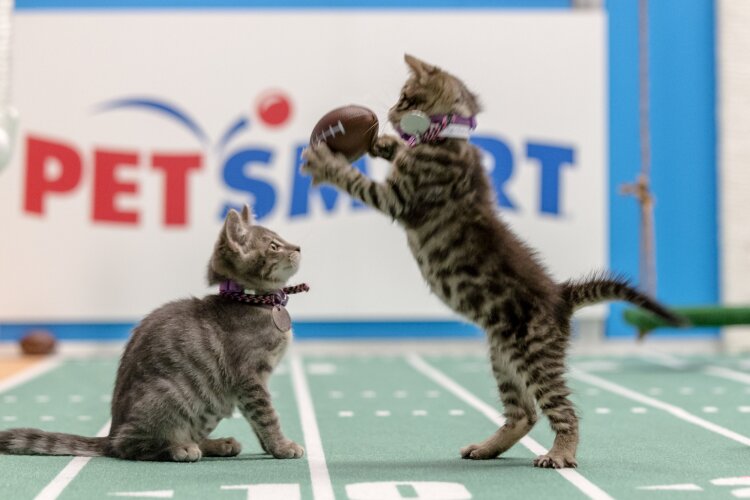
It’s the big game! Watch adorable, adoptable kittens and puppies square off on a tiny football field for a no holds barred game of…catch? Fumbling? We don’t know! They’re doing something, okay?
It’s time for the Kitten Bowl!
What, you thought we were gonna blog about that other game?
For the second straight year the former Kitten Bowl has been renamed the Great American Rescue Bowl, and will feature puppies as well as kittens. It’s moved from its former home at the Hallmark Channel to the Great American Channel, but retains its hosts, its partnership with the North Shore Animal League, and most importantly its adorable furry participants.
You can catch the Great American Rescue Bowl at noon eastern, making it a convenient watch whether you’re headed to a Super Bowl Taylor Swift Bowl party later in the day or you care not for sporting contests that don’t feature four-legged athletes.
Catches are pretty rare, but that’s okay!
If you don’t get the Great American Channel as part of your cable package or you’re a cord-cutter, you can stream it for free on fubo.
While the kittens and puppies are adoptable, this year also includes three special young cats — Meowi Wowi, Hana Lulu, and Surfin Sammy — who were displaced by the Hawaii wildfires of August 2023.
And if you’re hosting a party today and you need a last-minute addition to your menu, Buddy has kindly offered to share his recipe for Buddy’s Extra Turkalicious Turkey Wings:
Turkey wings for guests (24) and for Buddy (48)
Turkey sauce, 2 cups
Buddy’s BBQ Turkey Seasoning
Turkey bacon
In a large bowl, mix the turkey wings with the turkey sauce, then arrange the wings on a non-stick pan and bake for 30 minutes at 400 degrees. Glaze with additional turkey sauce. Garnish with turkey bacon. Goes great with your other favorite turkey-based snacks!
The suspect has been charged with a pair of felonies and remained jailed awaiting arraignment on Tuesday evening.
A 27-year-old Ohio man has been identified and arrested in connection with the cruel death of a cat in late January.
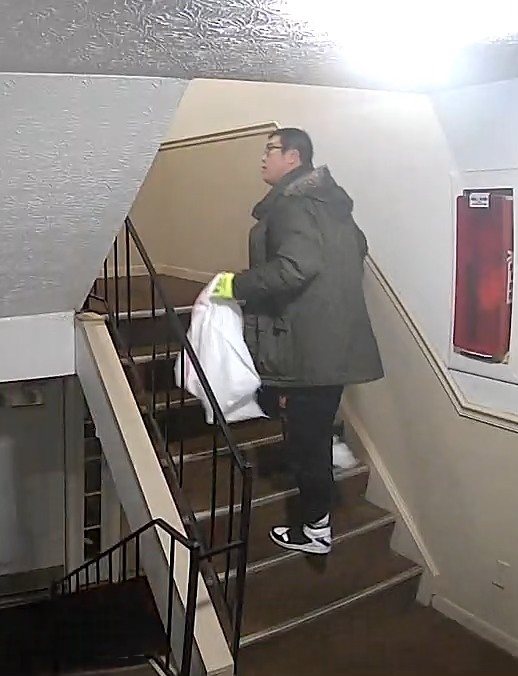
Police located Zhean Bai of Oxford, Ohio, thanks to a tip from the public and charged him with a pair of felonies. They say he’s the man seen in disturbing security camera footage from Jan. 24, when he chased an apparent stray cat into an apartment complex in Hamilton, Ohio. The footage shows Bai forcing the cat into a plastic bag and slamming it onto the ground.
The charges — prohibitions concerning companion animals and breaking and entering — are fifth-degree felonies under Ohio law. Bai faces up to two years in prison, $5,000 in fines and up to five years of probation if he’s convicted of both crimes.
Zhean Bai as seen in his jail booking photo. Credit: Butler County Sheriff’s Office.
After severely injuring the feline, Bai allegedly dumped the cat behind the building and fled. A dog warden found the cat, but a veterinarian made the decision to euthanize due to the extent of the cat’s injuries, including a broken spine and pelvis.
“This instance of horrific cruelty is unimaginable and will never be tolerated in this county,” Butler County Sheriff Richard Jones wrote in a statement to the media. “Anyone who treats an animal in such a cruel manner will always find a place in my jail.”
The investigation isn’t over. Police say they’re looking into the possibility that Bai may have been involved in other animal cruelty cases.
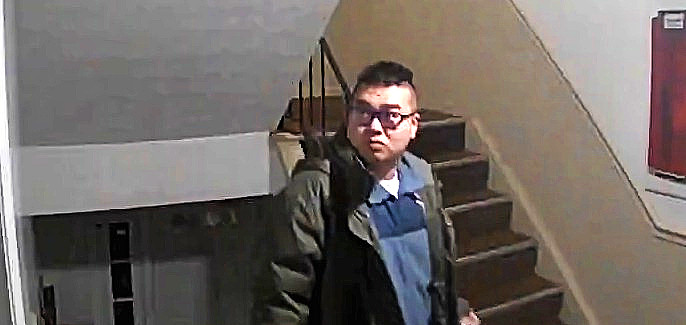
Bai was apparently concerned he’d be caught. The same cameras show him returning to the apartment complex — where he does not live — and scoping it out for security cameras. He was wearing the same shoes and jacket and had recently gotten a haircut, giving police and the public a better view of his face. Cops quickly released a second batch of images this week, imploring the public help them find the man.
Bai was held in Butler County jail pending arraignment on Tuesday evening. It wasn’t immediately clear if he’d retained an attorney.
The police are looking for the public’s help in identifying and tracking down a man seen in a disturbing video.
Cops are looking for the public’s help identifying a man who abused a cat, injuring the feline so badly it had to be euthanized.
The man chased the cat into an apartment complex in Hamilton, Ohio, on Jan. 24 at 9 p.m. He caught the cat, forced it into a plastic bag and then slammed the bag down hard on the stairwell, according to footage from security cameras the complex. He dumped the cat, still alive and suffering, behind the apartment complex and fled.
The cat was found by deputy dog wardens, according to local media, but had a fractured pelvis and spine and had to be euthanized.
A still image from Jan. 24. Police say the suspect returned last week to scope out security cameras. Credit: Butler County Sheriff’s Office.
In addition to being shockingly cruel, the suspect isn’t the sharpest tool in the shed. Cops say he doesn’t live in the complex, but returned there last week to look for surveillance cameras. In doing so, he gave the police a better look at his facial features and more images to release to the public.
“In the new photos of the suspect, he is wearing the same coat and shoes, but has a recent hair cut, according to the BCSO.”
For those of you living in the Ohio area, details on how to contact the Butler County Sheriff’s Office are in the post below. Help them find this cruel man so he can be prosecuted and convicted.
The women were arrested for managing a cat colony in the summer of 2022, convicted in December, then won a subsequent appeal in April of 2023. Now they’ve filed a lawsuit against the police and mayor involved in the saga, alleging false arrest and malicious prosecution.
Two women who were arrested for trying to manage a colony of stray cats have filed a lawsuit against the mayor, police chief, assistant chief and three officers involved in the ugly incident.
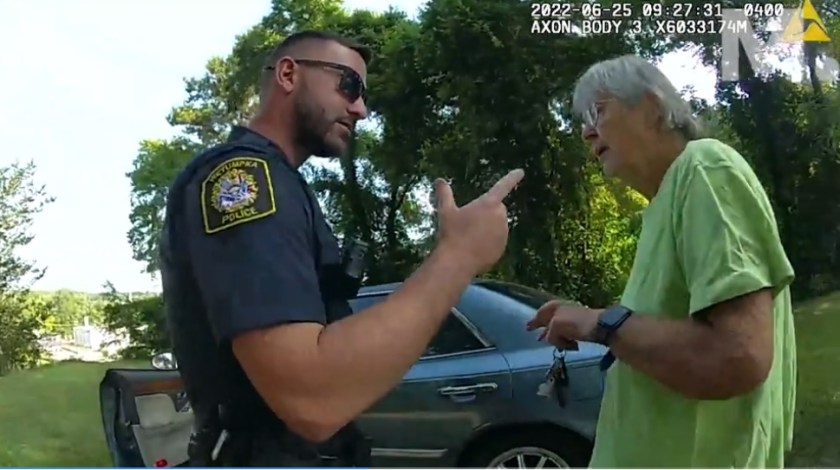
The July 2022 arrest drew nationwide outrage and condemnation as police responded in force to a complaint that Beverly Roberts, 86, and Mary Alston, 61, were trespassing in a wooded area and trapping cats. Body camera footage showed police treating the women like violent criminals, the police response itself was disproportionate, and the police chief doubled down on his insistence that the women deserved to be treated harshly even after damning footage showed the officers laughing about “beatin’ up on some old ladies.”
Now Roberts and Alston have sued Wetumpka Mayor Jerry Willis, Police Chief Greg Benton, the assistant chief and three officers, according to the Montgomery Advertiser.
Noting that the women were paying out of their own pockets to help manage the stray cat population, the paper detailed the allegations in the civil suit:
“The suit alleges that Willis directed their arrests and that Benton and Reeves acted on the mayor’s orders. The women had angered city officials for “being vocal” about the care of animals in the city and appearing at several city council meetings to complain that the city was not enforcing anti-animal cruelty ordinances on the books, specifically the law banning the chaining or tethering of dogs, the lawsuit states.
The suit argues that the women were arrested under false circumstances. The women were originally charged with criminal trespassing.”
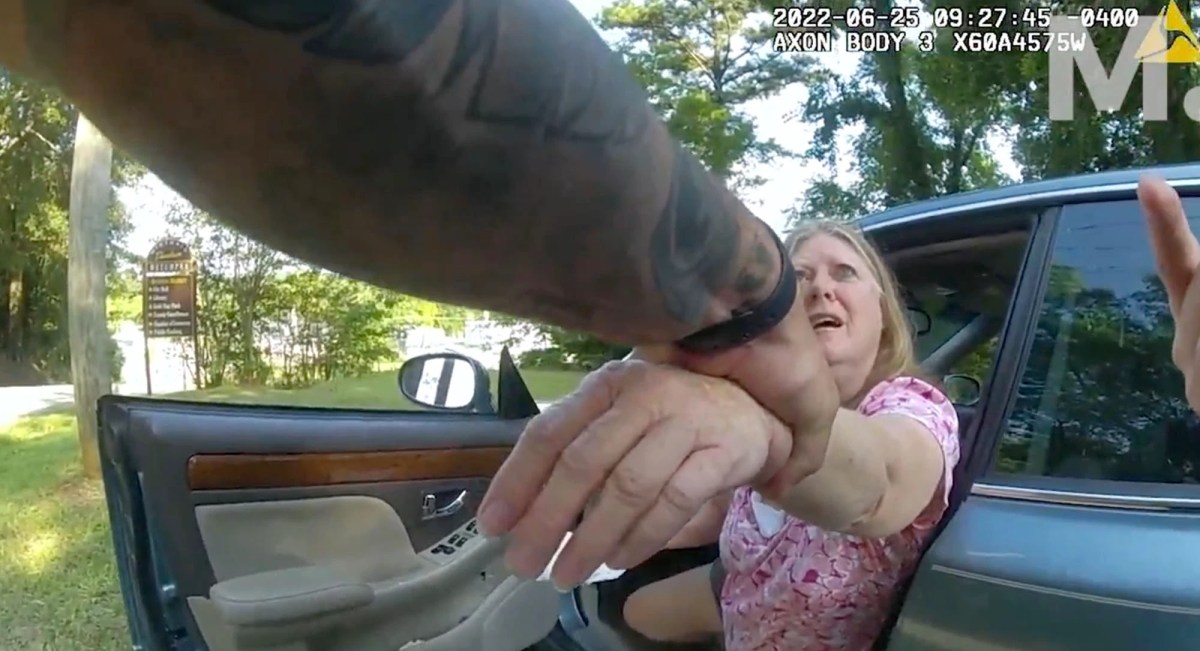
Footage of the summer 2022 arrest showed officers handling the women roughly, jabbing their fingers in their faces, threatening them with additional charges and barking at them to move more quickly.
The women were taken aback.
“I’m teetering on going to jail for feeding cats?” Alston asked in body camera footage of the police response.
Another officer towered over Roberts, jabbing a finger at her and warning it was “going to get ugly” if she didn’t move more quickly before eventually cuffing her.
A Wetumpka police officer wags a finger at Roberts, who was 84 years old at the time, before handcuffing her hands behind her back and rifling through her personal possessions.
After a show trial in municipal court in late 2022, in which Roberts and Alston were convicted of trespassing by a judge appointed by Mayor Jerry Willis, the women appealed. Despite the conviction, the municipal trial resulted in the release of damning information, including the fact that it was Willis himself who called the police on Roberts and Alston, that he did so because he didn’t like their complaints about the way the city handled animal issues, and that he instructed the police to arrest the women before they arrived in four patrol cars and had a chance to assess the situation.
Willis called the police after spotting Alston’s car near a county-owned plot of land, and lacking any ordinance that prohibited feeding or trapping stray cats, the police resorted to charging the women with misdemeanor trespassing and “obstructing governmental operations,” a charge roughly equivalent to resisting arrest.
But the land was county-owned, there were no prohibitions on managing cat colonies or conducting TNR (trap, neuter, return), and the footage — which police tried to hide from the public for months before finally caving to legal threats from attorneys for the women — was damning, drawing universal condemnation.
Roberts and Alston appealed, and in April of 2023 county court Judge J. Amanda Baxley accepted a motion by prosecutors to drop the case.
The civil suit “alleges unlawful seizure and detention, excessive force, malicious prosecution, negligence, wantonness and other counts,” per the Advertiser.
Attorneys for Roberts and Alston didn’t specify a dollar amount, but said they’re seeking “compensatory and punitive damages” and legal fees related to the arrest and resulting drama, which has played out for more than a year and a half. A spokesman for the City of Wetumpka did not respond to the Advertiser’s request for comment.
From the military camps where they stop mice from wreaking havoc to social media where they help raise money, Ukraine’s felines are enduring the war alongside their people.
Roman Sinicyn and his men were living in an abandoned house in a destroyed village for a month.
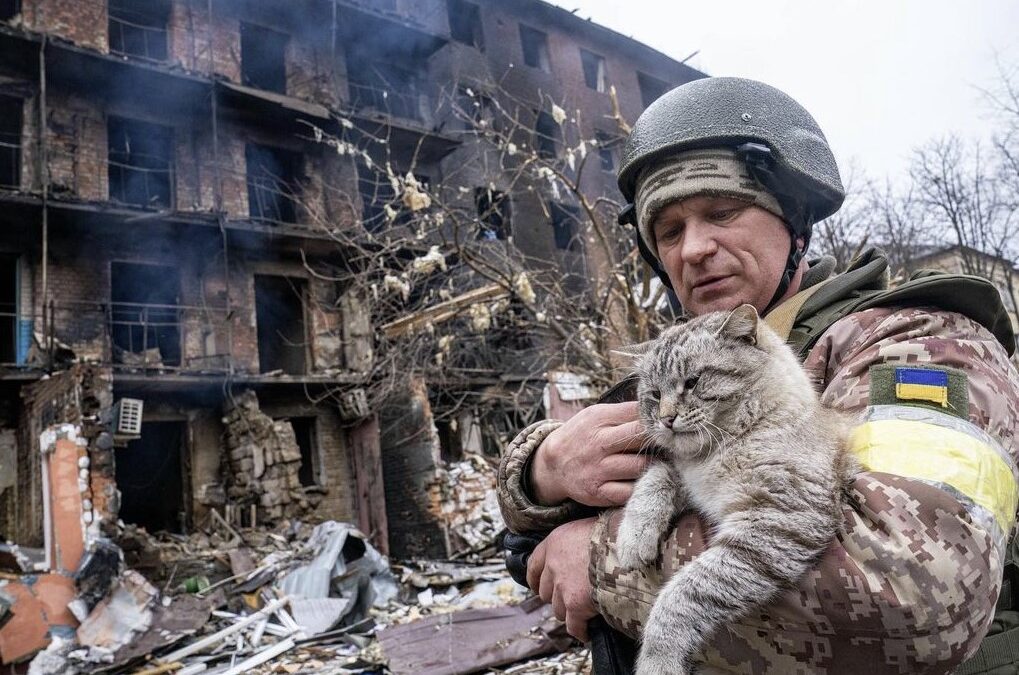
Although each of the Ukrainian soldiers contributed to their survival and fought the Russians, perhaps their biggest hero was Syrsky the Cat.
The fearless feline evicted a rodent infestation in the platoon’s temporary headquarters, hunting the mice mercilessly as his humans engaged in firefights with invading Russians. By day Syrsky made the soldiers’ temporary lodgings livable and by night he soothed their trauma with healing purrs.
The cheese-loving moggie’s moniker is a double-entendre: he’s named for Ukrainian Army Land Forces Commander Oleksandr Syrsky, and for the Ukrainian word for cheese, syr.
A new story from Politico EU details the important role of felines as the costly war enters its third year. Russian missiles, bombs and artillery have flattened villages, sending civilians fleeing and often separating them from their families and their pets.
The bewildered cats and dogs, accustomed to easy lives indoors, are suddenly thrust into a world of death, explosions, mine fields and other horrors.
As the war endured past its early phases, former pets began seeking out humans where they could find them — in military camps and in the rodent-infested trenches where they hunkered down against the constant thunderclaps of Russian artillery.
During peak war season in the summer, Vladimir Putin’s bedraggled military fires up to 20,000 artillery rounds a day according to the Associated Press, with that number dipping to “only” 7,000 per day as the war machine slows in brutally cold Slavic winters.
Oleksandr Liashuk, a Ukrainian soldier, with his cat Shaybyk. Credit: Oleksandr Liashuk
Just like they did 10,000 years ago when they first domesticated themselves, cats proved their worth by chasing out mice and rats, but this time they didn’t have to convince humans to allow them to stick around. They were welcomed with open arms and hands bearing snacks, serving as hunters and therapy animals to men enduring a living hell.
“When this scared little creature comes to you, seeking protection, how could you say no? We are strong, so we protect weaker beings, who got into the same awful circumstances as we did, just because Russians showed up on our land,” Oleksandr Yabchanka, a Ukrainian medic, told Politico.
It’s amazing how a return to primitive circumstances has so quickly pushed humans back toward reliance on animals who made it possible for our species to survive in the first place.
Without dogs, early hunter-gatherers would have been much worse off on the hunt and their groups would have been much more susceptible to ambush when they slept. Indigenous societies eking out existences on the tundra would have no reliable animals to pull sleds. Without oxen to pull plows, farmers wouldn’t be able to produce enough food for civilization to thrive and grow.
And the people of nascent human settlements, taking the first great leap forward for our species with the invention of agriculture, would have starved out over long winters as mice and rats gnawed away at their food stores — if not for cats, our furry friends.
In 2024 humans can’t live without cats once again. Felines patrol Ukraine’s World War I style bunkers, killing hordes of mice. Mice that otherwise devour MREs, chew through comm link and power wires, damage weapons and make soldiers miserable.
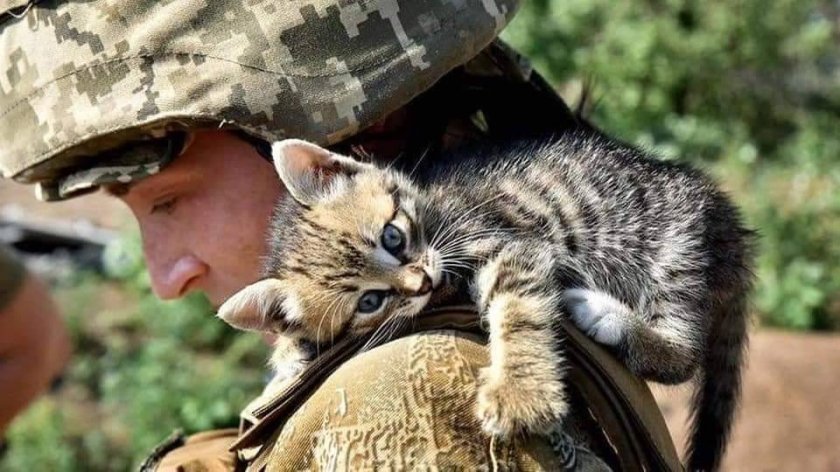
A Ukrainian soldier with a stray kitten. Credit: Ukraine Ministry of Defense
Some cats become unofficial unit mascots and good luck charms, but many others are claimed by individual soldiers who find normalcy and relief in their company.
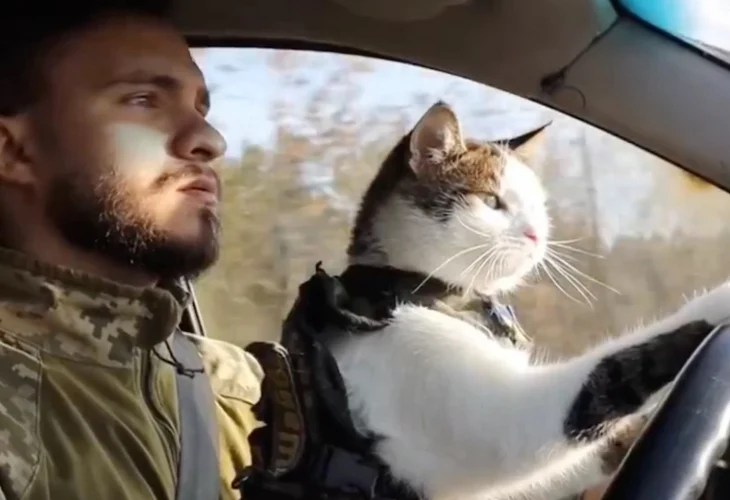
One soldier/cat pair are viral sensations thanks to videos of the alert cat riding along with his human, scanning the terrain ahead. Another story detailed a patrol whose men just avoided an ambush thanks to their company’s cat, who spotted the enemy first and frantically warned that something was wrong.
In that way, cats are serving the propaganda effort as well, helping the public to connect to the men and women defending them.
Military cats have become signals for Ukrainians to rally around, but Russians are doing it too. Russia is a famously cat-loving country, and Putin’s government has latched onto stories about the felines accompanying his men into battle — an effort that Politico notes is meant to humanize Russian soldiers and create the impression that it values them even as it continues to conscript unwilling civilians and ship them to the front line “meat grinders” with a few weeks’ worth of training, meager supplies and minimal ammunition for their rifles.
In that respect, the soldiers of Ukraine and Russia have at least two things in common — they love their feline companions, and they’re enduring hell as well as a high risk of death because of one small man’s delusions of greatness and legacy. Western media tends to ignore the humanity of Russian conscripts, and the pro-Ukrainian side of the internet calls them “orcs,” painting them as the mindless and disposable drones of a bloodthirsty dictator.
But they’re human too, with their own hopes and fears, and mothers back home worrying about them. They don’t want to be there. It seems fanciful to imagine Russians refusing to continue the invasion when Putin has squads behind the front lines with guns pointed at his own men to prevent them from deserting or refusing to fight. But maybe the men in the trenches can come together over shared interest and shared love of cats, and help put an end to three years of misery.





 Pain In The Bud