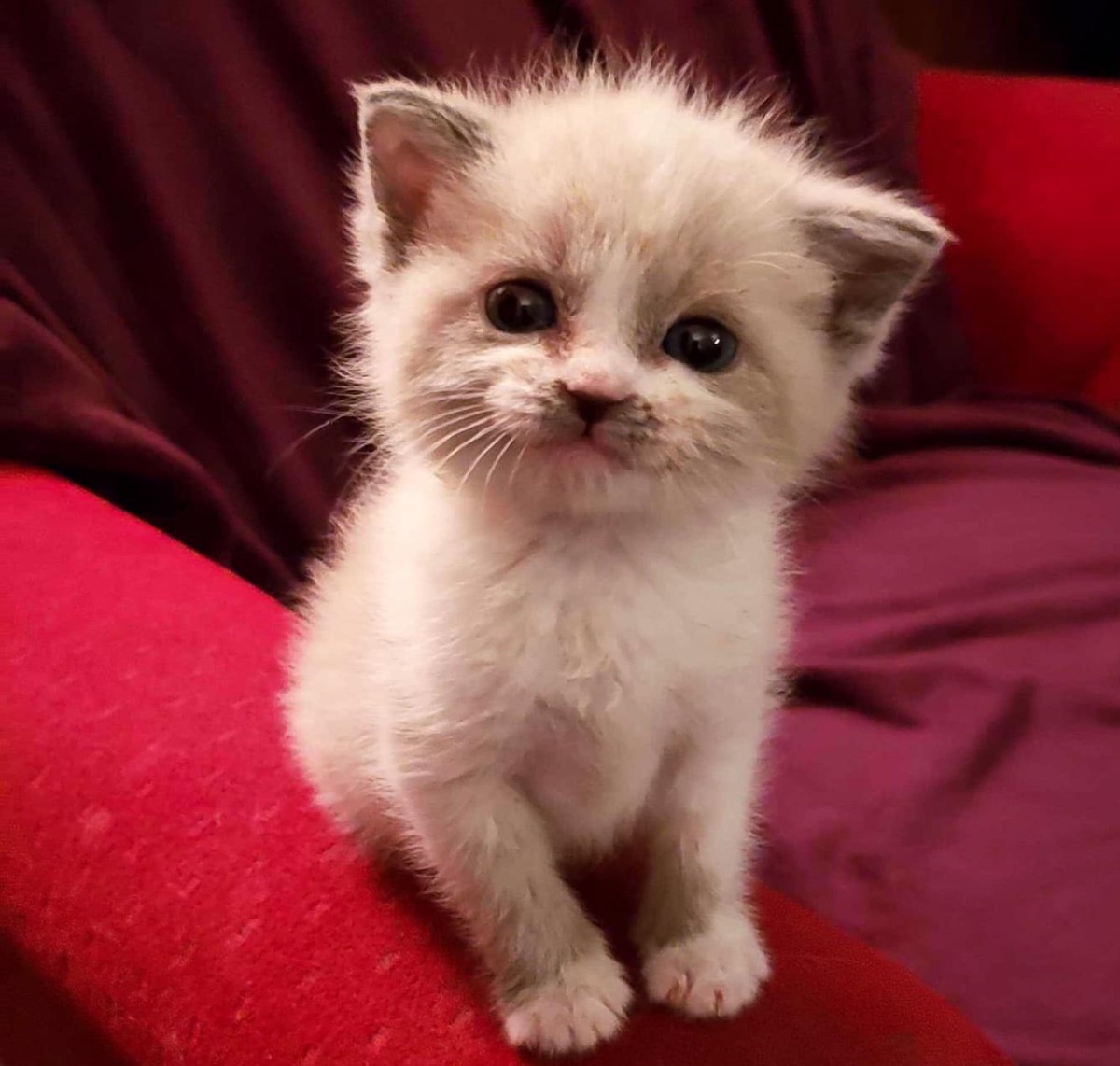
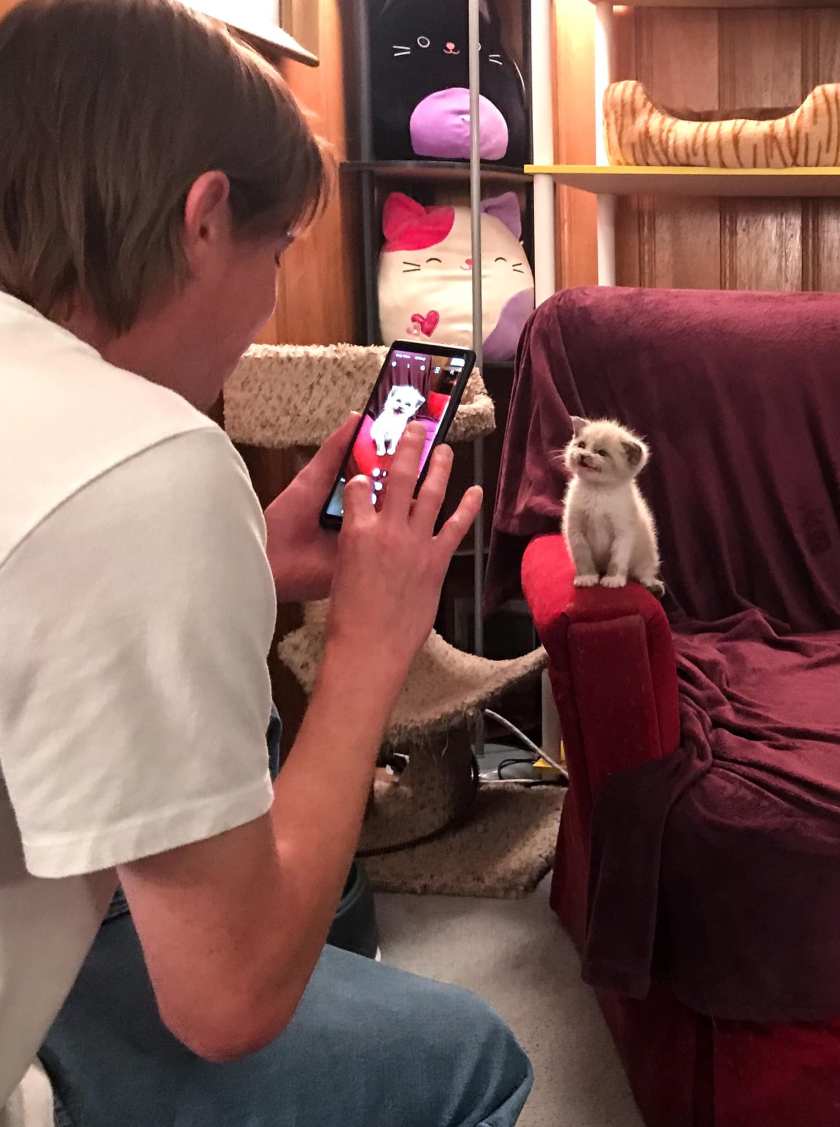
This kitten can’t hide her smile as she poses for the camera.
Do cats understand and appreciate when humans rescue them?
It’s a question that comes up often, even though cat owners servants are quick to answer in the affirmative based on their own experiences with thankful felines.
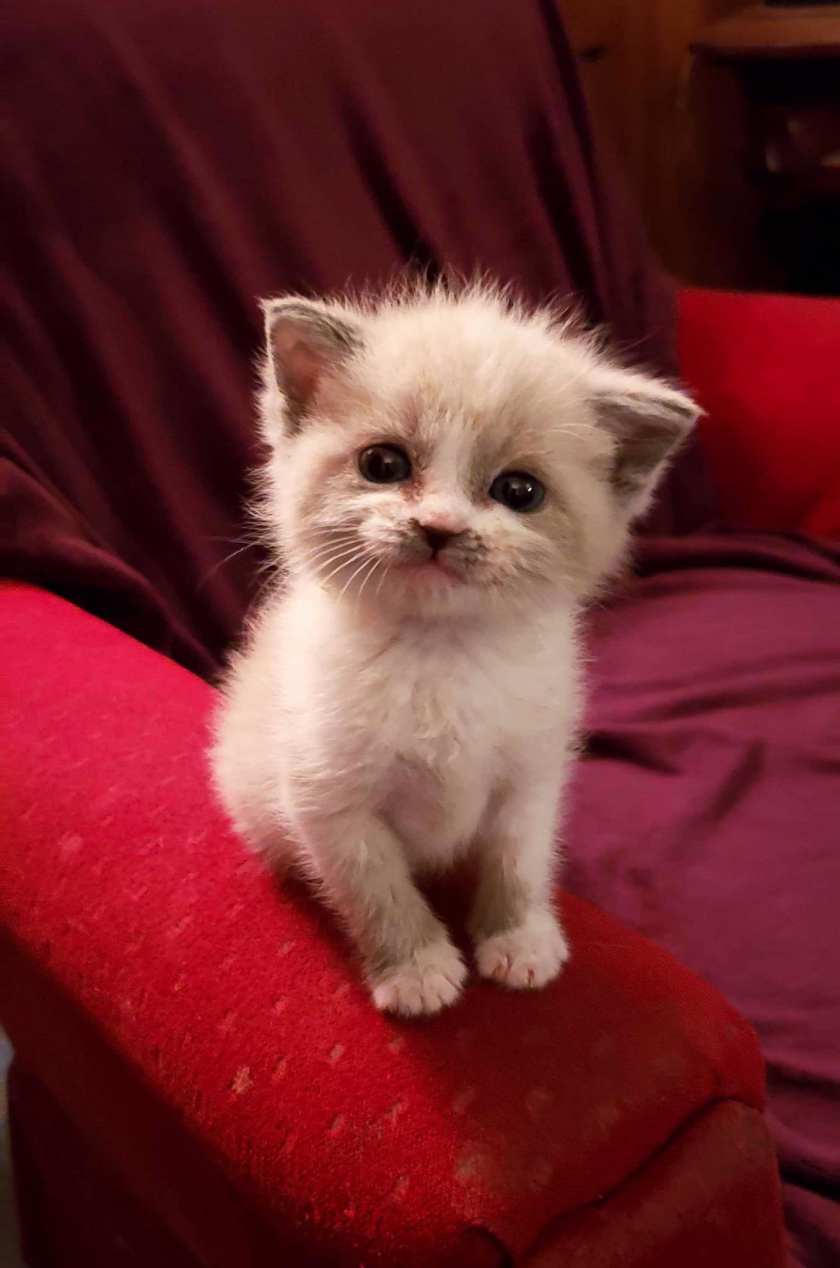
Thanks to a tiny rescue kitten named Blossom and her beaming smile, any doubts can be officially put to rest. Here’s Blossom happily posing for the camera in the home of her foster mom, Lauren Boutz of New Mexico:
“Get my good side! Got it? Good!”
Blossom and her two sisters are receiving round-the-clock care from Boutz and her boyfriend, who have taken over mom duties for the orphaned trio.
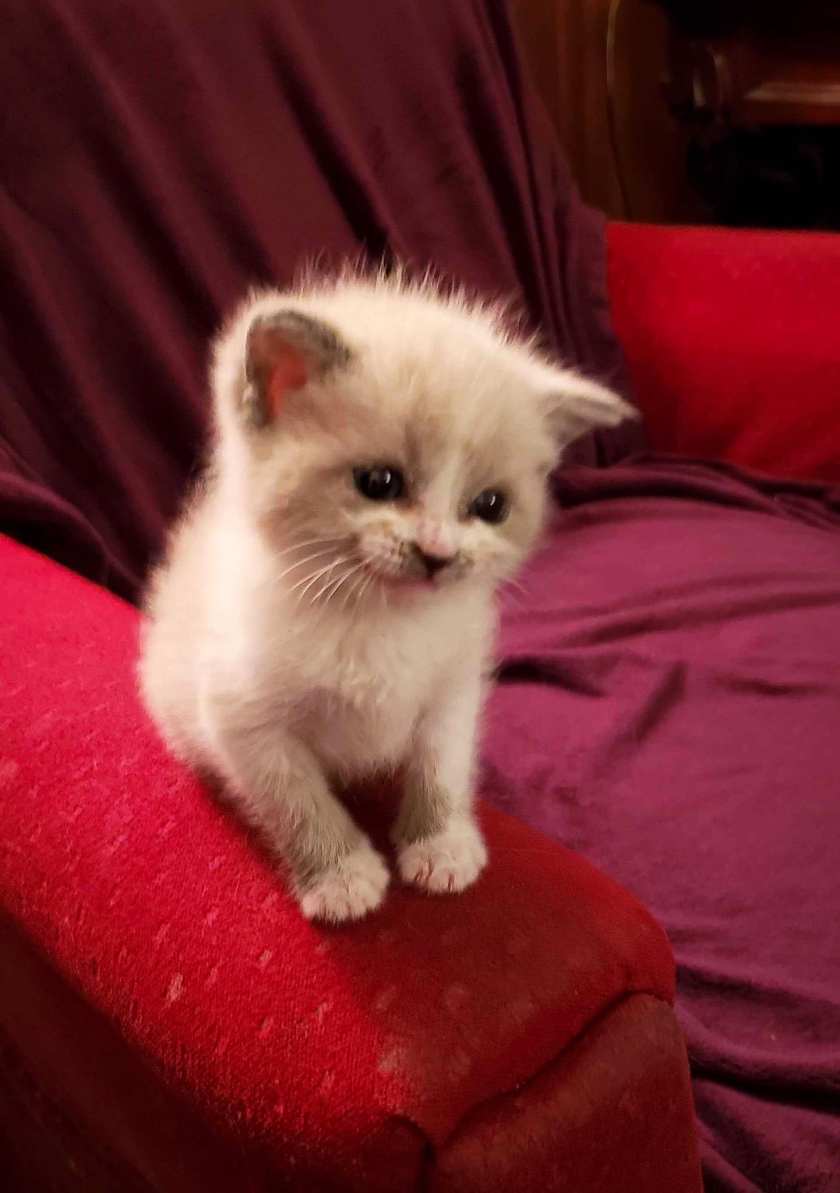
The grateful kitty’s sunny mug has been shared a few thousand times since Boutz shared the photos to Facebook. Like all good models, Blossom has several looks.
“My other good side!”
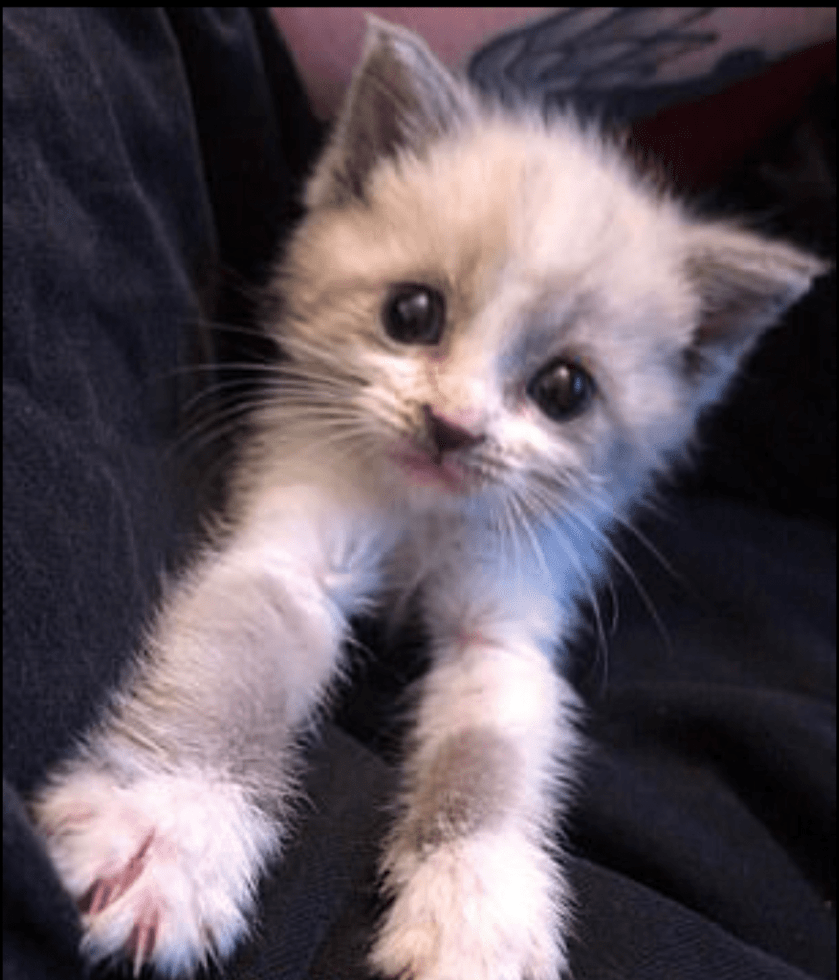
“You cannot resist my cuteness…play with me!”A natural in front of the camera.
Now if we could only get a certain grouch around here to smile…Why so serious all the time, Bud?
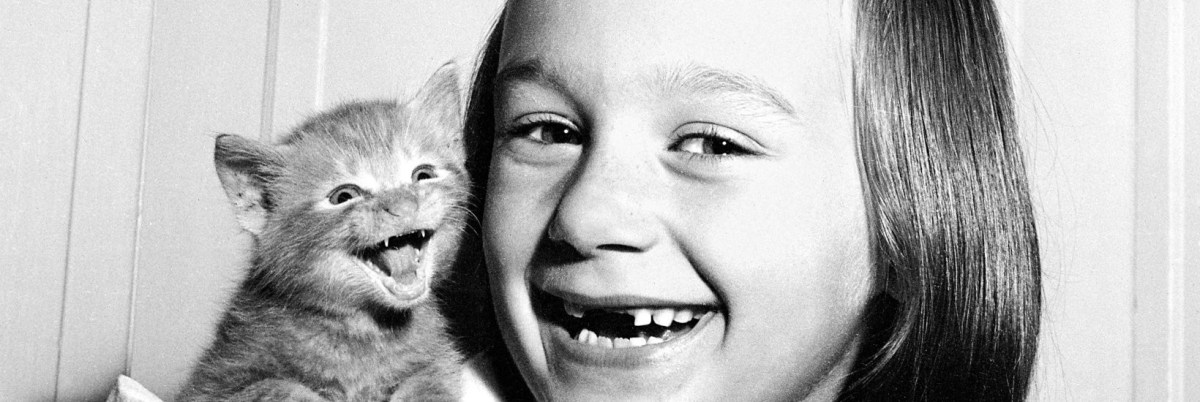
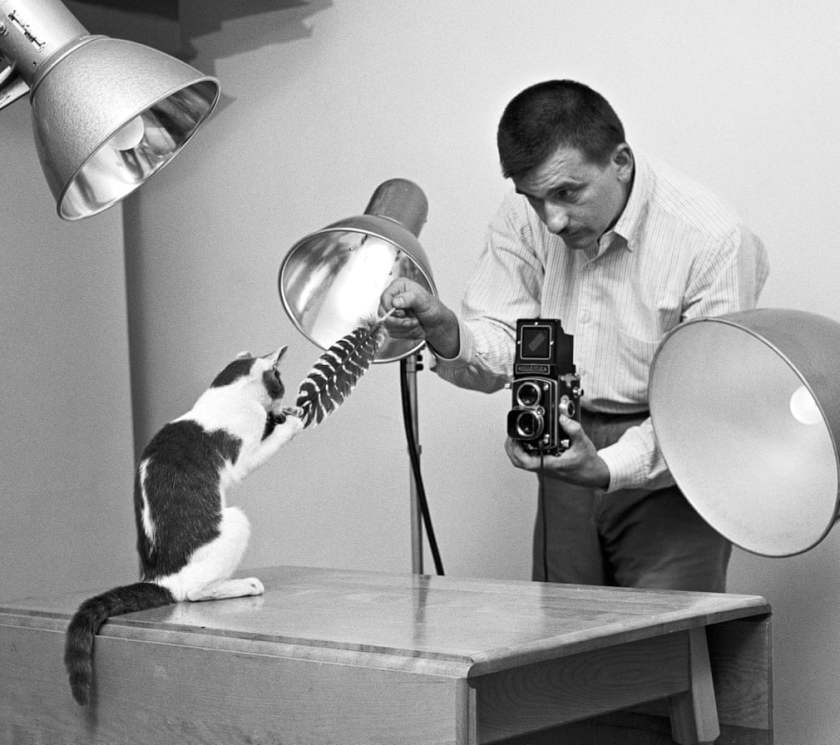
Walter Chandoha photographed cats for the better part of seven decades.
Walter Chandoha might not be a household name, but he’s a legend among photography enthusiasts and — most importantly for readers of this blog — a true OG of feline photography.
Chandoha, who took more than 90,000 photographs of photogenic kitties, passed away earlier this year at the ripe old age of 98. We don’t know the secrets to the photographer’s longevity, but it’s a good bet all that time spent with cute cats was a major contributor.
The New Jersey native and NYU graduate didn’t set out to become the most celebrated cat photographer. His work appeared on hundreds of magazine covers before the fluffy little carnivores pulled him into their world:
In 1949, Walter Chandoha adopted a stray kitten in New York. When he began taking pictures of his new pet, Loco, he was so inspired by the results that he started photographing kittens from a local shelter, thereby kickstarting an extraordinary career that would span seven decades
Now those photos are collected in a book called, appropriately, Cats: Photographs 1942-2018.
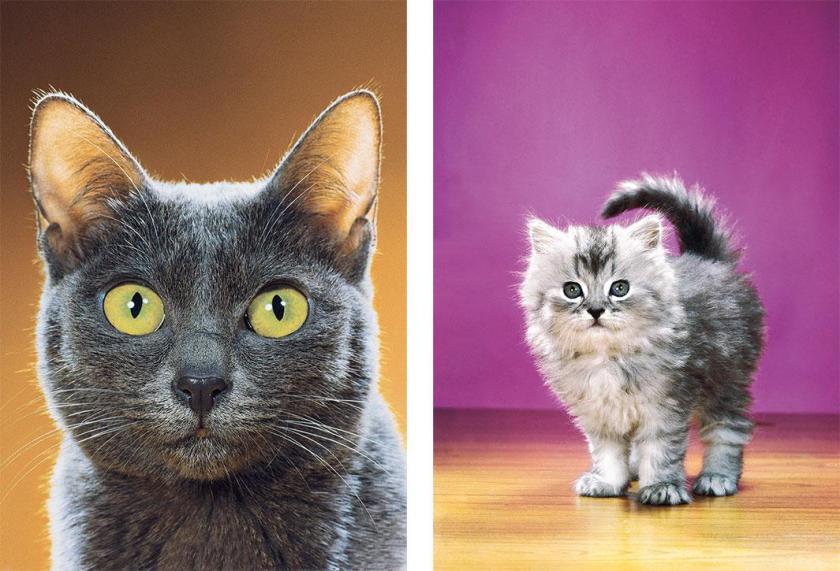
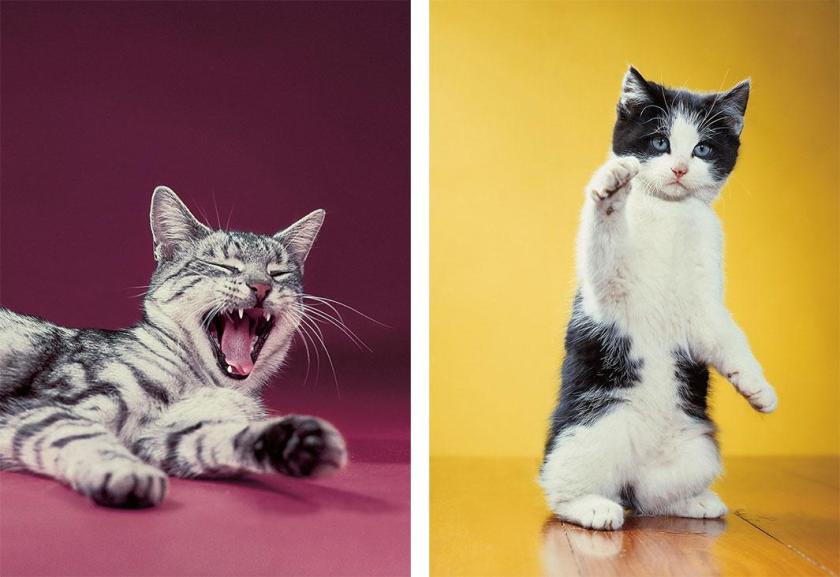
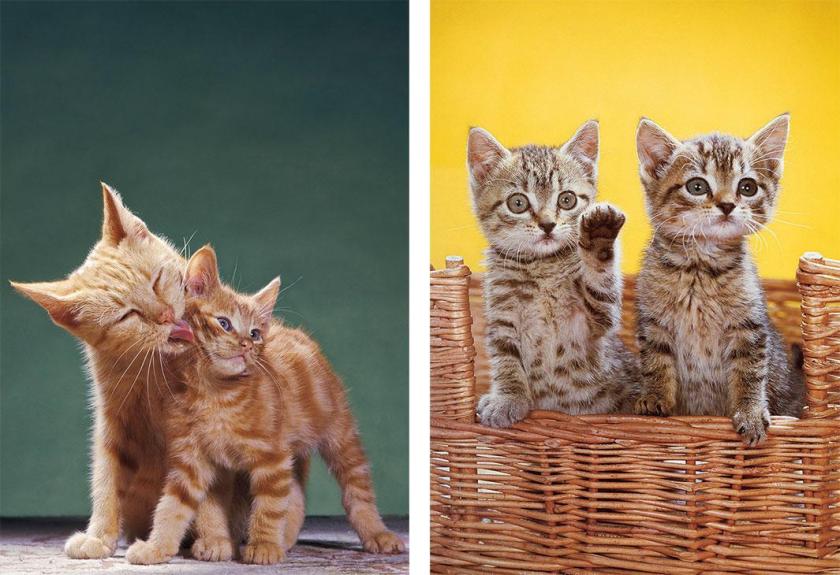
A pair of Chandoha’s kitty muses.
Fashion has Helmut Newton, architecture has Julius Shulman, and cat photography has Walter Chandoha. In 1949, his encounter with a stray kitten blossomed into a career that elevated feline portraiture to an art form. This is a tribute not just to these beguiling creatures but also to a remarkable photographer who passed away this year at the age of 98; and whose compassion can be felt in each and every frame.
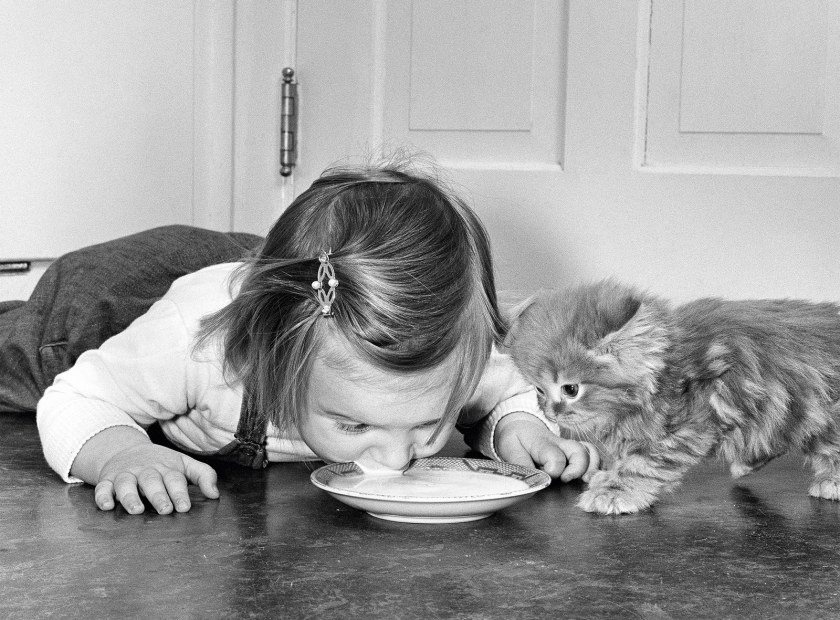
Hello, kitten!“Why are humans always putting us in baskets?”Chandoha and one of his feline models in the 1950s.Walter Chandoha was photographing adventure cats before it was cool.“Hey, get outta my milk, tiny human!”
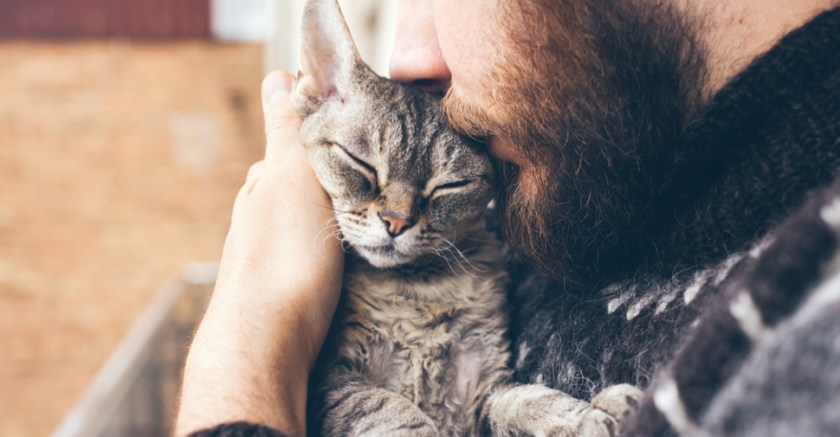
In a discovery that won’t surprise most feline servants, scientists have concluded cats really do get attached to us even if they have a funny way of not showing it.
The internet is abuzz this week with news of a study that indicates a cat’s bond with his human is much like a child’s bond with a parent.
The research, conducted by a team at Oregon State University, sought to gauge how attached cats are to their owners by putting them in a strange situation and seeing how they react with their humans present and without.
In the study a cat is led into a strange room accompanied by his or her human. After two minutes the human exits and the cat is left alone in the unfamiliar room. Another two minutes later, the cat’s servant returns.
It’s the way the cat acts when its human is away — and how it adjusts when the owner returns — that interests researchers. And sure enough, domestic feline behavior followed a familiar pattern:
With owner/servant in the room: “What is this strange place? What are we doing here?”
Human exits: “Oh no! Don’t leave me in here! I don’t know what this place is! Come back! Hey, come back here! This place looks, smells and feels funny. I’m scared!”
Human returns: “Ah! Okay, much better. I’m just gonna rub up against you so I feel better. You know, this room isn’t so bad after all, is it? You look pretty calm. That means I should be calm, right?”
Although it might seem strange that scientists can learn so much from such a simple experiment, the result is important because the way cats react is precisely the way small kids and dogs react to strange situations.
“I love you, furless human, and I’m not just saying that ’cause you feed me!”
It’s all about what psychologists call secure attachment: When a child is bonded with her parent, the mere presence of that parent lends calm and comfort in a strange situation.
Without mom or dad present, the kid is unsure, cautious and maybe even frightened. But with mom or dad in the room, the child feels comfortable and safe enough to go exploring and isn’t intimidated by the new environment. Psychologists call it a “secure base test” because it means kids use their parents as a safe “base” from which to explore.
Two decades ago, researchers broke new ground when experiments showed dogs behave the same way, drawing comfort and feeling more secure with their owners nearby.
“Like dogs, cats display social flexibility in regard to their attachments with humans,” study author Kristyn Vitale said. “The majority of cats are securely attached to their owner and use them as a source of security in a novel environment.”
That is, cats don’t always feel like playing nice and participating in a study because, well, they’re cats.
This latest study isn’t the first time researchers have tried to gauge feline attachment to their humans, but it’s the most expansive study of the phenomenon to date: The Oregon State University team conducted the test with some 80 kittens younger than eight months, then repeated the same experiment with adult cats.
The idea was to determine if cats grow out of their emotional attachment. The results suggest they don’t, which lends credence to the theory that domestic cats under the care of humans are, in some respects, kittens for life.
“Once an attachment style has been established between the cat and its caregiver, it appears to remain relatively stable over time, even after a training and socialization intervention,” Vitale said. “Cats that are insecure can be likely to run and hide or seem to act aloof. There’s long been a biased way of thinking that all cats behave this way. But the majority of cats use their owner as a source of security. Your cat is depending on you to feel secure when they are stressed out.”
For those of us currently employed as cat servants, that last bit is important: Cats most definitely do pick up on our moods even when it seems like they don’t.
To read more, check out a 2015 study by Italian scientists that found cats look to their owners for emotional cues about how to respond to new situations, and a 2017 by the same Oregon State University team that found cats value human interaction just as much as they value food.
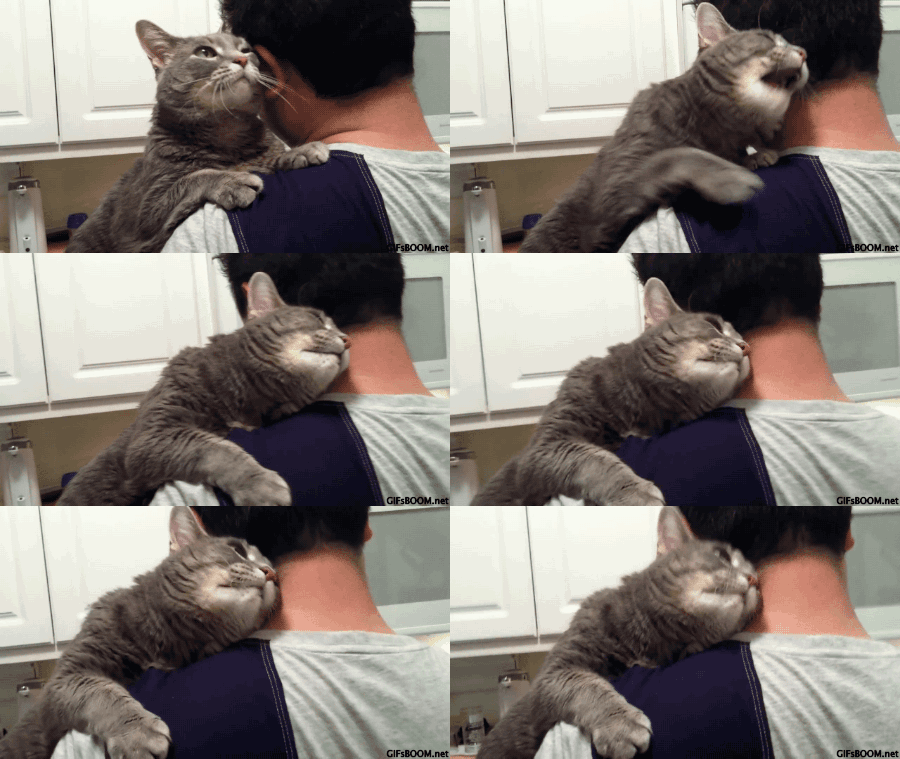
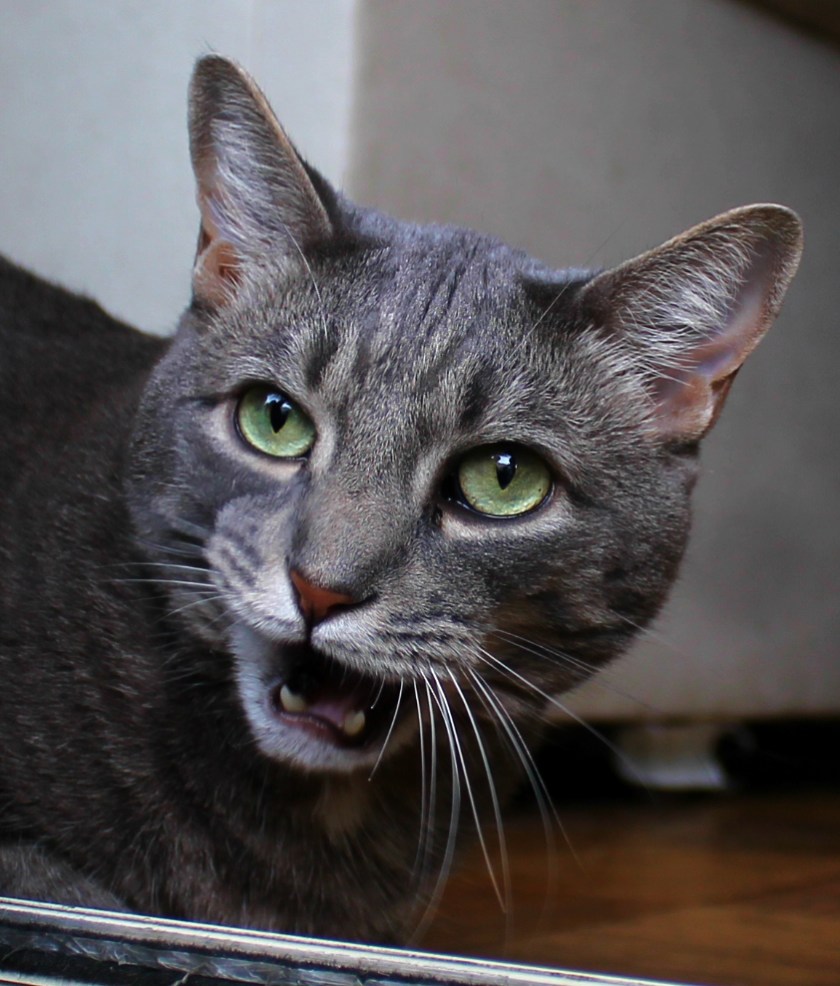
“Buddy doesn’t do hugs, okay? Buddy speaks in the third person, Buddy meows insistently for dinner, but Buddy does not do hugs. Deal with it, human.”
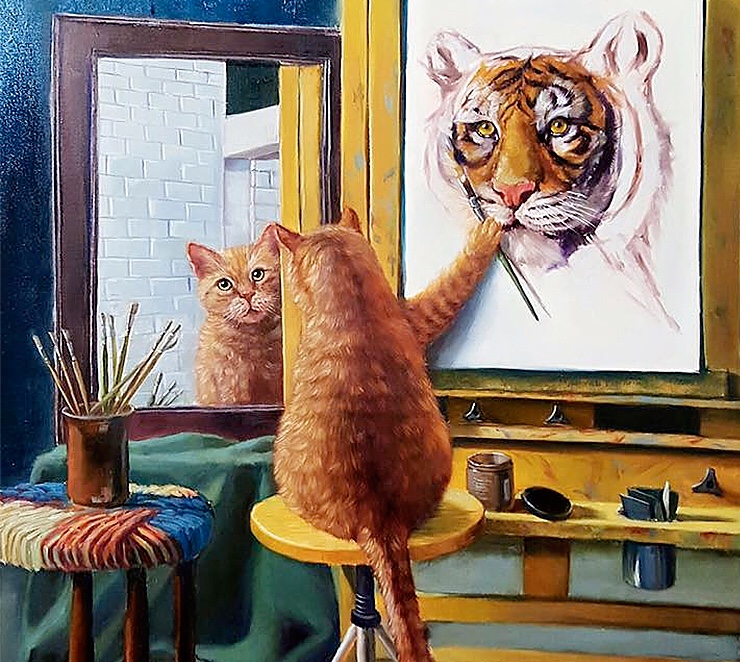
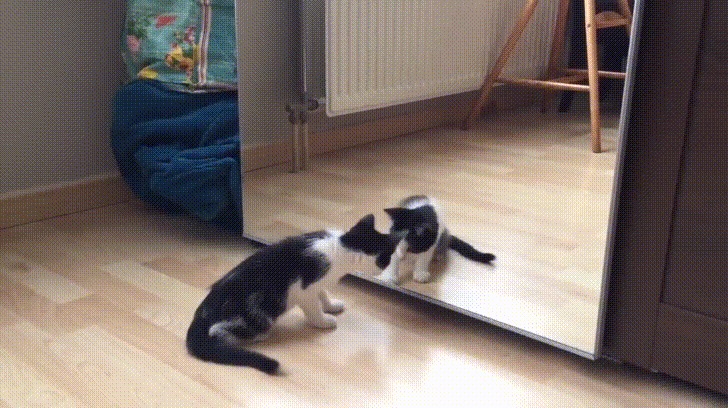
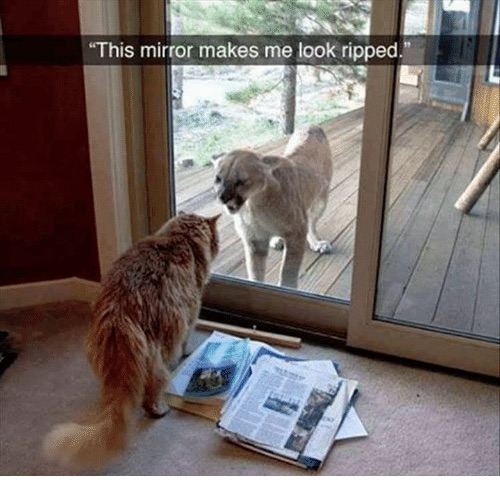
The traditional mirror test might fall short when it comes to determining the self-awareness of cats and other animals.
The mirror test has been the de facto gauge of animal self-awareness since it was invented in 1970 by psychologist Gordon Gallup Jr., mostly because no one’s figured out a better way to determine if animals understand who they are.
The procedure is simple: When the animal is asleep or sedated researchers will add a smudge of red paint, a sticker or some other visible mark on the animal’s face. Then they place a mirror nearby.
If the animal wakes up, looks in the mirror and tries to probe or wipe away the new mark, it passes the self-awareness test. It means the animal understands the image in the mirror is a reflection of itself and not another animal, according to researchers.
The list of animals who have passed the self-awareness test is quite short: It includes great apes like orangutans, bonobos and chimpanzees, as well as elephants, dolphins, orcas and crows.
Cats, who are notoriously difficult to work with in controlled studies, have never passed the mirror test. Dubbed “the world’s most uncooperative research subject,” cats are a challenge even for the most seasoned animal cognition experts.
“I can assure you it’s easier to work with fish than cats,” one scientist told Slate magazine. “It’s incredible.”
It’s not clear if cats don’t recognize themselves or simply can’t be bothered. Indeed, one of the primary criticisms of the mirror test is that, like most measures of animal cognition, it employs a human perspective to gauge non-human intelligence. It assumes that animals use vision as their primary source of information, as humans do, and it assumes that animals will be immediately driven to touch or remove an unfamiliar mark.
Buddy has a long and tumultuous history with mirrors. As a tiny kitten he once pulled down a thick, heavy wood-framed mirror from a wall, smashing the glass on impact. Thankfully he avoided injury.
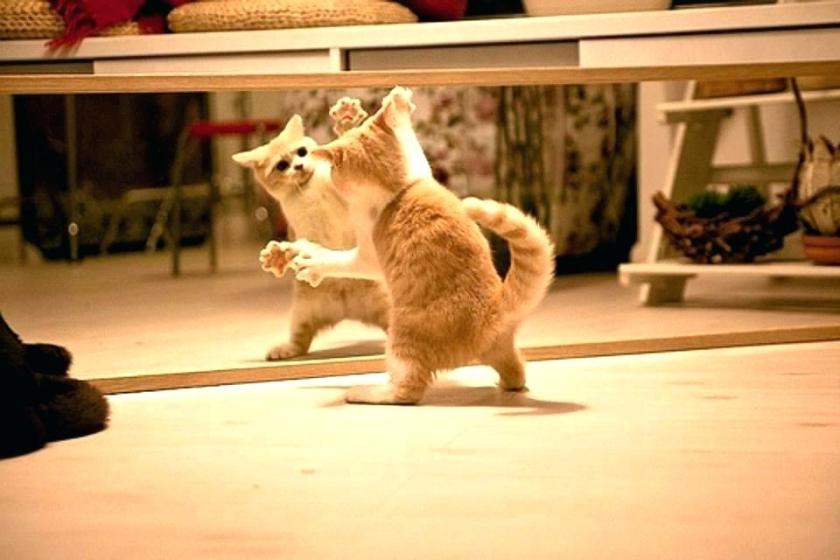
As he got older, Buddy graduated to his boxing phase: He’d stand in front of a mirror, put his weight on his back legs and “box” the Buddy in the mirror with a series of quick jabs. Even from another room I knew instantly when he was boxing his reflection thanks to his high-pitched trills and the THWAP-THWAP-THWAP!! of his little paws against the glass.
The boxing phase eventually gave way to the narcissism phase, when Buddy would park himself in front of the mirror and stare at his reflection, occasionally raising a paw to the glass or waving at himself.
Was this evidence of self-awareness? Did little Bud now realize he was staring at his own reflection? After all, even humans don’t pass the mirror test until they’re two years old, so it’s entirely possible a cat can come to understand what it’s seeing in the mirror just like kids can.
So ripped.
Then one day I was shaving with the bathroom door open when Buddy padded up behind me and meowed to get my attention. Instead of turning to face him, I kept shaving, locked eyes with him in the mirror and gave him a slow-blink of recognition. He blinked back.
Finally, yesterday the roles were reversed: Buddy was sitting in front of the mirror while I was reading a few feet away.
“Hi, Bud!” I said, putting my tablet down.
Buddy, still staring into the mirror, met my gaze and blinked at me. Then in a moment that might have been confusion or dawning comprehension, he turned from the mirror-me to the real me, then turned back to the mirror. He blinked at me again.
Is that evidence of self-awareness? If Buddy still thought that the images in the mirror were different animals, wouldn’t he freak out upon realizing there are now two Big Buddies? Or would he meow with joy at the serendipitous development of a second Big Buddy to do his bidding?
He didn’t do any of those things. He took it in stride and reacted to mirror-me the same way he always reacts to regular me.
Skeptics will say this little anecdote proves nothing. It is, after all, just an anecdote, and it’s a far cry from a well-designed, controlled study with a few dozen feline participants.
That’s all true. But maybe we’re onto something here. Maybe instead of the traditional mirror test, which cats don’t seem to be interested in, a new mirror test could gauge how cats react to their owners as seen in a mirror.
Cats are never satisfied with doing things the “normal” way. Why should the mirror test be any different?
“I don’t always eat kibble, but when I do, I stop the second I can see the bottom of the bowl.”
For the full experience, play this in the background as you read. 🙂
“His scratches are so artful they’re featured on at least 15 hip hop albums. When dinner time arrives, he feeds his human. He makes biscuits for Michelin-starred restaurants. He is….the most interesting cat in the world.”
“I don’t always break things, but when I do, I prefer breaking irreplaceable personal items. Stay Buddy, my friends.”
“His meow can be understood by speakers of 43 different languages. On Halloween, other cats dress like him. When the veterinarian gives him shots, he shoots back. He is…the most interesting cat in the world.”
“I don’t always get the zooms, but when I do, I rocket around at 120 mph. Stay Buddy, my friends.”
“The owners of the Empire State Building keep a perch for him at the very top of the structure. His litterbox was the inspiration for Calvin Klein’s newest cologne. He’s so adept at knocking things off flat surfaces, the US National Bowling Team recruited him when he was just a kitten. He is…the most interesting cat in the world.”
“I don’t always seek affection, but when I do, it’s always at the time, place and duration of my choosing. Stay Buddy, my friends!”
“His feelings are so strong, he enlisted the Mountain from Game of Thrones as his Emotional Support Human. He always lands on his feet, even in zero gravity. His leap is so graceful, Michael Jordan once asked him for his pawtograph. He is…the most interesting cat in the world.”
“I don’t always want to be let in, but when I do, I want to be let back out again immediately. Stay Buddy, my friends.”

 Pain In The Bud