Now you can track how much time your cat spends exercising, grooming herself and sleeping.
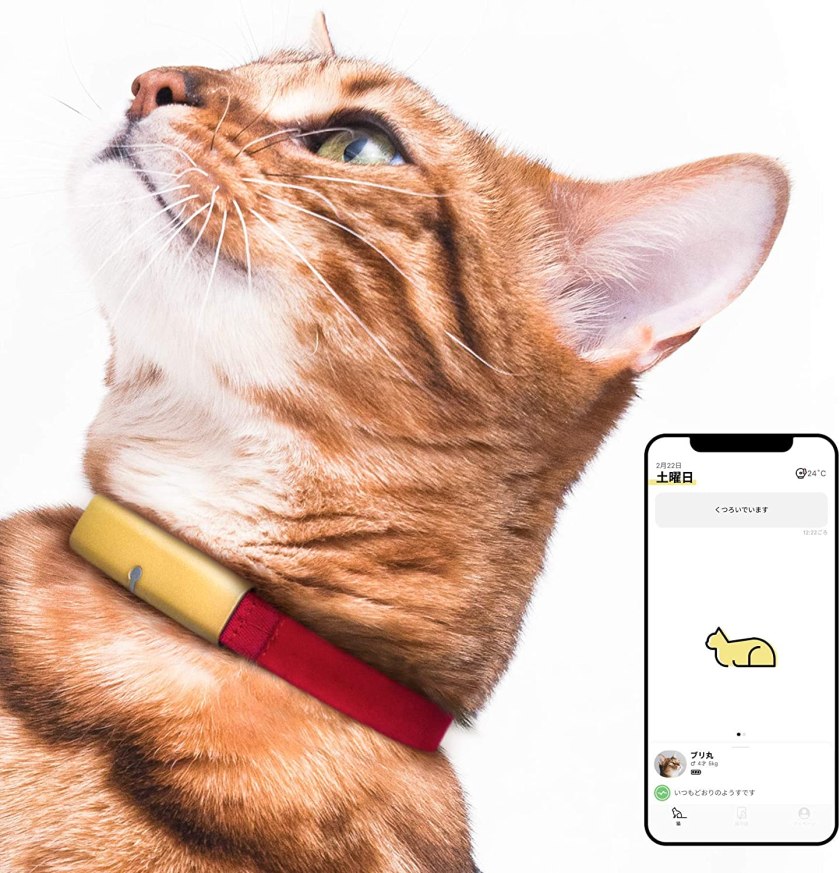
A Japanese company that sells FitBit-like devices for cats released its first data-driven report this week and promises new revelations to come as more people buy the devices for their cats, leading to more data.
The company and its device are both called Catlog. To mark “Cat Day” in Japan, which falls on Feb. 22, researchers at the Shibuya, Tokyo-based firm issued a report saying data shows cats sleep progressively longer as they age, and cats in general sleep longer in winter.
Yeah. Not exactly a whopper.
Still, it’s one thing to know something anecdotally and another to prove it, and there are tantalizing possibilities as more kitties are equipped with Catlog. The collar-like device uses “biologging” technology to record and sort data on things like eating, drinking, sleeping, grooming and exercise. The data is relayed to caretakers via a mobile app and added to the information coming from every other Catlog, giving the research team behind the app hard data for cats across all ages and breeds.
The Catlog has received Japan’s Good Design Award, a sought-after mark of excellence among Japanese products.
Catlog looks like a regular collar with an unobtrusive device attached.
Unfortunately Buddy won’t be contributing to that data even if Catlog pushes into the US market. Little dude won’t tolerate a collar at all and is not shy about loudly, repeatedly, incessantly communicating when he doesn’t like something. 🙁
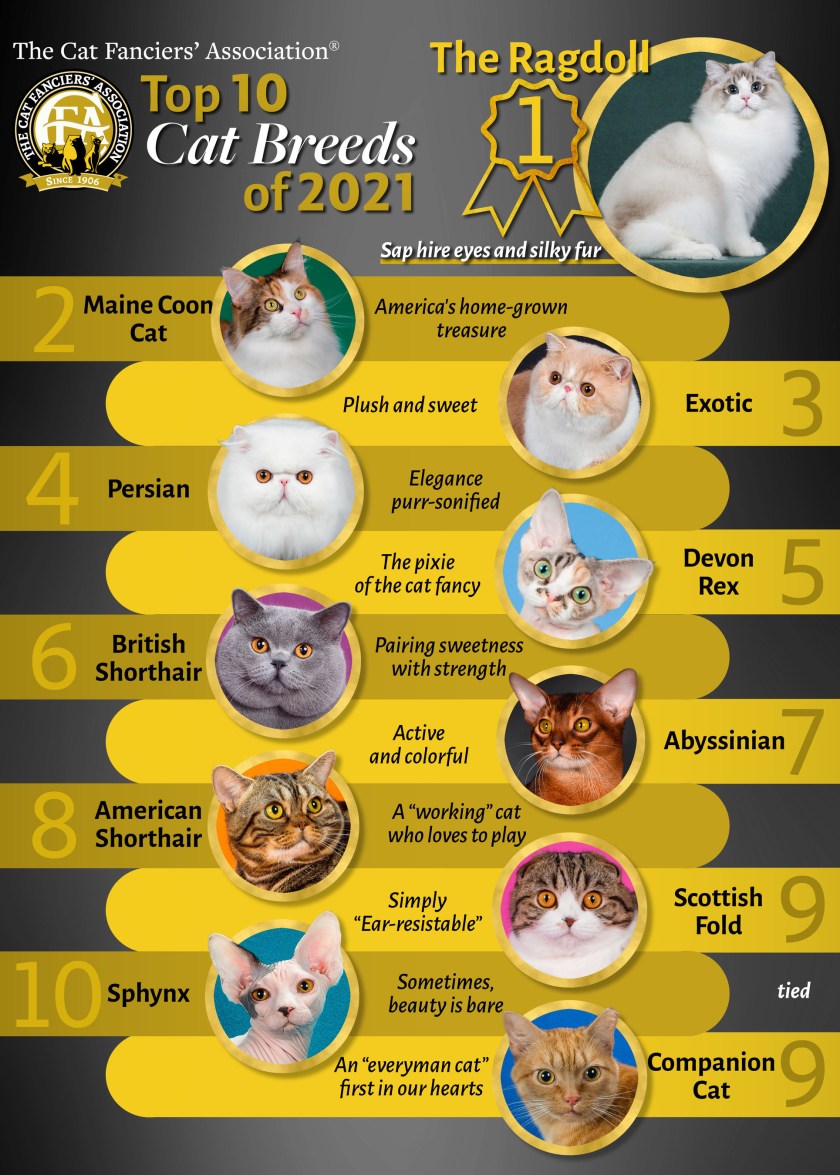
Most Popular Cat Breeds of 2021, According to CFA
The Cat Fanciers’ Association has released its annual list of the most popular cat breeds. While the CFA recognizes 45 breeds and registers “non-pedigreed” cats as well, the list is based only on CFA registered cats. That means it provides a good snapshot of which breeds are trendy, but it’s not a definitive most popular breeds list.
Cats without a particular breed still account for the vast majority of all pet felines, but among people who registered their cats with CFA, Ragdolls were the most popular in 2021, followed by gentle giant Maine Coones and exotic shorthairs. (Note that this list does not include the fearsome and elusive Buddinese Tiger.)
The world’s largest registry of pedigreed cats has again determined the world’s most popular cat breeds, based on registrations. This year’s Top 10 list reflects the increasing popularity of certain breeds. However, registrations of ALL cats have increased substantially, reflecting the growing popularity of pet cats since the beginning of the pandemic.
While the answer is obvious to cat servants, proving feline jealousy in a study is a different ballgame entirely.
Bud isn’t fond of my smartphone.
Like many other humans I spend too much time looking at the damn thing, and that’s not good even though I have the excuse that I use my phone as a reader and my presence on social media ranges from extremely limited to nonexistent.
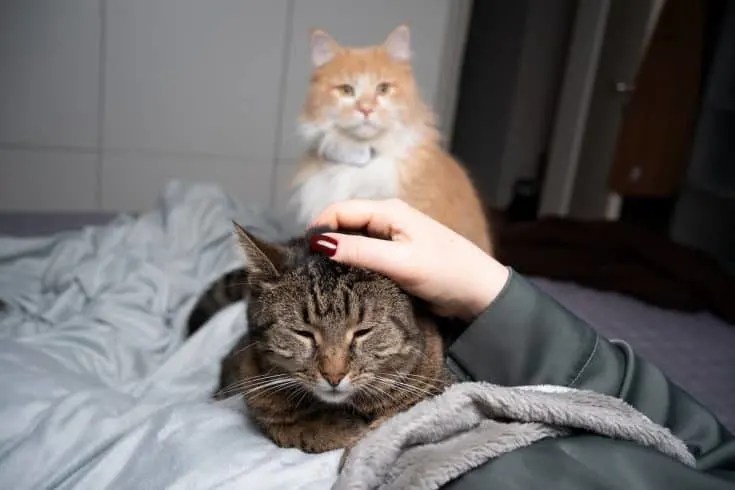
When His Grace has decided I’ve looked at the screen long enough and it’s Buddy Time, he’ll pad up and slap the phone out of my hands, or if I’m laying down he’ll climb on top of me, nudge the phone out of the way and sit on my chest so he has my full attention.
“No glowing rectangle!” he’s saying. “It’s Buddy Time! Now scratch my chin and rub the top of my head as I purr!”
Naturally I comply, and before long Buddy is leaning in, pressing the top of his head against my forehead, which is his way of saying: “I love you, slow dumb human! You have many flaws and you don’t give me enough snacks, but you’re my Big Buddy!”
Of course, intuitively knowing Buddy is jealous of — or annoyed by — my phone is different than proving it in a well-designed, repeatable experiment.
Psychology Today’s Jessica Wu writes about just such an effort by a team of researchers out of Japan.
Before I offer my criticism of the study, let me first say I have respect for the team at Kyoto University. They’re one of a handful of research teams around the world that routinely produce studies into cat behavior and cognition, and it’s clear that they view it as an important and crucial area of research. That’s significant, because even though we’ve seen something of a renaissance in cat-related studies over the past half-decade or so, many scientists still think cats are nearly impossible to work with.
The team at Kyoto also understands the territorial nature of cats makes it difficult to study them in a lab environment, so they go the extra mile and enlist people who are willing to let them into their homes to study their little tigers.
That’s what the Kyoto team did for their 2020 study on jealousy, splitting their research between typical homes and cat cafes. (Fifty two cats in total participated.) All the cats observed in the study had been living in their homes or cafes for at least six months.
Researchers took a method that’s been used to study human babies and dogs, and adapted it for felines. They brought in a plush cat and a pillow with a corresponding color and texture.
Then they asked the participants to spend time petting the plush cat and the pillow in front of their furry overlords while team members carefully watched the kitties for their reaction. Each experiment was then repeated with a stranger petting the plush and the pillow to gauge whether cats behaved differently when observing someone they aren’t emotionally attached to.
The team found the cats “reacted more intensely” to the plush cats than the pillows, but there wasn’t any marked difference in how they reacted when they watched their humans versus strangers.
Crucially, the cats didn’t show signs that they were upset, like human babies have in such experiments, and they didn’t try to physically separate their humans from the plushies, as many dogs did in their version of the experiment.
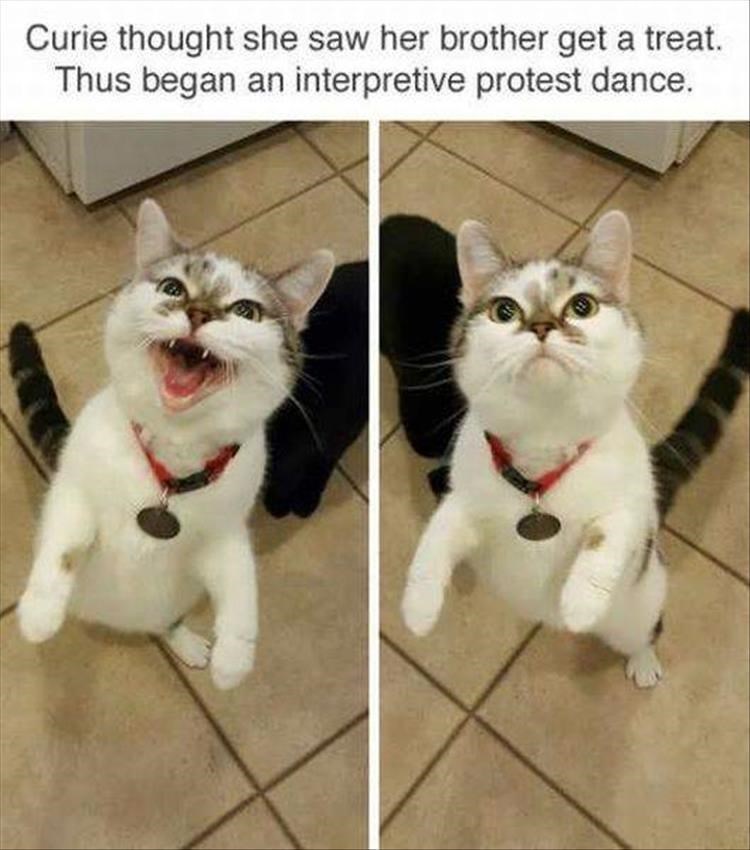
“How dare you hand out yums and not include me!” Credit: icanhazcheezburger
The results indicate cats didn’t express jealousy in the experiment, but the Kyoto team are pros, noting that it’s just one study with one approach.
“We consider the existence of some cognitive bases for jealousy to emerge in cats, and the potential effect of cats’ living environment on the nature of their attachment to their owner,” they wrote. “More ecologically valid procedures are required for further study of these issues.”
It’s my non-expert, non-scientific opinion that researchers would get better results using actual cats instead of proxies. That introduces a new set of problems and an experiment involving rival cats won’t be easy, but science isn’t supposed to be easy, and if we really want to understand how cats think, we have to get as close as possible to mimicking real circumstances.
The plush cat used in the Kyoto study. Perhaps the cats involved in the research felt the humans were insulting their intelligence. Credit: Kyoto University
It would also help to expand the scope of the experiment. How much can researchers really glean from a fleeting interaction? Jealousy isn’t something that just bubbles up and disappears. It happens within an emotional context. It’s a secondary emotion that sprouts from elements of primary emotions like fear, anger and confusion.
Scientists are very careful about anthropomorphizing animals, for obvious reasons, but sometimes they’re guilty of over-correcting as well and denying the obvious, which is why the prevailing scientific opinion for almost half a century, until 1959, was that animals don’t have emotions or cognition.
In the meantime, Buddy will continue to make sure Buddy Time is equal to, or greater than, glowing rectangle time.
The famous “beckoning cat” traces its origins to feudal Japan, where a friendly cat was said to lead a weary lord and his men to refuge at a humble temple.
In a new article, National Geographic delves into the history of maneki neko — Japan’s famous “beckoning cat” — and how the image became ubiquitous in modern society.
Chances are you’ve seen maneki neko even if you don’t realize it. The iconic feline image has transcended its homeland and is common not only in China, Vietnam, Thailand and the rest of Asia, it’s also made its way to the US and Canada as well, earning a place in shops run by Japanese and westerners alike.
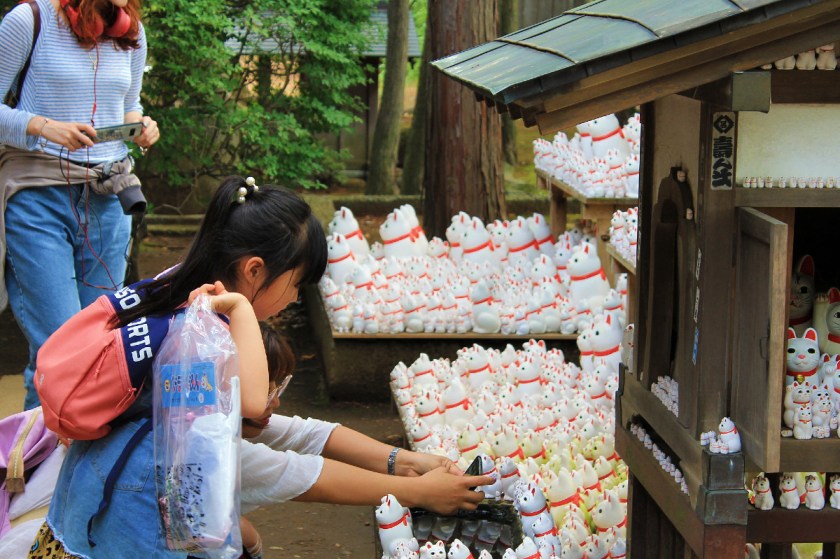
Visitors leave their own maneki neko statues at the shrine, often with personal messages asking for different blessings and written in black marker on the back of the statues. Credit: Pain In The Bud
There’s a reason for that: The waving cat not only represents luck and good fortune, it’s a welcoming gesture meant to attract customers. Maneki neko find a place in homes too, with different coat colors and patterns representing different positive attributes: A white cat is supposed to bring happiness, while a black cat wards off evil spirits and a calico is believed to bring luck in all its forms.
Maneki Neko statues at Setagaya shrine. Credit: PITB
As a cat lover I kept an eye out for the iconic statues during my time in Japan and, although I missed Buddy, I couldn’t leave without seeing where it all began: The cat shrine at Setagaya, a quiet Tokyo suburb where, according to legend, a feudal lord followed a beckoning cat by the roadside and found refuge from the elements in a humble shrine, where the temple monk invited them inside and gave a memorable sermon.
The feudal lord was so grateful for the hospitality, and for finding shelter to wait out a violent thunderstorm, that he vowed to become the temple’s patron. The grounds contain several temples today, as well as separate shrine areas for maneki neko left by visitors and wooden icons with hopeful messages written on them.
All images in this post are from my trip to Setagaya’s cat shrine in the summer of 2019. To see more, check out the post I wrote at the time from Tokyo.
One of the highlights of my trip to Japan last summer was Gotokuji Temple, the famous “cat shrine” in Tokyo’s Setagaya suburb.
Gotokuji is home to thousands of statues of maneki-neko, or “beckoning cat,” an important and ubiquitous image in Japan: Statues of maneki-neko adorn shops and virtually every public place in Tokyo, but Gotokuji is where the legend of the beckoning cat was born. Visitors write prayers on the statues and ask for good luck for a variety of venture, from opening new businesses to getting married.
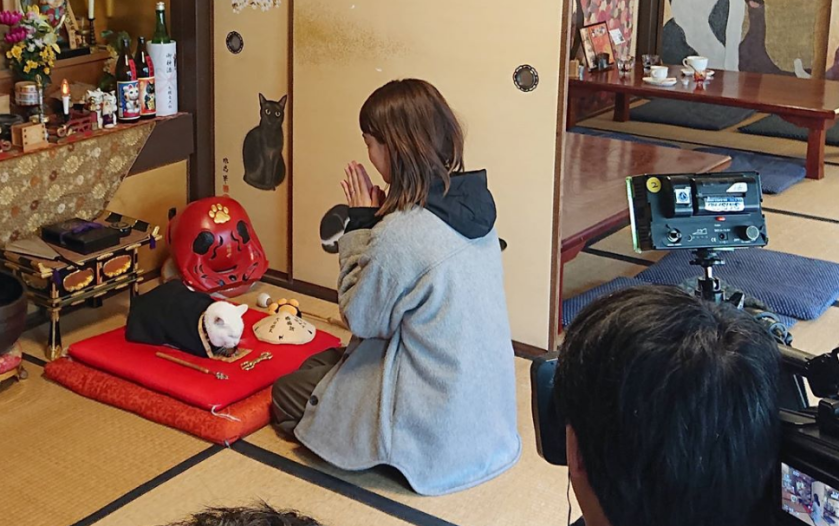
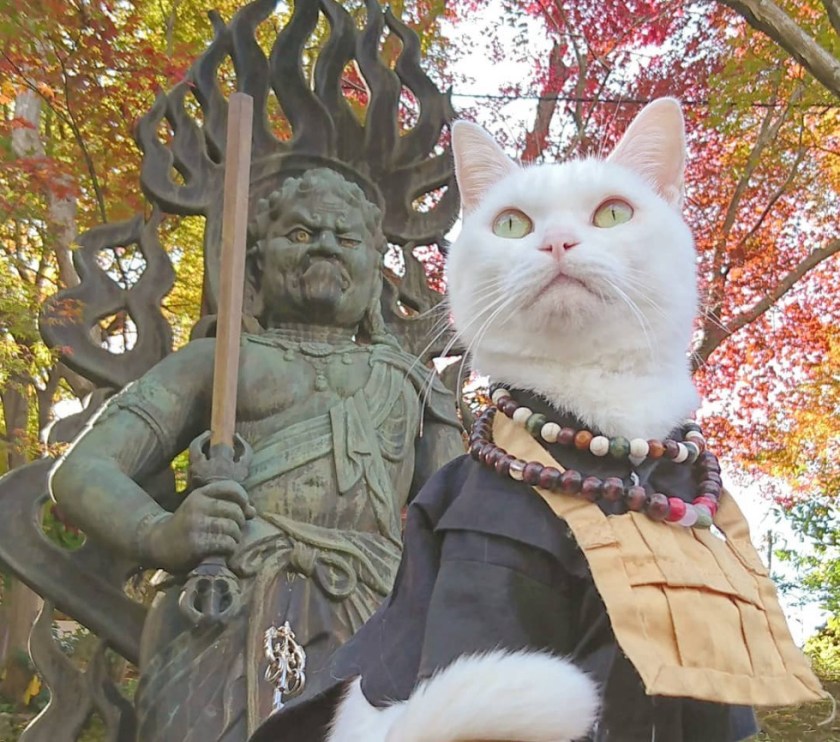
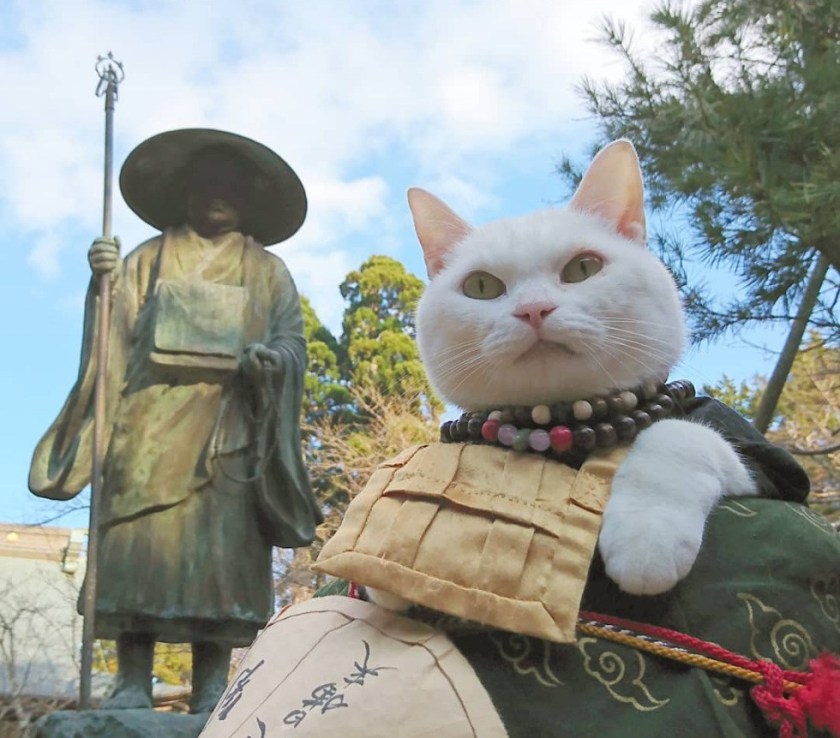
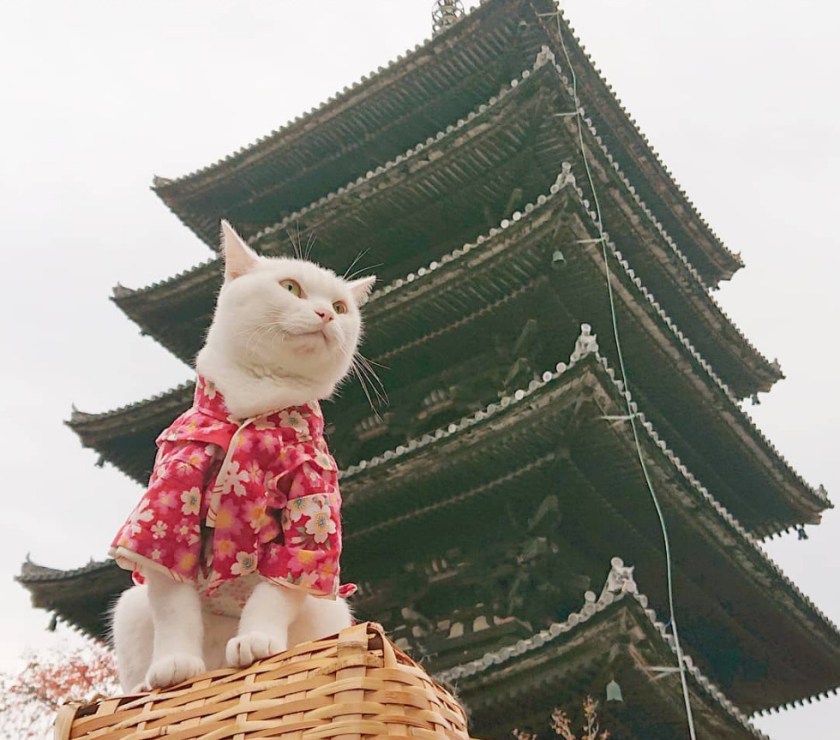
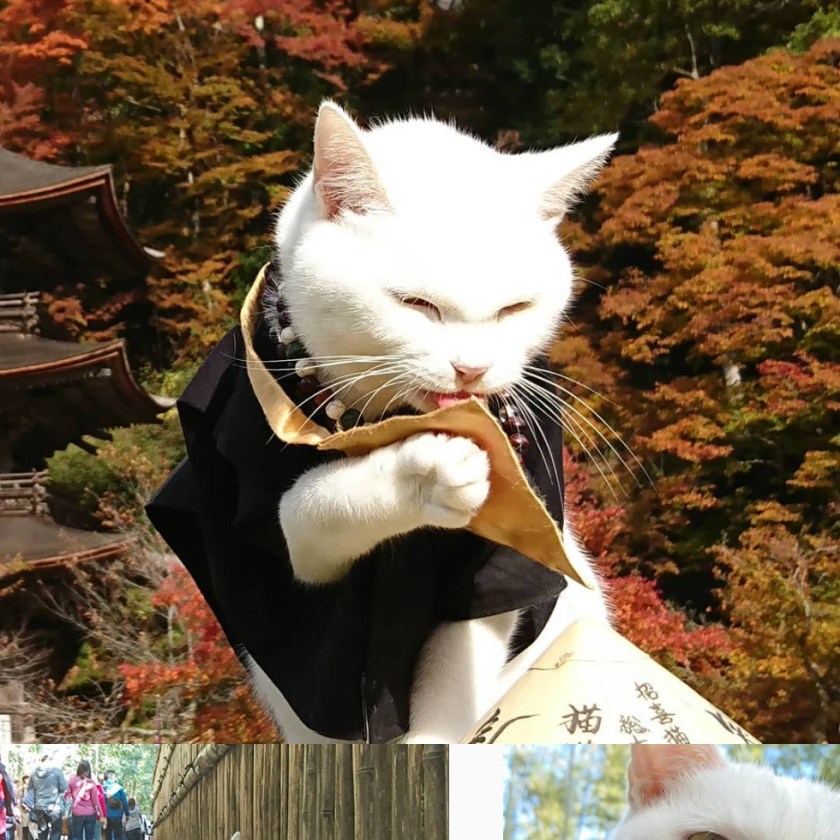
There is, however, only one current feline resident at Gotokuji, while Kyoto’s Nyan Nyan Ji — literally “meow meow shrine” — is populated exclusively by feline “monks,” who wear monkly garb and take their duties — especially napping, er, meditating — very seriously.
The most recognizable of them is Koyuki, the chief cat priestess at Nyan Nyan Ji.
Here are some photos, all courtesy of the temple’s Instagram, showing what life is like for Koyuki and her fellow priests:
“This is how it’s supposed to be, humans: You kneeling before us. Those ancient Egyptians had it right.”“I can call upon powerful minions to smite you whenever I please.”
“Tiny humans are permitted to touch my holy personage.”“And here is the nursery, where it’s currently reading time for our kittens…”“Walk with me on the path to deliciousness…”“Read the sign! We’re not open until I says so. Now if you please, I have napping to do.”
A tabby in Japan got help after an elderly man fell into an irrigation channel.
When an elderly Japanese man fell into an irrigation channel and couldn’t get out under his own power, it was a cat who got the attention of a neighbor, leading to the man’s rescue.
The incident happened at 7:30 p.m. on June 16 in Toyoma, a city of about 413,000 people about 300 miles northwest of Tokyo on Japan’s main island, Honshu.
Koko the cat, a gray tabby, managed to catch the attention of a 77-year-old neighbor, leading her to the spot where the man had fallen into the irrigation channel, Kyodo News reported. The neighbor enlisted the help of her daughter — Koko’s owner — Tomoyo Nitta, and her two grandsons — ages 20 and 18 — who pulled the victim to safety.
Civic duty is a big thing in Japan, and Japanese police agencies in turn honor civilians who go out of their way to help or rescue others. (US police agencies, which are desperately trying to repair their tense relationship with regular Americans, could learn a thing or two from the Japanese model of community policing.)
The humans involved got an official calligraphic thank-you citation from the cops, while Koko got cat food. We’re sure she’s not complaining about her reward.
“I want to tell her well-done,” Nitta said, cradling the usually shy Koko in her arms during the brief recognition ceremony on June 28.
A cat and a group of people who rescued an elderly man from an irrigation ditch were honored by police in Toyoma, Japan, earlier this week.










 Pain In The Bud