Wash. Family Recovers Cat Stolen By Amazon Driver: ‘She Left Her Outside To Die’

After an Amazon delivery driver stole their cat from their driveway, a Washington state family went to great lengths to recover their beloved tabby — without the help of the online retail giant, which declined to put them in touch with the driver.

Feefee’s back home.

The tabby cat, who belongs to the Ishak family of Everett, Washington, has been reunited with her humans after an 11-day ordeal that started with her abduction by an Amazon Flex delivery driver on July 21 and ended with a long and determined search by her family that led to an apartment complex about six miles from their home.

“My wife and I drove around over the last three days concentrating on apartment buildings until [Thursday] when I spotted a car that matched [the driver’s],” Ray Ishak told PITB. “I have been in the car business for 26 years. I know what to look for. Perfect match, even missing the front wheel cover, just like in the [home security camera] video.

“We went to the leasing office and explained we were looking for our cat and reason to believe it might here. The office employees immediately commented that the police were there a few days ago asking about the cat. We knew then we were at the right place.”

Ishak and his wife spent the next few hours searching the grounds around the apartment complex, which are covered in heavy brush. While they didn’t find Feefee, they spoke to several children playing nearby who confirmed they’d seen the missing tabby. They gave their phone number to the kids, asking them to call if they spotted Feefee again.

“Around 6 pm they called,” Ishak told PITB. “We took off and found her in very heavy brush and sticker bushes.”

The couple gave the kids rewards for their crucial help, then gently coaxed their frightened cat from out of the brush where she’d been hiding.

A video taken afterward shows a famished Feefee digging into a large bowl of food after her long ordeal. She’d clearly not been eating over the past week and since she’s been home she’s been doing little else besides sleeping and eating.

Ishak said his grandchildren, who are particularly close to Feefee, were “elated” when told she’d been found.

For the family, the reunion comes after lots of worry, stress, taking time off work to search for her — and frustration that neither Amazon nor the driver who stole Feefee helped them recover her.

“What is infuriating is the area where [Feefee was found] is right behind the building where that person’s car was parked. That cat has been out there for days with no food and multiple people have seen her on multiple days. [The Amazon driver] just let her out and could have very easily told us and we could have very easily found her days ago and all this would be put to rest.”

The driver stole Feefee from the family’s driveway after delivering a package on July 21. Footage from the Ishaks’ security cameras shows the female driver squatting down in their driveway to pet the 13-year-old cat. The motion-activated camera timed out momentarily, then was triggered a second time as the Amazon driver left with Feefee in her car.

When confronted with video evidence, Amazon admitted the driver had taken the cat and told Ishak the driver went to the police to return her. That wasn’t true: Ishak checked with the Everett police as well as the county sheriff’s office, and neither had been contacted by anyone trying to return a stolen cat.

Then the driver’s story changed. An Amazon rep told Ishak that the driver claimed Feefee had escaped and was missing.

When Amazon would not put Ishak in touch with the driver, he pleaded with them to at least point him in the right direction, suggesting the driver could make a burner email address or call from a blocked number — anything just to get a lead on where Feefee might be.

The woman refused to cooperate.

“She knew where the cat was for over a week and still refused,” Ishak fumed. “She purposely left that cat outside to basically die, while everyone online was calling us bad people for letting our cat be an indoor outdoor cat and that she is better off with that person.”

The online retail giant never gave Ishak an explanation for why one of its drivers would steal his cat, and said only that she no longer works for the company. In an email exchange with Amazon, Ishak pointed out that his family had been victimized in a crime committed by a company employee, yet Amazon was treating it like a customer service issue and protecting the driver.

In the meantime, the family was frustrated by online comments criticizing them for allowing their cat outdoors on their own property. Feefee was diagnosed with asthma years ago and benefits from fresh air, Ray Ishak said. The cat was in the family’s driveway, just a few feet from their home, when she was stolen.

“I took time off work and after a few days of pure determination looking for a needle in a sea of haystacks we found her,” Ray Ishak told PITB. “I guess we’re not so bad after all.”

Videos and photos in this post courtesy of Ray Ishak.

An Amazon Driver Took A Family’s Cat, And Amazon Has Not Been Helpful

Amazon’s response not only leaves a lot to be desired, it’s also an example of precisely what not to do when an issue goes beyond a simple customer service complaint. The company missed an opportunity to respond with compassion and earn a family’s gratitude.

An Amazon delivery driver took a Washington family’s cat and drove away with her on July 21.

Since then, Amazon has admitted its driver has the cat, but has offered little more than carefully-worded customer service responses mixed with boilerplate language about valuing the family’s business and feedback.

Ray and Karin Ishak have video of the driver petting and playing with 13-year-old Feefee in the family’s driveway during the delivery. The motion-activated camera timed out, according to a report by Seattle ABC affiliate KING5-TV, but when the camera began recording again, triggered by the driver pulling away, Feefee was gone.

“The driver [was] driving away and there’s not a cat in sight. It’s pretty obvious the cat disappeared in those seconds,” Ray Ishak told the station, adding he filed a report with the Snohomish County Sheriff’s Office.

feefeecamera
An Amazon driver playing with Feefee in the Ishak family’s driveway before driving away with the cat. Credit: Ray Ishak

Amazon has chosen to deal with the incident via email, as if it’s a dispute over a returned item rather than a living being who is valued as a family member by her people.

A company customer service representative told the Ishaks that the driver said she contacted the police to return Feefee, but the family called the sheriff’s office and the police in Everett, Washington, where they live, and both agencies told them they hadn’t heard from the driver or from Amazon.

The Ishaks asked Amazon if the company could at least tell them the town or city where the driver lives, figuring the driver may have contacted police there instead of the departments that have jurisdiction over their hometown. Amazon declined to provide that information.

When the Ishaks followed up with Amazon again, a customer service representative said she’d be happy to help — if the police approach Amazon. She provided an email address for law enforcement use only, said Amazon will cooperate if the police contact them, and ended the reply with a request to “vote about your experience today.”

This is an awful response by Amazon, and the company deserves any bad PR it gets as a result. The very first thing the company should have done was escalate the ticket to a manager empowered to take care of the case directly, and that manager should have picked up the phone, called the family and promised to get their cat back immediately.

If the company doesn’t have anyone in its customer care hierarchy who understands why it’s important to make that kind of judgment call, then it’s done a poor job of hiring and training its employees.

Alternately, Amazon’s known for keeping its employees on an extremely short leash — the company is notorious for watching its employees via cameras, has been fined tens of millions of dollars for “excessive surveillance” of its own workers, has forced employees to “justify” things like bathroom breaks, and operates on founder Jeff Bezos’ belief that employees are “inherently lazy” — so if the email-only response was due to strict company policy, that’s another negative that can be chalked up to a toxic corporate culture.

Treating this like a routine complaint only exacerbated the Ishak family’s stress and uncertainty regarding the fate of their beloved cat. Putting the onus on the family and the police to sort out of the problem makes things worse, and you’d think any halfway competent customer service rep would skip the “rate your service” pitch, at least until after the problem is solved and Feefee is back with her family.

Feefee with granddaughter
Ray Ishak said Feefee’s disappearance has been especially hard on his grandchildren, who love the gentle feline. Credit: Ray Ishak

It doesn’t matter how massive and successful the company is, there has to be a better way to handle issues like this without requiring even the police to approach Amazon like customers dialing a service line, or supplicants petitioning a king to turn his gaze toward a situation that normally falls beneath his notice. There’s also no recognition of the impact on Feefee, who is almost certainly confused and stressed at being separated from the only home and family she’s known for her entire life.

Lastly, Amazon missed an opportunity to respond with compassion and earn the gratitude of a family whose members are obviously very concerned about their cat. A PR win like that is worth a thousand commercials, and can earn enormous good will with customers. Instead, people will hear about how the company treats a problem like this as if a customer is returning a shirt that’s too small.

As for the Ishak family, they say they’re giving the driver the benefit of the doubt. Maybe she thought Feefee was a stray. But, as Ray Isha told KING5, it’s been made abundantly clear that Feefee is a beloved member of the family, and she needs to be returned.

“Maybe you did this out of the kindness of your heart,” Ray Ishak said. “I appreciate it, but bring me my cat back.”

Top image of Feefee as a kitten with one of Ray Ishak’s grandchildren courtesy of Ray Ishak, via KING5.

Coyote Repeatedly Slams Into Screen Door To Get At Cat, Plus: What If Air Conditioning Isn’t Enough?

With much of the US already sweltering under a summer heat dome, architectural engineers warn most American buildings aren’t designed for extreme temperatures, while energy experts warn of more rolling blackouts.

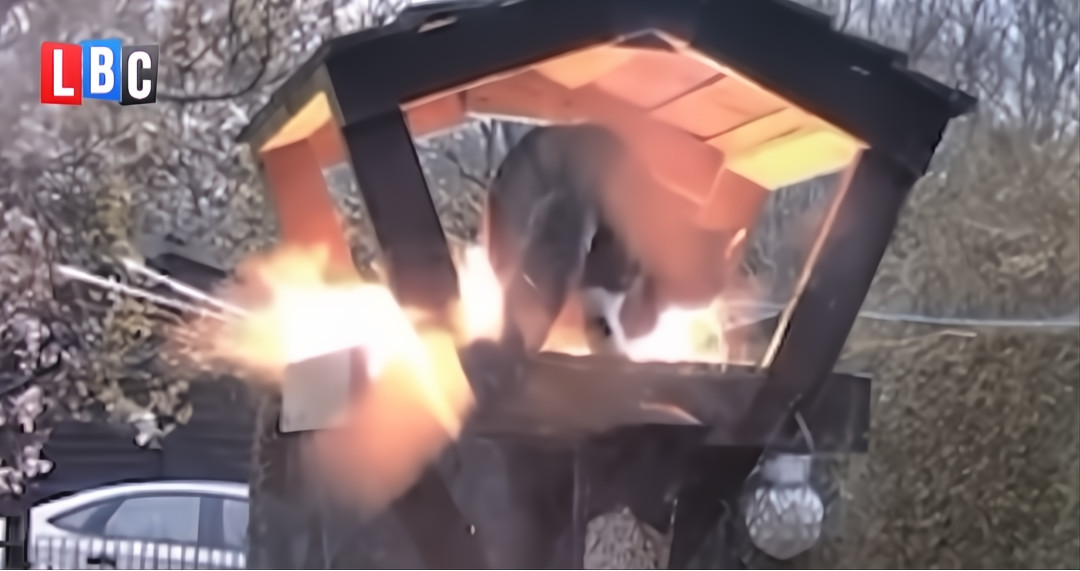
A family in Mission Viejo, Calif., heard a series of loud crashes at their back door, then reviewed their doorbell camera footage to find a determined coyote had been trying to attack their cat.

The footage shows the coyote repeatedly throwing itself at the screen door, which might have buckled if there hadn’t been a baby gate reinforcing it.

“We ended up putting a baby gate up to keep the cats inside,” homeowner Cindy Stalnaker told KABC. “That ended up being what prevented the coyote from getting inside the house because that’s what he was banging into repeatedly.”

Coyotes weigh about 30 to 35 pounds and will attack potential prey smaller than they are, which includes pets as well as young children.

The canids aren’t usually keen on approaching human homes, but in many places they’ve run out of room to roam as towns and cities clear more wild land for new developments. Less habitat means less prey, which can also lead the animals to scavenge and hunt on the fringes of residential and urban neighborhoods.

Stalnaker said she was grateful the baby gate held, but she’s looking into a more stable and permanent solution to keep her cats safe from coyotes.

What if air conditioning isn’t enough?

Human activity isn’t just driving wild animals to extinction, it’s killing them off with temperature extremes, and a Tuesday story from The Guardian provides a bleak look at how our present situation threatens human life as well: Buildings in most US cities aren’t built to mitigate excess heat, air conditioners weren’t designed to keep on chugging indefinitely with temperatures around 100 degrees, and power grids can’t keep up with the demand when millions of AC units are drawing power simultaneously.

At the same time, summers keep getting hotter and there’s no reprieve in sight.

Kids playing in water from a fire hydrant
Legal or not, New Yorkers turn to fire hydrants to get relief during heat waves. Credit: NYC Office of Emergency Management

While the heat has major ramifications for animals and sea life, it’s also directly endangering human life now:

“Some experts have begun to warn of the looming threat of a “Heat Katrina” – a mass-casualty heat event. A study published last year that modeled heatwave-related blackouts in different cities showed that a two-day blackout in Phoenix could lead to the deaths of more than 12,000 people.”

An architectural engineer tells the newspaper that temperatures have spiked so much in recent summers that cooling “systems that we sold 10 years ago are not able to keep up with the weather we have.”

The result for people in America’s hottest cities is that even AC doesn’t provide relief.

In the meantime we’re likely to see more headlines about rolling blackouts, punishing energy bills and people dying in their homes, scientists say. Fusion power and significant leaps in battery technology can’t come soon enough.

Pet Theft Up 40 Percent Since Pandemic, Criminologist Says

Incidents like Sunday’s attempted cat robbery are happening more often in recent years, a forensic investigator specializing in animal-related crimes says.

Pet theft is a low-risk, high-reward way for the criminally-minded to make a quick buck, which is one reason why such crimes have become much more common since the pandemic, a forensics professor told the New Haven Register.

Virginia Maxwell, who specializes in forensic investigation of animal cruelty, spoke to the newspaper in the wake of Sunday’s failed gunpoint robbery when two men broke into an East Haven, Conn., home and demanded the victims’ “high dollar value cat.”

But first we’d like to draw your attention to an announcement we made back in February of 2021. At the time pet theft was in the headlines after robbers shot a man walking Lady Gaga’s breed dogs, while across the country in Portland a man stole a van full of daycare-bound pups.

Here’s what we wrote at the time:

“Buddy would like everyone to know he does not actually live in New York, and that his true location is a secret.

“I could be living in Rome,” the troublemaking tabby cat said. “I could be Luxembourgish. Maybe I live in Königreich Romkerhall or the Principality of Sealand. You just don’t know.”

“The one thing you can be certain of is I definitely don’t live in New York.”

We would like to make clear that we continue to blog from Not New York.

On a more serious note, financial woes brought on by the pandemic, painful inflation and a generally difficult economy have attracted the criminally inclined to the petnapping trade, and as Maxwell pointed out to the Register, few people are held accountable for animal-related crimes. That includes darker endeavors like dog fighting and puppy/kitten mills.

“Sadly, animal cruelty in general is under-prosecuted, and very, very few actually end up resulting in jail time,” Maxwell said.

white cat on brown wooden shelf
A cat stays above the fray and surveys her surroundings from an elevated perch. Credit: cottonbro studio/Pexels

Sometimes pet thieves are opportunists who see a cat or dog who catches their fancy, or they believe might be worth money. Those cases often include people luring well-loved animals off porches and property with food.

Most, however, are people who intentionally target breeds that command high prices and are primarily responsible for what Maxwell says is a 40 percent spike in petnappings since early 2020. For felines that means Bengals, Savannahs, Ragdolls, Maine Coons, Norwegian Forest Cats and other breeds that can net the thief a solid payday for minimal effort.

“They’re going to steal your pedigree cat, your pedigree dog that’s worth thousands” and immediately flip the animal, Maxwell told the newspaper.

Social media, it turns out, is a double-edged sword.

While cops and animal welfare organizations warn people against showing off valuable pets online — and urge people to disable features like location tagging — the same platforms are often invaluable for retrieving stolen cats and dogs. Groups on sites like Reddit and Facebook help people find their well-loved four-legged family members and warn others when they identify resellers.

You can help keep your furry friends safe by making sure they’re microchipped, only allowing them outdoors when you’re there to accompany them, and keeping gates, doors and garages closed and locked.

2 Men Break Into House, Demand Cat At Gunpoint, Cops Say

The would-be robbers knew the cat was worth money and specifically targeted the victims, according to police.

Two armed men broke into a Connecticut home on Sunday afternoon and demanded the victims turn over their “high dollar value cat,” according to the East Haven Police Department.

The would-be robbers initially tried to force their way into the East Haven house through a rear sliding glass door, but when the victims tried to prevent them from getting in, one of the men simply kicked through the glass, cops said.

That’s when the intruders brandished a handgun and demanded not cash, not jewelry or other valuables, but the cat!

The kitty in question must have been spooked by all the commotion because the frustrated robbers left empty-handed after a few minutes of fruitless searching. They hopped into a blue BMW and sped off, the victims told police.

Cops didn’t offer any description or breed information about the feline, describing it simply as a “high dollar value cat.”

It’s not uncommon for prized breed cats to command $5,000 from prospective buyers, and some breeds like the “exotic” Savannah cat can sell for as much as $20,000.

bengal cat on white background
Bengal cats like the one above are favorite targets of thieves. Credit: jerry u6770/Pexels

While it’s unusual for someone to break into a home and demand a cat at gunpoint, in the middle of the day no less, cat theft is actually a thing.

Thieves most frequently go after Bengals, Savannahs, Maine Coons, Ragdolls and other breeds that can make them a quick buck by selling them to unsuspecting buyers. Surprisingly domestic shorthairs are on several lists of most commonly stolen cats, but a vet tech tells Reader’s Digest that moggies make the list simply because there are so many of them.

Part of the problem is that the penalties for stealing cats aren’t prohibitive. Most states either treat cats and dogs as property that can simply be replaced, or classify theft of pets in archaic agriculture and markets laws, which were designed to deal with disputes over livestock and farm animals, not pets.

Advocates in some countries, like the UK, are pushing legislation that would make stealing a pet a criminal offense with much harsher penalties.

In Sunday’s attempted robbery, police found the BMW abandoned in Hamden, a town about 10 miles north of East Hampton. They’re still looking into the unsuccessful caper, telling local media that the attempt was planned, not a crime of opportunity or a random event.

Still, if you have a “high dollar value cat,” it’s worth taking some precautions. Here at Casa de Buddy we’ve installed a feline version of a panic room: a panic box! Reinforced with heavy shipping tape, the thick corrugated cardboard is sure to keep bad guys out while also remaining roomy, yet paradoxically snug.

buddybox2
“Yes, this will do nicely, human.”