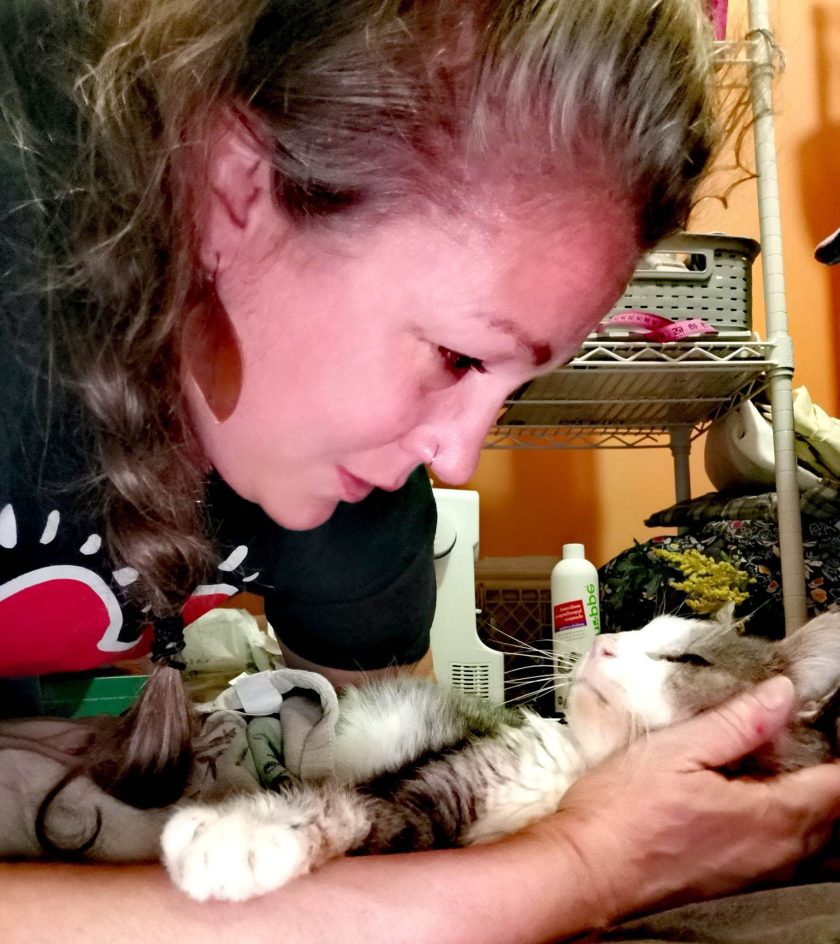
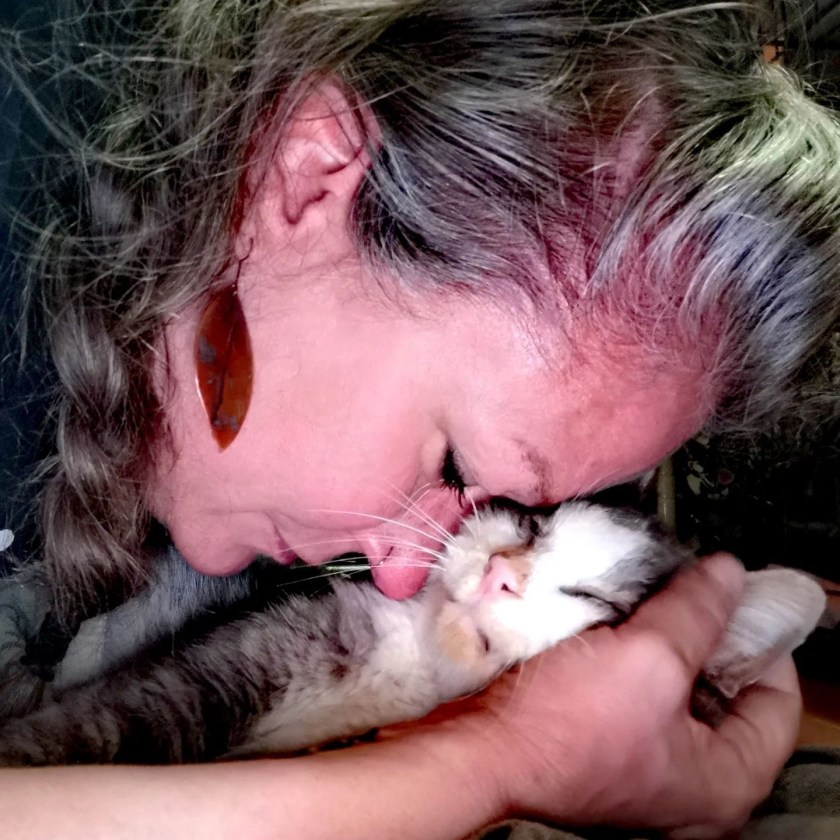
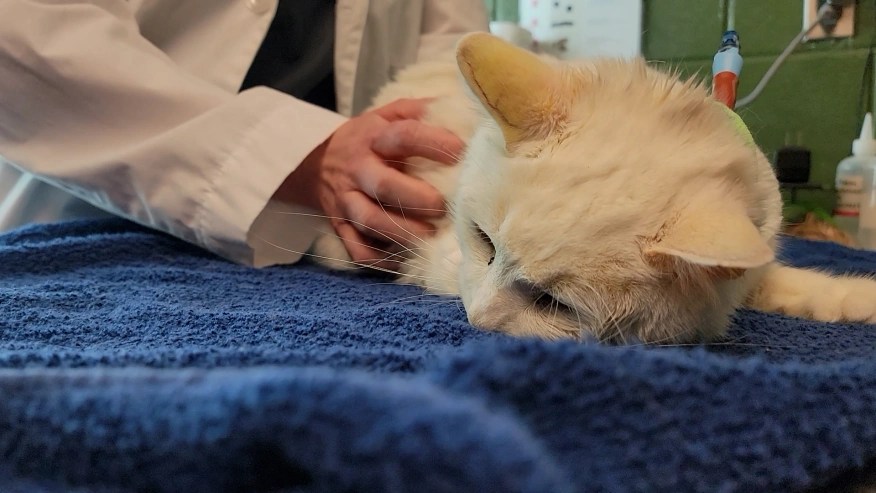
A Woman Wanted This Gorgeous Kitty Euthanized For Litter Box Issues

A veterinarian realized kitty was healthy and put her in the care of a local no-kill shelter, where she remains while hoping for a forever home.

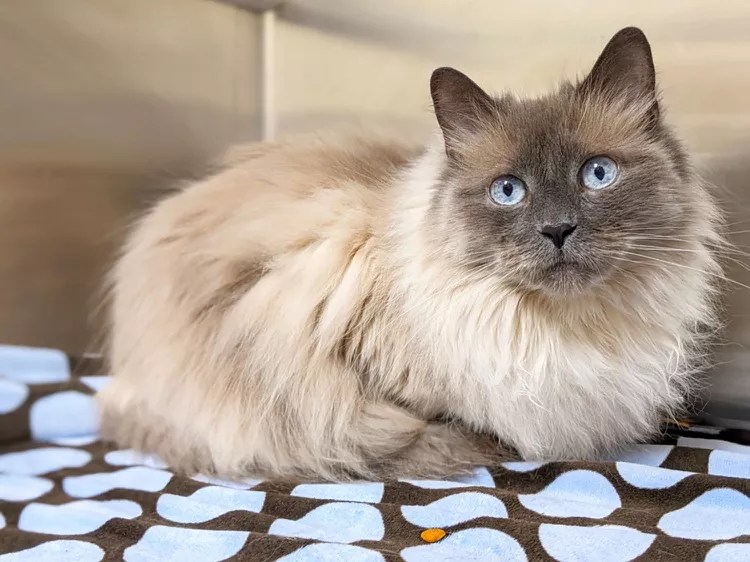
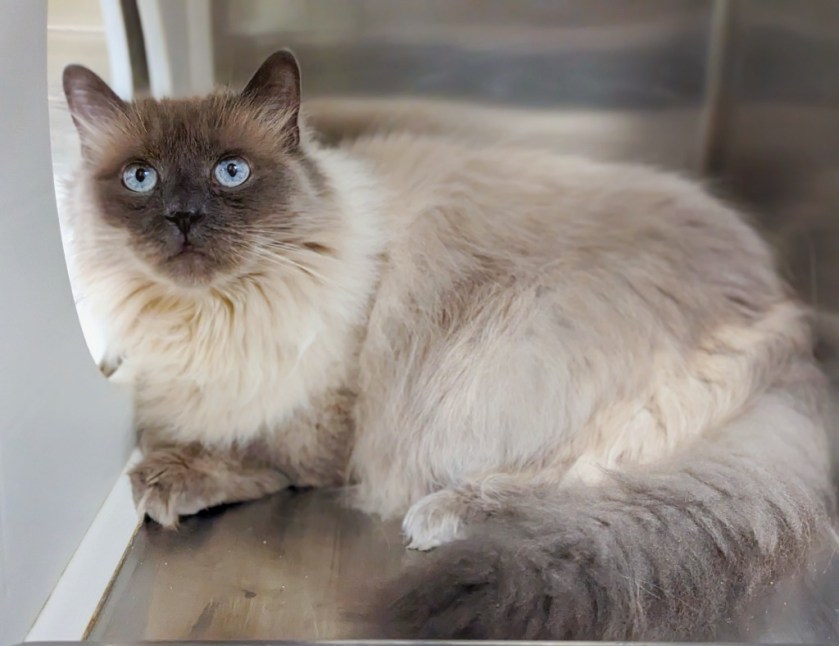
Lulu is 13 years old and began eliminating outside her litter box last year after a long life of doing her business properly.

Instead of realizing that a change in behavior was almost certainly precipitated by health issues — and attempting to get those issues sorted out — Lulu’s “owner” brought her to a veterinarian to be euthanized.

The vet realized Lulu was healthy and her issues were easily remedied, wisely persuaded the woman to sign over ownership of Lulu and brought the Himalayan to the local SPCA. She’s been there since December.

Lulu had urinary crystals which were remedied after a change in diet, and she hasn’t had an “accident” in months.

Staff at the SPCA want people to know that they don’t have to surrender a cat for litter box issues or other behavioral changes even if they think they can’t afford veterinary treatment.

“If your pet is not behaving or their behavior has changed, the first step is to get them to a vet to see if something is medically wrong. Even if it is not a medical condition, there are numerous resources — many available at Dutchess County SPCA — to help resolve the issue and avoid both euthanasia and surrender to a shelter,” Lyne Meloccaro of the Dutchess County SPCA told People. “Medical assistance, expert guidance, and management plans, and training referrals are all available for you.”

Lulu
Lulu has a regal bearing, an epic coat and beautiful coloring. Credit: Dutchess County SPCA

Dutchess County, which is about 75 miles north of New York City, happens to be the former college stomping grounds of Big Buddy. I graduated from Marist College and lived in the area for some years after. The SPCA there does good work, and its law enforcement division has handled some high profile animal-related crimes over the years.

It’s sad that Lulu lost her home after 13 years, but maybe it’s for the best if she ends up with a devoted servant who will really love her. Her caretakers at the SPCA say she’s stubborn, demands affection on her own terms and wants an “emotional support human.”

Lulu is still available for adoption. The SPCA says she’ll do best as an only cat in a quiet household, and we have no doubt she’ll bring joy to the lucky person who brings her home.

‘Every Time We Needed To Refill, They Charged Us More’: FDA Says 2 US Women Made Millions Off Desperate People Whose Cats Had FIPV

The importers are accused of jacking up prices almost 16 fold on FIPV drugs they illegally imported from China, the FDA says.

FIPV is pretty much a guaranteed death sentence for cats, and the only way to cure it is with an experimental drug that doesn’t have FDA approval.

Oregon’s Nancy Ross and Nicole Randall of Texas knew that, and as importers selling the cure via the popular Facebook group FIP Warriors, the FDA says they banked on the desperation of people who would do almost anything to save their cats — including forking over vast sums of money.

Ross and Randall are now accused by the FDA of smuggling GS-441524 from China, where it’s manufactured illegally, and hiking the price by almost 16 times what they paid for it as they served as the middle women between desperate cat owners and the suppliers in Hong Kong.

Feline infectious peritonitis kills some 95 percent of cats it infects, and veterinarians often tell their clients with FIPV cats that while they can’t prescribe GS-441524, they will help administer it, track their cats’ progress through bloodwork and hopefully save feline lives — if the clients obtain the drug themselves.

FIP Warriors — now in its fifth incarnation as FIP Warriors 5.0 on Facebook — is where people with FIPV cats go to find suppliers. The group has more than 43,000 members, and the FDA says Randall made millions off of them, charging as much as $385 for vials of GS-441524 she obtained for between $25 and $45 from manufacturers in Hong Kong and mainland China.

Randall sold $9.6 million worth of GS-441524 to clients in the US, according to the FDA. Per The Oregonian:

“A spreadsheet found in Randall’s Google email showed customer orders of at least 58,460 vials and 236,836 pills of GS-441524 from July 2020 through June 6, 2022, the affidavit said.”

PITB spoke to several people who paid thousands of dollars for GS-441524 after their cats were diagnosed with FIPV. All of them said they were surprised by the news of the FDA’s investigation, and said they were given various reasons for why the drug was so expensive to acquire.

One customer from Texas, whose cat Seth began his regimen in July of 2020, told PITB she doesn’t regret spending the money to cure Seth, but she “can see how the people saw our desperate situation and took advantage of us.” She was told prices were at a premium because of scarcity.

“It was a very stressful time for us, and every time we needed to refill, they charged us more,” she said. “They knew we couldn’t say no.”
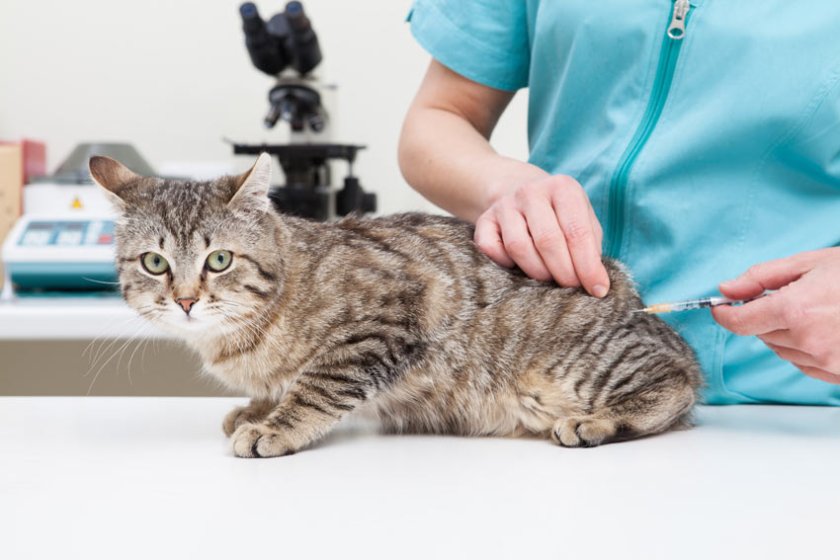
Cat-Cat_Guide-A_grey_tabby_cat_having_its_first_vaccination_injection

Another woman, whose kitten was diagnosed with FIPV in 2021, “was told that the prices were set because they ensure the medication was purchased from a trusted source.”

As a college student at the time, she used her savings and crowdfunded the other half, paying more than $5,000 for her kitten’s treatment. She said she doesn’t think the administrators of the group were ripping her off, since they had FIP cats of their own, and likely didn’t know the importers were making huge profits. She trusted the seller — who was not Ross or Randall — because the group vouched for that person, assuring her they supplied real pills.

“Of course, I don’t think this is a valid justification for hiking up prices up to 16x the amount,” she told PITB, “but I’m sincerely hoping the individual [accused by the FDA] had a valid reason for setting the prices that she did.”

Others paid even more exorbitant prices: a British woman we interviewed for a story about FIPV in 2022 said she paid about £7,000, or $9,400 at the time.

FDA investigators said they intercepted shipments from China and Hong Kong disguised as COVID masks, cat shampoo and chewable medicine for pets, and the Oregonian report says the shipments were listed as “essential oils” and “beauty products” in import documents.

Randall and Ross have not been charged criminally, but they are now targets of a civil asset forfeiture case:

“The government seized five of Randall’s bank and brokerage accounts and her 2022 Tesla Model Y car last year based on a warrant signed by a federal magistrate judge in Oregon.

The warrant identified the bank accounts and car as proceeds from the “crime of smuggling” and subject to forfeiture, according to the affidavit. It also alleged Randall, now 35, used the proceeds to buy several properties, including a ranch in Leander, Texas, in July 2021.”

While the FDA’s affidavit went into detail regarding Randall’s earnings, it describes shipments sent to Ross but does not specify how much she may have made in profit. An attorney for Randall told The Oregonian that the Texas woman will fight the civil asset forfeiture.

The illegal market for GS-441524 exists because the drug’s creator, Gilead Sciences of California, declined to submit it to the FDA for approval. That’s because it’s chemically similar to another drug the company makes, remdesivir, which was floated as a possible treatment for COVID-19. The company was worried any snags in a potential approval process for GS-441524 would also ensnare remdesivir, according to reports, putting the latter drug in limbo during the pandemic.

Now that the pandemic has retreated to much lower levels of infection and death, it’s not clear if Gilead Sciences will reconsider its FIPV medication, but there may be hope in the form of alternate treatments. A report from the American Animal Hospital Association (AAHA) says scientists at the University of California-Davis and UC San Diego are working on several promising therapies, including a potential treatment using CRISPR gene-editing technology.

But until another cure or treatment passes trials and earns FDA approval — a process that could take years — people with FIPV-diagnosed cats remain at the mercy of strangers on the internet, spending thousands of dollars per regimen and hoping the drugs they buy are the real deal.

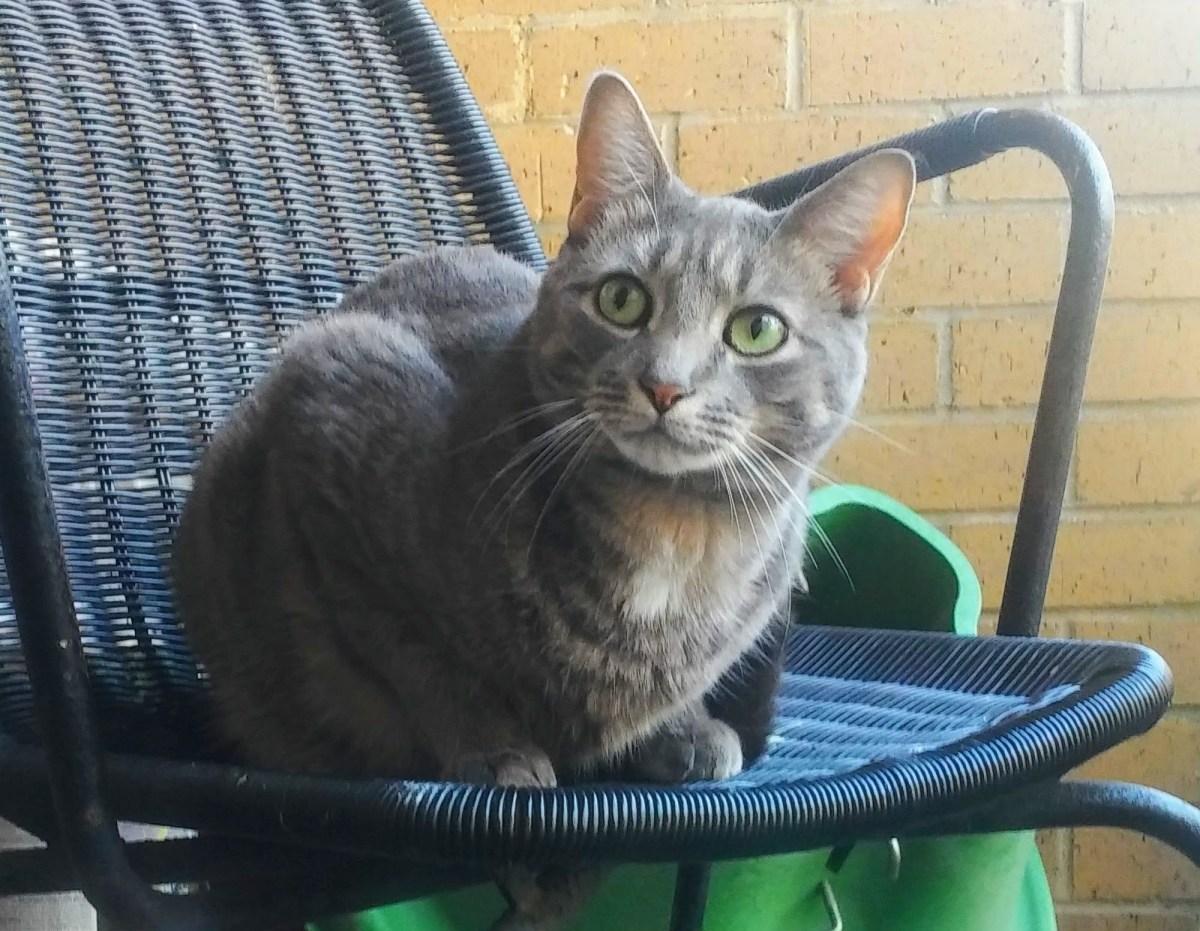
RIP Elliot, The Stray Cat Found Frozen To The Ground

Little Elliot was recovering from his ordeal, but developed a deadly blood clot.

This feels like a real gut punch, especially after a South Carolina veterinarian’s heroic efforts to save Juliet, the cat who had 38 hair ties removed from her stomach and died after her health seemed to improve.

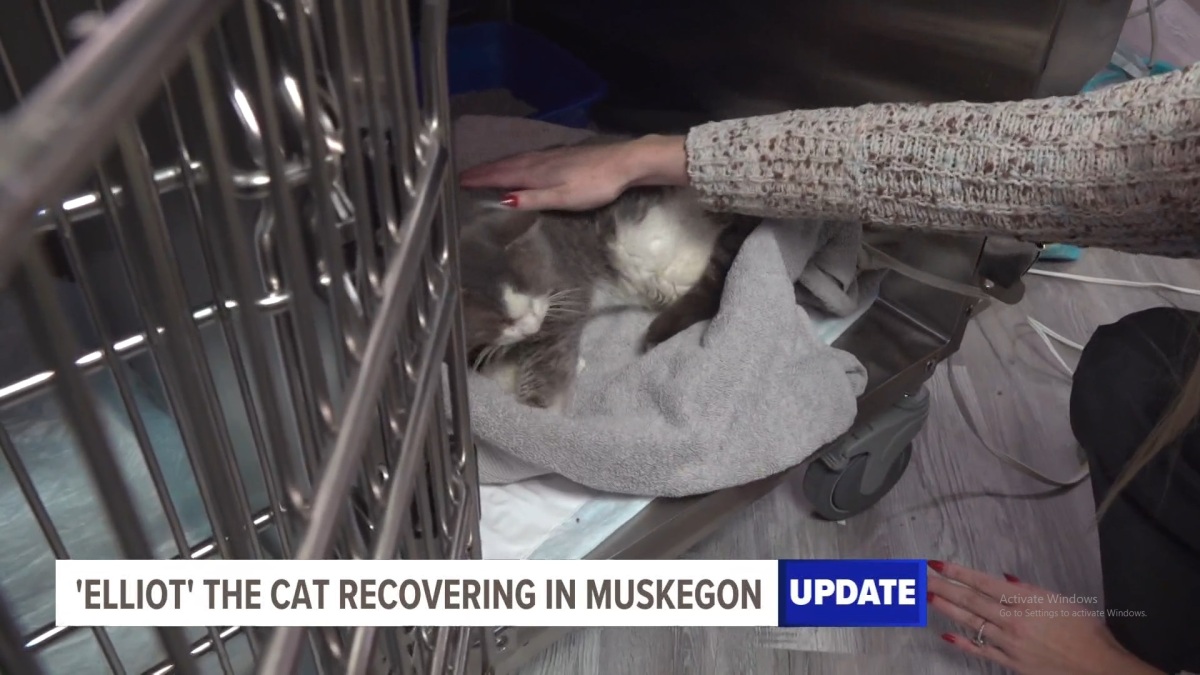
Elliot, you’ll recall, was the poor, sweet stray who was found literally frozen to the concrete on the day after Christmas, when the country was in a deep chill the likes of which we haven’t seen in decades, with temperatures plunging well into the negative. A Good Samaritan found the little guy in a bad way, with his eyes frozen shut and his organs shutting down, but she turned up her truck’s heat and rushed him to Big Lake Community Animal Clinic in Muskegon, Michigan, where the staff took good care of him and named him after the storm he was found in.

They wrapped little Elliot up in warm blankets, gave him fluids and began to slowly raise his body temperature, which was a dangerous 94 degrees. Things started to look up, too: Elliot had a habit of reaching his paw out to the vet techs who were monitoring him, began to regain his appetite, and eventually was able to stand and eat on his own.

elliotcat_follow2

But Elliot’s health took a turn for the worse again, and veterinarians determined he developed a saddle thrombosis, which is described asa blood clot (called a “thrombus”) that lodges at the base of the aorta just as it branches into two distinct arteries, thereby obstructing blood flow to the hind limbs. It is so named because of the saddle-like shape it roughly resembles once it takes up residence in this location.

For cats who develop a saddle thrombosis, the outlook is not good, and drugs designed to dissolve blood clots are often ineffective.

“Sadly, there was nothing we could have done to prepare for that but we knew it was time to let him be free from the pain and struggle he’s known most of his life,” Big Lake’s staff wrote to supporters.

A staffer named Diane Neas, who took Elliot into her home after a few days when he’d stabilized, was particularly hard hit by the loss, and understandably so. Well-wishes and applications to adopt Elliot had come pouring in, and it seemed like the former stray’s suffering would lead to the best reward — a warm home of his own and people to love and care for him.

“We find peace in knowing the last two weeks of his life were spent with people who showed him kindness, care and love,” shelter staff wrote. “We can’t believe the following and support he has gained on this journey to healing; from the bottom of our hearts, thank you all for caring so deeply for him and sending such love and support his way.”

Images courtesy of Big Lake Community Animal Clinic

elliotcat_follow

South Carolina Cat Dies After Surgery To Remove 38 Hair Ties From Her Stomach

Veterinarians tried their best to save Juliet, but noted “even with the best care, not every animal makes it.”

Juliet the cat and her two feline siblings were unceremoniously dumped outside their former home when their humans moved out of state a few weeks ago.

A Good Samaritan realized the trio had no one taking care of them and nowhere to go, and brought the cats to the Charleston Animal Society in South Carolina. After some time, Juliet stopped eating. A scan revealed why: The cream-and-white cat had an amorphous mass inside her stomach, a “seemingly endless bundle of strings” in the words of one veterinarian, which blocked Juliet’s stomach and prevented her from being able to eat or process food.

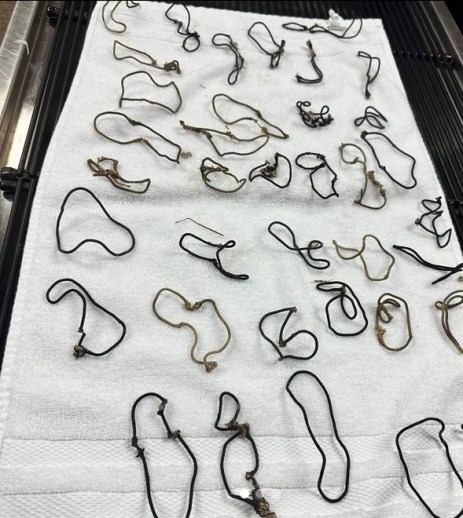
A vet performed emergency surgery on Juliet earlier this week and removed 38 hair ties.

“I’ve never seen anything like it,” said Leigh Jamison, the shelter’s associate director of veterinary care.

julietcathairties
Hair ties removed from the stomach of Juliet the cat.

Vet techs monitored Juliet closely and fed her carefully, making sure she got the nutrients she desperately needed without overwhelming her shocked system, which had suffered a buildup of fat in her liver.

They thought Juliet would pull through, but the ailing kitty took a turn for the worse on Friday and died a few hours later, the shelter announced.

“Our expert veterinarians and lifesaving team perform what we think are miracles every single day. Unfortunately, even with the best care, not every animal makes it,” staff wrote in an Instagram post. “Even though Juliet was loved and was not suffering during her last days, she did succumb to this tragic accident. We are all heartbroken.”

Pica, an eating disorder that affects humans, also occurs with cats. Defined as the consumption of items which are not food, pica can manifest in cats as a predilection for things like paper, plastic bags, rubber bands, small pieces of plastic and, as was the case with Juliette, items like hair ties that are made of fabric, wool or synthetic materials.

While there are medical reasons pica can present in felines, it’s also sometimes brought on by environmental stress, and it wouldn’t be a stretch to imagine the kind of people who would abandon their pet cats may not have been good caretakers. No one except her former caretakers know what Juliet’s been through, and they’re unlikely to come forward.

Likewise, adoption isn’t a part time, halfway or temporary thing. Adopting a cat means committing to taking care of the animal for his or her entire life. Despite the stubbornly persistent idea that cats are aloof, solitary animals who are indifferent to companionship, research studies show felines are just as sociable as dogs and form strong emotional attachments with their humans. They care deeply, but they express affection in different and less overt ways. That doesn’t mean they suffer less when they lose their homes and the people they’ve grown to love.

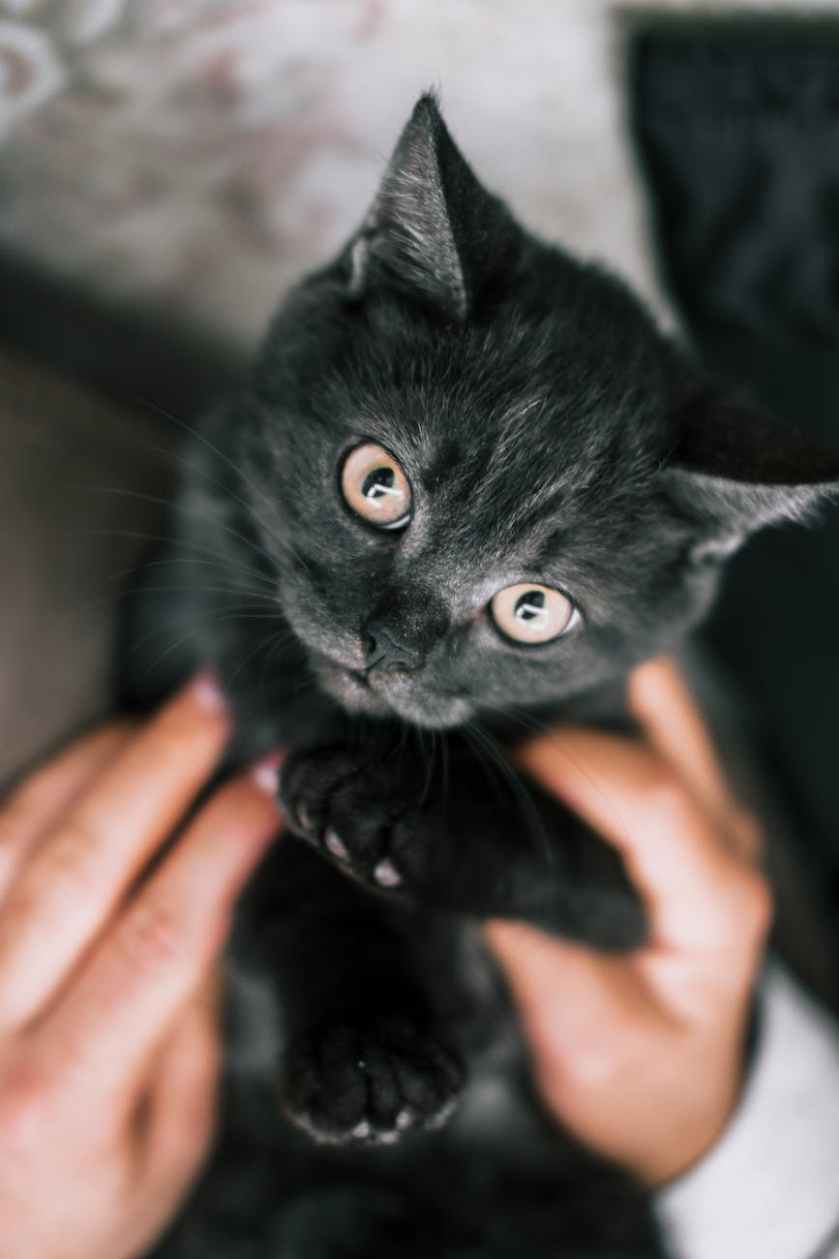
cute black kitten
Credit: beytlik/Pexels


Is Your Cat In Pain? The Feline Grimace Scale Can Tell You

For the first time, veterinarians and regular cat parents have a tool that can tell them if their cats are hurting.

Although there’s been lots of talk claiming cats don’t have facial expressions humans can parse — or even the muscles to noticeably change expressions — that’s not actually true.

It’s more accurate to say feline facial expressions are far more subtle than their human or even canine equivalents, and it takes an expert — a veterinarian or behaviorist with specialized training — to accurately read them.

This is a brand new frontier for veterinary science, and it’s all thanks to the feline grimace scale, a system developed by researchers at the University of Montreal in 2019. Using video clips of cats in various moods and stages of pain or pain-free expression, the researchers built a system that could reliably determine how a cat is feeling. (You can read more about how they did that here.)

“I call it the Rosetta Stone for interpreting how a cat is feeling,” veterinarian Liz Bales says in a new video at dvm360. “It turns out that very subtle changes in cat’s facial expressions can tell us whether or not they’re in pain. It includes the position of the ears, the opening of the eyes, the expression on the mouth, how the cat is holding its whiskers, and how they’re holding their head.”

Each of the five elements of feline facial expression are scored on a three-point scale, then added up. The result provides an accurate assessment of how a cat feels.

“It’s amazing, and it allows us to interpret feline pain in a way we never could before,” Bales says. “The hard part is, it can be a little bit tricky to learn. It is learnable, but I specialize in this and I’m still struggling to get it right every single time.”

Despite the challenge, she says, it’s well worth learning.

“The applications of this are so far and wide, and I think as the technology grows and it becomes easier and easier to use the grimace scale, the more exciting it’s going to be.”

Thanks to an app named Tably, cat servants don’t have to know how to read the most subtle feline facial expressions anymore. By running a photo of your cat through the app’s algorithm, Tably can read your cat’s expression for you.

Tably Bud
Tably gauges cats’ moods in addition to their pain levels. We used the web app to evaluate Buddy last year. Thankfully he was happy!

Bales says she envisions a near future in which pet parents monitor their cats’ health and mood daily, and the scale becomes the standard for end-of-life care. With a “validated, consistent way to measure pain, we can look into more pain drugs for cats, what’s working, what isn’t.”

“A cat in pain looks like a resting cat to most people, but now we have this tool,” Bales says. “And I think as the tool evolves and we give cats a way to really speak for themselves through this Rosetta Stone of the grimace scale, then the more we understand that we can do for them, the more we’re going to do for them.”

We wrote about the feline grimace scale and Tably last year, and noted it had a lot of promise for veterinarians and us cat servants. At the time Tably was in beta and had a web app that allowed anyone to use the technology.

Unfortunately the web app seems to have disappeared, and the app is now available only to iOS users. Since we switched from an iPhone to Android, we can’t access Tably for the time being. (Let’s hope an Android version is forthcoming.) But if you have an Apple device, the app is definitely worth checking out.

Bud and Becky
“You go, girlfriend!”