Do You ‘Pspsps’ To Your Furry Friend? Plus: An Obit For Miles The Cat

Do you use “pspsps” to get your cat’s attention?

Apparently a lot of people use the “pspsps” thing to get their cats’ attention, and Mental Floss has a new story proposing some theories about why people use it and why cats respond.

The first and most obvious is that felines hear higher frequencies than humans, and they’re especially tuned into those frequencies because their usual prey — including rodents and birds — not only make noises in the higher ranges, they make noise us humans can’t hear, but felid ears are primed to pick up.

Mental Floss’s Ellen Gutoskey also points out that it could be “a truncation of ‘Here, pussy, pussy, pussy’—popularized in part by ‘Pussy, Pussy, Pussy,’ a 1930s song by the Light Crust Doughboys. In fact, the tempo is fast enough that it almost sounds like they’re singing ‘Pspsps.”

I think she could be onto something there unless the “pspsps” sound is universal, but truthfully I have no clue whether people in other countries, or outside the English-speaking world, use it to call their cats. I don’t and never really needed to. Bud comes when called a good 85 percent of the time, and if he doesn’t I usually assume it’s for good reason, like he’s having a nice nap or he has no current use for his servant.

Miles the cat

The Guardian’s Hannah James Parkinson writes about adopting Miles, the shelter’s most skittish cat who had been passed over time and again until she came along.

Earning Miles’ trust wasn’t easy, but Parkinson did it with time, patience and love, and eventually Miles became her little buddy and even came out of his shell enough to make friends with another neighborhood cat.

milesthecat
Credit: Hannah Jane Parkinson

Unfortunately Miles got hurt, infected and died while he was outside overnight. Parkinson doesn’t say if the little guy got hit by a car, but the description of his initial injury is consistent with it.

The indoor vs outdoor thing is a thorny issue. I saw it as a more black-and-white problem until hearing from several readers who live in places like farmland or very quiet neighborhoods where the chance of a cat getting hit is small.

I don’t begrudge anyone making what they think is the best choice for their cat(s), except maybe for Australians and New Zealanders. Seriously, guys, bring those cats in before sadistic “hunters” get them in their crosshairs or they nibble on the poisoned meat that both governments like to use to “manage” the cat population. Neither country seems overly concerned with pet cats getting caught up in their zealous extirpation campaigns, and when birders are this riled up it’s best not to take chances anyway. If your cat isn’t spending time outdoors, it can’t be blamed for killing local wildlife.

I love dogs, but…

The Daily Mail has a horrific story about a pair of unleashed rottweilers that followed a woman into her home as she was carrying groceries and mauled her two pet cats to death in front of her traumatized children.

The attack happened around noon on Aug. 30 in a small town in the UK’s Western Midlands. The dogs came bounding in and snatched one of the cats off the kitchen counter, then mauled the other. The ginger tabby died immediately, either from shock or his severe injuries, while the other lived long enough to make it to the vet, who said the little tuxedo couldn’t be saved.

The woman told the newspaper her kids are having nightmares about the attack, while the police response was underwhelming to say the least, especially because the cats weren’t the only animals attacked by the roaming rottweilers.

“We were called to Raglan Way, Chelmsley Wood (on August 30) to reports of two dogs attacking another dog. The injured dog was taken to the vets to be treated,” a police spokesman told the paper. “The owners of the two dogs were spoken to and were taken back home to be secured by the owners. We have asked neighbourhood officers to speak to the dog’s owners regarding securing the animal, and will consider any further steps that need to be taken to ensure public safety.”

The owners of the dogs “were spoken to.” Wow. Let no one say the West Midlands Police don’t have a sense of scale. Perhaps if it happens again they’ll send a stern letter.

I hope the resulting media stories, and the beginning of the attack caught on a home security camera, lead to enough pressure that the police take the incident seriously and the owners of the dogs have to face consequences. There’s nothing prohibitive about talking to them. The only way irresponsible people are going to leash their dogs, especially dogs capable of this kind of thing, is if the consequences for not doing so are sufficiently prohibitive to make them think twice.

Finally, here’s a video of a cute baby kookaburra to balance out all that horribleness:

Can Cats Solve New York’s Rat Problem?

When even the mayor can’t keep rats from overwhelming his property, it’s clear New York is losing its battle against rodents.

For the second time in seven months, one of New York Mayor Eric Adams’ own health inspectors has ticketed him for rat infestations at the Brooklyn brownstone he calls home.

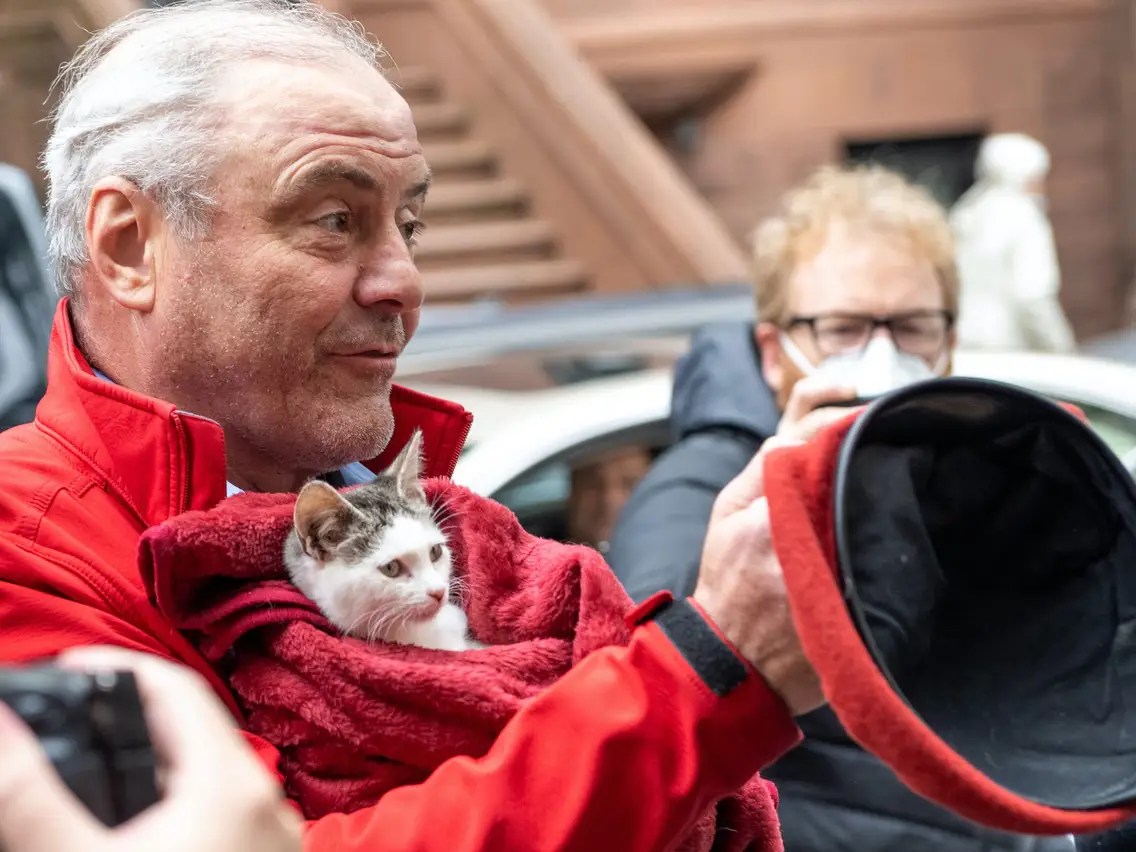
Because it wouldn’t be New York without things turning into a circus, the man who unsuccessfully ran against Adams for the mayorship, Guardian Angels founder Curtis Sliwa, took advantage of the mayor’s embarrassment by bringing two of his 16 18 cats to Adams’ block and holding a press conference on the sidewalk where he touted felines as the solution. (Adams, who is well known for his hatred of the rodents, famously held a “rat summit” at Brooklyn Borough Hall in 2019, “gleefully” showing off a new rat-killing contraption to reporters.)

Introducing reporters to his tuxedo, Tiny, and tabby cat, Thor, Sliwa said Adams was missing the most obvious solution to the rat problem — cats — and offered to become the city’s “rat czar” free of charge.

“Like most New Yorkers, [Adams] is frightened of rats,” Sliwa told reporters outside the mayor’s brownstone. “He’s tried everything but it’s time that we revert back to the best measure that has ever worked — and that’s cats.”

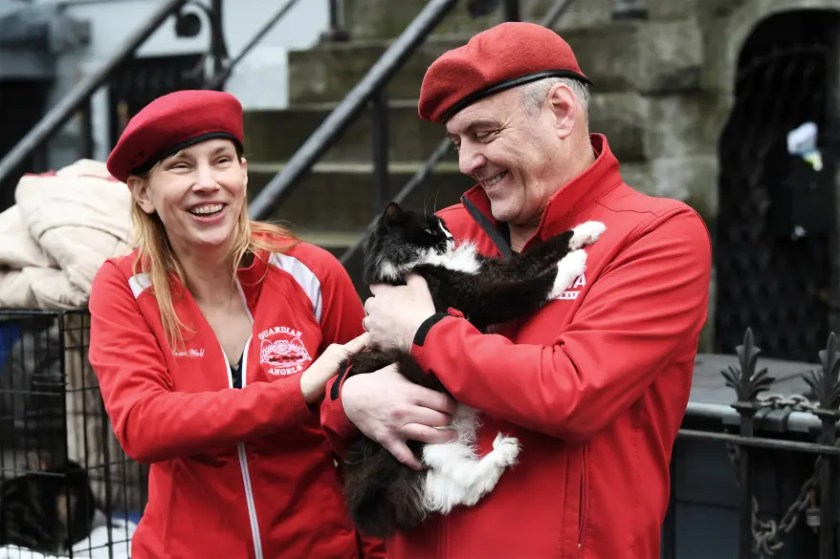
As we’ve noted before on PITB, Sliwa and his wife are dedicated cat servants, perhaps overly so. They currently house 18 cats in their Manhattan studio apartment, Sliwa said on his radio show this Sunday. Some of them are the couple’s pets and some are fosters for their rescue.

sliwacats
Nancy and Curtis Sliwa with one of their cats. Credit: Matthew McDermott

The rat problem in New York is real and, sadly, as bad as people make it out to be. You can hear them at night in many neighborhoods, and it’s not unusual to see them briefly caught in the glow of streetlights before scurrying into the shadows again.

I’ll never forget watching an entire conga line of them at the 125th St. subway platform. They just marched out of a hole in the twilight, each one bigger than the last, going about their business without any concern for what people might do to them.

And the answer, they know, is nothing. Because New York’s rats aren’t regular rats. They’re well-fed freaks, ballooning to enormous sizes thanks to the abundance of garbage cans to eat out of and the way garbage is collected in the city. Back in 2015, video of a rat dragging an entire slice of pizza down the steps to a Manhattan subway platform went viral, racking up more than 12 million views and earning the rodent the title Pizza Rat:

People who aren’t from New York and have never visited are probably shocked to see garbage piled high on the sidewalks of every street. New Yorkers are supposed to put the garbage out the night before pickup, but no one really observes that rule, and the mounds of trash grow for days before sanitation removes them. It’s a feast for the rats, and any solution has to start with cleaning  up the garbage situation.

In the winter the cold weather prevents the contents of the trash from rotting, so the stink isn’t as bad, and sometimes the trash mountains are covered by snow.

But in the summer, when the tree-lined avenues get their green canopies and flowers bloom in window boxes, the city reeks. On hot days, the perfume of New York is rotting trash and the overwhelming smell of urine wafting up from the subways. Sometimes I think of what the Japanese, with their spotless streets and shiny subways, must think when they come to New York for the first time.

In October, after the city fielded a 71 percent increase in rat complaints over the previous year, the city introduced a new law making it illegal to put trash on the sidewalk before 8 pm ahead of pickup the following morning. The change hasn’t made a dent in the rodent problem.

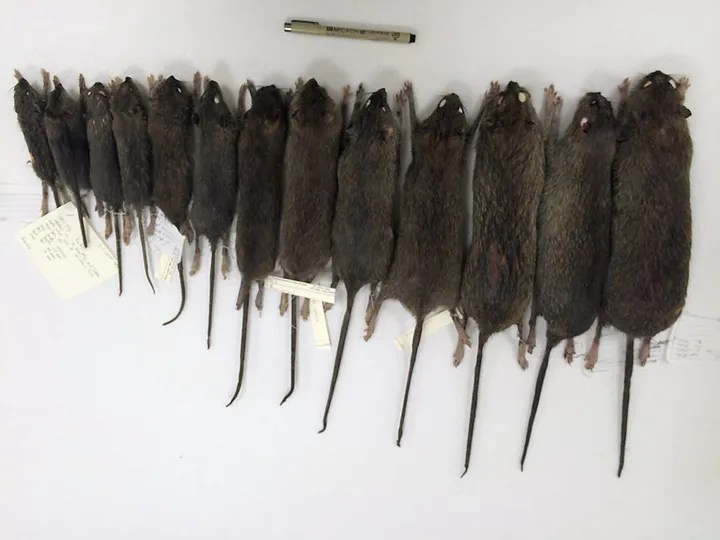
ratssize
A 2015 study by Matt Combs of Fordham University documented the enormous size of New York City’s rats. Credit: Matt Combs

In any case, New York is not a good place for cats. Thankfully we have a huge and generally well-funded network of rescues that get kitties off the street and pulls cats and dogs from the city’s animal control system before they’re due to be euthanized, but strays who fall through the cracks don’t last long.

Indeed, when the New York Post talked to one of Mayor Adams’ neighbors shortly after Sliwa’s latest press event on Sunday afternoon, the woman said she’d like another cat to patrol the area around her building. The last one, she explained, had been run over by a car.

I don’t really expect anything to come of Sliwa’s plan to use cats in rat-infested locales. The red-bereted radio host is hawking the scheme because he likes to be a thorn in the mayor’s side, and because it generates free publicity, especially from the city’s tabloids and local news channels.

But if it ever comes to fruition, and people really expect strays to handle their rat problems, Sliwa and company better have a plan to keep the cats safe from traffic.

Why Are UK Cat Owners So Intent On Allowing Their Cats To Run Free?

A UK couple created a cat flap that uses algorithmic AI to determine if their cat is trying to come inside while carrying prey in her mouth. If she’s carrying prey, the cat flap won’t open.

Jinx the cat was so grateful to UK couple Martin Rosinski and Michelle Bowyer for giving her a home that she decided to bring them a gift.

“The first time I was working at home, I heard Michelle making a commotion because Jinx had come in with a mouse and dumped it on the carpet in front of her as a ‘thank you’. That’s their way of expressing love. You can’t tell her off, so we thanked her a lot for it and took it away from her,” Rosinski said.

“Then this started happening more and more often to the point where we would be woken up at 2 a.m. as Jinx would meow loudly and announce, ‘Hey I have a gift. If we didn’t get to her fast enough she would decide to eat it herself, which would involve piles of mouse parts being smeared into the carpet. This was happening at 2 a.m., then again at 4 a.m. on many nights and we’d not get any sleep having to deal with this. Her record was four in one night – that night was a frenzy of three mice and one bird. It was something that was a real cause of stress.”

The solution is pretty simple, right? Keep Jinx inside.

The former stray won’t like it at first. There will be an adjustment period when the meowing will be seriously annoying. But it’s better than allowing your cat to play Predator at night and waking up to find your cat sitting on your chest, proudly presenting a twitching mouse to you.

Rosinski and Bowyer didn’t take Jinx inside.

Instead they created a bespoke intelligent cat flap that allows Jinx to come and go as she pleases, but won’t open if she’s carrying prey. They both have backgrounds in tech: he’s a researcher who also tinkers with software and hardware, and she’s a web developer.

cute brown tabby cat
Despite being domesticated, cats retain their predatory instincts and many will kill small mammals and birds if allowed to wander on their own outdoors. Credit: Aleksandr Gorlov/Pexels

Their system, OnlyCat, uses a camera and an algorithm to determine if Jinx is carrying something in her mouth. If she is, the cat flap won’t grant her access, and Bowyer and Rosinski will get a text informing them Jinx has been up to her hi-jinx again, along with a photo of her entry attempt.

The OnlyCat prototype has prevented Jinx from bringing in 42 prey animals since June of 2021, the couple said. OnlyCat may prevent her from bringing her prey inside, but it hasn’t dissuaded her from killing.

“Two months ago I think something clicked and she realized, ‘I can’t bring these home. It’s just not going to work,’” Rosinski told the UK’s South West News Service. “She still catches them outside but she’s learned that there’s no point even trying to bring them home, which is a relief.”

The couple developed the OnlyCat into a full product, which launches on Aug. 16 at £499. (A little more than $600 USD.) Their site says the retail version of the flap has worked 100 percent of the time in tests, and the developers believe “99%+ accuracy should be achievable for everyone.”

It’s similar to a device built by Amazon engineer Ben Hamm which uses DeepLens, an AI-enabled camera system, and Sagemaker, a software tool for training machine-learning algorithms, to determine if cats are carrying prey.

Hamm’s version, which he created for his cat Metric in 2019, initiates a 15-minute lockout timer if Metric tries to enter while carrying a kill, and automatically sends a donation to the National Audubon Society, which protects birds and their habitats. The algorithm was trained using tens of thousands of images of cats approaching normally, and with prey in their mouths. So far, Hamm hasn’t developed a retail version of his AI-enabled cat flap.

orange tabby cat on gray rock
The feline predatory drive is instinctual. Indoor cats can exercise that drive with wand toy games and by chasing laser pointers. Credit: Aleksandr Nadyojin/Pexels

We don’t think there’s any one way to raise cats, and it’s obvious there are different cat cultures in various countries.

Nevertheless, seven out of 10 cat owners in the UK allow their cats to roam free, and anecdotes like the ones about Jinx, with her multiple kills a night habit, draw the ire of birders and conservationists.

Peter Marra is the author of Cat Wars: The Devastating Consequences Of A Cuddly Killer and co-author of many of the leading studies claiming cats are the primary threat to bird populations. He’s currently making the media rounds and endorsing strict policies — many of them in enacted in response to his studies — that would make it illegal to allow cats outdoors.

The Australian government is airdropping poisoned sausages by the ton in a plan to cull as many as two million cats, a town in Germany tried to ban outdoor cats, a US politician recently suggested starting a “hunting season” for feral and stray felines, and some people — including wildlife biologists and conservationists — have gone vigilante and convinced themselves they’re doing good by randomly picking off cats with shotguns and poisoning feeding stations for strays.

Maybe it’s time for more people to reconsider allowing their cats to roam free. Like putting a cat on a diet or trying to break a bad habit, there’ll be loud and annoying protests in meow, and it’ll get worse before it gets better, but eventually cats always adjust to changes if given long enough.

As domesticated animals they don’t have a natural habitat anymore, and they don’t actually need to be outside. It’s entirely possible to keep things fun and interesting for the furry little guys, and that’s on us. All that’s required is our time, attention and affection. Interactive play time. Toys that can keep a cat occupied by herself. Catnip. Condos and tunnels. Window perches. Cat TV on Youtube. Simple things to play with, like plastic bottle rings, crinkled tin foil and cardboard boxes.

We don’t think anyone should be required to keep their cats indoors, and that’s the point. We have an opportunity to meet conservationists halfway and make a real effort to reduce feline impact on small wildlife. If we don’t, eventually we’ll be forced to comply by laws that’ll be draconian compared to the voluntary measures we could have taken to prevent the government from getting involved.

Bodega Cat’s Back To Business After Abduction

Boka is one of about 10,000 cats who prowl New York’s delicatessens, keeping them free of rodents.

A beloved bodega cat is back where he belongs a week after a thief snatched him from the store.

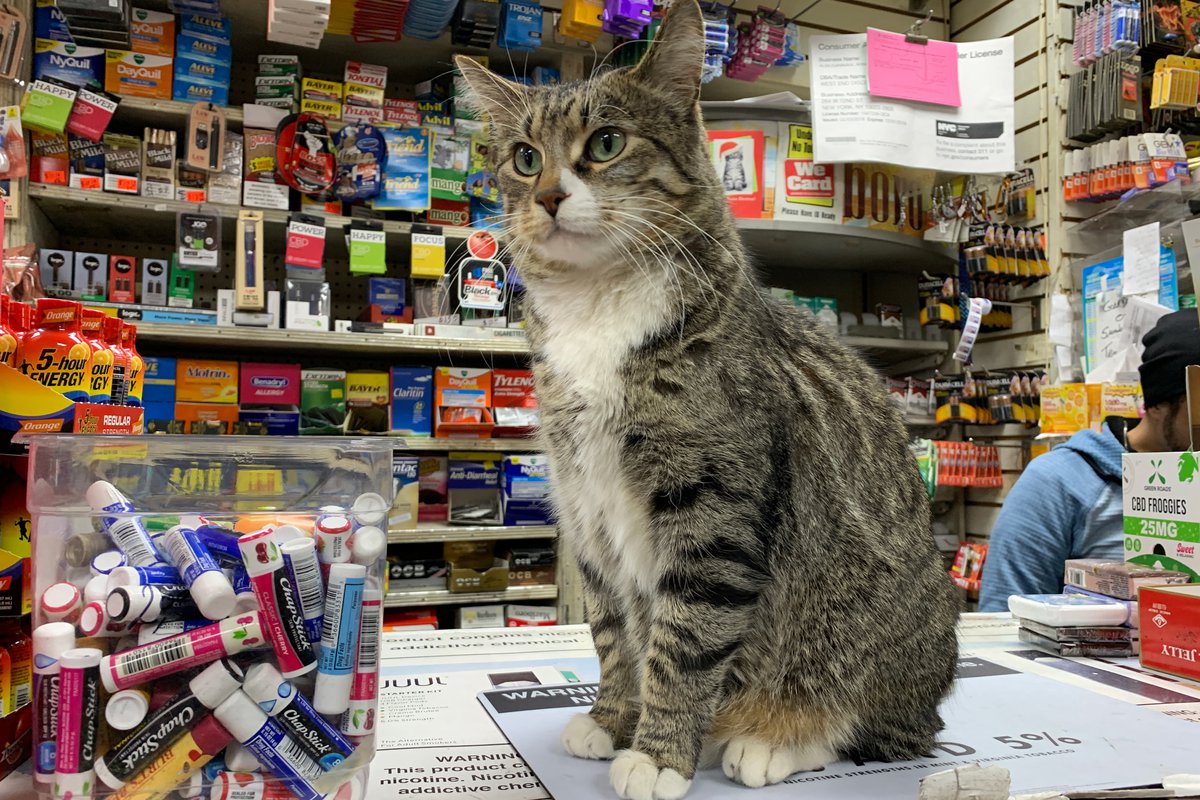
The cat, Boka, is actually a kitten. Majeed Albahri, owner of Green Olives Deli in Brooklyn, adopted the little guy in January and in seven months the all-gray feline has become a familiar face in the neighborhood, where people are used to seeing him sitting on Albahri’s shoulder as he works the register, or napping on the nearest convenient pile of newspapers.

Boka “brings life to the store,” Albahri said, noting people stop by just to give Boka a head scratch.

But on July 29 a guy “skulking around” outside the store took a liking to the neighborhood mascot and swooped him up. Albahri didn’t know what happened until he checked the store’s surveillance feeds and saw the thief in action.

Boka’s abduction mobilized an entire neighborhood, generated headlines in the New York papers, segments on local TV news and posts on neighborhood blogs. The thief must have felt the heat, because he contacted the deli through an intermediary and returned Boka to Albahri safe and sound.

On Aug. 5, exactly a week since Park Slope’s favorite feline was filched, Albahri posted online to share the good news.

“Best news I’ve heard all week,” one neighbor wrote, while another one posted: “Yes Boka! We missed you!”

Others urged Albahri to invest in some AirTags, the Apple-made locators that were designed for keys, phones and other easy-to-lose items, but have been repurposed by some as pet trackers.

For those unfamiliar with city life, particularly in New York, bodegas (Spanish for wine cellar or warehouse) are corner stores that stock grocery staples, snacks, and usually some sort of combination deli/salad bar. They also sell everything you’d find in a convenience store, from newspapers, magazines and gum to cigarettes and cigars.

Because there are very few grocery stores in New York, and because suburban-style grocery shopping isn’t an option for millions of people who don’t own cars, bodegas are essential in neighborhoods that would otherwise be “food deserts.” (Some sociologists consider such neighborhoods food deserts anyway, especially if the local stores don’t offer fresh produce, dairy and meat. Most bodegas do.)

Bodega cat
“Bodega cat trainee reporting for duty, sir!”

Bodega cats occupy a legally precarious but widely loved position in the fabric of New York. They’re pets, but they also have primal jobs that call back to the original reason humans and felines began their partnership thousands of years ago: rodent control.

Technically they’re illegal according to the city’s Department of Health, but the New York Times estimates there are more than 10,000 bodega cats across all five boroughs. In a city that produces viral videos of rats dragging full slices of pizza down subway stairs, and rodents run rampant at night, bodega owners are faced with two choices: Accept the rodents and pay a fine, or get a cat and pay a fine, but have their stores free of rodents.

With the fines for rodent infestations and cats both around $300, bodega proprietors say the choice is easy, and cats have become ubiquitous. New Yorkers have created petitions to get the Department of Health to relax the rules on bodega cats, with no luck so far.

Got A Rat Problem? Get A Cat To…Befriend It And Groom It?

If you can’t beat ’em, join ’em?

Cats and humans began their grand partnership some 10,000 years ago, when kitties handled humans’ pesky rodent problem and people repaid the felines with food, shelter and companionship.

Now the deal’s off, apparently.

Yesterday a Reddit user shared a video titled “When you get a cat hoping it will help you get rid of the big rat in your yard.”

The video shows the user’s new cat, a tortoiseshell/calico, “solving” the rat problem by befriending the rodent, playing with it and even grooming it.

The video has amassed almost 86,000 upvotes in 24 hours.

The odd friendship between feline and rodent is not without precedent. Studies have shown that cats are not effective rodent hunters in urban settings where rats have gone unchallenged for so long that they rival or exceed the size of most members of Felis catus.

In certain neighborhoods of New York City, for example, researchers observed cats essentially ignoring massive rats and in some cases eating trash side by side with them. The largest rats, apparently aware of the truce, are equally unconcerned by the presence of the cats. Other rats were more cautious around kitties.

The scene reminded me of the time my brother wanted me to bring Bud over to handle his rat problem. At the time he was living on 88th St. in Manhattan, less than a block from Gracie Mansion. His apartment had an unusual perk for Manhattan living — it was a spacious ground floor flat that opened up into a private, fenced-in backyard with grass and a few trees.

Mighty Bud
Tremble before him! Buddy the Mighty Slayer of Rodents!

In fact, it was one of the first places I took Buddy after adopting him. He was just a kitten, maybe 14 weeks old, and I brought him with me on a warm summer day when my brother had a few friends over for a barbecue.

Buddy made fast friends with my brother’s Chihuahua-terrier mix, Cosmo, and spent the day playing with his doggie cousin, frolicking in the grass and chasing bugs around the yard. Then he got a treat: Steak from the grill, chopped into tiny Buddy-size pieces.

Having a backyard in Manhattan was awesome, but there was a downside. At night the yard was like a stretch of highway for marauding rats who ran across it in numbers with impunity, probably en route to raiding the garbage bins of a bodega on the corner of 88th. The rats were so emboldened and so numerous, you could hear them scurrying across the yard at night.

My brother proposed bringing Buddy over and letting him loose in the yard after dark, letting his claws and predatorial instincts thin the rodential herd.

I declined, using the excuse that Bud could pick up diseases from going to war with the rats. That was true, but I’m sure it wouldn’t have come to that: At the first sign of those rats, Buddy would have run screaming!

(We don’t acknowledge that around him, of course. Officially, Buddy was not set loose upon the Manhattan rats because it would be grossly unfair to unleash such a meowscular, brave and battle-hardened feline warrior upon them.)

It’s one thing if Buddy won’t kill rats. He’s a wimp. But as the Reddit video illustrates, we are apparently closing the chapter on 10,000 glorious years of human-feline partnership, and officially entering the Era of Zero Reciprocity.

We do everything for our cats, and in return they nap, eat and allow us to serve them. From their point of view, it’s a fine deal.

Meowscular Buddy!
Just look at those meowscular guns and vicious claws!