The president of the Americats registered his displeasure with a new study claiming cats should be fed only once a day.
WASHINGTON — A new study suggesting cats should only be fed once daily is “an attack on our freedoms” and “quite possibly the biggest threat to felinekind since vacuums,” an angry President Buddy said Friday.
“One meal a day! That’s what these supposed ‘scientists’ say,” the president of the Americats said during a White House press briefing. “But could it be they have an agenda?”
The president waited a few moments as aide cats wheeled in a projector, then took reporters through a slide presentation positing a connection between the study’s authors and “nefarious interlopers from the Siamese communist government.”
“University of Guelph? What the hell is a Guelph? It sounds Siamese,” President Buddy said, clicking through the slides.
“The Siamese, led by Chairman Xinnie the Pooh, want to take away your freedoms,” the president said. “They want to tell you that you can’t have a tremendous turkey dinner at food o’clock because you ate eight hours earlier. If it were up to them, none of us would ever have snacks.”
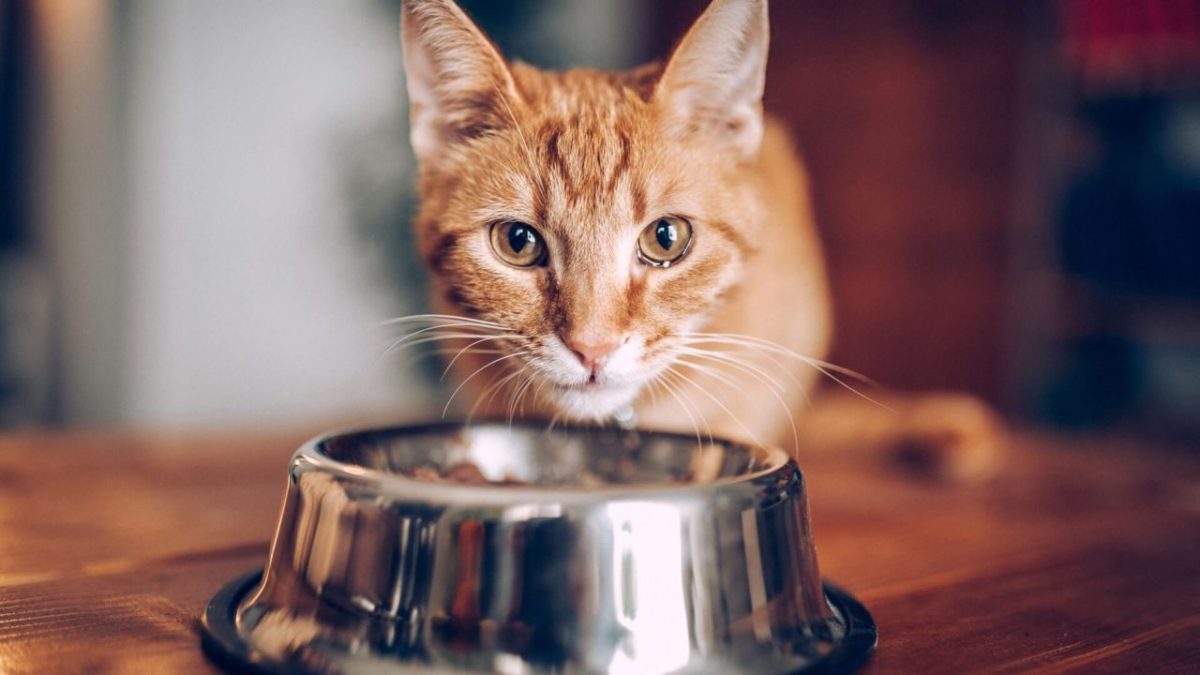
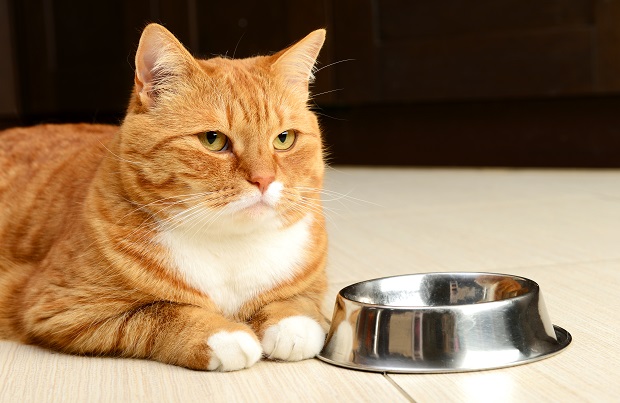
The study involved only eight cats, all four years old or younger, who were fed a large meal once a day for three weeks, then smaller meals four times a day for three weeks. Feeding cats only once a day helped those cats burn more fat and make better use of the protein available to them, the authors said.
Cats fed once daily seemed “more satisfied” and didn’t ask for food as much as they did when they were fed four times a day, according to the study.
“That’s how you know it’s fake news,” President Buddy said. “Who are these supposed cats who are cool with eating once a day? I’ve never met them.”
The president said he would form a new commission, the Yums Studies Council, to “foster studies supporting the view that we need at least four meals a day, and that six or seven would be awesome.”
Do you keep your cats inside, or do you let them roam free?
When it comes to attitudes about hunting and impact on local wildlife, there are five broad categories of cat owners, a new study says.
Four out of the five aren’t particularly worried about their cats killing birds and small mammals, the University of Exeter researchers wrote in the study, which was published in Frontiers In Ecology and the Environment, a research journal.
Concerned Protector. These are people who keep their cats indoors to keep them safe from the world. Their main worries are cats being stolen, lost or killed. They don’t have strong feelings about hunting behaviour and wouldn’t keep their cats indoors solely to stop them hunting.
Freedom Defenders believe cats should be able to roam where they please, like wild animals. Cats hunting is a good sign of normal behaviour and helps control the rodent population. They oppose any restrictions of cat access to the outdoors.
Tolerant Guardians believe that the benefits of roaming outweigh the risks of the cat being injured or lost. They love wildlife and cat hunting is the least attractive part of cat ownership, but it is just what cats do. They’re not sure how cat owners can effectively reduce hunting behaviour.
Conscientious Caretakers believe cats should have access to the outdoors but they don’t oppose some containment. Hunting by cats really bothers them, and they particularly worry about birds. They believe owners should have have some responsibility managing their cat’s hunting behaviour.
Lasseiz-faire landlords believes it’s natural for cats to want to go out into the natural world and if they fall foul of it (dogs, bigger cats, SUVs) that’s natural too. They’ve never seriously thought about the effects of cats on wildlife populations. They’d be more likely to manage their cat’s hunting behaviours if it was killing things all the time.
You can take a short quiz (16 multiple choice questions) to find out what kind of cat caretaker you are. For what it’s worth, the quiz says I’m a “conscientious protector,” which sounds about right.
In his mind, of course, Buddy is a fierce, powerful feline and a mighty hunter. In reality he’s hilariously inept at the hunting games we play, and no matter how many times I’ve brought him outside on his harness, he goes into sensory overload every time, spending the first 20 minutes nervously huddled before he relaxes, his tail shoots up and he starts to enjoy the new sights and smells.
Fortunately I don’t have to deal with a cat who pines for the outdoors. Bud has no desire to go out there on his own, and he won’t even step onto the balcony if it’s too hot, too cold, raining, snowing or especially windy.
Most of all it’s too dangerous out there between traffic, potential predators like coyotes, train tracks, other cats and people who will abuse or kill cats just because they can. I don’t want to lose my little Bud.
Dear readers, if you take the test, please let us know which category it placed you in.
“Men holding cats were viewed as less masculine; more neurotic, agreeable, and open; and less dateable,” the study’s authors wrote.
Sad news, gentlemen: A new study from a team at Colorado State University claims men who love cats are perceived as “less masculine” and are less likely to score dates with single women.
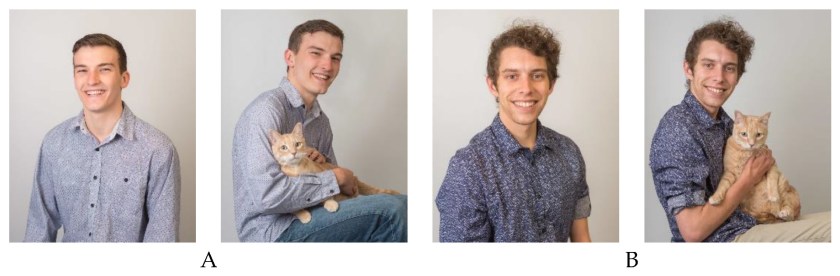
The study surveyed 708 women between the ages of 18 and 24, showing them photos of men photographed alone and with cats. The women were asked whether they’d agree to a date with each man they viewed, and whether they’d consider a long-term relationship with each man.
When those same men were shown with cats, the number of women who said they’d date them dropped by five percent, while the number who said they’d consider a serious relationship dropped by four percent.
The women who took the survey also rated men “on masculinity and personality” according to their appearance in the photos. In addition, the participants answered questions like: “Is he reserved?”, “Is he generally trusting?” and “Is he lazy?”, and asked the women whether they believed the men were outgoing, sociable, kind and considerate.
“Men holding cats were viewed as less masculine; more neurotic, agreeable, and open; and less dateable,” wrote authors Lori Kogan and Shelly Vosche, who titled their paper “Not the Cat’s Meow? The Impact of Posing With Cats on Female Perceptions of Male Dateability.”
In an attempt to reduce variables, the photos were all staged the same way in front of a plain white background, with the men wearing blue button-down shirts. Credit: Lori Kogan and Shelly Vosche/Colorado State University
The researchers also asked the women if they viewed the men as dominant, gentle, sympathetic, affectionate, warm, decisive and possessed of leadership abilities.
The presence of cats hurt men across the board with the female respondents, who found the cat men “ultimately less datable in the short or long term,” Vosche and Kogan concluded.
That begs the question: Why?
Women want manly men, Vosche and Kogan argue.
“Women prefer men with ‘good genes,’ often defined as more masculine traits,” they wrote. “Clearly, the presence of a cat diminishes that perception.”
The results, they said, indicate “women are more likely to seek masculinity first, then consider other components of the potential mate.”
The findings were “influenced by” whether the women self-identified “as a dog or a cat person,” although it wasn’t clear just how much that impacted their responses.
Vosche and Kogan speculate “that American culture has distinguished ‘cat men’ as less masculine, perhaps creating a cultural preference for ‘dog men’ among most heterosexual women in the studied age group.”
The authors didn’t say why they concentrated on the 18 to 24 range, nor did they speculate on how women in older age cohorts might respond.
Buddy responds
We would be remiss, of course, if we didn’t run this by Buddy the Cat. This is his blog, after all.
The outspoken tabby cat dismissed the study as “fake mews” and said it’s well-known that cats are “spectacular wing-men.”
In addition Buddy — who holds doctorates in being a cat and being handsome — argued that, while some cats may indeed make their human male servants seem less masculine, other cats — like Buddy — amplified masculine and desirable traits by several orders of magnitude.
“If a man is pictured with a scowling, flabby Persian, then sure, maybe women are less likely to view that man as masculine,” Buddy said. “But if a man is pictured with a ripped, dashingly handsome cat such as myself, women are 96 percent more likely to want to date him.”
Asked where he arrived at that figure, Buddy replied: “I made it up. But obviously it’s true.”
In research by Buddy, women were 96 percent more likely to date men pictured with Buddy.
Ingredients can change without any indication on pet food packaging or acknowledgment from the companies that manufacture pet food, the study revealed.
We’ve all heard the oft-quoted factoid claiming domestic cats kill billions of birds and small animals every year, and unsurprisingly that number is contested and controversial.
One reason skeptics doubt those numbers is because researchers didn’t observe cat behavior and extrapolate the ecological impact — they handed out questionnaires to owners and asked them how often their cats brought dead animals home. To get accurate results, researchers have to be confident people are answering honestly and have reliable memories. It’s really not the best way to do a study.
So a team at North Carolina State University came up with a better way to measure cat predation on wildlife: They’d take hair samples from more than 400 cats, which would reveal how much of their diets consist of cat food versus prey.
Hair analysis can reveal different isotopes, so the team would be able to directly note each cat’s diet by distinguishing between pet food isotopes and those from prey animals. As the team explained:
A common way to understand the composition of animal diets is to collect samples of fur, nails, or blood from an animal and analyze its carbon and nitrogen isotopes. All organic materials contain isotopes of elements that get locked into body tissues, following the basic principle that you are what you eat. For example, the ratios of nitrogen isotopes present in carnivores are dependably distinct from those of plant eaters. Similarly, researchers can distinguish the types of plants that an animal eats by measuring the ratio of carbon isotopes.
It was a good idea, but the study was derailed by an unexpected discovery: No one knows what the heck is in pet food.
Cat food manufacturers fill their products with mystery ingredients, the team found, which means one bag of kibble or one can of wet food doesn’t have the same ingredients as the next, even if they’re the same flavor from the same company.
Although they can meow in protest, our cats can’t tell us their food tastes different. (Source)
Additionally, pet food manufacturers can — and do — change what they put in their products without notifying customers or acknowledging the changes on the packaging.
As a result, the research team couldn’t identify which isotopes were from cat food and which ones were from hunted meals.
“We really thought this was going to be an ideal application of the isotope methodology,” said scientist Roland Kays, a co-author of the study. “Usually these studies are complicated by the variety of food a wild animal eats, but here we had the exact pet food people were giving their cats.”
That discovery essentially rendered the study useless for its original purpose, but like all good scientists, the North Carolina State team realized that failure reveals just as much as success, even if it’s not necessarily what you’re looking for.
“This isn’t what we aimed to study, but it is important in as much as there are hundreds of millions of cats (perhaps more) on Earth,” said Rob Dunn, a professor in NC State’s Department of Applied Ecology and co-author of the study. “The diets of cats, dogs and domestic animals have enormous consequences for global sustainability, cat health and much else. But they are very non-transparent. In short, at the end of this study we are still ignorant about why some cats kill more wildlife than others, and we have also found we are ignorant about something else, the shifting dynamics of ‘Big Pet Food.'”
As veterinarian Shawn Messonnier put it in an editorial for Pet Age, “the pet food industry remains shrouded in mystery about what’s really inside the pet food bag and how it’s created.”
Calling for more transparency in the manufacture and packaging of pet food, Messonnier pointed out ingredients can have a drastic effect on the health of our furry friends.
“For pet parents, a big leap of faith is required of them because unlike fresh human food, you can’t visually verify the ingredients used, their sources, freshness or the safeness of their handling,” he wrote. “Label language can be difficult to discern, too, so people rely mostly on the observations and opinions of friends and family they trust. Inevitably, people hope what goes in the bowl will translate into well-being and happiness for their dog or cat.”

 Pain In The Bud