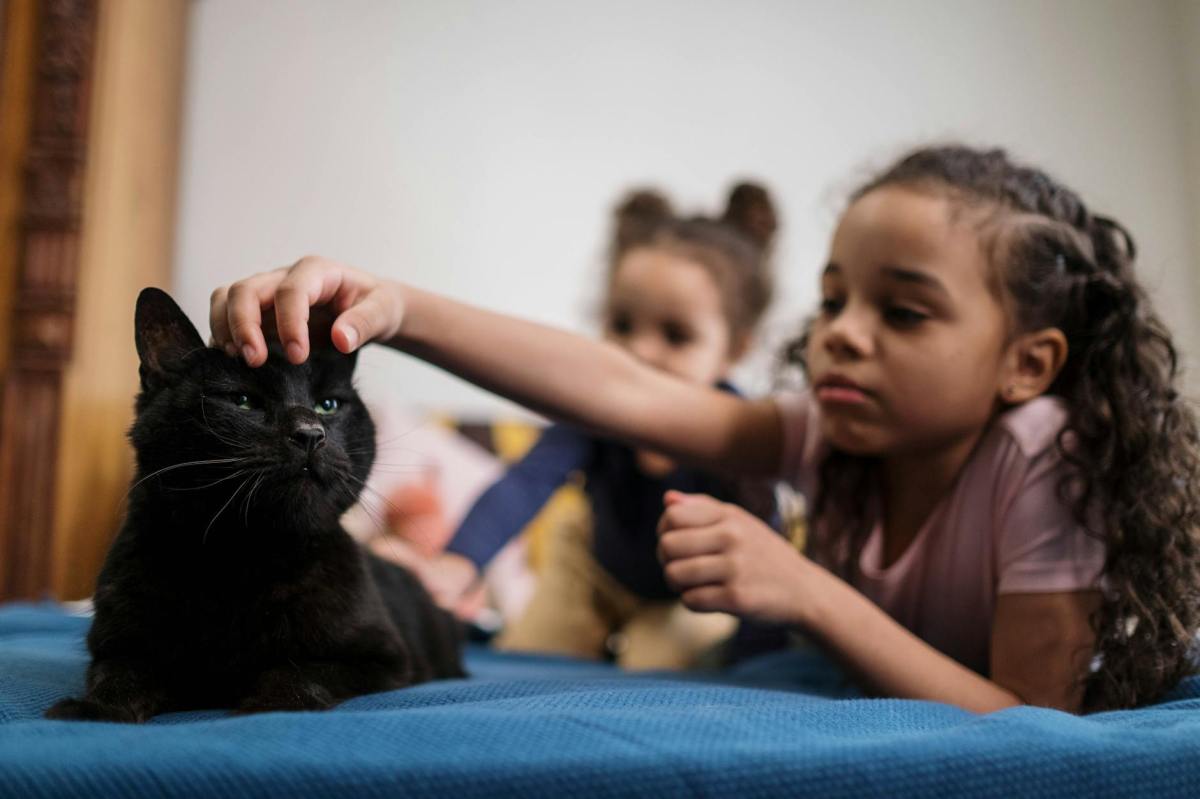
Do You Speak Cat? This Quiz Tests Knowledge Of Real Feline Language

Studies show most of us are pretty bad at interpreting our cats’ moods. A research team in Australia wants to change that.

Cats are constantly telling us how they feel, but many of us aren’t listening.

We’re not talking about chirping, trilling and meowing, although those are some of the ways our cats try to communicate with us.

While they might seem protective of their own thoughts and feelings, cats are actually transparent, and they can’t lie.* Their tails, ears, whiskers, facial expressions and body language all broadcast a cat’s mood.

The question is, are we picking up that broadcast?

In The Conversation, the University of Adelaide’s Julia Henning introduces us to a quiz she designed to answer that question, and invites us to take it.

The goal: to correctly assess each cat’s mood. What I liked most was that we’re asked to evaluate videos — clear, well-lit high resolution clips — instead of the low resolution stills that are often used for quizzes like this.

Sir Talks-a-lot

Henning has been studying the human-cat communication issue because when we misread cats, there’s a good chance we’re stressing them out. Henning and her team published the results of a study in September in which 368 participants from Australia were asked to evaluate a series of clips human-feline interaction.

It turns out they didn’t do so well at reading the signs that a cat is agitated, stressed or doesn’t want to play.

“For videos of cats who weren’t playing and were showing subtle negative cues (such as sudden tension in the body or avoiding touch), participants only recognised the negative cues about as well as chance (48.7%),” the authors of the study wrote.

Even when study participants correctly read a cat’s ears, tail, whiskers and body language, some of them indicated they’d do things that would unknowingly make a cat more agitated and stressed. A classic example is trying to pet a cat’s belly and misinterpreting their derpy way of trying to block you as a playful gesture.

Did you know? Approximately 96% of Buddy’s communication is related to yums.

In the paper, which was published in Frontiers in Ethology, Henning and her colleagues lay out the case for making sure we — the people who take care of cats — are sensitive to what our little buddies are feeling.

It’s not just about strengthening the bond, although that’s an important part. It’s about reducing stress and miscommunication, and increasing quality of life.

Cats are incredibly sensitive to our actions and moods because we are the most important living beings in their lives. We feed and house them, and we’re their pals. If we’re constantly subjecting them to play they don’t like or overstimulating them, they get stressed, and stressed cats can become depressed, sick or resentful cats.

If we want to make sure our buddies live their best lives, we have to understand what they’re trying to tell us.

(*) Except when it comes to food. When food is involved, these innocent, cute little furry creatures become master manipulators and can convince anyone they’re starving.

Note: The first version of this story linked to the study page twice when the first link should have pointed to the quiz. It’s fixed now, and email subscribers can follow the link through this version of the story. Apologies for the error.

Header image credit: cottonbro studio/Pexels
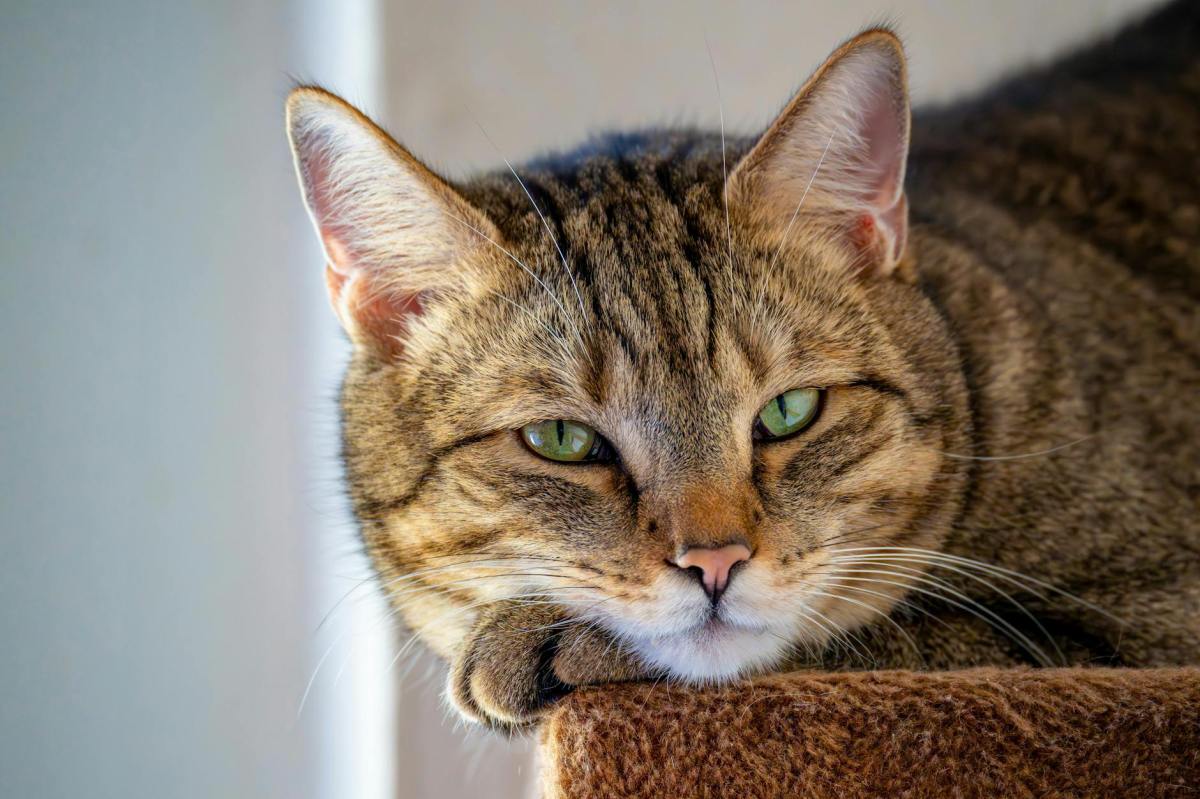
Study: Cats Use Facial Expressions To Reassure Each Other Everything’s Cool During Play Time

Once again, we’ve underestimated cats. There’s so much more to the ways in which they communicate than we realize.

We know cats use non-verbal signals to communicate with each other, but recent research suggests we may just be scratching the surface, glimpsing only a portion of the information that passes between our furry friends.

Cats “talk” to each other by the way they position their tails, whiskers and ears, in addition to their overall body language.

It turns out there’s more. A group of interdisciplinary scientists from universities in Kansas, Arkansas and Haifa, Israel, found cats also employ specific facial expressions, and rapidly mirror each other’s expressions during play time to signal they’ve got good intentions and aren’t going to hurt each other.

The study, which was given the yawn-inducing title “Computational investigation of the social function of domestic cat signals” (in English: using AI to figure out how our house cats “talk” to each other), started with observations of felines playing with each other in cat cafes.

From there, the coders and mathematicians on the team created an algorithm to record and sort the facial expressions the cafe cats used, employing CatFACS (Cat Facial Action Coding System) to associate each expression with its meaning.

“I’m serious. Feed me, or feel my wrath.”

Cats make a surprising number of facial expressions, 276 in total, according to a 2023 study.

The problem is, we humans are terrible at reading them. Even veterinarians trained in CatFACS still struggle to get it right, but happily this is precisely the sort of task algorithmic AI excels at. Like facial recognition software, a well-trained machine learning algorithm can recognize faces and record them more accurately and much faster than any person could.

In a column praising the facial expressions study, evolutionary biologist and Jane Goodall Foundation ethics board member Mark Bekoff said it’s the kind of labor-intensive work that truly advances our understanding of the ways animals communicate.

For cats and their human caretakers, Bekoff notes, it could help us reduce inter-species misunderstandings and make it easier to read our cat’s emotions, so we know when they’re not feeling well or need something.

“There are no substitutes for doing what’s needed to learn about the nitty-gritty details of how animals communicate with one another in different contexts,” Bekoff wrote. “This study of play opens the door for more widespread comparative research focusing on how animals talk to one another.”

“Do I look happy, human?” Credit: Milan Nykodym/Wikimedia Commons

We also know adult cats very rarely meow to each other, and the meow is reserved for cat-to-human communication. Imagine the frustration our little friends must feel when they have so much to tell us, but the only thing we understand are vocalizations — meows, chirps and trills — that can convey only basic ideas at best.