Of Cats And Books

A look at the strange and wonderful world of rare books where, of course, you’ll also find cats.

I’ve always liked the idea of antiquarian bookshops.

I am almost completely ignorant on the subject, mostly because chasing after extremely rare print volumes is the domain of people with a lot of expendable income. The most valuable books in my possession are an original 1939 first edition print of Will Durant’s The Life of Greece, and two novels signed by their authors. Their value is sentimental, not monetary.

But I like the general romanticized image of the antiquarian bookseller: an older man or woman in tweed ensconced in a cozy shop in Manhattan, with every shelf filled with dusty volumes and every surface covered by globes, astrolabes and other curiosities. There’s one of those tight winding staircases with wrought iron railings leading to a loft for access to the highest shelves, the music is from a vinyl collection of light jazz, and it’s always raining outside.

A doted-on shop cat dozes on a red leather armchair, tail twitching from some nightmare in which it’s slightly less adorable than it thinks it is.

Collectors in damp trenchcoats drop in, asking after 17th-century occult tomes, grimoires, and Voynich-esque manuscripts with engravings of impossible creatures, trees with visual organs and arcane rituals. Bibliophiles ask after leatherbound collections of classics like Don Quixote, and the occasionally curious passerby peeks in, surprised that such shops still exist in the age of the internet.

It turns out that’s not too far from the truth, especially the bits about the internet and, of course, the cats.
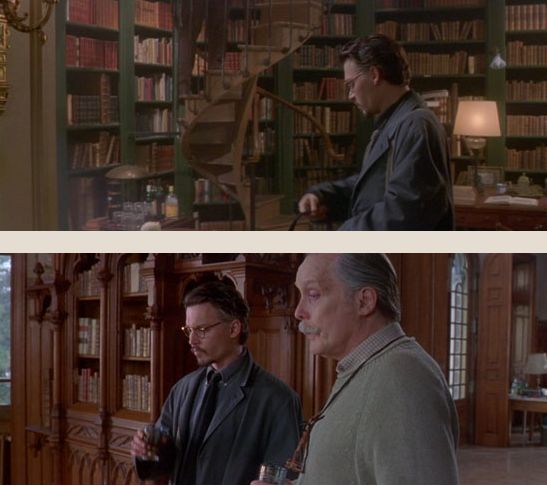
Johnny Depp is constantly smoking and drinking red wine while handling priceless old books in 1999’s The Ninth Gate. Notice the winding staircase in the rare book shop in the top screenshot.

The Booksellers is a documentary that screened in festivals in late 2019 before heading straight to video when the pandemic brought the world to a screeching halt.

It’s an inside look at the annual New York Book Fair and the small world of antiquarian and rare booksellers in New York, a shrinking constellation of people mostly descended from, or formerly apprenticed to, the booksellers of old before Barnes and Noble and Jeff Bezos laid waste to that sector of retail.

Before network TV, cable TV, dial-up internet, broadband, Kindles, iPads and smartphones turned us into a media-gorging — yet paradoxically less literate — society, New York was home to more than 500 bookshops, including generalists and specialists who catered to people with particular and peculiar interests. Now it’s home to fewer than 80, according to the documentary.

When the booksellers were asked about the way the internet has impacted their trade, their weary sighs reminded me of my older colleagues from my brief time experiencing the end of the “good old days” of newspapering, before the internet destroyed or compromised every publishing income stream and delivered us to this moment. This dystopian time when entire swaths of the country have become news deserts, Elon Musk in all his wisdom asserts that Twitter accounts run by anonymous trolls in Belarus are just as reliable — even more trustworthy, in fact — than those liars in legacy media, and corporate raiders are stripping the last handful of newspapers down to assets they can auction off.
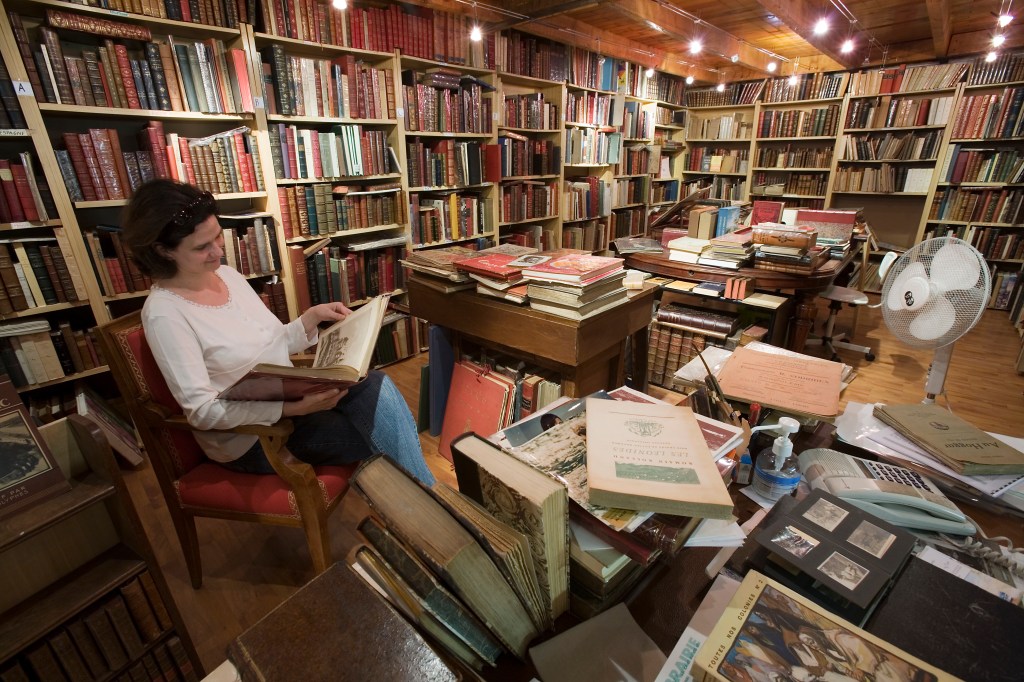
A rare book shop in Paris. Credit: Wikimedia Commons

Not all of it’s bad. One rare book dealer laments the fact that “the thrill of the hunt” is gone, meaning it no longer takes years to track down some obscure volume because you can hop online and find it in a few clicks. I get that, but nostalgia for that sort of thing is the ultimate in looking back through rose-colored glasses. Plenty of us could wax nostalgic about the days when we’d hear a song on the radio and have to hum the damn thing to record store clerks, but we’re forgetting about the considerable frustration involved. Given the choice between “fun” ignorance and access to information, I’ll always choose the latter.

As for the cats, it’s not a surprise when many of the book dealers interviewed for the film identify themselves as cat lovers or idly scratch their feline friends while showing off their vast personal collections. Antiquarian bookshops tend to be warm, quiet, gently-lit spaces, perfect napping spots for cats who guard old books from rodents.

If you’re interested in watching The Booksellers, you can find it on Amazon Prime video, or better yet, just click below:

Header image credit: A. Savin/Wikimedia Commons
One Unverified Claim Of An Aggressive Stray Prompted A New Jersey Town’s Plan To Trap And Kill Cats

Local authorities have backed off the plan, but the story raises important questions about how local governments deal with stray cat populations.

The recent saga of a New Jersey town’s ill-advised plan to “destroy” feral cats highlights almost everything wrong with local government.

First, a notice went out from the northern New Jersey town of Matawan, informing residents that feral cats had become a “nuisance” and their presence posed a danger to “the welfare and safety of both the community and the cats.” The town, in cooperation with the police and SPCA, the notice said, would begin trapping stray, feral and free-roaming felines in November, and any cat not claimed after seven days would be “destroyed.”

The backlash was loud and immediate, and it took the Monmouth County SPCA by surprise.

After receiving angry complaints, the local SPCA posted a notice on Facebook blasting the “outlandish and outrageous campaign.” The SPCA’s leaders said they hadn’t been consulted and hadn’t approved of the policy, blaming the Matawan Animal Welfare Committee, a three-person group comprised of the town’s business administrator, Scott Carew, town councilwoman Melanie Wang and an animal control officer.

“We are completely outraged and disheartened that our organization has been attached to this archaic campaign to euthanize feral cats, when there are so many other successful, humane alternatives,” the Monmouth County SPCA wrote in its statement.

Carew backpedaled in the fallout, claiming the notice was a well-intentioned way of informing people who live in Matawan to keep their cats inside and stop feeding strays and ferals.

“By no means was the goal of the trapping efforts to destroy trapped cats,” Carew told NJ.com. “That said, since there was the chance that cats would be trapped and brought to the shelter, we wanted to alert cat owners whose cats are allowed to roam outside.”

But Carew also said he and the other were “obligated to address the complaint,” and said the town would have to enact “a resumption of trapping efforts” if it received more complaints about the cats. According to a statement by the Matawan police department, in a meeting between local leaders and people concerned about cats in one neighborhood, it was a single complaint about a possibly aggressive feral cat that prompted the plan.

That’s it. That’s all it took, in the eyes of local government officials, to justify a policy of trapping and killing sentient, human-habituated innocent animals, a group that includes free-roaming pets, former pets, strays and true ferals. A single, unverified complaint of a potentially “aggressive” cat, with no further detail about what the word aggressive means in that context, no information about what the cat supposedly did, or even confirmation that the cat was a feral and not a stray or a wandering pet.

When the dust cleared from all the finger-pointing, Carew said his committee should have informed the SPCA of its plans, and police brushed off responsibility by saying they “assumed” the notice was drafted with the cooperation and intent of the SPCA and other local animal welfare groups.

Cat trap
A cat caught during a trap, neuter, return program, which reduces feral/stray populations in the long term without the cruelty of culling. Credit: Pixabay

Local government leadership and incompetence has become a big problem. With the death of newspapers, particularly regional dailies that employed trained journalists, there are entire swaths of the country no longer served by local government watchdogs who have the time, skills and resources to monitor local officials and inform the public.

We’re fortunate that NJ Advanced Media, an online portal for content from more than a dozen New Jersey local newspapers, has found a way to exist as a viable business serving millions of readers throughout its home state. Without it, it’s doubtful the story would have surfaced anywhere.

Lots of people think local government is small potatoes, but the truth is that local officials are responsible for enormous budgets and wield considerable power. The decisions they make very likely have more impact on our lives than decisions made in the halls of congress, even if it’s the latter that gets people’s blood boiling.

In this case we have a meeting conducted in secret, without public notice, that would have determined the fate of an unknown number of animals. We have anonymous, nebulous complaints and allegations about “nuisances.” What constitutes a nuisance? How many cats are involved? Are the cats part of managed colonies and cared for by people who trap and neuter them? None of those questions were answered.

Additionally, instead of taking intermediary steps or using widely available resources — the “other successful, humane alternatives” the SPCA referenced, from the willing cooperation of local shelters to the free toolkit created by the authors of the incredible D.C. Cat Count — the local officials came up with their own ill-advised plan to trap and kill cats.

Outrage by animal lovers and the SPCA were enough to make sure a plan like this was quickly discarded this time around, but you have to wonder how many other places this kind of thing might be happening without so much as a blurb about it.

Bodega Cat’s Back To Business After Abduction

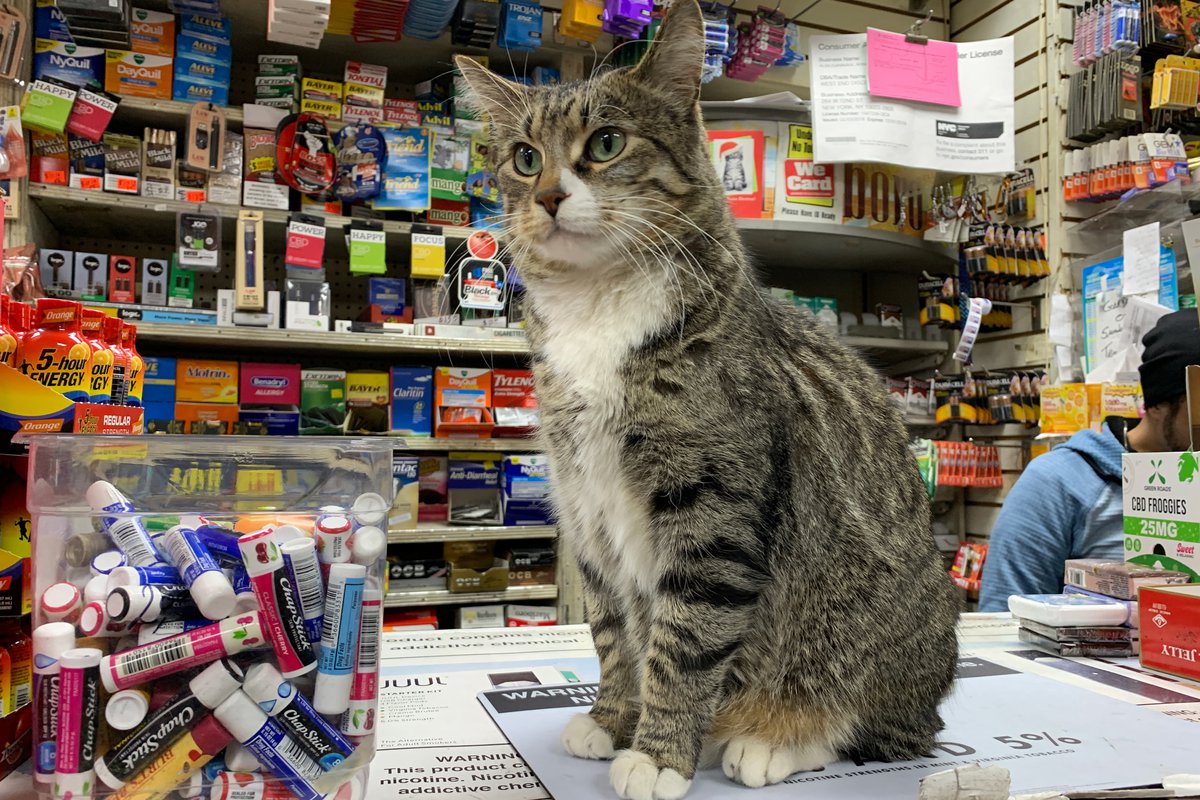
Boka is one of about 10,000 cats who prowl New York’s delicatessens, keeping them free of rodents.

A beloved bodega cat is back where he belongs a week after a thief snatched him from the store.

The cat, Boka, is actually a kitten. Majeed Albahri, owner of Green Olives Deli in Brooklyn, adopted the little guy in January and in seven months the all-gray feline has become a familiar face in the neighborhood, where people are used to seeing him sitting on Albahri’s shoulder as he works the register, or napping on the nearest convenient pile of newspapers.

Boka “brings life to the store,” Albahri said, noting people stop by just to give Boka a head scratch.

But on July 29 a guy “skulking around” outside the store took a liking to the neighborhood mascot and swooped him up. Albahri didn’t know what happened until he checked the store’s surveillance feeds and saw the thief in action.

Boka’s abduction mobilized an entire neighborhood, generated headlines in the New York papers, segments on local TV news and posts on neighborhood blogs. The thief must have felt the heat, because he contacted the deli through an intermediary and returned Boka to Albahri safe and sound.

On Aug. 5, exactly a week since Park Slope’s favorite feline was filched, Albahri posted online to share the good news.

“Best news I’ve heard all week,” one neighbor wrote, while another one posted: “Yes Boka! We missed you!”

Others urged Albahri to invest in some AirTags, the Apple-made locators that were designed for keys, phones and other easy-to-lose items, but have been repurposed by some as pet trackers.

For those unfamiliar with city life, particularly in New York, bodegas (Spanish for wine cellar or warehouse) are corner stores that stock grocery staples, snacks, and usually some sort of combination deli/salad bar. They also sell everything you’d find in a convenience store, from newspapers, magazines and gum to cigarettes and cigars.

Because there are very few grocery stores in New York, and because suburban-style grocery shopping isn’t an option for millions of people who don’t own cars, bodegas are essential in neighborhoods that would otherwise be “food deserts.” (Some sociologists consider such neighborhoods food deserts anyway, especially if the local stores don’t offer fresh produce, dairy and meat. Most bodegas do.)

Bodega cat
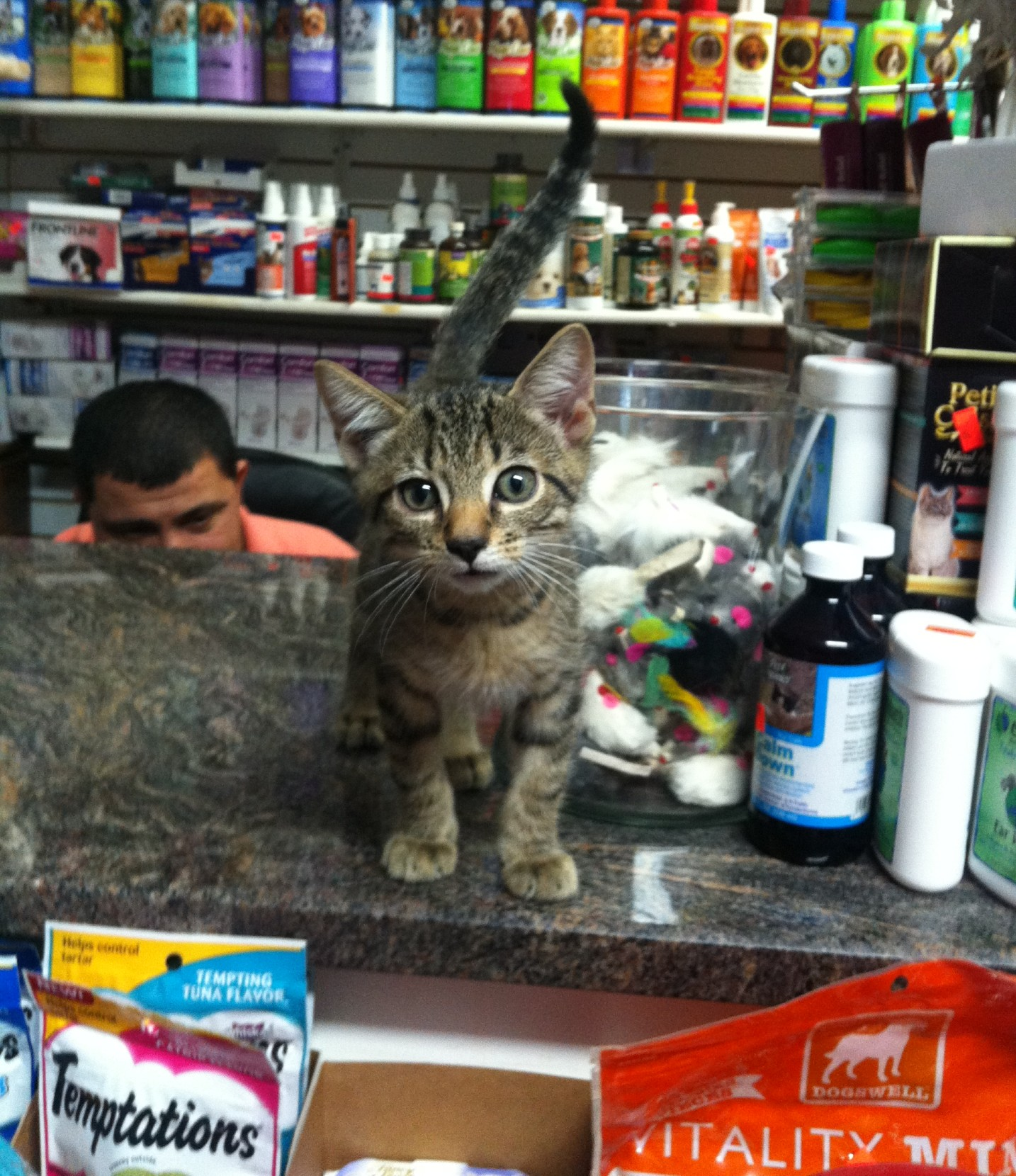
“Bodega cat trainee reporting for duty, sir!”

Bodega cats occupy a legally precarious but widely loved position in the fabric of New York. They’re pets, but they also have primal jobs that call back to the original reason humans and felines began their partnership thousands of years ago: rodent control.

Technically they’re illegal according to the city’s Department of Health, but the New York Times estimates there are more than 10,000 bodega cats across all five boroughs. In a city that produces viral videos of rats dragging full slices of pizza down subway stairs, and rodents run rampant at night, bodega owners are faced with two choices: Accept the rodents and pay a fine, or get a cat and pay a fine, but have their stores free of rodents.

With the fines for rodent infestations and cats both around $300, bodega proprietors say the choice is easy, and cats have become ubiquitous. New Yorkers have created petitions to get the Department of Health to relax the rules on bodega cats, with no luck so far.

PITB Reviews: The Electrical Life of Louis Wain

The Electric Life of Louis Wain tells the story of one of Victorian England’s most revered artists who was known almost exclusively for his humorous cat illustrations.

Movie: The Electrical Life of Louis Wain
Director: Will Sharpe
Genre: Biopic, drama
Medium: Amazon Original (streaming and in theaters)

Louis Wain was an artist in the employ of The Illustrated London News, one of the most popular newspapers in Victorian England, when advances in photography and printing made it possible for newspapers to regularly include photographs in their pages.

Demoted from staff illustrator to contributor, Wain’s professional skills seemed destined for obsolescence when he and his wife, Emily, returned to their cottage one rainy afternoon in 1886 and heard the distressed mews of a kitten. They found an adorable tuxedo cat soaked and shivering in their garden, brought him inside and were instantly smitten.

They named the baby Peter, and in the months that followed Wain made the growing kitten the subject of most of his idle drawings, sketching him in various situations and with increasingly anthropomorphic features. Wain’s cat sketches were only intended for his wife, but when Sir William Ingram, editor at The Illustrated News, saw the whimsical cat drawings he commissioned Wain to fill two pages with cats as a special feature for the paper’s Christmas edition.

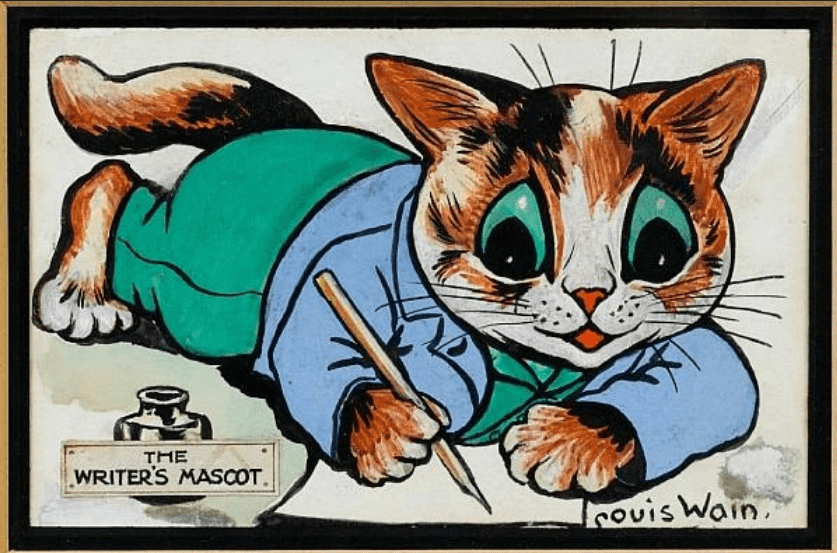
Wain’s cats were a huge hit with readers, marking the beginning of a second, much more successful career as a pet portraitist and one of Victorian England’s most beloved artists. Wain gave his cats human expressions, had them do human things, and put them in contemporary clothing to the delight of newspaper readers and, later, book publishers who sold many thousands of copies of illustrated books featuring nothing but Wain’s anthropomorphic cats.

Louis Wain
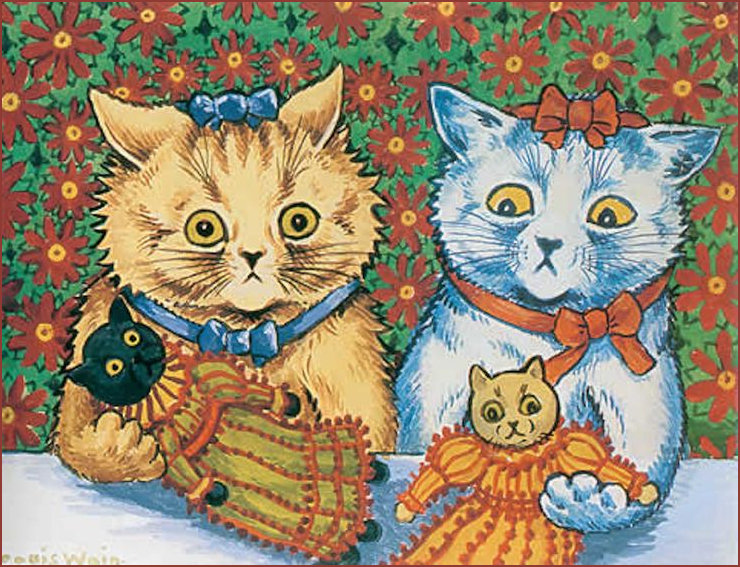
A pair of young female cats play with cat dolls.

The Electrical Life of Louis Wain weaves a narrative from its subject’s professional life and his lesser-known private life. A polymath, philosopher, amateur boxer and author of some particular ideas about cats and electricity, Wain (played by the always-excellent Benedict Cumberbatch) was an eccentric and not particularly happy with his life until his family hired Emily Richardson (Claire Foy) as governess — a home teacher — for Wain’s younger sisters.

Despite the fact that Emily was a decade his senior and such relationships were looked down upon in Victorian England, Wain and Emily married, made it clear they didn’t care what others thought about them, and learned to enjoy life in each other’s company. With the addition of little Peter, the Wains were a happy family.

Louis Wain did not, however, have an easy life. Three years into their blissful marriage, Emily was diagnosed with terminal breast cancer. Her illness, the subsequent mental deterioration of one of Wain’s younger sisters, and Wain’s own eventual struggles with mental illness cast long shadows over his outlook and his work.

Louis Wain's Annuals
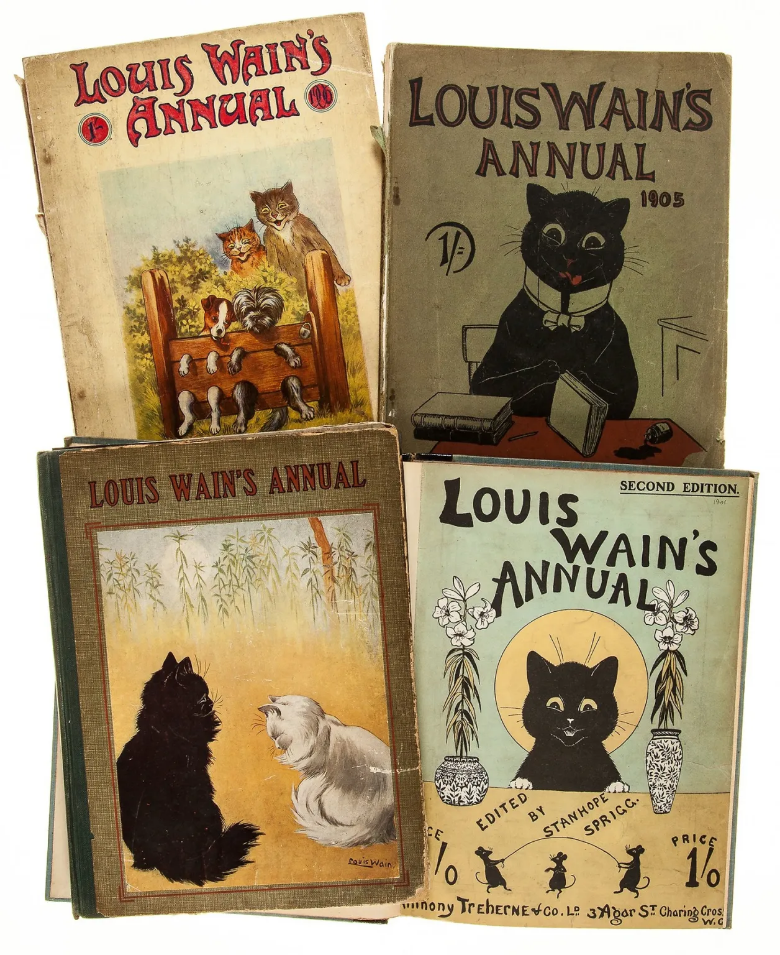
Wain’s cat drawings were so popular, they were sold in stand-alone books in addition to filling the pages of widely-read publications in Victorian England.

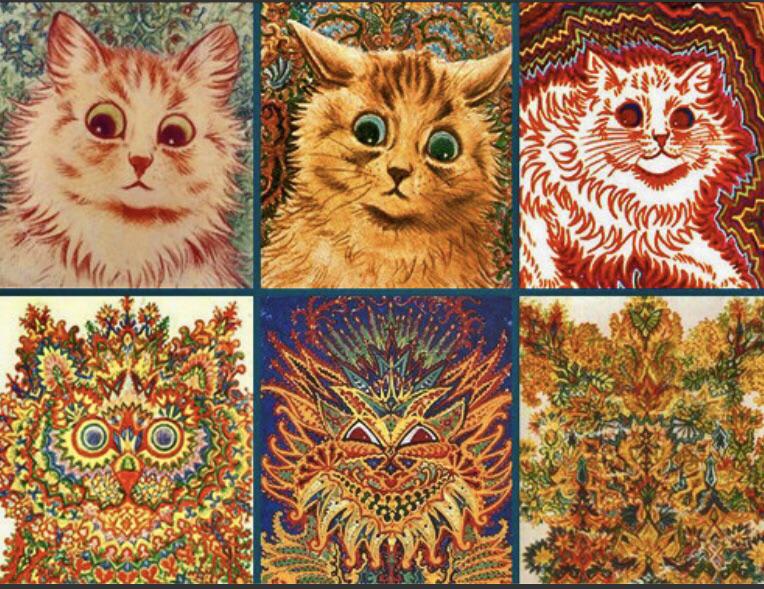
Today, psychologists, art critics and scholars of the man’s career still debate whether — and to what degree — his mental state was reflected in his artwork as his cats took on increasingly psychedelic and abstract qualities. What began as simple kitten sketches morphed into whimsical scenes of expressive cats and eventually trippy images that wouldn’t have looked out of place as album art in the late 1960s and 1970s.

Did Wain truly suffer from severe mental illness, or was he a casualty of a society that banished its “undesirables” to asylums and “lunatic houses”? Was Wain on the autism spectrum? Did the increasingly psychedelic bent of his drawings stem from medications he was given at a time when mental illness was poorly understood and poorly treated?

It depends on what you see in the illustrations. For a man so revered by the public, Wain was remarkably casual about his output — a quality Cumberbatch displays admirably throughout the film — and he didn’t bother to date his drawings. He was prolific, completing many hundreds of cat images throughout his career, in addition to the journalistic images and livestock renderings of his early career, when he was a newspaperman.

Louis Wain's Cats
Wain’s cat illustrations took on more psychedelic qualities as the years passed.

What is absolutely clear is that Wain saw something in cats that others didn’t see until he showed it to them with his pencils. He was credited with a major shift in attitude toward cats and the normalization of keeping cats as pets rather than as mousers. Although cats enjoyed companion animal status in various other cultures earlier in human history, the idea of keeping a feline as a pet was novel in Victorian England.

The shift in public attitude was treated humorously — as much of the subject matter is — by the film, with a bewildered Wain accepting the presidency of the Cat Society of England at a fete in his honor, then explaining his theory that tabby markings were the result of electricity flowing through fur.

The subject of electricity comes up again and again in the film, bringing to mind Tesla and another famous British eccentric, Alan Turing, who was also played by Cumberbatch in the 2014 biopic The Imitation Game. Not coincidentally, both movies show that service to crown and country mattered little when British eccentrics were deemed too odd to tolerate. Like Wain, Turing — a war hero who famously cracked the legendary German Enigma cryptography machine — found himself on the wrong side of the UK’s mental institutions when he was convicted of indecency in 1952 after admitting to police, during an interview in an unrelated investigation, that he’d once had a relationship with another man.

Turing was subsequently placed on synthetic estrogen and drugs prescribed to “cure” his mental condition, which had the opposite effect: Turing, a shadow of his former self, his genius blunted by chemicals, committed suicide by eating an apple he’d laced with cyanide in 1954.

The Electrical Life of Louis Wain finds humor in both the light and dark moments of its subject’s life, and it’s a credit to the film’s writers, director and actors that lighthearted moments don’t spoil the more serious narrative themes. For his part, Wain was a man who endured a lot of suffering in his life, and if there’s a lesson to be learned here, it’s that no matter what life throws at us, spending time with cats makes things more bearable.