New Zealand Hunting Contest For Children Offers Prizes For Killing The Most Cats

One of New Zealand’s most prominent economists has called cats “serial killers” who are driven by “bloodlust,” and is one of many who blame domestic cats for the decline of local wildlife.

An annual hunting competition for children in New Zealand has a new category this year, awarding a cash prize to the young hunter who kills the most cats.

You read that right.

The North Canterbury Hunting Competition announced the new category on Saturday and says it will offer a $250 prize to any child 14 or younger who kills the most felines.

In a statement, the local SPCA pointed out the obvious, that cats will suffer horribly, pets will die and the competition will result in bungled kills en masse, leaving wounded cats to suffer horribly before the children finish them off — if indeed they do.

“There is a good chance someone’s pet may be killed during this event,” the Canterbury SPCA wrote in a statement. “In addition, children often use air rifles in these sorts of events which increase the likelihood of pain and distress, and can cause a prolonged death.”
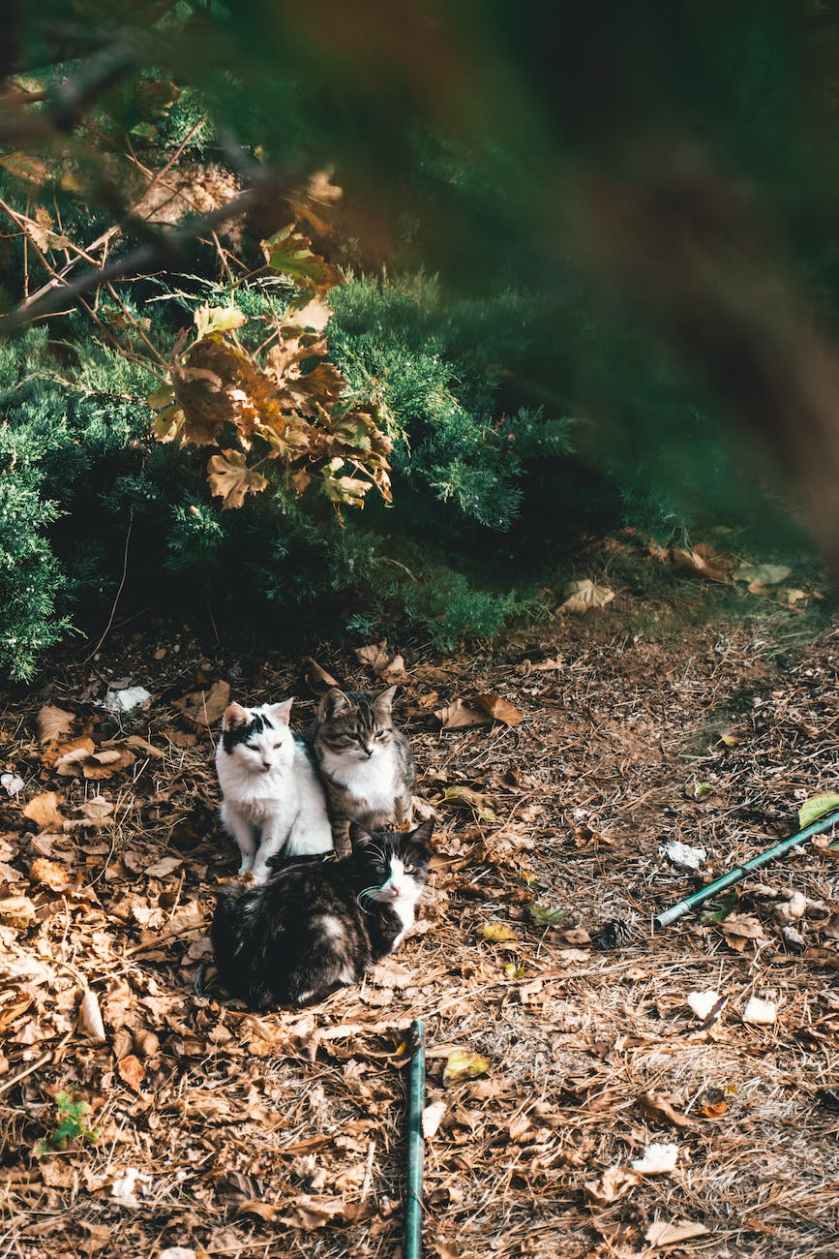
photo of cats
Credit: Ali Arapou011/pexels

Prompted by the same sloppy “research studies” that inspired Australia to kill millions of cats — and resulted in a mouse plague of biblical proportions in 2021 and 2022, causing billions of dollars in damage to farms, homes, businesses and infrastructure — New Zealand is on a disinformation-fueled jihad against felines.

Like all such studies, the claims that cats are singlehandedly responsible for declines in native wildlife, thus absolving direct human activities of blame, come by way of overzealous bird conservationists and others who insist the mass murder of cats will save native birds and small mammals. As if humans destroying habitats, dumping chemical waste, creating wind farms that act as bird dicers, building glass skyscrapers that millions of birds fly into every year, saturating entire swathes of the Earth with light pollution and EM radiation that harms and confuses animals — and all the other things people do — have no impact whatsoever, and it’s only those dastardly cats who are the culprits.

You’ve got to hand it to the misguided conservationists, who have picked tiny scapegoats who can’t defend themselves verbally or physically against humans.

To understand how the “hunting” (killing) competition can be real, it’s important to understand the context of the way cats are portrayed in New Zealand. Gareth Morgan, a Kiwi economist and politician, launched a campaign about a decade ago with the stated goal of eradicating cats from the island nation of 5.1 million people, which would forbid people from adopting new cats and end programs like trap, neuter, return (TNR) in favor of having local animal control departments kill felines.

Morgan, whose Cats to Go site portrays kitties with devil horns and glowing red eyes, says cats are evil animals driven by “bloodlust.”

“Cats are the only true sadists of the animal world, serial killers who torture without mercy,” Morgan has said.

Hunting Competition
A screenshot from the group’s Facebook page announcing a new prize for young hunters.

The North Canterbury Hunting Competition, which also offers prizes like dirt bikes for child hunters, pulled the new category announcement from its Facebook page on Monday but stopped short of canceling the event, blaming people who were upset by the idea of cat hunting.

Citing abusive feedback, the group said it’s “incredibly disappointed by this reaction” and said the hunt is for a good cause, raising money for local projects.

Kiwi Cat Dad Builds Lift For His Aging Buddy

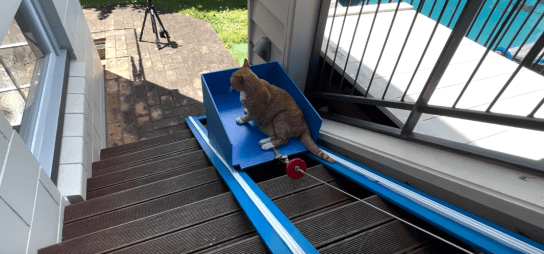
Frodo the Cat is 20 years old and doesn’t get around like he used to, so his handy human put his handy skills to work and built the little guy his own lift.

Liam Thompson is a 21-year-old Youtuber who’s known for building cool stuff.

His cat’s name may be Frodo, but Thompson said he’s in “Gandalf territory” at 20 years old and has been having trouble getting around to his favorite spots, especially a sunny corner of the backyard where he likes to sit poolside and enjoy the New Zealand warmth.

“Despite his ancient-ness, he still insists on hobbling down these stairs every day to sit out in the sun,” Thompson says in a video about his latest project. “That is, until today.”

The video shows the handy Kiwi building an “elevator” — more like a stair lift for a cat — out of wood, an electronic hoist and a handful of small hardware pieces. The passenger compartment is a simple cart, and at the press of a button the cart descends or ascends the stairs along a wooden track.

Frodo isn’t bothered in the slightest.

“Are you ready to go downstairs without having to move a muscle?” he asks his cat before the maiden ride. “I hope so, because it took me four days.”

Thompson is delighted as the elevator works perfectly and Frodo rides it without fear or protest, laughing as the orange senior cat makes himself comfortable during the ride. The current setup requires Thompson to push a button, but perhaps in the future he can add a simple button for Frodo directly on the cart.

Speaking of elevators, this cat thinks he’s Leslie Chow from The Hangover:

‘Social Influencer’ Thinks He Saw A Panther…In New Zealand

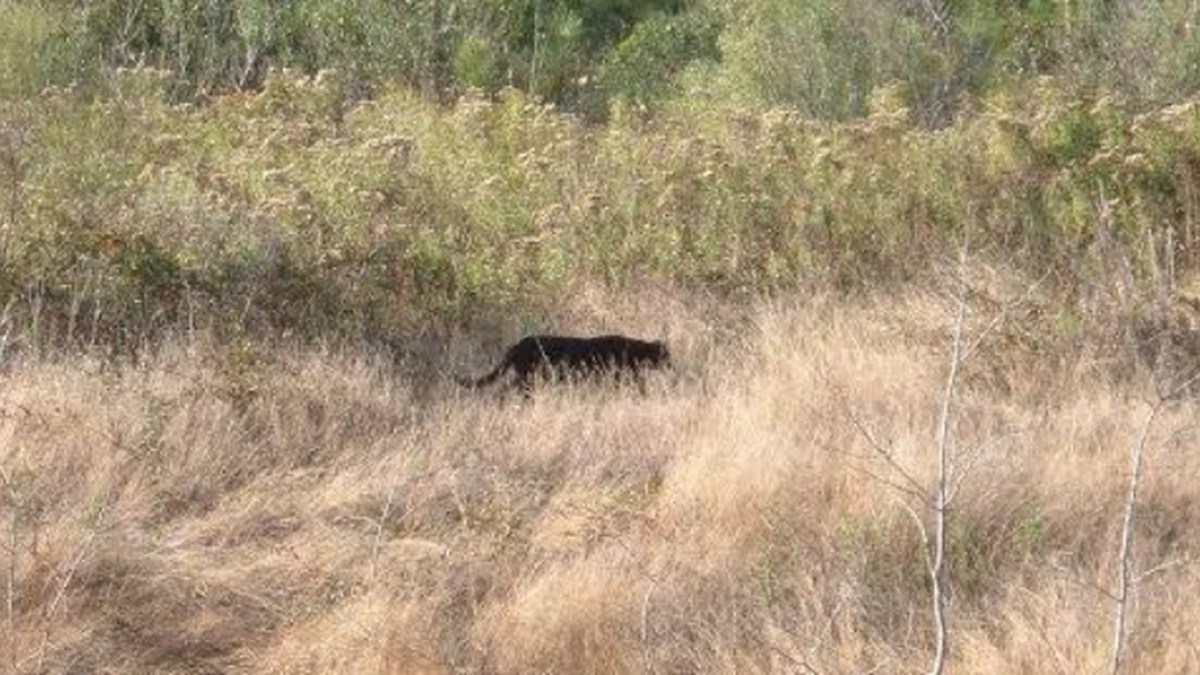
Local papers are calling the mystery cat the Canterbury Panther.

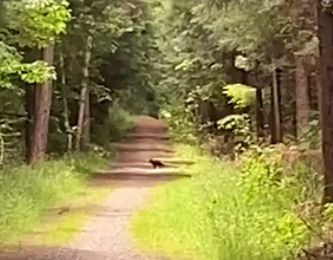
A New Zealand man says he filmed a “panther” after taking blurry footage of a house cat.

Kyle Mulinder does his best Steve Irwin impression with a breathless “Look at that thing! Amazing!” while zooming in on what looks an awful lot like a domestic cat.

Mulinder continues to provide commentary and generously estimates the cat at “four foot high” as it dashes off a dirt road into a wooded area in New Zealand’s Hanmer Springs Heritage Forest.

Here’s a screenshot of the cat. I wasn’t able to embed the video, so you’ll have to visit the New Zealand Herald to watch it.

Screenshot_2020-11-30 Canterbury mystery Is it a cat or is it a panther - NZ Herald

A handful of New Zealanders have said they’ve seen a large cat since at least this summer, long enough for the local press to dub the cat the Canterbury Panther. Various reports identify the cat as grey, tawny or black.

Mulinder, who calls himself Bare Kiwi online, demonstrated a flair for the dramatic while telling his tale to the Herald.

“It was about 50 metres away, strolling in the other direction but it sat down, turned and looked into my soul,” Mulinder said. “It was a very emotional experience. I was fearing for my life.”

(Insert terrifying Buddy joke here.)

junglebuddy_horizontal

Yolanda van Heezik, a zoologist at New Zealand’s Otago University, said the chances of a big cat on the loose are “extremely unlikely.”

Aside from the lack of convincing footage of the Canterbury Panther, there aren’t any obvious signs of a mountain lion, jaguar or leopard, van Heezik said. Those signs could include scratches from large claws high up in trees, widespread scent-marking and the trail of prey that would be left by a large carnivore.

“No one’s ever caught one, no one’s ever got really good evidence that they are something different from just a large feral cat,” she said earlier this month. “And there’s also a complete lack of evidence that is indirect like if you had a really big cat like that you would expect there to be more stock kills, for example, but we don’t really have that evidence either.”

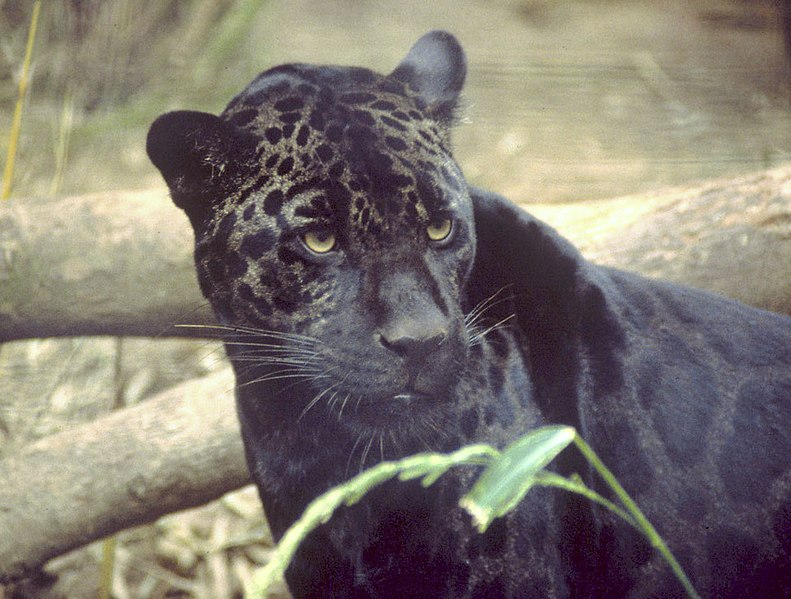
blackjaguar

Aside from the cat’s small size, there are other obvious reasons why it’s unlikely to be a panther. The word panther can refer to a cougar, also known as a mountain lion or puma. It can also refer to a jaguar or a leopard.

None of those cats are found on New Zealand: Pumas and jaguars are native to the Americas, while leopards exist in Africa and parts of Asia.

Of course it’s possible someone purchased a big cat from the illegal wildlife market and the animal escaped or was let go, but those cases are rare and big cats tend to be the “toys” of the ultra-wealthy. Local authorities have ruled out the possibility of a large cat escaping from any nearby zoo or wildlife facility, according to the Herald.