A New Species Of Cat Has Been Identified For The First Time In A Century

With its kitten-like features and striking rosettes, the Tilcayo tiger cat managed to evade scientists thanks in part to its remote range.

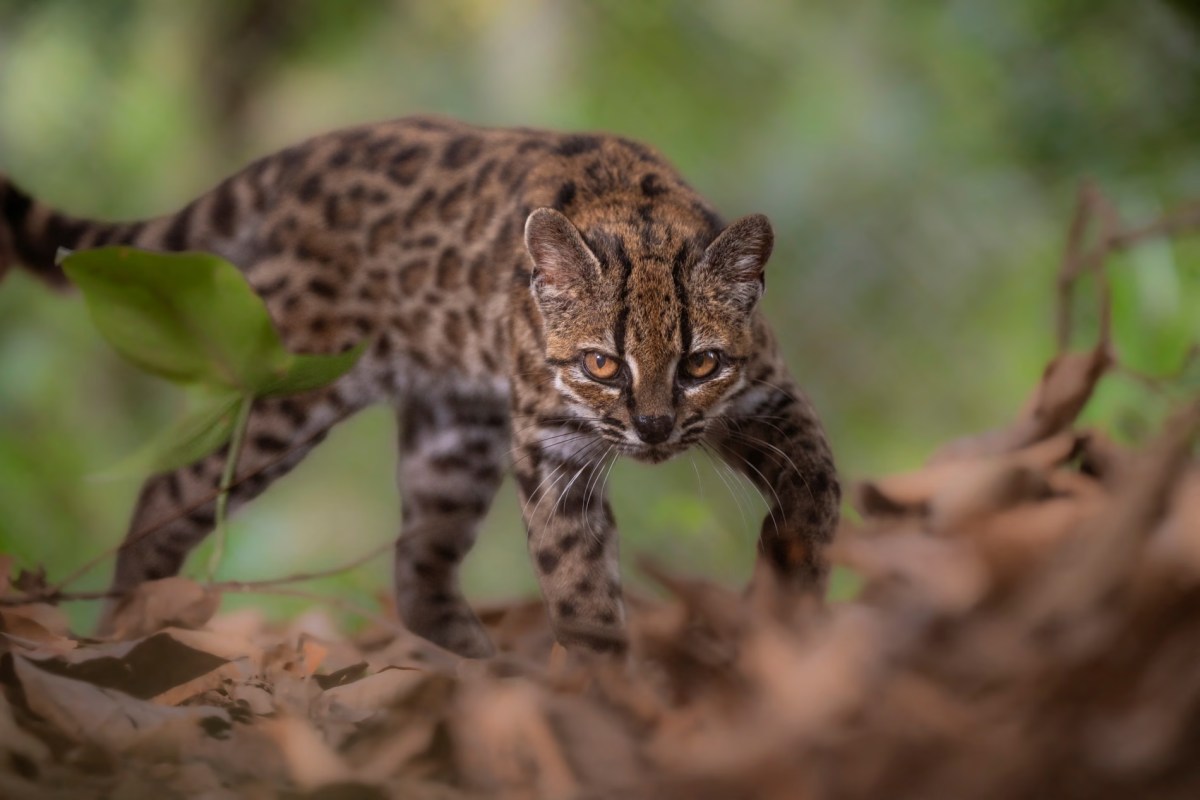
Say hello to Leopardus tilcayo, also known as the Tilcayo tiger cat.

The small, slender feline is the first new species of cat discovered in 103 years following the Uruguayan pampas cat in 1923. Found in Bolivia’s Yungas forest, also known as the cloud forest for its high elevation and lush vegetation, the Tilcayo tiger cat is smaller than domestic felines, weighing in at about six pounds on average.
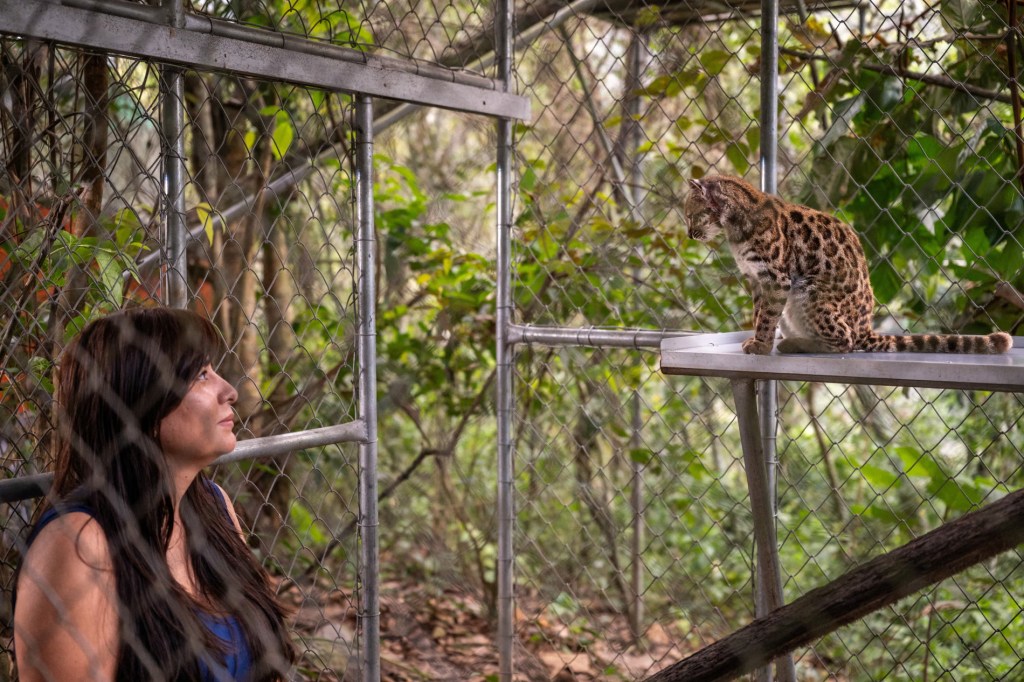
A woman inside a wildlife enclosure gazes at a small, spotted cat perched on a platform, surrounded by greenery and a chain-link fence.
Paola Nogales Ascarrunz, a scientist and National Geographic explorer, co-authored the study that announced the discovery of Leopardus tilcayo. Her team used genetic analysis to confirm the Tilcayo tiger cat is a separate species. Credit: National Geographic

Although it’s part of the genus leopardus and it’s colloquially known as a tiger cat, its coat pattern features rosettes that more closely resemble those of jaguars with the latter felid’s broken patterns and spots inside the rosettes. By contrast, leopard rosettes do not have randomly placed spots.
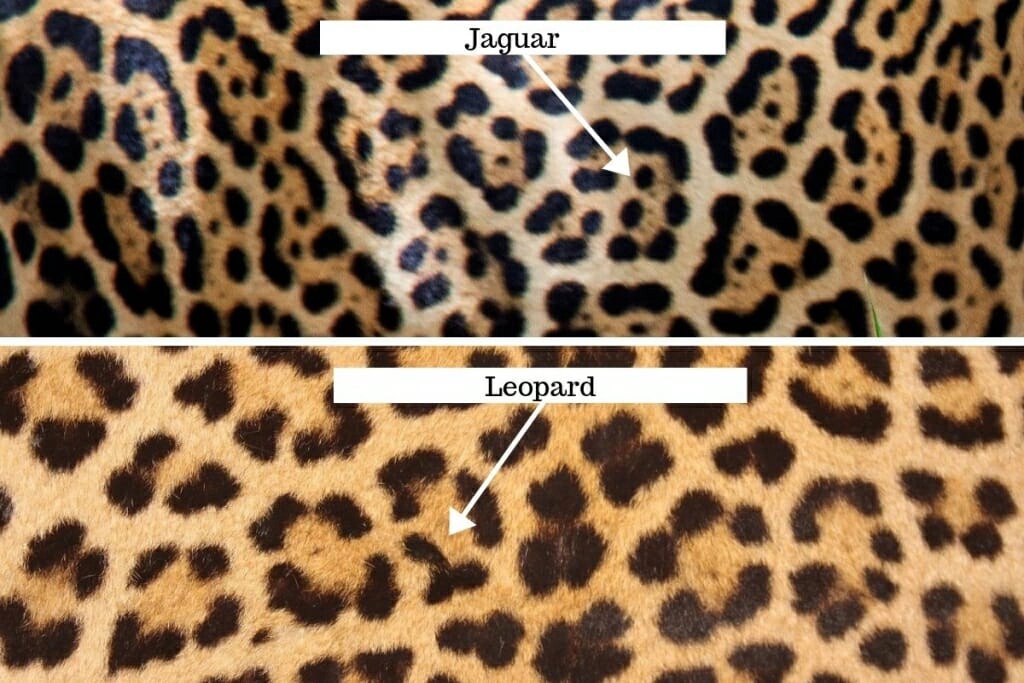
A comparison of jaguar and leopard fur patterns, showing distinct differences in the shape and arrangement of spots. The top section labeled 'Jaguar' features interspersed rosettes and spots, while the bottom section labeled 'Leopard' displays more solid rosettes.

The new feline is closely related to the other “tiger cats” of the Americas, including the ocelot, oncilla, kodkod, pampas cat and margay.

Notably, it is not a subspecies split from another cat, but an entirely new species to scientists. DNA tests confirmed its status as a separate species. It eluded discovery for so long in part because of its remote location in forests at high elevation.

Paola Nogales Ascarrunz, co-author of the study in the journal Current Biology, said a discovery like this is extremely unusual. The discovery of Leopardus tilcayo was formally announced to the world on Thursday when the paper was published. The same paper noted a new subspecies of tiger cat, the Leopardus tigrinus antisuyo, but the Tilcayo tiger cat is the big news.

“This time, it’s a cat. That’s really novel. And it hasn’t happened in 100 years,” Ascarrunz said. “No one else had named it. No one else had described it.”

The first time Ascarrunz saw the Tilcayo tiger cat while volunteering at a wildlife rehabilitation center in Bolivia, she “thought it was a kitten,” she said.
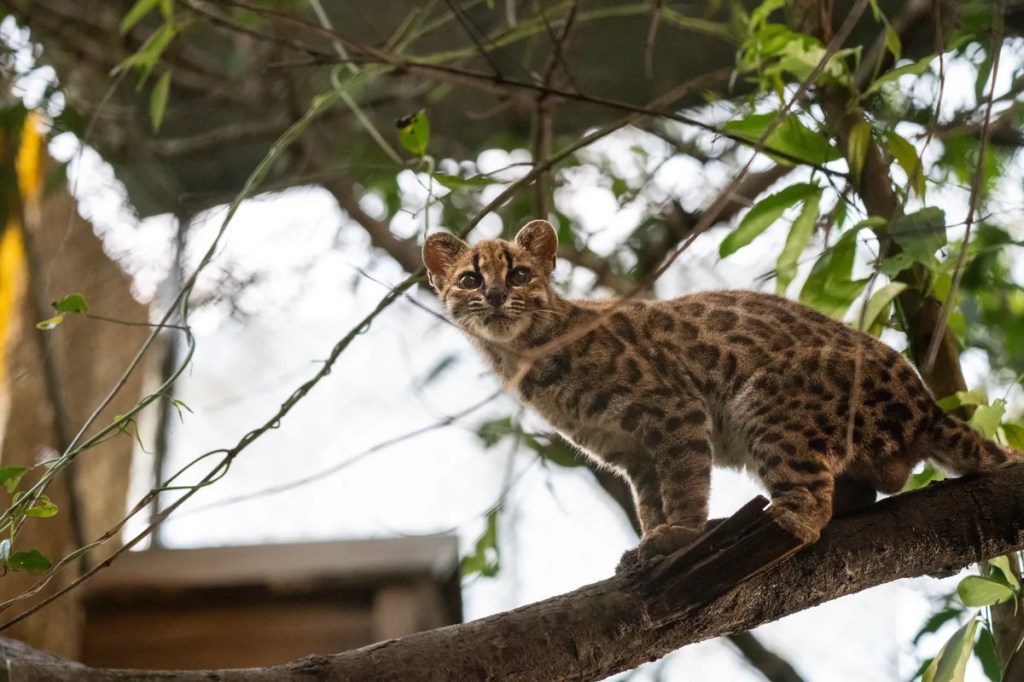
A small, spotted wildcat perched on a branch surrounded by green foliage.
Credit: National Geographic

Biologists are still learning about the Tilcayo tiger cat. They’ve only closely examined two members of the species and have camera trail footage of several others. They don’t yet have an estimate of how many individuals live in the Yungas forest.

Unfortunately, study co-author Tadeu de Oliveira noted, all of South America’s tiger cats “are in habitats that are vanishing fast.”
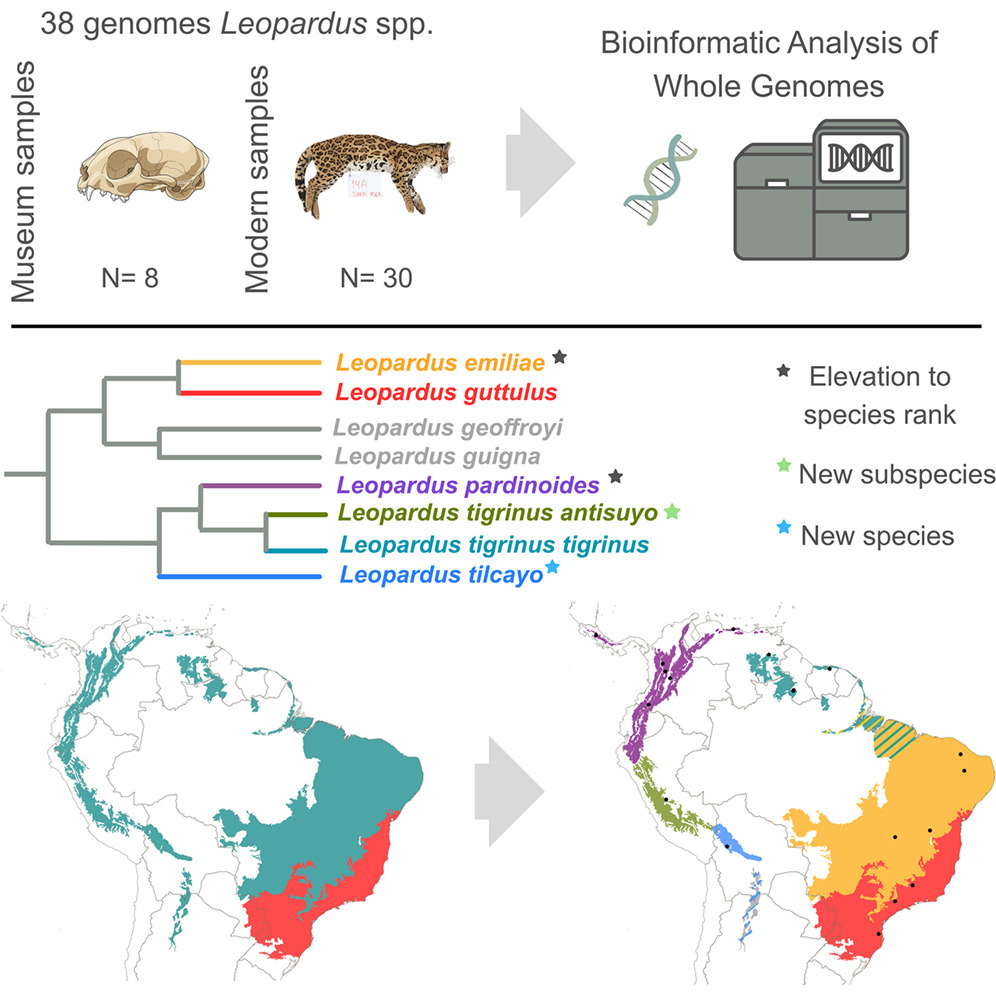
Diagram illustrating the analysis of 38 genomes from Leopardus spp. including museum and modern samples, highlighting bioinformatic methods, phylogenetic relationships, and geographic distribution.
Maps show the current habitats of tiger cats in South America. Leopardus tilcayo’s range can be seen in the darker blue sections of the map on the right. Credit: Current Biology

Eduardo Eizirik, an evolutionary biologist at Brazil’s Pontifical Catholic University of Rio Grande do Sul, said the new discovery emphasizes the importance of preserving the Earth’s remaining wild places as humanity encroaches from every angle.

“Showing the general public that even in a flagship group such as cats … there are still new species to be discovered may transmit an important message,” Eizirik said. “There are many undiscovered species out there in the world, and they are at risk of disappearing before we even discover them.”

Newly Discovered Monkey Species Has Orange Lips And Croaks Like A Frog

The Likweli are only the fifth new primate species discovered in the last 75 years, and differ considerably from their closest cousins.

Deep in the jungles of the Congo basin, in an area wild and dense with trees and verdant undergrowth, crickets sing.

And cutting into their song, coming from high in the jungle canopy, are deep croaks, but they don’t come from frogs.

The source of the mysterious calls are a new species of monkey called the Likweli by the few locals who are aware of them. Likweli are rare, difficult to find and live between two rivers – the Lomami and the Lilo — about 1,200 kilometers from their closest relatives, the colobus angolensis. (Commonly known collectively as colobus monkeys, they are split into six subspecies.)

Likweli have short black fur like their cousins but differ in the color of their mouths and noses, which range from a beige cream to a tangerine-like hue, as well as the shape of their skulls and their deep, rhythmic, croak-like vocalizations.

They’re only the fifth new primates species discovered in the last 75 years, and the excitement at their discovery has been tempered with concern that they may already be endangered.

It took substantial effort to find, observe and take DNA samples from Likweli, scientists say, and there hasn’t been an opportunity for assessing their numbers yet. However, because Likweli live in a relatively small range and depend on the high canopy to thrive (they eat a diet of mostly leaves and live above most potential predators), they’re vulnerable.

Members of the team who found them published a study this week in the open-access journal Plos One.

The process of tracking, photographing, studying and testing the new species took almost 20 years, according to the study’s authors.

“The first evidence of the new species came in 2008 during exploration of the Lomami Basin by members of the Lukuru Foundation, in an area that later became Lomami National Park. Ashley Vosper and Bernard Ikembelo photographed an unidentified monkey in a high forest canopy on the east bank of the Lomami River in the Courbure Sector, named for six large meanders of the Lomami River,” they wrote. “Although the photograph revealed only part of the animal, the field team strongly suspected that this was not any of the monkey species they already knew from the region. Following the initial sighting, nothing more was reported until November 2018, when Jean Pierre Kapale led a surveillance patrol in the Courbure Sector and photographed a black monkey with pale markings around its mouth and a white perianal patch. These characters were unlike those of any known primate species in the area.”

They were able to find and photograph seven more monkeys before beginning efforts for observational study. Likweli live in small family groups of about six individuals on average, they found.

The discovery is a reminder that our beautiful planet is still capable of surprising us even at a time when human behavior and expansion has placed unprecedented pressure on animal species. It’s a reminder that our planet is irreplaceable, that life continues to find new expressions and niches to branch into, and we shouldn’t give up on it.

No matter what the Elon Musks of the world say, no matter how many renders they share depicting grand cities in domed Martian craters or clinging to the underside of Europa’s thick ice crust inside its subsurface oceans, there is only one place thst is absolutely perfect for us, that we evolved to live on and care for.

Even if the science fiction futures that Musk, Bezos, Thiel, Altman and company envision ever come to pass, even if science fiction technology like terraforming becomes reality, there is no backup. Earth, its fauna and flora are ours to protect, a responsibility we need to take seriously for the collective future of every kind of life that exists here.

Let’s hope the Likweli and all species that follow have a place to thrive.