Amazing Cats: Pallas Cats Are The Grumpy Little Hobbits Of The Feline World

The Gremlin-like felids have some unusual habits compared to other cats in addition to the trademark scowls that distinguish them from other feline species.

The fact that they live in burrows and crevices is the first indication that Pallas cats are the weirdos of the feline family.

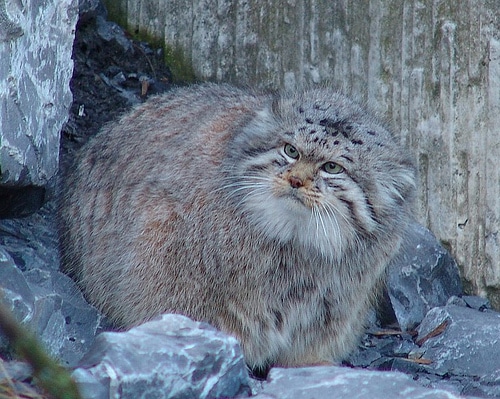
The small, bushy little creatures greet the day by poking their heads out of their burrows just enough to see what’s going on. Thanks to the low profile of their ears, which stick out almost horizontally, only their eyes and tufts of frosty-looking fur are visible in those first moments.

When they’re satisfied nothing’s going to vex them further than their usual, seemingly perpetually-annoyed default, they fully emerge from their dens, and that’s when their true form becomes apparent.

Behold grumpiness incarnate:
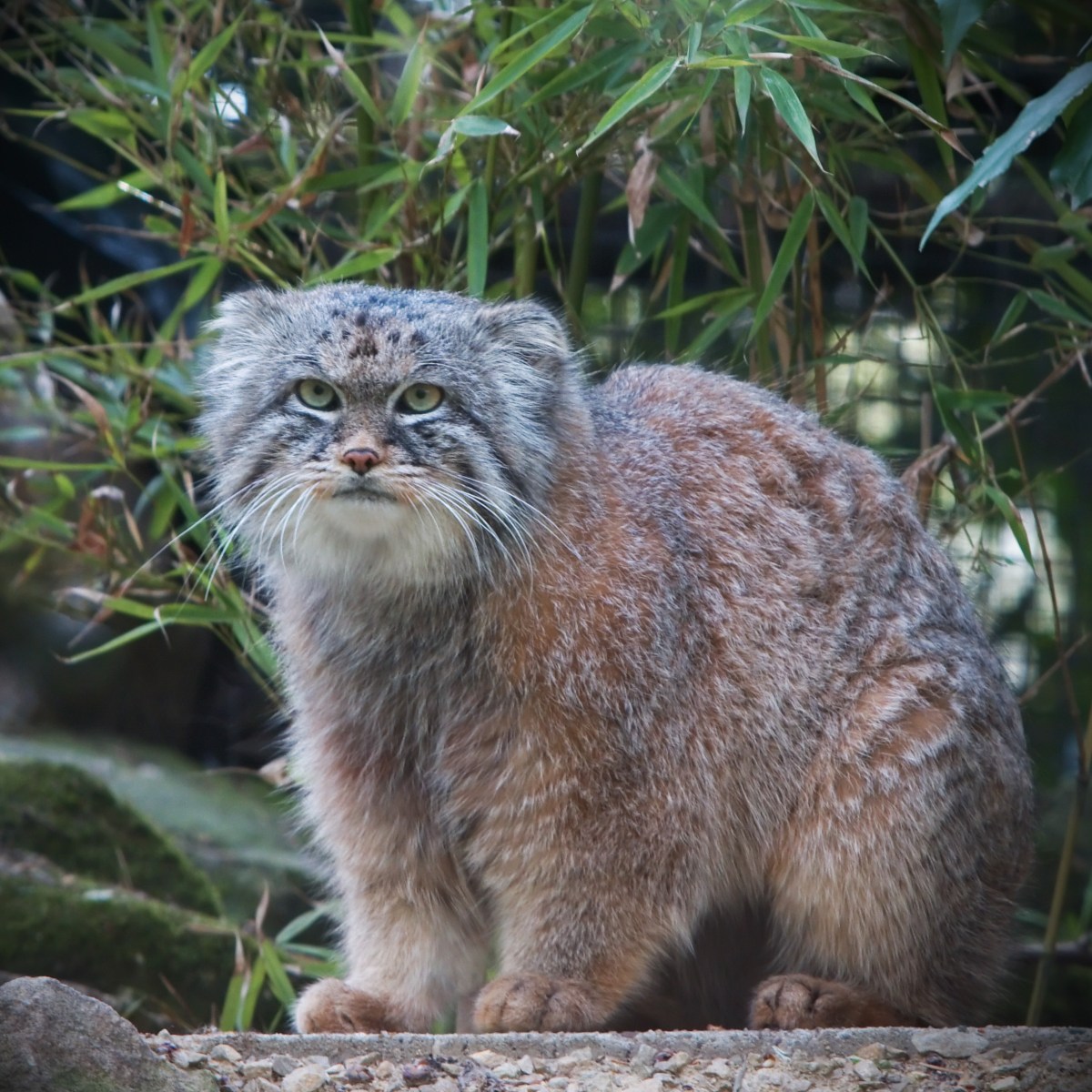
“These kittens today, they want everything now. No patience and not a lick of common sense between ’em. Hey! Get off my lawn, you little cretins…” Credit: Wikimedia Commons
“Would it kill these dogs to clean up after themselves? Sheesh! You don’t see me defecating all over everything. When nature calls, I do what civilized cats do, find a private spot and bury my business. Hey! Hey! Don’t you dare move that rock!”

These little guys look like they start every day off getting rained on while birds with impeccable aim empty their bowls on their heads. Then they file out, each one grumbling, and engage in their species’ favorite pastime — complaining about everything, like a perpetual Airing of Grievances on Festivus or a communal bitching session about joint pain at the local senior center.

“Oh, my back! For crying out loud! They couldn’t have dug this tunnel at a more forgiving angle? Aww crap, look at the weather! Hunting in this is gonna suck. Lenny, is there any more of the rabbit from last night? No? Of course not. And we’re out of coffee again! I don’t know why I even roll out of the burrow. This place is a dump!”

First observed and written about — in the western world, at least — by Peter Simon Pallas in 1776, Pallas cats are about the same size as our domestic feline buddies, but they look stockier thanks to their heavy coats. Pallas, a Prussian explorer and naturalist, was presumably going about his day when he heard a group of these malcontents complaining from a mile or two away.
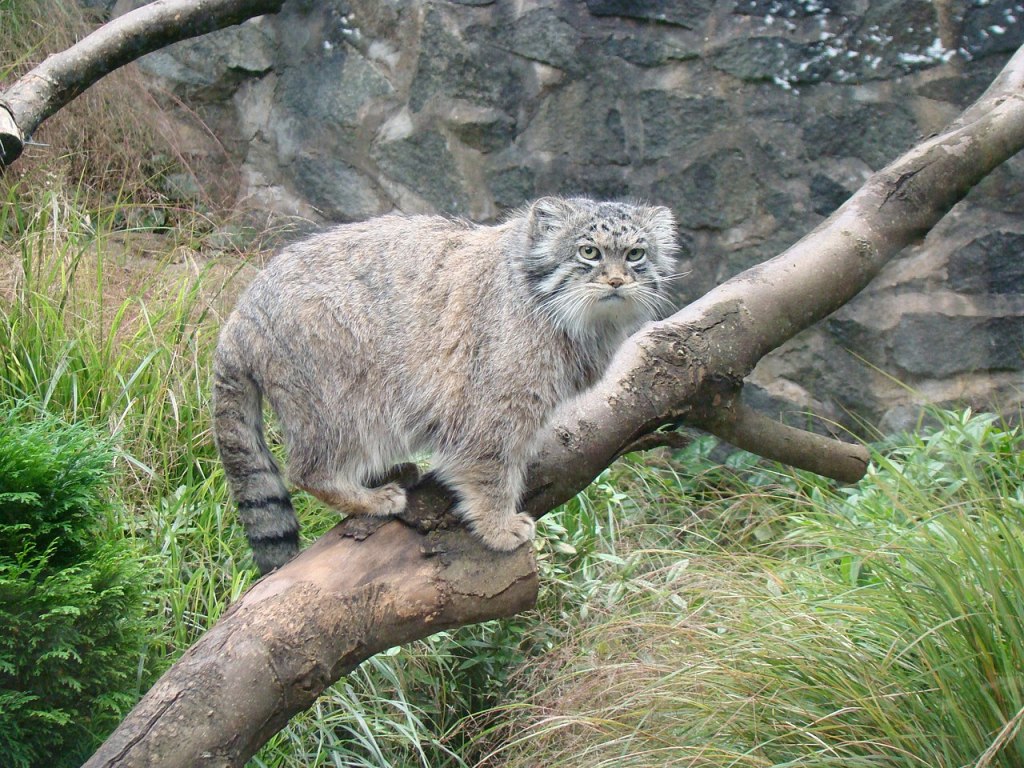
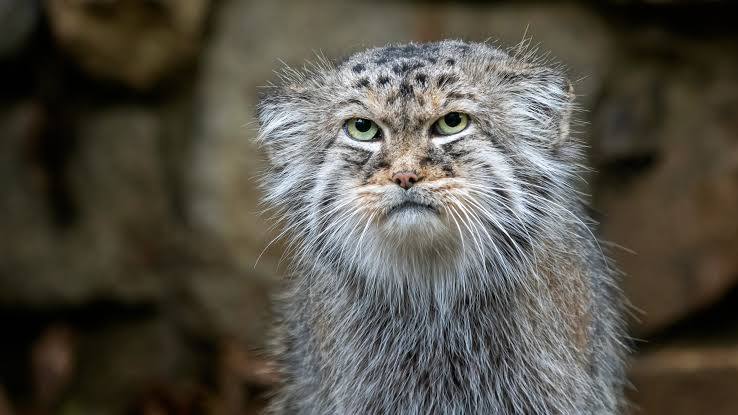
“Whatchu lookin’ at?” Credit: Wikimedia Commons

Jokes aside, Pallas cats only look angry to us because we anthropomorphize them. Difficult as it is to believe with their convincing scowls, there’s no evidence to suggest they’re actually grumpy.

The fact that they sometimes co-occupy burrows means they have a cooperative and social component to their behavior that many cat species lack. You won’t find tigers cooperatively hunting, napping in communal burrows or padding out together to greet the crepuscular morning, but that’s what Pallas cats do. That’s a pretty good indication of a sunnier disposition than their trademark scowls indicate.

Here’s a remarkably clear and close video showing a Pallas cat mom poking her head out from a burrow and making sure the coast is clear before emerging with her four cubs close behind her:

Spread throughout mainland Asia, and concentrated most heavily in Mongolia, Kyrgyzstan, Bhutan and parts of China, individual Pallas cats move between different burrows and crevices depending on the need for cover and the season. They’re found on the vast plains of Mongolia, as well as in mountains like the Himalayas and the Altai range.

They usually top out at about 10 pounds and primarily hunt rodents, pikas, shrews and other small, ground- and underground-dwelling prey, but like most cats they’re adept ambush hunters and take opportunities where they find them.

Happily, and owing partly to their remote habitats, Pallas cats are one of the few wild species that are not listed as threatened or endangered on the IUCN Red List.

Header image credit: Wikimedia Commons
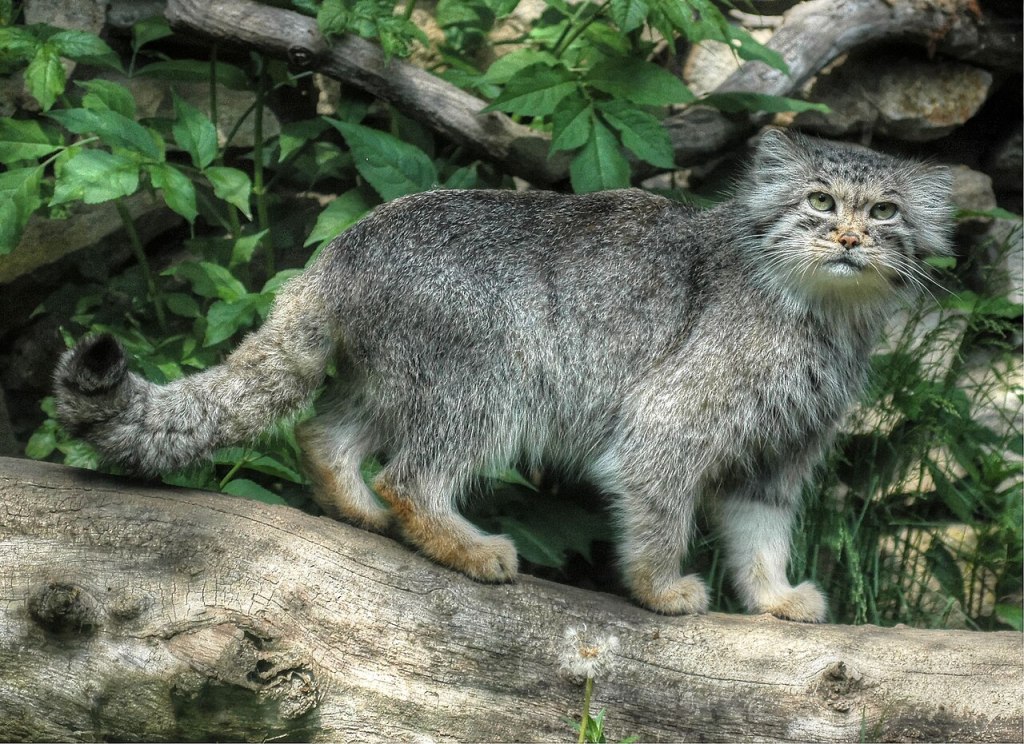
Proof they don’t scowl in every photo. Credit: Wikimedia Commons

Previously:

Amazing Cats: The Mysterious Marbled Cat
Amazing Cats: The Rusty-Spotted Cat
Amazing Cats: ‘He Who Kills With One Bound’
Amazing Cats: The Puma

Amazing Cats: The Sunda Clouded Leopard

Amazing Cats: The Adorable Colocolo, Feline of the Pampas

Amazing Cats: The ‘Fire Tiger’ Is The Stuff Of Legend

Amazing Cats: Ocelots Love Trees, Water And Calvin Klein’s Obsession For Men
Wordless Wednesday: The Retrofuturistic Rocket Cars Of Rural New York

They appear out of nowhere on a scenic route in New York’s Catskill mountains, beckoning drivers to stop and check out the rest of the wonders inside the nearby shop.

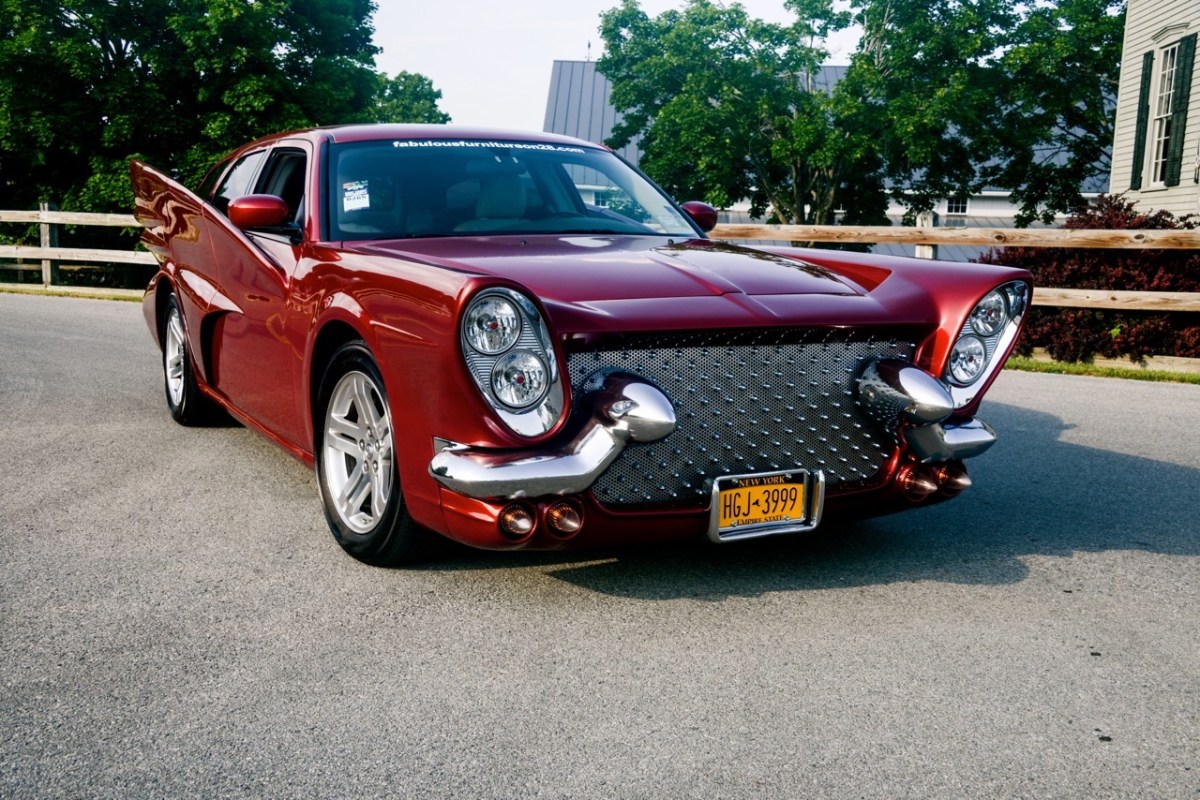
A few years ago on the way back from the Catskills, a scenic mountain belt in low-central New York, I spotted this beauty from the road and had to stop:

It’s a heavily modified, custom Dodge Magnum crafted by artist Steve Heller. The parcel of land I’d almost passed houses his shop, Fabulous Furniture On 28, one of the most unique spots you can find in the state, if not the country.

Here are a few other photos of the Cro Magnum I took that day:

Heller’s property is adorned with all sorts of retrofuturistic metallic sculptures that evoke the science fiction films and comic books of yesteryear:

The classic cars are my favorite, but unfortunately I did not get to see them all that day.

The header image and the images below are from Heller’s site, while I took the other photos on the day I stopped to look around.

The header image is another Dodge Magnum, while the beast below is The Marquis de Soto, a customized Mercury Grand Marquis:

Amazing Cats: The ‘Fire Tiger’ Is The Stuff Of Legend

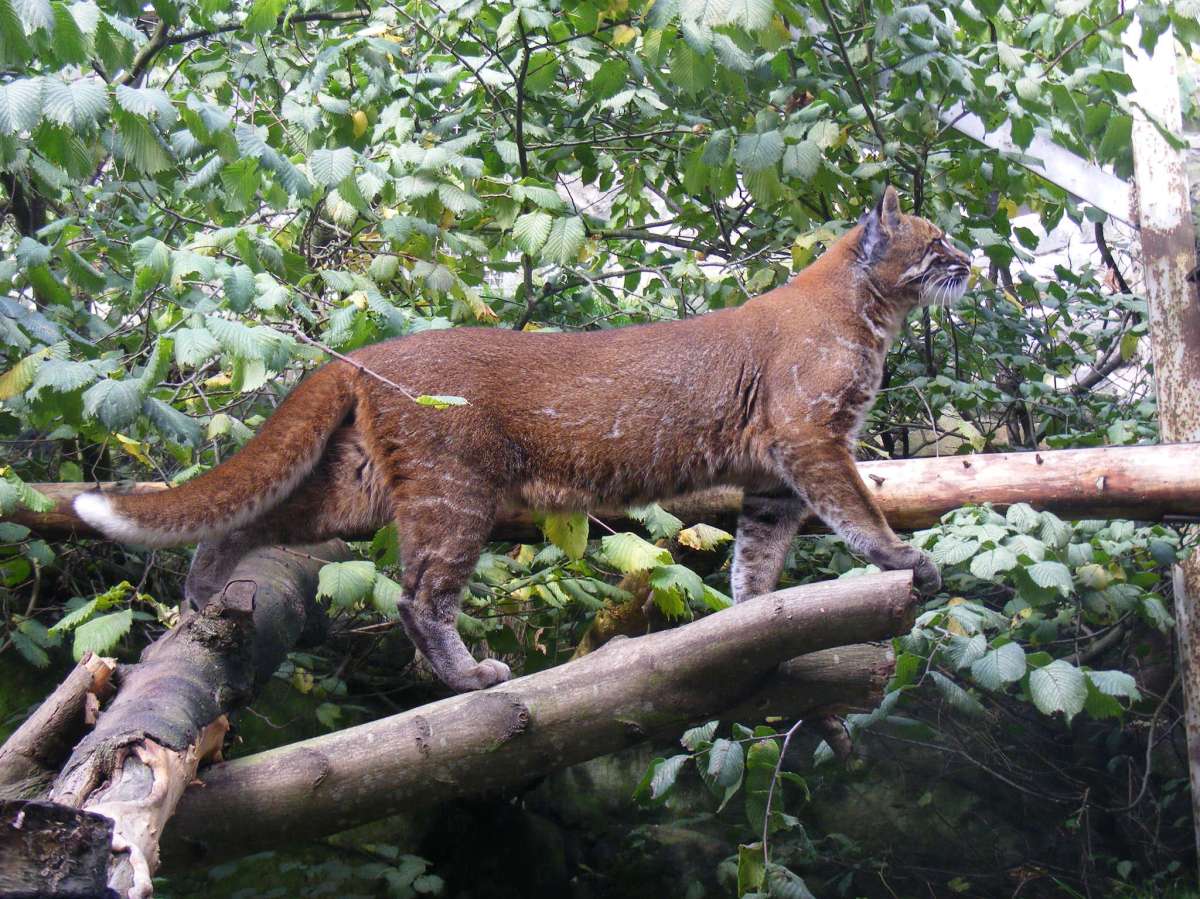
The Asian golden cat, also known as catopuma, is an elusive medium-size wildcat with striking features and exceptional hunting abilities.

It’s extraordinarily elusive, moves with a grace superlative even among fellow felids, and enjoys mythical status in many of Asia’s cultures.

It is the Asian golden cat, a medium-size feline that calls a diverse range of places home, from the mountains of rural China to the jungles of Sumatra.

Known officially as Catopuma temminckii, the species is about three times the size of domestic cats but extremely adept at taking down much larger prey, including young water buffalo and other ungulates several times the cat’s body weight.

An Asian golden cat. Credit: Wikimedia Commons

Asian golden cats inspire legends in many Asian cultures in part because of how difficult they are to find. Even the appearance of one on a trail camera in Thailand’s Khao Luang National Park this summer spawned news headlines, so rarely are they seen.

Often, as was the case with the recent sighting, they’re fleeting, just glimpses before the animals melt back into the jungle. The fire tiger seen in the June 20 trail camera footage pads across a clearing, clearly unhurried, before disappearing back into the ground cover.

In some places it’s good luck to catch a glimpse, while in other locales — like parts of Thailand — people believe a single strand of Catopuma fur is enough to protect the bearer from their larger cousins, panthera tigris. (I wouldn’t rely on that personally, but it does show how large tigers loom in the imagination in areas where they still roam the wild, even as low as their numbers are these days.)

While the Asian golden cat is known as the fire tiger in some places, it’s not a close relative of true tigers, at least not in terms of the cat family.

Credit: Wikimedia Commons

Catopuma is a feline, meaning it can meow and purr, but cannot roar. That puts the species closer genetically to domestic cats, pumas, ocelots, servals and other members of the feline subfamily. True big cats — tigers, lions, jaguars and leopards — are part of the pantherinae subfamily. Aside from their size, they are distinguished by their ability to roar, but they cannot purr or meow.

The Asian golden cat is a feline, but shares some physiological features with big cats

Even though catopuma is genetically closer to small- and medium-size felines, its gait, substantial tail and head shape are reminiscent of big cat features.

The ferocious medium-size cats also have a melanistic color morph that makes them look like smaller versions of jaguars and leopards.

A melanistic catopuma seen on a trail camera. Credit: Panthera

The fire tiger is classified as threatened as its habitats are destroyed to make way for more palm oil plantations, among other agricultural and industrial facilities.

Header image via Wikimedia Commons