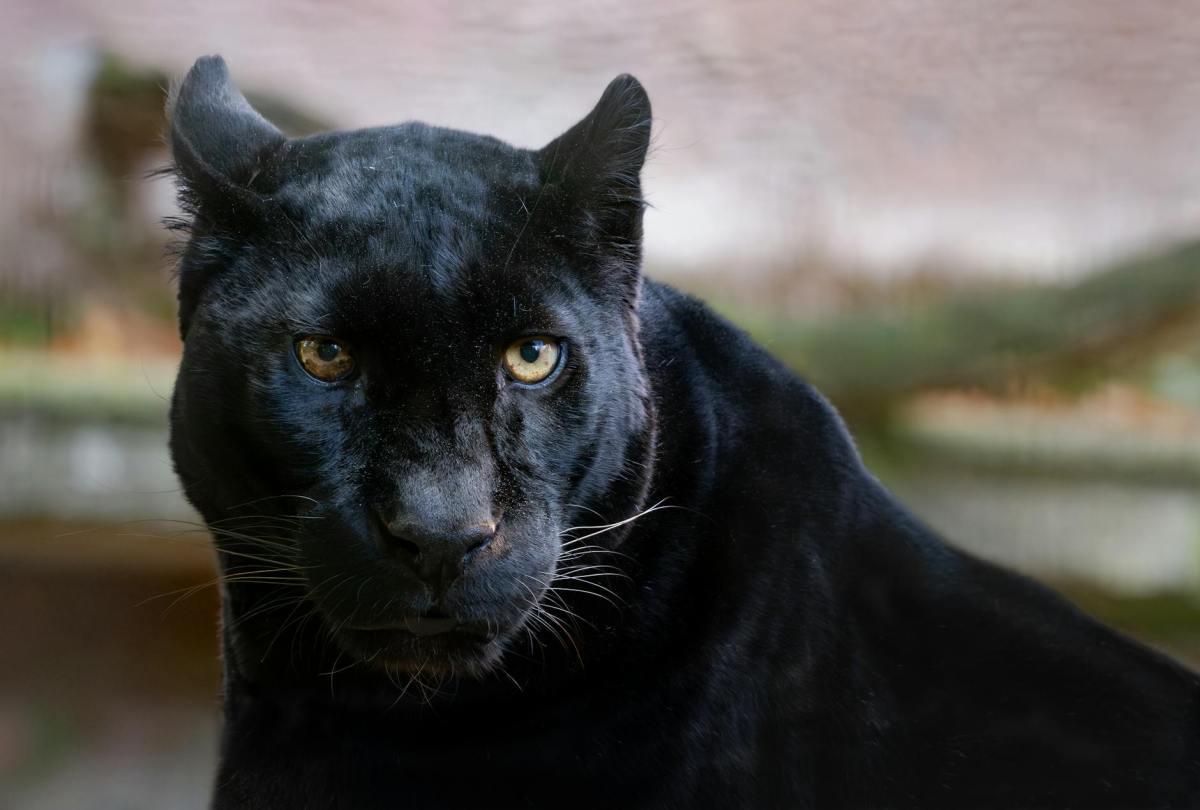
Facebook Is Flooded With Hoax Posts About A Supposed Black Mountain Lion

The purveyors of the deceptive posts want you to click, share and argue with other users about the veracity of the photos.

Not only is he the rarest puma in existence, he’s more well-traveled than most humans.

The mountain lion in question has a black coat, unprecedented for his species, and has been popping up all over Facebook. He’s photographed from the passenger seat of a truck cab, his tail in an unbothered curl, crouched amid the brush near a rural road.

Some posters claim they spotted the formidable feline in Mississippi. Others attribute the image to a sister-in-law who lives near Houston or a daughter in Charleston. A user in Louisiana claimed they took the photograph near the bayou, while another places the cat in Wyoming and claims he’s the first-ever documented “shadow cougar.” (Our friend Leah of Catwoods drew our attention to the images last week after seeing posts placing the cat in the south.)

In case it isn’t obvious, all the claims are full of it.

There is no such thing as a melanistic (black) mountain lion, and the big cat in the photo has the physical characteristics of a leopard, an animal that is not native to this hemisphere, let alone this continent.

The real story here is that Facebook remains a fountain of misinformation and Meta (its parent company) doesn’t care. Unscrupulous users will do anything to get attention and the clicks that come with it, and the average Facebook user is happy to indulge them, driving clicks by resharing the hoax content and juicing its algorithmic value by engaging in endless arguments with fellow users about the veracity and provenance of the photos.

Alleged big cat sightings are perfect for this sort of thing because they pique people’s natural curiosity, there’s a whiff of danger — especially when the poster claims the animal was spotted locally — and most people aren’t aware of telltale differences between cat species.

In many ways, the blurrier and more indeterminate the photo, the better: like Bigfoot and the Loch Ness monster, the idea of phantom cats is most fertile in the imagination.

These days you don’t even need a photo to get in on the click-baiting action. I asked Gemini to create an image of a jaguar-like big cat walking along a rural road at night, and this is what the LLM gave me:

In the image prompt, I asked it to make it look like an amateur photo taken with a midrange smartphone camera, but if we really wanted to get artistic, it’s simple enough to add noise, maybe some motion blur and digital artefacts to the image to make it look more like an authentically crappy, rushed shot of an unexpected animal.

Here’s the result of some simple efforts to en-crapify the “photo” further:

To give the image urgency and encourage people to engage with it, I can make it local and claim it was recent. Errors of grammar, spelling and punctuation add a nice seasoning of authenticity, along for feigned concern for others as the reason for sharing:

“Folks – just wanted to tell ya’ll to mind your pets an make sure of you’re surroundings bc theres a big cat on the lose!! my cousins GF took thus friday nite on Route 9 a few mile’s south of Dennies. a real honest to goodness black panther! BE SAFE!!!”

There’s a dangerous animal on the loose in your area! You know what you have to do: share it so others can bring their pets safely inside and stop their kids from playing outdoors, at least until it looks like the predator has moved on.

It’s your duty as a good American!

Since it doesn’t seem to matter if a quick reverse image search can settle the question of where an image came from, it’ll be interesting to see if anyone lifts the above image and text.

At the very least, maybe a few people who do think to run a search will find their way here, read about the hoax, and save themselves from getting drawn into online debates about the existence of cryptid cats.
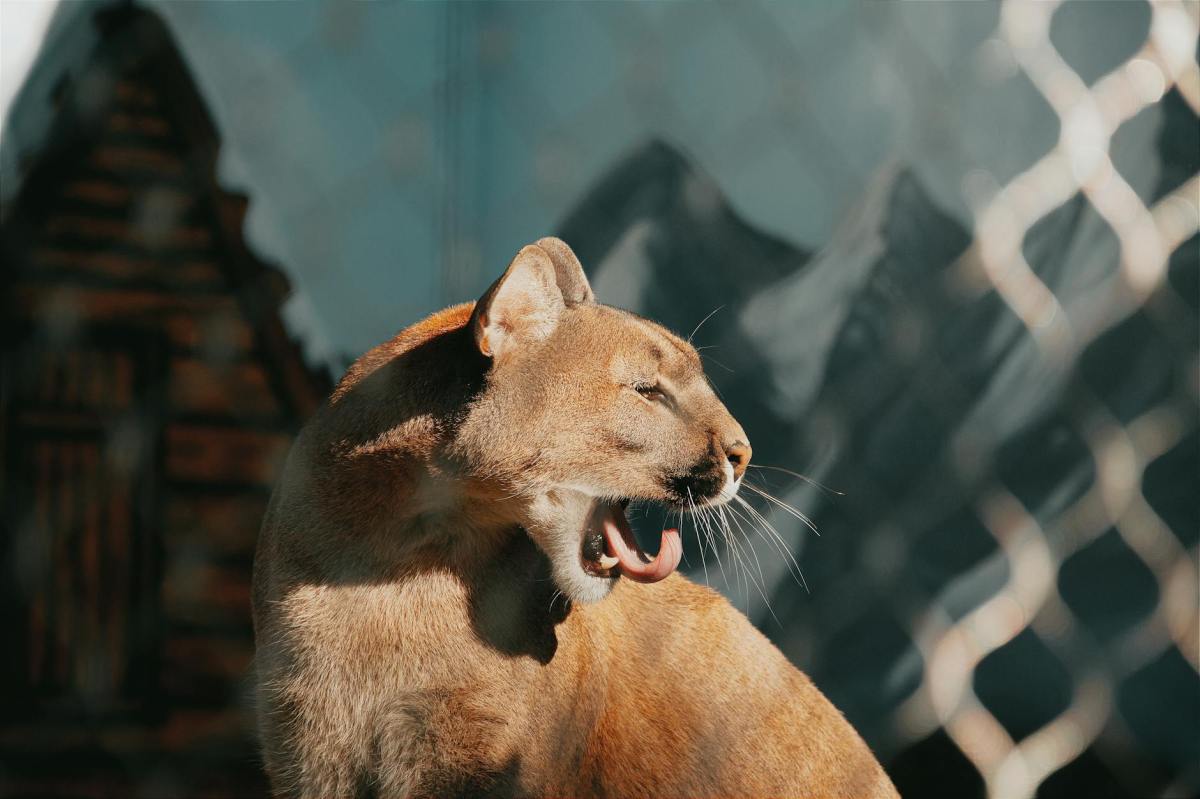
Did A School Really Go Into Lockdown After A Teacher Confused A Chonky Cat For A Mountain Lion?

The latest viral cat story offers a lesson in healthy skepticism in today’s news environment.

Viral news accounts on social media and less scrupulous news sites have been buzzing this week about a school lockdown in Moses Lake, Washington, which was reportedly caused by a teacher confusing a particularly fat cat for a puma.

I saw red flags immediately while reading the story. While it did give a specific location, it was suspiciously devoid of other details, and the wording on all the posts and stories was dubiously similar. Additionally, a Google news search doesn’t turn up anything recent from reputable press.

Then there’s the photo, which looks a little too good to be true.

This photo is a Getty stock image and does not depict the domestic cat in the school lockdown story, despite accompanying it in dozens of news posts.

So did a school really go into lockdown after a case of mistaken feline identity?

Yes, but it happened in November of 2023, and the photo of the obese cat making the rounds in stories this week does not depict the cat in question. The original story was published by a local news site on Nov. 22, 2023, and says the school went into lockdown at 10:30 that morning, but was quickly lifted after staff confirmed there was no puma stalking the school grounds.

“…educators soon learned that the mountain lion was in fact, a “fat cat eating a rat,” according to the school memo to parents. 

‘While we take all reports seriously, this was the first report we’ve ever had of this nature,’ the school wrote in a statement. 

Despite the benign nature of it all, safety measures resumed to safeguard students and staff. Classes resumed as normal after a short period of time. “

As for the photo, the particularly rotund moggie’s image is a stock photo from Getty. It was used in a story about feline obesity in 2017 and an April 2018 story from the New York Daily News about public outrage in Jefferson, Iowa, where the police were shooting feral cats instead of dispatching animal control or working with local shelters.

Since the image is from a photo agency and predates the original story about the Washington school lockdown by at least six years, we can rule it out as an image of the feline mistaken for a mountain lion while settling down to a feast of fresh rat.

A deceptive image used to promote the story on Facebook.

So what happened here, and why are so many news sites and channels reporting this incident as if it just happened, accompanied by a deceptive photo that is not credited to Getty?

It’s classic clickbait. That is to say, some administrator or editor saw the old story picking up traffic or noticed a blip in certain search strings, and republished the story as if it’s new while omitting the original date.

Others noticed and followed suit to get the clicks while the getting’s good, fighting over the scraps that fall from the Zuckerbergian table in the form of ad revenue. The story is simple, sharable, has been paired with an amusing image, and is exactly the sort of thing people love to post and comment on via social media.

It’s a reminder to all of us to be skeptical about what we read, and to never take anything on Facebook, Instagram, TikTok et al at face value. In fact, it’s best to ignore anything on those platforms presented as news or fact. Everyone’s got their own preferences, but here at Casa de Buddy, we like the Wall Street Journal, Reuters, The Guardian, Associated Press, al Jazeera, the BBC, and aggregators like RealClearPolitics.

That doesn’t mean they’re above reproach or that everything they produce is a sparkling example of journalism, but they’re institutions that operate under the traditional rules, staffed by professionals who take pride in trying to get stories right. I’ll take that any day over a random Facebook account run by some shady guy in Macedonia or Belarus, who will post anything as “news” as long as it brings him clicks and ad revenue.