‘More Purring, More Buying’: Bookstores Give Readers A Reason To Drop In

In the era of Amazon, America’s independent bookstores survive by offering things the online giant can’t.

Like everything else in the realm of print media, bookstores have been having a rough go of it the last decade or two.

Waldenbooks, Crown Books and Borders no longer exist, with the latter chain shuttering its last 400 stores in 2011. Barnes and Noble is the last surviving book chain thanks to an aggressive strategy of expanding their cafe and lounge space, encouraging shoppers to hang out while they sample books and drink coffee.

There are still some 14,000 bookstores in the US, depending on how some hybrid businesses are categorized, and independent booksellers now make up the majority of real-world retail while the giant that is Amazon looms.

The key to survival is offering things Amazon can’t. Some distinguish themselves by catering to specific customers, like fans of mystery or science fiction, offering rare and signed volumes alongside their regular stock. Some pursue a Barnes and Noble-like strategy, leaning heavily into the hybrid coffee shop model. And some become community spaces for book signings and poetry nights.

Others lure customers inside — and back after they’ve already visited — with pets.

In a new story, the New York Times highlights independent book shops around the country that have dogs, lizards, turtles, rabbits, and of course, cats.

When it comes to our furry and clawed friends, some shops are populated with adoptable felines:

At the Literary Cat Co. in Pittsburg, Kansas, readers have the opportunity to adopt a pet while they shop. The store partners with a local rescue organization, hosting about seven cats at a time, along with three permanent feline “employees”: Hank, the regional manager; Scarlett Toe’Hara, the assistant regional manager (she’s polydactyl); and Mike Meowski, the assistant to the assistant regional manager.

Jennifer Mowdy, the store’s owner, described each cat’s role, personality and origin story with the air of a matriarch ticking off successful grandchildren. Speaking of the upper respiratory illness that cost Mike Meowski an eye, she sounded stoic. He was a kitten; she was there for him. They soldiered through.

Mowdy created a glass alcove for allergic customers – and to deter escapees – and a “kitty conference room” (accessible by cat door) for litter boxes. With regular scooping, four air purifiers and daily mists of Mrs. Meyers Room Spray, she said the scent of the store is neutral to positive.

In the past year and a half, the Literary Cat Co. has facilitated 50 adoptions. “We’ve only had one cat that didn’t work out,” Mowdy said. “Too much fight in her.”

Kittens tend to wreak havoc; Mowdy prefers a mature animal of the “Don’t call me, I’ll call you” variety. Felines are welcome to scale shelves and interact with readers as they please, which is their way.

“They get to practice being a good house cat,” Mowdy said. “They get socialized.” Occasionally, the right cat finds the right reader’s lap. The rest is destiny (with the rescue organization handling logistics; the Literary Cat Co. simply makes the introduction).

Check out the entire story here. (No paywall.)
Two Families Battle Over A Cat, Prompting The Question: What Defines Pet ‘Ownership’?

Bob/Maui the cat was adopted by one family in 2013, went missing a few months later and was rescued by another family, who have had him for 10 years.

Bob the cat was adopted by Carol Holmes of Wichita, Kansas, in 2013.

Holmes says Bob disappeared a few months later and that was the last she saw of him.

Alex Streight, who also lived in Wichita at the time, found Bob in a bad way, malnourished and in “bad condition.”

“He was in horrible shape,” Streight told WRAL, a North Carolina TV news station. “I fed him, kept looking for [the] owner. I posted in the Wichita groups, but I never found anyone.”

Streight, who was 27 years old and pregnant at the time, said the veterinarian gave her no indication the cat belonged to anyone, and her efforts to find a potential owner were unsuccessful, so she paid for his veterinary fees, adopted him and named him Maui.

When Streight moved to North Carolina in 2015, she took Maui with her and he’s been living happily with her family ever since. In late August Maui slipped out of Streight’s North Carolina home. A neighbor picked him up and brought him to the vet, and the veterinarian realized there was a microchip. A scan showed Holmes as the cat’s owner.

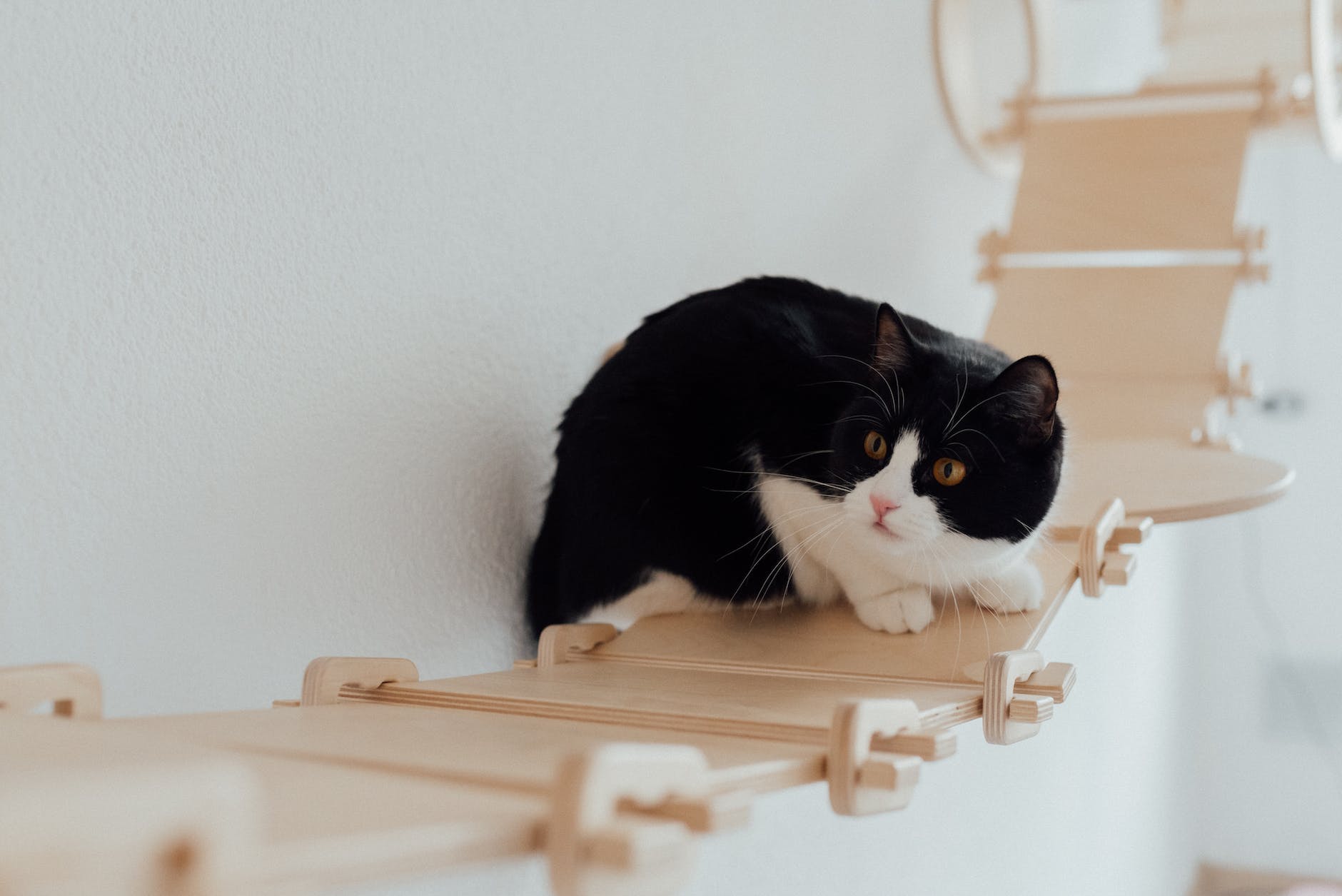
a tuxedo cat on a hanging wooden bridge
Credit: Arina Krasnikova/Pexels

Now Bob/Maui is in the custody of Wake County (NC) Animal Control, whose staff don’t sound keen on returning the cat to Streight. They’ve called Wilson, who said she’d like to be reunited with Bob/Maui, and when Streight went to animal control to get her cat — returning with the veterinary records when they wouldn’t release him to her the first time — the staff called police.

“The cat is in protective custody where an investigation will begin,” Jennifer Federico, a veterinarian with the county animal control, told the station. “The cat is safe and isolated.”

Federico seems intent on making the situation more complicated than it needs to be, telling WRAL that “Microchipping proves ownership, so we have to take that into consideration, and launch a full investigation.”

Streight doesn’t see it that way. She wasn’t registered as the owner on the chip, but she’s got 10 years’ worth of veterinary records, a photograph of Maui laying on her couch the day he slipped out of her house, and photos and videos showing the tuxedo cat with her kids and other pets over the past decade.

“It’s just absurd to me that anyone would think to take someone’s pet away from the family that he’s been with for ten years,” Streight said.

We have to agree with Streight here, and it’s disturbing that animal control has not only made itself the arbiter of the cat’s fate, but has apparently decided that nominal ownership based on a microchipping from 2013 trumps the fact that Maui has been happily a part of Streight’s family for at least 95 percent of his life.

We feel for Wilson, but Streight did everything right: She looked for the cat’s family, posted about him online, cleaned him up and got him veterinary care, then adopted him when all indications were he didn’t have a home. With a decade’s worth of vet bills, photos and videos backing her up, it’s clear Maui is happy in her home, has been well cared-for, and if he could speak there’s little doubt about where he’d prefer to go.

She’s clearly bonded to the cat, and he to her: Only someone who really loves their furry friend regularly takes photos of their cat, even after 10 years. I can attest to that fact: Probably 60 or 70 percent of the photos on my phone are of Buddy, and I’d be devastated if we were separated.

What do you think? Should Bob/Maui be returned to Wilson or Streight?

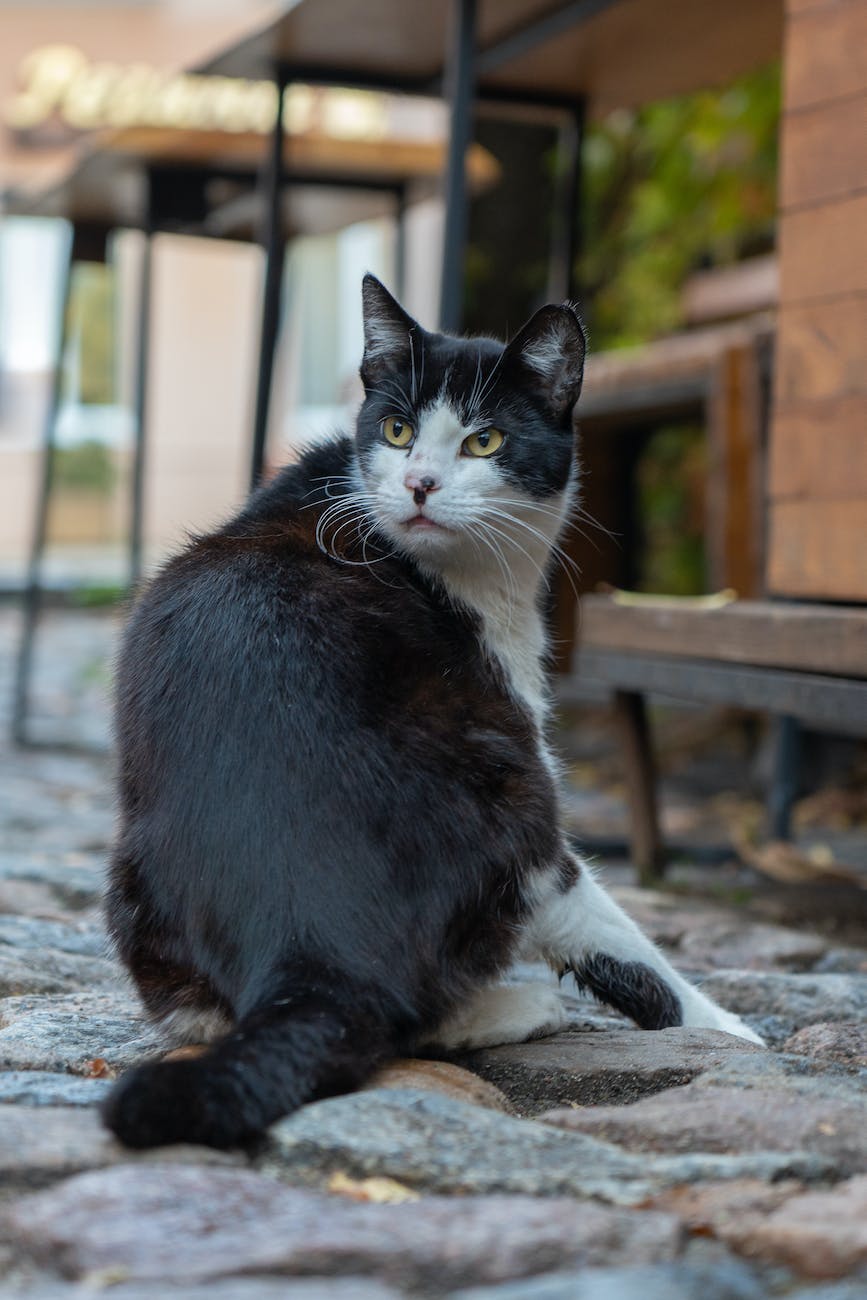
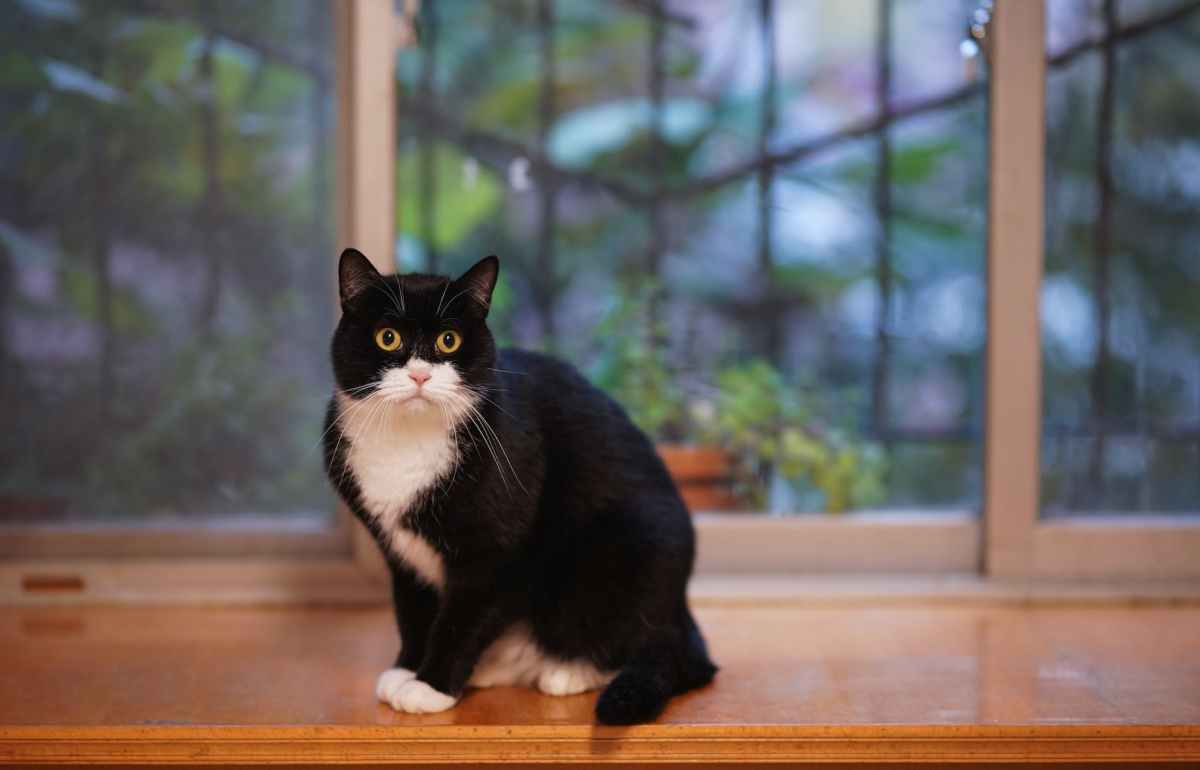
tuxedo cat sitting on ground
Credit: Dima Solomin/Pexels

A Guy In Canada Wants To Open A Catnip Dispensary

A pair of catnip companies want to help you get your cat stoned.

Fuzz Aldrin. Meower Diesel. Freddie Purrcury. Pawnapple Express.

If a Toronto man gets his way, cats will soon get their catnip fix the same way their humans get their marijuana: In colorful, slickly-produced packaging featuring whimsically named strains purchased through a dispensary.

The aspiring catnip entrepreneur calls himself Mikey Fivebucks and has launched his business, Catnip Dispensary Inc., from his Toronto apartment.

Now he’s trying to take his business to the next level with a Kickstarter to help fund the equipment and growing space he’ll need to make a name for himself among the world’s stoner cats and the humans who enable them.

Catnip, also known as nepeta cataria, is a mint plant that produces euphoria and acts as a sedative for most cats via a naturally occurring chemical compound called Nepetalactone, which is found in the plant.

About two thirds of cats are susceptible to catnip’s effects, while other cats may respond to silver vine. The compounds in both plants bind to feline olfactory receptors, prompting cats to roll on the ground, purr, drool and mellow out.

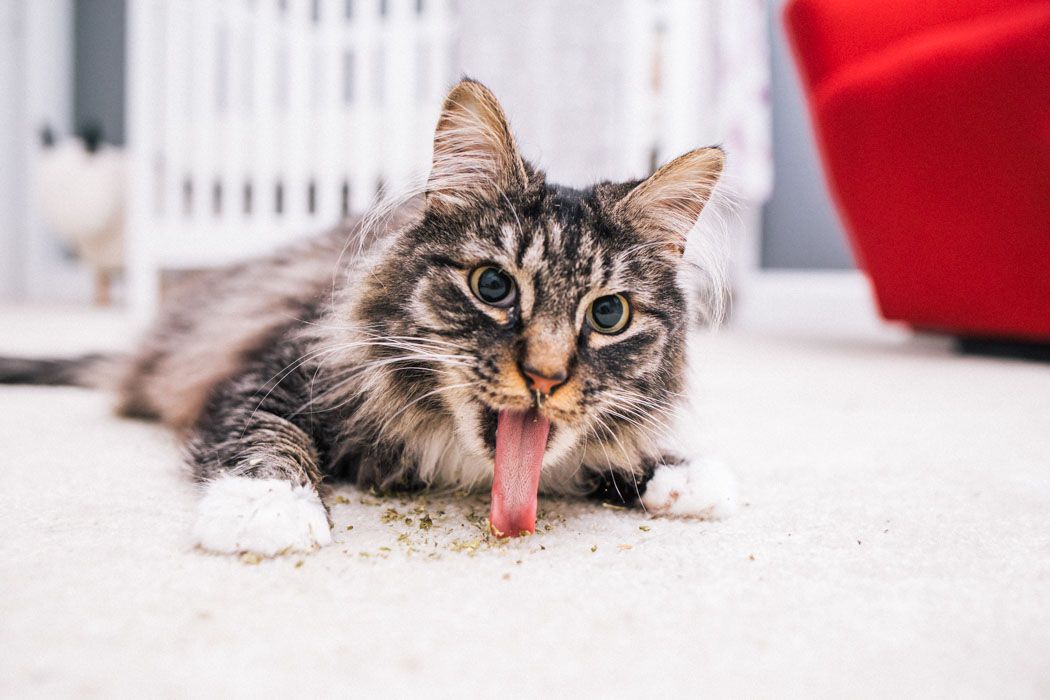
Most cats sniff, lick or chew catnip, while others (like our very own Buddy) eat the plant. (Response from Buddy: “It’s delicious!”)

Catnip isn’t just for domestic kitties: Wildcats like lynx and Servals are susceptible to it, as are big cats.

Fivebucks says his product is not the same as the dried, flaky catnip found in pet stores. The leaves are kept moist by controlling humidity during the drying and storing process.

“It keeps it flavourful and it keeps the natural oils,” Fivebucks told blogTO, a local Toronto news site. “It’s moist, a bit like weed.”

Fivebucks isn’t the only entrepreneur pushing high-grade ‘nip in packaging and under names reminiscent of marijuana dispensaries. Meowijuana, a Kansas-based company, has been selling catnip in “medicinal” bottles and naming their strains after feline puns for years.

The catnip company’s packaging and tongue-in-cheek advertising has been so successful that sometimes people show up expecting a marijuana dispensary, employees say. On another occasion, someone called the police. Although the officers said they were required to follow through on the complaint, they joked around with Meowijuana employees and even posed with a staffer wearing the company’s cat mascot costume.

Like its counterparts in the marijuana industry, Meowijuana has enjoyed record sales during the COVID-19 pandemic as people practice social distancing and hunker down with their pets.

“People get that this is a little bit tongue-in-cheek that we’re having a little fun, but there’s a good quality product for pets under it,” said Meowijuana’s Scott Ragan. “Part of having pets is sharing time with them — not just feeding them — but sharing time and engaging in that emotional bond, and I think everybody here appreciates that.”

Cats On Catnip photos by Andrew Marttila.