Tribe Discovers Ancient Three-Toed Cat’s Fossilized Footprint Deep In Forest

The strange footprint may date back as far as 35 million years ago, according to a preliminary analysis.

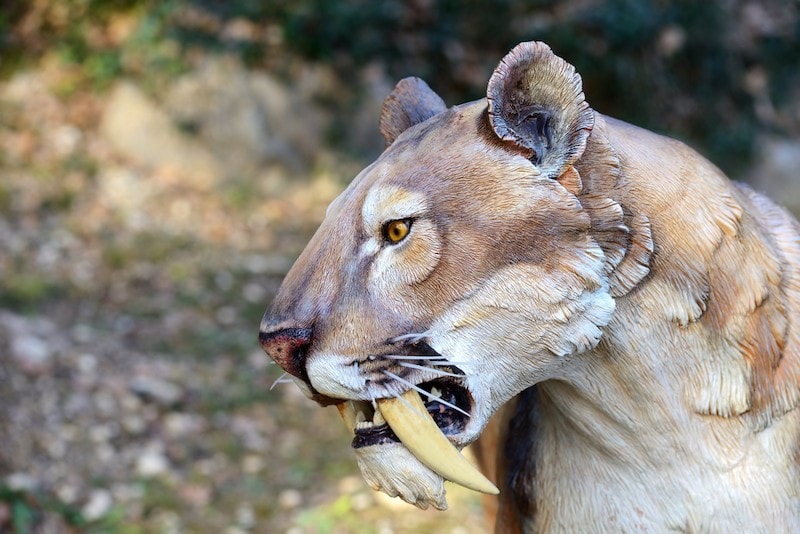
Before house cats, tigers and lions, before sabretooth cats and their scimitar-toothed relatives, Pseudaelurus (pseudo-cat) stalked the forests and plains of Europe, Asia and North America between eight and 20 million years ago.

Before Pseudaelurus, Proailurus — an animal whose name literally means “before cats” — stalked the Earth beginning 30 million years in the past.

Proailurus was thought to be the earliest true feliform ancestor, but now there may be evidence of a felid or feliform animal that predates both Proailurus and Pseudaelurus. Feliform is a term that encompasses cat-like creatures both extinct and extant, from familiar felines to civets and mongoose.

Deep in South India’s Nallamala Forest, near one of the country’s largest tiger reserves, members of the aboriginal Chenchu tribe found a fossil that could put the cat lineage back even further.

The fossil is well-preserved and clearly defined, made by an animal whose paw was about the size of an adult man’s hand. It bears a striking resemblance to tiger pug marks, but perhaps the most striking feature is its three toes.

Feliform fossil
The recently discovered fossil. Credit: Times of India

“Based on the distinctive characteristics of the sandstone, identified as the Cuddapah subgroup Quartzitic sandstone, the estimated rock’s age is approximately 35 million years,” archaeologist Arun Vasireddy told the Times of India. “It was around this time that sandstones were formed and it is likely that the animal would have cast its prints.”

Biologists have had to reshuffle their picture of felid lineage many times over the past century and a half as new discoveries uncover previously unknown species of cats and cat-like creatures. Since they first appeared, cats have taken hundreds of different forms with significant variations in size, appearance, hunting methods and preferred terrain.

The experts aren’t popping the champagne yet. There’s a lot more work to do before they can declare a newly-discovered species or even offer more than educated guesses about its niche and appearance.

Nallamala Forest may yet hold more secrets, and research teams will look for additional prints as well as potential remains. It’s a process that will unfold over years and decades, perhaps even longer.

Still, it’s a tantalizing clue about the past and the origin of some of Earth’s most iconic animals.

In the meantime, Vasireddy said, “nothing can be said clearly until further research.”

Homotherium_serum
A reconstruction of Homotherium, a scimitar-tooth cat that first appeared about four million years ago. Credit: Wikimedia Commons
OLYMPUS DIGITAL CAMERA
Styriofelis lorteti predates modern pantherine cats and was the size of a small leopard. Credit: Spanish National Research Council and the National Museum of Natural Sciences in Madrid
Fossil foot
The recently-discovered fossil compared to a man’s foot. Credit: Times of India

UK Couple Narrowly Avoid Striking ‘Big Cat’ In Road, Cali Cat Cafe Holds Festivus Fundraiser

For decades witnesses have claimed they’ve seen big cats prowling the English countryside.

A UK couple say they narrowly avoided hitting a big cat that bolted in front of their car Wednesday morning.

Chris and Marion said they were driving on the A303 in Hampshire, a rural road in southern England surrounded by farmland, fields and wooded stretches, at 7 a.m. when the felid leapt across the road and ran into a nearby field, possibly giving chase to prey. While others suggested it could have been a lynx — which went extinct in the UK more than 1,000 years ago — the witnesses ruled out the possibility, saying the cat was “twice the size of a fox” with a tail that was “thick and solid.”

When they made a Facebook post about the encounter, several others claimed they’ve seen a similar-looking “big cat” moving through Hampshire’s fields. There are several groups dedicated to alleged big cat sightings in the UK on Facebook.

It’s the latest in a surprisingly persistent legend of phantom big cats prowling the British countryside. There are no extant big cats in the UK or in Europe. They exist only on other continents: Lions and leopards in Africa, tigers and leopards in Asia, and jaguars in South America. Among felids that are not true big cats but are often grouped with them, pumas exist only in the Americas and cheetahs are exclusively found in Africa.

Despite that, hundreds of witnesses report seeing feliform animals much larger than well-fed ferals or small wildcats. A similar phenomenon exists in Australia, where for years people have insisted they’ve seen big cats slinking through the bush.

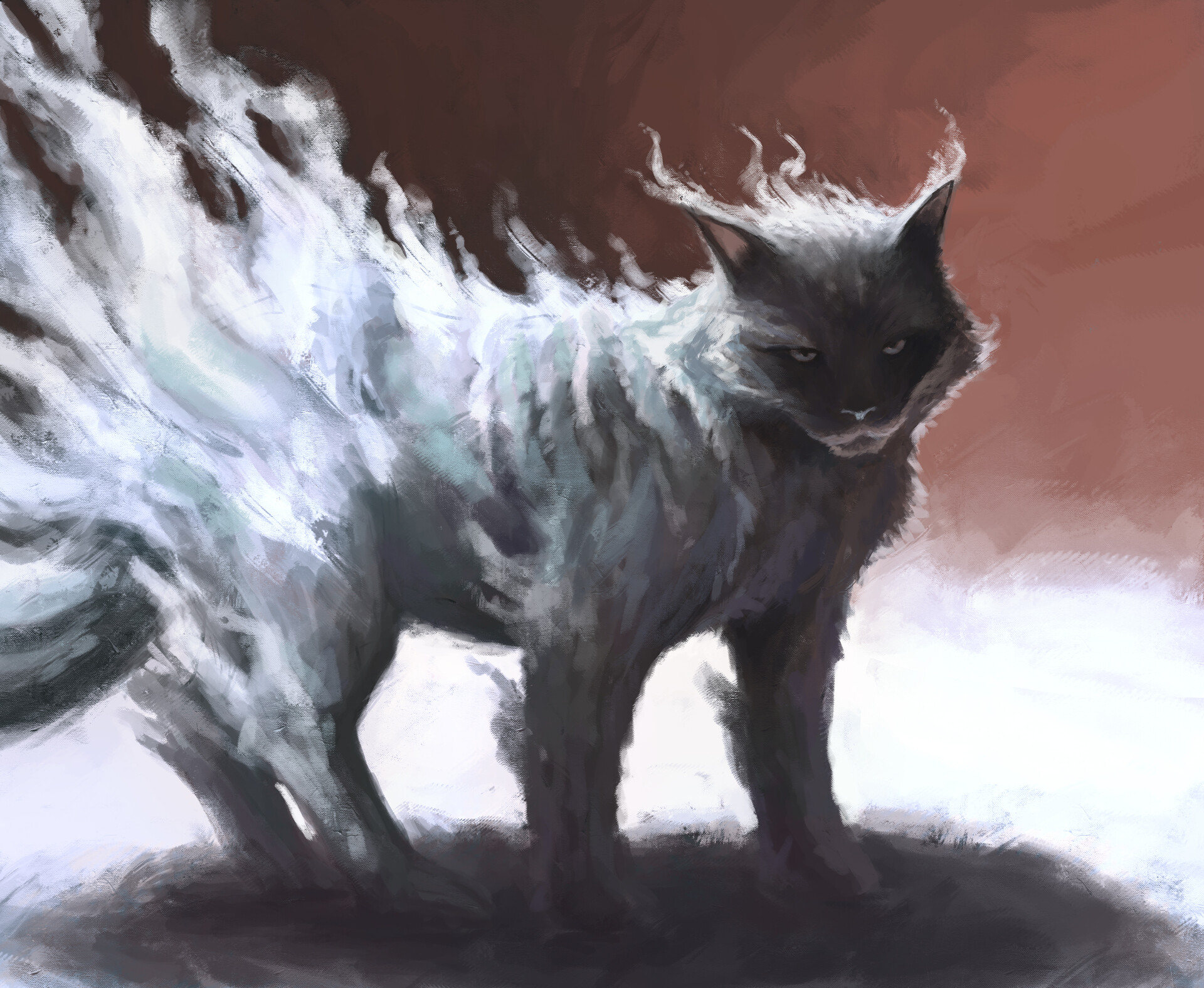
Ghost Cat
“Ghost Cat” illustration by Ken Jovi Credit: Ken Jovi/Artstation

While it’s possible that people in the British countryside or Australian bush are illegally keeping large felids, and it’s possible that a handful could have escaped over the decades, that’s an unlikely explanation for the sightings for several reasons. While big cats are apex predators, animals who have lived in captivity all their lives and have been given food will not know where to go or how to hunt. In places like Texas, where as many as 5,000 tigers live in backyard enclosures, escaped cats are quickly spotted wandering human neighborhoods, confused and looking for food.

If an escaped tiger or leopard was somehow able to rapidly adjust to the English countryside and fend for itself without being spotted, there would be evidence — pug marks, droppings, claw marks denoting territorial boundaries on trees, the carcasses of prey animals, burglarized pens, farm animals missing and terrorized.

That goes double if, as some suggest, there is a breeding population of panthera genus cats. Even a handful of such animals would consume thousands of pounds of meat each week.

Still, as Wednesday’s alleged sighting proves, rumors of large cats stalking the mists of the English countryside are unlikely to die out any time soon.

A Festivus for the Rest of Us…And Our Cats

Festivus is the celebration that keeps on giving.

The operators of Tail Town Cats, a cat cafe in Pasadena, California, are hosting a Festivus get-together that will double as a showcase for adoptable kitties and a way to help support adoption efforts.

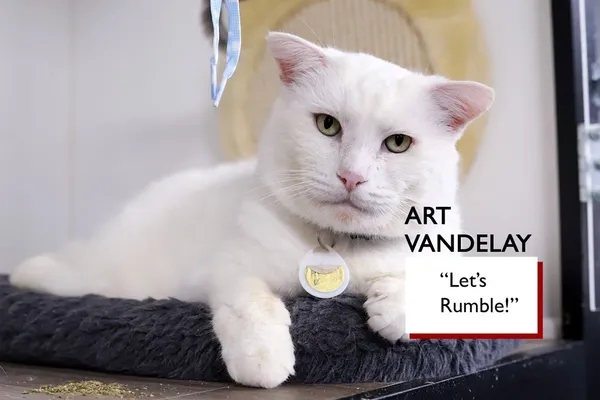
Hosted by a cat named Art Vandelay — who found his forever home through the cafe — the celebration will include a traditional Festivus pole, the Airing of Grievances and Feats of Strength. (Among the grievances listed in advance are general disappointment with the frequency of treats, displeasure at sharing litter boxes, and humans who recycle cardboard boxes instead of giving them to the felines.)

People in the Los Angeles area can attend in person, while others can watch online.

Art Vandelay
Art Vandelay found his forever home through the cat cafe and will return to host its first-ever Festivus celebration.

Seinfeld fans will recognize Art Vandelay as George Costanza’s most frequently-used alias. Vandelay is alternately described as an importer-exporter or as an architect. As George famously said: “I’ve always wanted to pretend to be an architect.”

As for Festivus, it’s taken on a life of its own 25 years after it was popularized on Seinfeld.

The made-up holiday had its humble origins in the home of writer Daniel O’Keefe, who introduced it to the nation — and immortalized it in the process — by writing it into “The Strike,” a 1997 episode of the sitcom. At the time, Seinfeld was a ratings juggernaut, averaging more than 30 million viewers an episode. Festivus is celebrated annually on Dec. 23.