Cat cafes offer a unique way for adoptable kitties to find homes, as well as a stress-reducing experience for customers, but two groups in the UK say cafes are not appropriate living spaces for cats.
Two major feline advocacy groups in the UK are urging the government to stop issuing new licenses for cat cafes, arguing they’re not good living situations for the felines who are their main attraction.
Many people see the cafe model as a win-win for cats and people. The latter get to unwind and spend time with cute animals who have a knack for lowering blood pressure, helping the stressed to relax. The cats, who are adoptable, get to run, play and live in an environment much better than a shelter cage while they wait for their forever homes.
But the RSPCA and Cats Protection, the most prominent feline welfare organization in the UK, say its “almost impossible” to meet the needs of the animals, who may be stressed by living with other cats and, they argue, are used as “entertainment” for customers.
“We don’t believe these environments can consistently provide cats with a good quality of life and are hugely concerned that many cats will be unhappy as a result,” said Alice Potter, a cat welfare specialist with the RSPCA.
“Generally cats are not sociable, and many felines often prefer to live without other cats, or prefer to form social groups with their relations.”
A cat cafe in Vilnius, the capital city of Lithuania. Credit: Wikimedia Commons
I’m not sure how I feel about this, and I’m not particularly familiar with how most cat cafes are run. The only ones I’ve been to were in Japan, and they were miraculously clean spaces with lots of things to climb, as well as nooks and private areas where cats could hide. The cats were well cared-for, staff were friendly, and the environments were relaxed.
Cat cafes also offer a unique opportunity for finding homes for the little ones. They’re much more likely to meow their way into the hearts of would-be adopters when they’re given space to run around, play and enjoy themselves as opposed to the often sullen, frightened state they’re in at shelters.
Are the UK cats groups right, or are they making perfect the enemy of good?
Scottish Folds are cute, but the genetic mutation responsible for their folded ears also causes lifelong pain, joint problems and misshapen bones.
In 1961, a shepherd named William Ross found a barn cat with a curious feature: instead of the upright, swiveling, satellite dish ears of a normal feline, this cat’s ears were floppy and shapeless, resting atop her head like a tiny knitted cap.
Ross took the cat home and named her Susie. Susie gave birth to a litter of kittens with the same floppy ears, and it all gets a bit murky from there, with a dozen variations of the story online claiming it was Ross himself or a neighbor who “created” the breed.
Regardless of who it was, the floppy ears were transformed from an abnormal feature into the unmistakable characteristic of a breed, and the Scottish Fold was born.
The cute cats quickly caught on and were officially recognized in competitions by 1971.
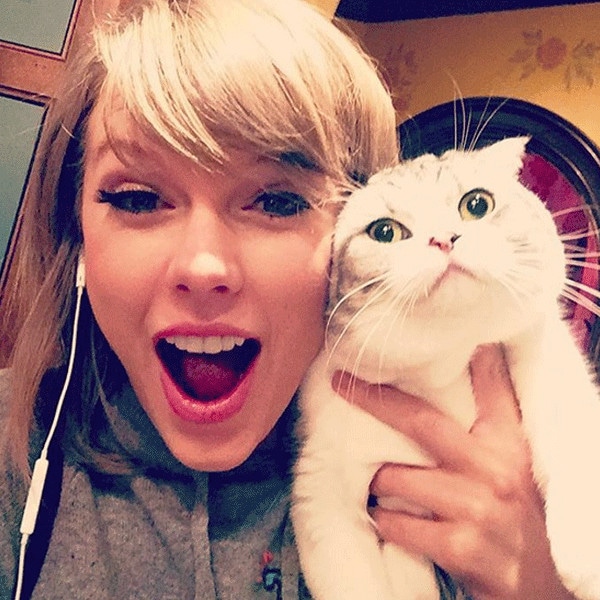
Now they’re more in vogue than ever. They’re the preferred pets of music superstars Taylor Swift and Ed Sheeran, who regularly feature photos and videos of their Scottish Folds in social media posts. People across the world are buying them, and they routinely appear in “best breed” lists online, lauded for being cuddly and docile in addition to adorable.
Ed Sheeran with his Scottish Fold cat. Credit: Ed Sheeran/Instagram
But they’ve also been banned by the same cat fancy groups that initially welcomed them, they’re prohibited outright in some countries, and animal welfare groups are begging people to stop emulating celebrities by buying them.
That’s because the same deformity that gives Scottish Folds their distinctive ears is also responsible for weak and brittle cartilage and bones elsewhere in the body, which results in lifelong pain and disability.
“The disease is evident on x-rays of cats from as young as seven weeks of age. Serious abnormalities in joints and bone growth lead to arthritis (painful, swollen joints), short, abnormally thick, and inflexible tails, spinal abnormalities and short, stiff legs. The welfare impacts of Scottish Fold Osteochondrodysplasia can be severe in terms of pain and inability to perform natural behaviours, as these cats can be lame, walk with an abnormal gait, can be reluctant to engage in normal movements such as walking or jumping, and can even become completely crippled.
There is no cure for this progressive condition.”
Sadly, the deformities and resulting pain may be the reason Scottish Folds are considered docile and cuddly: they may simply be in too much pain to move or protest when their humans hug them or pick them up.
Ross and Turner didn’t know it in 1961, but the folded ears and brittle cartilage were the result of a genetic mutation. It wasn’t until 2016 that a group of American and Australian scientists found a mutation in a single gene, TRPV4, was responsible for weak cartilage and bones, leading to the deformities highlighted by the RSPCA in the passage above, as well as “progressive joint destruction.” The condition is called osteochondrodysplasia.
Swift’s cats have appeared in her music videos, feature prominently in her online posts, and were photographed in her arms for her 2024 post announcing she was supporting Vice President Kamala Harris in November’s presidential election.
Cats Protection, a UK charity, raised the issue in 2024, warning that Scottish Folds were becoming even more popular, with breeders struggling to meet high demand. The group issued a public statement asking cat lovers and Swift fans to avoid buying Scottish Folds. Scottish Folds are equally popular in the US, spurring resistance from stateside animal welfare groups as well.
The Governing Council of Cat Fancy, which registers breeds in the UK — and no longer recognizes Scottish Folds — was even more direct.
“We strongly advise members of the public not to try to acquire cats of this breed,” Steve Crow, chairman of Cat Fancy’s governing board, told The Guardian.
Flossie’s outlived two “owners” and has lived the human equivalent of 120 years.
Bill Clinton was still in his first term as president of the United States, Oasis and Radiohead ruled the music charts, and millions of people were taking their tentative first steps onto the internet via noisy modems and a service called AOL.
That’s the world Flossie the cat was born into in 1995, and you can imagine her sitting by a fire with some wide-eyed kittens, telling them that back in her day humans didn’t stare at those silly little phone screens all day and the concept of gourmet cat food didn’t exist.
“You kittens today with your snobby grain-free wet food and your doting human parents,” Flossie might say. “Back in my day all we had was Fancy Feast, and if we didn’t eat it, we didn’t get dessert!”
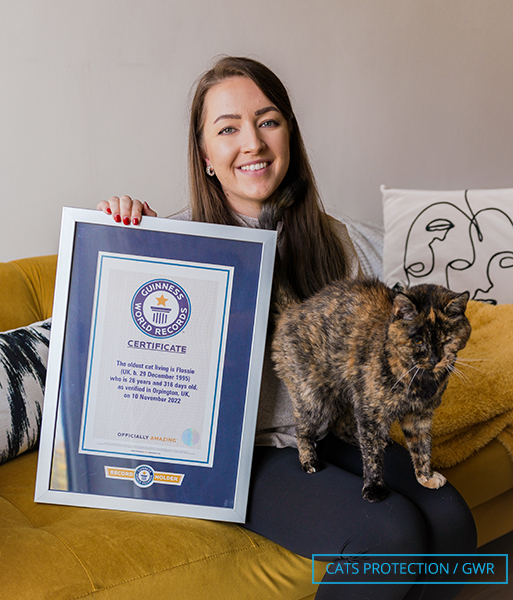
At 26 years and 316 days old as of Thanksgiving Day, Flossie has been verified as the world’s oldest cat by Guinness World Records. That makes the tortoiseshell, at a little more than a month shy of her 27th birthday, the equivalent of 120 human years old.
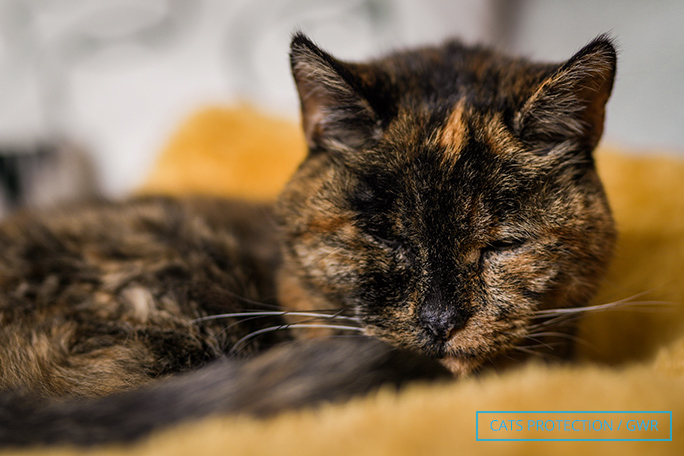
Flossie enjoys a snooze. Credit: Guinness World Records
Flossie is deaf and her vision is deteriorated, but veterinarians say she’s otherwise in good health. Her human, Vicki Green, said she’s surprisingly energetic for her age as well as “so affectionate and playful, [and] especially sweet when you remember how old she is.”
The super senior kitty hasn’t lost her appetite either.
“She never turns her nose up at the chance of a good meal,” Green told Guinness.
Flossie began her life as a stray and has outlived two owners. She lived in a cat colony on the grounds of the now-defunct Mercyside Hospital near Liverpool and was adopted some time in her first year of life. Her human died in 2005, and Flossie was taken in by her human’s sister, who cared for Flossie until her death in 2019. The woman’s son took Flossie and looked after her for a few years, but realized he wasn’t the caretaker she needed.
“It wasn’t an easy decision,” said Naomi Rosling of the UK’s Cats Protection, where Flossie was surrendered. “He sought our help when it was in Flossie’s best interests. Responsible cat ownership is when someone thinks about an animal’s needs above their feelings.”
Flossie with Green and their official Guinness World Records certificate. Credit: Guinness World Records
The staff at Cats Protection thought Flossie might not find a new home since many potential adopters don’t want an ancient cat, but Green has experience caring for older cats. Her previous cat, Honeybun, died at 21 years old.
“I’ve always wanted to give older cats a comfortable later life,” Green said.
The all-time record for longest-lived cat was Creme Puff, a Texas cat who was born on Aug. 3, 1967 and died on Aug. 6, 2005, just after her 38th birthday. Creme Puff was also certified by Guinness, which lists 18 other cats who lived to at least 30 years old. Domestic cats who live indoors, are fed healthy diets and are well taken care of live 16 years on average.




 Pain In The Bud