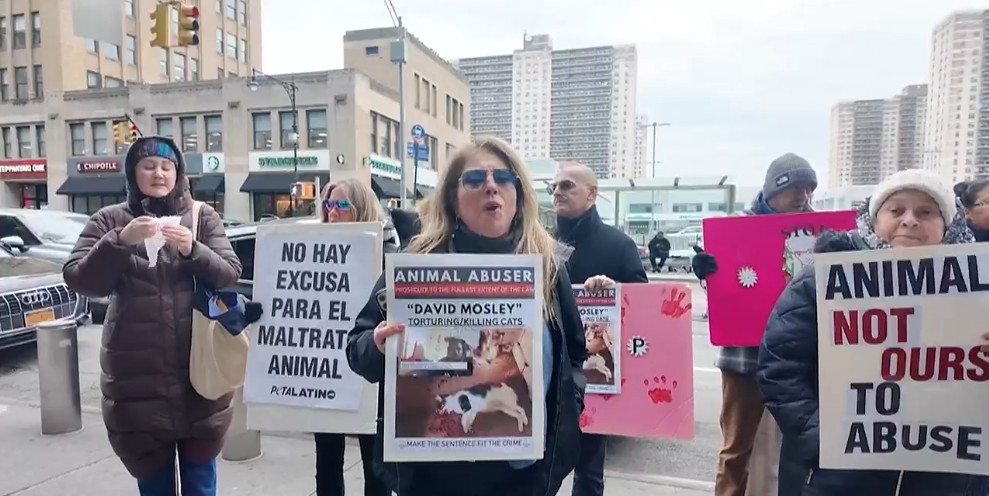
Cops: Wannabe Rapper ‘Ritually Sacrificed’ Cat To Promote Music

David Mosley wanted attention and allegedly killed a cat on camera to promote his Satanist-themed music.

What to do when you want to be a famous music artist, but your tunes are abominably awful and your gimmick is infantile?

If you’re David Mosley, apparently you beg the internet to notice you exist by allegedly murdering a cat.

The 26-year-old Bronx man was initially gleeful after sharing video and photos showing a dead cat in his Fordham North hovel surrounded by candles and a bunch of nonsense, including the word “SATAN,” spray painted on the walls.

“You should have heard the little bih squeal lol,” Mosley wrote on Instagram alongside a photo of a bloodied and dead cat in his apartment.

“I’m the king, n—a,” Mosley said in a follow-up video after mocking people who were upset that he allegedly killed the cat. “I can reach through the camera and put spells on you like that! That easily! I hexed you through the phone, through the camera. Ya’ll know I do f—ing voodoo, so don’t even call me delusional.”

Mosley during a live stream, during which he claimed supernatural powers.

A relevant question here: who adopted a cat out to this guy? I went through what felt like a CIA-level background check when I first went to adopt, and this Satanist who thinks he’s a wizard apparently had no problem just waltzing into a shelter and walking out with a cat.

Apparently angry that no one turned up to the first “show” in his illustrious music career, Mosley said he was going to take things to the “next level” with another “sacrifice” on Halloween night. In his musical endeavors he called himself Church of Ububal, with the latter word a reverse spelling of “Labubu” in reference to the viral toys.

“Be there or be square,” he wrote, per a screenshot posted to Reddit. “Like I said at my first show and no one came. But you will be at this one. Grab popcorn.”

When he got the attention he wanted, but not the reaction he wanted, he backpedaled during a live stream, claiming he found the already-deceased feline.

By that point, furious Redditors in a Bronx subreddit had closed in on his identity and exact location, and were pestering the NYPD to grab Mosley.

“Y’all are soft for falling for cheap parlor tricks” Mosley said during the live stream.

Incredibly, Bronx criminal court Judge Harold E. Bahr let Mosley walk free without having to post bail after a preliminary hearing this week, and adjourned a hearing this week after Mosley’s original attorney was not present. It’s not clear if that attorney will continue to represent Mosley.

Bahr must be confused about which decade this is. Constituents should (politely) register their displeasure with his office. People from several local cat rescues have already done so.

“We want the judge to take this seriously. We cannot wait for another crime like this to happen,” local animal welfare activist Rachel Ejsmont told News12 Bronx.

Mosley was initially charged with criminal mischief and aggravated cruelty to animals at his Oct. 30 arraignment. Activists are pushing the district attorney for more serious charges.

The court hasn’t set a date for Mosley’s next hearing after the Nov. 12 adjournment. We hope the scrutiny and his mounting legal troubles dissuade him from trying to get attention through violence again.

Lastly, I usually keep my mouth shut about this sort of thing because I know emotions run high and most people are well-intentioned, but already there are grifters latching onto this incident and using it to beg for donations for their activism, which amounts to little more than grumbling about this stuff on social media.

Be careful about who you donate to and make sure you’re giving to registered organizations with financials listed on Charity Navigator or Charity Watch. Donate your hard-earned money to groups that really do make a difference, such as the Humane Society, SPCA and local rescues that do outstanding work, like New Jersey’s Tabby’s Place. A transparent, effective charity will feature its IRS Form 990 on its website and use at least 75 percent of its revenue from donations on program spending. Be wary of “influencers,” people who say outrageous things for attention, clicks and donations, and anyone who claims they have special access to, or influence over, authorities.

Header image via News12 Bronx (screencap)
Investigators Rule Sanctuary Fire ‘Not Suspicious’ As Vets And Volunteers Treat 200 Surviving Cats

As veterinarians treat the surviving animals for ailments like smoke inhalation and burned paws, donors from all over the world have contributed $750,000 to help the newly homeless moggies and ensure Happy Cat continues in some form.

Investigators are still looking for the exact cause of Monday’s fire, which claimed the life of a New York cat sanctuary founder and about 100 of its feline residents, but they now say the blaze doesn’t look suspicious.

The fire started inside the main structure at Happy Cat sanctuary, Brookhaven Fire Marshal Chris Mehrmann told local media, and investigators “cannot rule out a fire caused by propane-fed portable heaters that were in the area of fire origin.”

Happy Cat founder Christopher Arsenault, 65, was found on the second floor of the building surrounded by animals he was trying to rescue. Neighbors told investigators that they saw Arsenault emerge from the home with several cats, then dash back inside in an attempt to rescue more of the felines he cared for.

When Arsenault converted the home into a sanctuary, he cut holes in the walls and floors to create passages for the cats. Unfortunately, Mehrmann said, the fire spread more quickly because of those modifications.

In the meantime, people from the local community, the SPCA and privately run animal welfare organizations have teamed up to care for the 200 or so surviving felines. Donations have also come pouring in from all over the world, totaling more than $750,000 as of Friday morning.

More than $670,000 of the funds have come from 13,000-plus cat lovers from dozens of countries who contributed to a GoFundMe drive started by Lisa Jaeger of Jaeger’s Run Animal Rescue in nearby Port Jefferson, NY.

A memorial image created by Loving Paws, a small rescue in Suffolk County, Long Island.

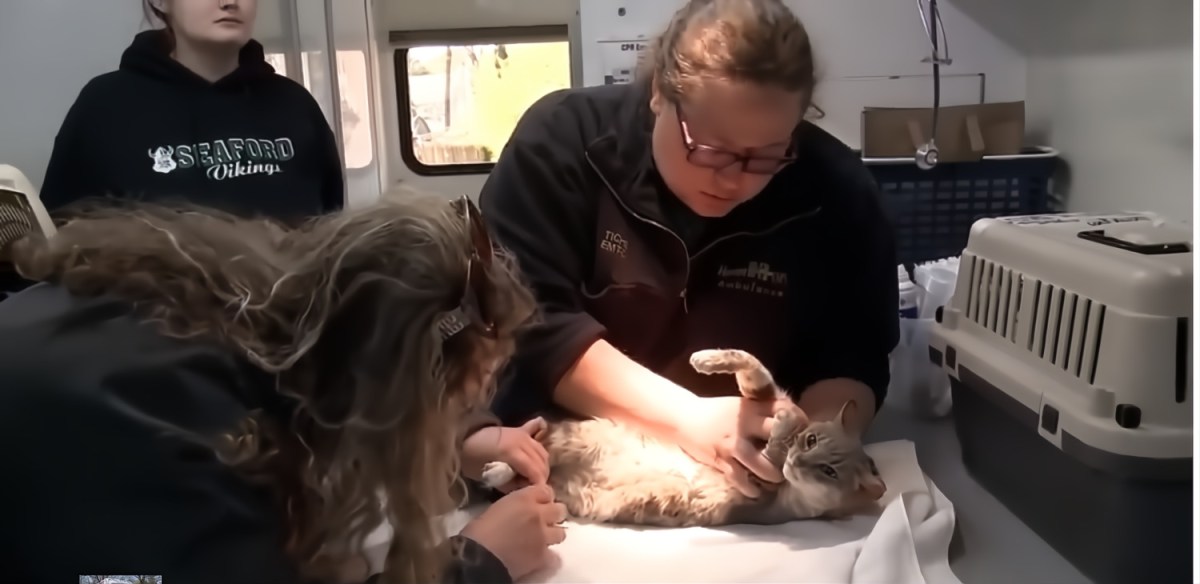
The surviving cats have a range of injuries, from minor sprains to life-threatening lung damage from smoke inhalation. Volunteers have spent the past several days trying to collect the traumatized animals from the vicinity of the destroyed sanctuary.

“I knew Chris well. I knew when he started. He died doing what he loved… rescuing animals,” said Robert Misseri, co-founder of Paws of War, which brought a mobile veterinary clinic to the site of the former sanctuary this week. “The very least we can do is continue his legacy and make sure that every single one [of the] cats get the proper love and care that they need to move forward.”

Veterinarians said they’ve treated lots of cats with burnt paws. Although the animals are skittish from the harrowing experience, rescues and shelters in the area are helping them find forever homes, veterinarian Jason Michael Heller told ABC News.

“We’re going to ask for our colleagues in the area here, hopefully, to take a few cats and try to get them healthy enough to be able to eat and be adopted,” Heller said.

People in the Long Island rescue community are also working on a public memorial for Arsenault, a man who dedicated his entire life to the animals in his care.

“There’s not going to be another Chris, ever, who does this,” said John Spat of Animal Protection Service, “and all we can do is try to recover what he was trying to do and try to move forward and help his organization work forward.”

NY Sanctuary Founder, As Many As 100 Cats Feared Dead In ‘Suspicious’ Fire

Chris Arsenault ran back into the fire in an attempt to save more cats and never reemerged.

A man who founded a cat sanctuary to honor the legacy of his deceased son was killed, along with some 100 of the cats he cared for, in a raging fire Monday morning.

Christopher Arsenault, 65, lived on the premises of the Happy Cat sanctuary in Medford, along with about 300 cats he’d saved from euthanasia, dangerous situations and difficult lives as strays.

Firefighters were dispatched a few minutes after 7 am and it took them an hour and 20 minutes to bring the powerful blaze under control. Arsenault was able to get out of the main structure on the Suffolk County, Long Island, compound, but dashed back in to save more of his cats, according to neighbors who witnessed the fire.

Chris Arsenault at Happy Cat sanctuary. Credit: Happy Cat Sanctuary

The Suffolk County homicide and arson investigation squads are assigned to the case, Suffolk police Chief of Detectives  William Doherty told the New  York Post.

However, it can take weeks for lab results from the state police crime lab in Albany, and fire investigators will need to comb through the remains of the ruined structure and the rubble to find a point of origin.

“It’s too early in the investigation to determine any cause,” Doherty told the Post.

The grounds and facilities at Happy Cat sanctuary were meticulously maintained, but that did not stop some in the community from complaining about the existence of the sanctuary.

Arsenault “vowed to take the unwanted, discarded, homeless [cats], the ones that people were going to euthanize, he refused and he took them into his sanctuary, sometimes for no money at all,” Lisa Jaeger, a local cat rescuer who worked with Arsenault, told NBC New York. “He started the sanctuary [in 2007]. This was his life. He gave his life to save these cats.”

The sanctuary’s Facebook page was flooded with an outpouring of grief on Monday from people who knew and supported Arsenault.

“He was always so concerned about each and every single cat he had in his care. Didn’t matter how many… they were all his babies,” one distraught woman wrote. “To think he literally lost his life trying to save them breaks my heart and makes all the sense in the world that he would never leave them behind.”

Local rescuers and the county SPCA were trying to corral the surviving 200 cats on Monday. Some fled the grounds during the fire and remained unaccounted for, while others remained close to the destroyed sanctuary despite the chaos and the significant amount of activity from first responders.

Despite his efforts, Arsenault was the subject of a harassment campaign on social media from neighbors and a small group of people who alleged Arsenault wasn’t properly caring for cats. There’s no evidence to back up those claims, and Happy Cat has not been the subject of any violations.

A petition on Change.org posted last year demanded a stop to the alleged harassment of Arsenault by neighbors and a local code enforcement officer. It garnered 28,665 verified signatures.

Despite locals standing up for him, Arsenault had found a piece of property in upstate New York and was preparing to move his cats and sanctuary to that location.

John DeBacker, who participates in local trap, neuter, return (TNR) efforts, referenced the push back against Happy Cat in a post about the fire on Monday.

“Despite being harassed for months, he continued to fight for the cats,” the post read, “and I truly hope everyone can screenshot posts from one of the groups that has been harassing him in case arson is connected.”

An outdoor area at Happy Cat sanctuary. Credit: Happy Cat Sanctuary

It’s important to note that there is no evidence connecting any of the critics to the fire, authorities have not commented on the source of the fire, and any speculation about the cause is just that: speculation. It’s also important to emphasize that just because police homicide and arson squads are investigating an incident does not mean either of those crimes has taken place. Authorities won’t know anything for sure until they can thoroughly investigate the fire scene and get lab reports on evidence.

Arsenault himself said he felt compelled to respond to critics last month in a video he posted to Youtube.

“The audacity of these people to call Happy Cat sanctuary a hoarding situation, to be claiming that we’re committing animal abuse and animal neglect,” he said “The cats that I see…these are cats that are out there and have nowhere to go. These are cats that are suffering out there. And this is where sanctuaries come in … Right now [the critics are] just taking a big handful of spaghetti, and they’re just throwing it up against the wall to see what sticks to come after Happy Cat sanctuary.”

Petition Aims To Make NYC Bodega Cats Official, Help Pay For Their Vet Care

The plan would allow bodega owners to certify their cats, eliminate city fines for keeping them, and help find homes for working felines if their stores shut down

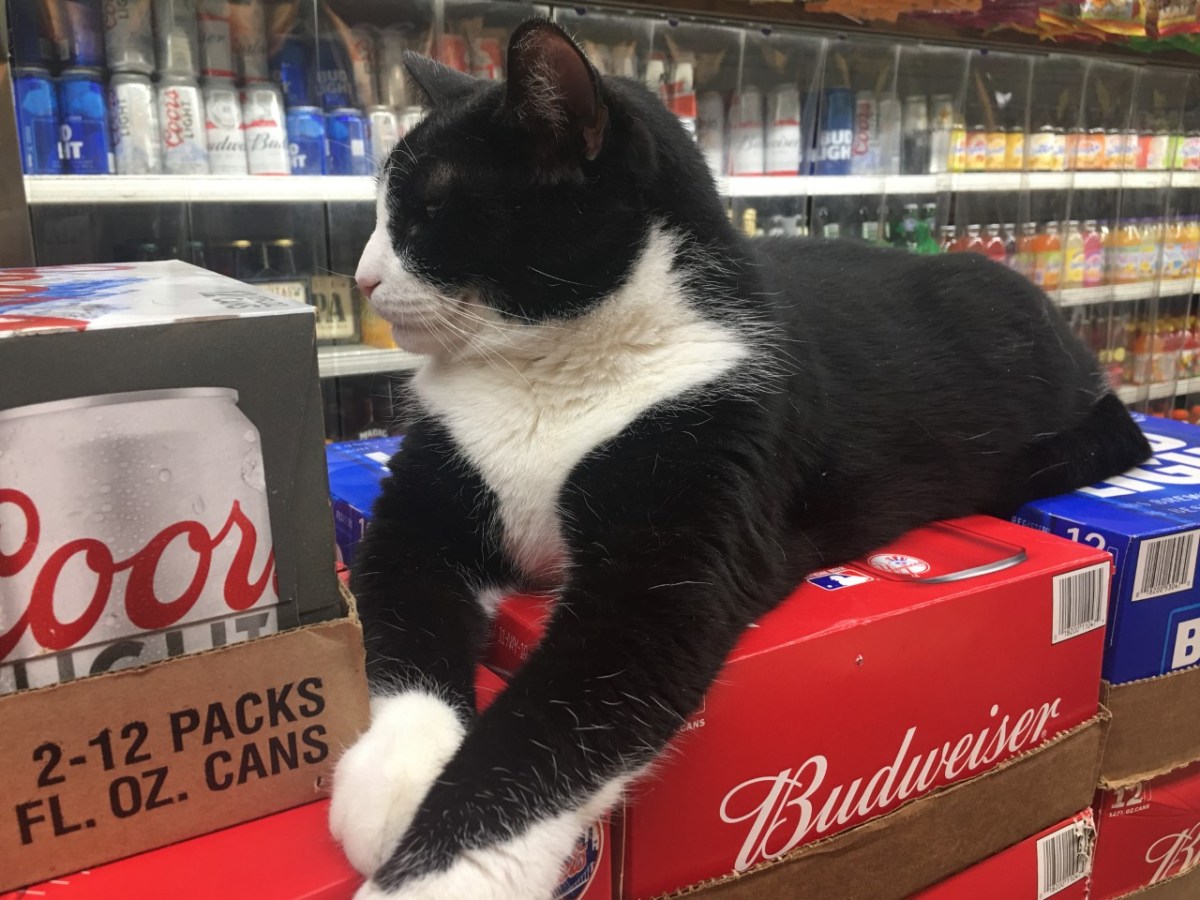
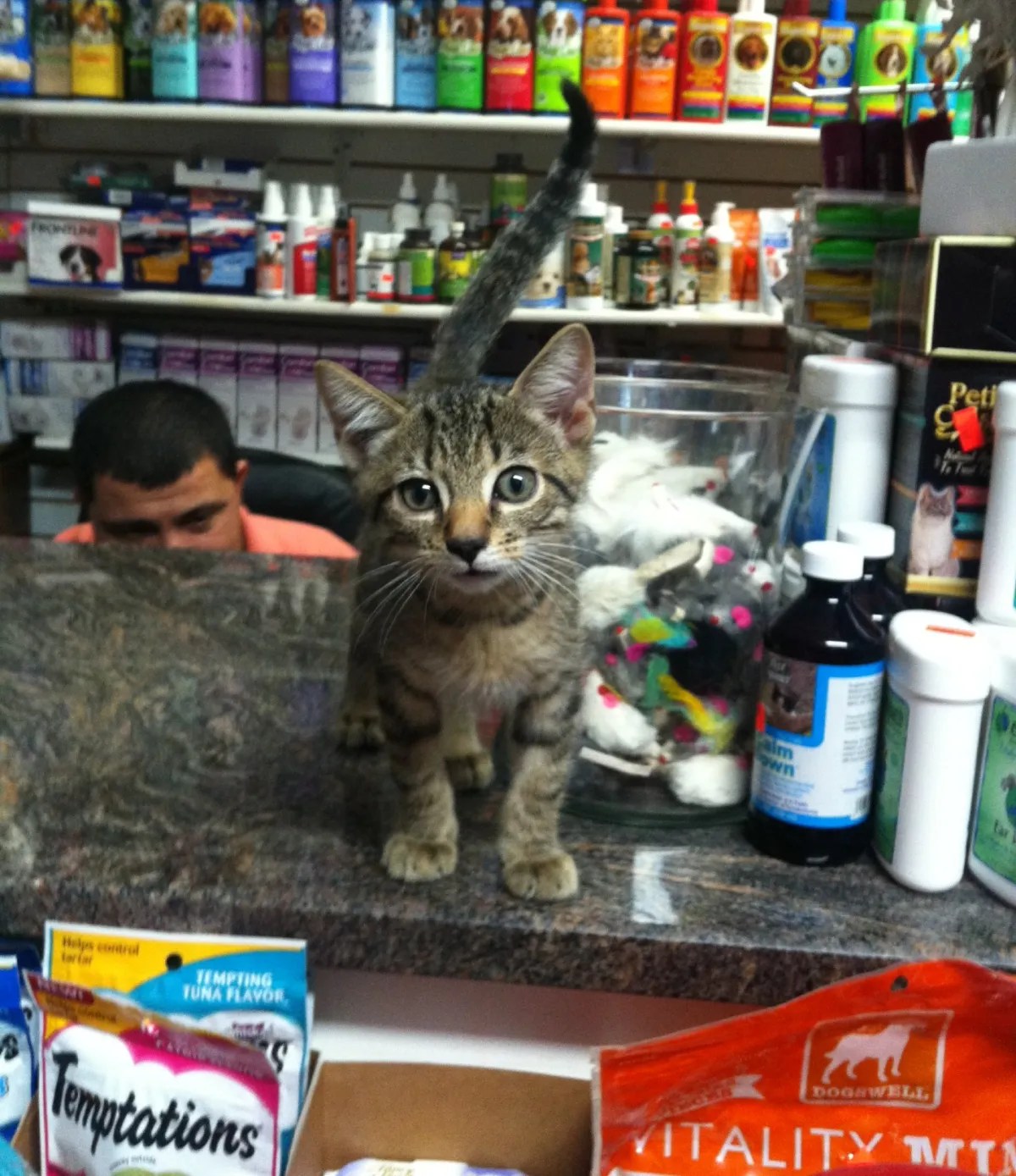
Cats have been a fixture in New York City’s bodegas for decades, but technically they’re illegal.

The fact that they’re so widespread, and owners of the small groceries/delis don’t try to hide them, underscores the absurdity of the situation. The fine for keeping a cat in a bodega in New York is $200 for the first offense, capping out at $300, but the fine for a rodent infestation starts at $300 and can rise to as much as $2,000 for repeat offenses. That’s in addition to the cost of bringing in pest control to get rid of the rats, which can easily add hundreds or more to an expensive problem.

So given the option between a maximum $300 fine with a clean, rodent-free shop, and potentially crippling fines — plus infestation — for rodents, thousands of bodega owners opt for the former. It’s a no-brainer.

Kota, a bodega cat from Brooklyn. Credit: Wikimedia Commons

The cats are also favorites of customers, and bodega owners don’t hesitate to talk to media when their cats go missing, nor do they turn down Dan Rimada, who runs the extremely popular @bodegacatsofnewyork Instagram page.

Now Rimada is the man behind a petition that seeks to eliminate fines for the store-dwelling felines, establish a voluntary shop cat certification, and help bodega owners get veterinary care for their little helpers.

Rimada proposes soliciting seed money from city government as well as deep-pocketed donors in the pet food industry — “think Purina, Chewy, PetCo” — to establish a veterinary care fund for the city’s working cats.

“Through years of hands-on experience, I’ve witnessed both the charm of well-cared-for bodega cats and the harsh reality of neglect when standards aren’t met,” Rimada wrote in the petition, which has almost 5,000 signatures as of Feb. 28. “In conversations with rescue organizations and experts in public policy, business, and technology, we’ve designed a realistic, community-driven solution.”

Credit: @bodegacats_/Twitter

The fund would help cover the costs of care, with additional “micro-loans” available for emergencies.

Rimada envisions it as a triple win for the shop owners, rescuers who will be compensated for their time, and most importantly, the cats. If city leaders are willing to engage, Rimada says he hopes to conduct a year-long pilot program to see what works and what would need tweaks, with input from rescuers, veterinarians and the people who care for the cats.

The petition and resulting plan was inspired by cases like that of Kobe, a Hell’s Kitchen bodega cat who almost died of a urinary infection when the owners of the bodega balked at paying veterinary bills.

Scientists Finally Figure Out Why Some Cats Are Orange, PLUS: Are Street Cats Really ‘Taking Over?’

More Americans say they can’t afford to keep their cats because of inflation, leading to an increase in surrendered and dumped cats in some places.

More than 110 years ago, American geneticist Clarence Cook Little developed a theory explaining why some cats have orange coloring and some don’t.

Now Little has been proven correct thanks to the work of separate teams in Japan and the US, which discovered the mechanism that leads to orange coloring, including fully ginger felines as well as calicos and tortoiseshells.

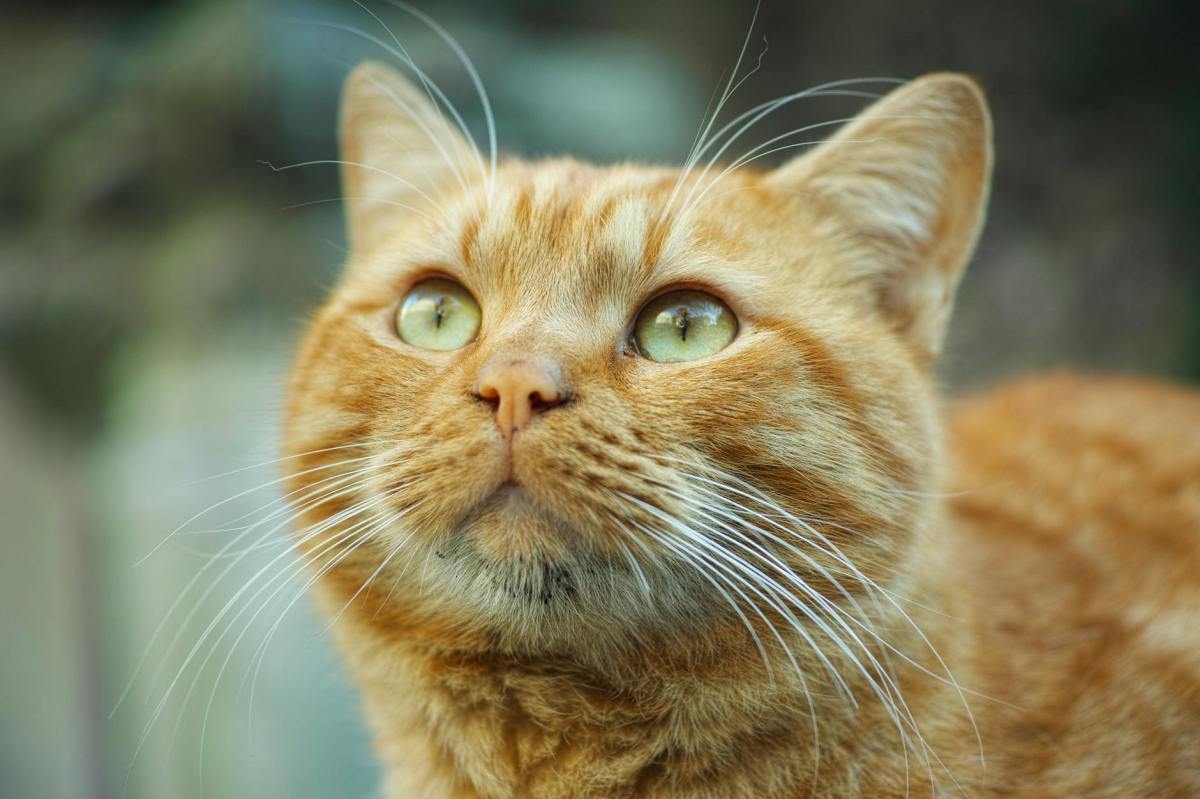
The explanation may be a bit too heavy on genetics for some readers, but essentially the researchers found the specific gene that leads to the growth or orange fur. They’ve known about the gene for a long time, but didn’t realize the totality of its function. Its official name is ARHGAP36, but for the sake of simplicity, scientists are calling it “the orange gene.”

“The orange gene has a known role in hair follicle development, but scientists didn’t previously know it is also involved in pigment production,” a team of geneticists and biotechnologists wrote in The Conversation, a science publication. “This means that a new pathway for pigment production has been discovered, opening the way for exciting and important research into a basic biological process.”

calico cat relaxing on wooden bench outdoors
In partially orange cats like calicos and tortoiseshells, the blotches of color are the result of imperfect gene copies and a secondary pigment-related gene switching “on and off.” Credit: Mehmet Guzel/Pexels

Ginger cats are usually male, but the pigmant can also appear in female cats due to an error in gene copying which deletes one segment of the orange pigment-producing genetic code.

That’s why calicos and tortoiseshells have orange blotches or mixed orange fur. “[T]he orange gene is persistently switched on in orange areas but is mostly switched off in non-orange areas of a cat’s coat,” the authors wrote.

Are there more strays in 2024?

Time magazine has a story examining the problem of stray cats in America’s urban and suburban population centers, why it’s happening, and what can be done about it.

First, might as well get this out of the way: We don’t know if there are “more” cats. The claim that there are more relies on anecdotes, and there’s no hard data to back that up. You have to be highly motivated to invest the time and money into a proper census like the D.C. Cat Count, and it’s an understatement to say most towns and cities are either not willing to do that, or don’t have the resources.

What we do know is there may be more cats in certain areas, with individual shelters in some places reporting record numbers of surrenders and cats scooped up by animal control.

close up of a stray cat on the metal railing
Rescuers say people who can’t afford food, supplies and veterinary care are surrendering or dumping their cats in larger numbers than in years past. Credit: Dou011fu Tunce/Pexels

The story quotes rescuers who say they’ve seen more surrendered pets, as well as data from Shelter Animals Count, which tallies self-reported information from shelters and rescues. The latter says 32 percent of cats taken in were owner surrenders in 2024, compared to 30.5 percent in 2019.

“It’s a combination of people surrendering their pets and people not adopting because they’re not sure they can take on the financial commitment,” Animal Care Centers of NYC’s Katy Hansen told Time.

Rescuers say that’s reflected in their experiences trapping the felines, who are friendly and acclimated to humans.

The people surrendering their pets cite inflation, not only impacting the cost of essentials like food and litter, but also more expensive veterinary care.

The story additionally includes this eye-popping detail:

“At Veterinary Care Group, a private equity-owned practice in Brooklyn, the cost of spaying or neutering a cat has soared to $850 per animal. By contrast, at the nonprofit veterinary clinic Zweigart recently founded in Brooklyn, the cost of spaying or neutering a cat is $225 and a mid-sized dog is $300.”

The lesson here: Steer well clear of veterinary clinics that aren’t vet-owned or are obtuse about their ownership. Private equity groups don’t buy clinics out of love for animals.

a close up shot of a tabby cat
The cost of spay/neuter procedures ranges dramatically at different veterinary practices. Credit: Tima Miroshnichenko/Pexels

As for solutions to local spikes in stray populations, the story doesn’t offer any. It mentions TNR (trap, neuter, return) but only in the context of a lawsuit against the San Diego Humane Society for its neuter/vaccination program.

That said, there probably isn’t a one-size-fits-all technique. What works for a small town won’t necessarily work in a city, and there are dozens of factors that could influence the prevalence of stray cats and colonies. Still, city councils and town boards don’t need to reinvent the wheel. Chances are if they look, they’ll find a municipality similar to their own where locals have successfully stabilized feline populations.

As for the Buddies, I’d live in my car before giving Bud up. He wouldn’t be thrilled about that situation, and we’d have to head south because the winters here are brutal, but as long as Bud has his servant, he’s good.

A previous version of this post incorrectly described cat chromosomes. The story has been updated to remove the error.