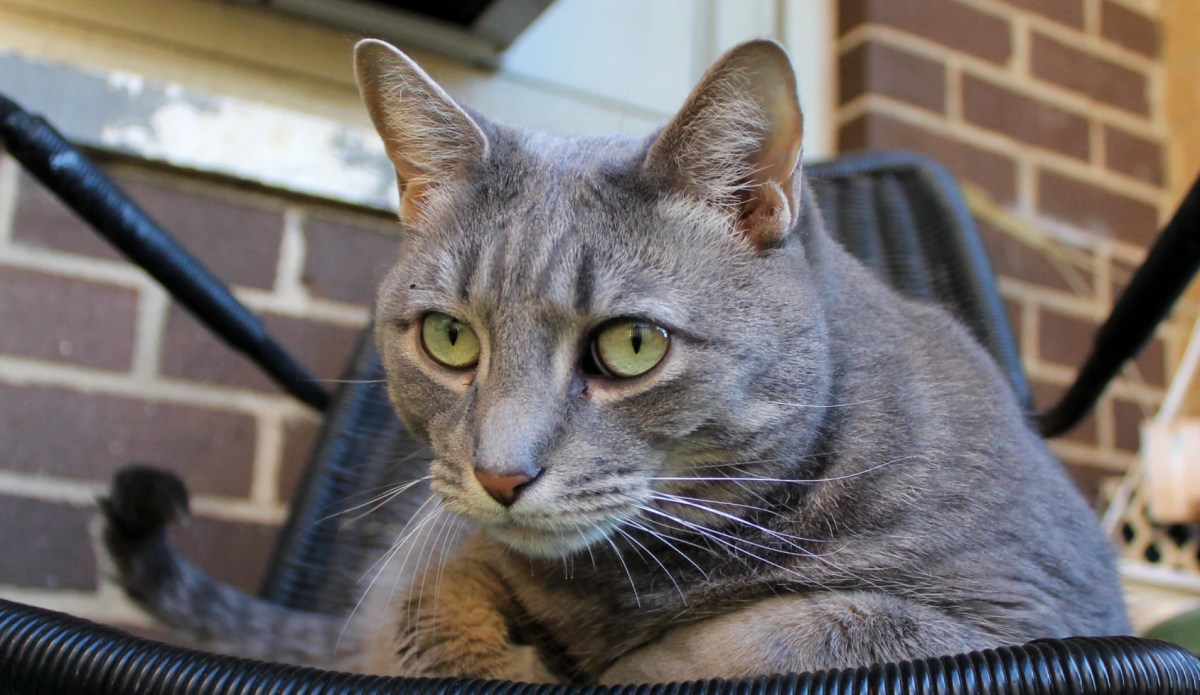
Does The Budster Love Me?

“Love is a strong word, human. I prefer ‘tolerate.’ On days when you anticipate my snack cravings before I verbalize them, you could maybe say I’m fond of you.”

Newsweek has an interesting interview with a cat behaviorist on the subject of whether cats love their humans.

Chantal Howard, a certified cat trainer with Feline Focus Training in Ottawa, told the magazine there are nine primary behaviors that indicate — or confirm — a house tiger loves his or her person. Most of these won’t be new to PITB readers, who are of course among the most cat-savvy people out there and have magnificent taste in cat blogs, but it’s still a handy way to ascertain how your feline overlord feels about you.

So how does Buddy do according to this checklist? Let’s see:

Headbutting: ✅ His Lordship is quite fond of headbutting me and favors me with dozens of headbutts throughout the day, ensuring his pheromones remain on me. You know, in case some other cat somehow comes wandering in and there’s a dispute about which furball owns me.
Kneading: ✅ Considering the fact that I’ve had to toss quite a few t-shirts because of claw rips, I’d say that’s a yes. At least he doesn’t knead my face anymore, as he liked to do when he was a kitten and would take his perch on my shoulder, nuzzle up to my neck and make biscuits against my beard.
Purring: ✅ Nine times out of 10, Buddy’s purr is inaudible, but it’s there. It’s a bit odd that such a talkative, loud cat barely makes a buzz. He likes to lay on my chest and purr up a storm while I rub his head and tell him he’s got admirers all over the world.
Chirping: ✅ Yes! In fact, chirps and trills make up a significant part of the Buddinese language. While meows can be positive, negative or demanding (“I can see the bottom of my bowl! This is an outrage, human!”), trills and chirps are always happy sounds.
Nipping: ✅ Unfortunately, yes.
Licking: ✅ He grooms my hair and my beard, and when I shave he licks my face, which is pretty gross.
Bringing Gifts: ❌ Negative. Then again, what kind of gifts can he bring me when he’s an indoor cat and doesn’t fully understand the concept of hunting?
Exposing Belly: ❌ Does he expose his belly? Yes. Does he feel comfortable enough to snooze in my lap with his belly exposed? Of course. Does he want me to give him belly rubs? No, he emphatically does not. The primordial pouch is not to be touched!
Tail Position: ✅ One of the most awesome things is the fact that Bud’s tail goes immediately into happy mode when I say “Hi, Bud!”, when I hold my hand out for a headbutt, and when I talk to him in general. His tail quivers with excitement when we play with the laser pointer or his favorite toy, and when he catches the first whiff of catnip.

So that’s 7 of 9, or 7 of 8 if we count gifts as N/A due to Bud’s hilarious ineptitude when it comes to even grasping the concept of hunting.

Bud has been known to throw up from excitement when I return from vacation, he often naps by the door when I go out, he talks to me constantly, and he’s rarely more than three or four feet away from me at any given time. All those things, plus our strong bond, have proven to me that he does love me, but it’s also nice to confirm it with a behaviorist’s criteria.

How does your cat perform on the checklist? Don’t forget to share your results in the comments.
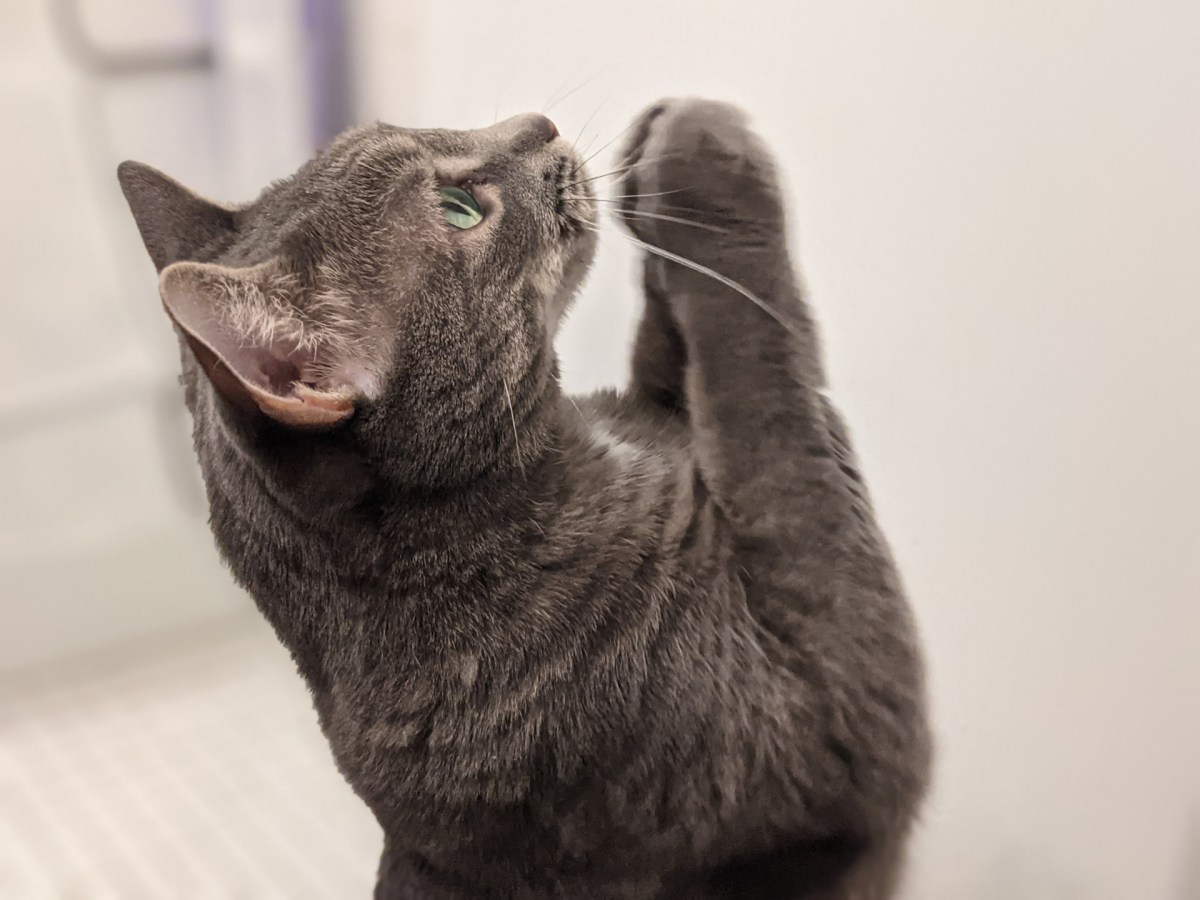
Why Do Some Cats Do The ‘Begging Paws’/’Praying’ Motion?

The begging/praying motion is one of the most unusual feline behaviors, but what does it mean, and why do some cats do it?

Readers of this blog know I love my cat dearly, but he’s also very weird.

Perhaps his strangest, most mysterious behavior is what I call his “praying” gesture: Buddy sits up on his hind legs, puts his front paws together and raises them up and down as if in fervent  prayer.

The behavior is extremely rare. Out of many millions of cat videos hosted on the internet, only a handful show cats engaging in it.

Here’s Buddy demonstrating his “prayer” form, set to De La Soul’s 1989 track, “Buddy”:

It’s seemingly random and impossible to predict, which is why it’s been so difficult for me to get a decent clip of Bud doing it. The above video is the third time I’ve managed to capture it, and only the second time I’ve been able to get a clear shot following an earlier capture:

ezgif-2-3cfbfed99a30

Some cats do it much more frequently, like the ginger tabby below whose humans have decided it’s an expression of gratitude toward them for giving him a forever home:

I’m confident in saying that, for my cat at least, it’s not an expression of gratitude or a form of begging. First, Bud doesn’t do gratitude, and he doesn’t beg so much as he demands. If he feels I’m not responding quickly enough to one of his directives, he goes right to screeching at me: “Snack now, human!” and so on.

Likewise in the video above, Charlie’s humans say the orange tabby does it “randomly.” They’ve even caught him making the motion on camera when no one else was around, which tracks with my own observations of my cat.

So why do cats do it?

“I’ve seen the ‘begging paws’ online and I wish I had a nice, clear explanation for you,” cat behaviorist Mikel Delgado told us.

Some cats, she noted, learn quickly that it elicits a response from their humans.

“My best guess at why cats continue to do this behavior is that it gets them attention,” Delgado said. “That however, does not explain why they do it in the first place.”

Nancy Meyer, a feline behavior consultant who volunteers for Tabby’s Place in New Jersey, said she believes cats in some of the videos are indeed signaling to their humans that they want something. For example, one clip shows a cat “begging” in front of a refrigerator — which his humans say he often does — while another shows a cat facing its reflection in a mirror while pressing its paws together and moving them up and down.

Some of those cats would be well aware that their behavior is a good way to get their humans’ attention, which could indeed lead to them getting what they want.

“It’s like a meow or gaze alteration; it’s a way of communicating that a cat wants to get something that’s currently out of reach,” Meyer told PITB. “The owners reward the cat for this behavior so the behavior perpetuates.”

In my own anecdotal experience I have witnessed Buddy engage in the behavior when he doesn’t realize he’s being observed, and he’s just as likely to break out in “prayer” while facing away from me. I suspect that because he does it so infrequently, he doesn’t realize it results in attention.

It’s unlikely we’ll get definitive answers unless the behavior becomes the focus of research, but that seems unlikely because of its rarity and its unpredictable nature.

Most of the time it appears benign, but Delgado says caretakers should pay close attention if their cats are engaging in it constantly.

“My only concern is that in some of these cats, the behavior appears almost compulsive – like they can’t/won’t stop,” she told PITB. “I also would recommend chatting with a veterinarian to see if they have any thoughts about whether this might indicate any physiological issue.”

Otherwise it appears benign, so if your kitty occasionally breaks out in “prayer,” enjoy the quirk — and good luck trying to get that elusive footage!