Three cats were pulled from a garbage conveyor in New Jersey, while another was pulled from a compactor in Russia.
May the people who threw these cats — an adult and three kittens — into trash bins experience spectacular karmic retribution for their inhumanity.
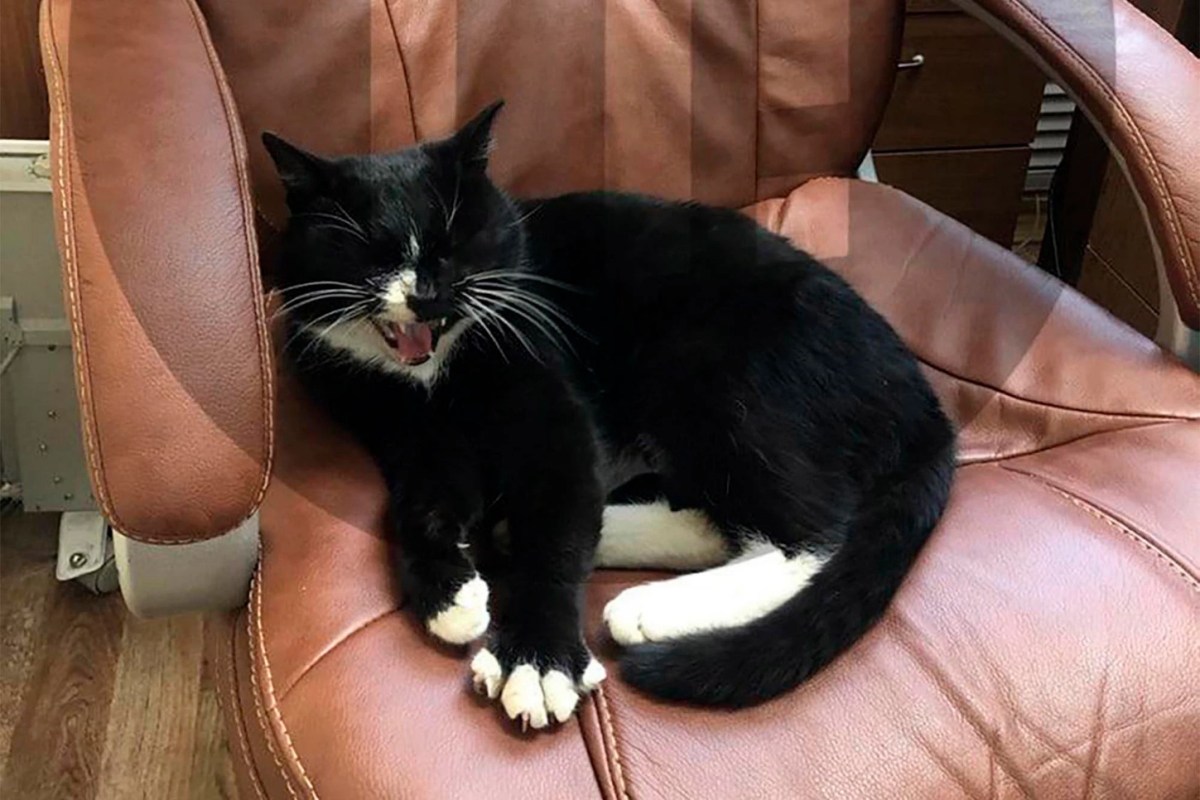
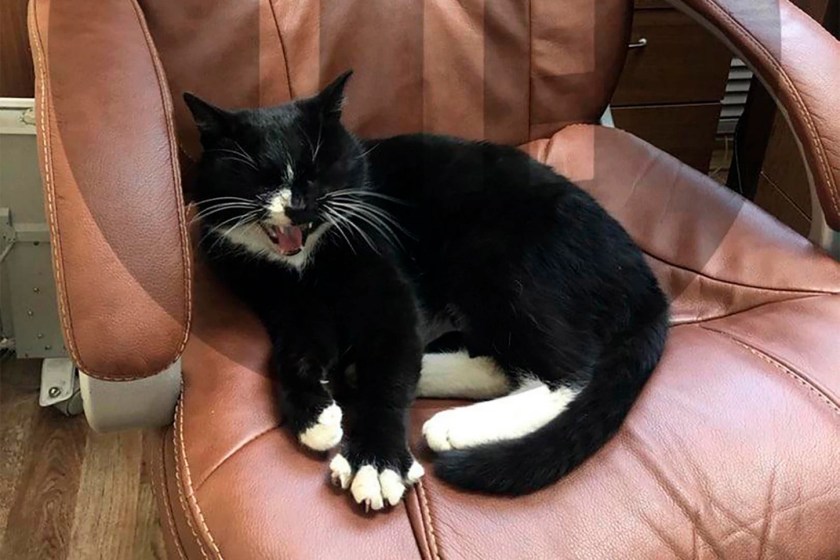
In Moscow, alert trash-sorters pulled a terrified tuxedo cat from a conveyor belt seconds before it would have been crushed on Dec. 21.
“The cat wasn’t meowing and the bag wasn’t moving,” municipal waste employee Mikhail Tukash told local television. “I needed to cut the bag to screen it for metals. I was just doing my job.”
In an eerily similar incident, three kittens were pulled from a conveyor belt in New Jersey on Dec. 17, just before they would have been killed in the threshing metal teeth of a glass crusher, the local CBS News affiliate reported.
Someone had disposed of the kittens in a backpack. This time the bag was moving, prompting Burlington Recycling Plant employee Barrie Donaldson to stop the conveyor.
“I looked at it real closely and they were moving,” Donaldson told the station. “And I was like, ‘Oh wow, there is something in this bag.”
Co-worker Ashley Bush, who was with Donaldson when he rescued the kittens, adopted one of the three baby cats and named her Precious.
“I looked to my right and I see all the teeth going,” Bush said. “That would have been horrendous.”
“Right away, I said, ‘I gotta have her,'” Bush added.
The other two were adopted by a local family. Police in Burlington are asking the public for tips to help them track down the person who disposed of the kittens.
As for the lucky Russian feline, local government officials in Ulyanovsk are holding a public contest to name the fluffster, who will also be named an honorary wildlife minister in the government’s efforts to tell the public not to toss animals in the garbage.
This cat, who has yet to be named, was rescued from a garbage processing plant in Russia’s Ulyanovsk region.
Bowing to public pressure, a state agency in California said it will no longer allow its employees to shoot cats in a misguided attempt at protecting local wildlife.
State employees in California have agreed to temporarily stop shooting cats after stories about their actions prompted an overwhelming backlash.
Employees with the East Bay Regional Park District have shot at least 18 cats this year, including a dozen in the past month. A spokesman for the state agency, which manages park land in nine California counties and major cities like San Francisco, claimed the cats were a threat to birds in a marshland not far from a business park where the felines lived.
But the East Bay Regional Park District has repeatedly lied about the cats’ fates, failed to work with local rescues and shelters, and refused to honor public records requests about the cat-killing program, according to animal rights advocates and local media.
Dave Mason, a spokesman for the East Bay Regional Park District, described the situation as “an out-of-control feral cat colony of at least 30 cats.” By contrast, staffers at local rescues, as well as the people who managed the colony, said most of the cats were strays, some were former pets, and they rarely entered the nearby protected marshlands.
“[East Bay Regional Park District] came out most likely at night, and shot and killed the cats we had cared for. We spent countless hours getting the majority of these cats fixed. Countless hours!” one local caretaker fumed on Facebook. “These cats were vaccinated, microchipped and healthy. We pulled kittens out when they presented themselves. We pulled adult cats out on many occasions. Some of which we believe were dumped there. We were constantly doing work there.”
Mason painted a very different picture of the situation.
“The Park District appreciates all animal life but is required by law to protect threatened and endangered wildlife living in District parklands,” he told SFGate. “It is imperative that the public understands that feral cats are not part of a healthy eco-system and feeding them only serves to put endangered wildlife at risk.”
Willow, one of the strays in the eliminated cat colony, is missing. Colony caretakers believe she was shot by state employees.
Now the agency’s supervisory board has pulled the plug on killing cats, according to the local ABC affiliate, after receiving a flood of angry messages and phone calls about the policy. Dee Rosario, the board’s incoming president, told KGO she plans to have the practice ended permanently.
Board members also promised the public will get answers after the EBRPD ignored public records requests from journalists at KGO.
“The board will be asking some tough questions, and we want to get a report of exactly what happened,” said Ellen Corbett, who sits on the board. “And that’s why we’ve asked for an investigation.”
It’s worth noting there’s no evidence to support culling cats as an effective way to protect birds. Several studies, however, indicate TNR (trap, neuter, return) programs do have a measurable impact on local cat populations, and thus limit the number of birds and small mammals killed by free-roaming cats. The majority of animal welfare specialists — as well as groups like the SPCA and Humane Society — urge people to keep their pet cats indoors, and to get them spayed or neutered.
Initially, employees of the state agency claimed they’d trapped the cats and placed them in local shelters, colony caretaker Cecelia Theis said. But after staffers at local shelters said the East Bay Regional Park District did not drop off any cats, and a local TV news station began calling, the agency backtracked and admitted a team of “conservationists” shot the cats.
“There is a pile of bags and a hole in the fence near where I fed these babies every night. Those jerks hunted them and killed them,” Theis wrote on Facebook.
Later she told SFGate: “I’m looking out at the park crying their names.”
A Change.org petition urging the EBRPD to “honor its values” and cease shooting cats had accumulated almost 5,000 signatures in three days.
Cat advocates were particularly incensed that the EBRPD did not notify them before making the decision to kill the cats and didn’t reach out to local shelters for help finding a better solution.
“While we understand and fully support the need to safeguard protected wildlife and habitats from nonnative and predatory species, this tragic outcome did not need to happen,” said John Lipp, director of the Friends of Alameda Animal Shelter. His group and other local rescues “could have worked together to humanely rehome or relocate these cats had we been notified in advance.”
Despite the pledge to stop killing cats, advocates aren’t taking any more chances. They’ve trapped the remaining strays. Some will be put in foster homes, and four will be available for adoption in the near future.
Istanbul is famous for its cats. We spoke to Basak Bugay, an Istanbul native and cat lover who cares for strays in her neighborhood.
It wouldn’t be hyperbole to call Istanbul a city for cats.
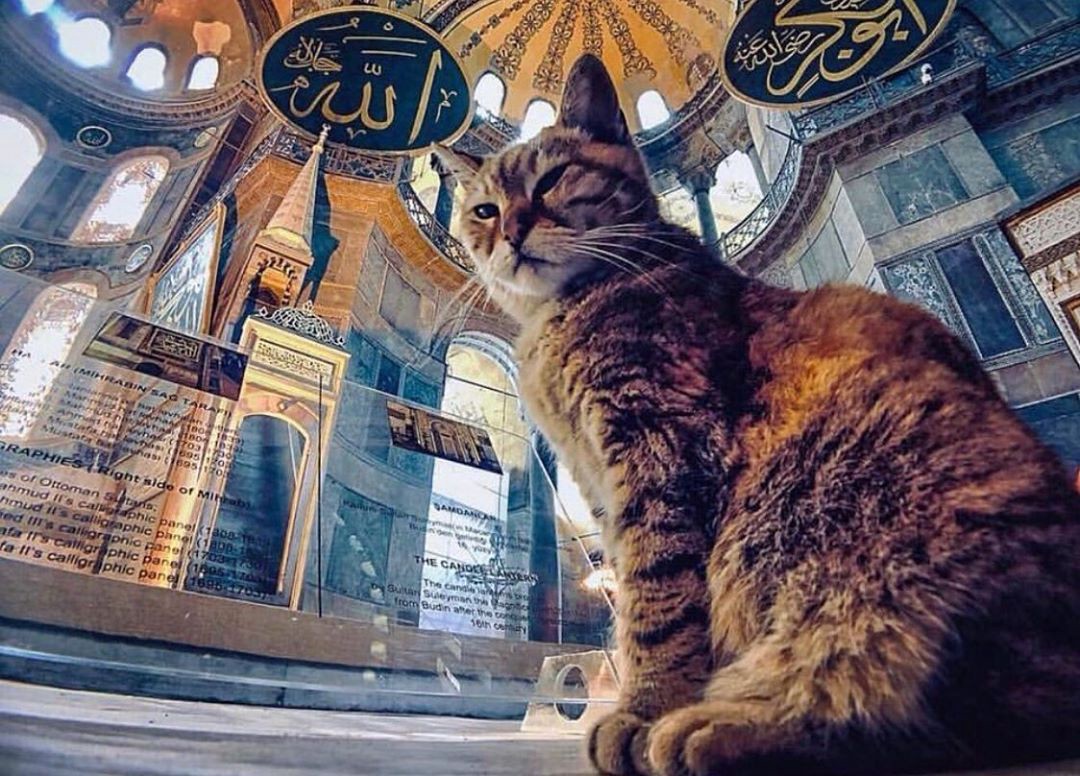
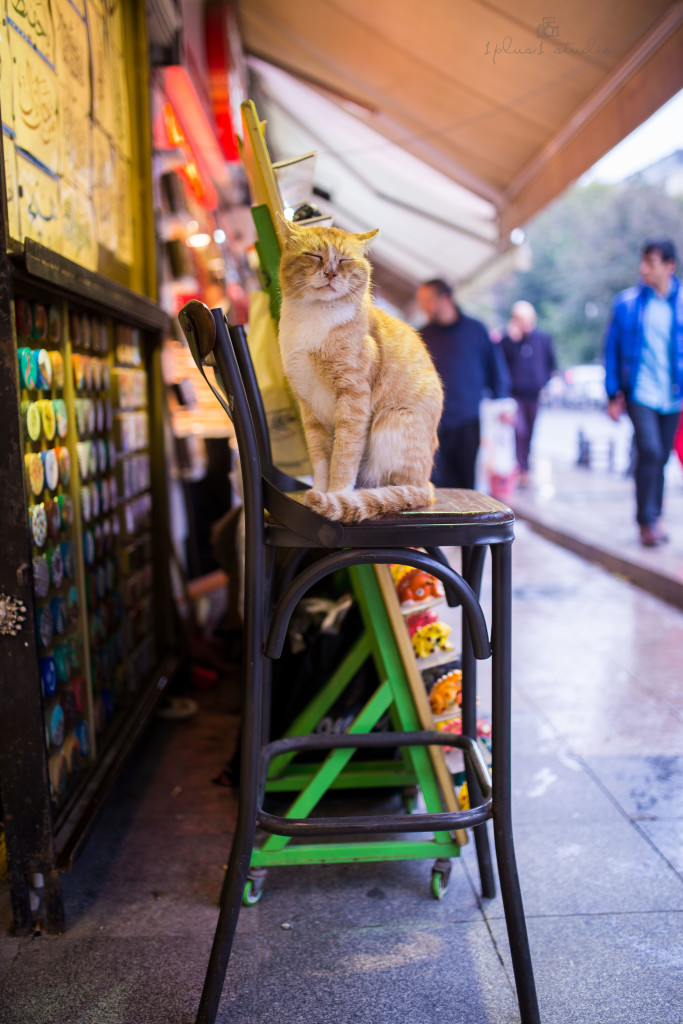
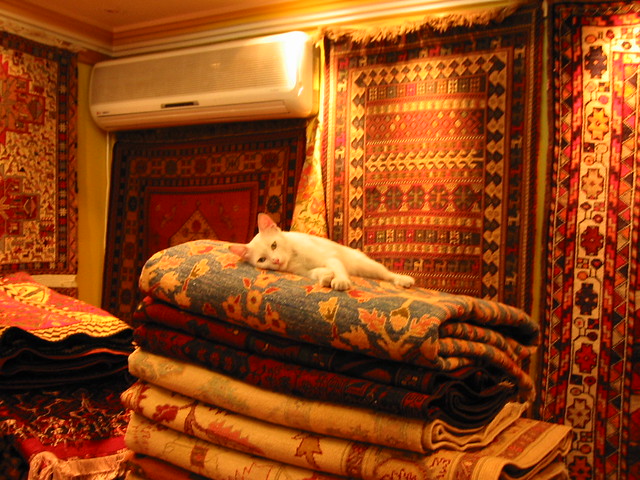
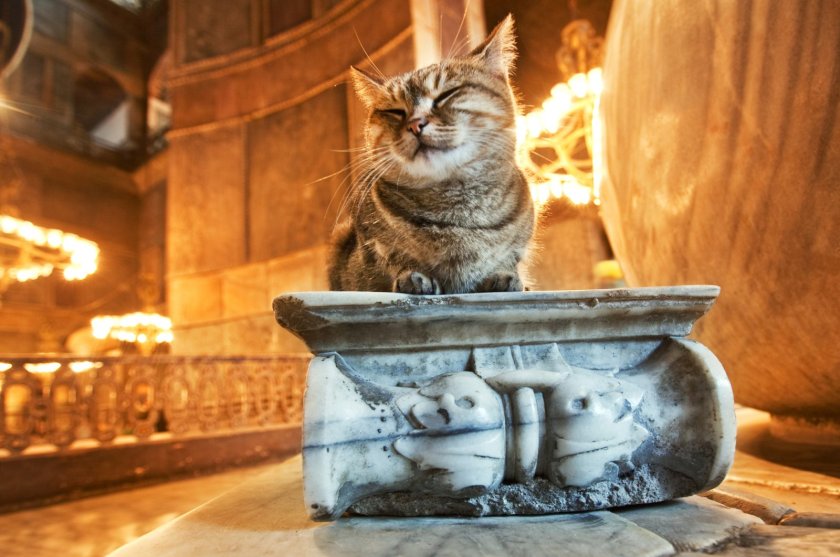
Felines are everywhere in this metropolis of 16 million, from the beloved — and famous — cats of the Hagia Sophia, to the shop cats lazing away their afternoons in bookstores and cafes, to neighborhood strays who enjoy the protection and care of entire communities.
Europe’s largest city is an example to the rest of the world, a vision of what life looks like when virtually everyone respects animals and pitches in to care for them.
We were fortunate enough to catch up with Başak Bugay, an Istanbul native who loves cats and cares for a small pride of strays in addition to her own beloved cat.
Thanks for joining us, Başak! Can you tell us a little bit about you, what you do for a living and whether you’ve got cats of your own?
I’m a 41-year-old visual artist living and working in Istanbul. Though I was born here, like the majority of Istanbulites, I have my roots in different regions of Anatolia. It’s not really easy to survive as an artist in Turkey, but that is the path I chose.
I live with [my cat] Minnosh in our home! I am so grateful for her presence and feel blessed to be chosen by her. She is one of the kindest souls I have ever met and yet a great inspiration as a survivor. It may sound funny but somehow she reminds me of my beloved grandmother who was a very strong woman… Minnosh (Turkish for “little darling”) came into my life years ago when she was a stray. She would spend the day at my studio and would leave with me at the end of the day.
Sometimes, especially during cold winters, she would follow me to my apartment and spend the night there. Strays are usually very anxious if they don’t have access to go out and it is not easy (in my opinion also not fair) to force them to stay inside. So she was not into being a house cat until the day she had a car accident. She suffered a broken leg and tail. After several surgeries at the vet, I took her home. It’s been 3 years now and she shows no more interest in going outside. She is 11 or 12 years old, having a happy, peaceful retirement at home.
For readers who may not be aware of Istanbul and the special place cats have there, can you tell us a little bit about the city and its relationship with cats?
It has always been a cat city and it is even more today. Istanbul is a big metropolis of more than 16 million inhabitants. As someone who was born and grew up in Istanbul, there are some quarters even I’ve never visited.
The life, culture and social habits vary from neighborhood to neighborhood; whether those neighborhoods are upper or lower class, secular or conservative, strays are everywhere and people take care of them.
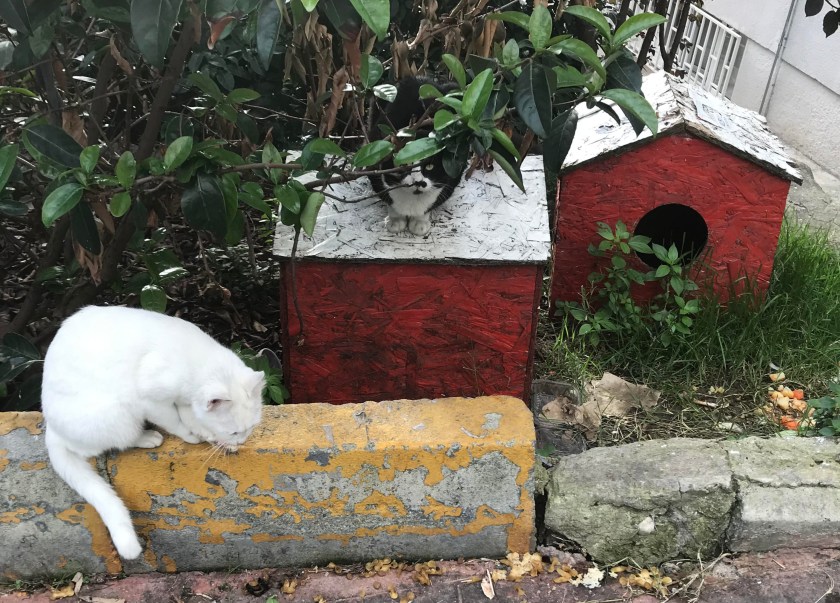
Street cats hang out near shelters built for them by people in the neighborhood. Credit: Başak Bugay
For the last few years almost all shops, markets, cafes and even shopping malls or hotels have started to put food cans and shelters in front of their door and some even host them inside. As a good example, a few years ago during snowy winter days, a fashion store opened its doors to stray cats and dogs for them to pass the cold nights inside. Best advertisement ever!
People in Istanbul have the common manner to take care of the animals, punish the ones who treat them badly and reward those who do good things. In my quarter you may see several cat houses and some of them are made by real estate agencies with their logo on the top! In addition, local authorities have special units for strays: They have a 24/7 emergency service, they do sterilization and bring them back to their neighborhood, they vaccinate stray dogs and replace cat/dog houses on the streets. It’s not all rainbows and flowers, but I think things are improving.
Is caring for cats an unwritten rule among the people of Istanbul? Is it embedded in the culture?
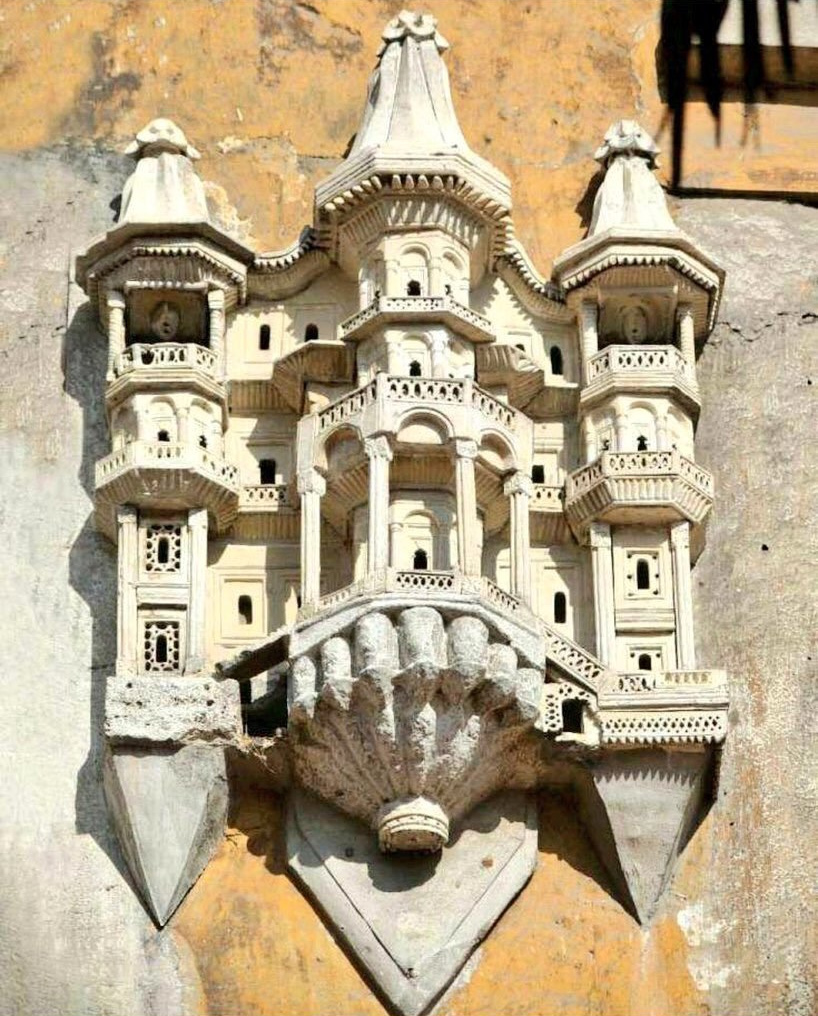
Not only the cats but also the dogs and the birds. Although it varies from region to region, it looks like this has been part of our culture for a long time. An important element of Ottoman architecture, for example, is bird shelters on building facades.
A restored bird shelter built on the facade of an Ottoman-era building.
Beginning in the 20th century the city was famous for its dogs. Sultan Mahmud II, who could be considered as a dictator of his time, initiated some strict restrictions, in an attempt to westernize the country and institute so-called civilization reforms. One of his decrees was to deport a thousand stray dogs to an isolated island off Istanbul. Despite being a totalitarian dictator, Mahmud II bent to the will of the people who wanted the dogs back, so they were brought back.
People usually say that the love for cats among Turkish people finds its roots in Islam, but it cannot be the only reason, because dogs who are considered “dirty” according to religion are well protected too. Recently the municipality of Konya, which is the most conservative city of Turkey, started a new program to rehabilitate dogs and place them in new homes, with a monthly stipend for caretaking expenses.
With regard to cats, it is said that the story of cats’ domestication had started in Anatolia as the most ancient land where agriculture was developed. That could be another reason why we are a whale for the cats. However I was surprised to see the absence of cats in the east of Turkey; there were really very few even in Van which is famous for its cats. Istanbul and probably the west coast of Turkey has the majority of the cat population in the whole country.
Recently there was a viral video of a man pushing a cart through the street in Istanbul when he came upon a cat drinking from rainwater collected in a puddle in the street. The man waited patiently for the cat to finish drinking, then went on his way. Is that a common scene there? Have you seen any simple acts of kindness toward cats?
Although there are some people who aren’t so nice to cats, yes, this kind of kindness is common and I see it all the time, not only in Istanbul but almost all around in Turkey. There is this story about prophet Mohammed: he wanted to get up but a cat was sleeping on the sleeve of his cardigan. Instead of waking the cat up, he cut his sleeve off. That kind of story might have a cultural impact and influence the behavior of Muslims.
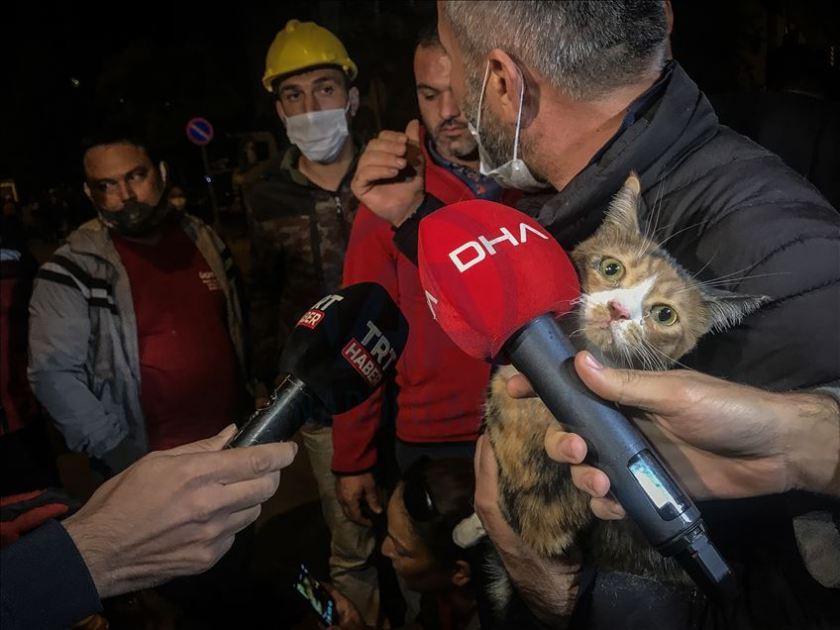
A few weeks ago Izmir (a city of 4.3 million on Turkey’s Aegean coast) had a terrible earthquake, which caused around 100 dead and 1,000 wounded. Rescue teams worked hard to save the animals as much as they did for people. They kept the rescued cats in a shelter, looked for their humans or tried to find new homes for them.
A rescue worker in Izmir holds a cat who was rescued from the rubble more than 30 hours after the 6.6-magnitude earthquake. /Hurriyet Daily News
You care for three friendly-looking cats who clearly know and trust you. How’d you get to know them and earn their trust? Do they just hang out at your home?
It is my studio, actually. I have a direct entry from the street so it allows me to be closer to the strays in the neighborhood. I knew their mother and would feed her too. They were all wild, and wouldn’t let me get closer or touch them. Once their mother abandoned them, they didn’t leave the area and I kept feeding them.
Sometimes I’d leave the door open and they’d come in. That’s how they eventually understood that I was harmless. One of them vanished; probably someone in the neighborhood adopted her. One shows no sign of interest in bonding with me. He is very distant but at least doesn’t run away when I go closer. However the other starts to let me pet him and enjoys it very much. I call him Osman.
Those of us living outside Turkey have seen photos of cats casually walking wherever they please: Entering office buildings, shops, homes, government offices. Do cats have free reign in Istanbul? Does anyone ever stop them from going where they please?
Well of course there must be some places they cannot go in but if it’s a private business, such as a restaurant or a shop, the owners would fear to get on the wrong side of people if they don’t get along with the cats. So even if they don’t like it, it’s kind of a must for such a place to welcome the strays.
On second thought, yes, I think they are welcomed almost everywhere. You would see them sitting, lying, sleeping in very awkward places and nobody would disturb them. I don’t know if you have seen the video of the cat messing with the Istanbul Symphony Orchestra players and stayed on the stage during the concert.
Although people of Turkey are quite polarized in terms of almost everything, when it is about animals, they unite and show a common reaction. At least no one objects when it comes to fighting for animal rights.
To be honest I couldn’t live in a city where the cats are absent. I feel very isolated and alone when I go out of Turkey, especially in European cities.
Since there are so many street cats in Istanbul — an estimated 125,000 — what about house cats? Is it common for the people of Istanbul to keep cats as house pets? Are those cats kept indoors or do they wander the streets too?
It is more common now than the past to have pets in the house and they are mostly cats rather than dogs. The old generation also had the culture to take care of the animals, but only if they were out of the house. Whereas many of them lived in stand-alone houses with gardens, most of us now live in apartments. Unfortunately, it is not possible for a house cat to go in and out [of an apartment]. I, for example, know only one house cat who goes around in my neighborhood.
Why do you love cats?
I grew up as an only child and was quite introverted. This is probably why I have always been passionate about bonding and getting to know the animals, although my parents were old fashioned and wouldn’t allow me to adopt one.
We would spend the summer holidays on an island of Istanbul, where our house was in the heart of the forest and surrounded by feral cats. I would chase them all day long but most wouldn’t allow me to get closer. My passion for observing their behaviors made me admire them. I probably understand and know cats better than I do humans. In my opinion they are the strongest animals in terms of evolution with their ability to adapt to humanity without compromising their nature.
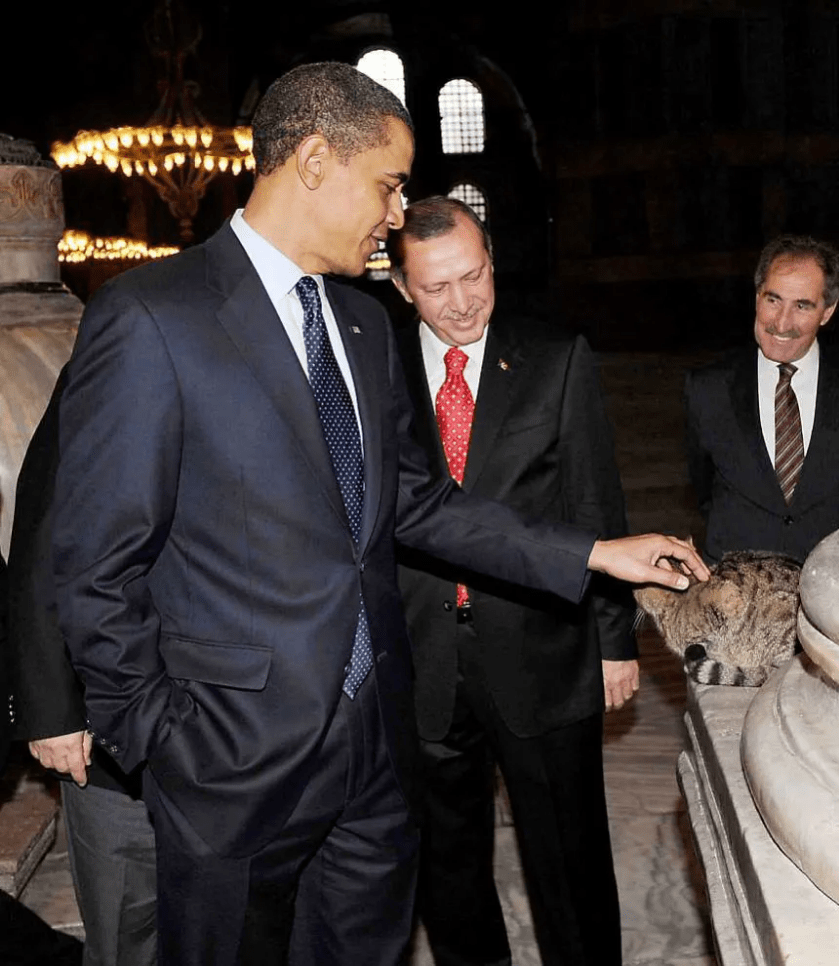
The late Gli, most famous resident cat of the Hagia Sophia. Gli was a magnet for tourists, the subject of thousands of photos, and was famously petted by former U.S. President Barack Obama during his state visit to Turkey.Former President Barack Obama pets Gli.
And finally, is there anything I didn’t ask, but should have? Is there anything you’d like to tell our readers about you, your city or the cats there?
I mostly talked about the good sides of it, but that doesn’t mean everything is perfect. The biggest problem is, we still don’t have a proper animal rights law in Turkey. Animal abusers or killers exist and they don’t get sentenced for their crime but only pay a small account of money.
If the animal has an owner, it’s considered as damage to property and has a more strict penalty. This has to change immediately. Also there are some epidemics among stray cats such as Coronavirus and feline HIV, which are very hard to treat. The good thing is the vets are usually very helpful. Some do voluntary service or work for a considerable discount. Yet no animal would be left alone in case of an accident or a disease, at least not in my neighborhood.
Thanks to Başak for taking the time to answer our questions, and in a foreign language, no less. I only speak two: English and Buddinese, and the latter isn’t so much a language as it’s a set of 283 different ways to say, “Feed me!” Here in the US, we could learn a lot from the people of Istanbul, their love of cats and their community effort to care for them.
A small act of cruelty in an industry that has visited immeasurable cruelties on big cats.
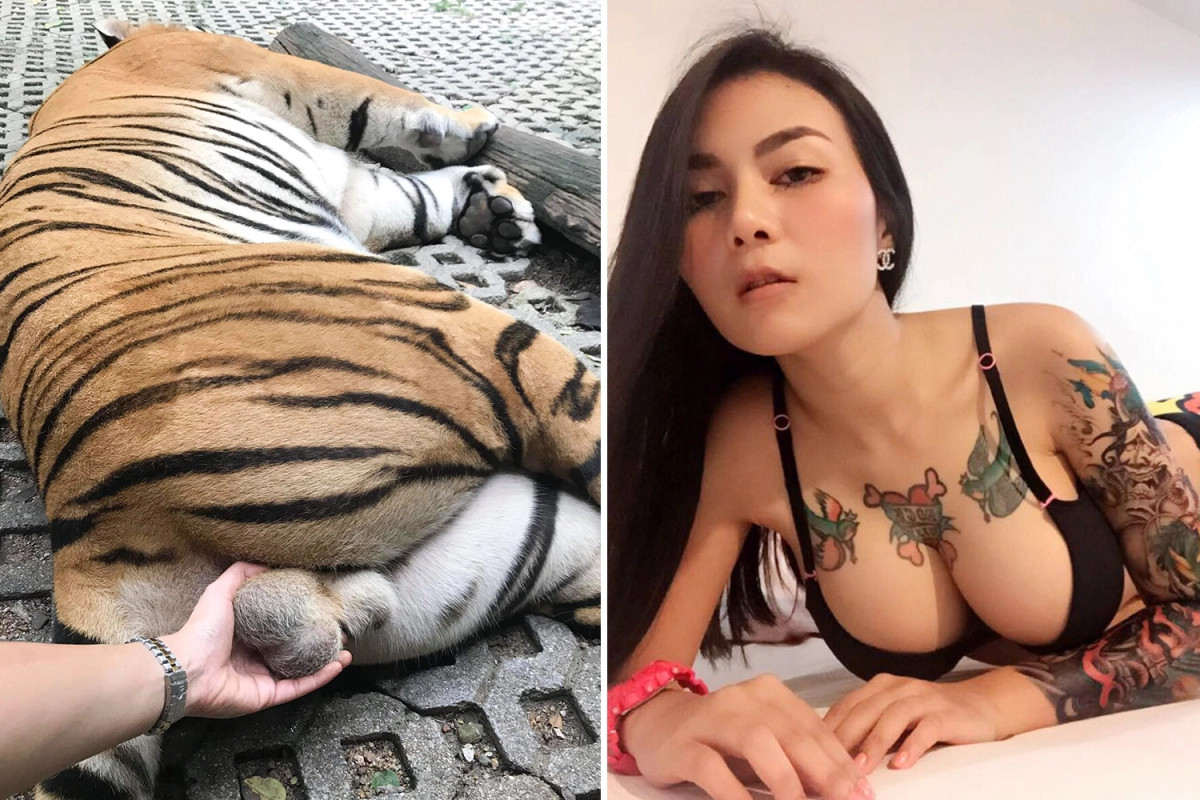
Look at the balls on this one!
A woman from Thailand apparently decided that caging, beating and sedating tigers for selfies wasn’t enough mistreatment for Earth’s critically endangered apex predators. You can always add more insult, just a little icing on the “We Destroyed Your Entire Species” cake, by grabbing a handful of tiger testicles and mean-mugging for a selfie.
Of course the reason the tourist, named Waraschaya Akkarachaiyapas (also referred to as Khun Waraschaya in some media reports), was able to enter the tiger enclosure and pose with the tigers in the first place is because the keepers at Tiger Kingdom zoo in Thailand sedate the animals until they can barely yawn, rendering them incapable of defending their personal space or doing anything other than laying down as tourist after tourist touches them and poses for selfies.
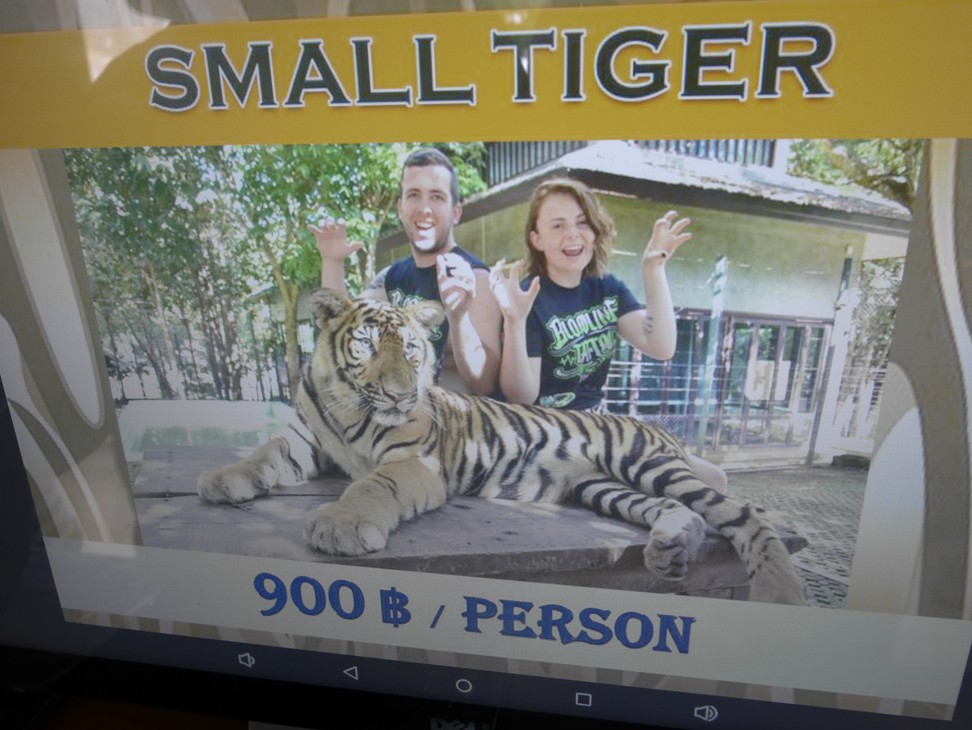
Tiger Kingdom was at the forefront of the so-called “Disneyfied” “zoo experience,” in which the operators rake in millions by breeding tiger cubs like an assembly line and charging tourists to interact and pose for photo with the animals.
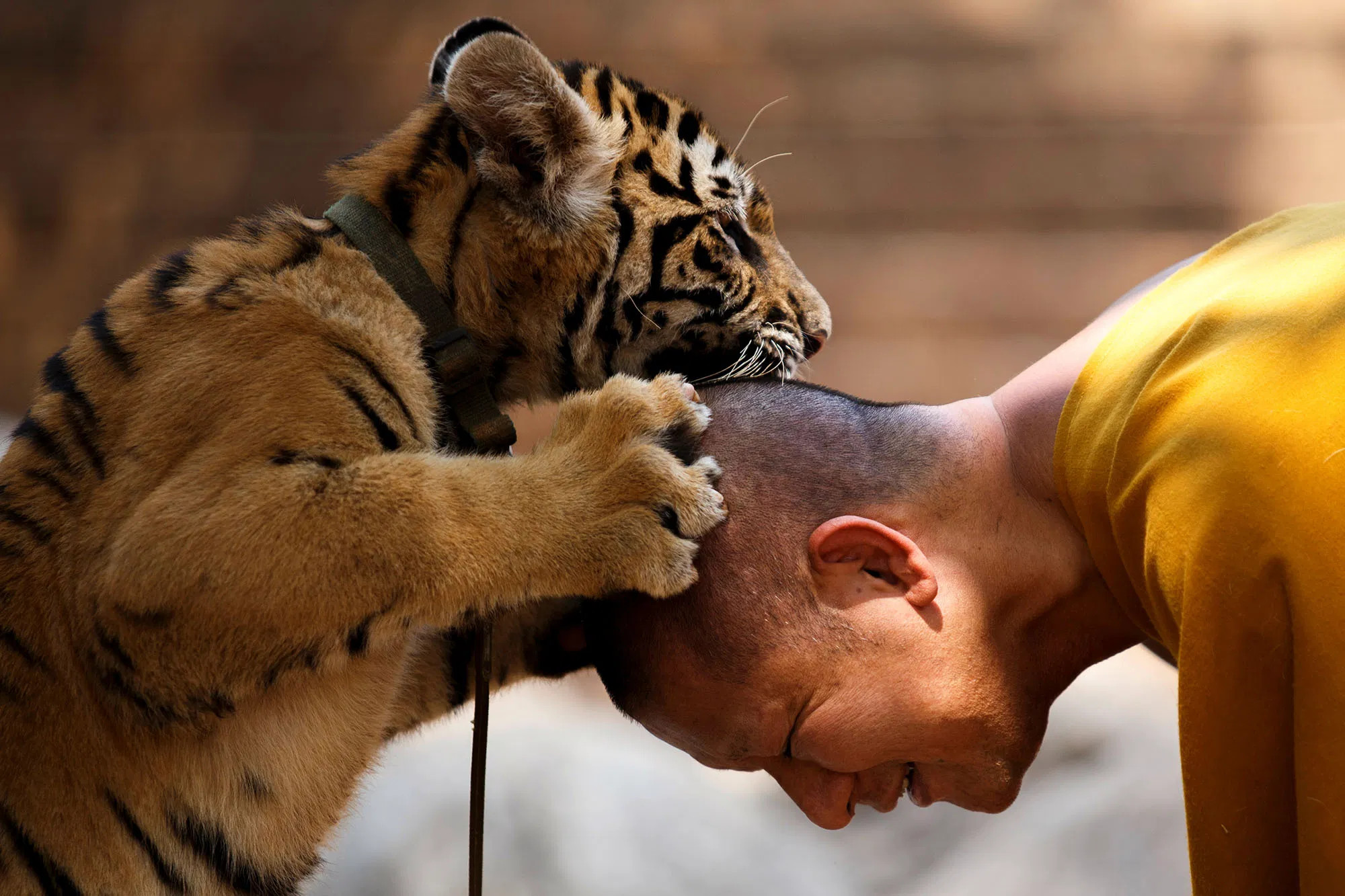
The tourists are told comforting lies: Employees of Tiger Kingdom dress like Buddhist monks, spout platitudes about being one with nature, and claim their “humble” operation began when one kindly monk took in an orphaned cub and founded a sanctuary decades ago.
Tourists are told that kindly monks founded a sanctuary after taking in an orphaned tiger cub.
The reason the tigers are so docile, the tourists are told, is because the monks hand-raise them, socializing them with humans from a young age. (Paging Siegfried and Roy, as well as Joe Exotic’s two former employees who lost limbs to hand-reared tigers!)
The comforting fiction allows tourists to justify what they’re doing: When an acquaintance of mine proudly changed her social media profile photo to a shot of herself hugging an adult tiger, she acted as if she was shocked by the suggestion that the tigers were sedated. No, she explained, you don’t understand! These tigers were hand-raised by the monks from the time they were cubs! That’s why they love spending 12 hours a day having their tails pulled and getting mounted by tourists who want to ride them like horses. They love it!
It takes only a few seconds to refute what we’ll gently call that misconception: Articles abound of former employees and conservation experts describing horrific conditions for the animals at Tiger Kingdom. (It’s not the only “zoo” that thrives on selling big cat interactions in Thailand: When the infamous “Tiger Mountain” attraction was raided by authorities in 2016, they found the remains of more than 60 tiger cubs, tiger pelts, and “around 1,500 tiger skin amulets, plus other trinkets apparently made of tiger teeth.”)
The cubs, who would normally spend at least two years with their mothers, are taken away when they’re infants so Tiger Kingdom’s employees can hand-raise them, and not with the care and good intent they claim: The operators want the cubs to be accustomed to being handled and passed around so they don’t protest too much when tourists manhandle them.
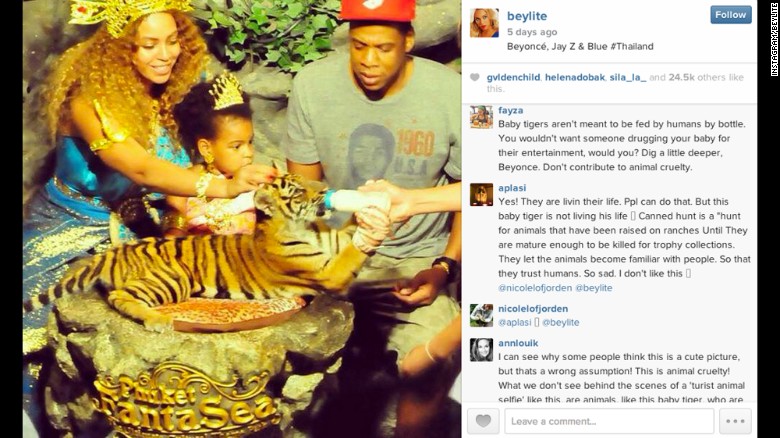
The cubs are big money-makers, and tourists will pay a premium to feed them from milk bottles. The baby tigers are fed and fed until they can’t drink anymore, then they’re fed some more, former employees say. The bottle-feeding only stops when the day’s over and there are no more tourists forking over an additional $15 to get “adorable” photos of themselves with the babies.
That’s also the age when the cubs are introduced to the bamboo stick, the primary tool for keeping them in line. A cub who doesn’t want to leave its cage for another day of manhandling and force-feeding is smacked on the nose with a bamboo stick until it complies.
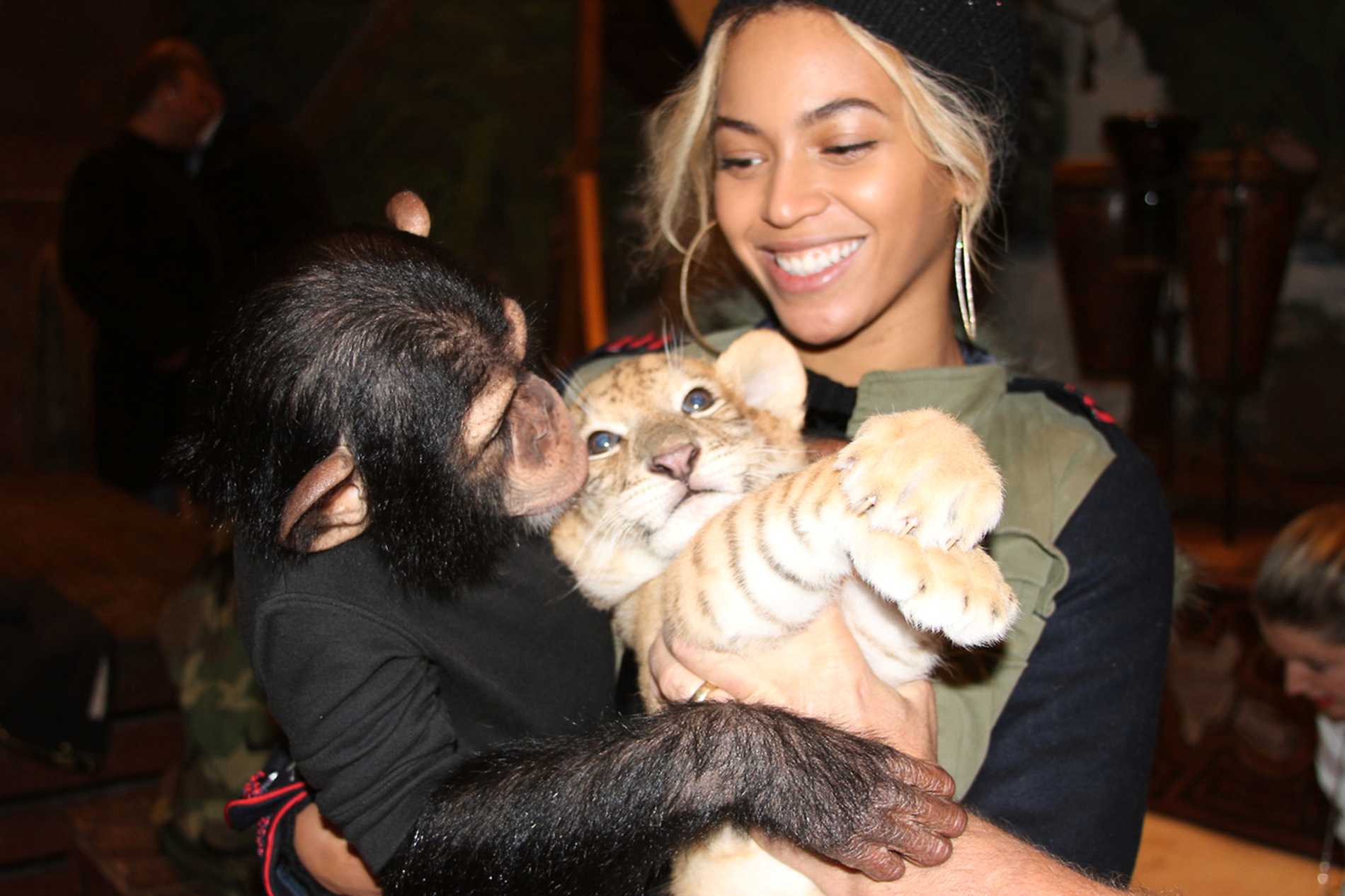
Tiger attractions like the infamous one at Thailand’s Tiger Kingdom have popped up all around the world, with interest fueled by enthusiastic reviews from celebrities like Beyoncé, who shared photos of her visit to an American tiger park with her millions of Instagram followers.
If Queen Bey says it’s okay, then it must be okay. Okay?
Queen Bey says it’s okay to mess with tiger cubs and chimp babies, so it must be okay!Queen Bey says it’s okay!
Life as a cub at Tiger Kingdom is a walk in the park compared to adulthood. Most of the adults are confined in cages 24 hours a day and are only let out on busy days when the operation swells with visitors who want tiger selfies. (Tiger selfies are extraordinarily popular with men who use them on dating site profiles, and Buddy’s home state of New York went so far as to ban tiger selfies because of their prevalence.)
When you consider the context, it’s really not surprising when someone like Waraschaya Akkarachaiyapas feels perfectly comfortable literally molesting the animals for her amusement.
We’ve poached this species to the brink of extinction and destroyed its habitat. We make rugs of their pelts, mount their taxidermied heads to our walls, sell their claws and teeth as trinkets, and grind their bones into dust for use in elixirs that allegedly cure ailments like baldness and erectile disfunction, according to ridiculous millennia-old folk medicine systems. (Having exhausted their supply of tigers to slaughter for traditional Chinese “medicine,” the Chinese have turned to poaching the Amazon’s jaguars to fuel their insatiable appetite for big cat parts. Jaguar poaching has skyrocketed “200 fold” in the last five years to fuel Chinese demand for animal parts.)
In that context, literally molesting a helpless animal is a drop in the ocean of abuse, decimation and the destruction of the dignity of these amazing animals. We’re supposed to be the intelligent species on this planet, the wise caretakers of the only world that we know of brimming with life. We are failing miserably.
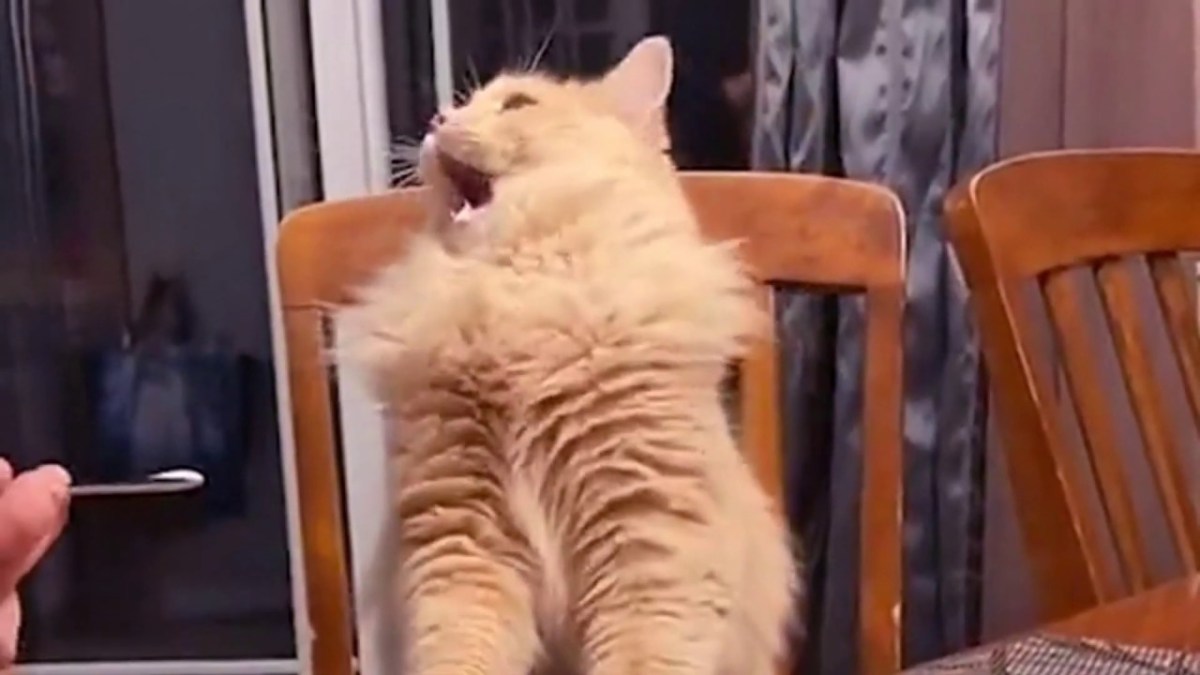
Is that brain freeze, as alleged by quite a few people online, or a dramatic reaction to something unlike Mr. Kitty has never tasted before?
It’s a tiny amount for a tiny creature for sure, but the reaction could be kitty’s way of saying “Dayummm! That is the tastiest yums I’ve ever tasted in the history of tasting yums!!”
Apparently this is a thing, a cat video genre unto itself. After watching the below video, I concede it does look like brain freeze. As you can see, however, most of the cats immediately go back for more:
One thing we do know is most cats are lactose intolerant, so dairy products in general are not good for them. (Kittens should nurse from their mothers, and orphaned kittens should be given kitten-specific formula, which can be found in pet stores and most grocery stores. Milk from cows or other animals doesn’t sit well with their digestive systems.)
Giving your cat ice cream probably isn’t a good idea unless it’s dairy-free and a rare treat. I’ve never given ice cream to my cat, and giving it to him for a cheap laugh would be a betrayal of trust.



 Pain In The Bud