Airline Introduces ‘Fat Tax’: Why Pet Parents Should Care

Credited to an “activist investor,” one airline has redoubled efforts to squeeze money out of travelers — and people traveling with pets could be next.

Travelers are calling it a “fat tax.”

The anecdotes, which have been popping up all over social media platforms this week, are similar: flyers show up to the airport, a counter person looks them up and down, then declares the flyer will have to purchase a second seat or give up their spot on the plane.

That this is happening on Southwest Airlines, long praised as the most considerate toward “passengers of size,” is even more surprising. SF Gate attributes the dramatic shift in policy, which is apparently just one of many, to an “activist investor.”

It doesn’t say who that “activist investor” is, but it’s difficult to imagine a person wealthy enough to own a significant portion of an airline developing a personal vendetta after bad experiences in crowded coach. This is something different, driven by the desire to extract more money from travelers with rent-seeking behavior. That sort of thing, an “activist investor” certainly would do. Boosting profits without creating any value has become the calling card of America’s financial ruling class.

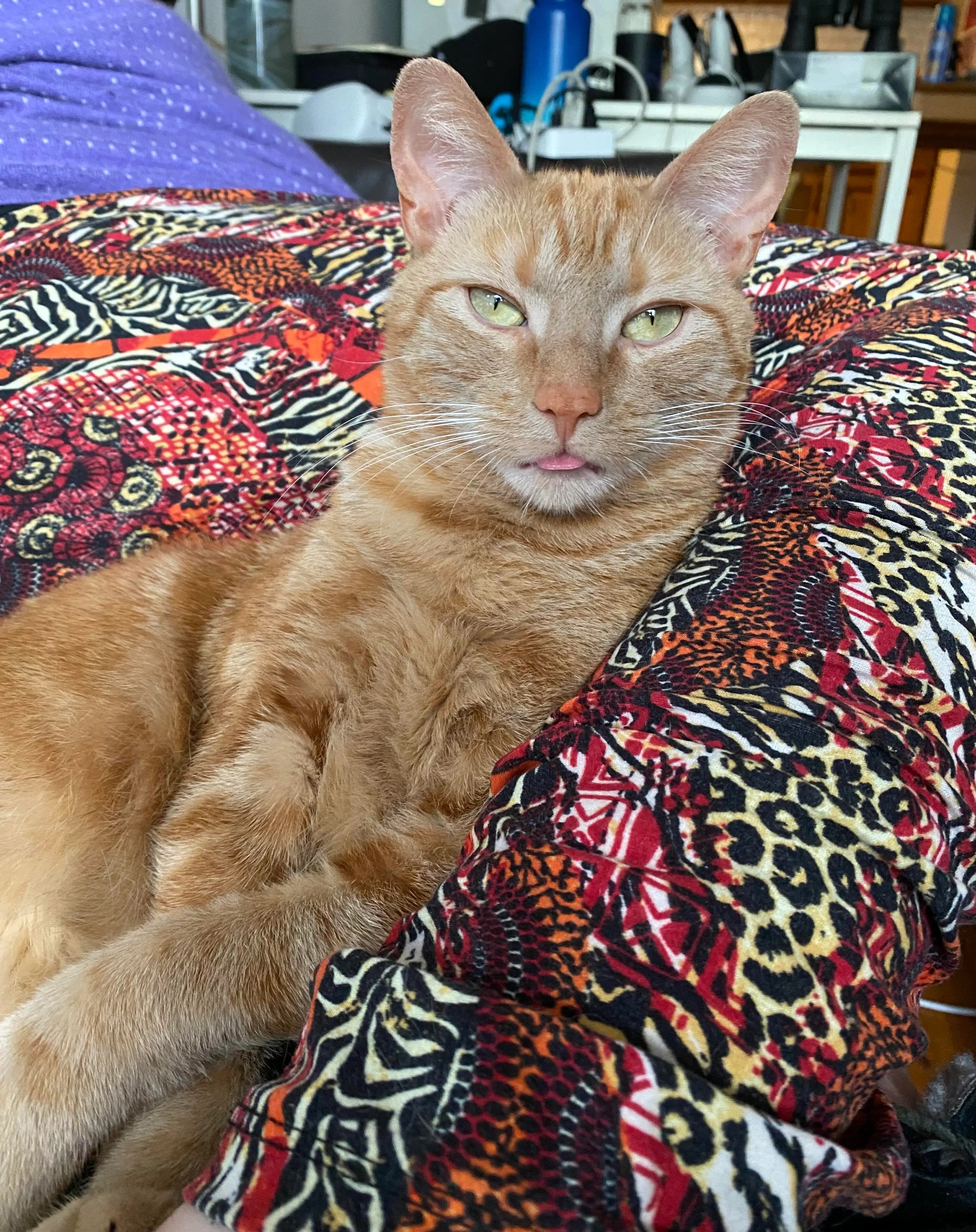
Which is why it’s likely this problem was created by the airlines in the first place, and why pet caretakers should be wary. (And no, not because felines like my Bud are a little too fond of the yums.)

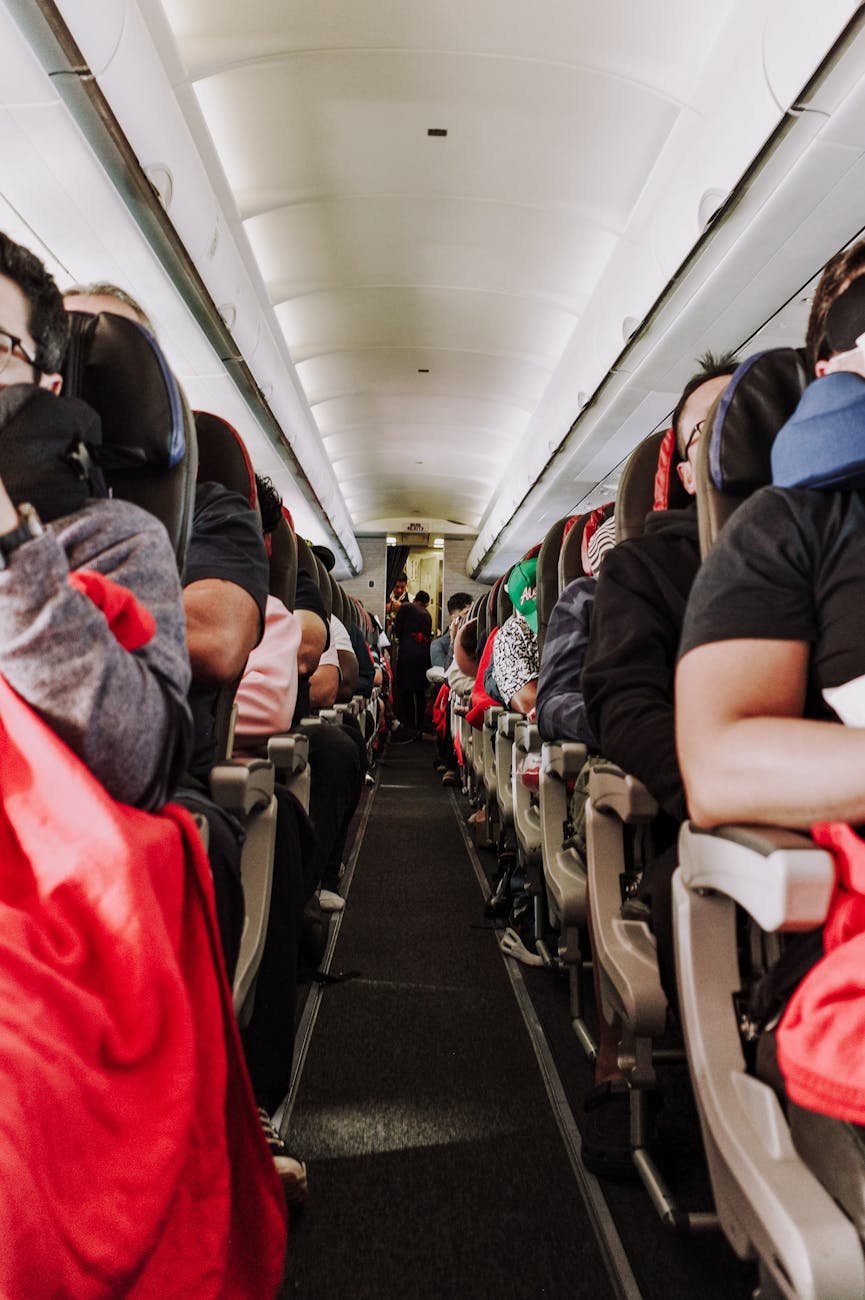
Airlines are always looking for ways to add new seats, and every year brings new “innovations” to reclaim space centimeter by centimeter so the airlines can sell extra tickets.
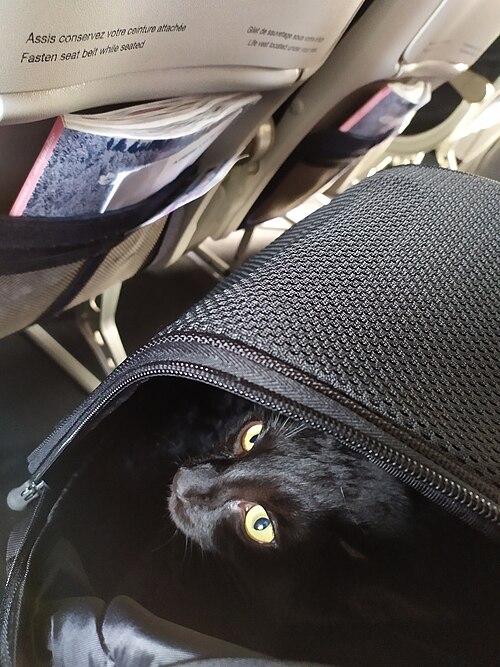
Credit: Anthony Baratier/Wikimedia Commons

We’ve long since become cattle. I’m 5’10” and I’ve been on flights in which my knees barely fit between the seat in front of me and my own. I always wonder: what would I do if I were taller? How the heck does someone, say, 6’2″ sit in one of these seats?

The effort to squeeze more money from travelers isn’t limited to the new “fat tax” either. From “premium economy” upsells that don’t yield more space to ever-shrinking carry-on limits, airlines continue to find new routes into our wallets, making us pay more for the same product.

And that’s why those of us with pets should be worried. It’s a short leap from a “fat tax” to a “cat tax.”
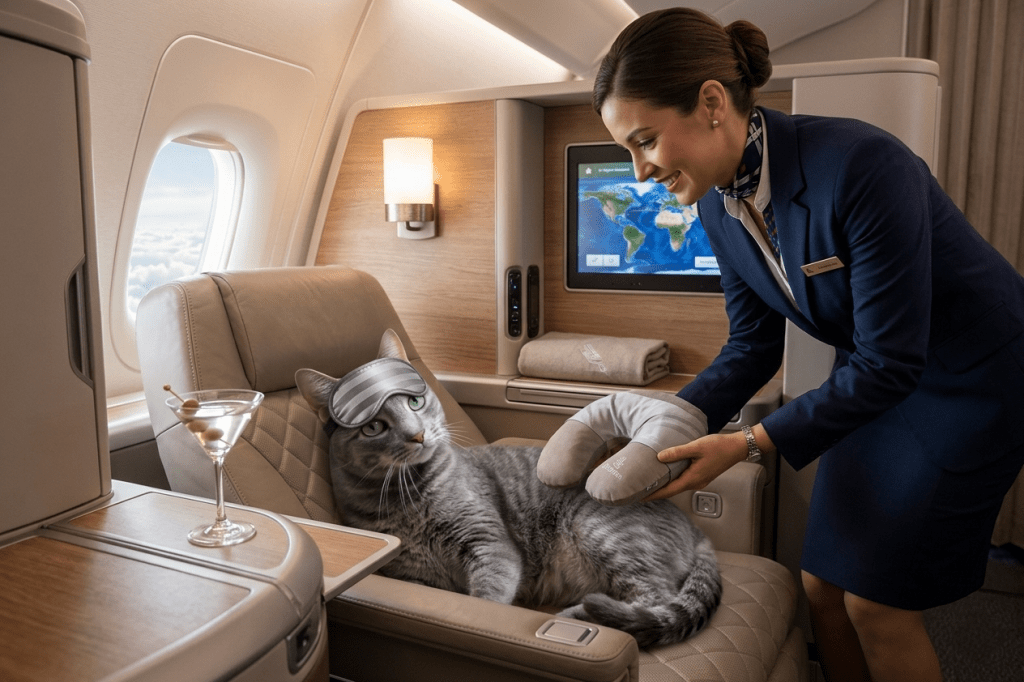
“You’ll be in coach while I take my place in first class, human.”

Most airlines treat people traveling with pets as a nuisance to begin with, and if they haven’t already, Southwest’s “activist investor” is likely to find new ways to squeeze people traveling with cats and dogs. (In my head, I imagine this “activist investor” as a vaguely Stephen Milleresque figure, with twitchy eyes betraying the rage bubbling below a calm exterior. “Let them sit elbow to elbow as they cradle their animals,” he laughs from his first-class seat. “Muahahaha!”)

The fact that this “fat tax” is arbitrary should scare all of us. If the whim of a counter clerk is what determines whether someone has to buy an extra seat, then who’s to say the same clerks won’t look at a cat, declare “He looks like a pain in the ass,” and demand some additional, ludicrously-titled fee?

“That comes to an additional $276.13 with your companion animal convenience surcharge. Thank you for flying with us!”

It just keeps getting better and better, doesn’t it?
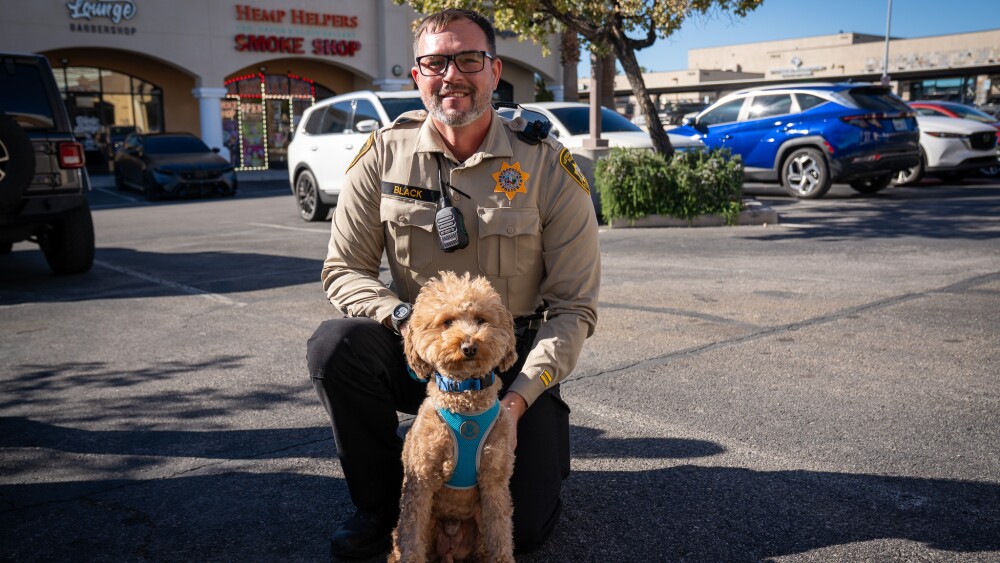
Woman Abandons Dog At Airport To Avoid Inconvenience, Cop Takes The Pooch In

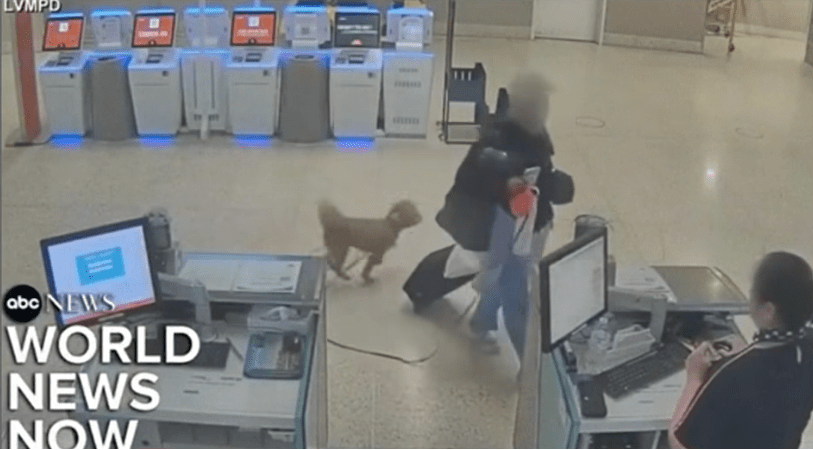
The woman left her dog tied to a post near the departure gate, telling police she didn’t want to miss her flight after the airline told her she didn’t have the right paperwork to bring her dog in the cabin as a service animal.

A dog who was abandoned by his owner at a Las Vegas airport has a happy ending to his ordeal after he was adopted by one of the police officers who responded to the initial abandonment call.

The sequence of events began on Feb. 2 at Harry Reid International Airport in Las Vegas. A woman was trying to board with her goldendoodle — a medium-size breed that is a cross between a golden retriever and a poodle — when an airline employee told her she needed paperwork proving the pooch was a service animal. Emotional support animals don’t need paperwork and aren’t certified by any agency, public or private, but service dogs must be trained and certified.

Instead of trying to work the problem out, the woman abandoned her dog, leaving him tied to a post near the departure gate. The airline’s staff called police and when officers arrived, they found the woman waiting to board her flight.

The woman pictured with Jet Blue the dog before abandoning him at the airport. Still image from a video provided by Las Vegas PD.

She was insistent she’d done nothing wrong, according to Las Vegas police, and said she could find the dog again after returning home because he has a tracking device. That excuse didn’t fly, and neither did the woman– officers pulled her off the departure line and arrested her for abandoning an animal.

In a positive twist of fate, one of the officers who responded that day had been looking to adopt a dog of that same breed and had already applied and been cleared by a local shelter. He was just waiting for the right dog.

The officer, Skeeter Black, adopted the abandoned good boy and named him Jet Blue after the airline. Jet Blue joined his new family on Sunday after undergoing the usual veterinary checks, quarantine and a 10-day mandatory hold with animal control.

“We’re very excited to add him to our family,” Black said when animal control handed three-year-old Jet Blue off to him. “We’re gonna enjoy him. He’s gonna be very much loved.”

As for the Las Vegas Police Department, the brass issued an exasperated statement reminding people that animals are living beings with their own feelings.

“We can’t believe we have to say this,” police wrote in a post, “but please don’t abandon your dog at the airport — or anywhere else.”

Header image via Las Vegas Metro Police.

Woman Fined $130 After Her Cat Meowed ‘Too Loudly’ On Train To Paris

The Europeans aren’t messing around when it comes to noise on public transportation, and a loud pet can cost you.

Note to self: Never take Buddy on a French train, unless I want to be out a few hundred bucks by the time I reach my destination.

That’s my takeaway after coming across this story about a woman who was fined €110 (about $130 in ‘Merican dollars) by the French National Railway Company after another passenger complained that her cat was causing “acute tensions” by vocalizing.

Naturally, the passenger and the railroad have two different versions of events. Camille, who was identified only by her first name, said she’d purchased a ticket (about $8) for her cat, Monet, and had the feline in a carrier for the trip from Vannes, Brittany, to Paris, per railroad rules.

Monet “meowed a bit at the start” at the beginning of the journey, Camille admitted, but wasn’t excessively loud.

Buddy the Cat, a gray tabby cat, with a synthwave background.
“Loud? I’m merely expressing my displeasure with the level of service around here!”

Railroad operators said there were multiple complaints, not just one, and claimed a conductor asked Camille and her boyfriend, Pierre, to switch to a mostly-empty car as a compromise with other passengers.

A conductor ticketed Camille when she declined the “simple and common sense solution,” according to French broadcaster BFM.

I’ve joked in the past about sedating the Budster before flights so the other passengers won’t toss him out at 40,000 feet, but there’s truth at the heart of it: Buddy is a naturally chatty cat, he’s got strong opinions, and he doesn’t hesitate to share them with anyone.

Of course you don’t want your companion animal to create a scene or make other passengers uncomfortable. I still wince when ai think about the woman who forced fellow passengers to endure the smell, proximity and potential defecation of her “emotional support horse,” and when people began abusing the privilege of going places with emotional support animals (emotional support alligator, anyone?), it was only a matter of time before companies that operate common spaces — be they in a fuselage, a baseball stadium or a grocery store — tightened the rules to avoid conflict.

Still, unless the cat was wailing, or Camille really did refuse to switch seats, a $130 fine is excessive.

Just something to think about for those of us who have plans to travel with our cats.

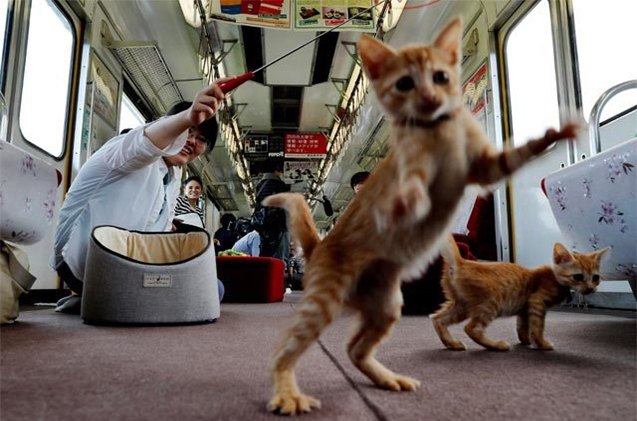
Header image of a cat cafe train car in Japan, credit: Wikimedia Commons

TSA Baggage Scan Reveals Kitty Stowaway In Luggage

Smells loves boxes just as much as any other cat, but his affinity for tight spaces almost landed him in Florida, a long way from his home in Brooklyn.

It was a tuft of orange hair poking out from the zipper of a carry-on suitcase that first alerted a TSA agent that something weird was going on.

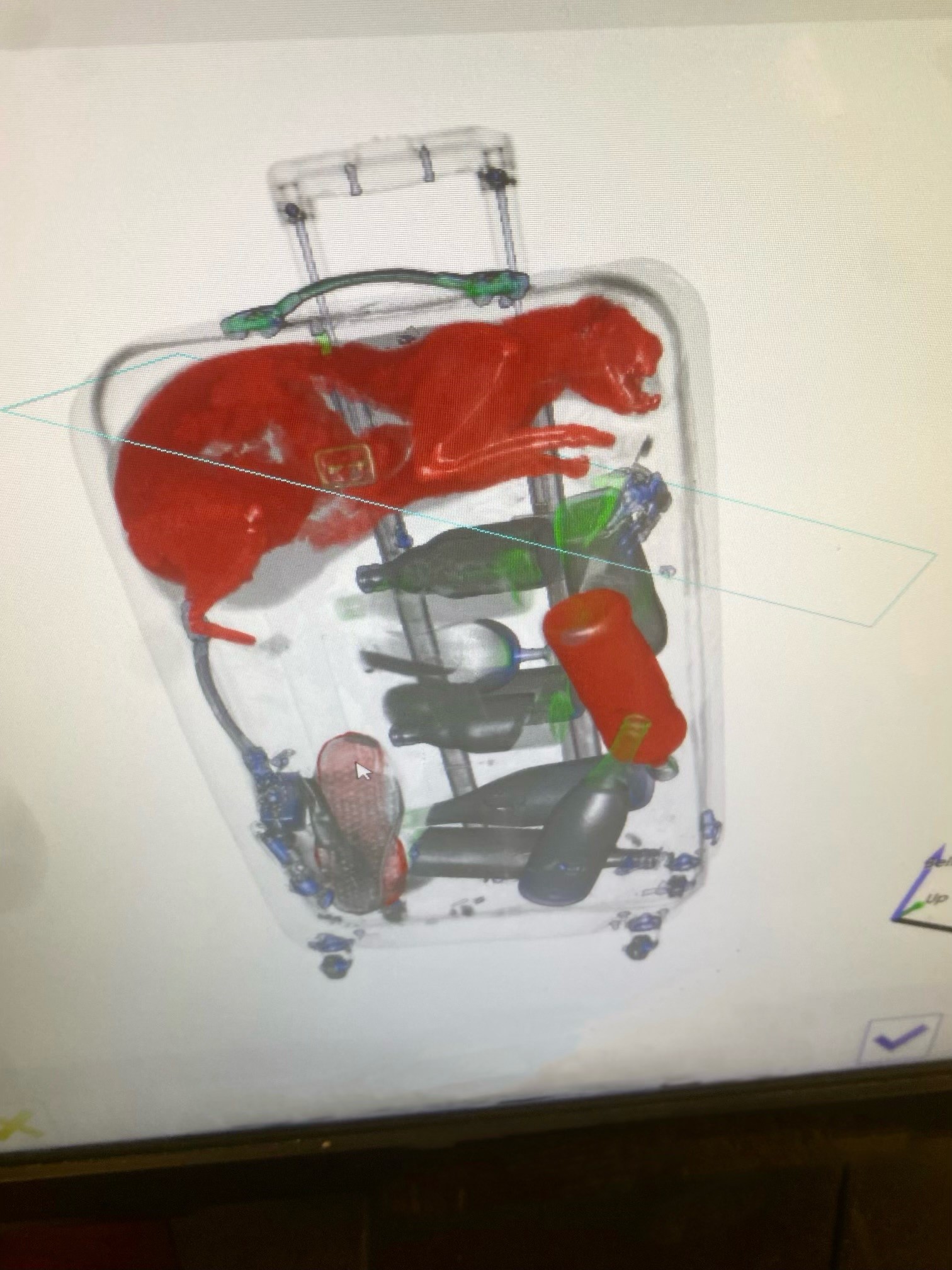
The agent, who was processing a traveler departing from New York’s JFK airport on Tuesday morning, then consulted an x-ray scan, confirming the suitcase contained some unusual cargo — a ginger tabby cat tucked in among toiletries, snug and napping comfortably in the enclosed space.

X-Ray TSA scan
An x-ray scan revealed Smells tucked snugly into the suitcase. Credit: TSA

tsasmellycat
The incriminatory tuft of orange hair that gave away Smells’ hiding spot. Credit: TSA

As for the traveler, the cat didn’t belong to him, nor was he aware kitty had climbed inside. It turned out he had been a house guest of friends living in Brooklyn, and the cat named Smells had slipped into the luggage before he left for home, for what is a suitcase if not just another box?

The TSA confirmed the story with the cat’s owner before letting the traveler board his Florida-bound flight.

“An officer called and asked if I wanted to press charges” said Alix, Smells’ 37-year-old human. “He wanted to know if there was any reason [the passenger] was trying to steal my cat and go to Florida.”

Smells the Cat
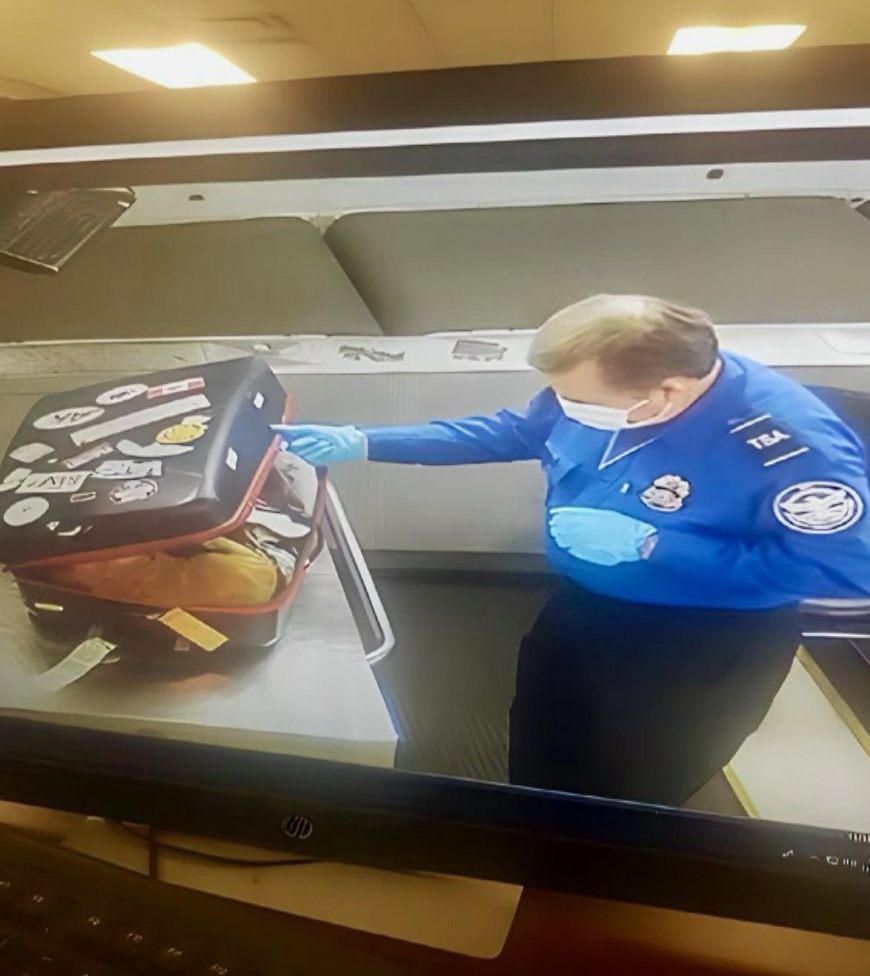
A TSA security agent opens the suitcase to reveal its unauthorized would-be stowaway. Credit: TSA

After Alix assured the TSA agent that Smells “really likes to check out boxes” and definitely would have climbed in on his own, she hired a driver to retrieve the kitty, who was unperturbed by the adventure.

“I was worried he’d be freaked out but he wasn’t even meowing on the way back,” Alix told the New York Post. “I went to give him some extra treats and he acted like nothing had happened.”

As for the TSA — which often deals with more serious finds like guns and drugs secreted into passengers’ luggage — the saga of Smells was a welcome change that gave them a good story and some laughs.

“On the bright side,” TSA spokesman Lisa Farbstein wrote on Twitter, “the cat’s out of the bag and safely back home.”

Smells the Cat
Smells the cat. Credit: His humans

“I was worried he’d be freaked out but he wasn’t even meowing on the way back,” she said. “I went to give him some extra treats and he acted like nothing had happened.”

Breastfeeding A Cat On An Airplane Pt. III

“She’s not showing you her baby because it’s a cat. A feline! A house pet!”

I’m just going to present this here without comment, because nothing I can say can possibly make this any better than it is. If you’re unfamiliar with the original saga of breastfeeding cats at 40,000 feet, read our previous post here.

Watch the four parts from top to bottom in order:

And to think, I was ready to write another post about how Americans are all going crazy on planes. 🙂