Pro Tip: Don’t Use Your Gun’s Laser Sight To Play With Your Cat

A woman tried to use a handgun’s laser sight as a toy for her cat, with predictably bad consequences.

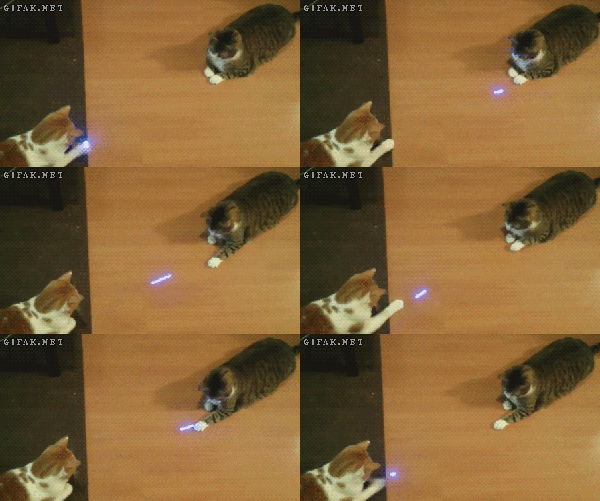
A Wisconsin woman narrowly missed out on a Darwin Award and sent her friend to the hospital with a gunshot wound after she used a pistol’s laser sight to play with her cat — while drunk.

The 19-year-old woman was in her apartment in Kenosha, WI, on Tuesday afternoon with a 21-year-old male friend. The two of them downed some shots in the span of about an hour when the woman had a flash of inspiration and picked up her friend’s handgun, using it as a makeshift laser pointer.

She was waving the gun and encouraging kitty to chase it when she unintentionally fired the weapon, hitting her friend in the thigh, according to the Associated Press. She called 911 while he sought help from a next-door neighbor, who helped him tie off the wound with a tourniquet to slow the bleeding.

Cops and paramedics took the 21-year-old victim to a local hospital. So far authorities haven’t said anything about his condition, but there is one indication he may have not been seriously injured, according to Fox affiliate WITI in Milwaukee:

“[The shooter] provided a statement to police, saying she was handling the gun when it “accidentally went off” and said she apologized to [the victim], who told her ‘it was OK.'”

The cat was not hurt when the gun went off, thankfully, although it’s likely kitty bolted and dived under a bed in record time.

While the accidental shooter and her accidental victim have forgiven each other, both of them are now dealing with legal troubles.

The victim was out on bail pending another case, when he was slapped with nine counts of first-degree recklessly endangering safety while armed in June 2020. That charge is a felony carrying a 12-year maximum sentence under Wisconsin state law. According to the bail agreement, he wasn’t supposed to possess or carry weapons, and police said they’re planning to charge him for the bail violation.

The woman was charged with one count of “injury by negligent handling of a dangerous weapon,” a Class I felony in Wisconsin. If she’s convicted, she could face a sentence of up to 3 1/2 years in prison and a $10,000 fine.

Of Claw Sheaths And Sky Raisins

No, the “sky raisins” don’t hurt your cat.

First I’d like to thank everyone who chimed in to reassure me that little Buddy lost his claw sheath, not his entire claw.

I’d never seen such a complete piece of claw come off like that, which is what got me worried. Buddy has the best readers who not only tell him he’s a handsome cat, but look out for his safety too!

The little dude appears just fine and there’s no indication of any injury on his paws.

Which brings us to our next subject: The sudden glut of “sky raisins” for pets living within the cicada “Brood X” territory.

Billions of the large, winged insects have emerged from the ground in Pennsylvania, Illinois, Indiana, Delaware and parts of Michigan, Virginia, West Virginia, Tennessee and northern Georgia. The current brood, dubbed Brood X, is near the end of its 17-year life cycle, and the cicada’s songs are at their most deafening this summer.

Screenshot 2021-06-15 at 05-34-19 Active Periodical Cicada Broods of the United States - CicadaBroodStaticMap pdf
Source: US Forest Service.

As cats and dogs are wont to do, they go after the larger-than-usual insects, and for them, a successful swat out of the air means a tasty treat.

That has lots of people wondering: Is eating cicadas harmful to my pet?

The answer is no, according to veterinarians who spoke to the New York Times, NPR and other press outlets in recent days.

There’s no truth to the rumors that a fungal toxin which affects cicadas can do any harm to cats and dogs, veterinarians say, and at worst, your pet might throw up the exoskeletons if they’ve snacked on a few of the relatively large insects.

“Most pets who ingest a few cicadas will only develop mild stomach upset,” Tina Wismer, a veterinarian with the ASPCA’s Poison Control Center, told the Times.

That said, veterinarians also caution that you shouldn’t let your furry friend gorge on “nature’s snacks.” One or even a few won’t cause any harm, but making an entire meal of them could make your little buddy sick.

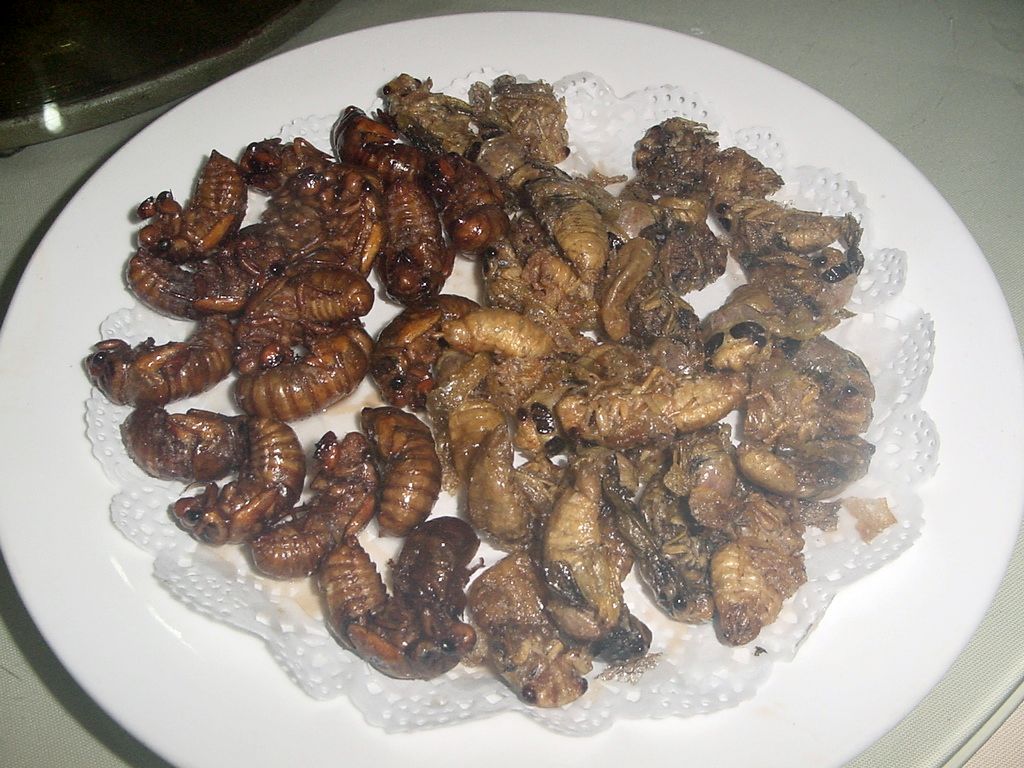
Speaking of meals, lest we judge our four-legged pals for their nasty eating habits, it’s worth nothing that plenty of our own species eat cicadas too. Yuck.

Deepfried_cicada
Source: Wikimedia Commons

Oregon Cat Is An Accomplished Kleptomaniac

Esme the cat once stole 11 masks in one day.

Esme the cat loves bringing gifts back to her human, so when she started bringing home inanimate objects instead of prey, owner Kate Felmet lavished her with praise.

“When she brings them, she comes to the back door and yowls, like ‘Wooooar!’ until I come and tell her she’s done a good job,” Felmet explained.

While Felmet’s glad her three-year-old kitty had stopped going after living creatures, the sheer volume of stuff Esme’s brought back — and her singleminded devotion to collecting it — prompted the Oregon woman to find a way to return the items to people in her neighborhood.

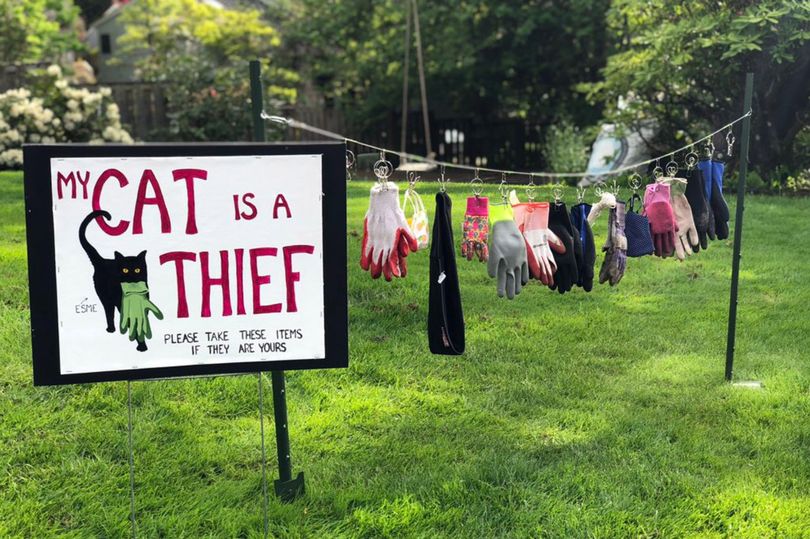
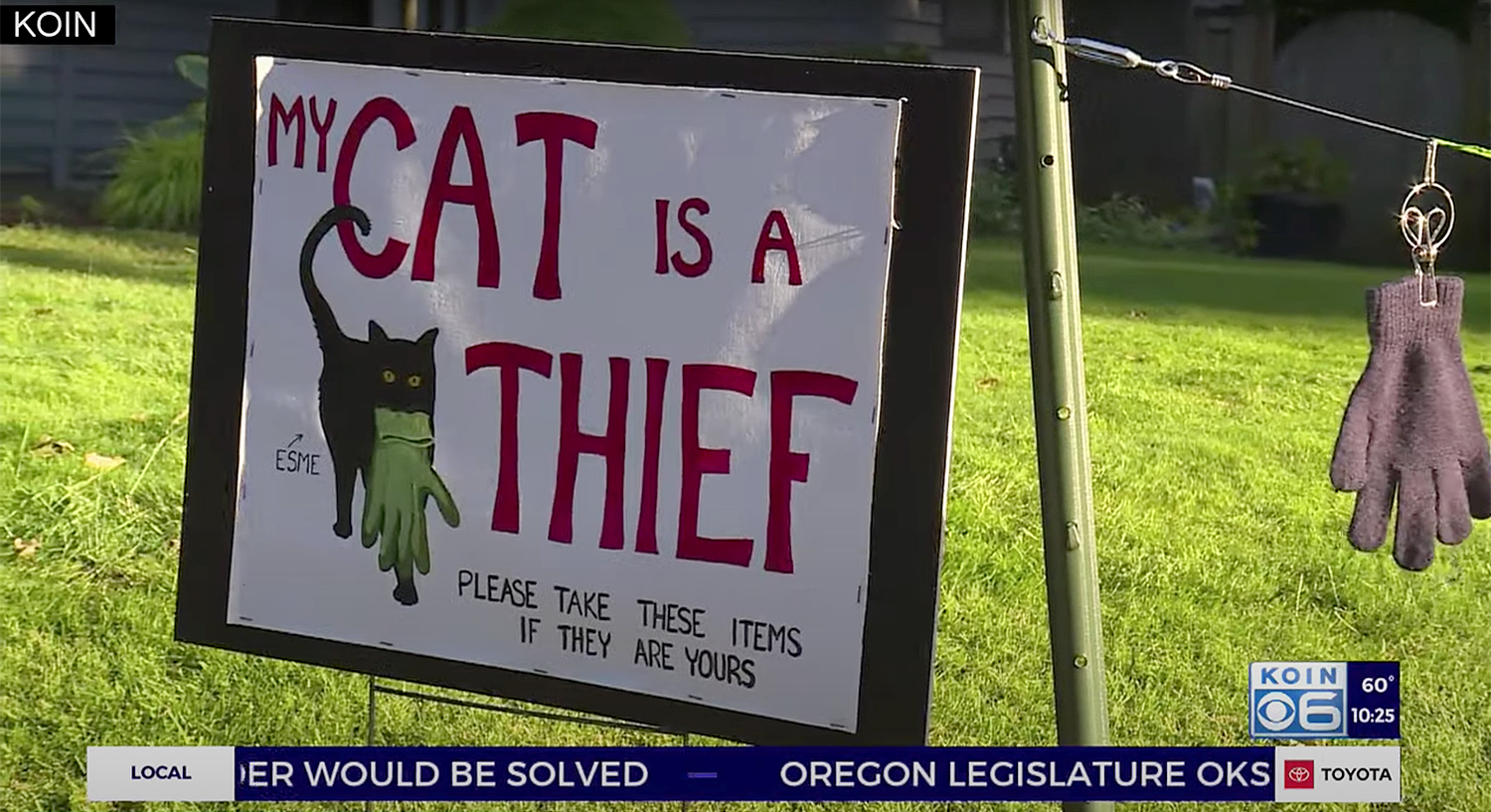
Felmet found a solution when she constructed a cat-shaming lost and found in her front yard, marked with a sign that reads: “MY CAT IS A THIEF” with the stolen items hanging from an attached clothesline.

0_PAY-CAT-BURGLAR-Owner-publicly-shames-her-feline-for-stealing-dozens-of-gloves-face-masks-and-even-a
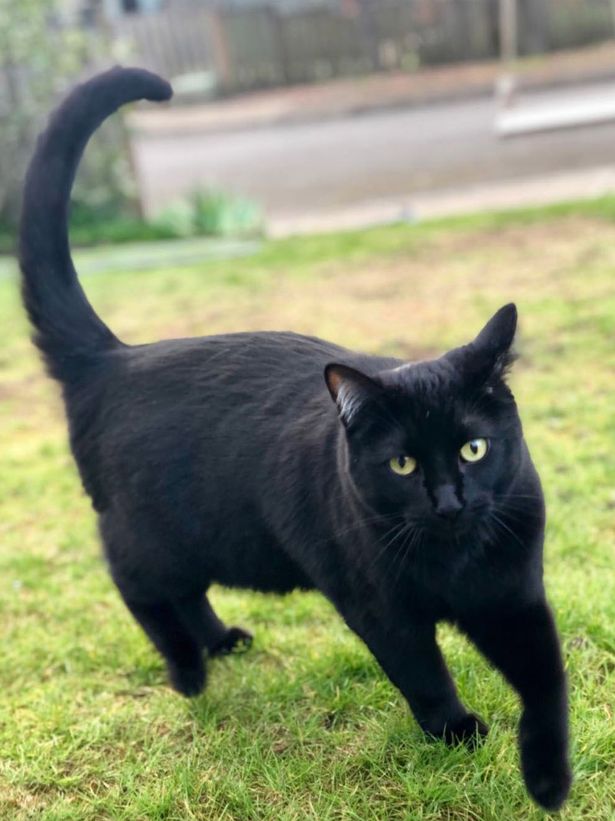
Esme the cat.

The sign has a well-drawn likeness of Esme with a glove in her mouth, and a smaller line of text that reads: “Please take these items if they are yours.”

So what does Esme steal? A little bit if everything, apparently.

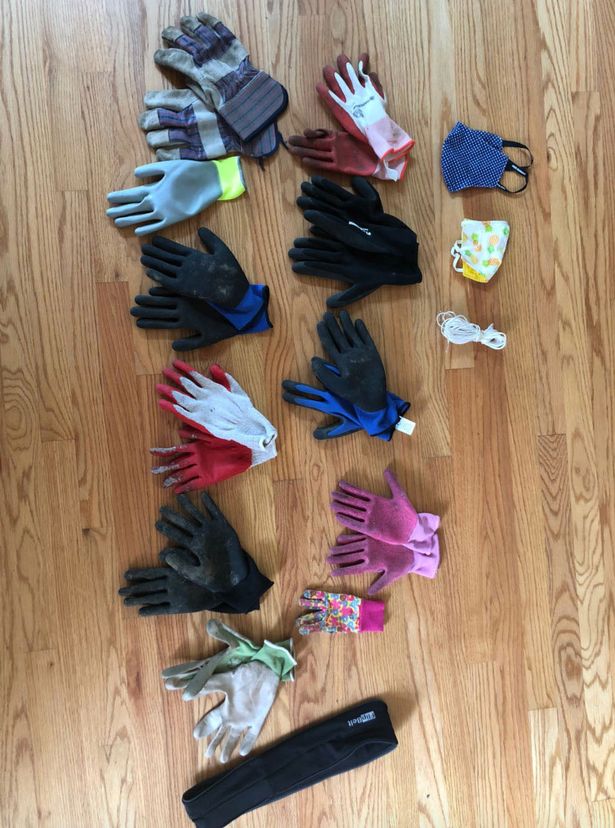
The most popular objects of her pilfering exploits are gloves and masks, but the little cat burglar has gotten her paws on “several bathing suits, knee pads, rolls of tapes, packages of paint rollers and lengths of fabric.”

“Esme’s thievery began last spring – she brought home 11 masks in one day,” Felmet said. “I was so delighted that she wasn’t bringing me birds and she got a lot of praise – and maybe a few treats for the gifts that weren’t recently alive.”

Esme’s a completist: If she steals one glove, she must have the other.

“She brings them separately but almost always goes back to get the second glove,” said Felmet, who is a medical doctor.

“As soon as I put the sign up, she went for a week of not bringing me anything,” Felmet told WKRG, the local CBS affiliate station. “I had the impression she was a little mad about it.” 

0_PAY-CAT-BURGLAR-Owner-publicly-shames-her-feline-for-stealing-dozens-of-gloves-face-masks-and-even-a(1)
Esme’s haul from a recent pilfering expedition.

image

Why We Need Stronger Animal Protection Laws: Example #233

A Pennsylvania man faces a minor misdemeanor charge for disemboweling a kitten.

Take a good look at the mugshot.

That winner-at-life is 21-year-old Mylo Latour, who used a sword to attack a kitten and said the experience was “magic,” according to Pennsylvania State Police.

Latour, who lives in York, Pa — a city of 44,000 in southern Pennsylvania, about 50 miles north of Baltimore — is accused of slashing his sister’s kitten, Mittens.

Latour told the cops he killed the baby cat because “it came into his room and it had power over him,” adding “my eyes dilated and I chopped it with my sword. It was magic.”

Mittens “had injuries consistent with disembowelment,” according to WHTM, a local ABC affiliate. Paperwork from an arrest report reviewed by the TV news station noted “there appeared to be a clean cut to the rear of the cat’s body.”

Latour was charged with cruelty to animals, a second-degree misdemeanor in the Pennsylvania penal code. That’s a charge on par with shoplifting, bigamy or stealing property worth less than $200. If he’s convicted, he faces a maximum penalty of $5,000 and up to a year in jail.

A more severe charge, aggravated cruelty to animals, does exist in the state. It’s defined as torturing an animal or “causing serious bodily injury to the animal or the death of the animal.” It’s not clear why Latour was hit with the lesser charge, and only one of more than a half dozen media reports specifies the charge against him.

We’ll keep an eye on this case and update accordingly.

Cat Alcatraz: Brazil’s Island of Abandoned Felines

On Brazil’s ‘Island of the Cats,’ hundreds of former pets and ferals face starvation.

In 2012, veterinarian Amélia Oliveira started a program to trap and neuter hundreds of cats who had been abandoned at Ilha Furtada, an island about 20 miles west of Rio de Janeiro.

Known as Ilha dos Gatos — island of the cats — the island was teeming with starving former pets and their feral offspring. Ilha Furtada has no natural source of drinking water, Oliveira said, and cats without hunting skills would quickly starve.

ilhafurtada3
Ilha Furtada became a curiosity for boaters and fishermen, and a sore spot for cat advocates trying to stop people from dumping animals there.

With the help of others, Oliveira began a program to end the misery on what’s been called “Cat Alcatraz”: The group managed to neuter more than 380 cats. Former pets were adopted out to new homes, but the ferals would need to remain on the island, so volunteers began feeding them and bringing fresh water on a regular schedule.

With the cooperation of local authorities, the group put up signage around the island and the coast warning that abandoning pets is illegal and asking people not to interfere with the island cats. There were plans for an official survey to quantify the feline population, an initiative to use cameras to dissuade people from dumping their pets on the island…

…and then came the Coronavirus pandemic.

Whatever gains Oliveira and company made over eight years have now been erased as Brazil — one of the countries hardest hit by the virus — has suffered more than 450,000 deaths officially (and likely much more uncounted) and an economy wrecked by waves of infection and lockdown.

ilhafurtado
A “feline shantytown” on Ilha Furtada.

Many owners could no longer afford to feed themselves or their cats while others died, leaving their cats at the mercy of relatives and landlords. Once again, people began abandoning their pets on Ilha Furtada.

“If you don’t take them, they’re going out to Island of the Cats,” people would tell shelter operators, a veterinarian told the Washington Post’s Terrence McKoy.

While the feline population of Furtada Island increased, resources dwindled as lockdowns prevented volunteers from delivering food and water as often as they had in the past.

Now the island has “the appearance of a feline shantytown,” dotted with dilapidated and hastily-constructed shelters for its resident felines.

I recommend reading the entire story, one of just a few highlighting the toll the pandemic has taken on pets.

Brazil Cat Island
Volunteers from Animal Heart Protectors fill a dispenser with food for cats on Furtada Island, popularly known as “Island of the Cats,” in Mangaratiba, Brazil, Credit: AP/Silvia Izquierdo)