People On Social Media Think A Cat Is Helping Ukrainian Soldiers Dodge Russian Sniper Fire

Hes doing what cats do best: Following the red dot.

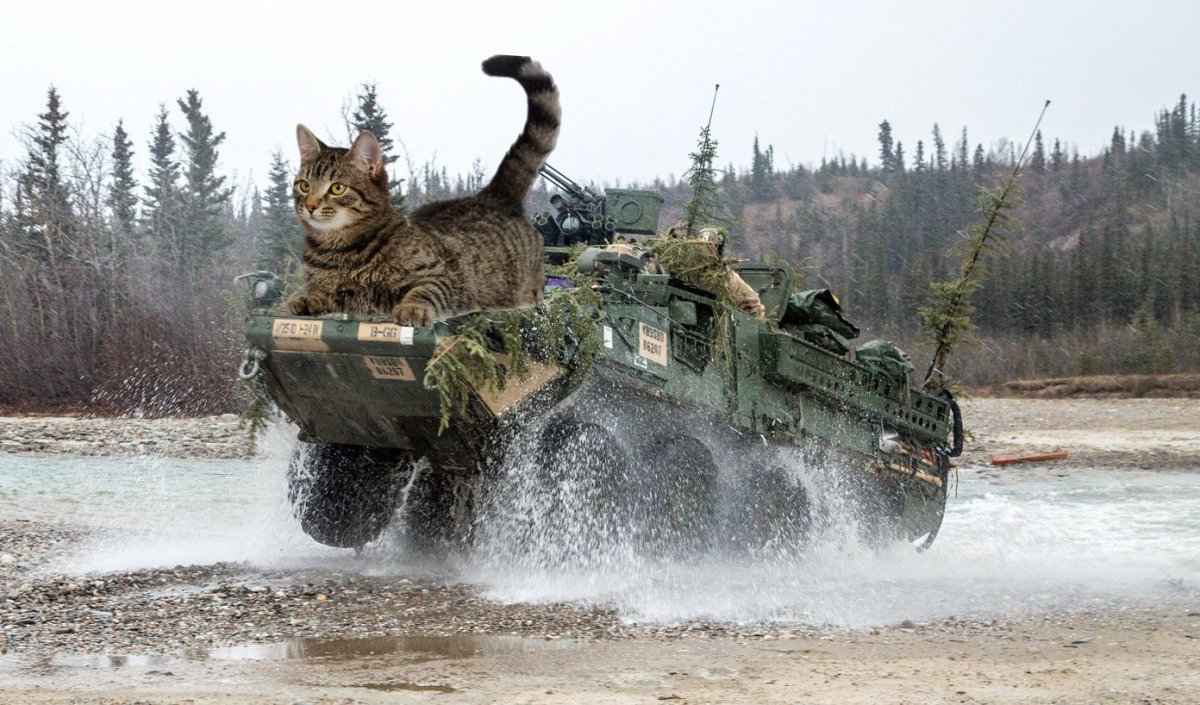
According to the legend of the “Panther of Kharkiv,” a vengeful house cat has been using his superior feline vision to spot the telltale red laser dots from sniper scopes and warn Ukrainian soldiers they’re targets before snipers can get off a shot.

I imagine it goes something like this:

“Dude, there’s a red dot on your face.”

“You said that 42 times in the last hour.”

“Well, it’s true. Give me my treat as a reward, otherwise I might forget to inform you next time.”

“If I find out you’re lying…”

“Treat, now! Thanks…Mmmm, that’s good. Oh look, there’s another red dot on your head! Quick, take cover and give me another snack!”

Either that or kitty is just launching himself at Ukrainian foreheads, chasing the ever elusive red dot.

Of course you don’t need us to tell you this viral social media story is nonsense, do you?

ukrainian-army-cat
Mmmmm, Elmer’s!

Hundreds of thousands of people have proven themselves more credulous, and continue to share the Panther of Kharkiv posts on Twitter, Facebook, Instagram, Youtube, TikTok and other platforms despite warnings that the story isn’t true. The accompanying photo, while real, is from 2018.

“Complete garbage,” is how Liam Collins, a West Point faculty member and former defense advisor to Ukraine, put it.

Others see these stories as evidence of new frontiers for psychological operations, propaganda and counter-propaganda.

Psy-ops have long been a part of war, from Alexander the Great’s armies leaving giant-size helmets and breastplates in the ruins of conquered cities to seed tales of impossible huge — and unbeatable — Greek invaders, to a CIA-devised plan to drop condoms on Soviet territory.

“Condoms?!?” you ask. “How exactly do condoms help a war effort?”

Because they were intentionally manufactured in ludicrously huge sizes marked “Medium” and “Small” with “MADE IN USA” prominently stamped on the packaging, which would be left for the enemy to discover and, the thinking went, to kill their morale. (There are also reports that US psyops left footlong condoms on the Ho Chi Minh trail in Vietnam, leading terrified Vietcong to hide their women.)

And, famously, US Army psyops drove around in up-armored Humvees during 2004’s bloody battle of Fallujah, blasting the South Park creators’ “America, F— Yeah!” from military sound systems as Marines engaged insurgent forces.

The point is to raise friendly morale, destroy enemy morale, or both, and it makes perfect sense that psyops would move into the digital domain in a war in which cyber warfare has become a major part of the hostilities.

The Panther of Kharkiv, like tall tales of wars past, collapses under scrutiny.

As Snopes correctly notes, snipers don’t actually use little red laser dots. Not only would they be counter-productive at the distances snipers work, when things like atmospheric conditions and wind speed come into play, but using lasers would alert the enemy that they’re being targeted and give away the location of the sniper(s).

The entire point of a sniper is to take out targets over long distances without giving themselves away. They’re not equipped for routine firefights, and the last thing they want is to be stuck somewhere relying on a sidearm while riflemen flank them. That’s asking to get killed.

The second absurdity is the idea that cats can be reliably trained to do anything of military value. The CIA already tried that in the 1960s with Project Acoustic Kitty, when they outfitted cats with listening devices and released them in the vicinity of Soviet targets in an attempt to eavesdrop on their conversations.

Twenty million dollars, a few years and several failed attempts later, the CIA concluded training cats as spies was “not practical.” The problem, of course, is that you can train cats all you want, and maybe the cats even have the best intentions, but then…Oh hai is that a bird? Is that a bird? Yes, it is! I’m chasing the bird! Wait, birdie! Oooh, what’s this on the ground? A bag with a half-eaten burger? How delicious! …

Cats are easily distracted, easily bored, driven to do their own thing, and not really open to suggestions when it comes to telling them where they should walk or lounge.

The Panther of Kharkiv joins The Ghost of Kyiv as a creation of social media, wish-fulfillment figures of legend for the age of information. The latter has been earning praise as a supposed ace fighter pilot who has been terrorizing Russian Su-35 pilots from the cockpit of a Soviet-era MiG-29.

A surprisingly realistic video of the legendary pilot has been making the rounds on social media, but the footage is actually from Digital Combat Simulator (DCS) World, a game made by developers so obsessive that they even model things like the effect of recoil from mounted guns on aircraft operation.

In the viral video, a Su-35 screams overhead as two Ukranians chatter in the background. A shaky camera tracks the jet until a missile fired from out of the frame blasts it to pieces. The MiG-29 follows a millisecond later, dipping its wings in a celebratory gesture as one of the observers says “Oh shit!”

When a simulator looks like this, it’s easier to understand how people could mistake out-of-context, long-range footage for the real thing:

Now if you put a cat in that footage, wearing goggles and flying wing, people would know it’s fake. On second thought, maybe they wouldn’t.
Montana’s Governor Killed A Mountain Lion In One Of The Cruelest Ways Imaginable

“He didn’t hunt the lion and he didn’t have to hike six hours to reach it. … All he did was walk to the bottom of the tree, pull the trigger and kill it.”

Montana Gov. Greg Gianforte has to go.

The so-called “avid hunter,” who once boasted of serving “mountain lion teriyaki, antelope chops wrapped in bacon, and elk tenderloin” to investment bankers visiting his home, apparently wanted to kill another puma so badly that he put the word out to fellow hunters.

On Dec. 28, one of those hunters caught sight of one of the large and elusive felids just a few miles outside of a protected area near Yellowstone. The hunter unleashed his hounds on the cat, who escaped up into a tree, and kept the dogs there for hours to prevent the puma from escaping while the Mighty Hunter Gianforte drove hours to the location, got out of his car and bravely shot the terrified animal at point blank range.

What Gianforte did was not hunting, according to retired physician, naturalist and outdoorsman E. Donnal Thomas Jr., a Montanan who is well known for writing about hunting and outdoor sports.

Driving to a place where quarry has already been trapped and shooting it is “the difference between a hunter and shooter,” Thomas told the Yellowstone Mountain Journal. “He didn’t hunt the lion and he didn’t have to hike for six hours to reach it. It sounds as if all he did was walk to the bottom of the tree, pull the trigger and kill it.”

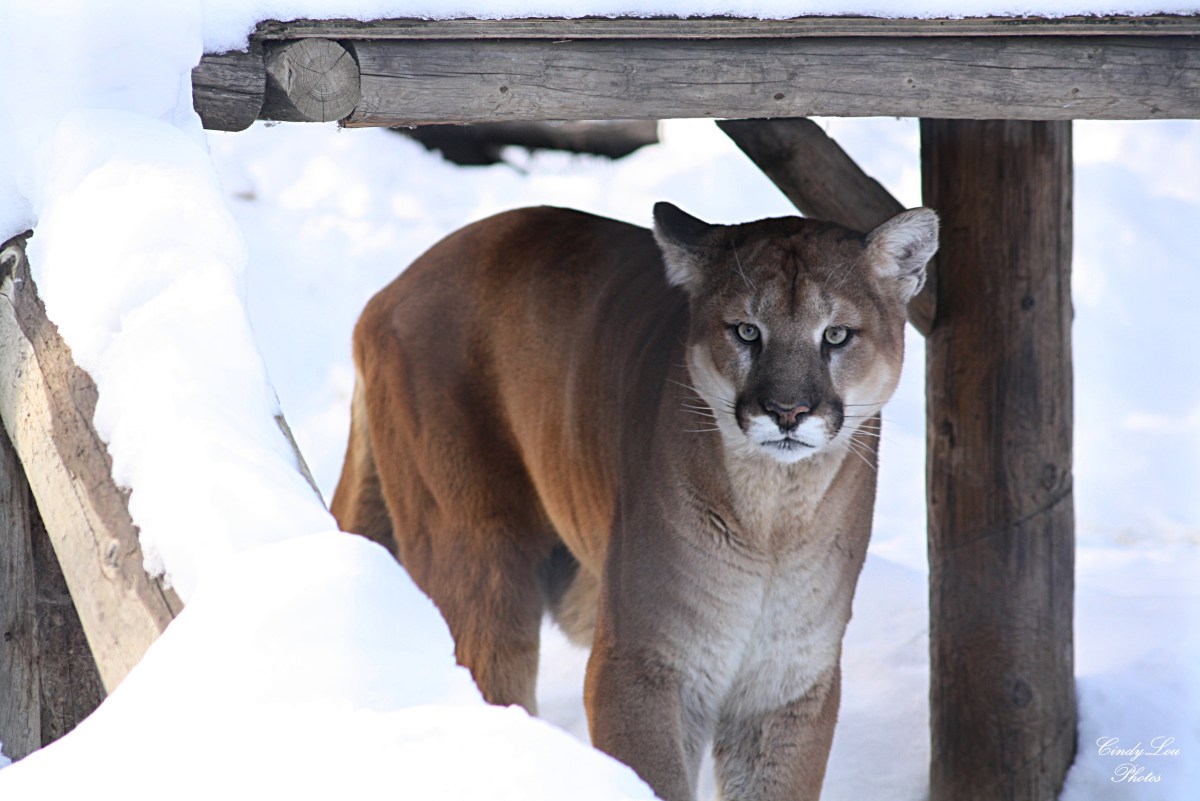
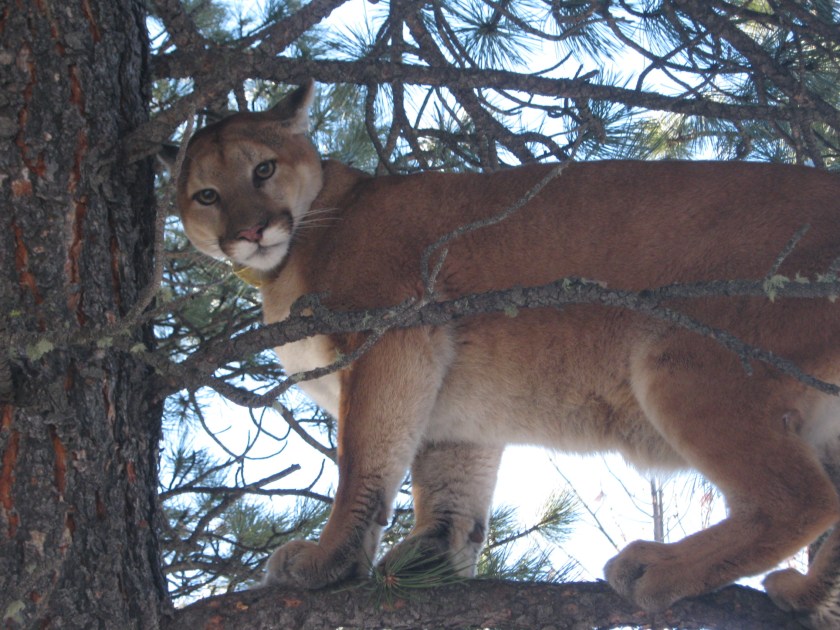
Mountain lion in a tree
A mountain lion, also known as a puma and cougar, in a tree in Montana’s Little Belt Mountains. Credit: Forest Service Northern Region/Wikimedia Commons

The governor may have broken the law, and certainly violated ethical guidelines, by refusing to say anything about the “hunt” and having his press office ignore phone calls, emails and public records requests by journalists. That’s primarily the reason the story is breaking now, more than two months later: Journalists were finally able to track down people with firsthand knowledge of Gianforte’s “hunt” and corroborate the details with other people who were in the know.

Gianforte has had his share of hunting incidents in the past, including two incidents in which he broke the law, once for hunting an elk without a permit, and once for killing a wolf that was radio collared and actively tracked by scientists. (He was let off with a warning.)

In that incident, Gianforte killed the wolf after it ventured out of protected lands, as he did with the mountain lion, who was also wearing a tracking collar. The cat turned out to be a five-year-old male who was monitored by staff at Yellowstone park.

If you’re wondering why Gianforte’s name sounds familiar, it’s probably because he famously assaulted and body-slammed a Guardian reporter who made the mistake of doing his job and asking Gianforte — who was a congressional candidate at the time — about his healthcare policies.

“At that point, Gianforte grabbed Jacobs by the neck with both hands and slammed him into the ground behind him,” wrote Fox News reporter Alicia Acuna, who witnessed the assault. “Faith [Mangan, field producer], Keith [Railey, photographer] and I watched in disbelief as Gianforte then began punching the reporter. As Gianforte moved on top of Jacobs, he began yelling something to the effect of, ‘I’m sick and tired of this!'”

In an audio recording of the assault, an angry Gianforte screams “Get the hell out of here!” while the shocked reporter responds, “You just body-slammed me and broke my glasses!”

Hunting mountain lions should not be legal. There is no such thing as “too many mountain lions,” even by arbitrary federal standards, as the animals are rare, elusive, not hostile to humans and rarely harm people unless cornered or their cubs have been threatened. There have been between 15 and two dozen fatal encounters with mountain lions in the last century. By contrast, dogs kill an estimated 25,000 people a year.

While we refrain from discussing politics or ideology on PITB, primarily because we want all readers to feel comfortable as regulars on the site and we believe politics shouldn’t poison everything, we agree with writer Abigail Weinberg’s assessment:

“Puma. Cougar. Mountain lion. There are many names for the big cats that roam the Americas, rarely attacking humans.

But there’s only one name that springs to mind for Montana Gov. Greg Gianforte: Asshole.”

Montana, you can do better.


All images from Wikimedia Commons.

Bring Your Cats Inside: Thieves Are Snatching Cats From Yards And Selling Them Online

As cat thefts increase on both sides of the pond, a UK woman’s security cameras caught a pair of thieves trying to stuff a neighbor’s cat into a plastic bin under cover of darkness. The cats are later sold online.

A week after a brazen thief stole a Portland family’s cat off their front porch, a pair of cat thieves were caught on security footage snatching a cat from a residential street in the UK.

The latter is not an isolated incident. A group of amateur sleuths, comprised of people whose cats were stolen and others concerned about the spate of thefts, found several of the missing cats listed for sale on a UK pet classifieds site, Pets4Homes.co.uk.

The latest cat-napping happened in East Birmingham, where home security cameras captured footage of a man and a woman creeping along a residential street shortly before 4 am, armed with cat treats, milk and a plastic bin and quietly searching for neighborhood felines.

East Birmingham’s Charlene Jones told the UK Sun that she was woken up by her dogs, who alerted her to intruders on her property.

“I didn’t notice anything until the dogs started barking, and I looked out the window and caught them in the act,” Jones said. “It all happened around 20 to four in the morning, at this point she was just putting the cat into the bin. I opened the window and the cat escaped.”

Cat thieves
In this still from Jones’ security cameras, the cat thieves are seen with the treats, milk and plastic bin they were using to capture neighborhood kitties.

An angry Jones, whose own cat was stolen three weeks ago, confronted the thieves, who claimed they were working for a local animal welfare charity and were trapping strays.

“I went out and spoke to them and she started reeling off all these charity numbers and claiming she worked for them,” Jones said.

When Jones later reviewed the footage she recognized the cat, who belongs to a neighbor a few doors down the street.

“I feel angry,” Jones told the paper. “I have done my own research, she has been selling cats for eight months.”

Jodie Smith of Solihull, a town of about 123,000 about 18 miles from Birmingham, said her family’s cat, Arlo, was stolen in January. A friend later spotted Arlo on Pets4Homes, but the Smiths weren’t able to recover him.

“It’s awful, this is my daughter’s cat,” Smith said. “My daughter can’t go to bed with cuddles from her fur baby. She is absolutely gutted.”

Arlo the cat
Arlo was listed on Pets4Homes but the family was unable to recover him.

Pet thefts on both sides of the Atlantic have been on the rise since the beginning of the Coronavirus pandemic in 2020. As entire countries went into lockdown, demand for companion animals skyrocketed, leaving many shelters bare and breeders sold out.

Criminals saw an opportunity and began stealing pets, mostly dogs at first, from yards, homes and kennels, prompting the owner of one lost pet site to dub 2020 “the worst year ever” for dog thefts, according to the BBC.

With exotic cat breeds commanding large amounts of money on the open market, from a few hundred dollars for breeds like Persians to $20,000 for Savannah cats, opportunistic thieves began targeting felines as well. “Moggies,” cats of indeterminate origin or no particular breed, aren’t exempt either. Some may be stolen because thieves mistake them for exotics, while other thieves apparently find it worth their time to snatch cats that can net them $100 or more on sites like Craigslist and Pets4Homes.

In the UK, cat thefts have increased threefold within the last five years, a trend accelerated by the pandemic and the resulting scarcity of cats, especially those with breed pedigree. Police rarely recover the stolen pets, and authorities say some people are targeted after sharing photos and video of their pets online.

Stealing cats is especially easy in the UK, where the majority of people allow their cats to roam free outdoors and the idea of keeping cats strictly indoors is seen as cruel or improper, even though felis catus are domesticated animals and don’t have a “natural habitat.”

In the Portland case, no one has come forward with any solid information in the theft of Kiki the cat despite two relatively clear shots of the suspect’s face and extended footage of her approaching and taking the cat from the Autar family’s front porch on Feb. 20. Like the UK catnappings, the Portland suspect seemed motivated by profit: The family said their cameras also caught the woman checking for open car doors, and the way she grabbed and held the cat — holding him at arm’s length, dangerously carrying him by the scruff of his neck — indicated she saw him as an object, not a living creature.

Karina Autar told PITB on March 1 that her family hasn’t given up hope.

“We are all just getting by, we are coping by putting in all our energy [into finding] him,” she said.

Cat thief suspect
The thief was caught snatching KiKi off his family’s front porch on Feb. 20.

In the UK, Jones is not the only person to confront the cat thieves. Amy Buckley, 29, told The Sun that the woman seen in Jones’ footage also told her she was an employee of an animal welfare organization.

“She came to mine around January, claiming she worked for the PDSA and that they’d had a report about a large number of stray cats in the area,” Buckley told the paper.

She said she was immediately suspicious because PDSA (People’s Dispensary for Sick Animals) is a charity run by veterinarians that provides care, not TNR or general trapping services.

PDSA confirmed the woman does not work for the organization, while local police told the paper they had taken several reports from people whose cats had been stolen and were investigating the thefts. Meanwhile, an RSPCA spokesperson urged caretakers to have their cats microchipped.

In the meantime the victims are trying their best to locate their stolen furry family members, but they’re also angry at the pain the thieves have caused families and children.

“There are other families going through the same heartbreak,” Smith said. “For a lady to have some money in her pocket, she is destroying little children.”

After Fire Destroys 1,000 Colorado Homes, Victims Are Still Looking For Their Cats

After their home was destroyed in an all-consuming fire, a Colorado family thought they’d gotten some good news when police found their cat and brought her to the local Humane Society.

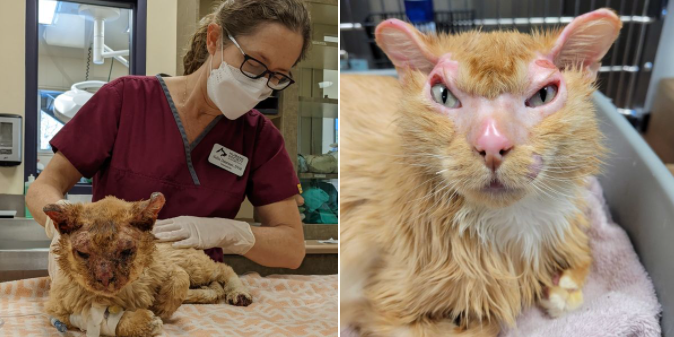
The Conejo family visited their beloved Pumpkin at the veterinary clinic where she was recovering from her burns and were eager to bring her home until a veterinary tech realized there’d been a mistake: Pumpkin is female, but the heavily burned and convalescing orange tabby was male.

Now the parents — who were not home when the fire ripped through their neighborhood and couldn’t retrieve either of their cats or their belongings — have to tell their two young kids that it was a case of mistaken identity, and they still don’t know what happened to Pumpkin and their other cat, Justin.

bootsthecat
Boots suffered burns on his face and right front leg.

In what is now officially the worst fire in Colorado history, almost 1,000 homes were destroyed and more than 100 others damaged, leaving tens of thousands of people homeless with many of them still searching for their missing cats and dogs two months later.

The Dec. 30 blaze ripped across three suburban towns between Denver and Boulder, consuming entire housing divisions, strip malls and stand-alone buildings. Authorities still haven’t said how the fire started, playing their cards close to the vest as they await laboratory tests and analysis from forensic fire investigators.

A search warrant executed on the compound of a nearby cult and a viral video that showed a barn burning on the group’s property, reportedly at the time firefighters were notified of the initial fire, have drawn attention and speculation from locals. But authorities say they’re looking at every possibility, from a possible lightning strike to an electrical fire and even the possibility that one of the nearby abandoned coal mines could have spontaneously ignited.

While the Conejo family did not get the news they wanted, things had a happy ending for the male tabby they thought was their Pumpkin.

The cat, an eight-year-old named Boots, had an emotional reunion with his human on Feb. 22 courtesy of the Humane Society of Boulder Valley.

“Hi, sweetie,” she said, hugging Boots tight in a video posted to the Humane Society’s Facebook page.

Some neighbors, who were inexplicably but mercifully spared by the fire, were counting their blessings but said they felt guilt as well.

Tracy and Jason Granucci were vacationing in Mexico’s Cabo San Lucas when their phones began blowing up with incoming alerts and texts from concerned friends.

Tracy Granucci immediately texted Carol, her cat-sitter: “I don’t care about the house,” she wrote in the text. “Obviously Peanut is all I care about.”

Routes to their street were blocked off and neither Carol nor animal rescue volunteers were able to get to the Granucci home, but when they returned they saw their home was still standing, unscathed despite the destruction of four nearby houses. Peanut, their 16-year-old tortoiseshell, was fine.

“The feelings I’ve had about being in our home and looking out at our neighbors and our community is definitely … survivor’s guilt,” Tracy Granucci told the local PBS news affiliate. “All you want to do is you want to help everybody.”

Camden Hall was at work when the fire raged through his neighborhood and was terrified that his cat, Merlin, was in its path.

When his landlord called to tell him the house had burned down, Hall said he felt “like someone had just ripped my soul out.”

Luck was on Merlin’s side. A neighbor heard distressed meows coming from one of the few homes that were still standing and found the little guy on the porch, badly burned but still alive. Hall reunited with Merlin at a local veterinary clinic.

The ordeal isn’t over for Merlin, however. His injuries were much worse than were realized, and he’s got several procedures and a long road to recovery ahead of him. A GoFundMe started by a friend of Hall will cover the veterinary expenses and help Hall get back on his feet.

Sunday Cats: FitBit For Felines, Plus CFA’s Top Breeds For 2021

Now you can track how much time your cat spends exercising, grooming herself and sleeping.

A Japanese company that sells FitBit-like devices for cats released its first data-driven report this week and promises new revelations to come as more people buy the devices for their cats, leading to more data.

The company and its device are both called Catlog. To mark “Cat Day” in Japan, which falls on Feb. 22, researchers at the Shibuya, Tokyo-based firm issued a report saying data shows cats sleep progressively longer as they age, and cats in general sleep longer in winter.

Yeah. Not exactly a whopper.

Still, it’s one thing to know something anecdotally and another to prove it, and there are tantalizing possibilities as more kitties are equipped with Catlog. The collar-like device uses “biologging” technology to record and sort data on things like eating, drinking, sleeping, grooming and exercise. The data is relayed to caretakers via a mobile app and added to the information coming from every other Catlog, giving the research team behind the app hard data for cats across all ages and breeds.

The Catlog has received Japan’s Good Design Award, a sought-after mark of excellence among Japanese products.

Catlog
Catlog looks like a regular collar with an unobtrusive device attached.

Unfortunately Buddy won’t be contributing to that data even if Catlog pushes into the US market. Little dude won’t tolerate a collar at all and is not shy about loudly, repeatedly, incessantly communicating when he doesn’t like something. 🙁

Most Popular Cat Breeds of 2021, According to CFA

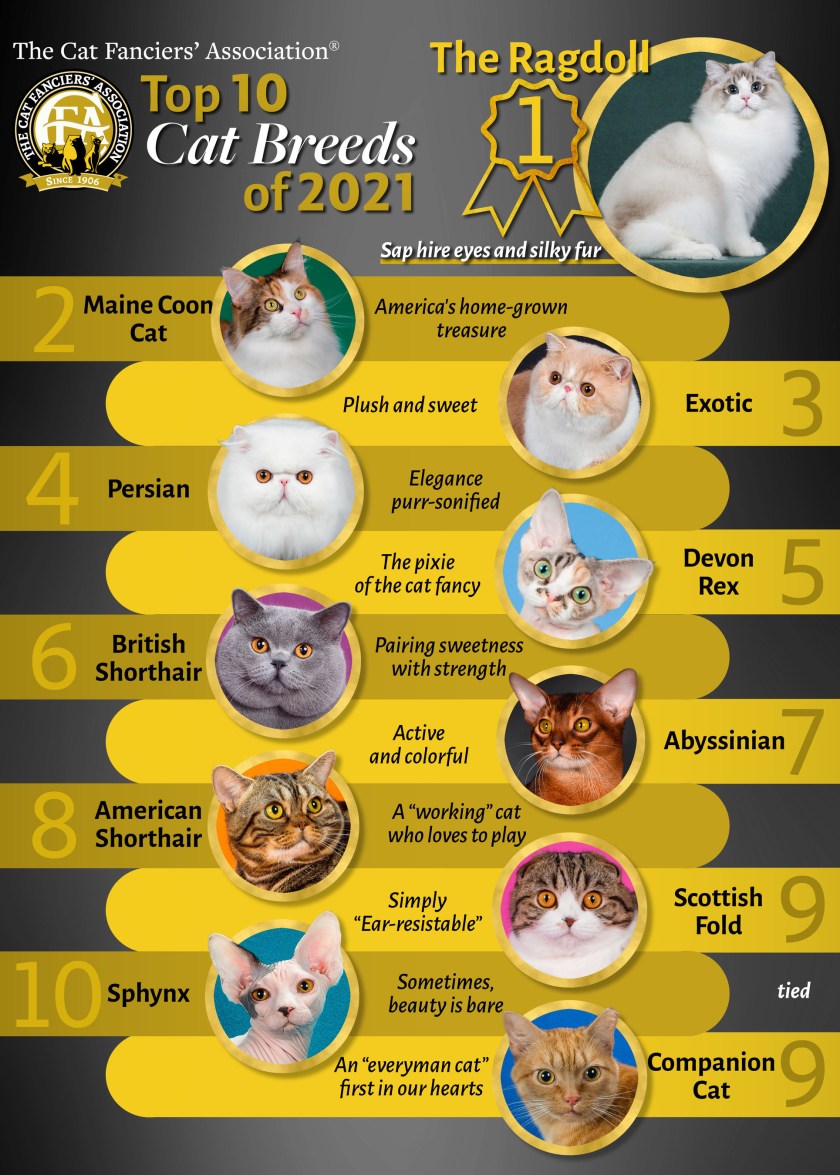
The Cat Fanciers’ Association has released its annual list of the most popular cat breeds. While the CFA recognizes 45 breeds and registers “non-pedigreed” cats as well, the list is based only on CFA registered cats. That means it provides a good snapshot of which breeds are trendy, but it’s not a definitive most popular breeds list.

Cats without a particular breed still account for the vast majority of all pet felines, but among people who registered their cats with CFA, Ragdolls were the most popular in 2021, followed by gentle giant Maine Coones and exotic shorthairs. (Note that this list does not include the fearsome and elusive Buddinese Tiger.)

2021-breeds-with-CC
The world’s largest registry of pedigreed cats has again determined the world’s most popular cat breeds, based on registrations. This year’s Top 10 list reflects the increasing popularity of certain breeds. However, registrations of ALL cats have increased substantially, reflecting the growing popularity of pet cats since the beginning of the pandemic.