The store’s owner says he’s not interested in having anyone prosecuted and he just wants his cat back.
Another day, another person who decided to steal a cat instead of adopting one of the estimated 3.2 million languishing in shelters and waiting for homes.
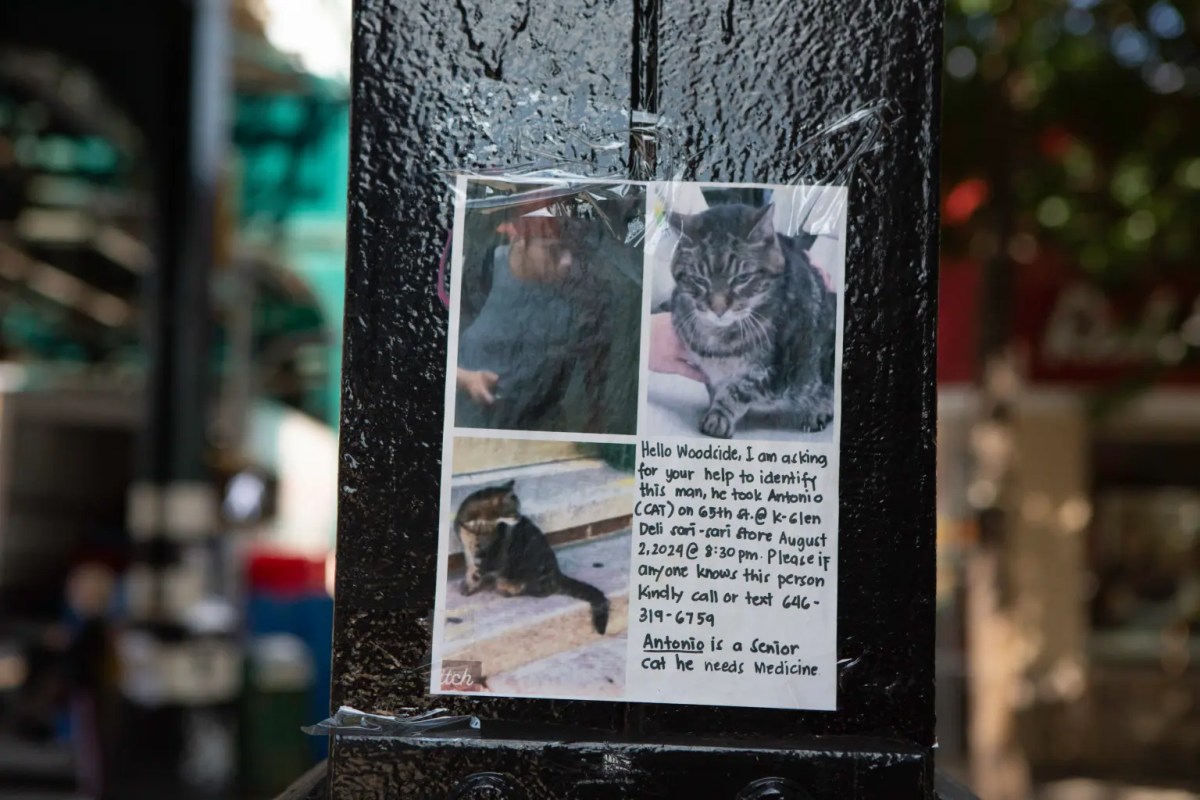
This time, a man made off with Antonio, a well-loved bodega cat who was the unofficial mascot of K’Glen Deli and Sari Sari Store in Woodside, Queens. When store owner Glen Alagasi couldn’t find Antonio and the tabby failed to show up for meal time, Alagasi panicked.
Sure enough, footage from security cameras showed a man picking Antonio up right in front of the store’s entrance and walking away earlier that day, on the afternoon of Aug. 2. As the man walked off, Antonio managed to squirm out of his hands and was trying to get back to the bodega. The man scooped him up again and Antonio was last seen in his arms as they headed toward Woodside Avenue.
Credit: Glen Alagasi
Like others who have had their feline friends taken from them, Alagasi said he’s much more interested in getting his cat back than any form of retribution or punishment.
“We’re not asking for any criminal prosecution,” Alagasi told CBS New York. “Just, we need the cat back. [The thief] stole a precious thing here in this community.”
For people unfamiliar with city living, especially in New York, bodegas are a daily part of life and often the only places to buy food in neighborhoods that are otherwise “grocery deserts.” When you live in Manhattan or a borough, the concept of big-time grocery shopping just doesn’t exist, because chances are you’re hauling your purchases back on foot and ascending stairs or an elevator to your apartment.
Technically, the Department of Health forbids the keeping of cats in bodegas and delis, which almost always have hot food and sandwiches prepared on-site. But the fine for a rat infestation is the same as it is for having a cat, and inspectors can’t be everywhere, so most bodega owners figure it’s better to have a little pal who keeps the rats away than cede territory to rodents, especially in a city that struggles with a perpetual rat problem.
The laws are so openly flouted that there are entire social media accounts dedicated to bodega cats, and the operators don’t bother to hide their cats from customers or the press. If the inspectors are going to come, they’ll come.
Alagasi says he’s lost a friend, and customers like Pia Tracy are used to seeing the little guy every day.
Antonio, who often plays with Tracy’s cat, is “part of our everyday life.”
Tracy says she’s “devastated and heartbroken because I don’t know if he’s okay. We just hope he’s okay.”
Feefee the cat’s family is deeply frustrated at the lack of answers about their cat and the lack of urgency by the company in trying to locate her after an Amazon delivery driver stole the 13-year-old tabby on July 21.
After a 10-day saga in which tan Amazon driver stole their cat — and Amazon did little to help recover her — a Washington family has been told the feline is gone, and has been offered stuffed animals in her stead.
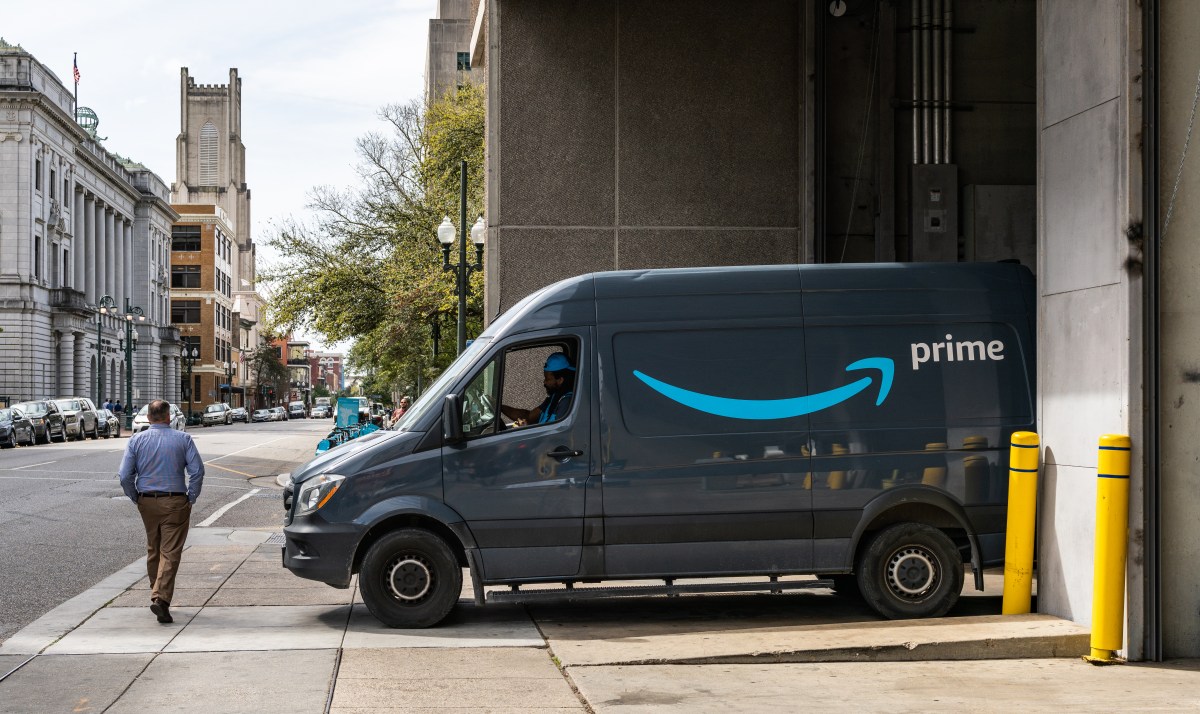
Feefee the cat was taken from the Ishak family’s driveway in Everett, Washington, on July 21. Footage from a motion-activated security camera shows an Amazon delivery driver crouching in the driveway and petting Feefee, then driving off.
A representative from Amazon’s customer service department confirmed the driver took the cat, but has not helped reunite Feefee and the Ishaks beyond giving the family an email address that law enforcement can use to contact the company.
At first, an Amazon rep told Ray Ishak that the driver — who has not been named by the company — contacted law enforcement to return Feefee. However, neither the Everett Police Department nor the Snohomish County Sheriff’s Office said they had any record of anyone approaching them about surrendering a cat.
An Amazon customer service representative told the Ishak family that the driver “contacted the police to return your cat.”
Amazon declined to put Ray Ishak in touch with the driver or to tell him the general area where the driver lives, so he might contact local law enforcement there.
The story changed on the morning of July 30, when the sheriff’s office told Ishak that the driver now says Feefee “allegedly escaped a few days ago,” Ray Ishak told PITB.
“They will not tell me where. If I could find out the vicinity I’m pretty sure I could have found the cat,” Ishak said. “I asked the sheriff’s deputies how I can find out the area and the only way is for the driver that stole the cat to tell me.
“I asked them to have her text me or call me from a blocked number or [create] a temporary email, just to tell me where it is because [the police] can’t tell me. It has to come from her and she has refused to do so so far. I fear that [Feefee’s] gone.”
PITB has reached out to Amazon and will update this post if the company responds.
In the meantime, while Amazon will not assist Ishak in trying to recover Feefee himself, a customer service representative asked the Washington man for a description of the 13-year-old tabby “so they can send me a stuffed animal that looks like her,” Ishak told PITB.
“I am serious,” he said, adding that he’s kept copies of the email correspondence with Amazon’s customer service department.
An Amazon customer service representative said the company would do “everything we can to investigate” and offered to send stuffed kittens “that look like” Feefee for the family’s grandchildren, who are close to the cat. Credit: Ray Ishak
As we wrote in our earlier post about the incident, Amazon has handled the case as if it were a dispute over a returned item or a delivery problem, even asking Ishak to rate his experience with the company’s customer support immediately after informing him they can’t give him more information. The company has not taken active measures to reunite the Ishak family with their cat, and has refused to provide any information about the driver, even vague information that could help Ishak find Feefee.
“What baffles me is that no one seems to understand that this is a CRIME and we the people who were hurt by this crime are being kept in the dark when we should be able to find her,” the family wrote in response to Amazon’s most recent reply.
The language reflects the deep frustration the family has felt over the incident and the company’s response.
“I just pray we find her alive. I am also tired of getting the brush off, generic emails and no information on our case.”
An Amazon driver playing with Feefee in the Ishak family’s driveway before driving away with the cat. Credit: Ray Ishak
If the driver is telling the truth and Feefee escaped, finding her quickly is critical. The vast majority of house cats do not do well when forced to fend for themselves, and Feefee has been a member of the Ishak family for 13 years, since she was a kitten.
If the driver is not being truthful and still has the cat, there’s no way for the family to know, and no indication Amazon or law enforcement can be convinced to find out if she’s telling the truth.
As one of our readers wrote in response to our previous story, few things are more heartbreaking than someone stealing a family’s well-loved cat. The saga has been stressful for the Ishak family, and has undoubtedly taken a toll on Feefee, who was taken from the only home she’s ever known. Feefee suffers from asthma, Ray Ishak said, which is why she was allowed to spend time outdoors immediately outside the family’s home.
Ray Ishak said his family was gathered this weekend for his son’s wedding and he had to tell his grandkids, who are particularly close to Feefee, that the cat was elsewhere. That quickly backfired.
“The emotional distress for me having to lie to my grandkids that the cat is safe and fine,” Ishak told KING5, a Seattle NBC affiliate, earlier this week. “Then, watching my granddaughters cry after they found out because they heard us talk about it. It was a double whammy from every single front.”
This is not the first time a delivery driver has stolen a pet, and not the first time an Amazon driver has done so.
In 2021, a driver for Uber-owned Postmates stole an 11-month-old ginger tabby named Simba from a Colorado family’s driveway after delivering a package. Postmates was similarly reticent to help the victims, and the family was never reunited with Simba.
In 2020, a 23-year-old delivery driver stole a Minnesota woman’s cat from outside her home and repeatedly denied taking the 12-year-old tabby until, three months later, he wrote an apologetic letter admitting he nabbed her, felt guilty and tossed her out of his truck later the same day.
In 2022, an Amazon driver stole a Michigan family’s dog. The pup was returned four days later.
Earlier this year, an Amazon driver tried to steal a family’s dog after admiring the pup and telling the family he wanted a puppy of his own. The family caught the driver in the act, and the driver did not escape with the dog.
On July 3, a FedEx driver stole a French bulldog named Tori after delivering a package to her owner’s home in North Carolina. The driver, 44-year-old Kimani Joehan Marshall, left Tori in his truck as he continued making deliveries and the pooch died as temperatures pushed well into the 90s with high humidity. Marshall dumped Tori’s body by the side of a road and the family continued to post missing flyers and search for her until July 10, when police confirmed their dog was dead. Marshall remains in jail on $50,000 bail and faces a felony cruelty to animals charge as well as larceny and possession of stolen property.
Most recently, an Amazon Flex driver allegedly stole an Austin, Texas woman’s dog on July 25. The woman, with help from friends and online sleuths, tracked the driver to his home 50 miles away and was able to recover her dog after confronting the man with evidence — including video from a neighbor’s security camera — showing he’d taken the pup.
That’s not a comprehensive list, and the cases that make the news involve pet thefts caught on camera. Victims who don’t have security or doorbell cameras generally have no recourse, and thefts by delivery drivers won’t make the news unless the victims take their stories to local newspapers or TV news stations, or local reporters discover reports by checking police blotters. The latter situation is becoming increasingly unlikely as so-called “news deserts” — locales not covered by any local media — expand with every newspaper that folds and every round of newsroom layoffs.
We hope someone in Amazon management is paying attention and can help the Ishak family get Feefee back. After all, who wants Amazon drivers delivering packages to their homes if the company allows those drivers to steal from customers with impunity?
As we wrote previously, this isn’t a customer returning a sweater or complaining about a late package, and it shouldn’t be handled that way. Feefee is a living being with emotions, and she’s been part of the Ishak family for 13 years. The very least Amazon can do is have a compassionate and empowered manager call them, apologize profusely, and vow to do everything possible to reunite the family with their well-loved cat.
Top image of an Amazon delivery driver in a Prime van courtesy of Wikimedia Commons.
Incidents like Sunday’s attempted cat robbery are happening more often in recent years, a forensic investigator specializing in animal-related crimes says.
Pet theft is a low-risk, high-reward way for the criminally-minded to make a quick buck, which is one reason why such crimes have become much more common since the pandemic, a forensics professor told the New Haven Register.
But first we’d like to draw your attention to an announcement we made back in February of 2021. At the time pet theft was in the headlines after robbers shot a man walking Lady Gaga’s breed dogs, while across the country in Portland a man stole a van full of daycare-bound pups.
Here’s what we wrote at the time:
“Buddy would like everyone to know he does not actually live in New York, and that his true location is a secret.
“I could be living in Rome,” the troublemaking tabby cat said. “I could be Luxembourgish. Maybe I live in Königreich Romkerhall or the Principality of Sealand. You just don’t know.”
“The one thing you can be certain of is I definitely don’t live in New York.”
We would like to make clear that we continue to blog from Not New York.
On a more serious note, financial woes brought on by the pandemic, painful inflation and a generally difficult economy have attracted the criminally inclined to the petnapping trade, and as Maxwell pointed out to the Register, few people are held accountable for animal-related crimes. That includes darker endeavors like dog fighting and puppy/kitten mills.
“Sadly, animal cruelty in general is under-prosecuted, and very, very few actually end up resulting in jail time,” Maxwell said.
A cat stays above the fray and surveys her surroundings from an elevated perch. Credit: cottonbro studio/Pexels
Sometimes pet thieves are opportunists who see a cat or dog who catches their fancy, or they believe might be worth money. Those cases often include people luring well-loved animals off porches and property with food.
Most, however, are people who intentionally target breeds that command high prices and are primarily responsible for what Maxwell says is a 40 percent spike in petnappings since early 2020. For felines that means Bengals, Savannahs, Ragdolls, Maine Coons, Norwegian Forest Cats and other breeds that can net the thief a solid payday for minimal effort.
“They’re going to steal your pedigree cat, your pedigree dog that’s worth thousands” and immediately flip the animal, Maxwell told the newspaper.
Social media, it turns out, is a double-edged sword.
While cops and animal welfare organizations warn people against showing off valuable pets online — and urge people to disable features like location tagging — the same platforms are often invaluable for retrieving stolen cats and dogs. Groups on sites like Reddit and Facebook help people find their well-loved four-legged family members and warn others when they identify resellers.
The would-be robbers knew the cat was worth money and specifically targeted the victims, according to police.
Two armed men broke into a Connecticut home on Sunday afternoon and demanded the victims turn over their “high dollar value cat,” according to the East Haven Police Department.
The would-be robbers initially tried to force their way into the East Haven house through a rear sliding glass door, but when the victims tried to prevent them from getting in, one of the men simply kicked through the glass, cops said.
That’s when the intruders brandished a handgun and demanded not cash, not jewelry or other valuables, but the cat!
The kitty in question must have been spooked by all the commotion because the frustrated robbers left empty-handed after a few minutes of fruitless searching. They hopped into a blue BMW and sped off, the victims told police.
Cops didn’t offer any description or breed information about the feline, describing it simply as a “high dollar value cat.”
It’s not uncommon for prized breed cats to command $5,000 from prospective buyers, and some breeds like the “exotic” Savannah cat can sell for as much as $20,000.
Bengal cats like the one above are favorite targets of thieves. Credit: jerry u6770/Pexels
While it’s unusual for someone to break into a home and demand a cat at gunpoint, in the middle of the day no less, cat theft is actually a thing.
Thieves most frequently go after Bengals, Savannahs, Maine Coons, Ragdolls and other breeds that can make them a quick buck by selling them to unsuspecting buyers. Surprisingly domestic shorthairs are on several lists of most commonly stolen cats, but a vet tech tells Reader’s Digest that moggies make the list simply because there are so many of them.
Part of the problem is that the penalties for stealing cats aren’t prohibitive. Most states either treat cats and dogs as property that can simply be replaced, or classify theft of pets in archaic agriculture and markets laws, which were designed to deal with disputes over livestock and farm animals, not pets.
In Sunday’s attempted robbery, police found the BMW abandoned in Hamden, a town about 10 miles north of East Hampton. They’re still looking into the unsuccessful caper, telling local media that the attempt was planned, not a crime of opportunity or a random event.
Still, if you have a “high dollar value cat,” it’s worth taking some precautions. Here at Casa de Buddy we’ve installed a feline version of a panic room: a panic box! Reinforced with heavy shipping tape, the thick corrugated cardboard is sure to keep bad guys out while also remaining roomy, yet paradoxically snug.
The suspect has been charged with a pair of felonies and remained jailed awaiting arraignment on Tuesday evening.
A 27-year-old Ohio man has been identified and arrested in connection with the cruel death of a cat in late January.
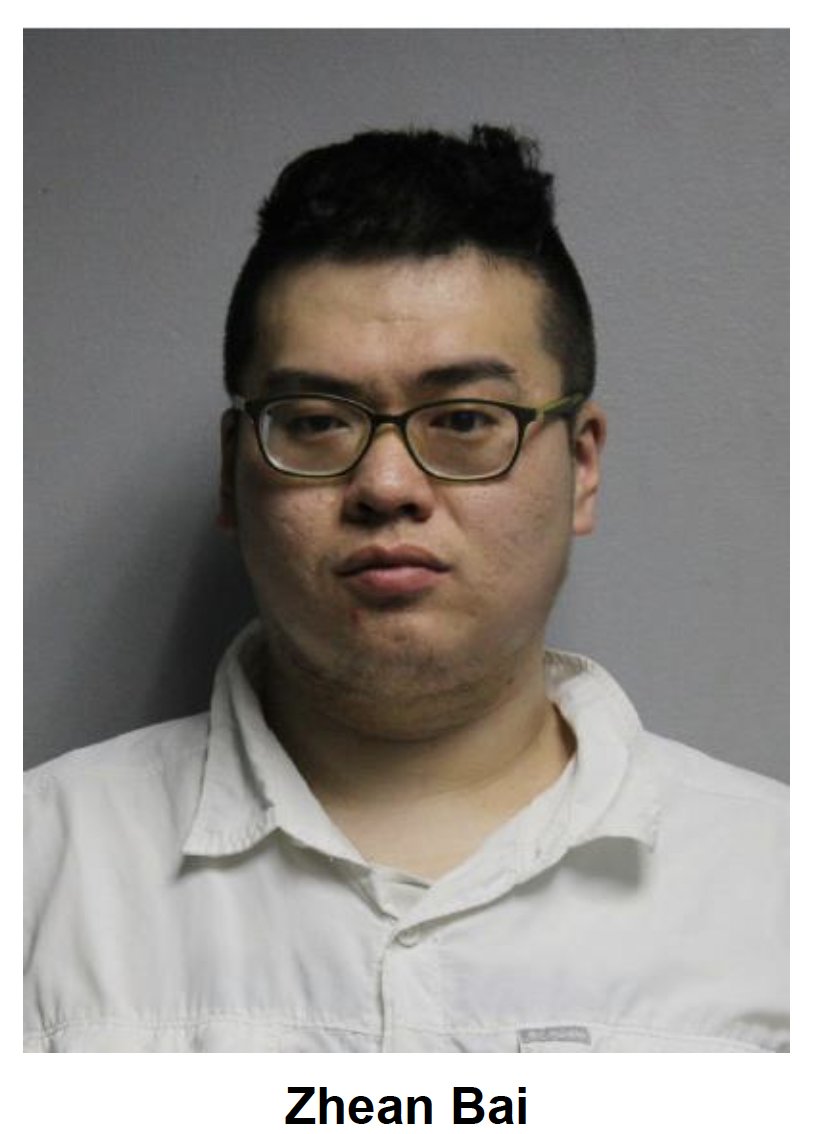
Police located Zhean Bai of Oxford, Ohio, thanks to a tip from the public and charged him with a pair of felonies. They say he’s the man seen in disturbing security camera footage from Jan. 24, when he chased an apparent stray cat into an apartment complex in Hamilton, Ohio. The footage shows Bai forcing the cat into a plastic bag and slamming it onto the ground.
The charges — prohibitions concerning companion animals and breaking and entering — are fifth-degree felonies under Ohio law. Bai faces up to two years in prison, $5,000 in fines and up to five years of probation if he’s convicted of both crimes.
Zhean Bai as seen in his jail booking photo. Credit: Butler County Sheriff’s Office.
After severely injuring the feline, Bai allegedly dumped the cat behind the building and fled. A dog warden found the cat, but a veterinarian made the decision to euthanize due to the extent of the cat’s injuries, including a broken spine and pelvis.
“This instance of horrific cruelty is unimaginable and will never be tolerated in this county,” Butler County Sheriff Richard Jones wrote in a statement to the media. “Anyone who treats an animal in such a cruel manner will always find a place in my jail.”
The investigation isn’t over. Police say they’re looking into the possibility that Bai may have been involved in other animal cruelty cases.
Bai was apparently concerned he’d be caught. The same cameras show him returning to the apartment complex — where he does not live — and scoping it out for security cameras. He was wearing the same shoes and jacket and had recently gotten a haircut, giving police and the public a better view of his face. Cops quickly released a second batch of images this week, imploring the public help them find the man.
Bai was held in Butler County jail pending arraignment on Tuesday evening. It wasn’t immediately clear if he’d retained an attorney.