
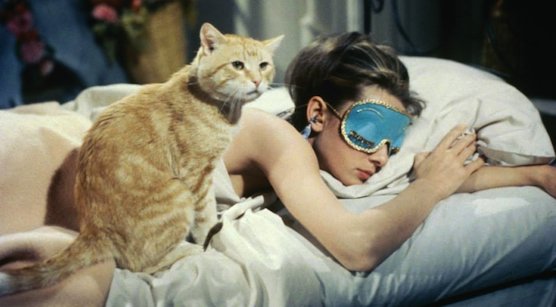
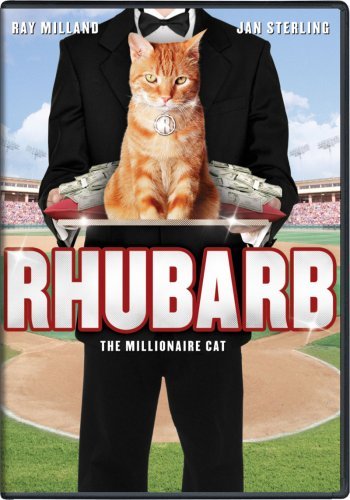
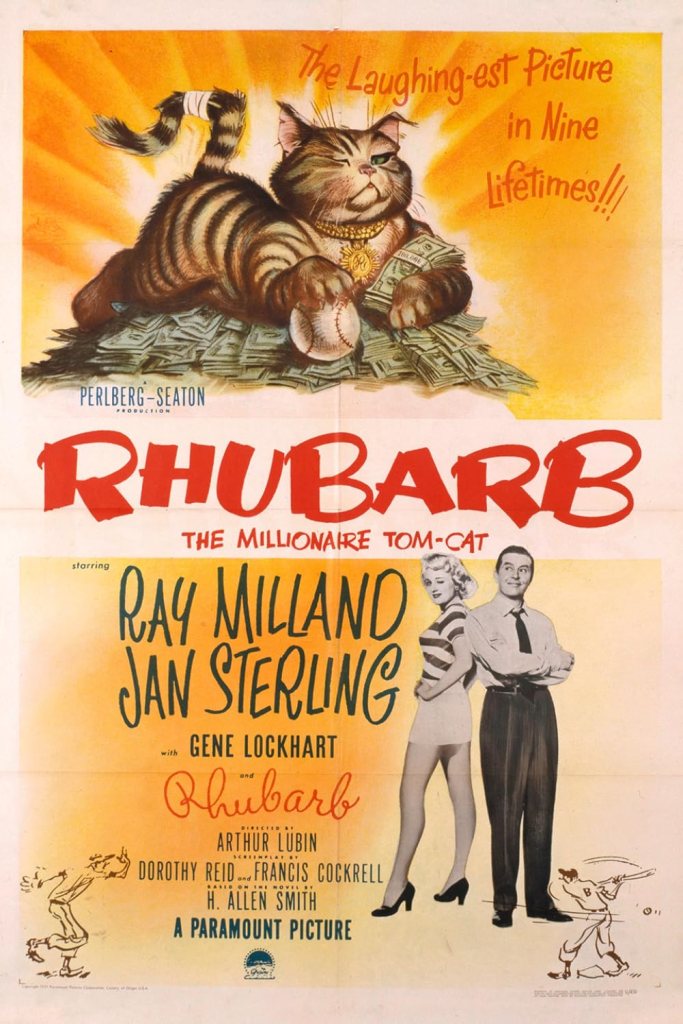
Orangey, the cat who famously belonged to Audrey Hepburn’s character in Breakfast at Tiffany’s, had an impressive and improbable film career beginning with 1951’s Rhubarb and ending with roles in TV series like Green Acres and The Flying Nun almost two decades later.
A new story in The Guardian charts Orangey’s film career and attempts to reconcile conflicting information about the famed feline. At least two cats played Orangey in Breakfast at Tiffany’s, while potentially dozens were used for Rhubarb, a comedy about a cat who inherits his wealthy late owner’s fortune and assets, including a baseball team.
“Watching the cat performances both within the movies and across the different titles certainly lends credence to the idea that Orangey was more a cat type, provided by trainer Frank Inn, than a specific animal,” The Guardian’s Jesse Hassenger writes.
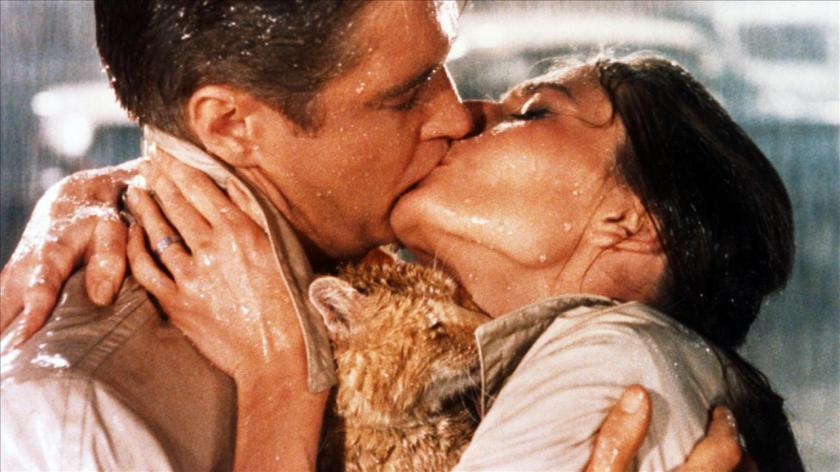
In fact, color mattered less than resemblance because most of Orangey’s appearances were in black and white, so it’s possible Orangey wasn’t always Orange. (Later performances were filmed in color and some films were subsequently colorized.)
Using more than one cat for a role is pretty standard in Hollywood films that feature felines. Keanu, the 2016 Key and Peele comedy about an eponymous kitten who is stolen by drug dealers, cycled through several kittens as the pace of production was simply too slow compared to the rapid growth of real life kittens. In 2024’s A Quiet Place: Day One, two very similar-looking cats, Nico and Schnitzel, shared the role of Frodo, the cancer-stricken protagonist’s emotional support animal.
Why do people steal cats?
In early 2023, more than 50 cats in and around Kent, England, were abducted and returned with patches of fur shaved off.
At first people suspected the perpetrators were engaged in some bizarre form of animal cruelty — and some later copycats, for lack of a better word, across the UK may have been motivated to cause distress — but authorities later said they believe the catnappers were checking to see if the felines were spayed or neutered.
If they weren’t, those cats were kept for breeding, while the others were dropped off where they were found.
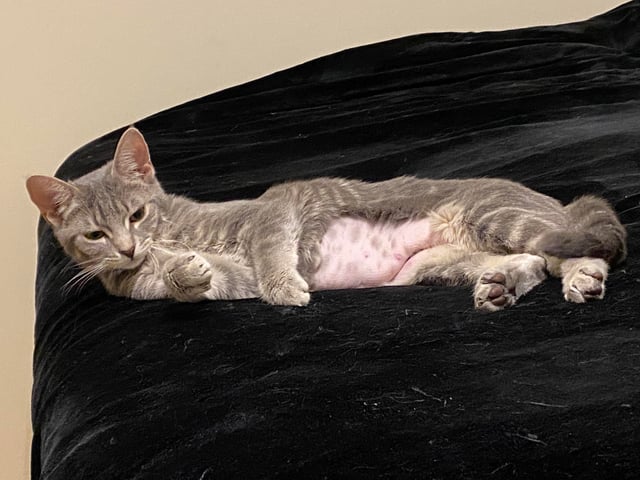
That rash of disappearances and other cases of car abductions factored into a staggering report from the Royal Kennel Club’s lost pets database: of the 25,000 pets reported missing in the UK between January 2023 and June 2024, more than 20,000 were cats.
Those cases and others are highlighted in a report from The Telegraph published on Thursday detailing the increase in reports of stolen felines. While the actual number of police reports are unknown due to discrepancies in the way such cases are classified by police, data from the Kennel Club and microchip companies, as well as anecdotes, indicate a concerning spike in cat theft even as the UK has mandated microchips for every pet cat.
Some, like the recent case involving an Amazon delivery driver, are crimes of opportunity. They’re spur-of-the-moment decisions by people who encounter cats they might want for themselves or people close to them.
Others, like the mass pet thefts in Kent, could have ties to larger organized crime operations.
And some are attempts to make a quick quid by petty thieves who count on the emotional bond between plpeople and their animals to demand ransom for the four legged family members, like one couple who abducted a woman’s cat and ransomed her for the equivalent of a few hundred dollars.
That woman, who was identified only by the pseudonym Helen in the story, said she was torn between getting her cat back and encouraging the people who took him.
“I was worried the same thing would just keep happening,” she told the newspaper. “It’s not something you want to encourage – paying to get your cat back – in case they do it again.”
 Pain In The Bud
I know about movie Rhubarb. Have been trying to find it quite a few years. When Netflix sent dvds through the mail they did not even have it. Breakfast At Tiffanys. Not sure why the facination with it. Hated it. One reason is she threw the cat in the alley way.
LikeLike
I don’t know, I’ve never actually watched the entire movie, just clips here and there over the years. I really should watch at least the “classics” everyone raves about.
LikeLike
Ok. Just found Rhubarb on Amazon. I will have to wait until i go to my clients house. But why pay for it when old movies are supposed to be free? I might look to buy it on dvd if i could find it.
LikeLike
Look on Bookfinder.com and choose the DVD option. I have found DVDs that are out of circulation that way.
LikeLike
“I was worried the same thing would just keep happening,” she told the newspaper. “It’s not something you want to encourage – paying to get your cat back – in case they do it again.”
She’s not taking into the account of “15 minutes of fame”. Some people do stuff just so they can see their name in print – which is much more frequent now than in the days before social media.
LikeLike
Do you mean if they get caught? In her case it was a couple of petty thieves stealing cats from the neighborhood and pretending to “find” them, although everyone knew they were the ones who took them. I don’t think their names ever got in the papers because they weren’t arrested.
LikeLiked by 1 person
I was talking more in generalization rather than that specific incident.
LikeLike
Ah, yeah. I agree. That’s why I think we should never use the name of, say, the guy who was the killer in Don’t F With Cats, and why the names of mass shooters should not be said or written. They want infamy and immortality, and we give it to them, which encourages others.
That’s one reason why I strongly dislike the “true crime” genre as well.
LikeLiked by 1 person
If I found what looked like a lost dog, I would take him/her home and put up posters for “Found Dog.”
I was truly embarrassed when one family insisted that I accept a payment for the rescue. I took the dog because it was an older puppy and it was gamboling around in the middle of the intersection. It turned out that it was right in front of their house. I felt that I had dognapped him for ransom.
LikeLike
They were probably just relieved it was someone well-intentioned and not one of the horror stories we keep hearing about. I would be relieved for sure.
LikeLike
I’m sure, but that was back in the 1980s when things were much calmer than they are today.
They were still grateful to get their dog back, and I gave them a lecture about letting him loose. He had broken out of their fenced back yard, though.
LikeLike
Yes. And another name should not be ever said but hey football seems to be more important than anything! My phone automatically sends stuff that i do not want to read or see. It said NFL legend Michael Vick. THAT POS IS AN ANIMAL KILLER. Society has a short memory. Not bashing football.
LikeLiked by 1 person
I could never get into it. Eleven minutes of actual play time in 3-hour broadcasts absolutely packed with commercials. It’s tedious.
Funny how they’ve convinced people that the commercials are a reason to watch the Super Bowl.
LikeLiked by 1 person
Hadn’t realised there’s so much cat-napping here in the UK (the Telegraph is not my go-to source of information, so I’m delighted to see that you also dip into the Guardian!)
LikeLiked by 1 person
The Guardian almost always has the most thoughtful coverage, in my humble opinion. I like how there’s still a newspaper industry in the UK and a culture that places newspapers at the top of the media. TV and bloggers can never replace the careful and dogged reporting of trained newspaper journalists, who have the reporting chops to break difficult stories and institutional clout behind them that often goes back more than a century or two.
We now have vast “news deserts” in the US, areas that no longer have any real media keeping an eye on government officials or even telling people what’s going on in their own towns, leaving people to turn to Facebook for their news.
LikeLiked by 3 people
I agree, good newspaper journalism is something to be treasured. However, I’m not sure how much longer the newspaper industry will survive here – I don’t think newspapers are on the radar of most younger Brits.
LikeLike
I’m sure that Buddy has told you that people steal cats because cats are cool, and the humans just can’t resist them. Putting aside the criminals, I think part of the issue is that cats have a tendency to roam around if they’re left outside. I’ve known of a couple of cats that fell out of open windows (and one who figured out how to open it). If they get scared and run, they may not know how to get home. I think they should update the microchips with a tracker, but that’s probably too expensive.
LikeLiked by 1 person
I’m sure there’s some way to power it biomechanically so it generates and stores power when the cat moves, but I’m not sure about miniaturizing an active signal, let alone one that could be picked up at a useful distance. The microchips are passive and don’t give off a signal, just a few lines of binary when scanned that translate to a name and phone number.
This would be a good question for engineers. I don’t have any expertise in that particular area. But it would be a game changer, especially because we often hear of cats that go missing for months or years and were within a few miles the entire time.
LikeLiked by 2 people
I believe that more people in England let their cats outside than is accepted in the US.
It’s becoming quite unacceptable in the US, because outside cats are vulnerable to all kinds of dangers, like dogs, coyotes, cars, people who hate cats, infections, and catnapping.
Maybe the English people will learn from these incidents to keep their cats indoors.
LikeLike
Yeah it’s a cultural thing, a lot of people in the UK believe cats should have access to the outdoors. I’ve even heard of rescues that won’t adopt to people who plan to keep their cats indoors. I don’t know what that would mean for someone in my situation. Aside from the fact that there’s too much traffic here, there would be no way for Bud to actually get back inside.
But I try not to judge people because their living situations and neighborhoods can be different, including people who read this blog. We all try to do what’s best for our cats.
LikeLiked by 1 person