Did A School Really Go Into Lockdown After A Teacher Confused A Chonky Cat For A Mountain Lion?

The latest viral cat story offers a lesson in healthy skepticism in today’s news environment.

Viral news accounts on social media and less scrupulous news sites have been buzzing this week about a school lockdown in Moses Lake, Washington, which was reportedly caused by a teacher confusing a particularly fat cat for a puma.

I saw red flags immediately while reading the story. While it did give a specific location, it was suspiciously devoid of other details, and the wording on all the posts and stories was dubiously similar. Additionally, a Google news search doesn’t turn up anything recent from reputable press.

Then there’s the photo, which looks a little too good to be true.

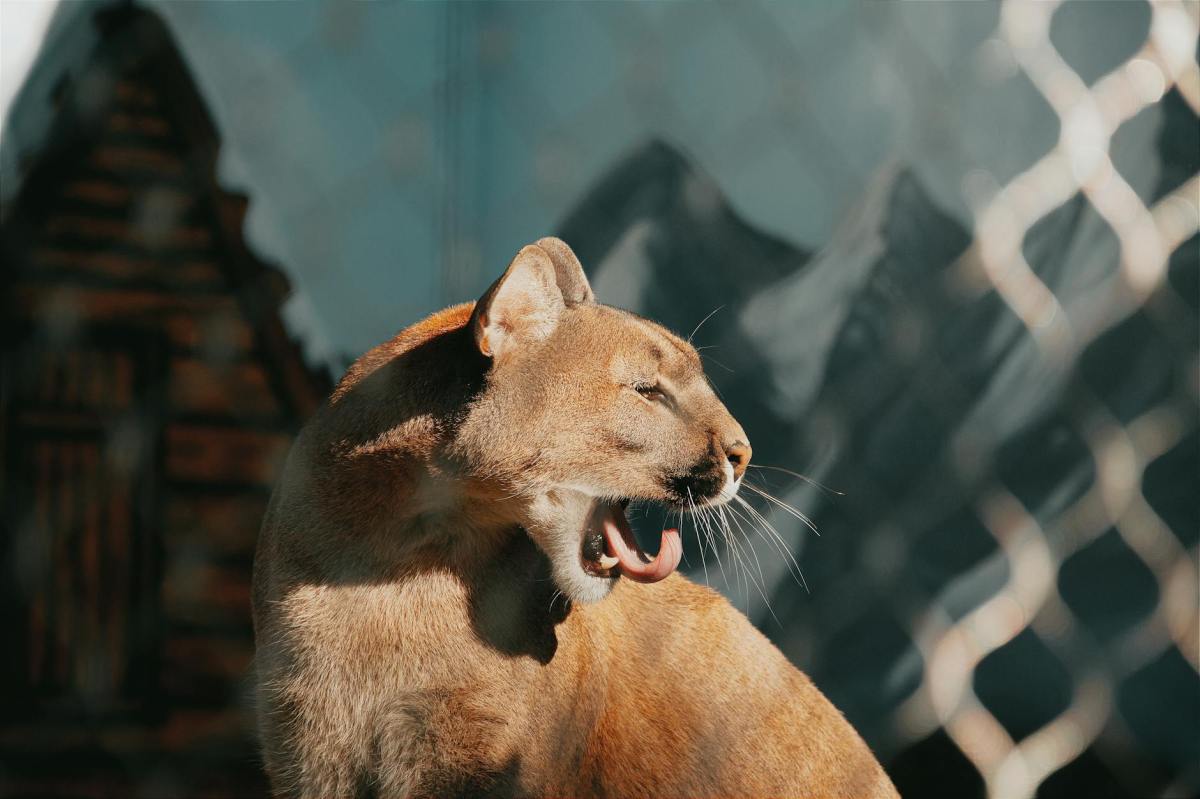
This photo is a Getty stock image and does not depict the domestic cat in the school lockdown story, despite accompanying it in dozens of news posts.

So did a school really go into lockdown after a case of mistaken feline identity?

Yes, but it happened in November of 2023, and the photo of the obese cat making the rounds in stories this week does not depict the cat in question. The original story was published by a local news site on Nov. 22, 2023, and says the school went into lockdown at 10:30 that morning, but was quickly lifted after staff confirmed there was no puma stalking the school grounds.

“…educators soon learned that the mountain lion was in fact, a “fat cat eating a rat,” according to the school memo to parents. 

‘While we take all reports seriously, this was the first report we’ve ever had of this nature,’ the school wrote in a statement. 

Despite the benign nature of it all, safety measures resumed to safeguard students and staff. Classes resumed as normal after a short period of time. “

As for the photo, the particularly rotund moggie’s image is a stock photo from Getty. It was used in a story about feline obesity in 2017 and an April 2018 story from the New York Daily News about public outrage in Jefferson, Iowa, where the police were shooting feral cats instead of dispatching animal control or working with local shelters.

Since the image is from a photo agency and predates the original story about the Washington school lockdown by at least six years, we can rule it out as an image of the feline mistaken for a mountain lion while settling down to a feast of fresh rat.

A deceptive image used to promote the story on Facebook.

So what happened here, and why are so many news sites and channels reporting this incident as if it just happened, accompanied by a deceptive photo that is not credited to Getty?

It’s classic clickbait. That is to say, some administrator or editor saw the old story picking up traffic or noticed a blip in certain search strings, and republished the story as if it’s new while omitting the original date.

Others noticed and followed suit to get the clicks while the getting’s good, fighting over the scraps that fall from the Zuckerbergian table in the form of ad revenue. The story is simple, sharable, has been paired with an amusing image, and is exactly the sort of thing people love to post and comment on via social media.

It’s a reminder to all of us to be skeptical about what we read, and to never take anything on Facebook, Instagram, TikTok et al at face value. In fact, it’s best to ignore anything on those platforms presented as news or fact. Everyone’s got their own preferences, but here at Casa de Buddy, we like the Wall Street Journal, Reuters, The Guardian, Associated Press, al Jazeera, the BBC, and aggregators like RealClearPolitics.

That doesn’t mean they’re above reproach or that everything they produce is a sparkling example of journalism, but they’re institutions that operate under the traditional rules, staffed by professionals who take pride in trying to get stories right. I’ll take that any day over a random Facebook account run by some shady guy in Macedonia or Belarus, who will post anything as “news” as long as it brings him clicks and ad revenue.
Another Serial Cat Killer, This Time Fresh From Prison, Goes Right Back To Killing Strays. Clearly, Existing Laws Are Not Enough

When serial cat killers serve sentences of less than a year due to plea deals and early release for good behavior, how much deterrent value do our laws have? Not much, it seems.

Note, 5/3/2025: We’ve heard from two readers who say the MyNorthWest report contains inaccuracies. We’ve reached out to the police and will follow up with police and courts on Monday to verify the facts and correct potential misinformation. Apologies for the confusion.

Every couple of months, at least in the last year or two, I’ve slowed down on posting, and almost always for the same reason: my cat-related news alerts are  seemingly endless streams of depressing stories about people shooting, strangling or dismembering cats.

It never ends, and sometimes it’s so overwhelming that I’m put off from writing for days. At the same time, I am not a believer in the idea that all animal blogs should be saccharine feel-good fests about fluffy kittens and TikTok videos of cats doing silly things.

There’s always a place for celebrating cats, but if they’re in danger, and if the stories point to wider trends that cat lovers should know about, then I think it’s our responsibility to remain educated. Not only so we can guard against threats to our little friends, but also so we can add our voices to the chorus calling for tougher laws and greater accountability.

That’s ultimately what this is about: accountability.

Stories about two cat serial killers in about a week have made it clear that even the strengthened animal protection law — the Preventing Animal Cruelty, or PACT Act — passed in 2019, during the first Trump administration, raising animal cruelty and murder to the level of a felony, are still not enough. They’re not a deterrent, especially when the convicted abusers and killers end up serving a year or less because prisons are overcrowded and the wider law enforcement community still doesn’t take animal-related crime as seriously as other violence.

Antoine Leander Runner Jr. is a serial murderer of cats. The Seattle man was recently released from prison after serving just a year for a felony animal cruelty conviction.

The 43-year-old’s modus operandi was setting up crude, homemade snares and traps to capture and harm felines. He was also known in cat rescue circles, where he posed as a cat lover and took advantage of programs to get free supplies, including “cat food, kennels, collars, leashes, and treats to lure cats and kill them,” according to MyNorthWest, a Seattle news site.

When locals discovered new homemade traps in Runner Jr.’s old haunts and trail cameras picked up images of the man himself stalking wooded areas, neighbors called police and area shelters. The evidence showed Runner Jr. was allegedly visiting cat colonies at night and had picked up right where he left off. One colony cat’s body was discovered on March 31, “disemboweled and publicly displayed.”

“Animal Control confirmed the injuries to the cats were human-caused,” MyNorthWest reported, adding that it appears Runner Jr. was visiting colonies “every night” to hunt cats.

Above images by u/picardhasyourback, posted to the SeattleWA subreddit. Click on the images to see full-size versions.

Runner Jr. was picked up by Seattle police this weekend after a neighbor spotted him in a wooded area and phoned authorities. The convicted cat killer, who had a new bench warrant out for his arrest, was charged with a misdemeanor, but more charges are likely as police investigate his latest alleged attacks on Seattle-area cats.

The Seattle man was originally arrested for killing cats in 2023, but was released early. The Seattle area was also terrorized by a serial cat killer who stalked the area in 2018, mutilating cats so badly that I won’t repeat the details on this blog out of respect for readers.

It should be made clear that Runner Jr. was not connected to the 2018 killings, but police should reconsider those cases as well because if it turns out Runner Jr. is guilty of these latest cat murders, it will be abundantly clear that he is a high recidivist offender who cannot be trusted to leave the animals alone. He should serve a long, unabridged prison sentence and be subject to constant monitoring when he’s released.

Antoine Leander Runner Jr. was arrested this weekend by Seattle police. Credit: Sarah Seiler/Facebook Georgetown Community Discussion Group

What’s the solution here? Increasingly tough criminal penalties for animal abuse and murder? Expensive monitoring equipment to watch over every cat colony? Education and training for law enforcement so violence toward animals is taken as seriously as it should be?

I hate to keep pointing out that people who harm animals are likely to “graduate” to harming humans, as many studies have shown, because it implies that we should only be concerned about animal abuse for its tendency to turn into human abuse. It obscures the fact that animal life is intrinsically valuable, and that cats — and dogs, many bird species, mammals and marine life — are sentient, with their own thoughts and emotions. But if that’s what it takes for people to take this sort of thing seriously, then it’s worth repeating the point.

Bird Flu: Study Warns Virus Has 90% Mortality Rate In Cats, Wild Pumas Succumb To Infection, Sanctuaries On Alert

“If you feed your pet contaminated raw meat or milk, they will likely die. I’m not exaggerating, just giving it to you straight,” one infectious disease specialist warned.

In more disconcerting news from the bird flu front, a new study warns of exceptionally high mortality rates for cats who are infected with the virus.

The study found 89.6 percent of avian influenza cases in cats are fatal, making the virus a virtual death sentence.

That applies to all species of cats, from the true big cats in the panthera genus — tigers, lions, jaguars and leopards — to felines, a broad group that includes domestic cats, lynx, cheetahs, pumas, ocelots, servals, jaguarundis and others.

“We don’t know if the cats are more susceptible than anybody else,” the American Veterinary Medical Association’s Michael Bailey told USA Today. “It’s just the fact they’re exposed to higher viral burdens because of where they go.”

Whether cats are more susceptible is up for debate, but one SPCA chapter said felids of all species are “uniquely vulnerable” to avian influenza because there are so many ways it can be transmitted to them by doing nothing more than what they typically do.

https://platform.twitter.com/widgets.js

Cats can be infected by catching and eating birds and mice, drinking raw milk, eating raw meat (including commercial raw pet food), and exposure to infected animals, including cows.

In Washington state, two wild pumas died after contracting the virus from prey, a development Panthera puma director Mark Elbroch called “troubling.”

“It certainly raises eyebrows and makes one wonder: is it indicative of a bigger pattern out of sight?” Elbroch asked, noting pumas are at the top of the food chain in the Pacific northwest.

mousegeoffreyscat

To date, as many as 900 cattle herds across the US have tested positive for bird flu, according to the US Department of Agriculture, while two thirds of California’s dairy farms — 660 out of 984 — had confirmed cases as of Dec. 26.

Bird flu was the confirmed cause of death in a house cat from Washington who died after eating Northwest Naturals commercial raw food, which has since been recalled. Three house cats in Texas succumbed to the virus, which they possibly contracted from hunting mice. The bird flu was also responsible for the deaths of two domestic cats in California who drank raw milk, and 20 of 37 wild cats — including a tiger, several pumas, bobcats and a Geoffroy’s cat (pictured at left) — at the Wild Felid Advocacy Center, a sanctuary in Washington.

adorable cream kitten drinking milk outdoors
Contrary to popular belief, cats are typically lactose intolerant. Credit: DHG Photography/Pexels

Veterinarians are warning people to keep their cats indoors and to avoid raw meat diets, which have become more popular in recent years. Cats should not be given cow’s milk anyway, since most are lactose intolerant. As a general rule, kittens should consume milk from their mothers or kitten-specific formula, but should not be given milk from any other source.

“If you feed your pet contaminated raw meat or milk, they will likely die. I’m not exaggerating, just giving it to you straight,” tweeted Dr. Kristen Coleman, an assistant professor at the University of Maryland’s School of Public Health.

While the west coast accounts for the majority of confirmed bird flu infections, the virus continues to spread. A map from the Centers for Disease Control shows where infections have been verified as of late December:

Credit: Centers for Disease Control

Unfortunately, the bird flu outbreak comes on the heels of a heavily politicized pandemic and a major loss in trust in American institutions like the CDC after efforts to obscure the origins of SARS-CoV2, the virus that causes COVID-19.

It’s not clear if the fallout will make Americans less likely to heed warnings about bird flu and other potential viruses, but animal welfare groups and virologists say people can keep their cats safe with a handful of common-sense steps.