A longtime veterinarian in Alabama has been arrested and charged with animal cruelty for hitting, choking and dropping a terrified cat in his exam room, according to police.
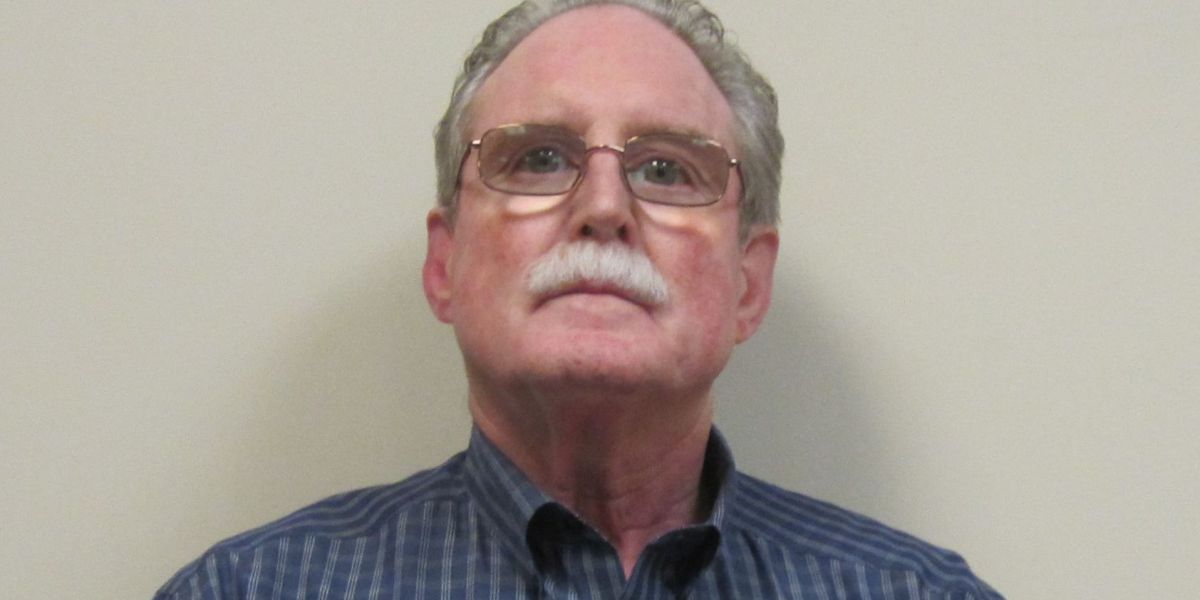
Richard Timothy Logan, 65, is a veterinarian at Andrews Avenue Animal Hospital in Ozark, Alabama.
A man identified as Logan was examining a calico cat in November, in an exam room at the animal hospital when he grabbed the cat by the scruff of her neck and punched her on the top of her head with a closed fist, video of the exam shows. Still holding the cat by her scruff, he slammed her down onto the exam table, then did it again more forcefully.
Logan then swiped the cat off the exam table, causing her to fall to the floor.
Logan steps out of the frame for several seconds, then the video cuts forward, showing Logan again with his hands on the cat as a veterinary assistant holds the terrified, screaming feline down.
He punches the cat a second time, makes an annoyed gesture, then picks the cat up by her collar and dangles her as she struggles.
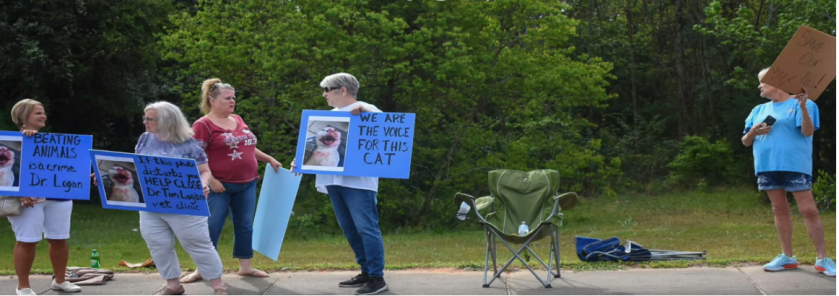
Animal rights activists and local people outraged by the video protested outside Andrews Avenue Animal Hospital this week, holding signs of the abused calico and demanding the Alabama State Board of Veterinary Medicine — which is conducting its own investigation separate from the criminal probe — revoke Logan’s license.
“We’re hoping for awareness, first of all, of animal abuse and we’re hoping that Dr. Logan will lose his license,” cat owner Rhonda Eller told Alabama’s Dothan Eagle. “There should not be veterinarians that don’t love animals and care for animals. Obviously, they should choose a different profession.”
Some of the protesters were clients of the animal hospital, and were alarmed not only by what they saw on the video — which was anonymously posted to Facebook on April 5 — but what may have happened behind closed doors when they brought their own pets in.
“I’ve been coming here so long, leaving my animals overnight [or] for a week when he said they needed it,” Michele Brown, a client of the hospital, told the Eagle. “What has happened to my animals while they were here and I never knew it?”
Neither Logan nor the animal hospital have issued public statements on the allegations, but Logan’s attorney, David Harrison, is acting as if the video does not show his client terrorizing a cat who was supposed to be in his care.
“He is a good veterinarian and people are destroying this man’s reputation,” Harrison told WTVY, an Alabama local news station. “I have instructed Dr. Logan to file a lawsuit against all who have smeared lies on social media. Facebook is not a court of law.”
Protesters stand across from Andrews Avenue Animal Hospital in Ozark, Alabama, this week.
Logan was charged with two counts of cruelty to animals.
Under Alabama law, if Logan is convicted, the most severe potential sentence is a $3,000 fine and up to one year in county jail. Because he doesn’t have priors, if he’s convicted he’s not likely to serve any jail time. Animal cruelty is a misdemeanor in Alabama’s penal code.
In the meantime, comments from Dale County District Attorney Kirke Adams do not sound promising.
“While this video is deeply concerning, I would like to take this opportunity to implore people to have this same concern over child victim crimes and gun violence,” Adams said, appearing to downplay the severity of the allegations against Logan.
The cat “is alive and doing better with its owner,” Ozark police wrote in a statement posted to Facebook. Cops say they’ve interviewed the owner as well as “other witnesses.” It’s not clear if those witnesses include the veterinary tech who was present or other employees at the animal hospital, nor did police say who filmed the abuse.
Top photo: Richard Timothy Logan mugshot courtesy Ozark Police Department
A protester at Andrews Avenue Animal Hospital
A protester stands outside of Andrews Avenue Animal Hospital in Ozark, Alabama, this week.
The Cat Man of Aleppo has survived bombs, chemical gas, a siege and a risky flight to Turkey as he’s cared for people and cats suffering in Syria’s civil war.
Human beings have lived in the city known as Aleppo for more than 4,000 years, making it one of the oldest continually-inhabited settlements in human history.
But as the raging civil war in Syria expanded and bombs began to fall on the country’s largest city, there was an unprecedented mass exodus — reducing Aleppo’s population from 4.6 million in 2010 to less than 600,000 by 2014.
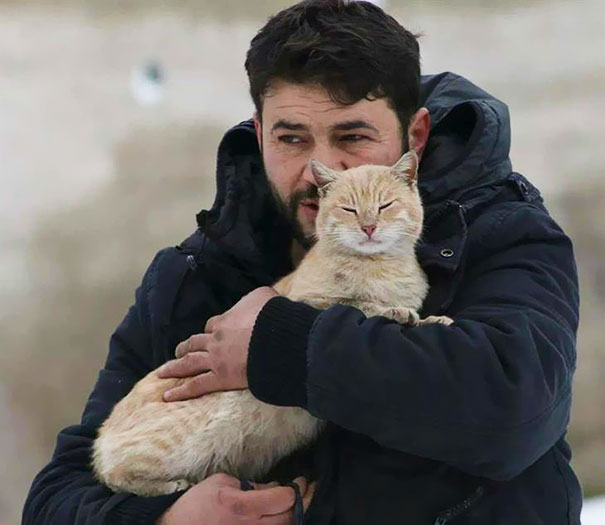
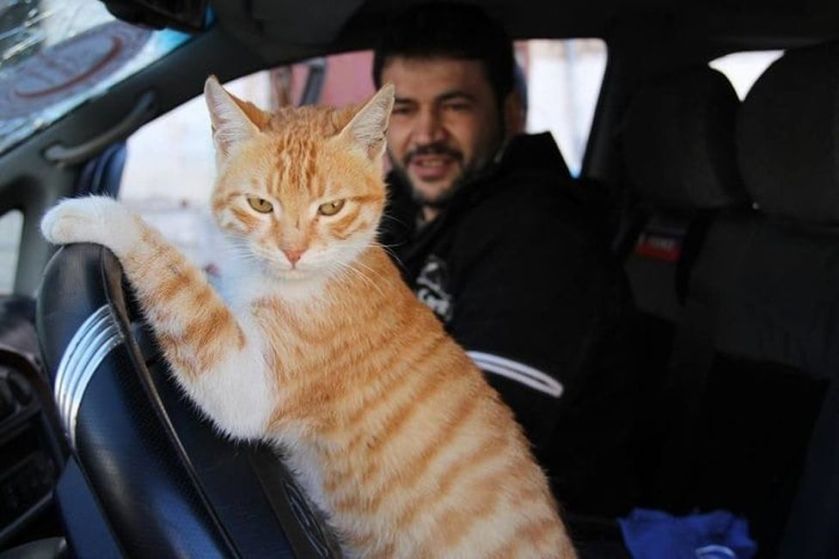
Mohammad Alaa Aljaleel was one of the stubborn few who stayed. His wife and children fled to safety in Turkey in 2015, but anchored by his commitment to people who couldn’t leave, Aljaleel stayed behind to continue driving his ambulance and feeding a growing population of abandoned cats.
At first friends and acquaintances turned to Aljaleel to take their cats as they prepared to flee the crumbling city, knowing he was fond of felines and would care for them as his own.
Others heard about the “cat man of Aleppo,” and soon Aljaleel’s home became a sanctuary for former pets from all over the city, which was becoming a ghost town.
With few remaining people to feed them — and food sources like restaurant dumpsters drying up — hungry stray cats started showing up too.
“Since everyone has left the country, including my own friends, these cats have become my friends here,” Aljaleel said in 2016, as a BBC camera crew filmed him among the hundreds of cats in his care.
Aljaleel, the Cat Man of Aleppo, hugs a tabby in his care.
One day a car pulled up and a little girl stepped out, cradling a cat.
Her parents “knew there was a cat sanctuary here,” Aljaleel told the BBC at the time. “The girl had brought the cat up since she was a kitten. She cried as she handed her over to me, and they left the country.”
For many people leaving the city in search of refuge in Europe or elsewhere in Syria, the decision to leave a beloved pet was agonizing.
But entrusting a cat to Aljaleel and his makeshift sanctuary — where the animal would be fed and well cared for — was much more palatable than making it to the border of an EU country only for a border guard or customs official to refuse the cat entry, forcing families to choose between pet and safety.
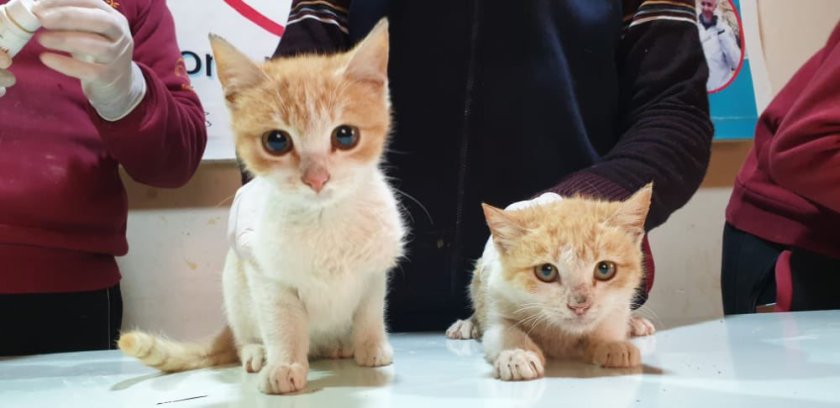
Kittens who were brought to Ernesto’s Sanctuary with their mother.
For people like the little girl, knowing their cats were in Aljaleel’s sanctuary meant maintaining a tie to home and hope that they could return.
“I’ve been taking photos of the cat and sending them to her in Turkey. She begs me, ‘Send me photos of her. I miss her. Please promise to return my cat to me when I get back.'”
That was in 2016. Almost five years later it looks like the young girl won’t be returning to Syria, and her cat is likely dead.
After Aljaleel’s makeshift cat sanctuary swelled to include more than 200 cats, things took a turn for the worse.
The Syrian government and rebel forces dug in, calling on allies for support and resources. ISIS and Iranian-backed insurgents entered the fray, seeing opportunity to advance their own interests amid the chaos.
So too did Russia and the United States. Both countries treated the conflict as a proxy war, with Russia backing Assad and his Syrian government forces, while the US and its allies threw their support behind an opposition that grew out of the Arab Spring in 2011.
The US and Russia provided the combatants with training and weapons systems, increasing the destructive firepower at the command of the belligerents. Both countries sought to advance their geopolitical ambitions in the region when they entered the conflict.
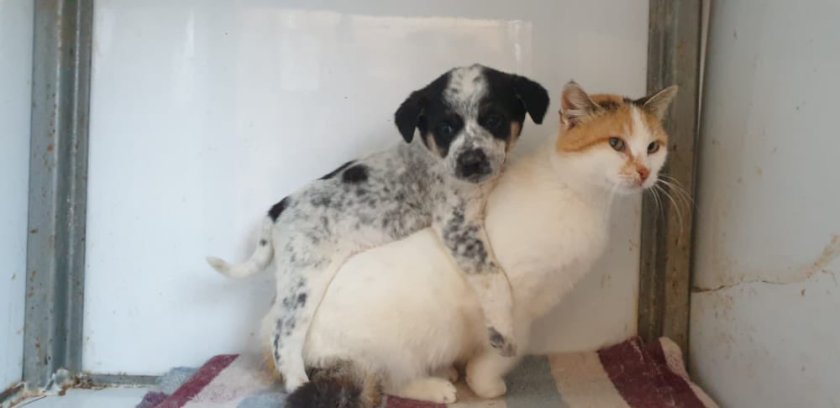
Not just cats: Alina and Samira are best friends and are inseparable. Credit: Ernesto’s Paradise
In internal memos justifying intervention in Syria, the US State Department predicted the civil war would flare out in months. Instead, the war has now lasted more than a decade, and in a move The Guardian called “a bloody end to [former President Barack] Obama’s reign,” in 2016 the US dropped 26,171 bombs on countries in the Middle East, with Syria absorbing the lion’s share.
Perhaps it was one of those bombs — or a bomb from Russia, or one of Syrian dictator Bashar al Assad’s own warheads — that obliterated Aljaleel’s sanctuary. It’s unlikely anyone will ever know. But one thing all sides agree on is that the chlorine gas was courtesy of Assad, who has not hesitated to use chemical weapons against his own people in the bloody war.
Weeks after Aljaleel was featured in a BBC short about the impact of the war, Aljaleel “watched helplessly as his cat sanctuary was first bombed, then gassed during the intense final stages of the siege of Aleppo,” per the BBC.
Some 180 of the 200 or so cats who found refuge with Aljaleel were killed by the bomb and the chlorine gas, and the stubborn man who dug in his heels and cared for Aleppo’s cats while everyone else fled finally gave up on his city.
Aljaleel and his cats survived the power outages, the destruction of the water works, the food shortages and a military siege of the city, but now the Cat Man of Aleppo was just a cat man in an ambulance.
He packed the few surviving cats, his meager possessions and a few sick, injured or elderly people into an ambulance and joined a convoy of civilians escaping the crumbling city. It was a tense and perilous journey, as those who fled knew Assad had no reservations about targeting his own people if it served his goals.
After seeing his family and recovering in Turkey, and with the help of an Italian benefactor and a growing community of supporters on social media, Aljaleel took his cats and his friends to a rural area in Syria, far from targets of opportunity, where he purchased a plot of land, put down roots and began his sanctuary anew.
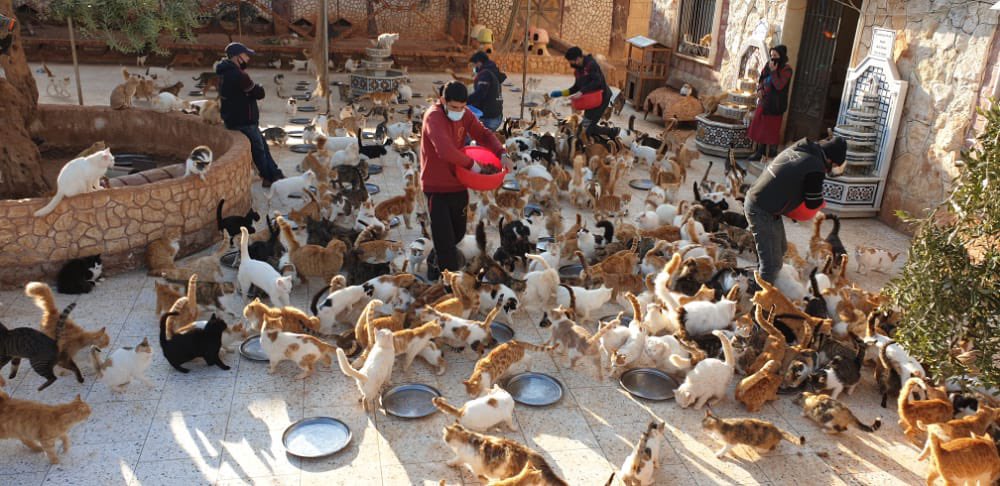
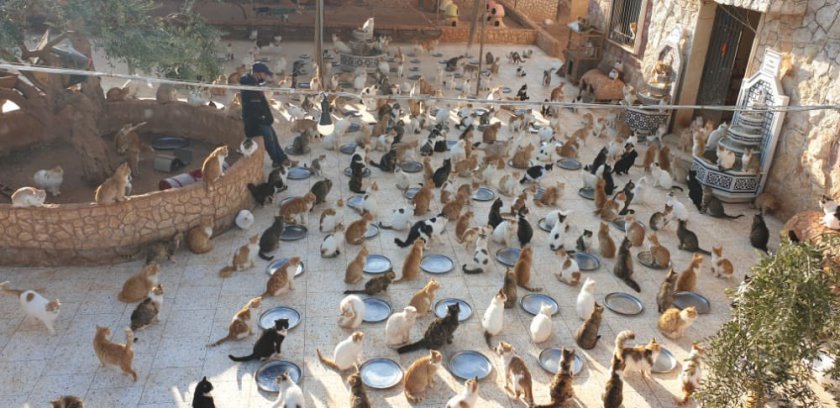
Even in war, cats know when it’s time to eat. The kitties of Ernesto’s Paradise wait by the more than 100 plates set out for them, eager for meal time. Credit: Ernesto’s Sanctuary.
That sanctuary is called Ernesto’s Paradise, named after Aljaleel’s own cat.
Ernesto’s Paradise is home to several hundred cats, plus four monkeys, horses, rabbits and dogs. There’s a playground for kids and — after a long search to find a veterinarian who hadn’t fled — Ernesto’s finally has a doctor in the house too.
The civil war in Syria has created perhaps the worst refugee crises in modern history, with millions fleeing to Europe and elsewhere in search of sanctuary.
The war had claimed 387,118 souls as of December 2020, according to the UK-based Syrian Observatory for Human Rights. Another 205,300 were missing and presumed dead, according to SOHR. In addition, more than 88,000 people have been tortured to death in Assad’s prisons, while thousands more were taken by ISIS and other terrorist groups operating in the country.
But “children and animals are the big losers” in war, Aljaleel told the BBC, and that’s why he chose to return.
“I’ve always felt it’s my duty and my pleasure to help people and animals whenever they need help,” he said. “I believe that whoever does this will be the happiest person in the world, besides being lucky in his life.”
You can follow and support Aljaleel’s work via Twitter, Facebook and by visiting his sanctuary’s official site. Direct donations to the sanctuary can be sent here.
This Buddy was missing for more than two weeks but was determined to make his way home.
Today we’re bringing you a story about another Buddy the Cat from New York, a well-loved domestic shorthair who went missing before a series of snowstorms walloped the New York City area.
This Buddy belongs to John Forestieri of Southold, NY, a town in Suffolk County, at the easternmost tip of Long Island. Forestieri brought the little guy to Fork Animal Hospital in Southold on Feb. 8 for surgery, but on the way out of the veterinary office something spooked Buddy and he bolted from his carrier.
Forestieri searched for his missing feline friend and enlisted the help of others. The veterinary office wasn’t far from his home at just more than two miles away, but a storm was bearing down on the area and Buddy would have to cross busy roads to make his way back.
“I walked for miles, for days and days and days,” Forestieri told local media. “Then the weather got nasty. I didn’t give up on him, but I did think, ‘I don’t think I can do anything for him now.'”
The New York area was already deep into winter weather after it was blanketed with more than a foot of snow on Feb. 2 in one of the worst winter storms in recent memory. A second snowstorm dumped another half foot of snow on the day Buddy went missing. To make matters worse, New York was caught in the deep chill that enveloped most of the country, knocked out power to millions and set new records for low temperatures.
“At first I was holding out hope that he’d be able to stay warm,” Forestieri said.
The Long Island man was beginning to think the worst when he was awoken by scratching outside his sliding door at 4 a.m. on Wednesday morning.
Forestieri was overjoyed to see his Buddy. The cat, who’s been with the family for 10 years, was skinny and his epic trek had taken a toll on him, but he was otherwise okay. He cried out to Forestieri, and the Long Island man said he cried too — tears of joy at his cat’s safe return.
“I thought I was dreaming,” Forestieri said. “But he did it. He found his way home.”
The sacrifices mom cats make for their kittens illustrate that cats are capable of great empathy and love.
One of the most compelling cat stories I’ve ever heard involved a reader of this blog, a woman who took in a white stray she named Snowy.
Snowy was a street cat who was always with a male cat, and the woman fed them both whenever they came by. Soon it became clear Snowy was pregnant, and her trusting tom — the father of her babies — nuzzled her goodbye as Snowy accepted the woman’s invitation to move inside at least temporarily so she’d have a safe place to give birth to her kittens.
In the three weeks that followed, Snowy raised her kittens in the woman’s home, and the tomcat would come by daily to see her and their little ones.
Snowy died when a pair of dogs climbed the porch steps, snapping at her kittens. Snowy fought the dogs off while her babies escaped, but she died from her injuries.
The poor tom who had been her constant companion came by the next night and meowed for her. He showed up again and again, meowing mournfully each night, distraught at her disappearance.
The story shows cats are capable of extraordinary empathy and love: The love between Snowy and her mate, who was protective of Snowy and loving with their babies, an unusual trait in toms. The love Snowy had for her babies, sacrificing her life for theirs. And the love the crestfallen woman had for those kittens when she returned home and found Snowy dead and the kittens hiding.
Another story of a mother who gave her life for her kittens reinforces the idea that cats are capable of great love and empathy.
When a mobile home in Pasco County, Florida, caught fire this week, the man who lived there was able to escape but his cats were trapped and firefighters couldn’t reach them.
Molly’s mom sacrificed her life to save the 2 1/2-week-old kitten.
The mother cat covered her kittens with her body, laying on top of them and remaining there even as the fire scorched her.
When firefighters poked through the debris, they found the cat and her kittens. The mom and one of her babies died at the veterinary hospital, but one kitten survived.
“It seemed as if mom did everything possible to protect her kittens, even risking her own life in their defense, but the flames and the smoke were too much,” said Rick Chaboudy, executive director of the Suncoast Animal League. “But mom managed to protect one of her kittens from the blaze, enough to give that kitty a chance at life. Other than her whiskers being burned completely off and a slight odor of smoke, she is doing well with her bottle feeding and her cuddling.”
Staff at the shelter named the kitten Molly after Molly Williams, a former slave who became the first black female firefighter in the US. Molly the kitten is expected to make a full recovery.
What’s that? A tear, you say? Absurd! Buddy and I do not cry. Now if you’ll excuse us, we’re going to toss a football around, talk about trucks and fix some things around the house with power tools.
“In addition to being handsome, I am very meowscular and I know kung fu!”
Istanbul is famous for its cats. We spoke to Basak Bugay, an Istanbul native and cat lover who cares for strays in her neighborhood.
It wouldn’t be hyperbole to call Istanbul a city for cats.
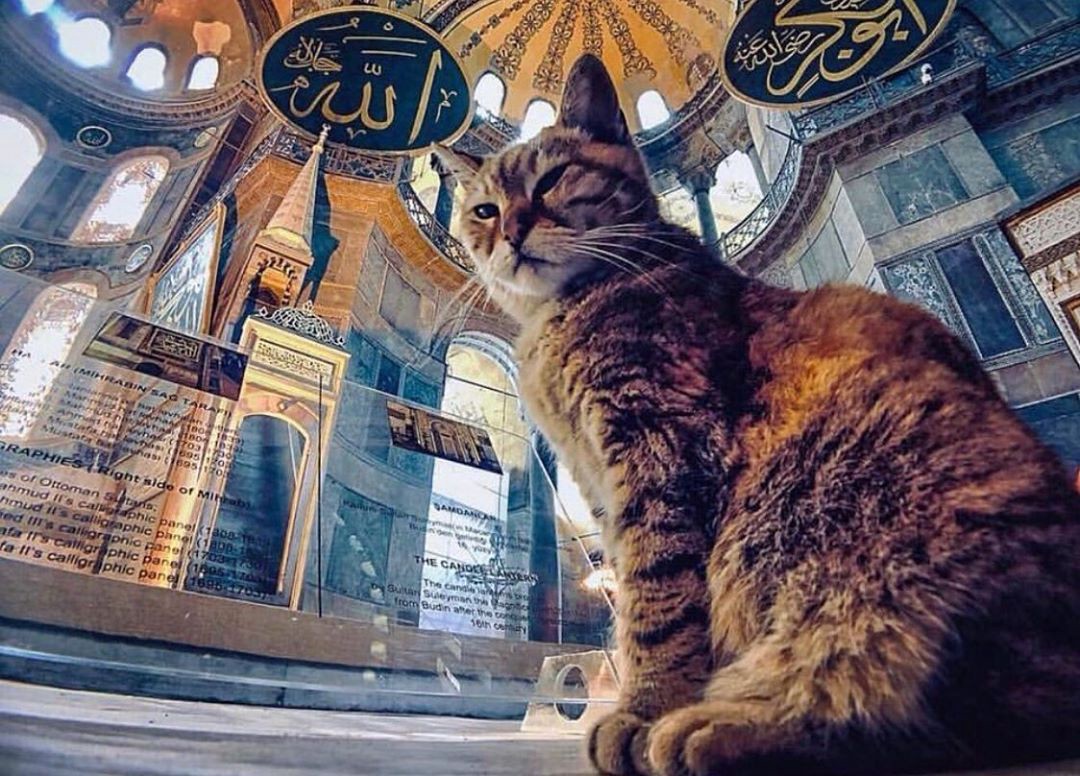
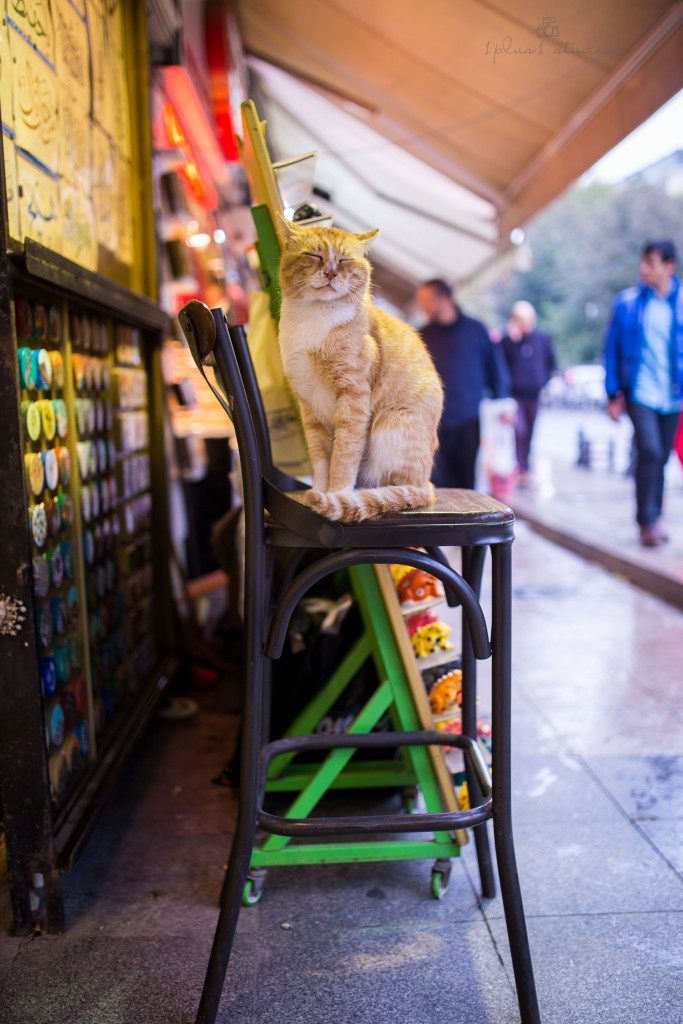
Felines are everywhere in this metropolis of 16 million, from the beloved — and famous — cats of the Hagia Sophia, to the shop cats lazing away their afternoons in bookstores and cafes, to neighborhood strays who enjoy the protection and care of entire communities.
Europe’s largest city is an example to the rest of the world, a vision of what life looks like when virtually everyone respects animals and pitches in to care for them.
We were fortunate enough to catch up with Başak Bugay, an Istanbul native who loves cats and cares for a small pride of strays in addition to her own beloved cat.
Thanks for joining us, Başak! Can you tell us a little bit about you, what you do for a living and whether you’ve got cats of your own?
I’m a 41-year-old visual artist living and working in Istanbul. Though I was born here, like the majority of Istanbulites, I have my roots in different regions of Anatolia. It’s not really easy to survive as an artist in Turkey, but that is the path I chose.
I live with [my cat] Minnosh in our home! I am so grateful for her presence and feel blessed to be chosen by her. She is one of the kindest souls I have ever met and yet a great inspiration as a survivor. It may sound funny but somehow she reminds me of my beloved grandmother who was a very strong woman… Minnosh (Turkish for “little darling”) came into my life years ago when she was a stray. She would spend the day at my studio and would leave with me at the end of the day.
Sometimes, especially during cold winters, she would follow me to my apartment and spend the night there. Strays are usually very anxious if they don’t have access to go out and it is not easy (in my opinion also not fair) to force them to stay inside. So she was not into being a house cat until the day she had a car accident. She suffered a broken leg and tail. After several surgeries at the vet, I took her home. It’s been 3 years now and she shows no more interest in going outside. She is 11 or 12 years old, having a happy, peaceful retirement at home.
For readers who may not be aware of Istanbul and the special place cats have there, can you tell us a little bit about the city and its relationship with cats?
It has always been a cat city and it is even more today. Istanbul is a big metropolis of more than 16 million inhabitants. As someone who was born and grew up in Istanbul, there are some quarters even I’ve never visited.
The life, culture and social habits vary from neighborhood to neighborhood; whether those neighborhoods are upper or lower class, secular or conservative, strays are everywhere and people take care of them.
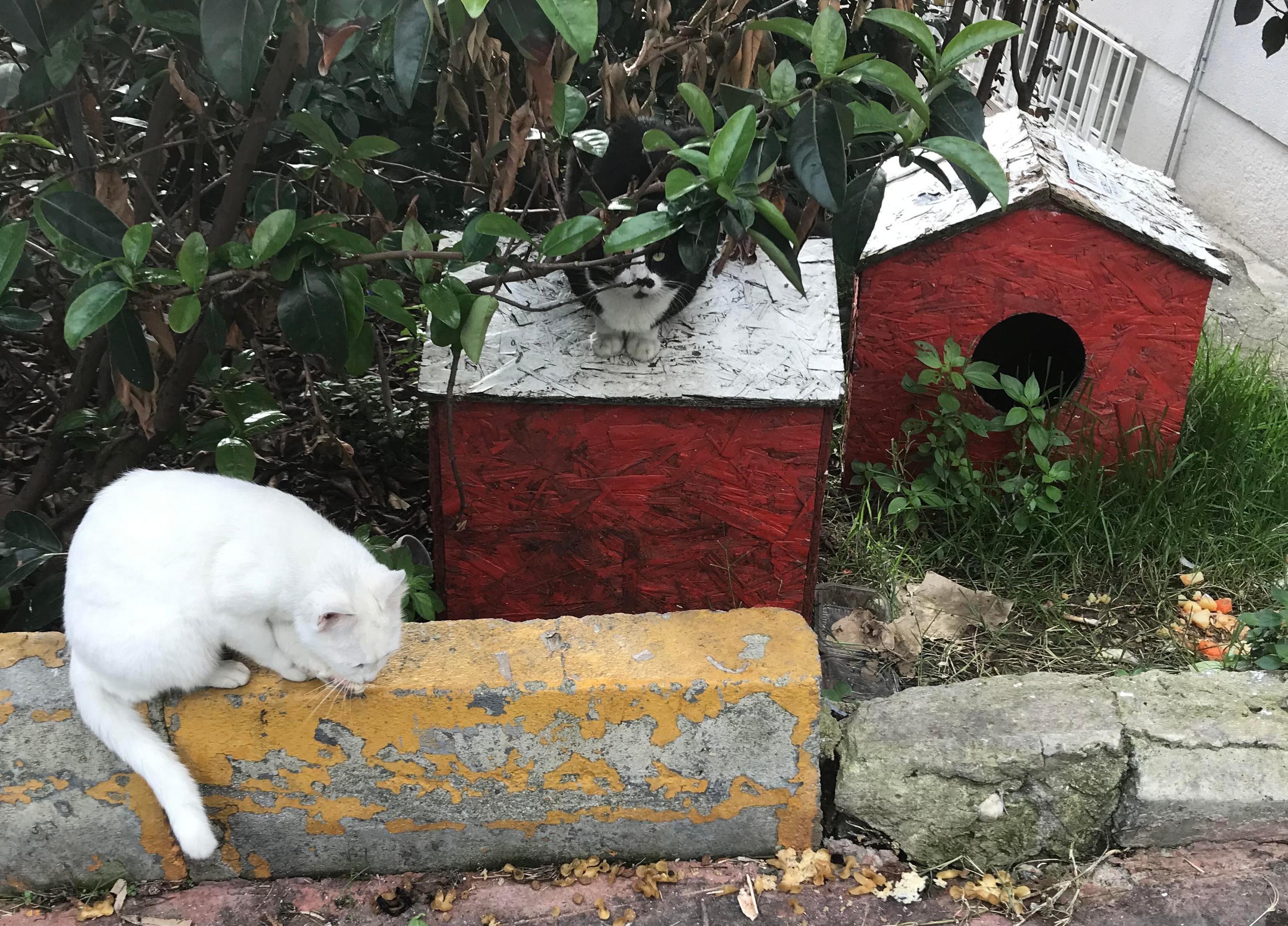
Street cats hang out near shelters built for them by people in the neighborhood. Credit: Başak Bugay
For the last few years almost all shops, markets, cafes and even shopping malls or hotels have started to put food cans and shelters in front of their door and some even host them inside. As a good example, a few years ago during snowy winter days, a fashion store opened its doors to stray cats and dogs for them to pass the cold nights inside. Best advertisement ever!
People in Istanbul have the common manner to take care of the animals, punish the ones who treat them badly and reward those who do good things. In my quarter you may see several cat houses and some of them are made by real estate agencies with their logo on the top! In addition, local authorities have special units for strays: They have a 24/7 emergency service, they do sterilization and bring them back to their neighborhood, they vaccinate stray dogs and replace cat/dog houses on the streets. It’s not all rainbows and flowers, but I think things are improving.
Is caring for cats an unwritten rule among the people of Istanbul? Is it embedded in the culture?
Not only the cats but also the dogs and the birds. Although it varies from region to region, it looks like this has been part of our culture for a long time. An important element of Ottoman architecture, for example, is bird shelters on building facades.
A restored bird shelter built on the facade of an Ottoman-era building.
Beginning in the 20th century the city was famous for its dogs. Sultan Mahmud II, who could be considered as a dictator of his time, initiated some strict restrictions, in an attempt to westernize the country and institute so-called civilization reforms. One of his decrees was to deport a thousand stray dogs to an isolated island off Istanbul. Despite being a totalitarian dictator, Mahmud II bent to the will of the people who wanted the dogs back, so they were brought back.
People usually say that the love for cats among Turkish people finds its roots in Islam, but it cannot be the only reason, because dogs who are considered “dirty” according to religion are well protected too. Recently the municipality of Konya, which is the most conservative city of Turkey, started a new program to rehabilitate dogs and place them in new homes, with a monthly stipend for caretaking expenses.
With regard to cats, it is said that the story of cats’ domestication had started in Anatolia as the most ancient land where agriculture was developed. That could be another reason why we are a whale for the cats. However I was surprised to see the absence of cats in the east of Turkey; there were really very few even in Van which is famous for its cats. Istanbul and probably the west coast of Turkey has the majority of the cat population in the whole country.
Recently there was a viral video of a man pushing a cart through the street in Istanbul when he came upon a cat drinking from rainwater collected in a puddle in the street. The man waited patiently for the cat to finish drinking, then went on his way. Is that a common scene there? Have you seen any simple acts of kindness toward cats?
Although there are some people who aren’t so nice to cats, yes, this kind of kindness is common and I see it all the time, not only in Istanbul but almost all around in Turkey. There is this story about prophet Mohammed: he wanted to get up but a cat was sleeping on the sleeve of his cardigan. Instead of waking the cat up, he cut his sleeve off. That kind of story might have a cultural impact and influence the behavior of Muslims.
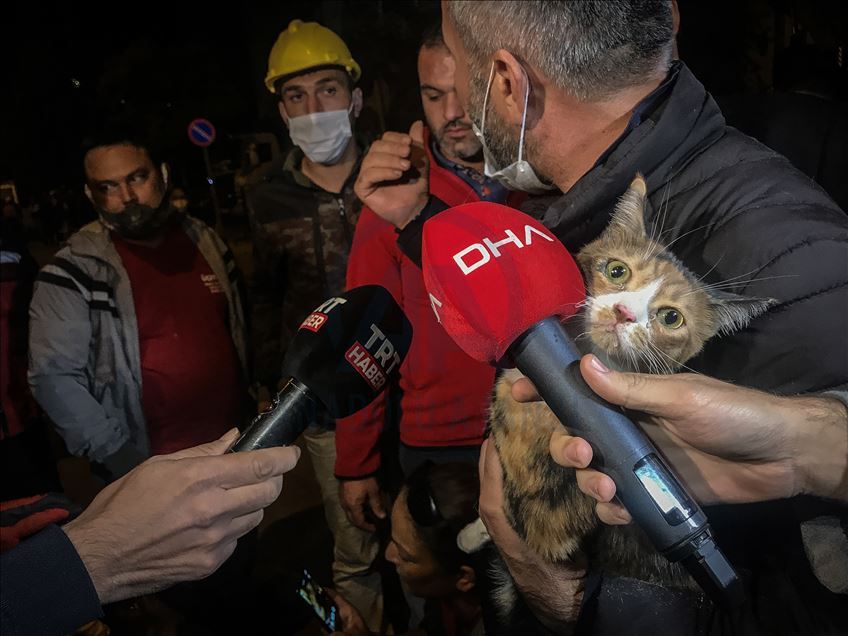
A few weeks ago Izmir (a city of 4.3 million on Turkey’s Aegean coast) had a terrible earthquake, which caused around 100 dead and 1,000 wounded. Rescue teams worked hard to save the animals as much as they did for people. They kept the rescued cats in a shelter, looked for their humans or tried to find new homes for them.
A rescue worker in Izmir holds a cat who was rescued from the rubble more than 30 hours after the 6.6-magnitude earthquake. /Hurriyet Daily News
You care for three friendly-looking cats who clearly know and trust you. How’d you get to know them and earn their trust? Do they just hang out at your home?
It is my studio, actually. I have a direct entry from the street so it allows me to be closer to the strays in the neighborhood. I knew their mother and would feed her too. They were all wild, and wouldn’t let me get closer or touch them. Once their mother abandoned them, they didn’t leave the area and I kept feeding them.
Sometimes I’d leave the door open and they’d come in. That’s how they eventually understood that I was harmless. One of them vanished; probably someone in the neighborhood adopted her. One shows no sign of interest in bonding with me. He is very distant but at least doesn’t run away when I go closer. However the other starts to let me pet him and enjoys it very much. I call him Osman.
Those of us living outside Turkey have seen photos of cats casually walking wherever they please: Entering office buildings, shops, homes, government offices. Do cats have free reign in Istanbul? Does anyone ever stop them from going where they please?
Well of course there must be some places they cannot go in but if it’s a private business, such as a restaurant or a shop, the owners would fear to get on the wrong side of people if they don’t get along with the cats. So even if they don’t like it, it’s kind of a must for such a place to welcome the strays.
On second thought, yes, I think they are welcomed almost everywhere. You would see them sitting, lying, sleeping in very awkward places and nobody would disturb them. I don’t know if you have seen the video of the cat messing with the Istanbul Symphony Orchestra players and stayed on the stage during the concert.
Although people of Turkey are quite polarized in terms of almost everything, when it is about animals, they unite and show a common reaction. At least no one objects when it comes to fighting for animal rights.
To be honest I couldn’t live in a city where the cats are absent. I feel very isolated and alone when I go out of Turkey, especially in European cities.
Since there are so many street cats in Istanbul — an estimated 125,000 — what about house cats? Is it common for the people of Istanbul to keep cats as house pets? Are those cats kept indoors or do they wander the streets too?
It is more common now than the past to have pets in the house and they are mostly cats rather than dogs. The old generation also had the culture to take care of the animals, but only if they were out of the house. Whereas many of them lived in stand-alone houses with gardens, most of us now live in apartments. Unfortunately, it is not possible for a house cat to go in and out [of an apartment]. I, for example, know only one house cat who goes around in my neighborhood.
Why do you love cats?
I grew up as an only child and was quite introverted. This is probably why I have always been passionate about bonding and getting to know the animals, although my parents were old fashioned and wouldn’t allow me to adopt one.
We would spend the summer holidays on an island of Istanbul, where our house was in the heart of the forest and surrounded by feral cats. I would chase them all day long but most wouldn’t allow me to get closer. My passion for observing their behaviors made me admire them. I probably understand and know cats better than I do humans. In my opinion they are the strongest animals in terms of evolution with their ability to adapt to humanity without compromising their nature.
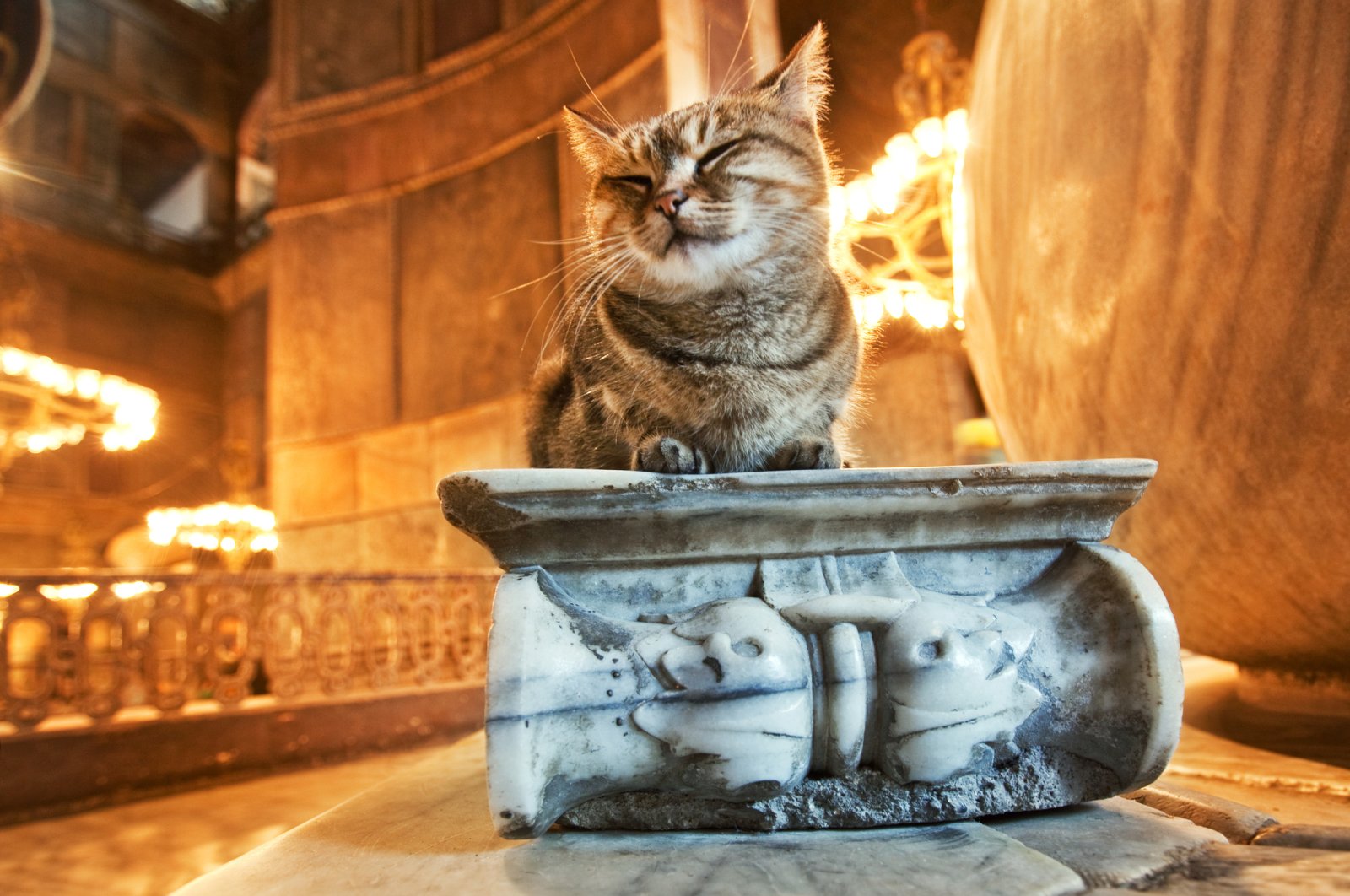
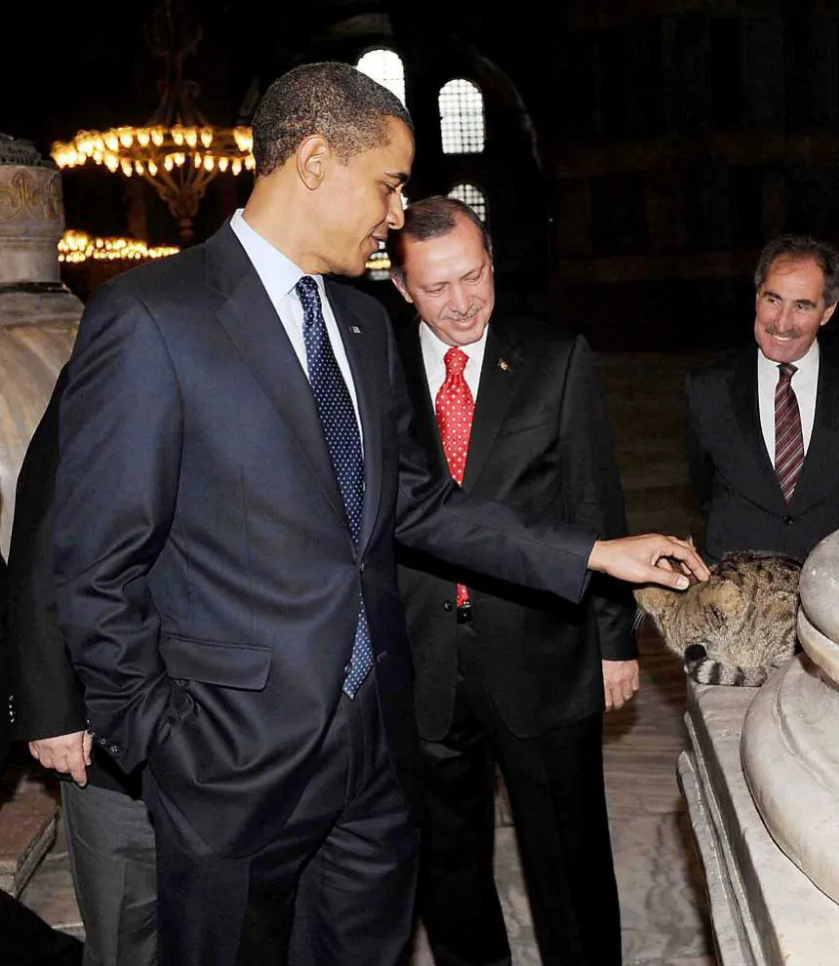
The late Gli, most famous resident cat of the Hagia Sophia. Gli was a magnet for tourists, the subject of thousands of photos, and was famously petted by former U.S. President Barack Obama during his state visit to Turkey.
Former President Barack Obama pets Gli.
And finally, is there anything I didn’t ask, but should have? Is there anything you’d like to tell our readers about you, your city or the cats there?
I mostly talked about the good sides of it, but that doesn’t mean everything is perfect. The biggest problem is, we still don’t have a proper animal rights law in Turkey. Animal abusers or killers exist and they don’t get sentenced for their crime but only pay a small account of money.
If the animal has an owner, it’s considered as damage to property and has a more strict penalty. This has to change immediately. Also there are some epidemics among stray cats such as Coronavirus and feline HIV, which are very hard to treat. The good thing is the vets are usually very helpful. Some do voluntary service or work for a considerable discount. Yet no animal would be left alone in case of an accident or a disease, at least not in my neighborhood.
Thanks to Başak for taking the time to answer our questions, and in a foreign language, no less. I only speak two: English and Buddinese, and the latter isn’t so much a language as it’s a set of 283 different ways to say, “Feed me!” Here in the US, we could learn a lot from the people of Istanbul, their love of cats and their community effort to care for them.




 Pain In The Bud