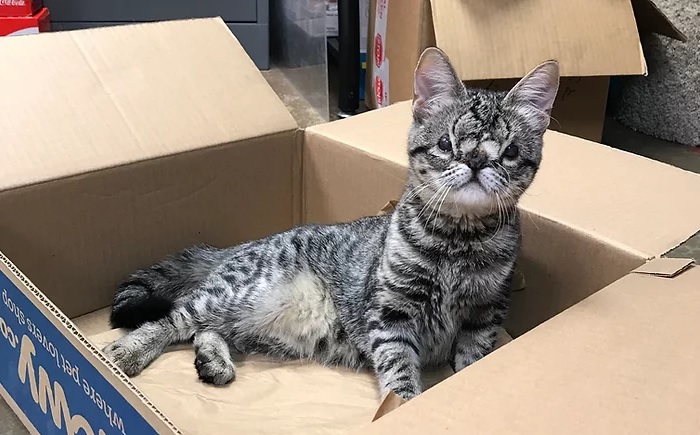
A shelter in California has turned to the internet for help after adopters passed over a kitten who looks a little different.
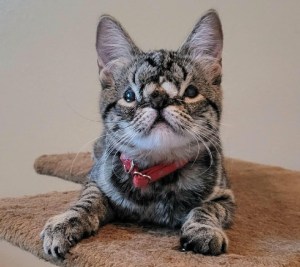
Kaya is a 5-month-old kitten with a congenital facial abnormality, which is almost certainly the reason why adopters have passed her over.
Now To Rescue, the shelter in California that’s been taking care of Kaya, has turned to the internet for help.
“She has been through a lot in her short life but that hasn’t stopped her from being super affectionate and playful,” the group’s Facebook page says. “She gets along great with her foster families other cats and dogs. She is so deserving of a wonderful forever home. Kaya has received zero applications, we are hoping that her story will continue to be shared so she can find her forever home.”
Kaya recently had surgery to “relieve her discomfort in her eyes,” but the shelter’s staff say it’s a “one time procedure” and she won’t require any more surgery or special care beyond routine veterinary needs. She’s already spayed, vaccinated, dewormed and chipped, and now she’s living with a foster family, where she gets along with the resident cats and dogs.
To Rescue is located in Montclair, about 35 miles east of Los Angeles. If any of our California readers are interested in Kaya, or know someone looking to adopt a kitten, you can download an adoption application on To Rescue’s site.
Not that this should be the reason anyone adopts Kaya, but given how popular unusual cats are on Instagram and TikTok, an adopter with a solid eye for photos and videos could probably turn her into a social media star. I wouldn’t be surprised if little Kaya has her own considerable fan club before long.
Kaya the kitten. Credit: To Rescue (Montclair, California)
She’s now called Sadie the Wonder Cat after enduring 46 days trapped without food or water.
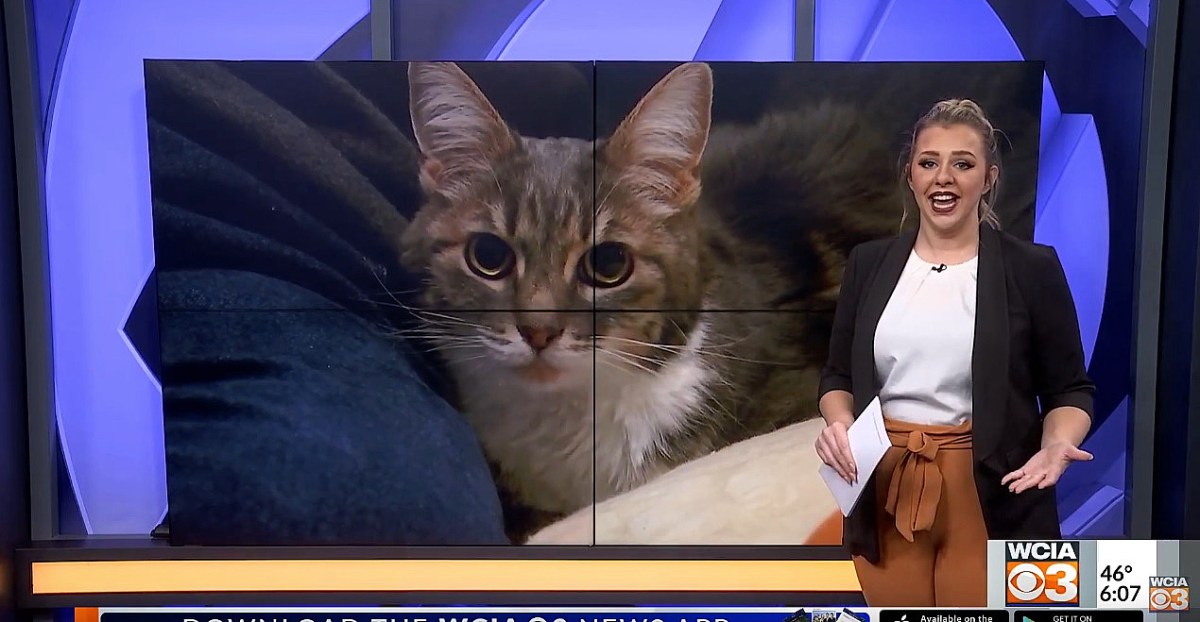
An Illinois family has been reunited with their cat after the resilient feline survived six weeks trapped in a box spring that was wrapped in heavy-duty plastic for shipping.
The Gaines family was moving from Fresno, Calif. to Charleston, Ill. and was packing up, with movers picking up their furniture and belongings on Sept. 22. The family’s cat, Sadie, went missing and the family thought the worst.
“She’s outside a lot during the day. She always comes in the house at night, but she didn’t show up, and it’s common for the coyotes to get the pets,” Mike Gaines told WCIA, a local CBS affiliate. “So, we figured she got taken by a coyote because she always comes home.”
Instead, Sadie was likely spooked by the commotion, the strange people in her home and the stress of seeing her familiar life upended, and found a way to burrow inside the box spring to hide.
In normal times Sadie’s ordeal would have lasted a few days, maybe a week tops, but because transportation companies are hurting for truck drivers, the Gaines’ furniture was put in a storage unit in Sacramento until it could be moved cross country.
“So, it sat there from September 22nd to November 3rd. So, several weeks with Sadie, the wonder cat locked in the box springs,” Mike Gaines said. “No food, no water, no sunlight, no nothing.”
On Nov. 7 the Gaines’ furniture arrived, and after more than 46 days Sadie was freed when Gaines’ daughter found her.
“She hollered dad, there’s something dead in the box springs it stinks,” Gaines said. “So, I came down here, and on my way down the stairs she said there’s a rat in there. She just saw her little ears and thought it was rat, but it wasn’t. I came down and looked in there and it was Sadie. She was sitting there looking up at me.”
The little survivor lost a whopping seven pounds, which is a huge deal for a cat. Most domestic house cats weigh about 10 pounds. Gaines said she went limp in his hands when he lifted her out of the box spring, and endured a vet visit. The veterinarian said the silver tabby was lucky to be alive, and didn’t suffer any injuries or ailments aside from obvious malnutrition and dehydration. It’s not clear if there were any perforations in the plastic around the box spring. Perhaps little Sadie caught herself a mouse or two to tide her over.
I think I’ll show this to Bud the next time he puts on a Shakespearean performance while trying to convince me he’s starving after two hours without a meal, although with the way he shrieks for food and yaps constantly, it’s difficult to imagine he’d get trapped in a piece of furniture without the entire block knowing about it.
“Cats take care of themselves,” the conventional wisdom insisted for decades. These days we know that’s not true.
Back in the Dark Ages of kitty cognitive knowledge, when scientists wouldn’t go near a cat with a 20-foot pole because they were considered impossible to work with, the conventional wisdom was that as long as a cat was fed and watered, its needs were met.
Going away for three days? Leave a few bowls of dry food and water and you’re good to go, or if you really want to splurge, get an automatic feeder, the prevailing wisdom went. Gonna be away for a week or two? Get someone to check in on the cat a few times a week just to make sure food and water is available.
“If you want a dog but you don’t have time to meet all of its needs, get a cat,” people would say. “They take care of themselves.”
It didn’t take me long to realize how wrong the “prevailing wisdom” on cats really was, and thankfully in recent years we’ve seen a boom in research into cat behavior, intelligence and emotional needs. Among the many things verified by those studies is the fact that cats absolutely are emotional animals and are not the cold, indifferent automatons many people insisted they were.
One reason for that enduring myth may be cats’ famous stoicism. Ignore a dog and she might cry, become destructive or pee in your house, but one thing’s for sure — she’s going to let you know she’s not handling the isolation well. Ignore a cat, and he’ll just withdraw.
I’ve seen plenty of examples of the latter in the homes of friends and acquaintances. The cats are just sort of there, existing like the furniture or plants, interacted with rarely and given affection only occasionally. Those poor cats are quiet, seemingly indifferent, expecting nothing and sadly accepting of their place. They are neglected.
But when you pay attention to your cats they come out of their shells, so to speak. They warm to you. They reveal their hidden emotional core.
Of course, when you raise a cat with attention and love, that’s there from the very beginning, and they WILL let you know when they’re not happy with your absence.
Who do we know who’s like that? His name sounds like Bum, or maybe Bunny, or…oh yeah! God forbid I should ignore Buddy. I’ll never hear the end of it. In fact, he’s on my desk right now, butt parked next to the mouse, and I’m sure any minute now he’s going to decide that I’ve been writing for too long and declare it’s Buddy Time.
Of course, the little jerk attacked his own cat sitter, a friend who has been caring for him when I’m away since he was a kitten! That complicates things.
“Oh servant! Servant, come here at once! I’d like a massage!”
If you’ve made it this far, you might be wondering how long you can really leave your cat alone. The answer is no more than 24 hours without someone dropping by to check on kitty, refill the water and food bowls, and give him some attention.
If you’re gone longer you’re going to want to make concrete plans for a cat sitter to be there every day.
“You should not leave your cat alone for a prolonged period,” veterinary postdoc Mikel Delgado told Inverse. “Cats also have emotional and social needs that can’t be met when they are left alone for extended periods.”
If your cat likes to play, that’s great, but even if the little one doesn’t, your cat sitter can make things easier by simply hanging out, Delgado said.
A new AI algorithm promises to help you gauge your cat’s mood — and determine if she’s in pain — by analyzing facial expressions.
In the photograph, Buddy is sitting on the coffee table in the classic feline upright pose, tail resting to one side with a looping tip, looking directly at me.
The corners of his mouth curve up in what looks like a smile, his eyes are wide and attentive, and his whiskers are relaxed.
He looks to me like a happy cat.
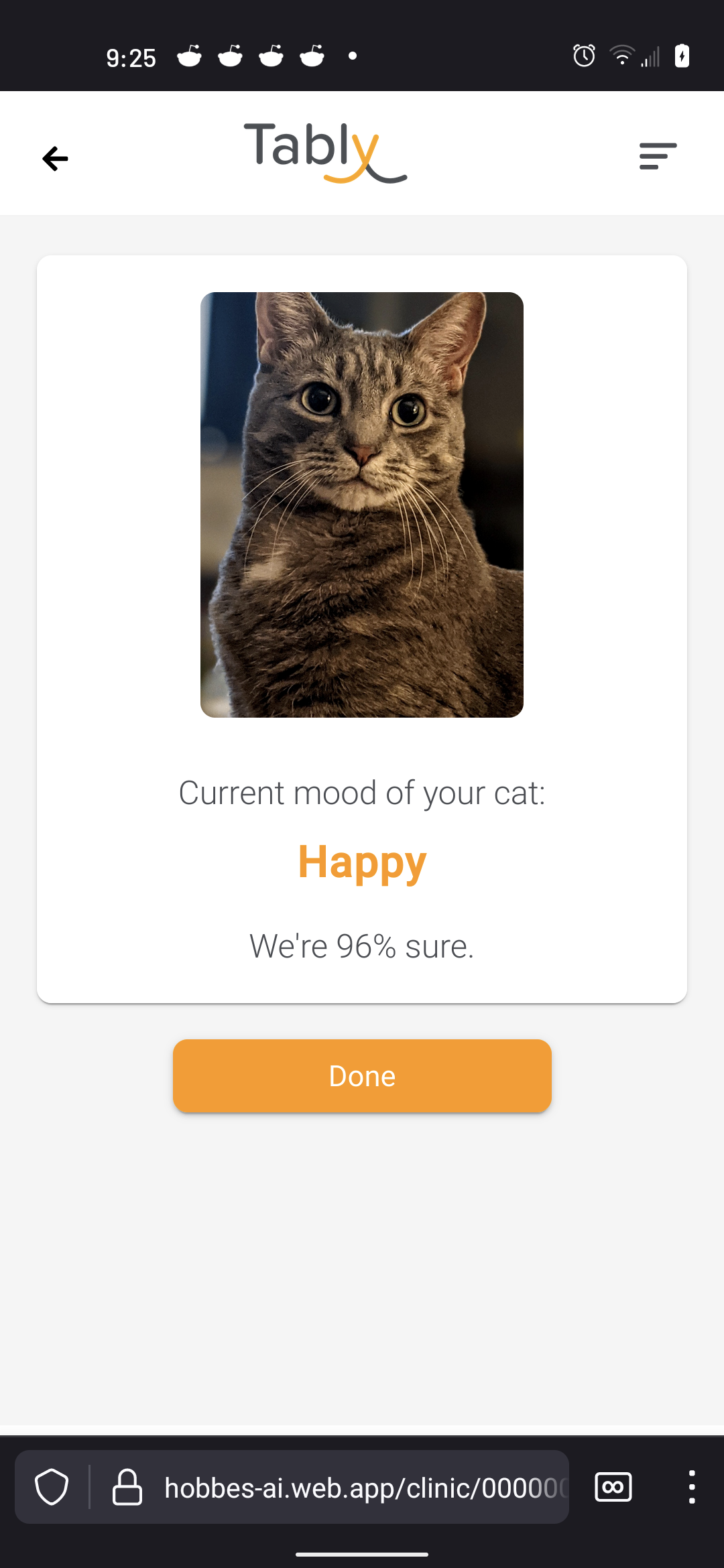
Tably agrees: “Current mood of your cat: Happy. We’re 96% sure.”
Tably is a new app, currently in beta. Like MeowTalk, Tably uses machine learning and an algorithmic AI to determine a cat’s mood.
Unlike MeowTalk, which deals exclusively with feline vocalizations, Tably relies on technology similar to facial recognition software to map your cat’s face. It doesn’t try to reinvent the wheel when it comes to interpreting what facial expressions mean — it compares the cats it analyzes to the Feline Grimace Scale, a veterinary tool developed following years of research and first published as part of a peer-reviewed paper in 2019.
The Feline Grimace Scale analyzes a cat’s eyes, ears, whiskers, muzzle and overall facial expression to determine if the cat is happy, neutral, bothered by something minor, or in genuine pain.
It’s designed as an objective tool to evaluate cats, who are notoriously adept at hiding pain for evolutionary reasons. (A sick or injured cat is a much easier target for predators.)
But the Feline Grimace Scale is for veterinarians, not caretakers. It’s difficult to make any sense of it without training and experience.
That’s where Tably comes in: It makes the Feline Grimace Scale accessible to caretakers, giving us another tool to gauge our cats’ happiness and physical condition. With Tably we don’t have to go through years of veterinary training to glean information from our cats’ expressions, because the software is doing it for us.
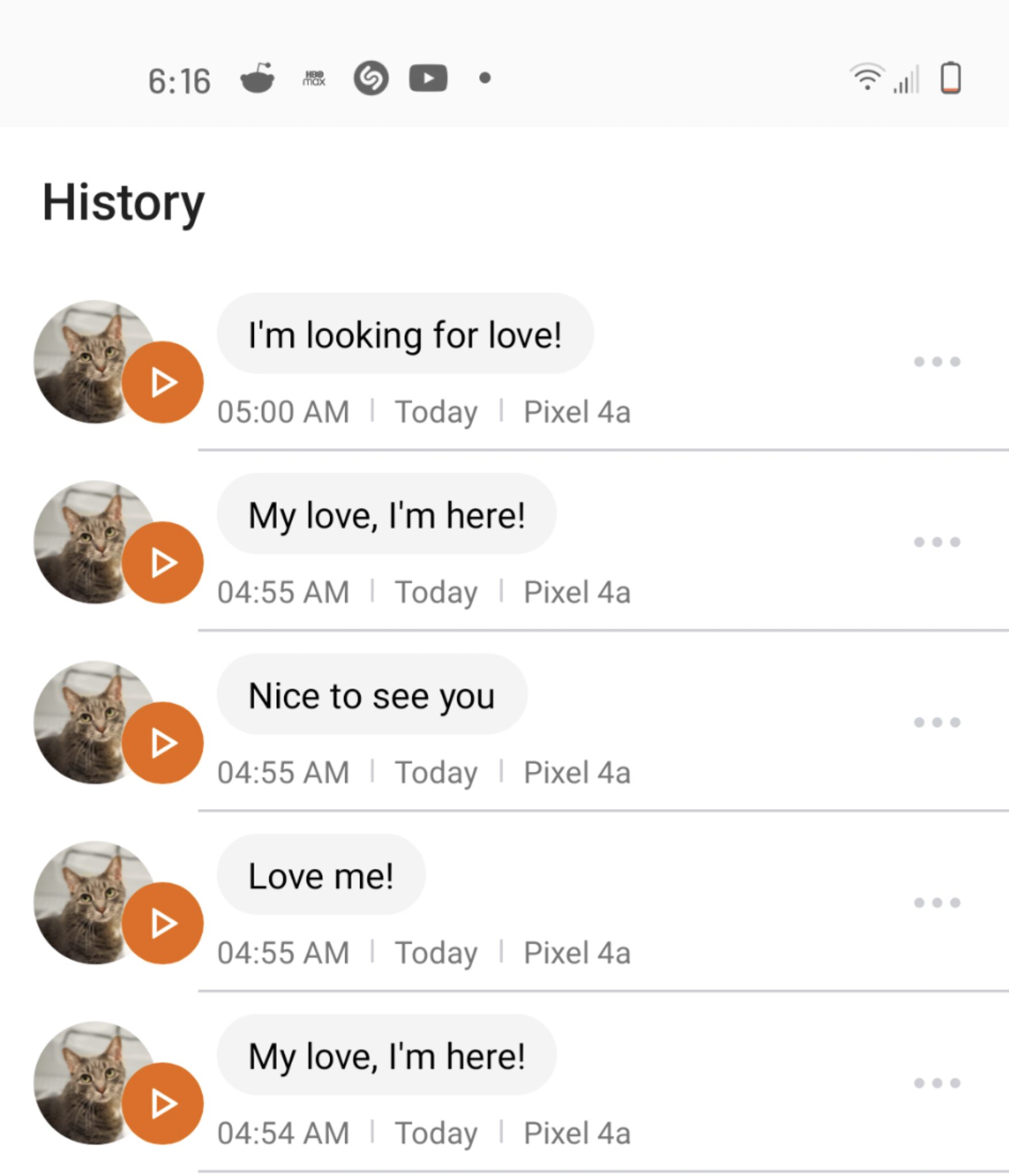
Meanwhile, I used MeowTalk early in the morning a few days ago when Buddy kept meowing insistently at me. When Bud wants something he tends to sound whiny, almost unhappy. Most of the time I can tell what he wants, but sometimes he seems frustrated that his slow human isn’t understanding him.
I had put down a fresh bowl of wet food and fresh water minutes earlier. His litter box was clean. He had time to relax on the balcony the previous night in addition to play time with his laser toy.
So what did Buddy want? Just some attention and affection, apparently:
I’m still not sure why Buddy apparently speaks in dialogue lifted from a cheesy romance novel, but I suppose the important thing is getting an accurate sense of his mood. 🙂
So with these tools now at our disposal, how much can artificial intelligence really tell us about our cats?
As always, there should be a disclaimer here: AI is a misnomer when it comes to machine learning algorithms, which are not actually intelligent.
It’s more accurate to think of these tools as software that learns to analyze a very specific kind of data and output it in a way that’s useful and makes sense to the end users. (In this case the end users are us cat servants.)
Like all machine learning algorithms, they must be “trained.” If you want your algorithm to read feline faces, you’ve got to feed it images of cats by the tens of thousands, hundreds of thousands or even by the millions. The more cat faces the software sees, the better it gets at recognizing when something looks off.
At this point, it’s difficult to say how much insight these tools provide. Personally I feel they’ve helped me understand my cat better, but I also realize it’s early days and this kind of software improves when more people use it, providing data and feedback. (Think of it like Waze, which works well because 140 million drivers have it enabled when they’re behind the wheel and feeding real-time data to the server.)
I was surprised when, in response to my earlier posts about MeowTalk and similar efforts, most of PITB’s readers didn’t seem to share the same enthusiasm.
And that, I think, is the key here: Managing expectations. When I downloaded Waze for the first time it had just launched and was pretty much useless. Months later, with a healthy user base, it became the best thing to happen to vehicle navigation since the first GPS units replaced those bulky maps we all relied on. Waze doesn’t just give you information — it analyzes real-time traffic data and finds alternate routes, taking you around construction zones, car accident scenes, clogged highways and congested shopping districts. Waze will even route you around unplowed or poorly plowed streets in a snowstorm.
If Tably and MeowTalk seem underwhelming to you, give them time. If enough of us embrace the technology, it will mature and we’ll have powerful new tools that not only help us find problems before they become serious, but also help us better understand our feline overlords — and strengthen the bonds we share with them.
Buddy’s bored of all this AI talk and wants a snack.
On Brazil’s ‘Island of the Cats,’ hundreds of former pets and ferals face starvation.
In 2012, veterinarian Amélia Oliveira started a program to trap and neuter hundreds of cats who had been abandoned at Ilha Furtada, an island about 20 miles west of Rio de Janeiro.
Known as Ilha dos Gatos — island of the cats — the island was teeming with starving former pets and their feral offspring. Ilha Furtada has no natural source of drinking water, Oliveira said, and cats without hunting skills would quickly starve.
Ilha Furtada became a curiosity for boaters and fishermen, and a sore spot for cat advocates trying to stop people from dumping animals there.
With the help of others, Oliveira began a program to end the misery on what’s been called “Cat Alcatraz”: The group managed to neuter more than 380 cats. Former pets were adopted out to new homes, but the ferals would need to remain on the island, so volunteers began feeding them and bringing fresh water on a regular schedule.
With the cooperation of local authorities, the group put up signage around the island and the coast warning that abandoning pets is illegal and asking people not to interfere with the island cats. There were plans for an official survey to quantify the feline population, an initiative to use cameras to dissuade people from dumping their pets on the island…
…and then came the Coronavirus pandemic.
Whatever gains Oliveira and company made over eight years have now been erased as Brazil — one of the countries hardest hit by the virus — has suffered more than 450,000 deaths officially (and likely much more uncounted) and an economy wrecked by waves of infection and lockdown.
A “feline shantytown” on Ilha Furtada.
Many owners could no longer afford to feed themselves or their cats while others died, leaving their cats at the mercy of relatives and landlords. Once again, people began abandoning their pets on Ilha Furtada.
“If you don’t take them, they’re going out to Island of the Cats,” people would tell shelter operators, a veterinarian told the Washington Post’s Terrence McKoy.
While the feline population of Furtada Island increased, resources dwindled as lockdowns prevented volunteers from delivering food and water as often as they had in the past.
Now the island has “the appearance of a feline shantytown,” dotted with dilapidated and hastily-constructed shelters for its resident felines.
I recommend reading the entire story, one of just a few highlighting the toll the pandemic has taken on pets.
Volunteers from Animal Heart Protectors fill a dispenser with food for cats on Furtada Island, popularly known as “Island of the Cats,” in Mangaratiba, Brazil, Credit: AP/Silvia Izquierdo)





 Pain In The Bud