Another Tech Company Wants To Translate Meows And Barks Using AI: Can It Work?

Cats and dogs communicate primarily by scent, touch and body language, but human efforts to understand them have focused exclusively on meows and barks. If we want to truly understand our non-human friends, we need to take an approach that considers the other ways animals “talk” to each other.

A few years ago when MeowTalk made a minor splash in the startup world, I was pretty bullish on its potential to help us understand our cats better.

Sure, the app had an unhelpful habit of attributing improbably loving declarations to Buddy, but I thought it would follow the trajectory of other machine learning models and drastically improve as it accumulated more data.

More users meant the app would record and analyze more meows, chirps and trills, meaning it was just a matter of time before the AI would be able to distinguish between an “I want attention!” meow and a “My bowl is dangerously close to empty!” meow.

Obviously that didn’t happen, and what I personally didn’t take into account back then — and should have, given how obvious it is in retrospect — is that cats don’t just communicate via vocalizations.

In fact, cats don’t normally incorporate vocalizations into communication at all. Pet kitties do it entirely for our benefit because they know we’re generally awful at interpreting body language and we are completely useless when it comes to olfactory information.

It’s actually amazing when you really think about how much of the heavy lifting cats do in our efforts to communicate with each other. They recognize we can’t communicate the way they do naturally, so they try to relate to us on our terms. In return, we meet them less than halfway.

No wonder Buddy sometimes looks frustrated as he meows at me, as if I’m the biggest moron in the world for not understanding the very obvious thing he’s trying to tell me.

“Human, how can you not understand the simple feeling of innerer schweinehund I’m trying to convey here? The cringe is killing me!”

Now the Chinese tech giant Baidu is throwing its hat into the ring after filing a patent in China for an AI system that uses machine learning to decode animal communication and “translate” it to human language.

Machines are designed to process things from a human viewpoint according to human logic, so if Baidu wants to succeed where MeowTalk has not, its engineers will need to take a thoughtful approach with the help of animal behavior experts.

This is a hard problem that encompasses animal cognition, neuroscience, linguistics, biology, biochemistry and even philosophy. If they approach this strictly as a tech challenge, they’ll set themselves up for failure.

Without the information and context clues provided by tails, whiskers, facial expressions, posture, eye dilation, heart rate, pheromones and even fur, an AI system is only getting a fraction of the information cats are trying to convey.

Trying to glean meaning from that is like trying to read a book in which only every fourth or fifth letter is legible. There’s just too much missing information.

Even if we can train machines to analyze sound visual, tactile and olfactory information, it may not be possible to truly translate what our cats are saying to us. We may have to settle for approximations. We’ve only begun to guess at how the world is interpreted differently among human beings thanks to things like qualia and neurodivergence, and the way cats and dogs see the world is undoubtedly more strange to us than the way a neurodivergent person might make sense of reality.

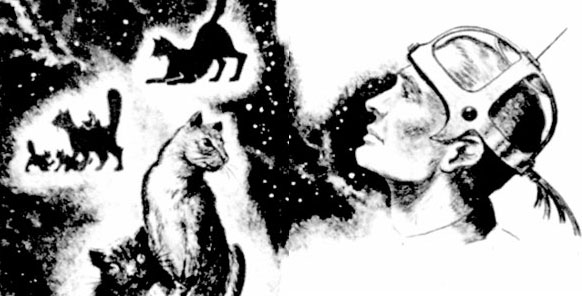
“He grimaced. He had drawn a greedy old character, a tough old male whose mind was full of slobbering thoughts of food, veritable oceans full of half-spoiled fish. Father Moontree had once said that he burped cod liver oil for weeks after drawing that particular glutton, so strongly had the telepathic image of fish impressed itself upon his mind. Yet the glutton was a glutton for danger as well as for fish. He had killed sixty-three Dragons, more than any other Partner in the service, and was quite literally worth his weight in gold.” – Cordwainer Smith, The Game of Rat and Dragon

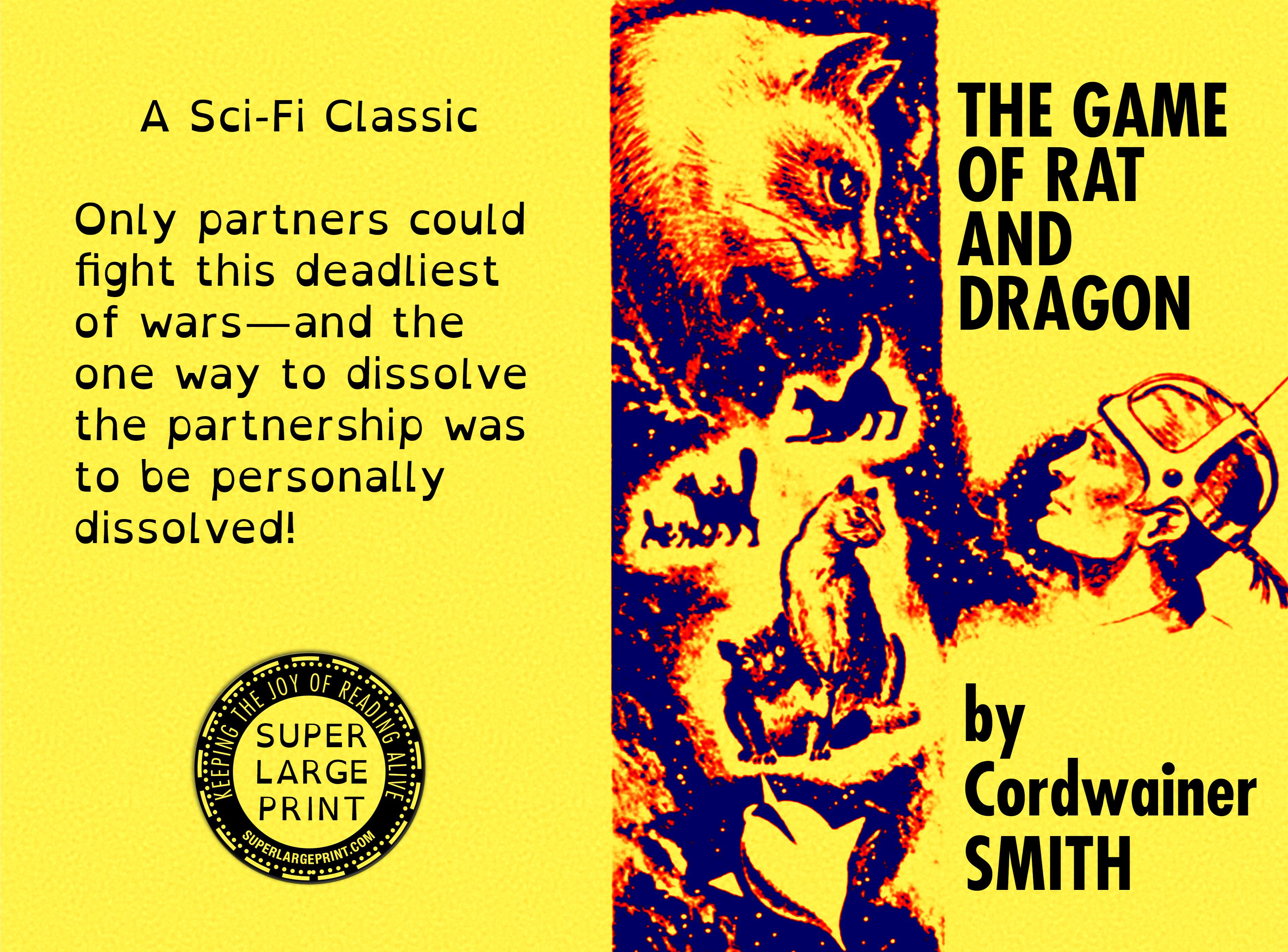
An animal’s interpretation of reality may be so psychologically alien that most of its communication may be apples to oranges at best. Which is why I always loved Cordwainer Smith’s description of the feline mind as experienced via a technology that allows humans with special talents to share thoughts with cats in his classic short story, The Game of Rat and Dragon.

In the story, humans are a starfaring civilization and encounter a threat in the void between stars that people don’t have the reaction speed to deal with. Cats, however, are fast and swift enough, and with a neural bridge device, teams of humans paired with cats are able to keep passengers safe on interstellar journeys.

The narrator, who is one of the few people with an affinity for teaming up with felines, hopes he’ll be paired with one of his two favorite cats for his latest mission, but instead he’s assigned to partner with an old glutton of a tomcat whose mind was dominated by “slobbering thoughts of food, veritable oceans of half-spoiled fish.”

The narrator wryly notes that the last time one of his colleagues was paired with that particular cat, his burps tasted of fish for weeks afterward. But the cat in question, despite being obsessed with fish, is a badass at killing “dragons,” the human nickname for the bizarre entities that attack human ships in space. (The software that allows felines and humans to link thoughts also portrays the “dragons” as rodents in the minds of the cats, stimulating their ancient predatory drive so they’ll attack instantly when they see the enemy.)

We can’t know for sure if Smith’s interpretation of the feline mind is accurate, but another part rang true when he wrote that cat thoughts were all about the moment, filled with sentiments of warmth and affection, while they rapidly lost interest in thoughts about human concerns, dismissing them “as so much rubbish.”

If the mind of a cat is that relatable, we’ll be incredibly lucky. But in reality we’re dealing with animals who evolved in drastically different ecological niches, with different priorities, motivations, and ways of looking at the world — literally and figuratively.

That doesn’t mean we shouldn’t try to understand our furry friends. Research has yielded interesting information about the way animals like whales and elephants communicate, and AI is at its best when it augments human creativity and curiosity instead of trying to replace it.

Even if we don’t end up with a way to glean 1:1 translations, the prospect of improving our understanding of animal minds is tantalizing enough. We just need to make sure we’re listening to everything they’re saying, not just the meows.
Bud’s Book Club: The Man-Eaters of Kumaon & The Game of Rat and Dragon

Join us in reading stories of cats in space and big cats in the jungles of India.

Welcome to the inaugural post of Buddy’s Book Club, where we’ll read stories about cats and stories involving cats!

We’re going to start things off easy with a classic short story of the cat canon, which is available for free online via Project Gutenberg, and a seminal book about big cats from a man whose name is indelibly linked with them.

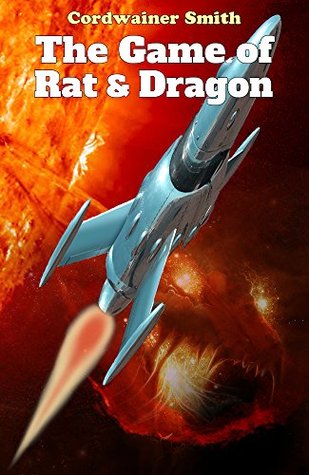
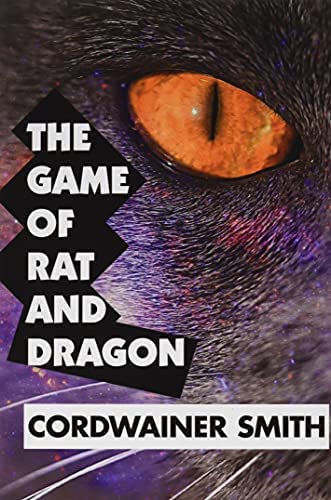
The Game of Rat and Dragon (1954) by Cordwainer Smith

51Aneono5KS._AC_SY1000_

Read it here for free from Project Gutenberg, a collaborative effort to create a digital archive of important cultural literary works that have fallen into the public domain. For those unfamiliar with Project Gutenberg, it’s completely above-board, legal and safe for your devices, and the story opens in plain HTML with illustrations included as image files. You can read the story in a browser or download it onto a reading device, tablet or phone.

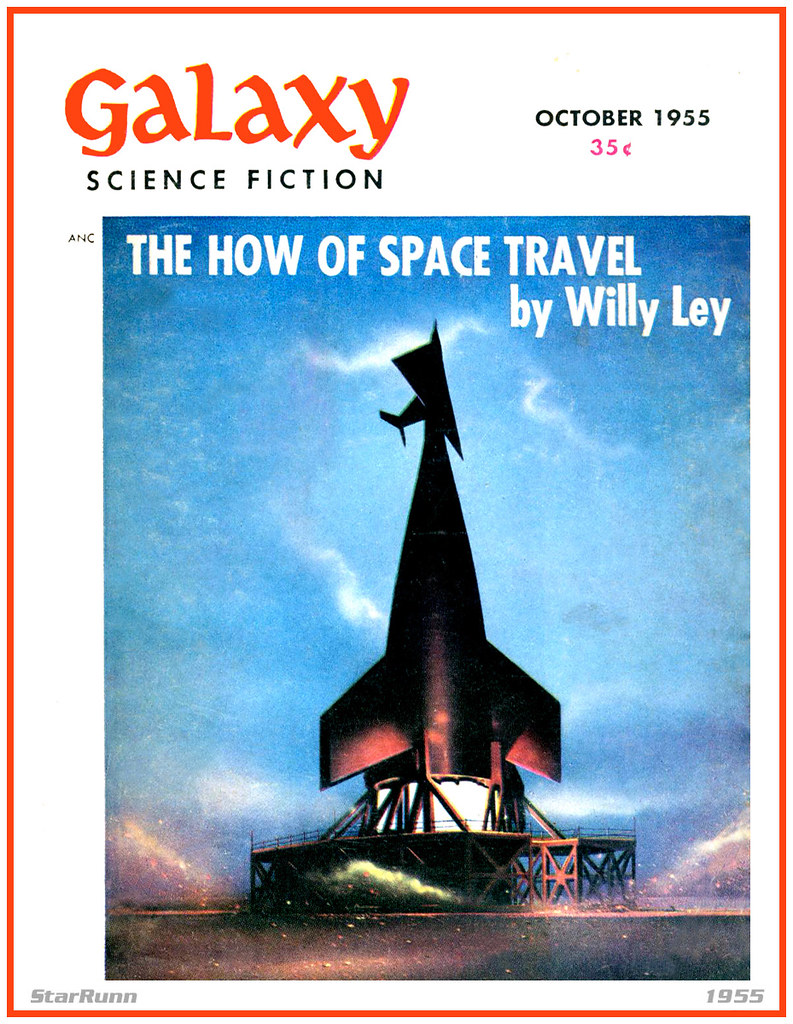
The Game of Rat and Dragon first appeared, as so much short fiction of the era did, in a digest. Although Smith had penned it the year before, the story was published in Galaxy Science Fiction’s October 1955 issue and became an instant classic among cat-lovers and science fiction aficionados. (There is considerable overlap between the two, not surprisingly: Introverts whose imaginations run wild when they look to the stars tend to have many of the same personality traits as people who prefer the more sublime antics of cats.)

The Game of Rat and Dragon imagines a far future in which humanity has become a star-faring culture, meaning we’ve conquered interstellar flight and have begun to colonize planets in star systems other than our own.

There is, of course, a problem. The dark, lonely void between stars isn’t as empty as we thought it was, and is inhabited by invisible (to the human eye), inscrutable, inexorable entities eventually dubbed “dragons.”

When dragons attack they leave only death and insanity in their wake, putting the entire idea of interstellar travel at risk. Imagine if there was a not-insignificant chance of your passenger jet being attacked by impervious creatures every time you hopped on a plane. It wouldn’t be long before the entire air industry collapsed and the world suddenly became a much bigger place, with other continents unreachable by air.

Who can help humans with this problem? Cats, of course! To say more would be to spoil the fun. Meow!

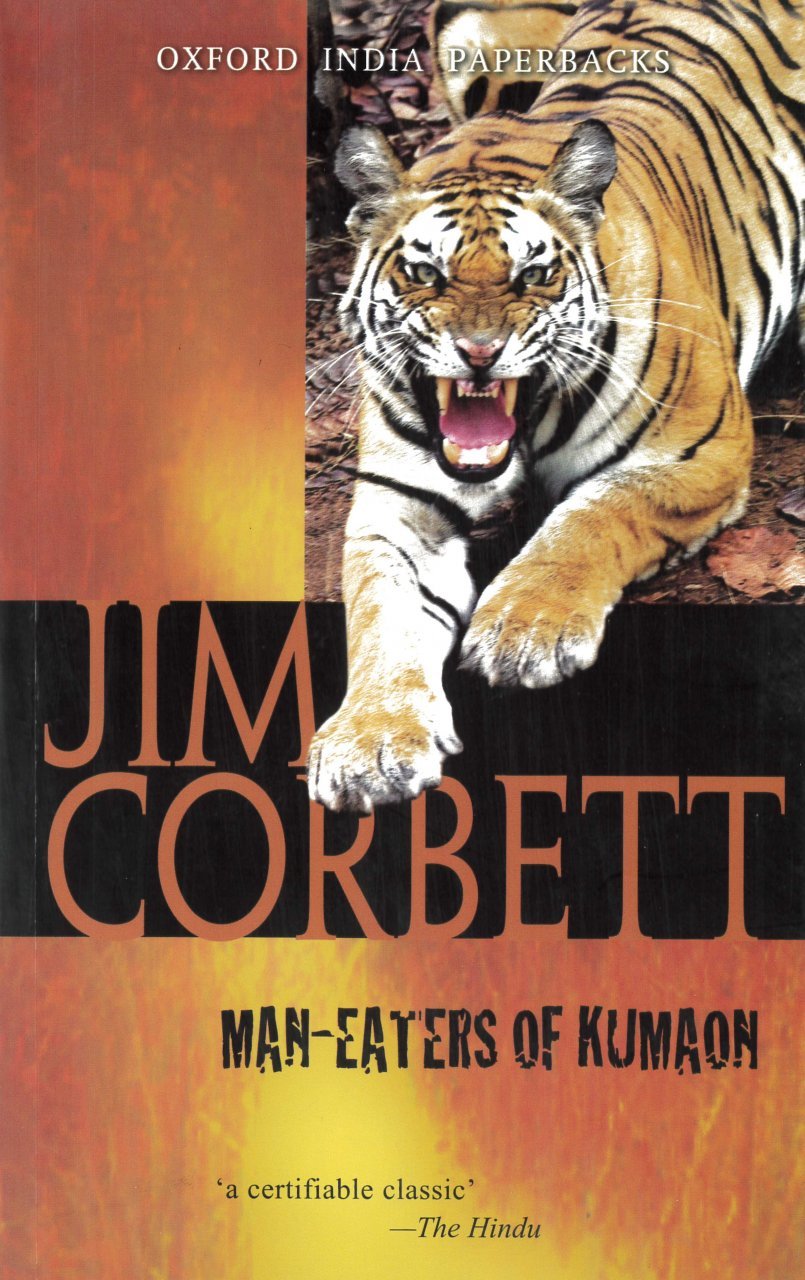
Man-Eaters of Kumaon (1944) by Jim Corbett

201355

Available as an ebook for 99 cents from Barnes and Noble.

Jim Corbett was a sportsman, the son of a government official in the British Raj who was raised in India’s jungles and came to know them intimately. He’s best remembered as the fearless hunter who finally brought down the infamous Champawat tigress, who officially claimed 436 lives over a years-long rampage as a man-eater, and likely many more that went unrecorded.

To understand the gravity of Corbett’s accomplishments, it’s necessary to understand the effect of a man-eater on rural India. The people living in India’s tiny villages are subsistence farmers. If they don’t farm, they don’t eat.

But when a man-eater as dangerous as the Champawat tigress claims an area as its hunting grounds, everything grinds to a halt: Farmers refuse to tend their fields, villagers disappear behind locked doors, and a simple walk to a neighboring village becomes an impossibility unless escorted by a group of two dozen or more armed men. Even then it’s a risk, for as Corbett notes, when tigers become man-eaters they have no fear of humans and will kill people in broad daylight, even when they’re in groups.

And yet for all their power and predatory instincts, tigers are never deliberately cruel and don’t harm humans willingly. Tigers become man-eaters by unfortunate circumstance, usually due to negligence or stupidity on the part of humans.

The Champawat tigress, for example, was like any other big cat until a human hunter took aim and shot her in the mouth, destroying one lower canine completely and shattering another. The tiger could no longer take down her usual prey, or at least not without serious difficulty. At some point — perhaps after encountering the body of a person it did not kill — the tigress realized she could survive on human flesh.

If that hadn’t happened, those 436-plus souls wouldn’t have been lost, an entire region wouldn’t have been brought to its knees, and the tigress would have continued life as normal.

The vast majority of the time, tigers are content to let humans be.

“I think of the tens of thousands of men, women and children who, while working in the forests or cutting grass or collecting dry sticks, pass day after day close to where tigers are lying up and who, when they return safely to their homes, do not even know that they have been under the observation of this so called ‘cruel’ and ‘bloodthirsty’ animal,” Corbett writes.

Despite his reputation as the man to enlist when a man-eater terrorized a region, Corbett saw the way things were trending a century ago, and begged people to let the big cats live undisturbed.

“A tiger is a large-hearted gentleman with boundless courage,” he wrote, “and that when he is exterminated — as exterminated he will be unless public opinion rallies to his support — India will be the poorer by having lost the finest of her fauna.”

Corbett would undoubtedly be deeply disturbed by the situation today, with only some 4,000 wild tigers remaining in the entire world, and the glorious species mostly reduced to spending life in captivity, constantly sedated so that idiots can pay to take selfies with them.

The Man-Eaters of Kumaon follows Corbett on 10 hunts of man-eating tigers and leopards. It’s also a story of life in the British Raj, rural life in India, Corbett’s jungle adventures, his love for his loyal hunting dog and his turn toward conservation.

Schedule:

We can do the short story in a week, yeah? Let’s shoot for one week for The Game of Rat and Dragon, and two weeks for The Man-Eaters of Kumaon. We’ll adjourn and discuss in follow-up posts. Happy reading!

Book Club: The Game of Rat and Dragon

Humans turn to cats to help them battle a cosmic threat in this classic science fiction story.

In what I hope will become a semi-regular feature, we’ll recommend a book or short story prominently featuring cats, then follow it up with a discussion post.

The Game of Rat and Dragon is a good pick to start us off easy: Humans turn to cats to help them overcome a cosmic threat in this classic science fiction tale. It’s a short story and the entire text is available online from Project Gutenberg.

Casual readers shouldn’t have any trouble following along even if they’re not familiar with the SF genre.

Click here to read The Game of Rat and Dragon by Cordwainer Smith, one of the most imaginative and influential SF scribes of the 1950s.

The story was originally published in Galaxy Science Fiction in October of 1955 and has been featured in countless SF collections and digest in the decades since.

We’ll follow up with a discussion post in a week or so. Happy reading!

galaxy1955hd
The story originally appeared in the October 1955 issue of Galaxy Science Fiction.

ratanddragon3
Alternate book cover.

ratanddragon
The cover design from the online edition of the story.