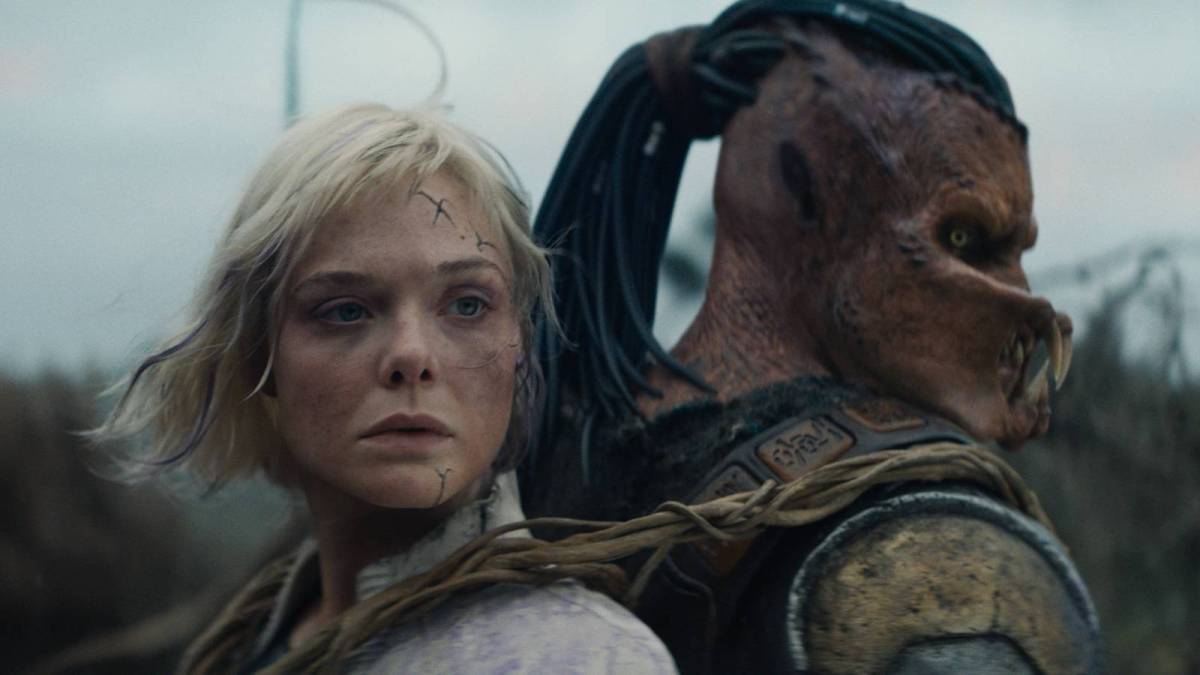
Predator: Badlands Is An Epic, Surprisingly Funny Adventure, And Even Has A Breakout Character Named Bud

Badlands is a romp through a vividly realized alien world filled with danger. It’s also a film with heart.

Hollywood pumps out so much disappointing content, especially in the age of streaming, that it’s easy to become disillusioned with movies altogether.

But every once in a while there’s a film that reminds you how much fun movies can be, hitting all the right emotional notes while taking you completely out of this world for two blissful hours.

Predator: Badlands is that kind of movie. Unexpectedly funny and poignant, it also delivers the kind of action audiences have come to expect from the Predator franchise — and then some.

The biggest change here is that, for the first time, a Yautja (the alien species we call the Predators) is the protagonist.

Njohrr is a Yautja clan leader who believes Dek is not strong enough to earn his place in the clan.

Dek isn’t just any Yautja. He’s a youngster who is horribly wronged in the opening minutes of the film and sent to Genna, a place his species calls the “death planet” because virtually every form of life there is monstrous and spectacularly lethal.

His own death is a foregone conclusion on the brutal world until he meets two unlikely allies: Thia, a damaged synthetic (android) built by the notorious Weyland-Yutani corporation, and Bud.

Bud steals the show, but I wouldn’t dream of robbing anyone of the pleasure of experiencing Bud the way writer/director Dan Trachtenberg intended, so I will say no more.
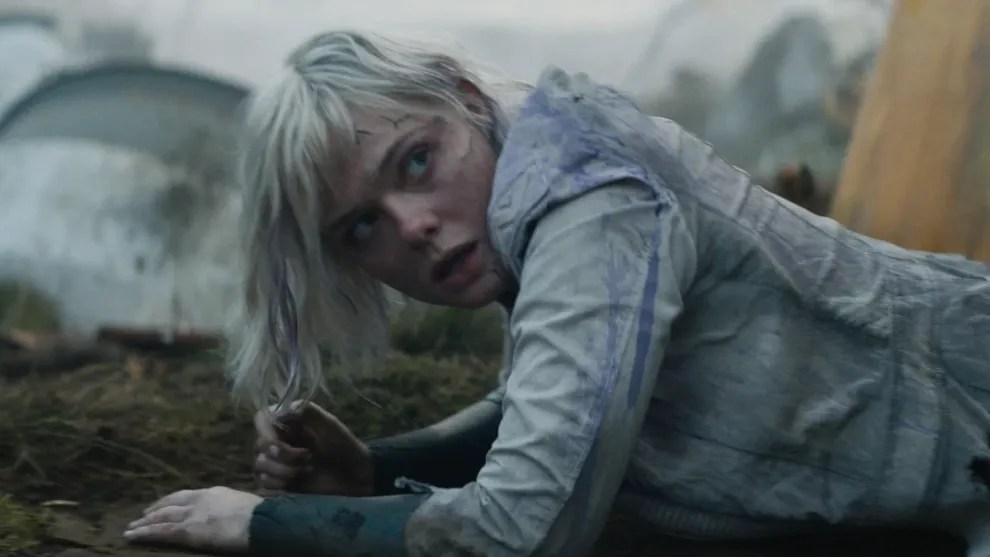
Elle Fanning and Dimitrius Schuster-Koloamatangi play Thia and Dek, respectively. Fanning adds a human element as she and Dek team up initially for survival, then out of loyalty to each other.

Badlands has a lot of heart and a script that knows just when to slice the tension. In one quiet scene after surviving an encounter with a particularly nasty creature, Thia (an energetic Elle Fanning) raves about the experience and the excitement of accompanying Dek and Bud on a hunt.

“The Dynamic Trio! Remember when we went down the tree? That monster’s mouth? I mean… Uggh. Didn’t smell great, didn’t smell great, but we got him. We got him! Thank you, seriously, for that experience. Truly amazing. Thrilling! Truly thrilling.

“What was your favorite part?” she asks the young Yautja.

“When my sword pierced the creature’s skull and its blood ran down my face,” Dek deadpans.
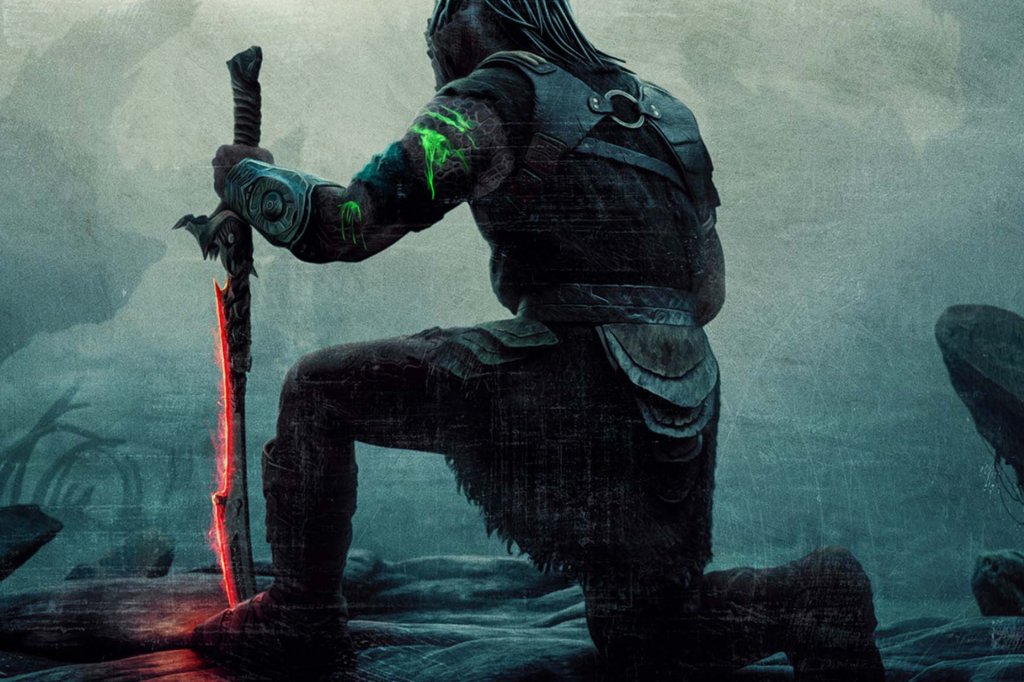
Dek is not invincible, and he’s without the vast majority of his arsenal, with only his trusty heat sword to defend against the hyper-aggressive fauna of Genna.

This is Trachtenberg’s second Predator film, and Badlands exists because he proved there was life still left in the franchise with 2022’s Prey.

That movie was unfortunately streamed direct to Hulu without a theatrical release, as were several big time films that year, because of a resurgent COVID wave. (Remember the Delta variant?)

But critics and audiences, including your humble Buddesian correspondents, found a lot to like in the story of Naru (Amber Midthunder), a young Comanche woman living on the Great Plains in 1719. After encountering a Yautja, Naru warns her tribe that a mysterious and dangerous creature is stalking their lands, but they laugh at her and accuse her of telling tall tales — until they see the Yautja for themselves, at which point they don’t find it amusing anymore.

Midthunder was fantastic, and Prey balanced its historical setting with stunning action sequences and quiet character moments.
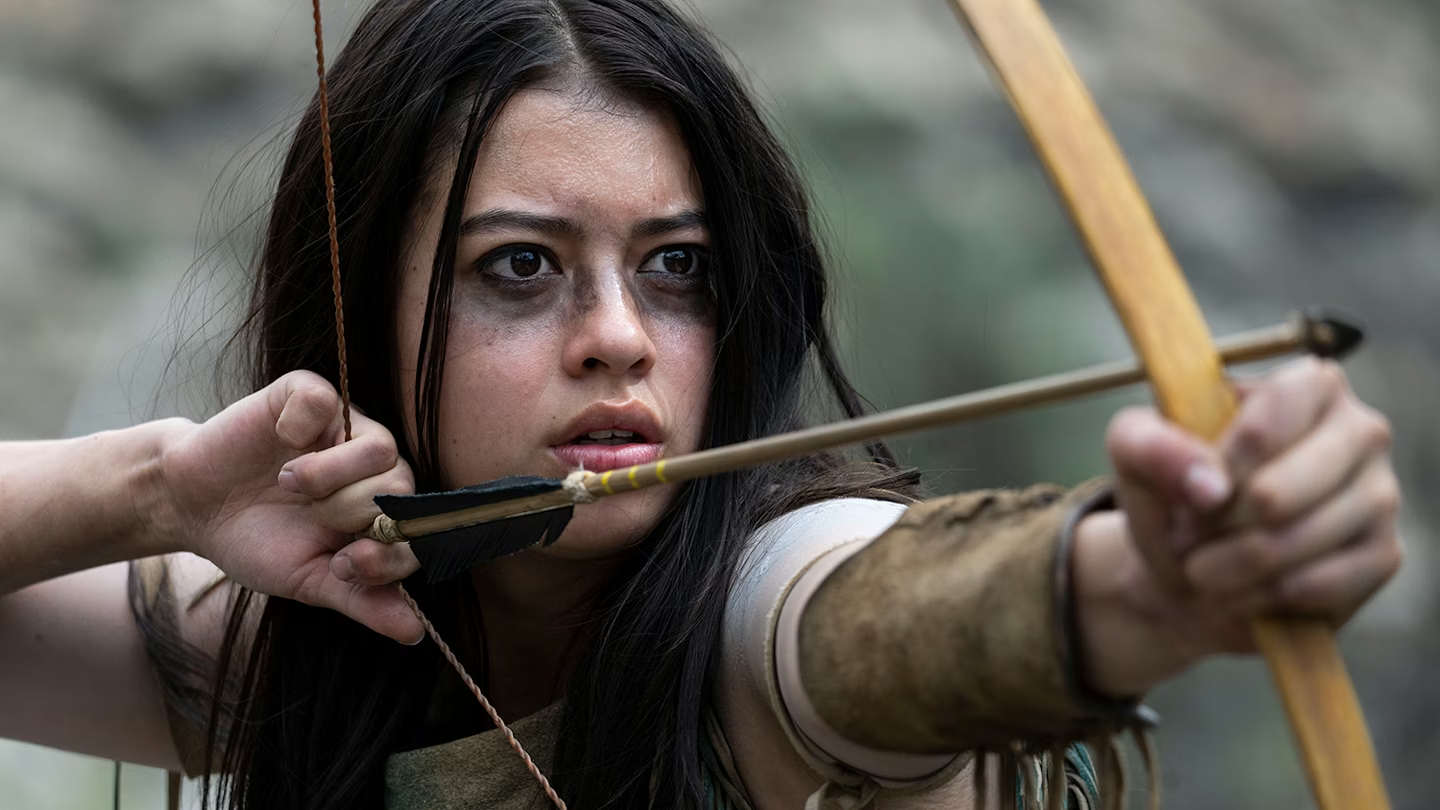
Amber Midthunder as Naru in 2022’s Prey.

In earlier installments, including Prey, the Yautja were always the antagonists. We knew they were a warrior culture, that they followed an honor code and possessed fantastically advanced technology, but for the most part the Yautja remained a blank slate aside from some non-canonical media (mostly novelizations, comics and games) that attempted to expand the universe.

Badlands demystifies the Yautja somewhat out of necessity, which is always a dangerous gamble (just ask the xenomorph of Alien fame, which lost its mystique half a dozen sequels ago), but significantly raises the emotional stakes.

Dek isn’t invincible. Circumstances have robbed him of most of his arsenal, he’s thrown into a perilous and unfamiliar world, and he’s haunted by the fresh memories of the tragedy that sets off the events of the film.

That makes it easy for the audience to identify with and root for Dek, despite the difficulty of conveying emotions with alien facial features. Dimitrius Schuster-Koloamatangi deserves credit not only for imbuing Dek with physicality, but also for getting the most he can out of the Yautja youngster’s brooding body language, howls of frustration and slowly dawning realization that he can choose his own path in life.

It may take a planet teeming with horrors to make an underdog of a Yautja, but Badlands succeeds on that count.

Predator: Badlands set a record for the franchise with a $40 million opening weekend, and pulled in $184 million total at the box office. It was made available for streaming this week. With the financial success, and the positive reviews from critics and fans alike, it’s possible we’ll see Dek, Thia and Bud continue their adventures in a sequel.
Study: More Than Half Of US Adults Haven’t Read A Book In A Year

Did you now? Little Buddy the Cat read an astounding 713 books last year and authored 43 of his own, including the bestseller “How To Handle Your Human Like A Pro: 10 Steps To Better Performance By Your Servant”

You read that right. According to a survey of more than 2,000 people from an independent industry research firm, 51.7 percent of American adults did not read a book in 2021.

More than one fifth (22.01 percent) haven’t read a book in three years, and more than 10 percent haven’t read a book in 10 years.

There are obvious reasons for that, including the choice of many other mediums for entertainment, plus an unprecedented volume of content offerings from streaming networks and traditional TV, meaning most of us have tens of thousands of movies at our fingertips through paid subscriptions like Netflix, Amazon and Hulu, as well as free ad-supported streamers like Tubi and the Roku channel.

Then there’s internet doomscrolling, the endless consumption of news (of which I am guilty), social media platforms designed to keep people engaged, fan fiction sites and a million other leisure activities competing for our attention.

Yet none of those things have a quality that books do. When you read a book, you are entering a theater of the mind created by one mind. Not a movie that has 500 crew members in addition to its cast, focus groups, script writers, script doctors and script polishers. Not a TV show written by committee in a writers room to the specifications of network honchos. With a fiction book, you’re allowing one person’s imagination to usher you into a story, trusting in their storytelling skill to make the experience worthwhile. With a well-researched non-fiction book, you can travel back in time, reliving wars, coups and personal stories, events that shaped the world and events that meant the world to a few people.

Not surprisingly, the survey shows, the percentage of people who read books regularly is lower for younger age cohorts. Credit YA fiction, like Harry Potter, The Hunger Games and similar series for turning at least some of them into readers.

catbook
A curious kitty reading “The Art of Meowing for Treats” by Buddy the Cat. Credit: PITB

The publishing industry is in a sorry state. In lean times publishers and their imprints have become as risk-averse as major movie studios, so they’re far less likely to take chances on new authors with new perspectives than they are to fall back on the same handful of big-name novelists or surefire memoirs like Prince Harry’s Spare.

Because of that, publishing houses don’t invest in developing younger up-and-coming writers the way they once did, and there are fewer literary journals and genre magazines for new authors to use as stepping stones.

Compounding the problem is the echo chamber in publishing: Because many publishing jobs offer low salaries, most of the people who can afford to take those jobs are independently wealthy, increasingly concentrated in places like Brooklyn, and share similar perspectives. That has a pronounced effect on the kind of books they’re publishing.

Still, I think we all share in the blame. I read only 12 or 13 books in the past year. That seemed low but not so bad until I though about it. That’s a measly 120 books in 10 years. It doesn’t add up to much over a lifetime.

When you put it like that, you either want to make sure every book you read is a gem, or you get your ass in gear, put down the junk news articles and smartphone, and dive into more books. 

I am a science fiction junkie and wanted to read more female authors since my favorites happen to be a bunch of British guys — Iain M. Banks, Alastair Reynolds, Peter F. Hamilton — and managed a measly one fiction book by a female author in the past year, although it was pretty awesome. (Dead Silence by S.A. Barnes, also known as Stacey Kincade. I think she’s Barnes for science fiction and Kincade for other stuff.) I’ll definitely be down for the planned sequel, and I have Ursula LeGuin in the queue.

What are your reading habits? How many books do you read per year, and are you happy with your pace?