A Colorado Woman May Have Been Killed By A Puma, But We Should Wait For The Facts

There are lots of questions but very few answers so far related to the death of a woman on a hiking trail in northern Colorado. Authorities have not confirmed a puma attack.

A woman who was found dead on a hiking trail may have been killed by a mountain lion, state authorities say.

Several hikers were making their way along the Crosier Mountain Trail in northern Colorado at noon on Thursday when they came upon a woman laying on the ground and a puma about 100 yards away from her, according to police.

The hikers made noise and tossed rocks to scare the cat off, then one of them — a medical doctor — checked the woman and found no vital signs.

They notified authorities, who launched a massive search by air and ground, closing down the neighboring trails and bringing search dogs into the effort.

The search teams found and killed two mountain lions, who will be autopsied to determine if either had human remains in their stomachs. If they do not, rangers and police will keep looking, as they say Colorado law requires them to euthanize animals who have killed humans, local news reports said.
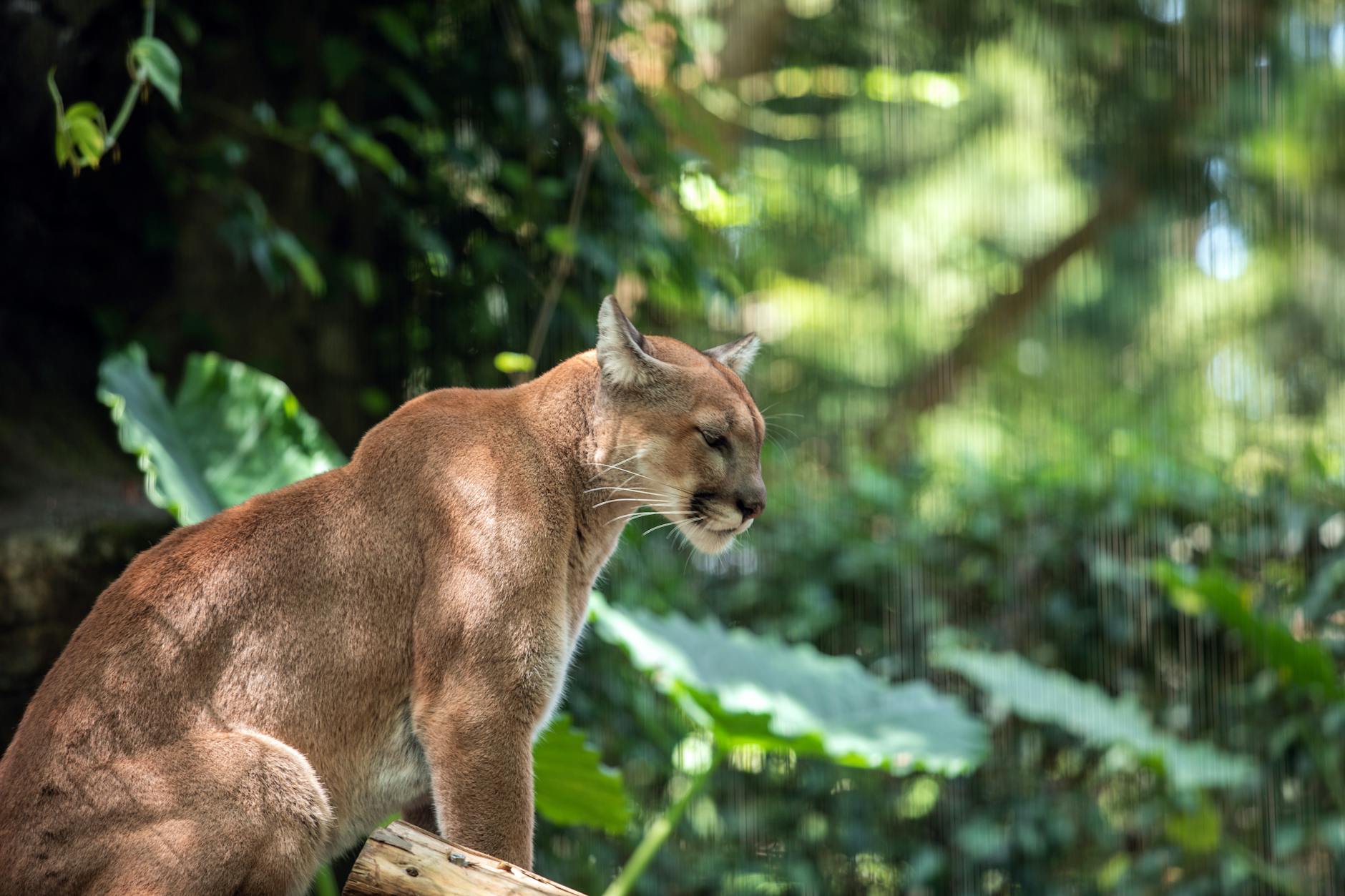
Pumas, also known as mountain lions, cougars, catamounts, screamers and many other names, are the widest-ranging cats on Earth, found throughout South America, the west of the US, and southern Canada. Credit: Charles Chen/Pexels

It’s important to note that there are no autopsy reports so far. Police don’t know how the woman died, if she was killed by the puma spotted near her, or if the animal approached after her death.

If an investigation does determine a puma was responsible, it’s crucial to place the incident in context. The last recorded fatal mountain lion attack in Colorado was in 1999, and was not confirmed. The victim, a three-year-old boy named Jaryd Atadero, wandered away from the hiking group he was with and was never seen again.

Search efforts in the following days and weeks didn’t turn up anything, but in 2003 another group of hikers found part of Atadero’s clothing. His partial remains were later found nearby.

Police said Atadero could have been killed by a mountain lion, but there’s no definitive evidence and his cause of death remains a mystery.

Aside from that incident, there have been 11 recorded, non-fatal injuries attributed to pumas in Colorado in the past 45 years despite as many as 5,000 of the wildcats living in the state’s wilderness.

Nationally there is some discrepancy in record-keeping, but most sources agree there have been 29 people killed by mountain lions in the US since 1868. By contrast, more than 45,000 Americans are killed in gun-related incidents per year, about 40,000 Americans are killed in traffic collisions annually, and between 40 and 50 American lives are claimed by dogs per year.

Americans are a thousand times more likely to be killed by lightning than by a puma, according to the US Forestry Service.
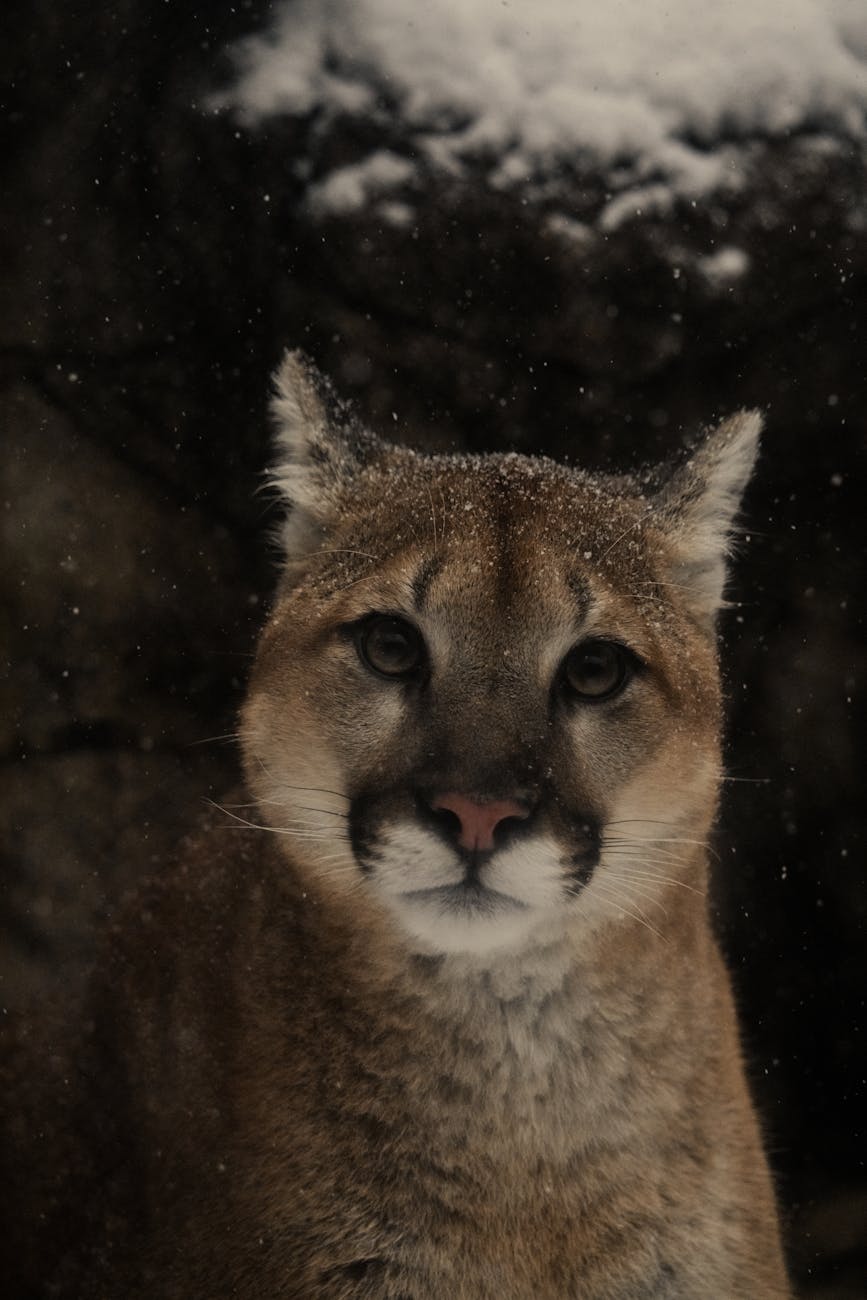
Despite their size, pumas are more closely related to house cats and small wild cats. They can meow, but they cannot roar. Credit: Caleb Falkenhagen/Pexels

Cougars are elusive, do not consider humans prey, and the vast majority of the time go out of their way to avoid humans. Most incidents of conflict are triggered by people knowingly or unknowingly threatening puma cubs, or cornering the shy cats.

Despite that, there’s confusion among the general public. Mountain lions are routinely confused with African lions, so some Americans believe they are aggressive and dangerous.

Pumas, known scientifically as puma concolor, are part of the subfamily felidae, not pantherinae, which means they are more closely related to house cats and smaller wildcats than they are to true big cats like lions, tigers, jaguars and leopards.

Pumas can meow and purr, but they cannot roar. Their most distinctive vocalization is the powerful “wildcat scream,” leading to nicknames like screamer.

In the Colorado case, police say they believe the victim was hiking alone. Her name hasn’t been released, likely because authorities need to notify next of kin before making her identity public.

This is a tragedy for the victim and her family, and we don’t wish her fate on anyone. At the same time, we hope cooler heads prevail and this incident does not spark retaliatory killings or misguided attempts to cull the species.

Mt. Takao: Snow Monkeys and Shrines

About an hour from the heart of Tokyo, Mt. Takao offers shrines, snow monkeys and hiking paths.

I arrived at Mt. Takao’s monkey park just in time to watch an exciting part of the day for the troop: lunch.

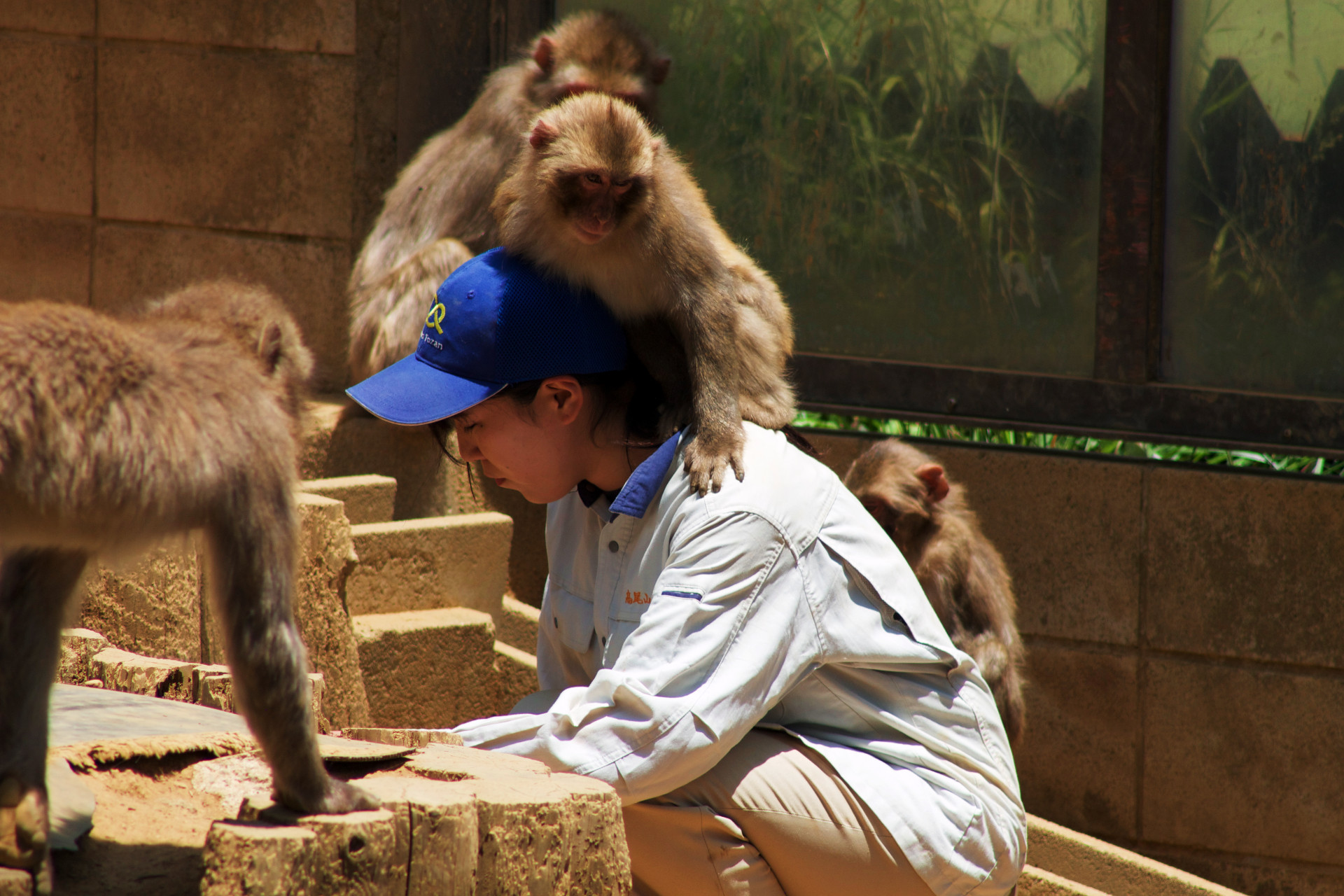
One of the keepers entered the exhibit with a bucket of seeds, and this little guy decided he wanted a ride:

Mt. Takao snow monkey rides a keeper
A juvenile snow monkey at Japan’s Mt. Takao hops on a keeper’s shoulder.

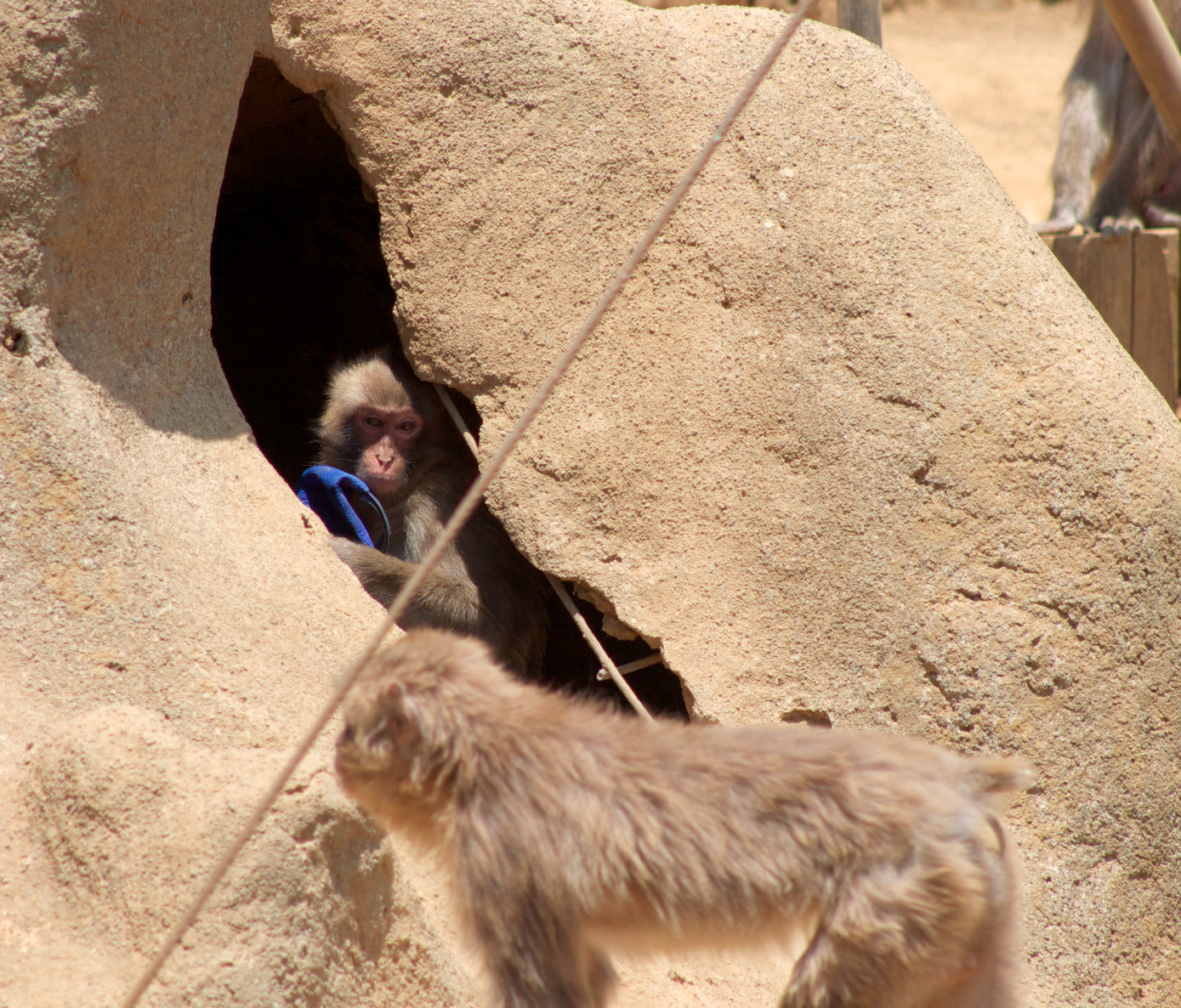
After a few minutes of snatching up seeds, the little monkey decided he liked the keeper’s hat, so he helped himself to it:

My. Takao snow monkey steals hat
A young snow monkey hides from one of his keepers after running off with her hat.

The keeper couldn’t get the monkey to give up the hat, so she called in reinforcements. For the next few minutes, two keepers tried to grab a hat from one monkey hiding in a den with five exits.

It was like wack-a-mole as his little face kept popping out of the various holes only to beat a hasty retreat and try for another when one of the keepers spotted him.

Eventually they did get the hat back after the prankster grew bored.

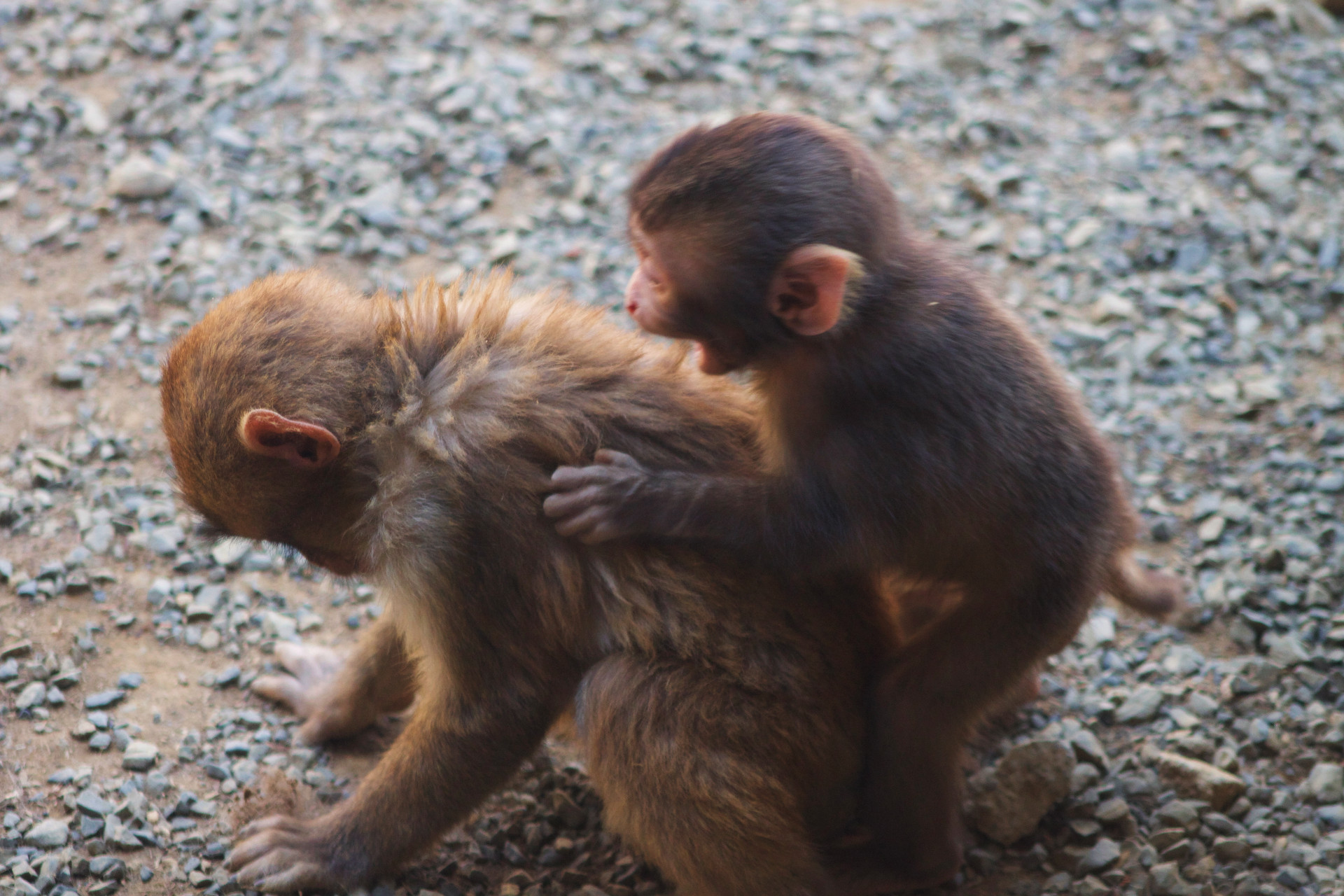
Snow monkey baby and older sibling
A weeks-old snow monkey baby wants to play with her older sibling, who’s picking seeds off the ground.

Snow monkeys are macaques, just like rhesus monkeys, bonnets and long-tails. What makes them unique is the fact that they are the northern-most, coldest-dwelling non-human primates on the planet.

No other monkey or ape can tolerate the extreme cold like Japanese macaques. Most people have seen images of them in snowy Nagano, where they bathe in hot springs during the deep chill and sleep in tightly-packed “group hugs” to share body heat.

Japanese macaques live in matriarchal societies. Each troop is headed by an alpha and a matriarch. Troops have strict hierarchies, and rank is matrilineal — a monkey’s standing in the troop depends on who his or her mother is.

Females stay in their maternal troops for life, while males are driven out by the alpha and his lieutenants on the cusp of adulthood, usually around six or seven years old.

This has the benefit of removing potential challengers to the throne as well as preventing inbreeding. The ousted males will spend their next few years trying to prove themselves to new troops, or decide to start their own.

I spotted the group’s alpha in the most well-shaded corner of the enclosure, attended to by three lesser-ranked monkeys who were grooming his fur. Grooming is a big deal in macaque society — it’s one of their primary social activities, where relationships are forged and problems smoothed out.

It pays to be king: The alpha always eats first, has first claim to choice spots and first crack at propagating his DNA.

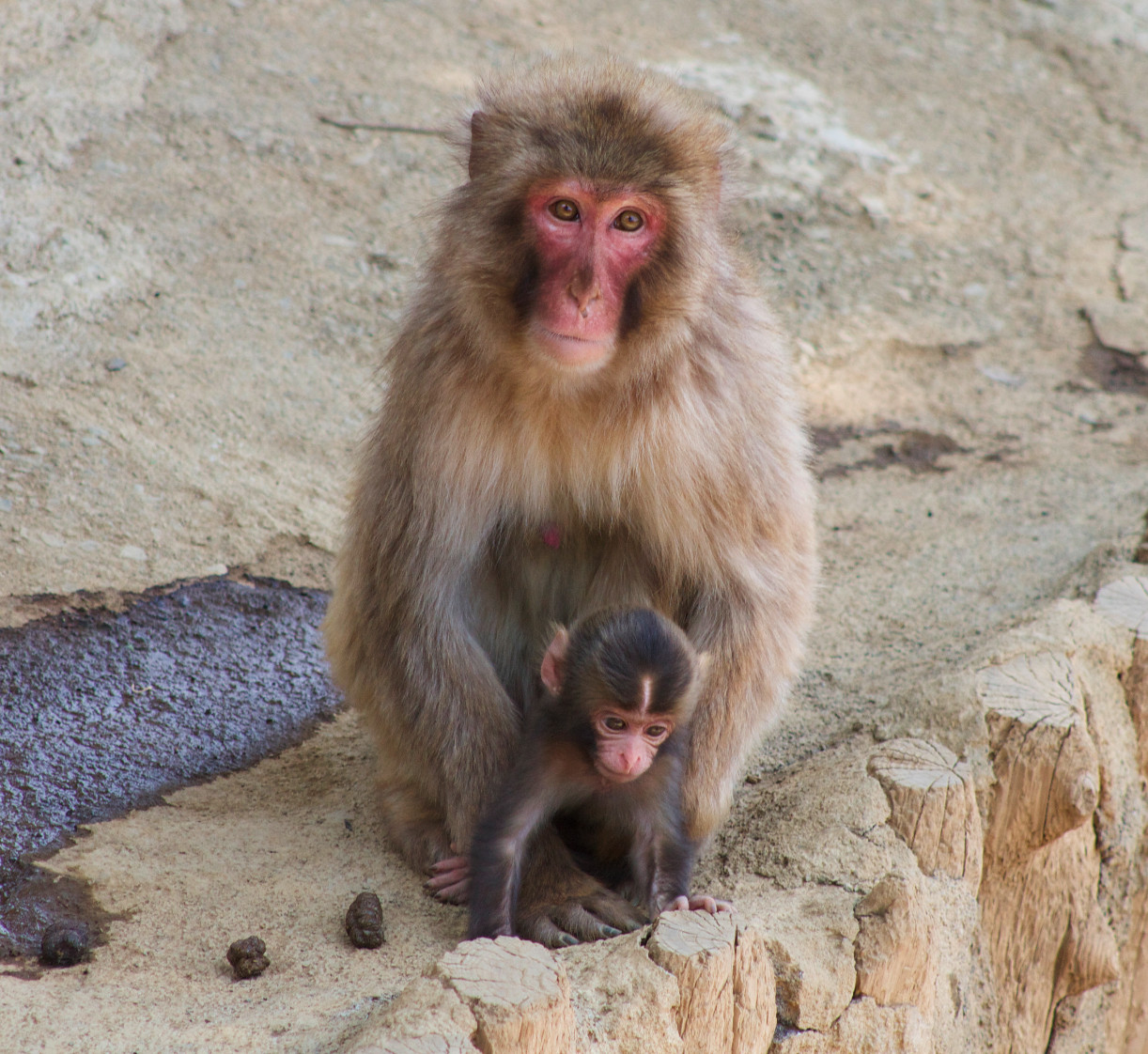
Also present were two nursing moms with infants. Macaques, especially Japanese and rhesus monkeys, are extraordinarily dedicated mothers.

Japanese macaques mom and her baby
A snow monkey mom encourages her baby to take a few steps.

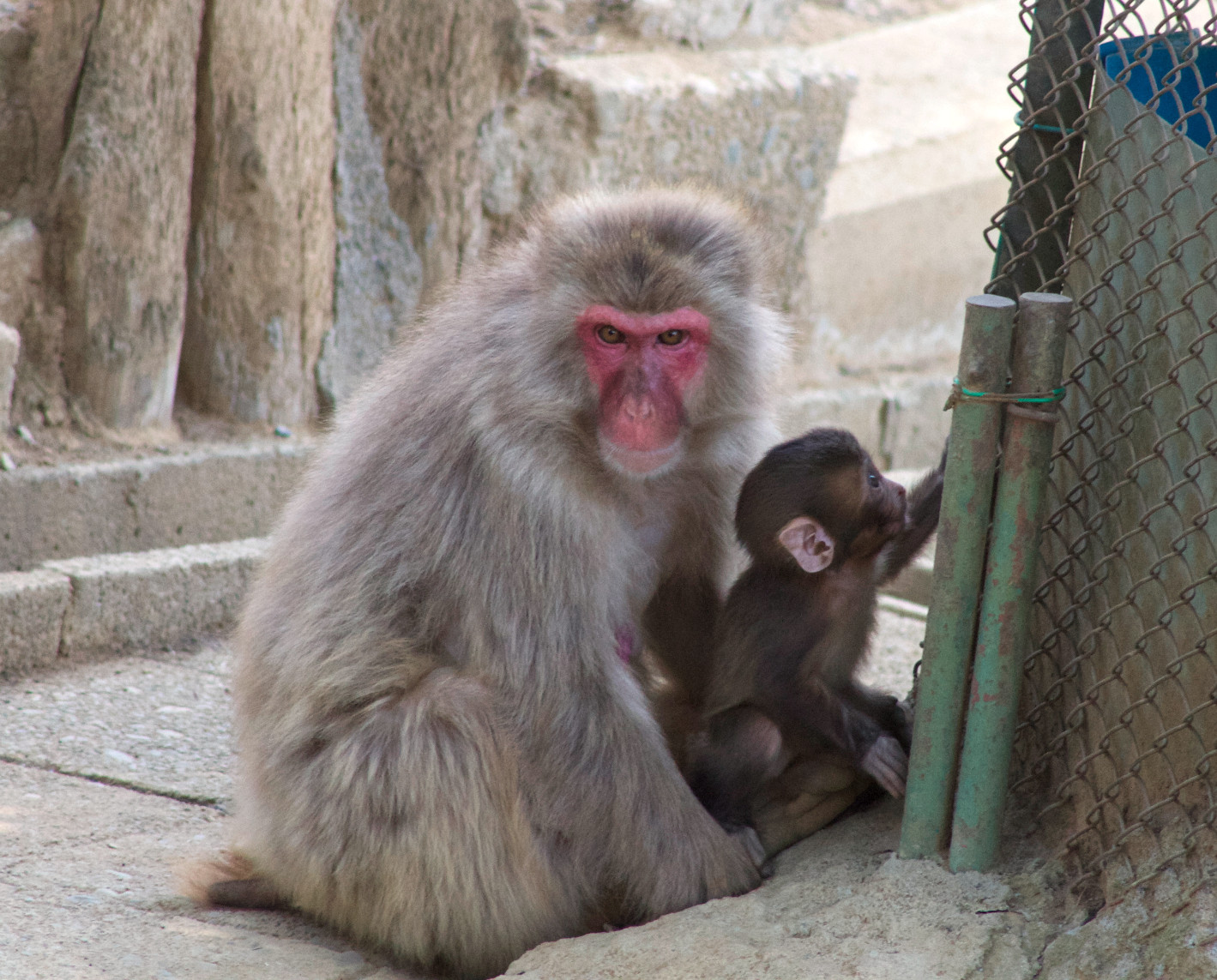
Babies spend almost the entirety of their first six to eight months of life clinging to their mothers by clutching their fur. As the babies become more ambulatory, their mothers gently nudge them to crawl, to take their first steps or climb their first obstacle.

Upon success, the babies will hop back into their mothers’ arms. Life continues that way for several more months until the babies are about a year old and start to venture further from their moms. They continue to nurse for up to two years.

Japanese macaque and baby
A patient mother encourages her weeks-old baby to climb.

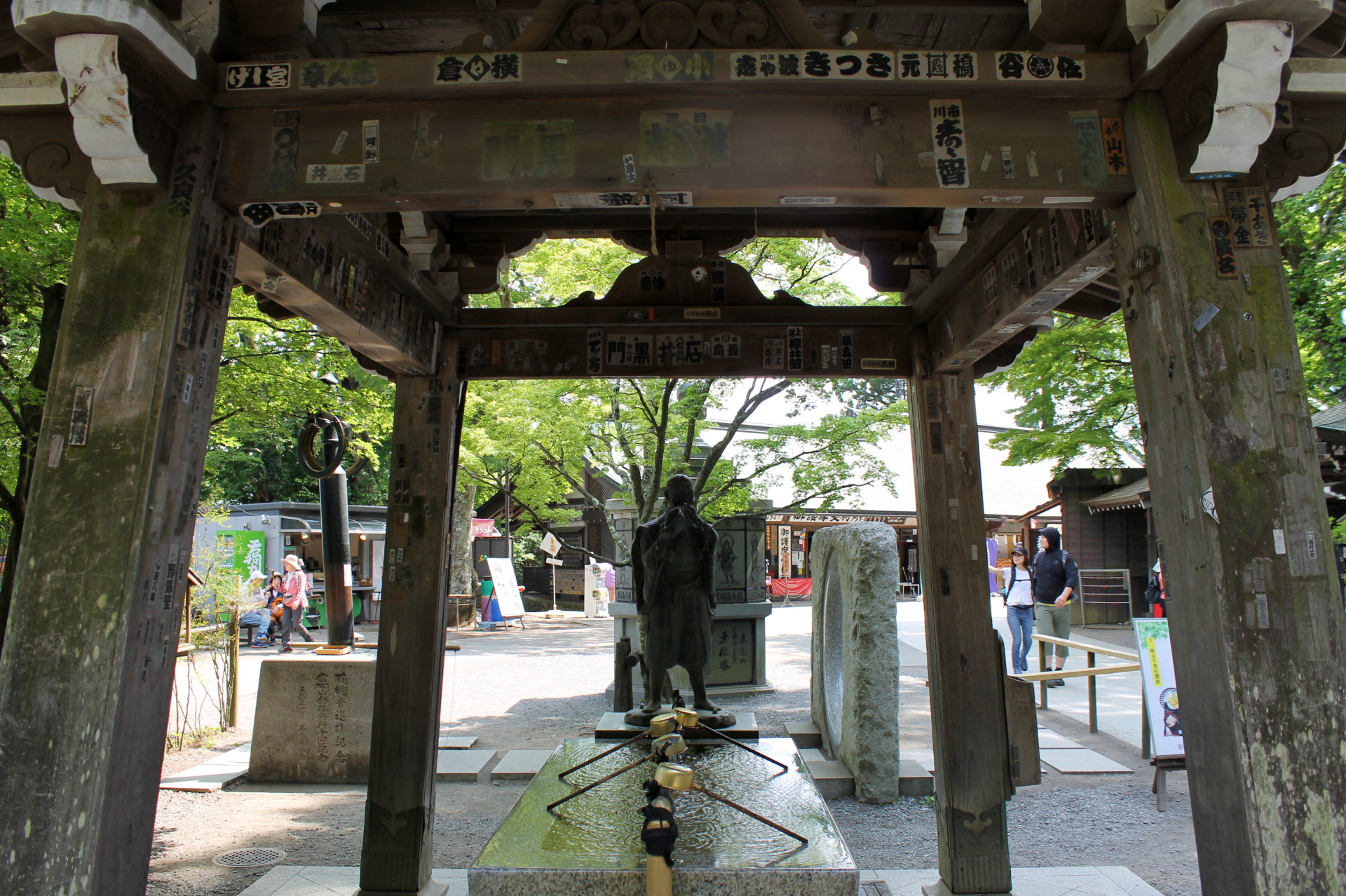
After the impromptu monkey show, I met up with my brother and we made our way up mountain toward several shrine complexes and temples.

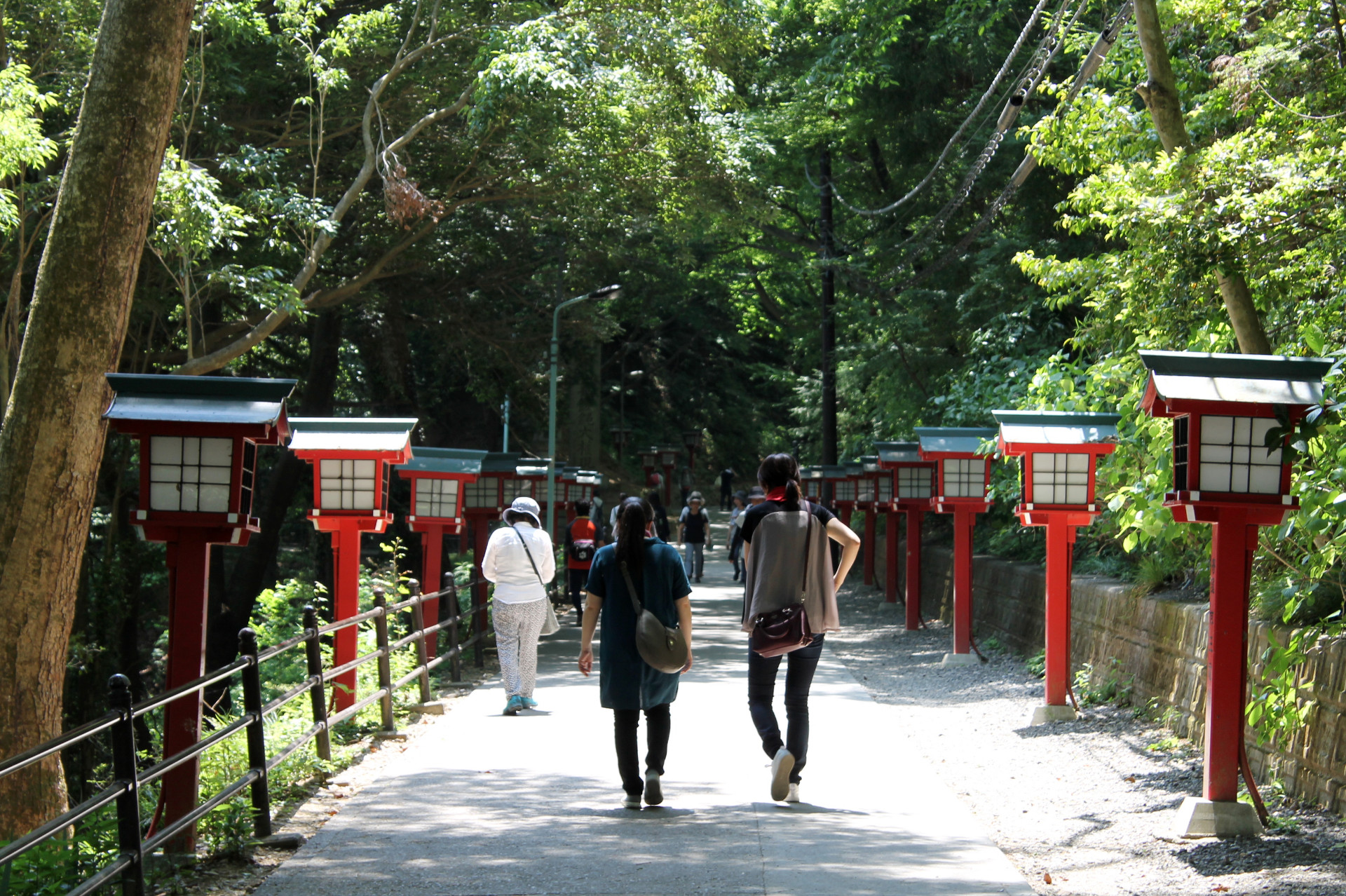
Mt. Takao, Tokyo, Japan
Visitors make their way toward a shrine on Mt. Takao.

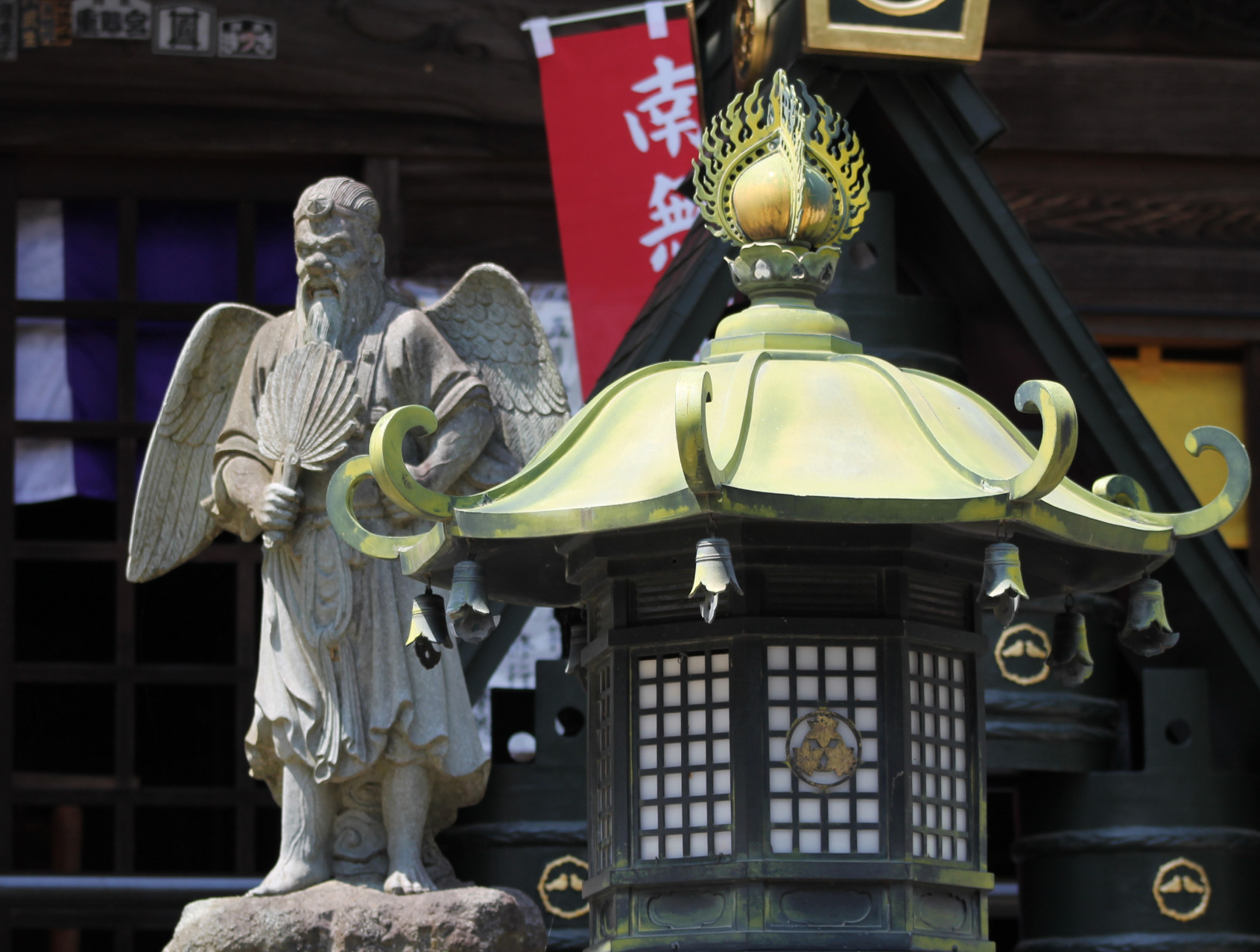
Mt. Takao tops out at 1,965-ft, and the ascent to its peak is peppered with mixed Buddhist-Shinto shrines. They’re the real deal, with centuries-old woodwork and artifacts that date back even further.

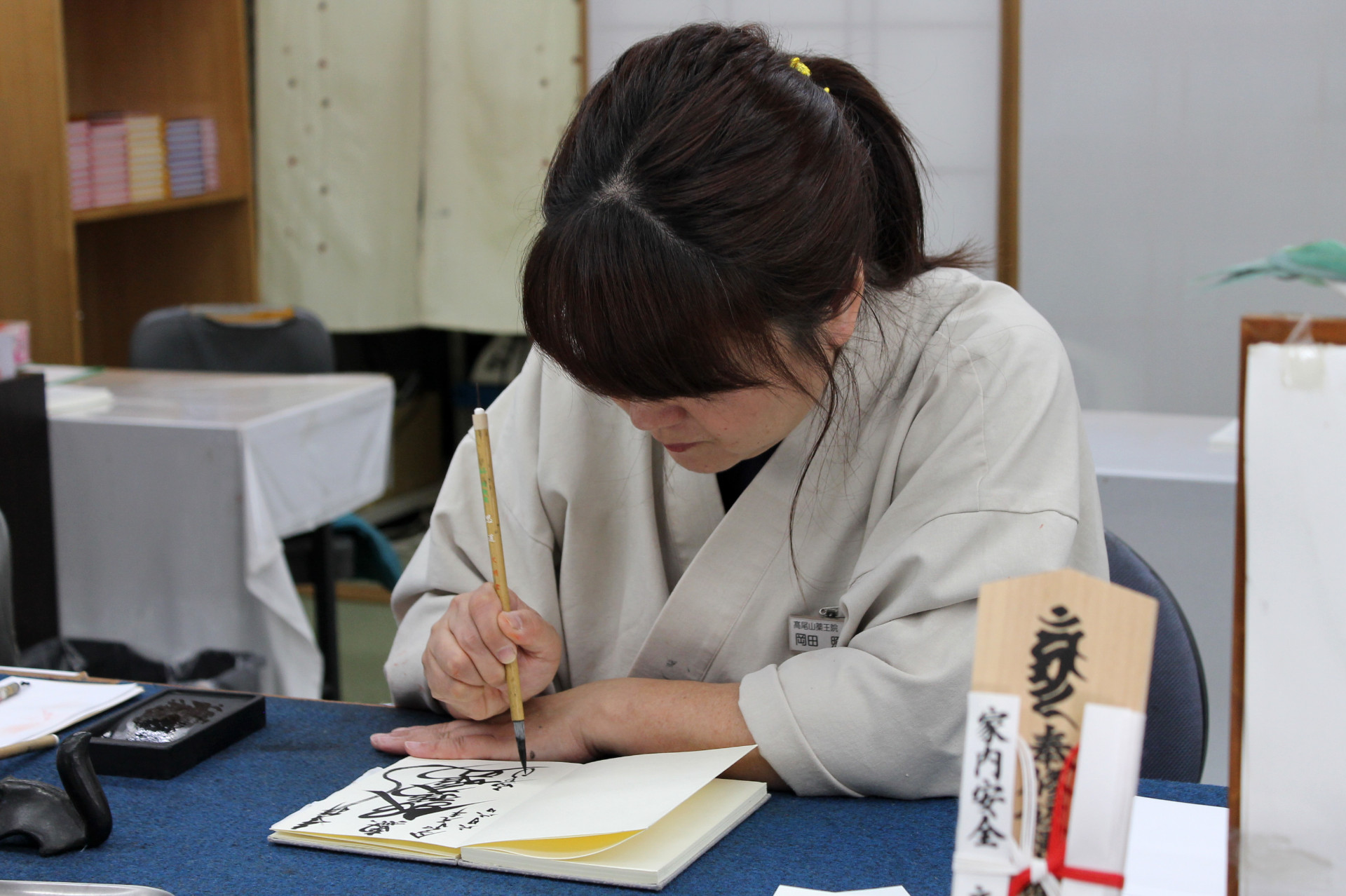
Each shrine in the country has its own unique stamps and calligraphic symbols. Visitors can buy blank books and collect stamps and calligraphy from each shrine they visit.

In this photo, a woman paints calligraphy onto a blank page with precise brush strokes:

26939D8B-0061-4AD5-8F5E-A799F74E7531

Further uphill are the temples:

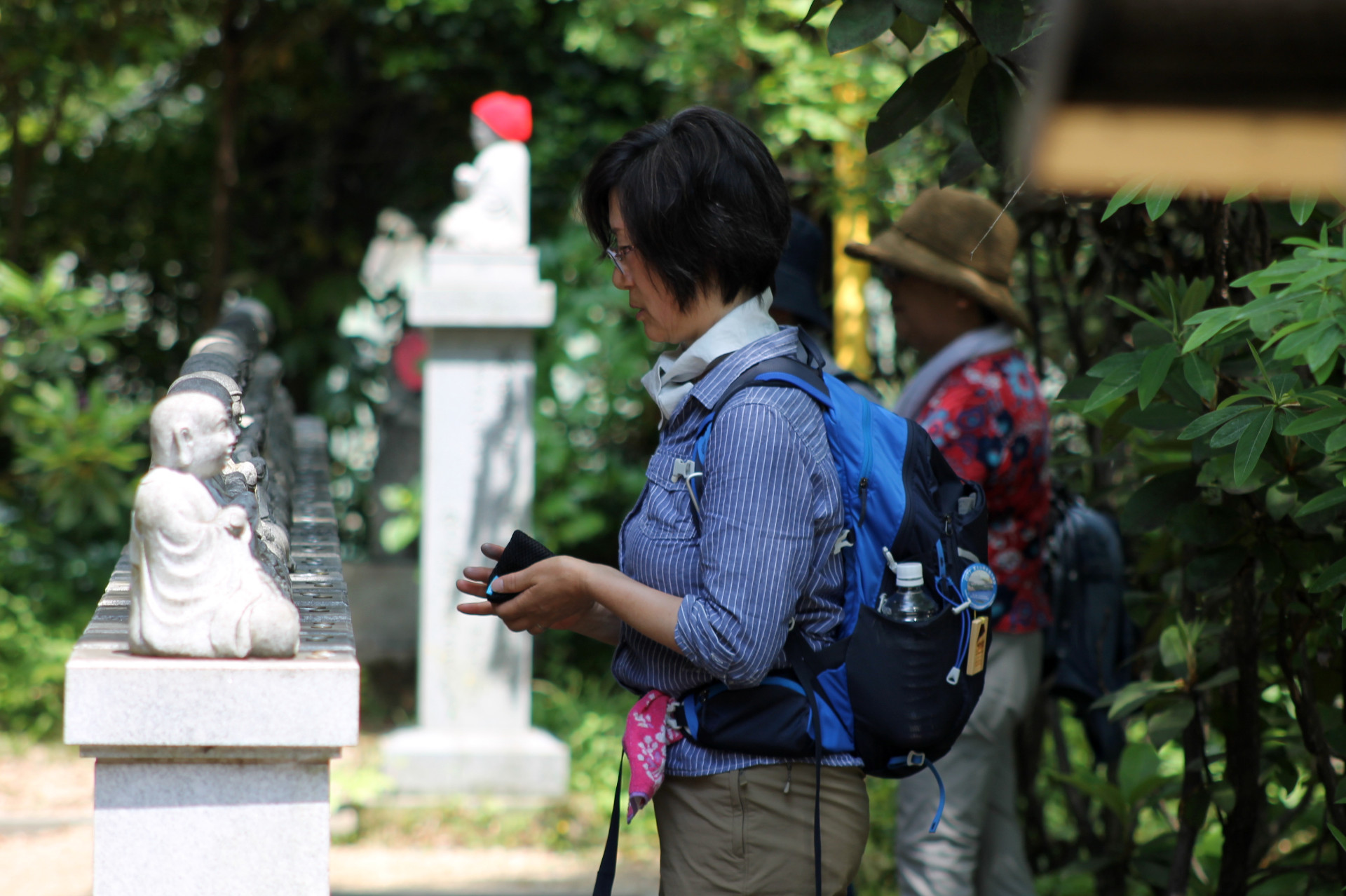
Woman in prayer
The shrines and temples aren’t just part of history, they’re sites of religious importance.

Buddha statues
Statues of Buddha on tall plinths line a path adjacent to a medium-size temple

3985F1B9-1B80-44AB-9867-016B825F5AC5

646B2D88-6C6E-4C15-BF2D-06F12ADC4534

00CCC686-B77D-4185-809B-48330BC1CD0E