For All Mankind May Be TV’s Best Show Right Now

For All Mankind shows us the future we could have had and the future that could still be if we celebrate our humanity instead of our differences.

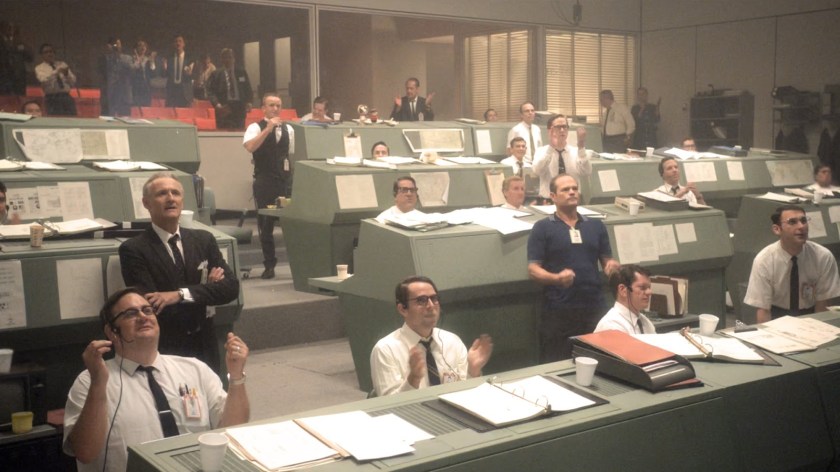
The first few minutes of For All Mankind play out like a documentary for the Apollo moon landing, interspersing archival footage of tense staff in mission control with shots of engineers in horn-rimmed glasses poring over data, backup astronauts raising their glasses in a pub and nervous families sitting in their 1960s living rooms, crowding around televisions.

A news anchor cuts in to report he’s getting the live feed from the moon. We see the door of a lander open…and a Soviet cosmonaut strides out, planting the flag of the USSR on the lunar surface and becoming the first human to ever set foot on another world.
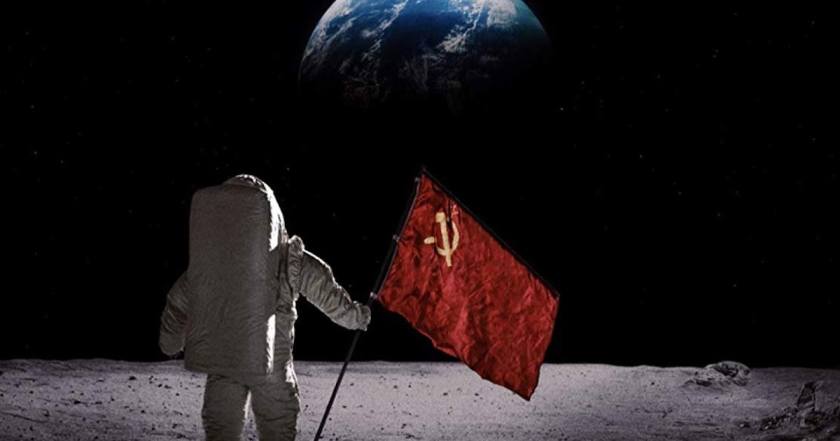
fam_sovietlanding

That’s the premise of For All Mankind. In this alternate history series, the fire that killed astronauts Virgil Grissom, Edward White and Roger Chaffee on Apollo I’s launchpad — which indeed happened in real life — led to policy changes and a more cautious culture at America’s space agency, resulting in the US losing the first and most momentous achievement of the space race.

That’s the start of the what-ifs.

What if the Soviets beat us to the moon? What if the rest of the space race was even more competitive than it was in our history, with an America struggling to prove its primacy? What if the US and Soviet Russia continued to pour incredible resources into space exploration? How far would we go? What kind of incredible new technologies would we invent? How would all of it impact American politics, culture, identity and standing in the world?

Could it have led to a better future?
fam_missioncontrol
Werner Von Braun (Colm Feore) and Deke Slayton (Chris Bauer) in NASA mission control in For All Mankind. Von Braun and Slayton were real-life leaders at the space agency and formative figures in the space race.

The answer to that question is hinted at in the series’ title, and while the show is filled with tense moments of international, organizational and personal rivalry, it’s infused with rational optimism instead of the cheesy, manufactured aspiration we’re accustomed to. It’s more like asking: What could the human race achieve if we all worked together? Is that retrofuturistic gleaming vision of the future still possible, and how do we get there?

For All Mankind follows Ed Baldwin (Joel Kinnaman) and Gordo Stevens (Michael Dorman), astronauts and best friends whose Apollo mission came within a few thousand feet of landing on the moon just weeks before the Russian landing.

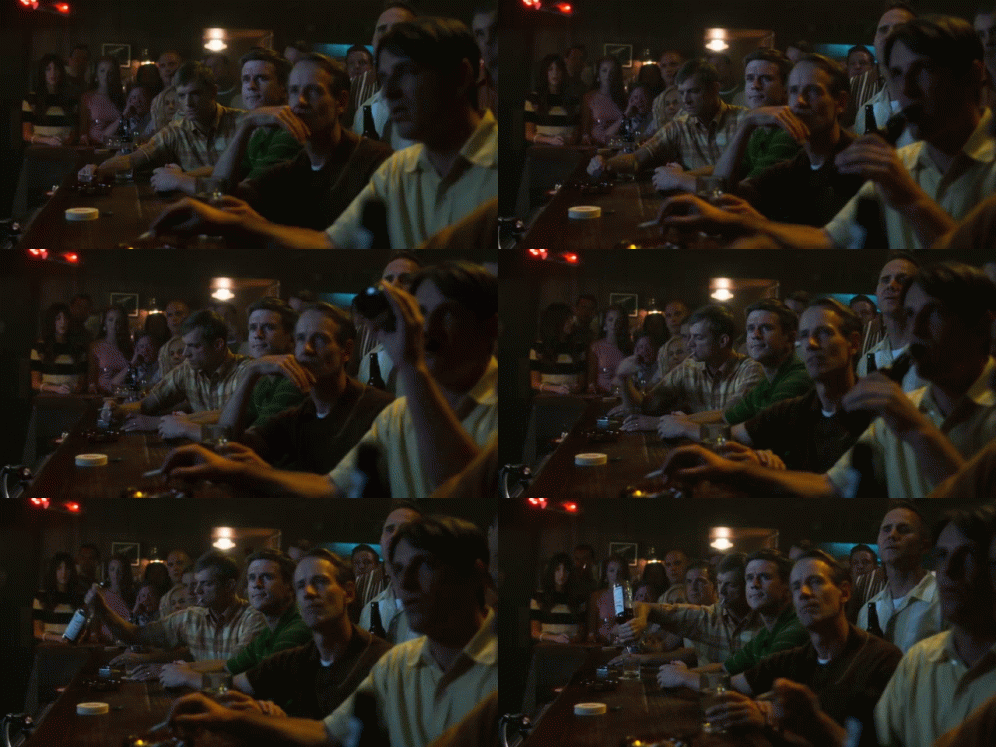
They’re miserable as they sit in a dive bar just off NASA’s campus watching grainy footage of cosmonauts claim their glory, and blame themselves for their failure to land even though it wasn’t in NASA’s cautious mission plan.
for-all-mankind-drink
Astronauts watch the Soviet moon landing from The Outpost, a dive bar frequented by NASA employees.

The scenes that follow look like they could have come from the 1995 blockbuster Apollo 13 as we meet the astronauts, their kids and their nervous wives, the eggheads and flight directors at NASA, and the political players who keep the space agency funded and protected from the wrath of President Richard Nixon.

With the agency rocked by the Soviet achievement and intense political pressure, it embarks on a series of bold new endeavors dictated by the White House. Not only will Americans land on the moon, they will build a permanent base there, and — embarrassed and spurred on by the fact that one of the cosmonauts was female — NASA will for the first time train a new, all-female class of astronaut recruits

The later group includes hotshot pilot Molly Cobb, “token black girl” Danielle Poole, quiet but determined Ellen Waverly — and Tracy Stevens, astronaut Gordo Stevens’ beautiful wife who is an accomplished pilot in her own right. While the women manage the normal pressure that comes with astronaut training and the high stakes nature of the job, they must also contend with pushback coming from directions they don’t expect — including hostility from some of the wives of current astronauts, who feel their husbands’ jobs will be threatened by women in space.
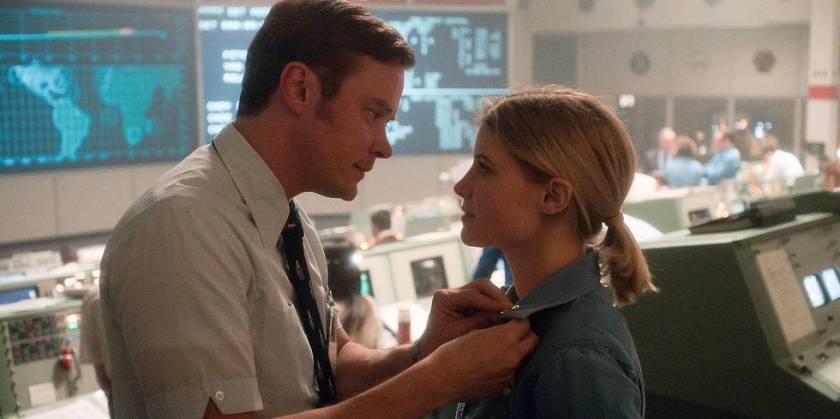
Gordo and Tracy
A proud Gordo gives his wife her astronaut pin.
Women of For All Mankind
Ellen Waverly, Molly Cobb, Tracy Stevens, Danielle Poole and another recruit are part of NASA’s first class of potential female astronauts.

For All Mankind is a science fiction show, but it’s also a drama and a thriller, putting viewers through the wringer of emotions.

There are funny and amusing moments as the show references celebrities, political figures and musicians from the 1960s onward, grounding the narrative in American culture. The fortunes of some celebrities and politicians change in the show’s alternate history while others stay the same.

In one running storyline — which you’ll only catch if you pay close attention to certain scenes and montages — John Lennon survives the attempt on his life, continues on as the grating, post-Beatles John Lennon most people would like to forget, and becomes just another aging musician cashing in on past glory alongside bandmate Paul McCartney and bands like the Rolling Stones.

The extension of the space race and continuation of US-Soviet rivalry impacts society in profound ways, many of them we may not realize from our historical perspective.

For example, DARPA created the internet because the US government and military wanted a decentralized communications network that could withstand nuclear attacks and remain operational even if major nodes are taken out in nuclear blasts.

That’s why the internet works on such a wide variety of hardware and why, even when major servers go down, our routers are able to move data packets via alternate paths. It’s difficult to imagine a time when the web wasn’t a medium for exchanging photos and videos of cute cats, but the early internet was populated by government officials, Pentagon brass and leading scientists in crucial fields.

In real life, restrictions were taken off the internet when the Soviet threat began to fade, allowing widespread civilian adoption of the technology and early dial-up services like AOL and CompuServe.

That doesn’t happen in For All Mankind’s alternate history as the USSR and communism remains a major threat, resulting in pop culture developing along a different cultural arc than the one we’re accustomed to.

While the pop culture references, sets, cars and costumes help ground For All Mankind historically, the show is at its best when it puts us in mission control and the command modules of high-risk space missions, constantly reminding us of the danger these men and women face while highlighting the commonality of astronauts, cosmonauts and later space explorers from other countries, all of them just human beings millions of miles from their families and everything they’ve ever known.

At the same time, the US and the USSR are playing a game of nuclear brinkmanship and astronauts are in many ways on the front lines as they figure out how to co-exist in unprecedented circumstances and places famously inhospitable to human life.

If astronauts tap a lunar mine too close to Soviet base camp, could that start a war? Are the Soviets spying on communications between NASA and its astronauts on the moon? What happens if someone gets hurt and their blood can’t clot in low/zero gravity?
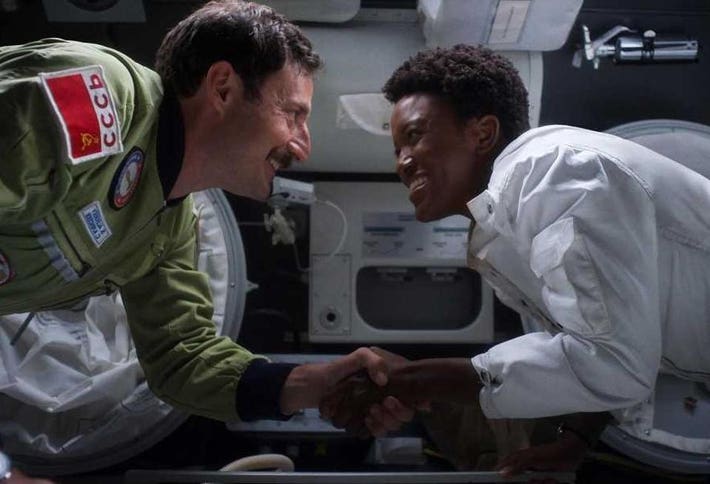
Handshake in space
NASA astronaut Danielle Poole shakes the hand of her Soviet counterpart as their modules dock in space.

Kinnaman, Dorman, Sarah Jones (Tracy Stevens), Sonya Walger (Cobb) et al shine in those scenes as they juggle the pressure of surviving in space with being exemplars of — and diplomats for — their country. Rather than be content painting the Soviets as the traditional bad guys, the show also gives us a close-up look at the people in the USSR’s space program and the pressures they face, particularly Polish actor Piotr Aleksander Adamczyk’s Sergei Nikulov in his relationship with his NASA counterpart, flight director Margo Madison.

In one of the show’s quieter moments, Poole (Krys Marshall) takes two cosmonauts to The Outpost when, during joint training exercises, they request real American cheeseburgers and whiskey. After a few drinks one of the cosmonauts grows somber and tells Poole how he held Laika, the Moscow street dog who was famously blasted into low Earth orbit in her own little module, before scientists were sure enough in the technology to risk human lives.

Although Soviet propaganda feted Laika as a hero and the official story said she survived until re-entry, the cosmonaut tells Poole that Laika died shortly after liftoff, terrified, alone and subjected to unimaginable forces as thousands of pounds of fuel carried her capsule heavenward via brute force.

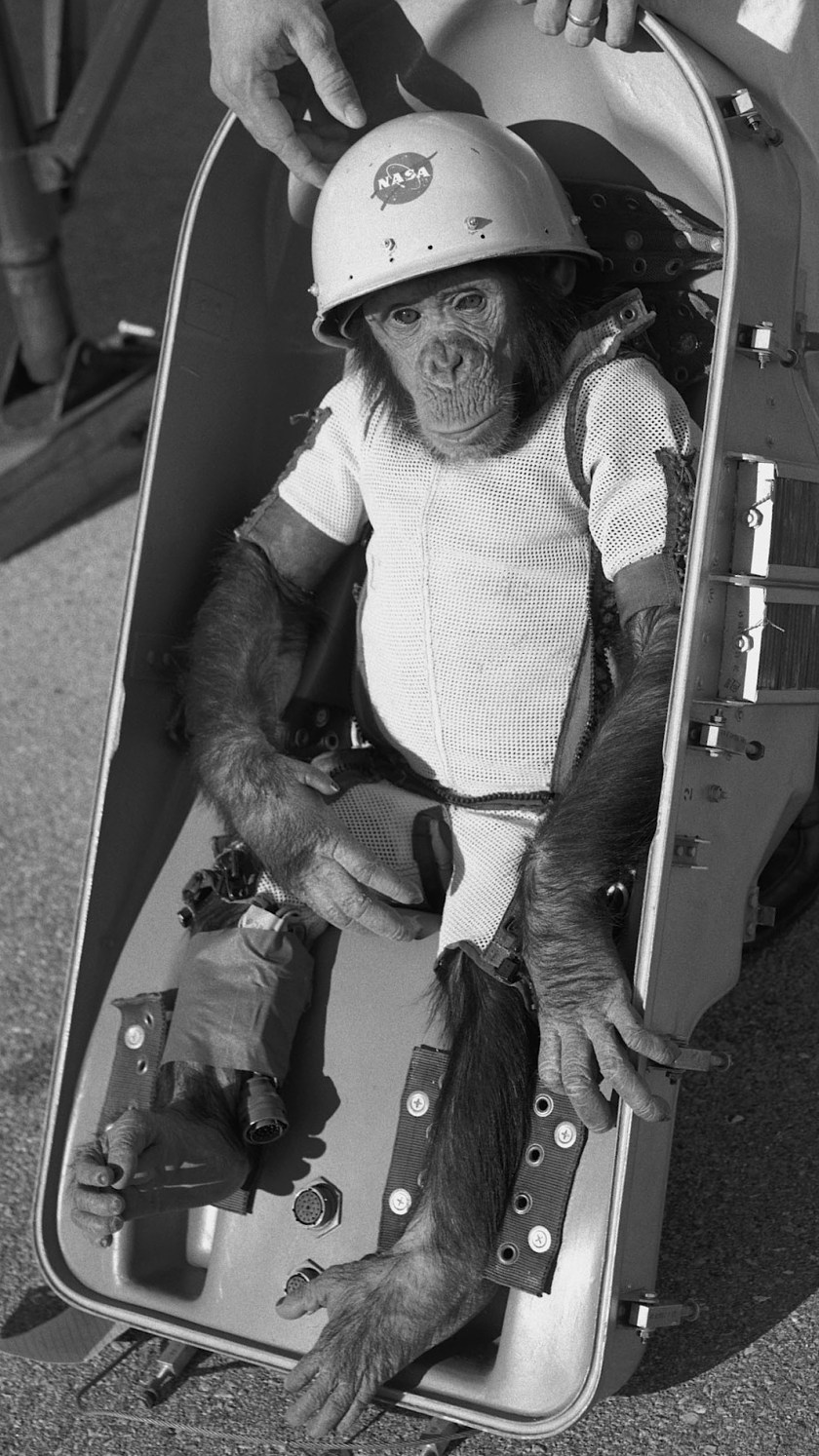
(The west was no less barbaric: The French famously sent a street cat named Felicette into space while NASA used a young chimp named Ham. In all of those cases the animals were named only after their missions, as mission commanders didn’t want to risk humanizing them in the event of disaster. Had Felicette and Ham both died in space they’d be remembered only by their identification numbers as footnotes in early space history.)
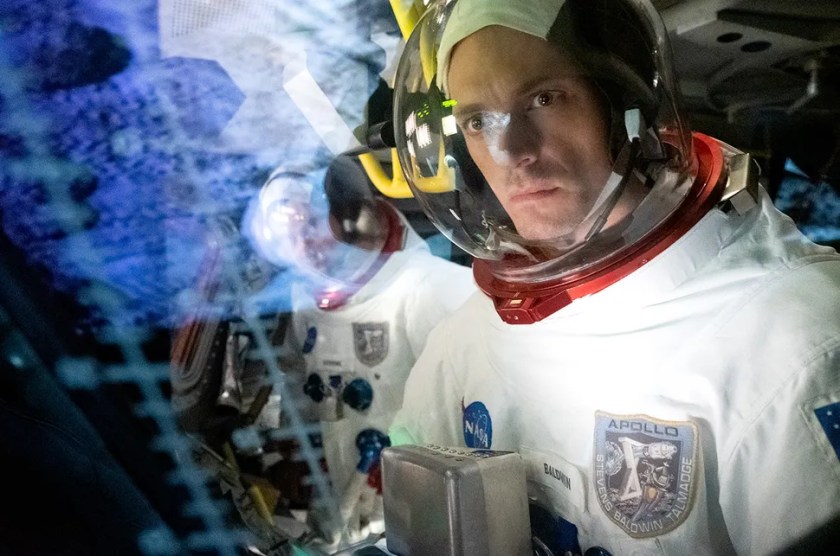
Ed Baldwin NASA commander
Kinnaman grounds the show as Ed Baldwin, one of the second generation of astronauts who take the mantle from men like Neil Armstrong and Buzz Aldrin.

For All Mankind recently began its fourth season and because AppleTV’s marketing and promotion is curiously weak, it remains one of TV’s best-kept secrets. If you haven’t seen the show yet, now’s a great time to jump aboard with so many TV shows on hiatus for the holidays and many others pushed back or canceled in the wake of the parallel strikes that halted production for most of 2023.

For All Mankind

Network: Apple TV

Content rating: TV-MA for bad language, occasional drug and alcohol use and mature themes.

Ratings: 8.1 (IMDB), 93% (Rotten Tomatoes), 4/5 (Common Sense Media)

Seasons: 4 (current)

PITB verdict: 4 Paws!

Laika And Felicette: The First Dog And Cat In Space Were Sacrificed For Human Ambition

Mankind’s achievements in space came at the expense of dogs, cats and non-human primates, who were sent into orbit during the early days of the space race.

I’ve been watching Apple TV’s exceptional show, For All Mankind, which dramatizes the space race of the 1960s and beyond in a sort of alternate history where the Soviets, not Americans, first lay boots on the lunar regolith.

That loss lights a fire underneath the behinds of the people at NASA and convinces American politicians that the space race is the ultimate measure of our civilization. In real life, American ingenuity and the creativity fostered by a free society allowed the US to leap ahead and “win” the space race. Space missions were already becoming routine by the time the drama of Apollo 13 briefly rekindled public interest.

Then the Soviet space program faded, the competition turned one-sided, and without an arch-enemy to show up, American politicians pulled back NASA’s funding to a fraction of what it once was, where it remains today. That’s why the rise of the private space industry — Elon Musks’s Space X, Jeff Bezos’ Blue Origin, etc — will almost certainly be our ticket to Mars.

But in For All Mankind, NASA remains the budgetary behemoth and source of prestige it was in the 60s and 70s, leading to the development of a permanent moon base, lunar mining operations and a planned mission to the red planet.

There’s a quiet moment in the second season when a Soviet cosmonaut, visiting the US as part of a peacekeeping mission, shares a drink in a dive bar with an American astronaut.

“Do you like dog?” the cosmonaut asks.

“Dogs?” the astronaut replies. “Of course. Who doesn’t like dogs?”

The Soviet shakes his head.

“No, dog,” he tells her. “Laika.”

Laika was the first dog in space, or more accurately, the first dog the Soviets acknowledged sending into space. (The Soviets didn’t acknowledge their failures, and we can only guess at the number of lost cosmonauts and animals officially denied by the Russians, drifting in space for eternity or disintegrated in atmospheric re-entry.)

Laika
Laika, also nicknamed Muttnick, wanted to please the humans who had taken her in, and didn’t understand that her trip would be one way. (Historical photo)

The moment turns somber as the cosmonaut recalls the Moscow street dog who was selected because she was docile, fearless and could handle the incredible noise and g-forces of a rocket launch.

“I held her in my arms,” the cosmonaut tells his American counterpart, taking a sip of his Jack Daniel’s. “For only one or two minutes on the launchpad.”

Then he leans in and tells her the truth: Laika didn’t triumphantly orbit the Earth for seven days in 1957 as the Soviet Union told the world. She didn’t endure the mission.

She perished, alone and afraid, just hours after launch when her capsule overheated.

The Soviets never designed the Sputnik 2, Laika’s ship, to return to Earth safely. Her death was predetermined.

We laud astronauts and cosmonauts, the brave men and women who willingly strap themselves into tiny capsules attached to cylinders of rocket fuel the size of skyscrapers and depart this Earth via brute force, knowing something could go wrong and their lives could end before they realize what’s happening. We should admire them. Their accomplishments are all the more impressive when you consider the fact that the combined processing power of every computer at NASA’s disposal in the 1960s was but a fraction of what we each hold in our hands these days when we use our smartphones.

Those first astronauts and cosmonauts were extraordinarily brave — but only up to a point.

Unwilling to risk human lives in the early days of space exploration, space programs used dogs, cats and later monkeys and apes, strapping them into confined spaces, wiring their brains with electrodes for telemetry data, poring over the information they gleaned about their heart rates, blood pressure and breathing as they left our home planet.

The sad eyes of a stray dog, separated from everyone she loved, were the first to behold Earth from space. A few years later the eyes of a French street cat took in the same view before humans did.

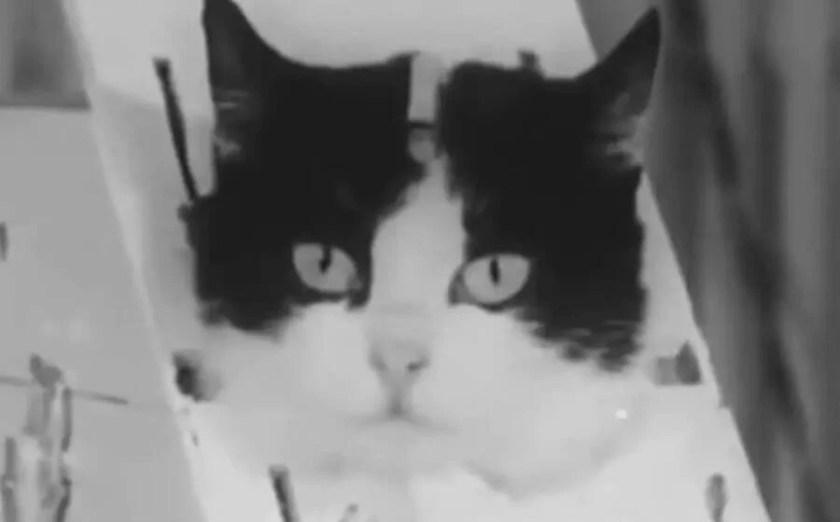
Felicette
Felicette couldn’t move when she was placed into the capsule that took her to space and back.

Felicette, the tuxedo cat who was launched into space by the French on Oct. 18, 1963, didn’t even have a name until the French recovered her capsule and took her back for examination.

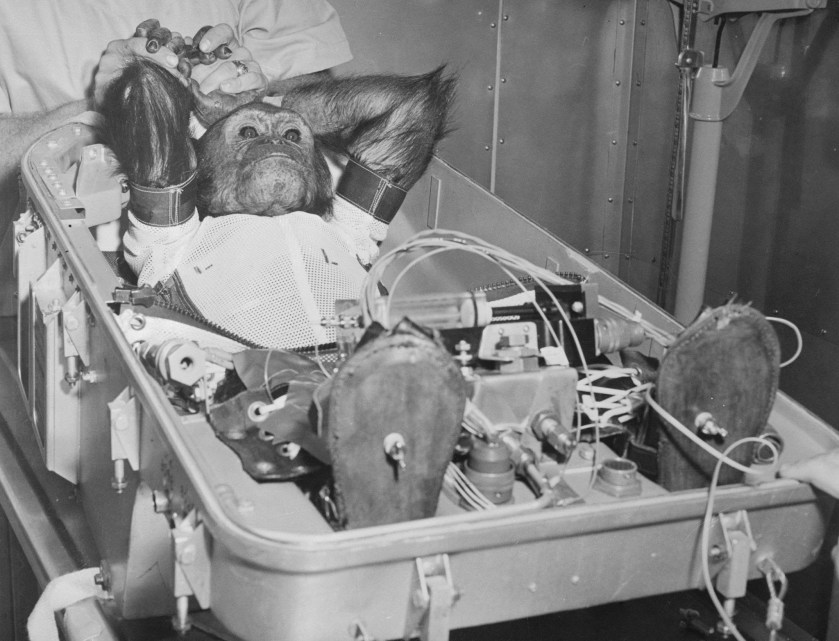
The scientists and engineers in charge of the launch didn’t want to humanize her if she didn’t make it, which was a common practice in space programs. (Ham, the chimpanzee sent into space by NASA in January of 1961, was known as No. 65 until his successful recovery. NASA was worried that a name would make him more sympathetic and lead to bad press if the chimpanzee died during the mission.)

Ham_the_chimp_(cropped)
Ham the chimpanzee was little more than a baby. Credit: NASA archives

Despite Felicette’s endurance and successful return, French scientists repaid her bravery by euthanizing her a month later so they could study her brain and learn more about the effects of spaceflight on mammalian biology.

Felicette, like Laika and Ham, was never given a choice. Those animals, with their child-like mental capacity, endured their missions out of a desire to please their human caretakers as much as any natural stoicism they may have possessed.

Would we do the same thing today? Will we repeat those experiments as we set our eyes on Mars?

Consider that the moon is a three day trip, and it’s close enough to Earth’s magnetic field to protect living beings from radiation. Mars is at least a seven month trip if the orbital conditions are right, and there will be no protection from radiation aside from what can be built into the craft. Take that trip without adequate protection and you’re guaranteed to get cancer.

It’s easy to say we wouldn’t make animals our test subjects for a Mars journey, and NASA now has decades of data on the effects of space and zero gravity thanks to the International Space Station.

And yet Neuralink, another company owned by Elon Musk, currently uses monkeys to test its brain interface technology, which allows the primates to operate computers with their thoughts. Those monkeys are forced to endure radical surgery to implant microchips in their brains. The teams working on the technology say suffering by those animals will be worth it as people with paralysis are able to do things with their thoughts and regain a measure of independence, increasing their quality of life.

Likewise, it will probably be an animal, or animals, who will be the test subjects on board craft that first venture beyond the Earth’s protective magnetosphere. Scientists and engineers will do their best to create a vessel that shields its occupants from harmful radiation, but they won’t know how successful they’ve been until the test subjects are returned to Earth and their dosimeters have been examined.

Will an astronaut volunteer for that kind of mission, knowing the “reward” could be a drastically shortened life?

To hear Musk and futurists tell it, pushing toward Mars is not just a matter of exploration or aspiration, but is necessary for the survival of our species. Earth becoming uninhabitable, they say, is an eventuality, not an if.

Others point out it’s much easier and wiser to pour our resources into preserving the paradise we do have, and the creatures who live in it, rather than banking on a miserable future existence on Mars where society will have to live underground and gravity, at 0.375 that of Earth, will change the human form in just a few generations.

To put it bluntly, while Musk and futurists look at life on Mars through the rose-colored glasses of science fiction fans, in reality living there is going to thoroughly suck.

If people do live on Mars they’ll never venture outside without a suit, never feel the sun on their skin, never swim in an ocean. They’ll never have another backyard barbecue, watch fireworks light up the sky on the fourth of July, or fall asleep to the gentle rain and crickets of warm summer nights. They’ll never hear birdsong or have the opportunity to see iconic animals like elephants and lions. Every gulp of air will be recycled, every glass of water will have passed through the kidneys of others. There will never be snow. Circadian rhythms will be untethered from the cycle that governed human biology for the 200,000 years our species has existed.

And while there could be a future — if you want to call it that — for people on Mars, there won’t be a future there for the rest of the living creatures on Earth.

As a lifelong fan of science fiction who devours SF novels, counts films like Alien and Bladerunner among my favorites, and is fascinated by shows like For All Mankind, The Peripheral and Star Trek, I understand the appeal of space and the indomitable human spirit that drives us to new frontiers. I just hope we can balance that with respect for the Earth and the animals we share it with. Let’s hope there is never another Laika, Felicette or Ham.

Correction: For All Mankind is the name of the Apple TV series about an alternate history space race. The first reference to the show’s name was incorrect in an earlier version of this story.

felicette-container
A close-up of Felicette’s face. Credit: French government archives
Ham the Space Chimp reaches for his apple reward after his space mission.
Ham the Space Chimp waits for his apple reward. Credit: NASA archives