Is Your Cat In Pain? The Feline Grimace Scale Can Tell You

For the first time, veterinarians and regular cat parents have a tool that can tell them if their cats are hurting.

Although there’s been lots of talk claiming cats don’t have facial expressions humans can parse — or even the muscles to noticeably change expressions — that’s not actually true.

It’s more accurate to say feline facial expressions are far more subtle than their human or even canine equivalents, and it takes an expert — a veterinarian or behaviorist with specialized training — to accurately read them.

This is a brand new frontier for veterinary science, and it’s all thanks to the feline grimace scale, a system developed by researchers at the University of Montreal in 2019. Using video clips of cats in various moods and stages of pain or pain-free expression, the researchers built a system that could reliably determine how a cat is feeling. (You can read more about how they did that here.)

“I call it the Rosetta Stone for interpreting how a cat is feeling,” veterinarian Liz Bales says in a new video at dvm360. “It turns out that very subtle changes in cat’s facial expressions can tell us whether or not they’re in pain. It includes the position of the ears, the opening of the eyes, the expression on the mouth, how the cat is holding its whiskers, and how they’re holding their head.”

Each of the five elements of feline facial expression are scored on a three-point scale, then added up. The result provides an accurate assessment of how a cat feels.

“It’s amazing, and it allows us to interpret feline pain in a way we never could before,” Bales says. “The hard part is, it can be a little bit tricky to learn. It is learnable, but I specialize in this and I’m still struggling to get it right every single time.”

Despite the challenge, she says, it’s well worth learning.

“The applications of this are so far and wide, and I think as the technology grows and it becomes easier and easier to use the grimace scale, the more exciting it’s going to be.”

Thanks to an app named Tably, cat servants don’t have to know how to read the most subtle feline facial expressions anymore. By running a photo of your cat through the app’s algorithm, Tably can read your cat’s expression for you.
Tably Bud
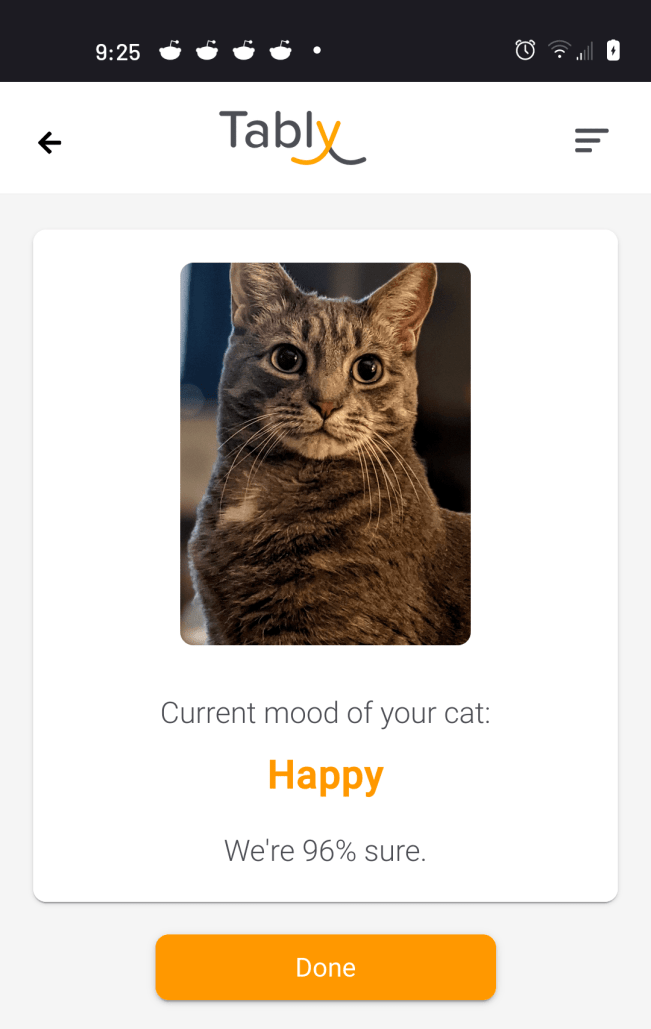
Tably gauges cats’ moods in addition to their pain levels. We used the web app to evaluate Buddy last year. Thankfully he was happy!

Bales says she envisions a near future in which pet parents monitor their cats’ health and mood daily, and the scale becomes the standard for end-of-life care. With a “validated, consistent way to measure pain, we can look into more pain drugs for cats, what’s working, what isn’t.”

“A cat in pain looks like a resting cat to most people, but now we have this tool,” Bales says. “And I think as the tool evolves and we give cats a way to really speak for themselves through this Rosetta Stone of the grimace scale, then the more we understand that we can do for them, the more we’re going to do for them.”

We wrote about the feline grimace scale and Tably last year, and noted it had a lot of promise for veterinarians and us cat servants. At the time Tably was in beta and had a web app that allowed anyone to use the technology.

Unfortunately the web app seems to have disappeared, and the app is now available only to iOS users. Since we switched from an iPhone to Android, we can’t access Tably for the time being. (Let’s hope an Android version is forthcoming.) But if you have an Apple device, the app is definitely worth checking out.
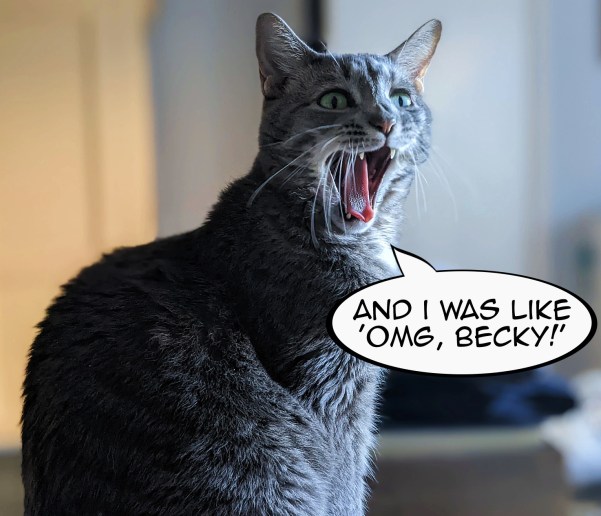
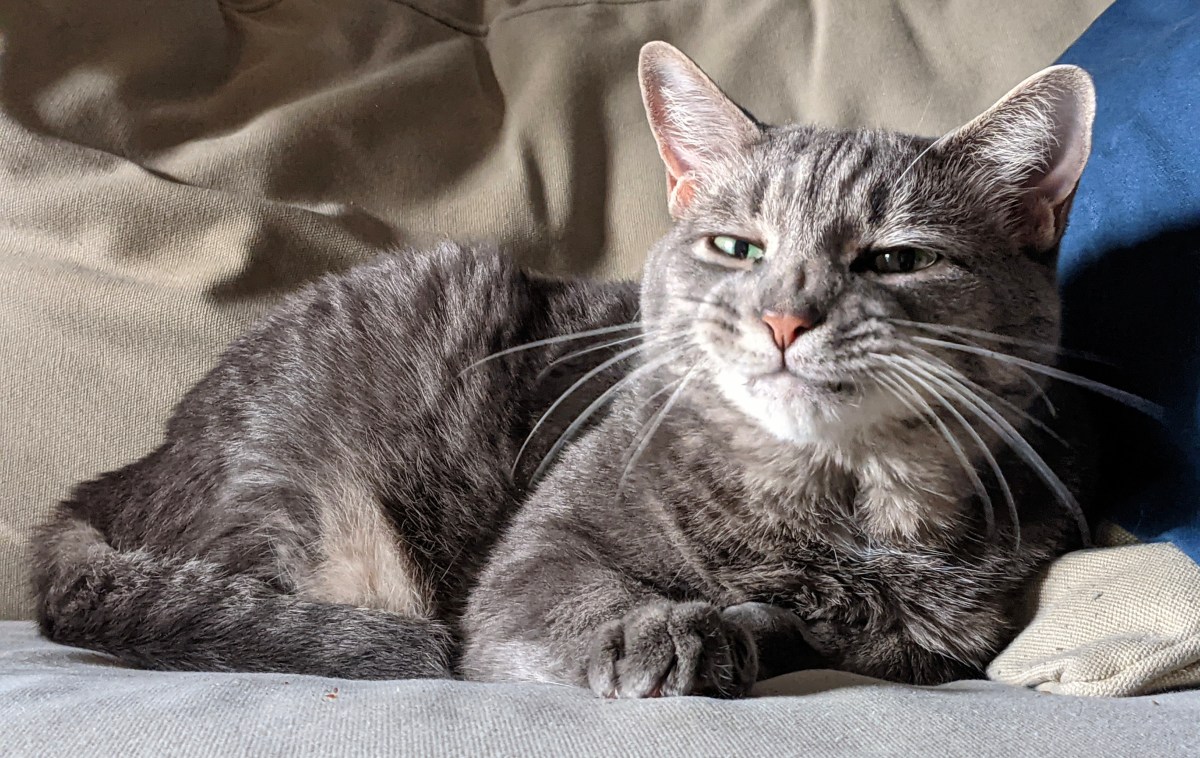
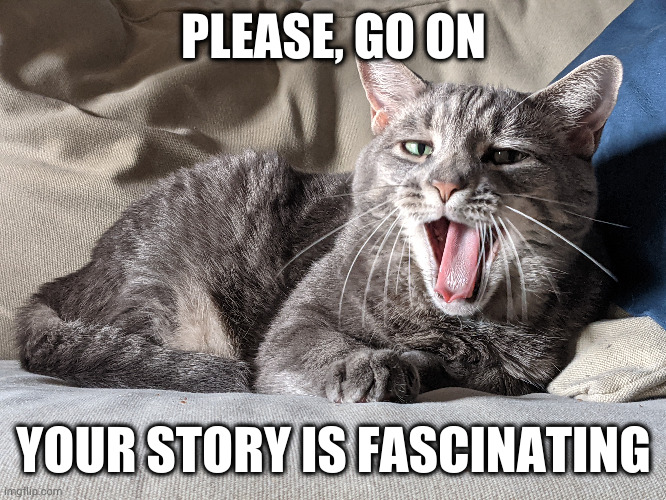
Bud and Becky
“You go, girlfriend!”

How Much Can AI Teach You About Your Cat?

A new AI algorithm promises to help you gauge your cat’s mood — and determine if she’s in pain — by analyzing facial expressions.

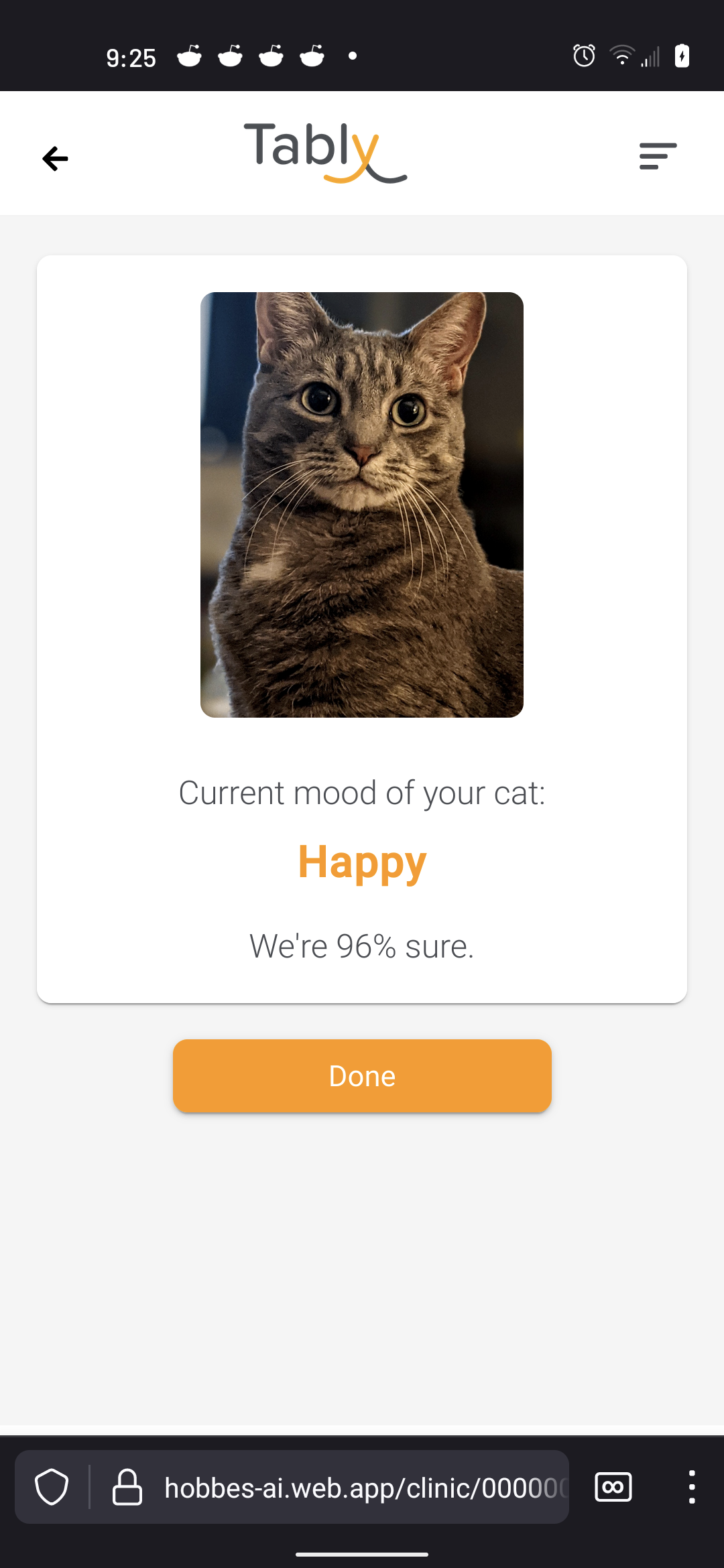
In the photograph, Buddy is sitting on the coffee table in the classic feline upright pose, tail resting to one side with a looping tip, looking directly at me.

The corners of his mouth curve up in what looks like a smile, his eyes are wide and attentive, and his whiskers are relaxed.

He looks to me like a happy cat.

Tably agrees: “Current mood of your cat: Happy. We’re 96% sure.”

Screenshot_20210730-092555

Tably is a new app, currently in beta. Like MeowTalk, Tably uses machine learning and an algorithmic AI to determine a cat’s mood.

Unlike MeowTalk, which deals exclusively with feline vocalizations, Tably relies on technology similar to facial recognition software to map your cat’s face. It doesn’t try to reinvent the wheel when it comes to interpreting what facial expressions mean — it compares the cats it analyzes to the Feline Grimace Scale, a veterinary tool developed following years of research and first published as part of a peer-reviewed paper in 2019.

The Feline Grimace Scale analyzes a cat’s eyes, ears, whiskers, muzzle and overall facial expression to determine if the cat is happy, neutral, bothered by something minor, or in genuine pain.

It’s designed as an objective tool to evaluate cats, who are notoriously adept at hiding pain for evolutionary reasons. (A sick or injured cat is a much easier target for predators.)

But the Feline Grimace Scale is for veterinarians, not caretakers. It’s difficult to make any sense of it without training and experience.

That’s where Tably comes in: It makes the Feline Grimace Scale accessible to caretakers, giving us another tool to gauge our cats’ happiness and physical condition. With Tably we don’t have to go through years of veterinary training to glean information from our cats’ expressions, because the software is doing it for us.

Meanwhile, I used MeowTalk early in the morning a few days ago when Buddy kept meowing insistently at me. When Bud wants something he tends to sound whiny, almost unhappy. Most of the time I can tell what he wants, but sometimes he seems frustrated that his slow human isn’t understanding him.

I had put down a fresh bowl of wet food and fresh water minutes earlier. His litter box was clean. He had time to relax on the balcony the previous night in addition to play time with his laser toy.

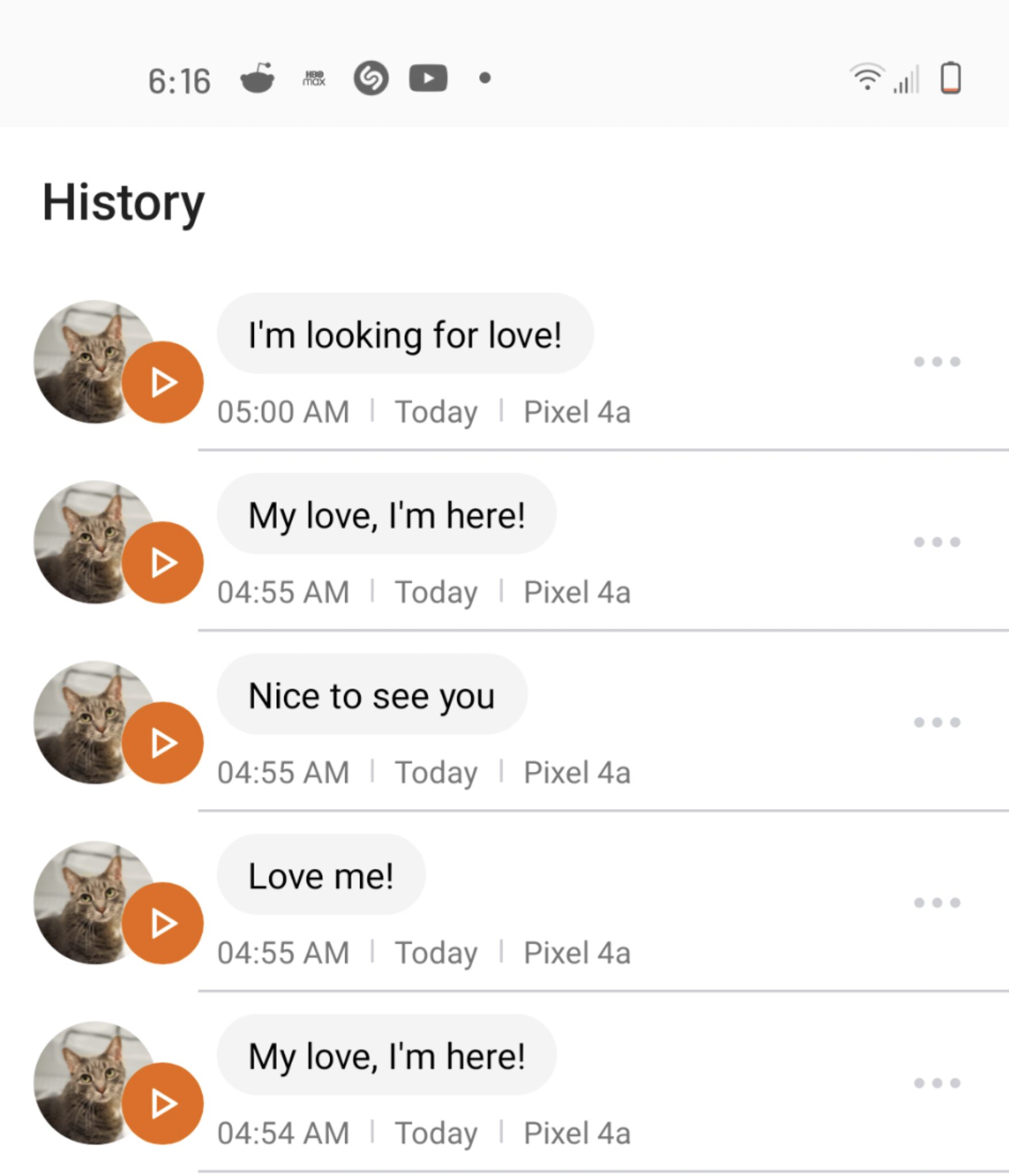
So what did Buddy want? Just some attention and affection, apparently:

Screenshot_20210801-181618

I’m still not sure why Buddy apparently speaks in dialogue lifted from a cheesy romance novel, but I suppose the important thing is getting an accurate sense of his mood. 🙂

So with these tools now at our disposal, how much can artificial intelligence really tell us about our cats?

As always, there should be a disclaimer here: AI is a misnomer when it comes to machine learning algorithms, which are not actually intelligent.

It’s more accurate to think of these tools as software that learns to analyze a very specific kind of data and output it in a way that’s useful and makes sense to the end users. (In this case the end users are us cat servants.)

Like all machine learning algorithms, they must be “trained.” If you want your algorithm to read feline faces, you’ve got to feed it images of cats by the tens of thousands, hundreds of thousands or even by the millions. The more cat faces the software sees, the better it gets at recognizing when something looks off.

At this point, it’s difficult to say how much insight these tools provide. Personally I feel they’ve helped me understand my cat better, but I also realize it’s early days and this kind of software improves when more people use it, providing data and feedback. (Think of it like Waze, which works well because 140 million drivers have it enabled when they’re behind the wheel and feeding real-time data to the server.)

I was surprised when, in response to my earlier posts about MeowTalk and similar efforts, most of PITB’s readers didn’t seem to share the same enthusiasm.

And that, I think, is the key here: Managing expectations. When I downloaded Waze for the first time it had just launched and was pretty much useless. Months later, with a healthy user base, it became the best thing to happen to vehicle navigation since the first GPS units replaced those bulky maps we all relied on. Waze doesn’t just give you information — it analyzes real-time traffic data and finds alternate routes, taking you around construction zones, car accident scenes, clogged highways and congested shopping districts. Waze will even route you around unplowed or poorly plowed streets in a snowstorm.

If Tably and MeowTalk seem underwhelming to you, give them time. If enough of us embrace the technology, it will mature and we’ll have powerful new tools that not only help us find problems before they become serious, but also help us better understand our feline overlords — and strengthen the bonds we share with them.

Buddy is bored
Buddy’s bored of all this AI talk and wants a snack.