The family posted a short statement on social media but refrained from offering details, citing an ongoing police investigation.
Nora the cat is back with her family.
The tabby cat was stolen from outside her West Yorkshire, UK, home on Jan. 18 by an Amazon delivery driver. Nora’s human, Carl Crowther, checked footage from his security cameras and had a clear view of the driver dropping off a package and scooping up the cat before walking off the property with her.
The incident was widely covered in UK media and while the suspect’s face was censored in news reports, an uncensored version was widely shared on social media by animal welfare groups and regular people who helped put pressure on the driver. Nora’s family worried that the kitty could experience health problems without the medication they give her regularly for a heart murmur.
Crowther’s Facebook post.
In an update post, Crowther said Nora had been returned “safe and well.” It’s not clear if the Amazon employee returned the cat or if police were involved in the recovery. Crowther, citing an ongoing police investigation, said he can’t offer more details at the moment.
“Obviously we are over the moon with this outcome,” he wrote on Facebook.
Unfortunately the theft of pets by delivery drivers has been a recurring story in the news, and there are reports of Amazon drivers making off with cats and dogs going back at least a decade. While there is no official count or centralized list, it’s happened often enough to generate outrage from customers and news coverage from local and national media, which is often key to helping the victims get their pets back.
The bishop of Little Rock called the allegations “disturbing” and said Thessing would not serve his two home parishes while the criminal case plays out.
An Arkansas priest was suspended by his diocese this week, one day after police found dead cats during a search of his home.
Charles Thessing, a 63-year-old “senior priest” and pastor at St. Michael Church in West Memphis and Sacred Heart Church in nearby Crawfordsville, was charged with two felonies on Tuesday. Police, working from information provided by a tipster, found a pair of dead cats, a water tank where Thessing allegedly drowned the felines, and animal traps, according to the West Memphis Police Department.
The Rev. Charles Thessing. Credit: Diocese of Little Rock
The tipster initially contacted a shelter on Feb. 7 with the information, according to police.
“We were very fortunate that someone, a concerned citizen brought our attention to the situation and we addressed it immediately,” Kerry Facello, Director of West Memphis Animal Services, told local CBS affiliate WREG. “The West Memphis Police Department worked so fast in obtaining a search warrant and allowing us to investigate further and see exactly what was going on.”
In a letter to parishioners at St. Michael and Sacred Heart, Diocese of Little Rock Bishop Anthony Taylor confirmed the arrest, adding “the allegations are disturbing, and as your bishop I take them very seriously.”
“Having heard from numerous voices within the parish, the school, and the broader community; having consulted with others; and having given this matter much prayer and consideration, I have determined that Fr. Thessing cannot continue serving as an effective pastor for your parishes,” Taylor wrote.
Thessing also has supporters, Taylor noted, while asking for parishioners to pray for the priest.
Thessing’s mugshot. Credit: West Memphis Police Department
Thessing, who has not spoken publicly since his arrest, smiled in his mugshot, which was released by West Memphis police. Per the bishop, Thessing will not minister to his parishes or perform any of his regular duties while the case reaches a disposition. The bishop did not say what could happen if Thessing pleads to the charges or is found guilty.
Thessing has been a priest for 37 years, according to the diocese.
Police say their investigation is ongoing, and they’re asking anyone with more information about Thessing to contact them. Under Arkansas state law, aggravated cruelty to animals is defined as “knowingly torturing a dog, cat, or equine,” and is a felony.
If Thessing drowned the cats, as police allege, that would put him at odds with the church. Pope Francis has been particularly outspoken on animal welfare. He was born Jorge Mario Bergoglio, and chose Francis as his name for his papacy, after the Catholic patron saint of animals.
His 2015 encyclical, Laudato Si, was the church’s strongest and most unambiguous condemnation of human treatment of animals, including cruelty, factory farming, exploitation and pushing animals toward extinction with our behavior and our public policies.
In the encyclical, Pope Francis condemned “tyrannical anthropocentrism unconcerned for other creatures” and stated clearly that animal life has intrinsic value, rejecting the argument often used by literalists who claim that God, through Bible verses like Genesis 1:26, created animals and the Earth for our use, as if they’re merely tools or resources for the advancement of the human race.
“[N]owadays we must forcefully reject the notion that our being created in God’s image and given dominion over the earth justifies absolute domination over other creatures,” the pope wrote.
He also echoed psychological concerns about the mistreatment of animals as a strong indicator that a person will harm humans.
“We have only one heart,” Francis wrote, “and the same wretchedness which leads us to mistreat an animal will not be long in showing itself in our relationships with other people.”
Authorities believe the person or people who stole the monkeys intend to sell them as pets or breeding animals.
UPDATE, 2/1/2023: A tip led police to an empty home in Lancaster, Texas, about 15 miles from the zoo. The missing tamarins were found inside a closet and were unharmed, per CNN. They were returned to the zoo and examined by veterinarians.
Police still want to speak to an unidentified man (see story below) who was seen on zoo grounds, but they haven’t said what the man was doing or how he may be connected to the thefts. The abduction of the tamarins follows two other incidents of breached enclosures at the zoo, and the theft of 12 squirrel monkeys from Zoosiana in Broussard, Louisiana, this weekend.
Original story, 1/31/2023:
Dallas police released a photo of a “person of interest” they’d like to speak to after a pair of emperor tamarin monkeys went missing from their enclosure in the Dallas Zoo, the latest of three incidents in which animal habitats at the zoo were breached by human hands.
The first incident happened on Jan. 13 when zookeepers noticed a three-year-old clouded leopard named Nova was missing from her enclosure. They found a breach in the mesh netting that serves as one of enclosure barriers, and said it was a clean, intentional cut with a blade, not from the animals.
After a frantic search — and multiple appeals to the public informing people the leopard was not dangerous and should not be shot — zookeepers found Nova hiding in a tree on the zoo grounds, not far from her enclosure. Nova’s sister, Luna, lives in the same enclosure and remained there.
That same day, staff at the zoo also found another breach, this time at the langur exhibit. Langurs are old-world, leaf-eating monkeys native to Asia. None of the monkeys were missing, but the discovery strengthened the suspicion that someone had tried to steal Nova and at least one monkey, but were not successful.
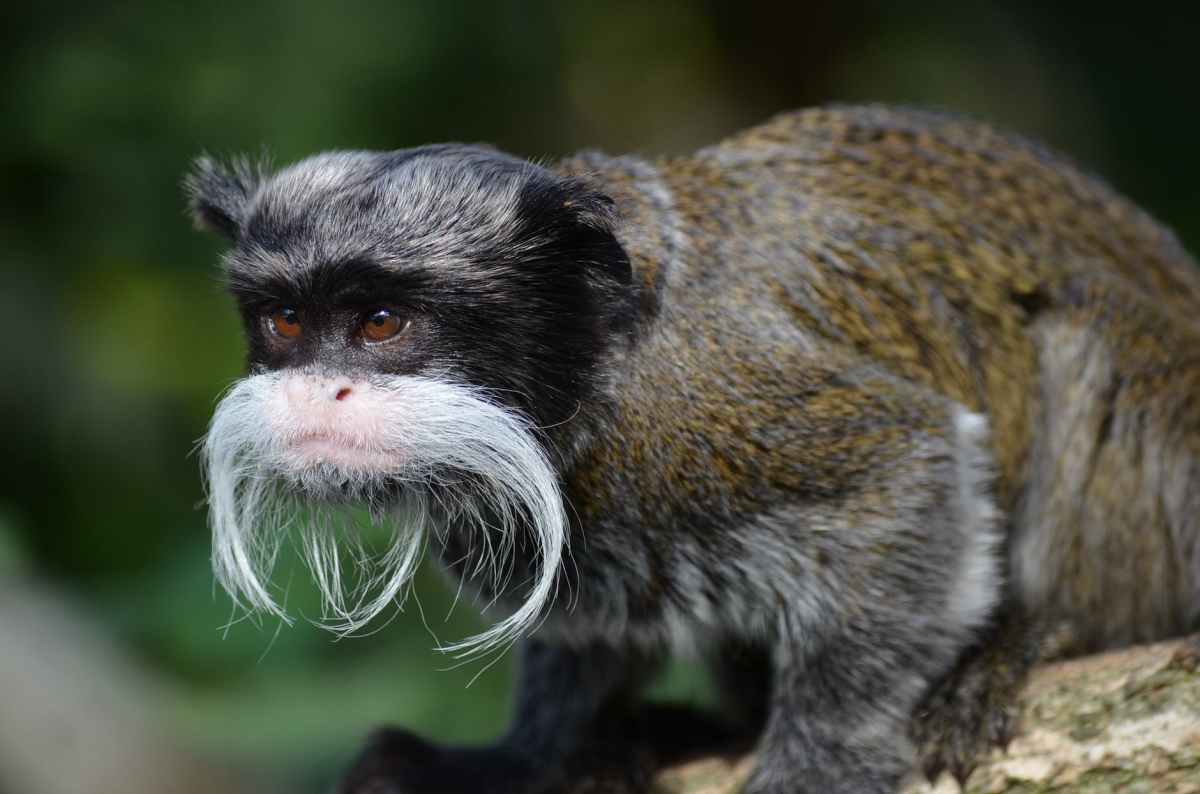
Now it appears that same person or a copycat has been successful in another habitat. On Jan. 30, zookeepers found a breach in a habitat that hold’s the zoo’s emperor tamarin monkeys. Two of the monkeys were missing.
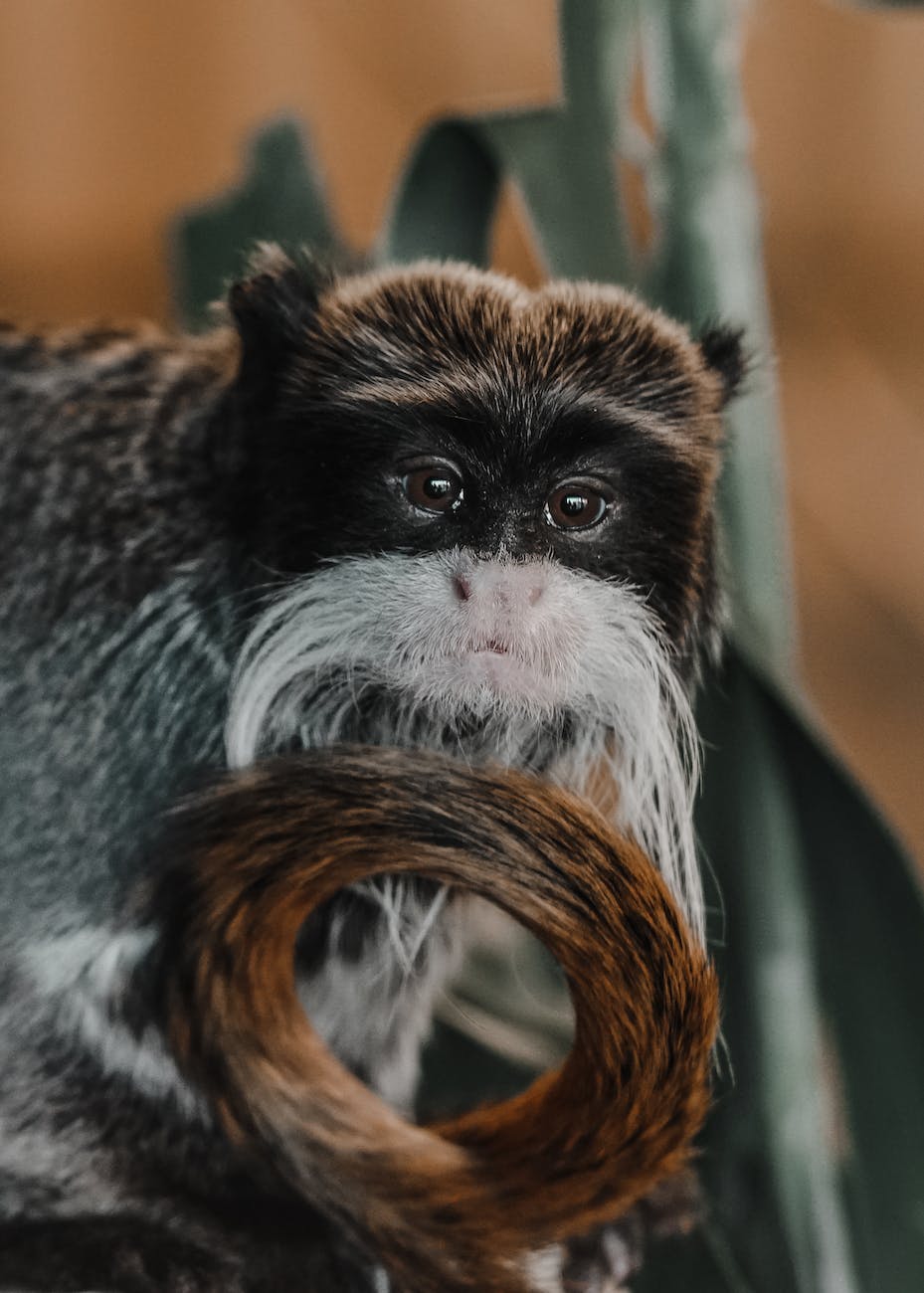
Tamarins are tiny arboreal new world monkeys that have become popular pets due to “influencers” popularizing them on sites like Youtube and celebrities purchasing them.
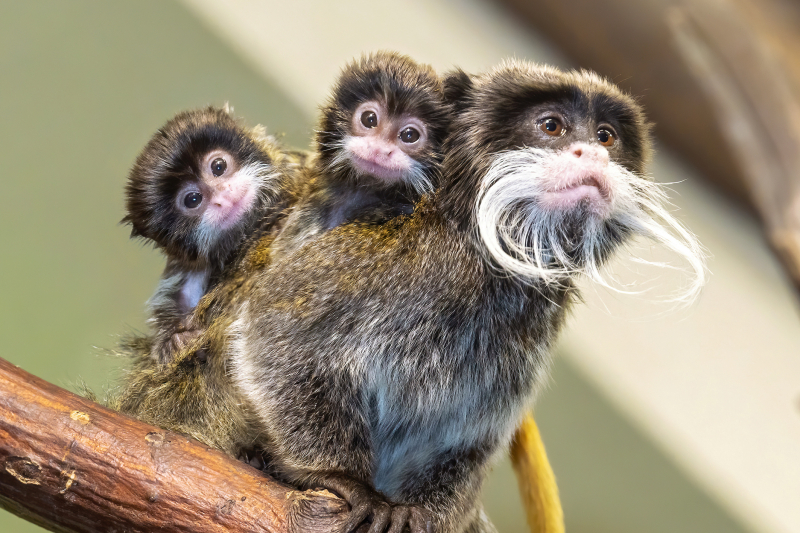
A tamarin mother with her babies. Primate babies are virtually attached to their mothers for the first years of their lives
There are an estimated 15,000 monkeys living as pets in the US, and some species fetch up to $7,500 as infants, when they’re violently “pulled” from their mothers when they’re just days old and sold. Most are temporary pets, lasting up to two years before docile, adorable infants become destructive, resentful juveniles and the “owners” decide to cut their losses. Buying monkeys as pets and subsequently abandoning them has become so common that sanctuary spots are at a premium, with a handful of sanctuaries taking thousands of monkeys annually.
Some people buy new babies every year or two, shipping the “old” ones off to sanctuaries — or simply dumping them in the woods where they don’t know how to fend for themselves — and repeating the process of infantalizing newly-purchased monkeys. Macaques, capuchins, marmosets and tamarins are the most popular monkeys kept as pets.
Despite the appeal to some people, humans cannot meet the social or environmental needs of monkeys, who naturally live in troops with complex social hierarchies and relationships.
“Monkeys are not surrogate children, and they’re not little people,” the Humane Society’s Debbie Leahy told the New York Post in a 2013 story.
“Pulling” monkeys from their mothers traumatizes infants and the mothers, and there is a wealth of data from primate maternal deprivation studies — going all the way back to the cruel experiments of psychologist Harry Harlow — documenting the psychological damage done to the animals when they’re removed from their mothers and troops.
“If you try to keep them as pets you’re creating a mentally disturbed animal in 99.9 percent of the cases,” Kevin Wright, director of conservation, science and sanctuary at Phoenix Zoo told National Geographic. “The animal will never be able to fit in any other home. Never learn how to get along with other monkeys. And, more often than not, will end up with a lot of behavioral traits that are self-destructive.”
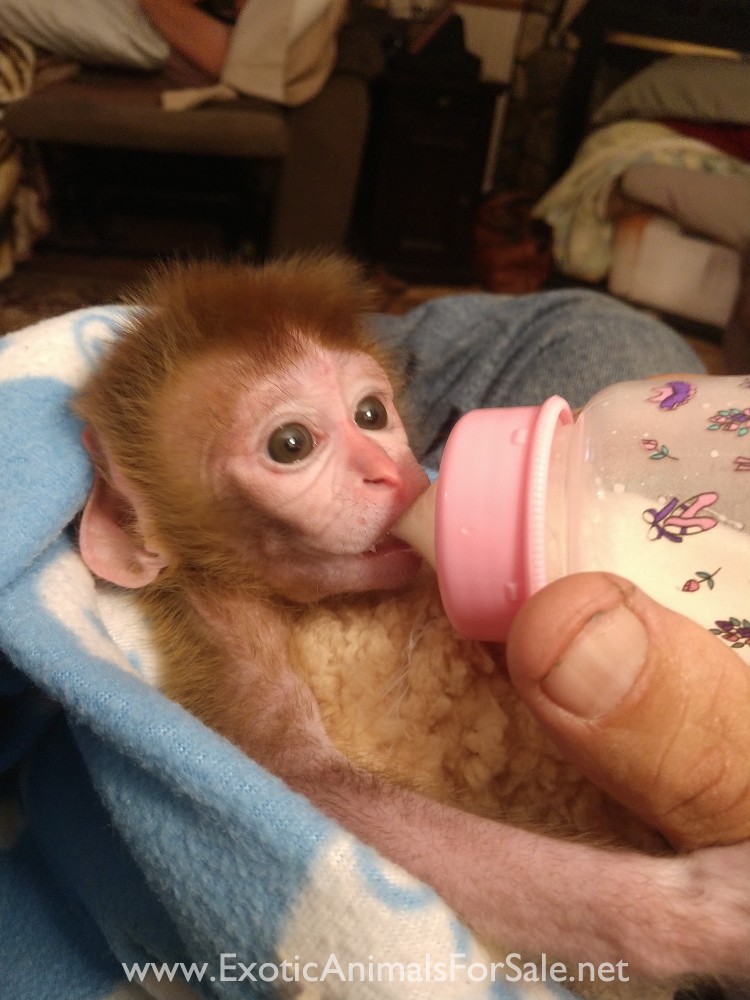
A rhesus monkey baby, already separated from its mother at just a few days old.
Tamarins, which are often called “pocket monkeys” by people who keep them as pets, can fetch up to $5,000 apiece, generally less than larger primates like capuchins or macaques. Demand for macaques has skyrocketed since the pandemic, as laboratories test various drugs on the old world monkeys, and prices for infants have risen as well.
Despite officials at Dallas Zoo installing additional cameras and increasingly patrols on the grounds at night, an intruder or intruders were able to evade detection and successfully remove the animals some time between Sunday night and Monday morning.
Police have released an image of a man who was seen strolling through the zoo and have asked for the public’s help identifying him so detectives can speak with him. Police did not say why they believe the man, who is pictured wearing a hooded jacket and eating Doritos, would have information on the missing animals or what his role might be.
Dallas Police are looking for the public’s help in identifying the pictured individual. Detectives are looking to speak with the man in regard to the two tamarin monkeys missing from the Dallas Zoo. Anyone with information- call 214-671-4509. pic.twitter.com/VVvvHFAdgJ






 Pain In The Bud