Airline Introduces ‘Fat Tax’: Why Pet Parents Should Care

Credited to an “activist investor,” one airline has redoubled efforts to squeeze money out of travelers — and people traveling with pets could be next.

Travelers are calling it a “fat tax.”

The anecdotes, which have been popping up all over social media platforms this week, are similar: flyers show up to the airport, a counter person looks them up and down, then declares the flyer will have to purchase a second seat or give up their spot on the plane.

That this is happening on Southwest Airlines, long praised as the most considerate toward “passengers of size,” is even more surprising. SF Gate attributes the dramatic shift in policy, which is apparently just one of many, to an “activist investor.”

It doesn’t say who that “activist investor” is, but it’s difficult to imagine a person wealthy enough to own a significant portion of an airline developing a personal vendetta after bad experiences in crowded coach. This is something different, driven by the desire to extract more money from travelers with rent-seeking behavior. That sort of thing, an “activist investor” certainly would do. Boosting profits without creating any value has become the calling card of America’s financial ruling class.

Which is why it’s likely this problem was created by the airlines in the first place, and why pet caretakers should be wary. (And no, not because felines like my Bud are a little too fond of the yums.)

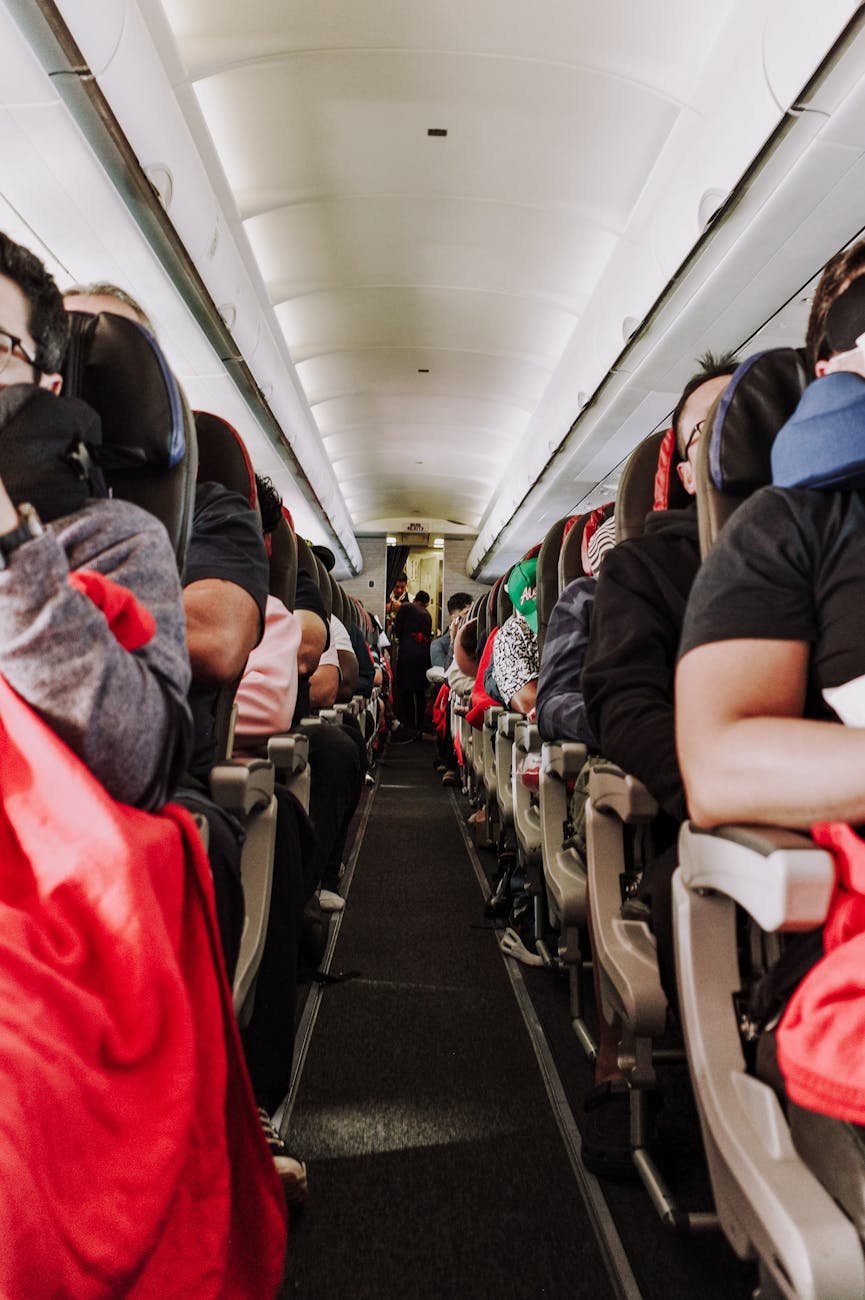
Airlines are always looking for ways to add new seats, and every year brings new “innovations” to reclaim space centimeter by centimeter so the airlines can sell extra tickets.
Credit: Anthony Baratier/Wikimedia Commons

We’ve long since become cattle. I’m 5’10” and I’ve been on flights in which my knees barely fit between the seat in front of me and my own. I always wonder: what would I do if I were taller? How the heck does someone, say, 6’2″ sit in one of these seats?

The effort to squeeze more money from travelers isn’t limited to the new “fat tax” either. From “premium economy” upsells that don’t yield more space to ever-shrinking carry-on limits, airlines continue to find new routes into our wallets, making us pay more for the same product.

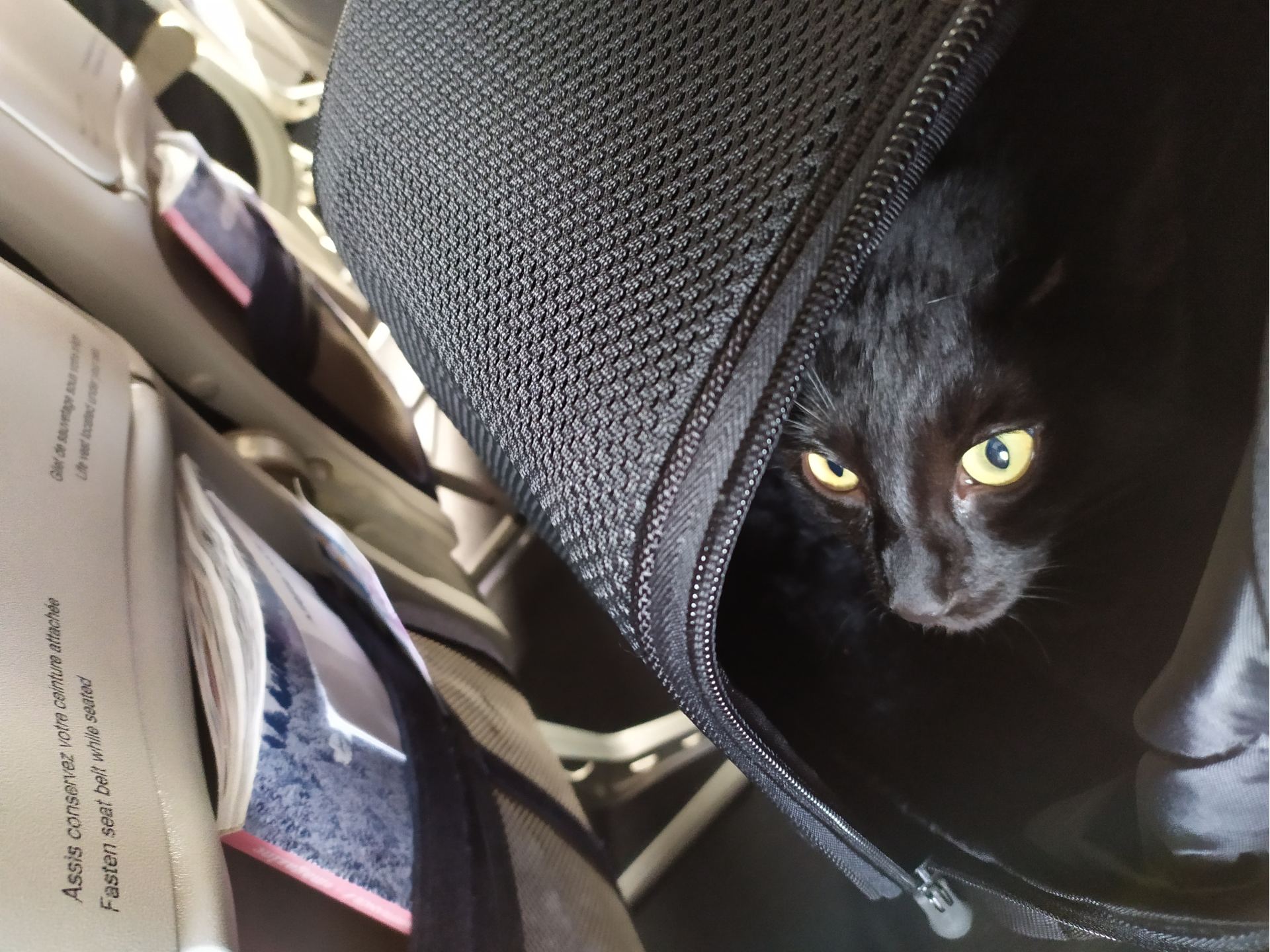
And that’s why those of us with pets should be worried. It’s a short leap from a “fat tax” to a “cat tax.”
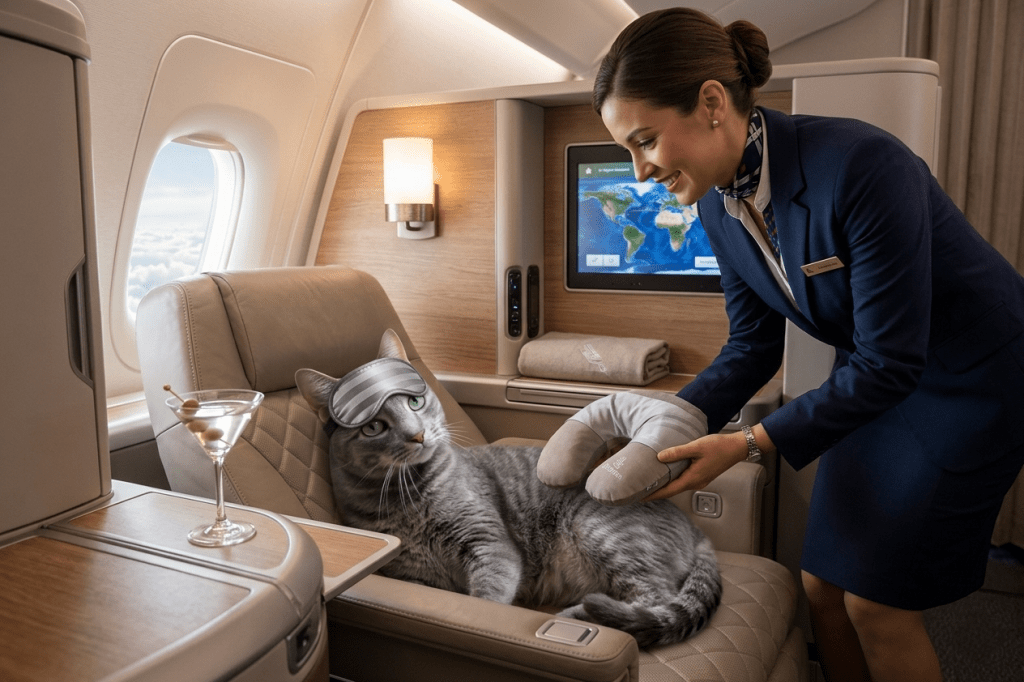
“You’ll be in coach while I take my place in first class, human.”

Most airlines treat people traveling with pets as a nuisance to begin with, and if they haven’t already, Southwest’s “activist investor” is likely to find new ways to squeeze people traveling with cats and dogs. (In my head, I imagine this “activist investor” as a vaguely Stephen Milleresque figure, with twitchy eyes betraying the rage bubbling below a calm exterior. “Let them sit elbow to elbow as they cradle their animals,” he laughs from his first-class seat. “Muahahaha!”)

The fact that this “fat tax” is arbitrary should scare all of us. If the whim of a counter clerk is what determines whether someone has to buy an extra seat, then who’s to say the same clerks won’t look at a cat, declare “He looks like a pain in the ass,” and demand some additional, ludicrously-titled fee?

“That comes to an additional $276.13 with your companion animal convenience surcharge. Thank you for flying with us!”

It just keeps getting better and better, doesn’t it?

Sunday Cats: Should Kitties Be Allowed On Passenger Jets? Plus: Footballers Adopt Cat From Qatar

Buddy the Cat tries to sell his human. Meanwhile, UK soccer stars adopt their own new buddy from Qatar.

Happy Sunday, dear readers. Buddy’s apparently angry with me about something, because I found a copy of this on the printer:

Human Buddy 4 Sale
Listed under “For sale by owner.”

What could I have done to deserve this? And $16? Isn’t that a little low? It’s insulting! We’re gonna need to have a little chat, Buddy to Buddy.

Should Cats Be Allowed On Airplanes?

CNN’s Jacqueline Swartz has a column about the challenges of traveling when you’re afflicted with severe allergies. Swartz is thoughtful, isn’t resentful of cats and understands it’s on her — for the time being, at least — to prep for flights by taking allergy medication, but she also believes airlines can do more to accommodate people who are allergic to pets.

As a cat guy and someone who dealt with really bad cat and dog allergies in my childhood and teenage years, I can sympathize with Swartz’s plight, and I agree that airlines can do more.

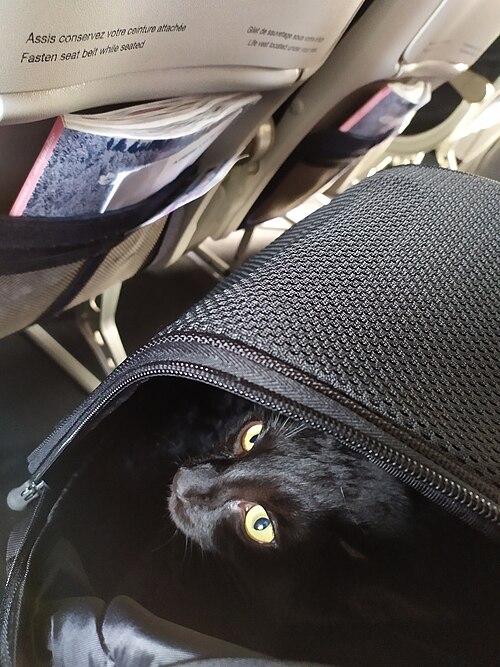
Of course, by “Should cats be allowed on airplanes?” she’s really asking if cats should be allowed in the passenger cabin. Even if a feline’s snug in a carrier, tucked beneath its human’s seat and well-behaved during the flight, a relatively short six-hours from New York to LA can cause all kinds of havoc on the immune systems and sinuses of people who are ultra-sensitive to cat dander.

Cat on passenger flight
Credit: Wikimedia Commons

Putting cats in cargo compartments is not an answer, and neither is banning cats from flights. Sometimes flying with a cat is a necessity, whether you’re moving cross-country or planning to live abroad temporarily. But airlines are notorious for trying to extract every dime from passengers, whether it’s charging thousands for business class or up-selling regular seats as “premium coach” by offering a Louis Vuitton-branded pillow or whatever.

Perhaps some enterprising airline executive could build goodwill with travelers, earning extra business and loyalty along the way with an innovative and friendly way to handle animals. How much space could possibly be required for a quiet, closed-off, climate-controlled closet where six or eight cats in carriers can snooze during a flight? That would solve the allergy problem, make life easier for everyone and probably make traveling easier on cats too.

Dave the Cat has a new home in England

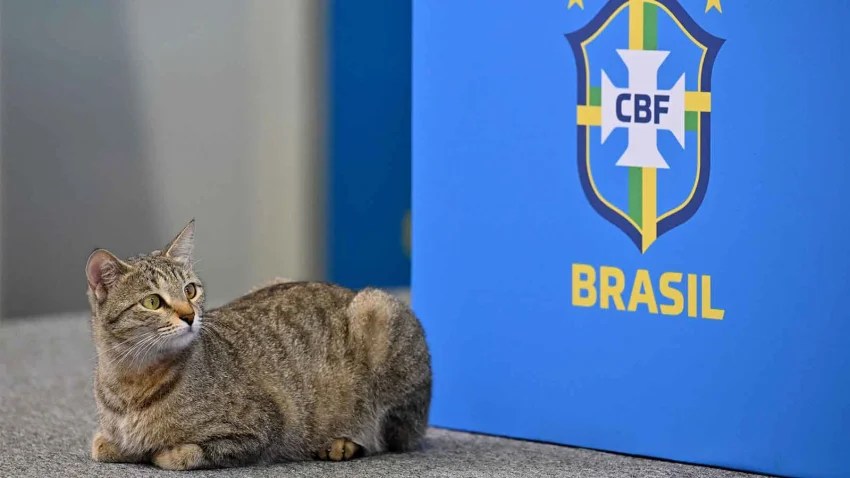
While a thoughtless PR official for Brazil’s national team drew the ire of animal lovers for the way he mishandled a cat during a press conference — an unforced error, since the cat wasn’t bothering anyone — some good is coming out of the World Cup for at least one feline.

Dave the Cat, a friendly stray befriended by England defenders Kyle Walker and John Stones, will be adopted by the players, who both suit up for the Premiere League’s Manchester City during normal club play.

Dave, a cream-colored tabby, won’t be reunited with his new pals right away. He’ll have to endure four months of quarantine first, as per the UK’s rules on bringing animals to the country, and then presumably he’ll be adopted by Walker, Stones or the entire team.

Brazil World Cup cat
An official with Brazil’s national team caught heat for the way he picked up and tossed a cat in Qatar. (Screengrab)


Cat in Qatar
Thankfully, the cat seemed unharmed.