
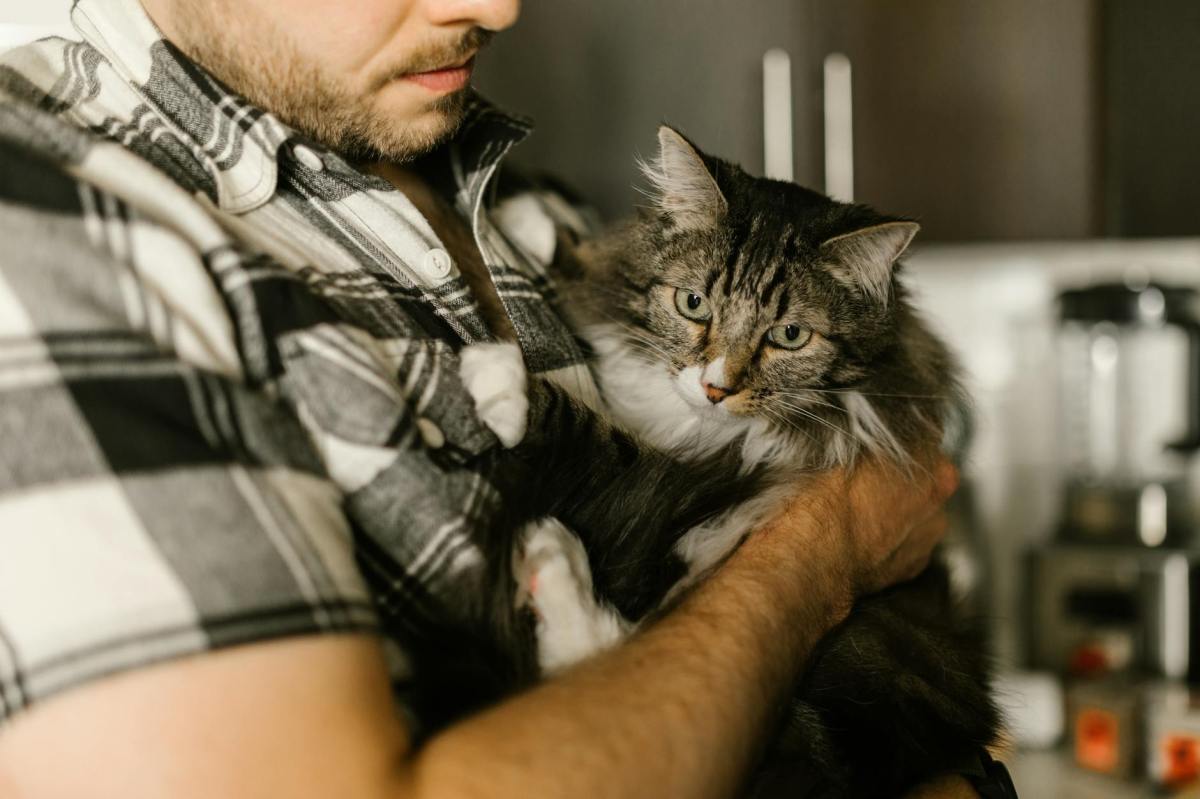
The headlines over the past few weeks have all been variations on the same riff: cats meow more frequently to male caregivers because we don’t know how to bond with the little stinkers, we disregard their feelings, and we ignore their pleas.
Others are more blunt in their assessment, like a story from YourTango that stated women “bond deeply” with cats, whereas we men are merely “manipulated” by them.
“Other studies have found that women are much better at giving their cats more attention, understanding their cats’ emotions, and are more likely to mimic their cats’ vocalization, too,” the YourTango story claims. “Whereas for men, the same cannot be said. Considering they tend to give affection more sparingly than women, it’s no wonder that the dynamic is different.”
Just picture it: women levitating above the rest of us, sharing their amazing Female Affection with the poor, emotionally starved pet felines who belong to men. If we’re trying to get rid of the “crazy cat lady” stereotype and spread the idea that cats are great companions for every kind of person, this probably isn’t helping.
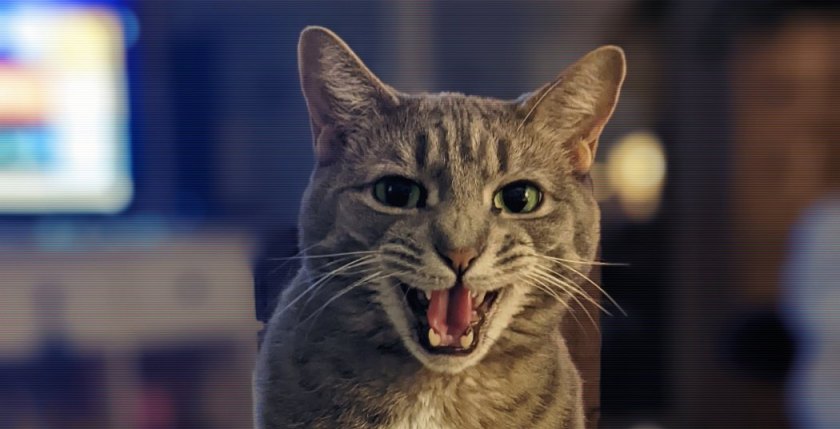
So what’s the source of these claims?
Apparently a study out of Turkey that involved just 31 cats and their humans. All of the human participants were Turkish, and just 13 of them were male. All were recruited online. (And for some parts of the study, like the analysis of greetings by owner gender, only 26 participants were included because the other five did not submit complete data, including the ages of their cats.)
It’s important to make a distinction between what the study’s authors claim and what the media reports, because they’re almost always two different things.

The research team from the University of Ankara counted more meows directed at the 13 male caregivers in their study compared to the 18 female caregivers. In their paper, the team acknowledged their sample size was too small to draw any conclusions, and lacked the demographic diversity to rule out innumerable potential reasons why those 13 cats meowed more frequently than the 18 cats cared for by women.
Even with a more robust sample size including men of different ages, social classes, and nationalities, correlation is not causation, and it may be that the apparent difference in feline vocalizations disappears with a larger study group that more accurately reflects universal demographics.
Indeed, the study’s authors state clearly that feline greeting behavior is “a complex, multidimensional phenomenon that defies straightforward explanation.” (Emphasis ours.)
The conclusion, as always, is that we need more data, which is one reason why studies must be repeatable.
That nuance doesn’t make it into listicles or stories optimized for maximum shareability on Facebook, so instead we get headlines that present studies as the last word instead of the first tentative steps to understanding a phenomenon.
In case it wasn’t obvious, there is no data to support the claim that men “give attention more sparingly” than women, or that women are better at reading feline emotions. We don’t even have baselines or criteria for those claims. How do we objectively measure “better” when it comes to reading cats, especially when every cat and human bonded pair have their own pidgin “language”? What’s the “right” amount of attention?

As the loyal servant of an infamously talkative cat, I’m not sure gender makes any difference. Bud’s vocal tendencies were already present from kittenhood, and I simply nurtured them by engaging in conversations with him, giving him loads of attention and doting on him.
Often our conversations go like this:
Bud: “Mreeeoww! Mow mow! Brrrrrt a bruppph!”
Me: “I know, little dude. You told me, remember?”
Bud: “Brrrrrr! Brrrruppp! Yerp!”
Me: “Yes, but they’ve tried that already. It’s not just about tokamak design, it’s…”
Bud: “Merrrrrp! Mow mow!”
Me: “No, it’s about plasma containment. No containment, no reaction, no energy gain!”
Bud: “Brrrrr! Mrrrowww! Brupbrupbrrrruppp!”
Me: “Yeah, well that’s just, like, your opinion, man.”
I really do talk about science and science fiction with my cat, since he seems to respond to it. Of course it’s gotta be at least partially due to my tone, but strangely if I talk to him about other abstract things, he acts like I’m bothering him with so much human nonsense.
Regardless, Buddy and I object to the claim that a talkative cat is a disengaged or neglected cat. It’s not that he talks a lot, it’s that he never stops!

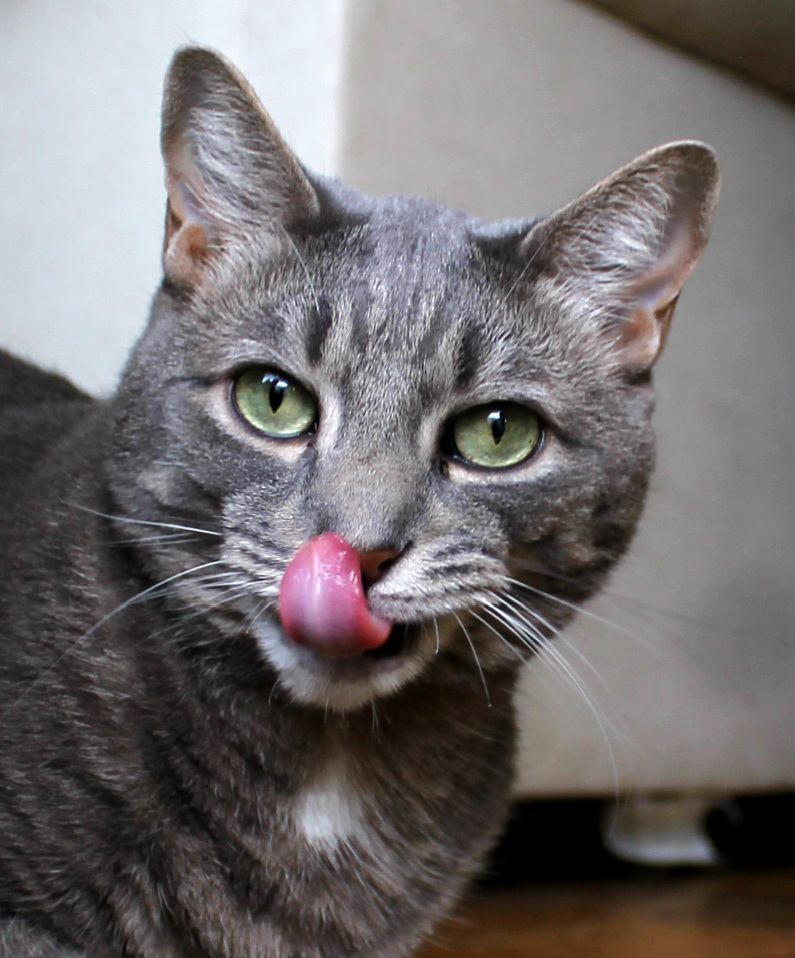
 Pain In The Bud