The Cat With The Mat

For the first time, the Budster has a patch of matted fur. Luckily, because this is a frequent problem for cats, there’s a lot of detailed advice out there about what to do.

Ruh roh!

In a first for him, Bud’s got a patch of matted fur. While it’s clear he understands I’m trying to help him, he’s not particularly keen on my efforts to comb it out.

He’ll tolerate limited brushing, but after a few attempts he pulls away. I don’t think it’s a sore spot in general. He hasn’t minded when I examined the area and he doesn’t pull away if I scratch his lower back, but his limited tolerance for the brush and his body language all say he’s uncomfortable with repeated attempts to clear the fur.
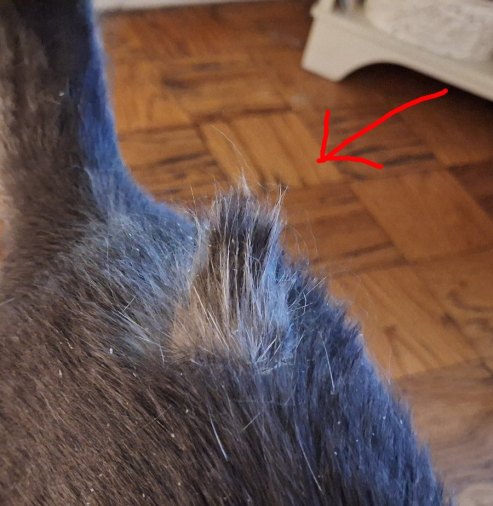
Matted fur
The dandruffy stuff is from the combing and looks like dead skin. His coat is normally clear of anything like that.

The mat is hard, like the bristles of a paint brush that hasn’t been cleaned properly. Bud’s white underfur is much more visible in the matted area as it sticks up.

After reading about matting in cats and the causes, I don’t think we’re dealing with fleas or an infection. I realize indoor cats can get fleas, but I very rarely see the little guy scratching himself and there’s no indication he’s in any general discomfort.

My best guess is that he’s, ahem, maybe still a little too much on the chubby side and can’t groom the area as he did when he was a younger, slimmer feline, before he moved down to Florida, joined the Del Boca Vista retirement community for cats and immersed himself in the exciting world of bocce.

As you can see, he doesn’t look chubby and his coat is otherwise very healthy.

buddybeefcake
He’s a tiger!

Of course any talk of weight issues is very hush-hush around here. Officially, Buddy has the physique of an athletic tiger. Anyone who vocalizes doubts about that does so at their peril.

Right now my plan of attack is to get a fine metal comb specifically for jobs like this. I’ll try to remedy it with short brushing sessions and encouragement in the form of treats and praise for Bud being such a brave little guy.

If that doesn’t work, the next step would be a groomer or veterinarian. These things don’t resolve themselves, unfortunately, and the longer they’re allowed to persist, the worse the problem becomes.

To be continued…
Looks Like Bud’s Got Feline Acne

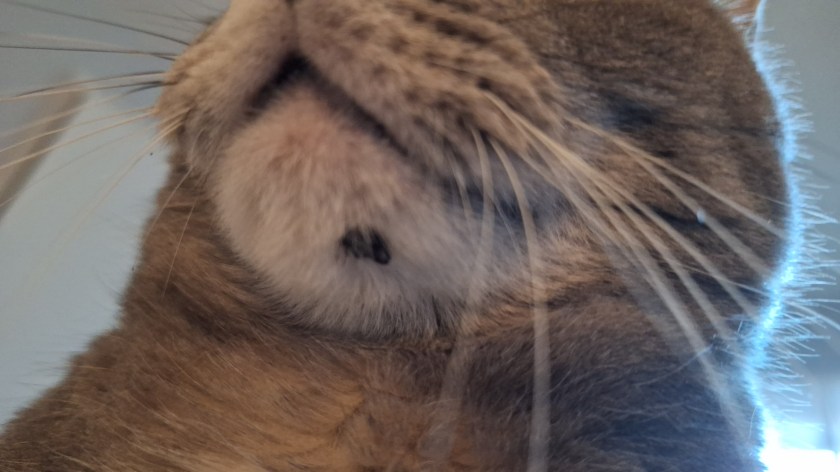
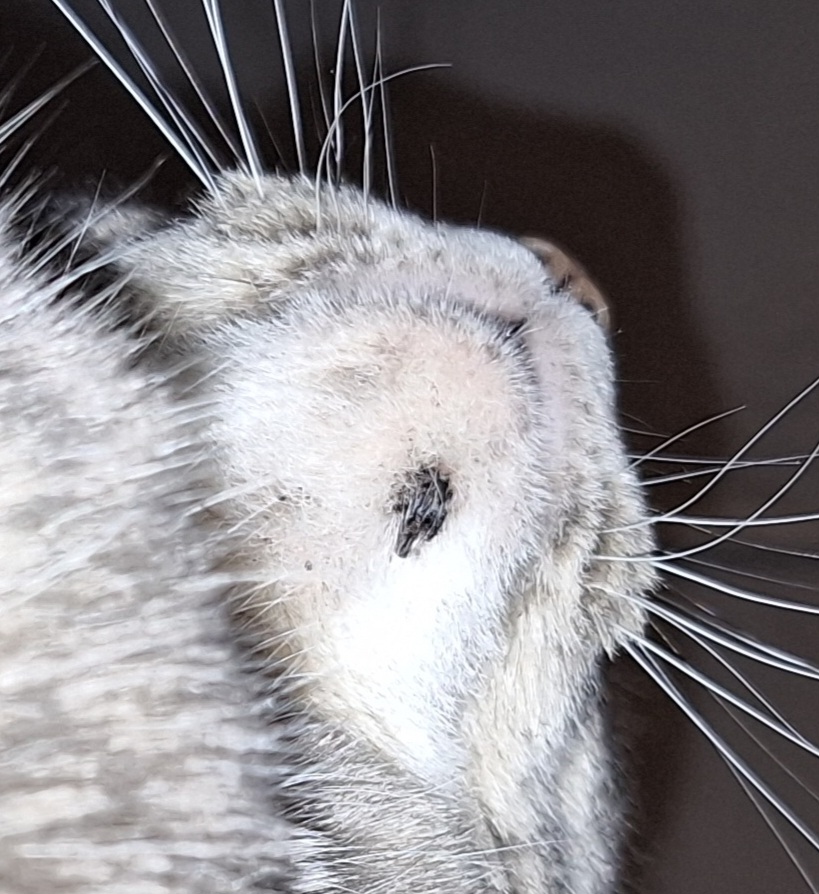
Little dude has large black spots, possibly scabs, beneath his chin.

I first noticed a black spot under Bud’s chin two or three months ago.

I thought he’d somehow hurt himself, perhaps from sticking his little face everywhere, and the mark looked like a scab to me.

Then it went away, was replaced shortly after by another mark, then a second next to it and now there’s a large black mark under his chin.

The problem is, he won’t cooperate with attempts to photograph it and he acts like I’m torturing him if I gently pick him up and try to get a close-up shot. I was finally able to photograph it by setting my phone to take a photo with a voice command and placing it beneath him, and this is what I saw:

20231118_155418

And a close up with flash:

20231118_190342

It looks a lot like the feline acne photographs I saw when I googled the condition, but this mark is quite big and looks painful.

I wash Bud’s food bowls after every meal and I wash his water bowl out with soap and water a few times a week. Both are stainless steel and his dry food bowl is some sort of ceramic. Nothing plastic that would harbor bacteria.

It may be genetic, he may be not as good about grooming under his chin, or it may be my fault. Bud has always had a lot of discharge from his eyes (the nasty black eye crust) so he does secrete fluids more than most cats.

Regardless, I hope he’s not in serious pain. Has anyone dealt with this before? Do the antimicrobial gels designed for cats actually work?

Some material online suggests using common antibacterial wipes or solutions found in pharmacies, but I’m wary of anything like that because Bud may get it in his mouth while grooming.

This Cat Loves Corn Like Buddy Loves Turkey

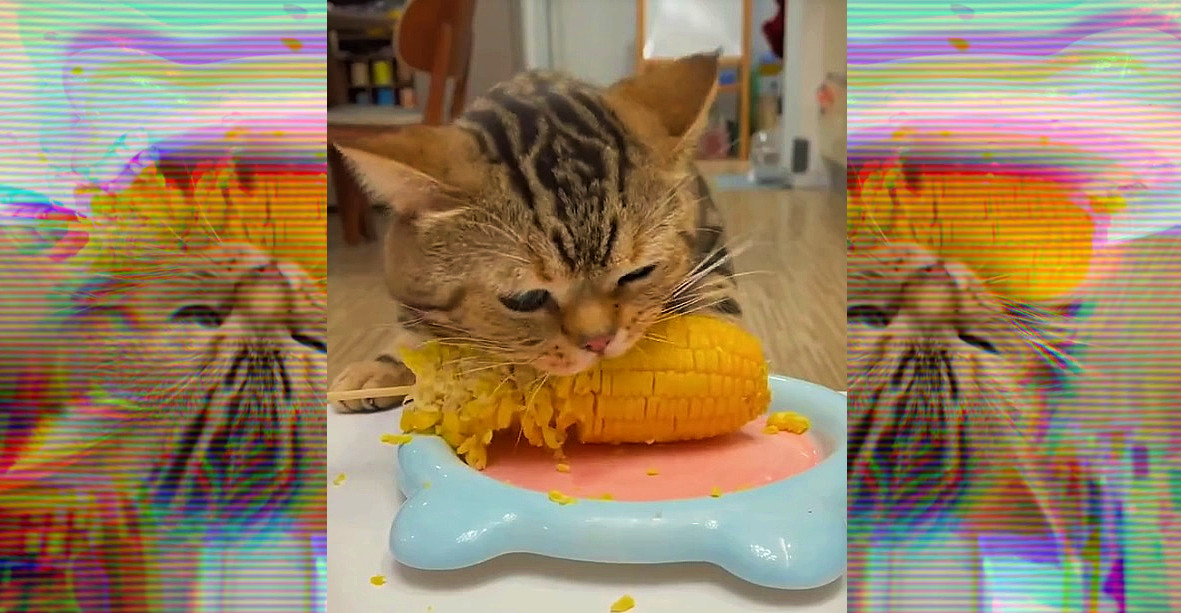
The English language does not provide the means to properly state how much this cat loves corn. To quote Dave Chappelle: “Look at him, he loves it!”

This isn’t just a video of a cute cat eating corn.

It’s a video of a cute cat who gives a cry of joy when he sees his human plop corn a cob of corn onto his plate, then tears into it with such gusto that he half-purrs, half-growls as he devours his yums. Seriously, make sure you turn the volume on, it has to be heard to be believed:

The Corn Kid, famous for declaring “When I tried it with butter, everything changed…I can’t imagine a more beautiful thing!” might be given a run for his money by this cat.

And if you haven’t heard about the Corn Kid, well, make your day brighter by checking out this songified version by the same guys who created a ridiculously catchy pop song out of the Bed Invader news segment back in 2010:

In case you’re wondering, corn won’t kill your cat. In fact, as veterinarians point out, your cat probably eats corn regularly because pet food companies use the stuff as filler in cat food despite the fact that, as obligate carnivores, cats don’t really get any nutritional value by eating it. However, it’s not meat, so if your cat likes corn, you should give it to kitty only in moderation as too much can cause an upset stomach and digestive problems.

A Woman Wanted This Gorgeous Kitty Euthanized For Litter Box Issues

A veterinarian realized kitty was healthy and put her in the care of a local no-kill shelter, where she remains while hoping for a forever home.

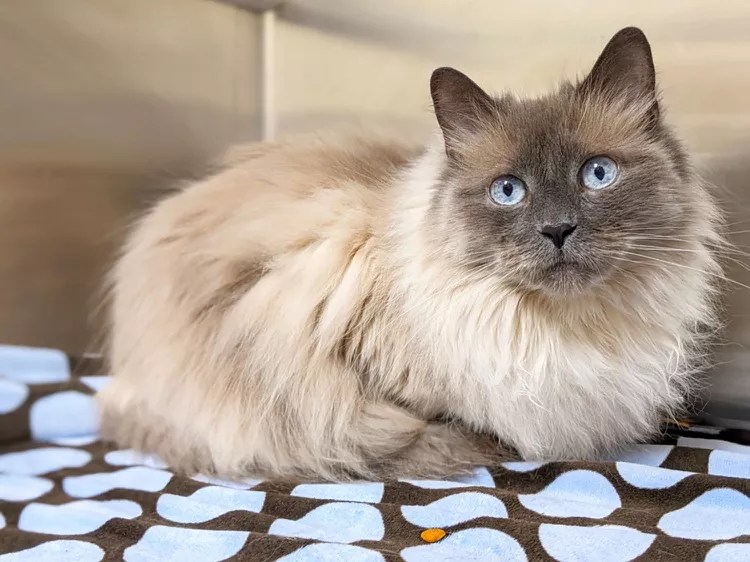
Lulu is 13 years old and began eliminating outside her litter box last year after a long life of doing her business properly.

Instead of realizing that a change in behavior was almost certainly precipitated by health issues — and attempting to get those issues sorted out — Lulu’s “owner” brought her to a veterinarian to be euthanized.

The vet realized Lulu was healthy and her issues were easily remedied, wisely persuaded the woman to sign over ownership of Lulu and brought the Himalayan to the local SPCA. She’s been there since December.

Lulu had urinary crystals which were remedied after a change in diet, and she hasn’t had an “accident” in months.

Staff at the SPCA want people to know that they don’t have to surrender a cat for litter box issues or other behavioral changes even if they think they can’t afford veterinary treatment.

“If your pet is not behaving or their behavior has changed, the first step is to get them to a vet to see if something is medically wrong. Even if it is not a medical condition, there are numerous resources — many available at Dutchess County SPCA — to help resolve the issue and avoid both euthanasia and surrender to a shelter,” Lyne Meloccaro of the Dutchess County SPCA told People. “Medical assistance, expert guidance, and management plans, and training referrals are all available for you.”

Lulu
Lulu has a regal bearing, an epic coat and beautiful coloring. Credit: Dutchess County SPCA

Dutchess County, which is about 75 miles north of New York City, happens to be the former college stomping grounds of Big Buddy. I graduated from Marist College and lived in the area for some years after. The SPCA there does good work, and its law enforcement division has handled some high profile animal-related crimes over the years.

It’s sad that Lulu lost her home after 13 years, but maybe it’s for the best if she ends up with a devoted servant who will really love her. Her caretakers at the SPCA say she’s stubborn, demands affection on her own terms and wants an “emotional support human.”

Lulu is still available for adoption. The SPCA says she’ll do best as an only cat in a quiet household, and we have no doubt she’ll bring joy to the lucky person who brings her home.

Reason #22 To Keep Your Cats Indoors: Bubonic Plague!

A cat in rural Colorado has tested positive for the Bubonic Plague. Health authorities say it was probably the result of an encounter with an infected rat.

A cat in Colorado has tested positive for the Bubonic Plague.

You read that right. The same bacterial infection that was called the Plague of Justinian back in the 6th century BC, killed one out of every four people living in the Mediterranean, then flared up occasionally every century or two before returning with a vengeance in 14th century Europe, where it was called the Black Death and killed a third of the population on the continent.

That plague.

The kitty ranges near a public park and likely caught the infection from a rat, local health authorities told KUSA, an NBC news affiliate.

Like many infections, it was never completely eradicated, and WHO statistics show about 100 people die annually of plague.

“While plague is a serious disease, and cases of animal-borne disease in household pets is never something we like to see, it is normal and expected for some animals to contract plague in Jefferson County each year,” said Jim Rada, director of Environmental Health Services for the county. “The good news is that modern antibiotics are effective against plague, and as long as it is treated promptly, severe complications, illness or death can be avoided.”

When we think of outdoor dangers to cats, we tend to think of abusive humans, vehicle traffic or poisons, but this is a reminder that nature can be lethal as well.