Tiger Kills ‘Joe Exotic’ Associate At Roadside Zoo

Ryan Easley “wanted to be the one with the most tigers in the ring at one time,” Joe “Exotic” Maldonado said of the Oklahoma man.

A circus big cat trainer and associate of so-called “Tiger King” Joe Maldonado was mauled to death by a tiger at a roadside zoo on Saturday.

Authorities say 37-year-old Ryan Easley was conducting a “show” at the Growler Pines Tiger Preserve when a tiger he “owned” turned on him. The captive predator mauled Easley, attacking his neck and shoulders “in full view of a group of visitors, including children,” PETA wrote in a statement calling on federal authorities to cancel the facility’s licenses.

Easley with a white tiger. Credit: Ryan Easley/Instagram

While Easley called the facility a preserve, others described it as a roadside zoo, and genuine animal sanctuaries do not put animals on public display. The roadside zoo description aligns with the Oklahoma man’s past as a circus trainer of big cats, and Maldonado — who was the subject of the popular 2020 Netflix documentary, Tiger King — seemed to confirm that description when he issued a statement on his friend’s death.

“He wanted to be the one with the most tigers in the ring at one time,” Maldonado wrote in a statement from prison. “Some of his cats were crazy in the head, but it was about having the most performing at one time at all costs.”

Easley acquired some of his tigers from Maldonado, who was convicted of conspiracy to commit murder for hire and 17 counts of violating federal conservation laws in 2019. Maldonado, who remains incarcerated in a federal prison in Fort Worth, Texas, tried in 2017 to hire two men to kill Big Cat Rescue’s Carole Baskin, an activist with whom he had a years-long feud. One of the men Maldonado tried to hire was an FBI informant.

Maldonado is serving a 21-year federal prison sentence. Mugshot credit: Santa Rosa County Jail

PETA has accused Easley of mistreating, neglecting and abusing the tigers at his facility. Tigers are apex predators and hyper-carnivores who do not recognize social hierarchy or have any innate compulsion to follow orders from humans, so “taming” them and getting them to “perform” involves coercion, including physical punishment, withholding food and torture. The brutal mistreatment required to force elephants, lions, tigers and other animals to perform is one reason why traditional animal circuses no longer exist in the west.

Maldonado admitted as much in his statement, noting “you don’t get a tiger to jump through a hoop of fire because they love you.”

“It’s never safe for humans to interact directly with apex predators, and it’s never a surprise when a human is attacked by a stressed big cat who has been caged, whipped, and denied everything natural and important to them,” PETA’s Debbie Metzler wrote in a statement.

Former big cat handler and caretaker Katherine Lee Guard, who is now an activist against keeping big cats as pets and using them in the entertainment industry, spoke to PITB about her experiences in 2023. She noted tigers can turn on their handlers at any time, even if the latter hand-reared the felids since infancy. Once their predatory instincts are triggered, the apex predators feel a powerful compulsion to attack.

Even in accredited zoos where tigers are provided with large enclosures designed for their well-being, given plenty of enrichment and stimulation, and fed well, Guard said people should never enter an area without barriers between themselves and the big cats.

“The cost is too great if something goes wrong,” she said. “And something always goes wrong given enough time.”

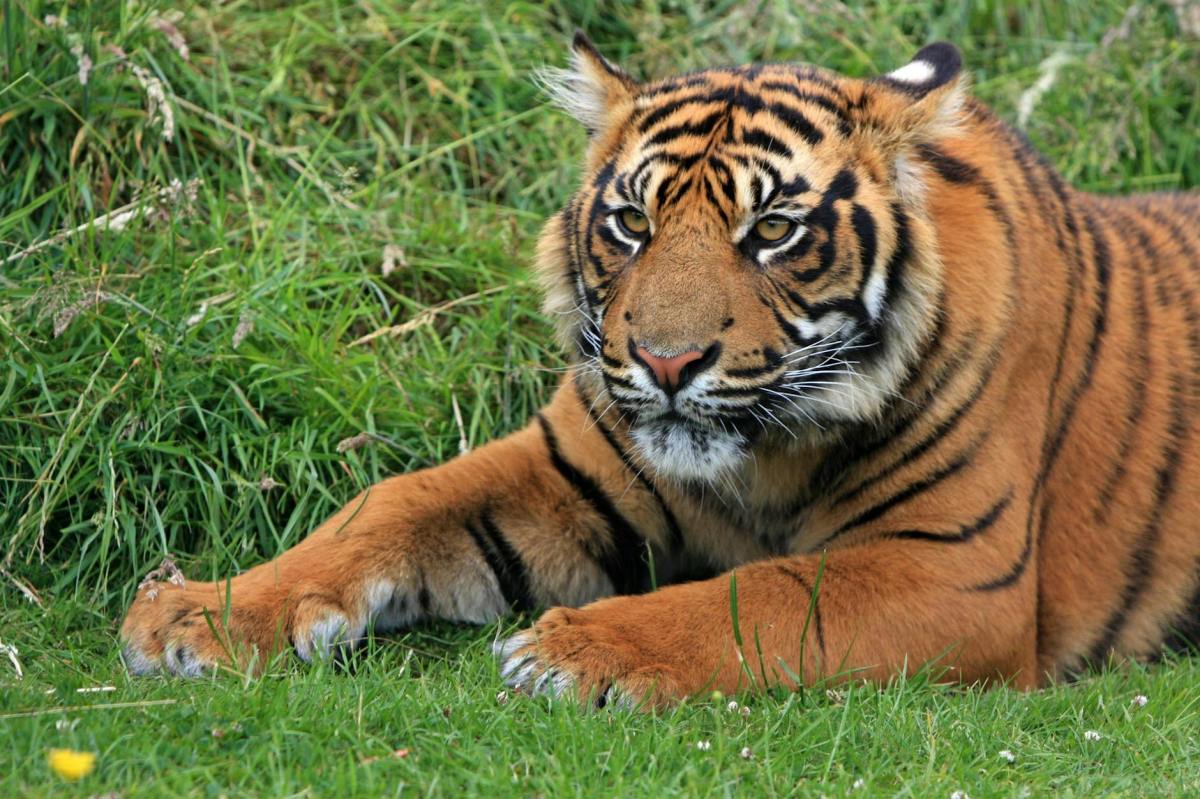
Header image of a Sumatran tiger via Pexels. Do you enjoy reading PITB? Please consider whitelisting us on your ad blocker so we can keep the lights on. Thanks!

DNA From Dead Sheep In UK Matches Big Cats, But Is That Proof Of Their Presence?

Rumors of big cats in the UK countryside have persisted for years, with witness claims from all over the country. The latest reported sighting was in northern England.

People who really want to believe big cats are running around the British countryside are ecstatic with the news that a DNA sample from a dead sheep reportedly tested positive for panthera DNA.

The DNA sample was swabbed from a freshly-killed sheep carcass “at an undisclosed upland location” in Cumbria, northwest England, a witness told BBC Wildlife. It’s exactly the kind of countryside where people have been reporting big cat sightings for years, although the sightings aren’t confined to that area, with other witnesses claiming they’ve seen large felids as far as the UK’s southern coast.

Sharon Larkin-Snowden, who lives nearby, told a big cat enthusiast podcaster that she disturbed the “big cat” while it was feeding. The startled felid took off and jumped a stone wall, leaving the partially-eaten sheep, Larkin-Snowden said.

“I assumed at first it was a sheepdog, but then I did a double take and realised it was a black cat,” she said. “It was big – the size of a German shepherd dog.”

Jaguar in a pub
“I could really go for a Chinese! Anyone else wanna go for a Chinese?”

A swab was collected — the details are sketchy on who did the collecting and when exactly they submitted the sample — and sent to the University of Warwick’s Robin Allaby, a professor of life sciences.

Allaby, whose specialty is studying the genetics and evolution of domesticated plants, began offering a DNA testing service for the public some 12 years ago in response to the persistent rumors of big cats in the countryside. In the past samples have yielded DNA from foxes and other animals, but Allaby says this one matched the genetic profile of a big cat, although he cannot say which species.

It’s not unusual for a DNA sample to match to a genus, in this case panthera, but not to a specific species if the sample was degraded or only partial.

Rick Minter, who has made a career of tracking alleged big cat sightings across the UK, says he believes the mystery cat is a leopard. Leopards and jaguars are the only two big cats who have true melanistic color morphs — meaning some of them have virtually all-black coats — and Minter says he believes it’s more likely the former.

Neither are native to the UK or Europe: Leopards range from Africa to Asia, while jaguars range from south to Central America, with some populations edging slightly into the US.

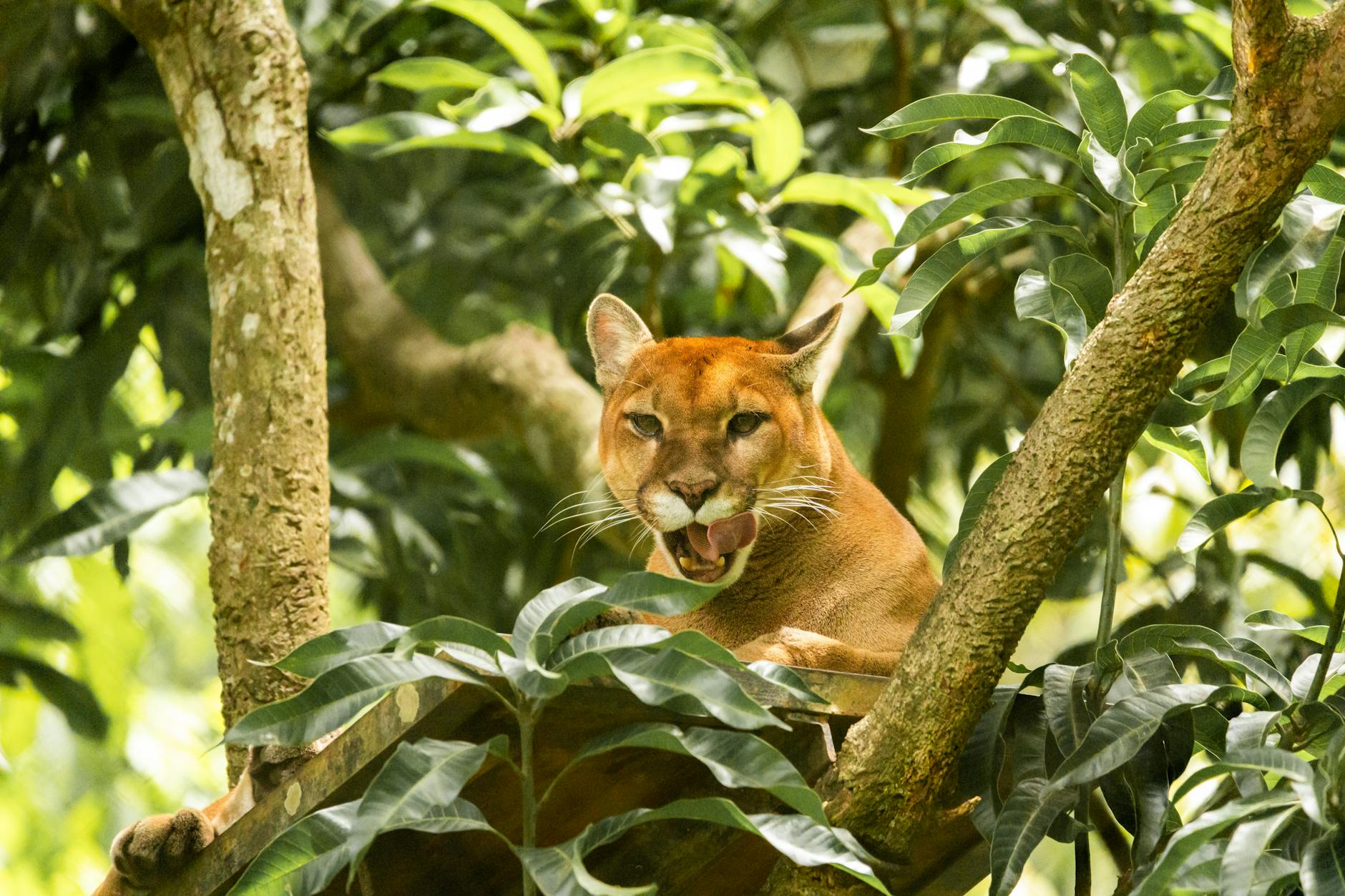
puma sits on tree
Britain’s big cat enthusiasts say they believe pumas are among the wild cats living in Credit: Jean Paul Montanaro/Pexels

Why isn’t a DNA match evidence of big cats in the UK?

If the lab results say the sample came from a big cat and that result is consistent with the witness account, what’s the problem?

Chain of custody, for one. We don’t know anything about who took the sample, where it was taken, the time elapsed between the kill and the sample swab, or who may have handled it before it reached Allaby.

In fact, we don’t know if there was a dead sheep to begin with.

If I were a prankster living in the UK, for example, and was friendly with a keeper at a local zoo, I could have the keeper swab an animal, bag it and hand it over to me. There are dozens of conceivable ways a person could obtain a sample even if they don’t know someone who works in a zoo.

Leopard in a pub
“So we left the sheep there at the edge of the field and made sure the lady saw us before we buggered off over the fence. Next day, we was in all the papers! A right laugh that was, mate.”

The problem is the provenance of the sample and what happens to it between the time it’s collected and ends up in the hands of a scientist like Allaby.

This is why chain of custody is paramount in criminal trials, and why there must be a complete record of who handled samples from collection in the field to the lab. Even in the absence of foul play, an improperly handled sample can be contaminated and render test results meaningless.

It’s not a matter of trust, it’s the simple fact that extraordinary claims require extraordary evidence, as Carl Sagan was fond of saying. Short of capturing one of these animals or getting clear, indisputable footage, any other claimed proof has to be ironclad.

Speaking of footage, that’s another issue. It’s extremely difficult to believe that a breeding population of big cats can exist in the UK countryside for years or even decades without a single definitive photo or video. The UK’s rural areas may not be blanketed by CCTV cameras like London, but they’re not the Amazon either. People live, work and farm in those regions, cameras are more ubiquitous than ever, and farmers take steps to protect their livestock, including installing cameras.

Big cats don’t just feed and vanish into the mist. They mark trees with their claws and urine, they leave distinct pug marks, they leave distinctive bite marks on their prey, and they make noise. To paraphrase one naturalist, when big cats are living nearby, you know it. Even if you don’t see them, signs of their presence are ubiquitous.

To accept the claims of tigers, leopards and pumas gallavanting in the fields around small towns and villages, we’d have to suspend disbelief or conclude that these are some sort of previously unknown ghost cats who can fade in and out of the physical plane.

I’m not a skeptic to be a killjoy. If big cats really were running around the UK, that would be a hell of a story. But we’d still need convincing evidence, and this isn’t it.