New videos show the entire sequence of events when a woman stole a family’s cat right off their front porch on Sunday morning.
We’re putting out a call to our readers and all cat lovers to help identify a woman who brazenly snatched a family’s cat off their front porch in Portland, Oregon, on Sunday.
The woman was wearing a pink jacket with a white scarf, black jogging pants, white sneakers and green socks.
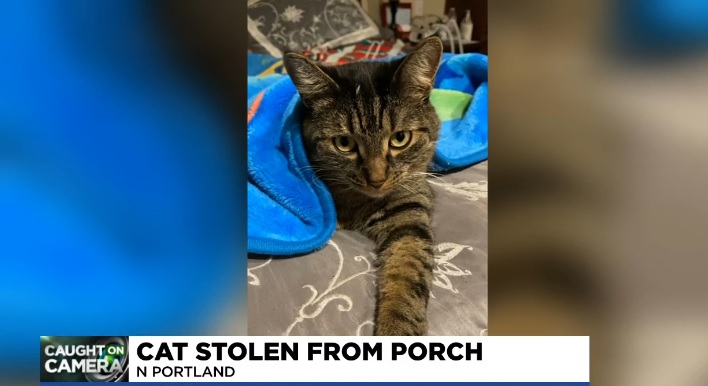
The thief was caught snatching KiKi off his family’s front porch on Feb. 20.
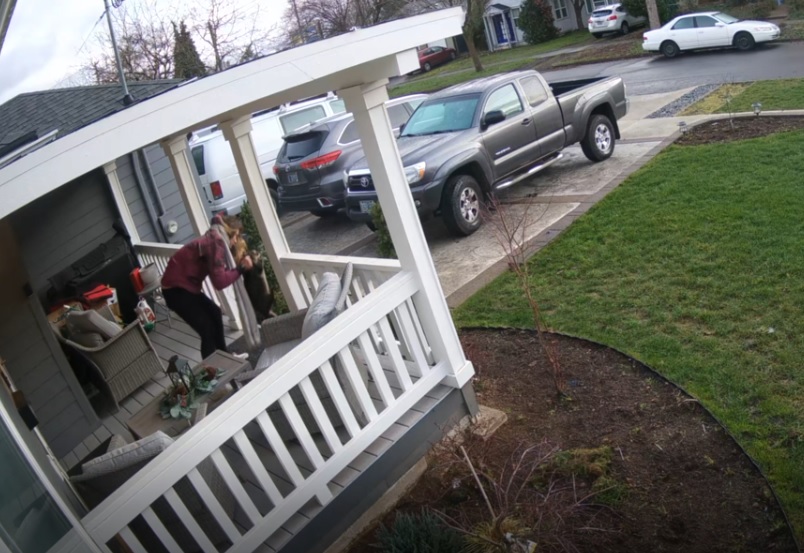
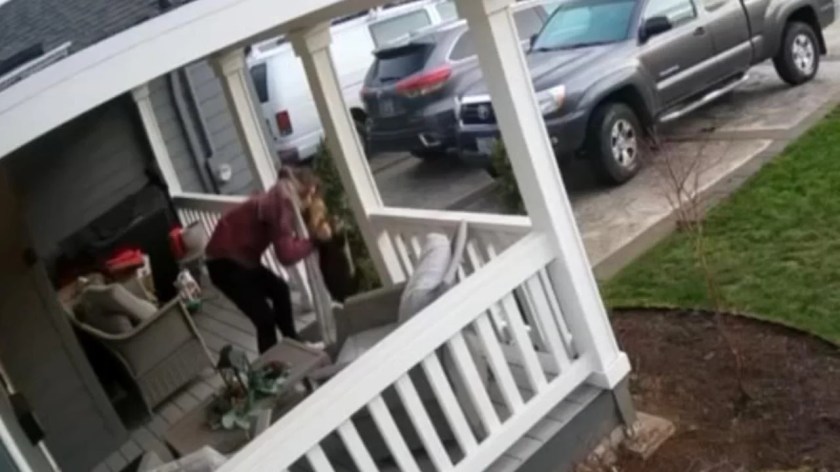
Home security footage shows that at 7 a.m. on Feb. 20, the woman approached the Autar family’s home and tried to get their cat, KiKi, to approach her. KiKi wasn’t having it and turned toward the front door several times, refusing to approach the woman, but she slowly made her way onto the porch and snatched the well-loved kitty.
It’s clear from the way she holds KiKi that she’s not familiar with cats: Footage shows her holding him by the scruff of the neck, which is extremely painful for adult cats. Here’s a video of the entire sequence courtesy of Karina Autar:
And here’s a video from a second camera overlooking the driveway. The thief is clearly holding poor KiKi by the scruff with one hand as she briskly walks off:
The woman leaves in what looks like a black or dark blue Chevy suburban, quickly fleeing the neighborhood with the trunk still open. The SUV did not have a front license plate:
Earlier footage shows the same woman on a bicycle stopping in front of cars on the block and checking their doors. It appears she tossed the bike in the back of the SUV and drove off quickly, perhaps after someone spotted her.
Anyone who recognizes the woman or has information about the theft can call the Portland Police Department’s non-emergency number at 503-823-3333 or email Karina Autar directly.
The thief was caught snatching KiKi off his family’s front porch on Feb. 20.
The thief was caught snatching KiKi off his family’s front porch on Feb. 20.
A Portland family’s cat was stolen by a woman who brazenly grabbed him off their front porch on Sunday morning.
A Portland family is looking for help getting their cat back after a woman snatched the moggie off their porch and ran off with him.
Home security footage shows the woman approaching the Autar family’s home early in the morning on Feb. 20 and crouching down next to the porch where she beckoned the tabby, KiKi, to approach her.
The woman grabs KiKi off the porch of his family’s home in Portland. The family hopes someone recognizes the suspect so they can recover KiKi.
When that didn’t work, the woman walked right up to KiKi and scooped him up.
Karina Autar and her brother, Akash, are students at the University of Oregon and described their parents as “empty-nesters” who dote on KiKi like a child.
“When my dad takes a nap, when my dad goes to sleep, he has to get KiKi on the bed with him,” Karina told KPTV, a Fox affiliate in Portland.
Karina, who adopted KiKi when she was in middle school, said it feels “like a family member is gone.”
KiKi was stolen from his family’s porch on Feb. 20.
KiKi was stolen from his family’s porch on Feb. 20.
With Karina and Akash living on campus 110 miles away in Eugene, Oregon, their parents have turned to neighbors and friends for help. The suspect was wearing a long sleeve pink jacket with a white scarf around her neck, along with black jogging pants and white running shoes. She’s got dark hair highlighted with blonde and while it’s difficult to estimate her age based on the pixelated footage, she may be in her 20s.
Akash Autar spoke directly to the woman in the KTPV segment.
“What you did was really wrong,” he said. “You took someone’s family member. You took someone’s love and joy. I just hope you haven’t done anything mean or bad or harmed him in any way.”
The thief was caught snatching KiKi off his family’s front porch on Feb. 20.
The thief was caught snatching KiKi off his family’s front porch on Feb. 20.
The proposed law would declare cats and dogs have rights, but it doesn’t do much besides that.
Declaring cats and dogs should have fundamental rights, an assemblyman in California has introduced a law that would create a Bill of Rights for the two most popular companion animal species.
The text of the proposed legislation covers the basics including the right to food and water, veterinary care and a life free from abuse, neglect and anxiety. It recognizes felines and canines as sentient animals who need mental stimulation, and says adopting means committing to caring for an animal for its entire life.
But it’s really about pushing for an even greater effort to spay and neuter both species to avoid euthanizing almost a million unwanted cats and dogs every year.
There’s been great progress in the last decade alone: In 2011, kill shelters and animal control departments in the US put down more than 2.6 million cats and dogs. In recent years that number has fallen to 920,000, including 530,000 cats, according to the ASPCA.
That’s still a staggering number of lives taken, and animal advocates think the US can continue the downward trend in euthanizing pets via efforts to educate people and execute trap, neuter, return (TNR) plans.
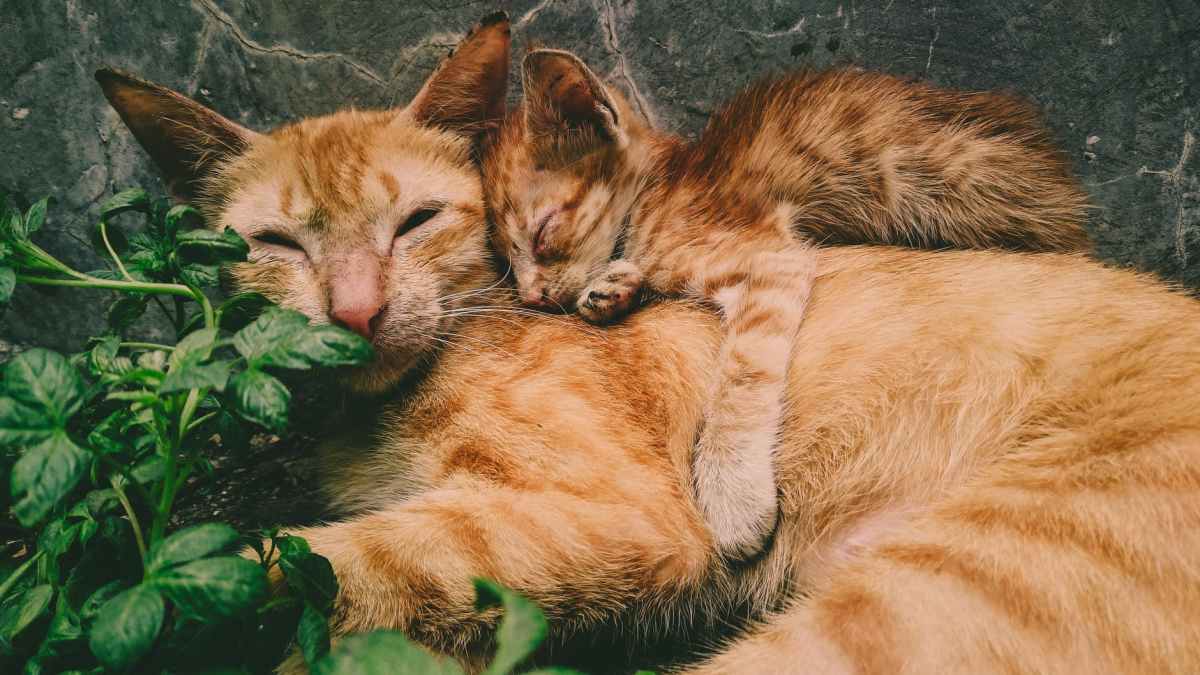
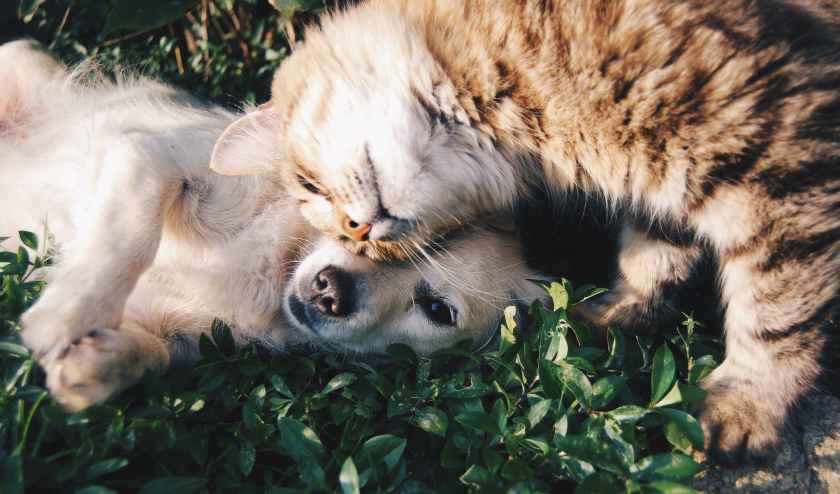
An orange tabby and his puppy friend. Credit: Snapwire/Pexels
It’s already a crime in California to harm an animal as opposed to the majority of states, where pets are considered property and the consequences for hurting or killing someone’s beloved cat or dog don’t go beyond providing monetary compensation. (However, it’s notable that the proposed cat and dog bill of rights would be added to California’s Food and Agriculture Code, not the Criminal Code. The fact that animal welfare legislation continues to exist in agriculture law instead of criminal is a relic of times when the only laws concerning animals were written to regulate their ownership, sale and slaughter.)
Santiago’s bill doesn’t specify a new plan for spaying and neutering more felines and canines. It doesn’t include funds for TNR or fund new enforcement efforts, and it doesn’t provide welfare groups with new tools.
Mostly what it does is require shelters and rescues to display the pet bill of rights in “a conspicuous place” or face a potential $250 fine. It doesn’t even specify how money collected via fines would be used.
“It sounds pretty simple,” Santiago said, “but we need to talk about it.”
Santiago’s proposed legislation has the support of Judie Mancuso, president of the animal advocacy group Social Compassion in Legislation.
“Those rights go beyond just food, water, and shelter. As stated in the bill, dogs and cats have the right to be respected as sentient beings that experience complex feelings that are common among living animals while being unique to each individual. We’re thrilled to be codifying this into law.”
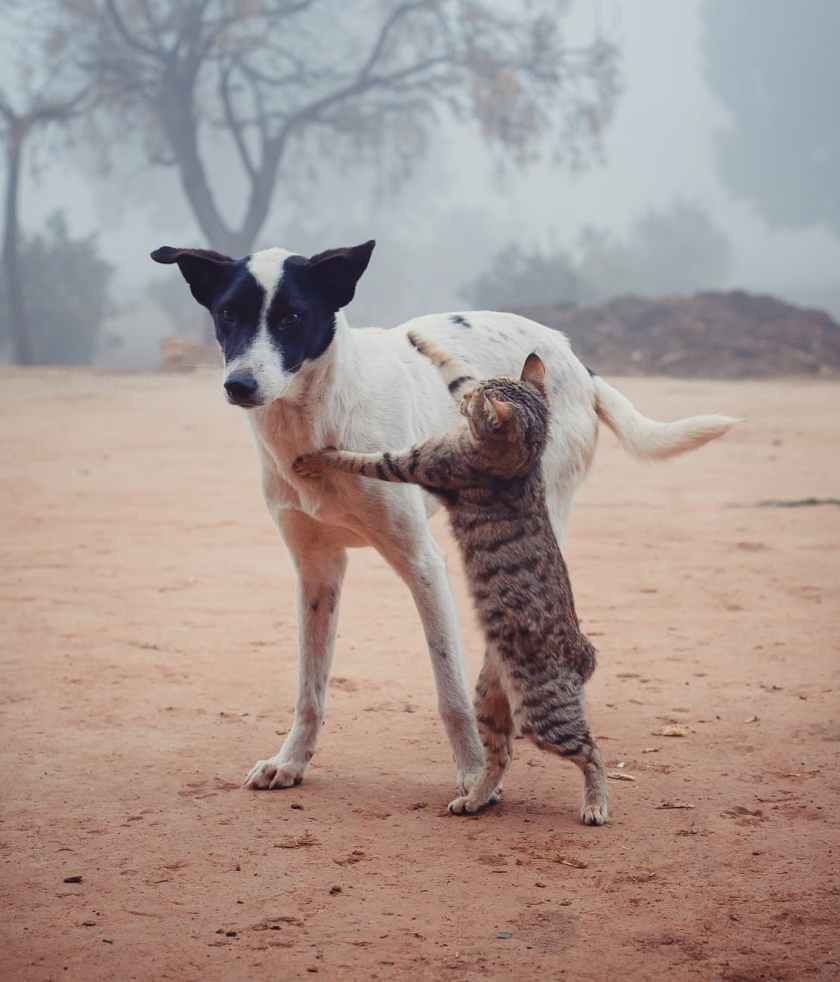
“So did you hear about the new bill of rights for cats and dogs? It says I have a right to ride you like a horse. No, seriously. Crouch down so I can get up there!” Credit: Tehmasip Khan/Pexels
There’s a long way to go yet for the potential law.
The bill doesn’t have any co-sponsors and it’s not clear how much support it has among other lawmakers. Without significant support it might not be put forth for consideration at all. New York’s assembly, for example, declined to put a declawing ban on the floor for a vote for years until it finally garnered enough support among politicians on both sides of the aisle, as well as voters and organizations like the PAW Project. The declawing ban finally passed in October of 2019.
Even if Santiago gets co-sponsors and convinces enough colleagues to proceed, it would have to pass in the state senate as well. As for PITB, we think failing the first time around might not be a bad thing if it forces Santiago to think bigger and smarter so it includes real measures to get more pets spayed and neutered. A bill of rights is a nice sentiment, but it won’t change much the way it’s written.
If Santiago and future allies lay out a competent plan for tackling companion animal overpopulation, perhaps it could be a model for other state to follow.
A cat who famously interrupted a soccer match earlier this month will get life-saving surgery thanks to donations.
Running onto the field in the middle of a professional soccer game is probably the best thing Topsey the cat ever did.
The nine-year-old tortoiseshell went missing in June of 2021 when her human, Alison Jubb of Sheffield (UK) was going on vacation and taking Topsey to a cattery. Topsey got spooked, bolted from her carrier, and after months of fruitless efforts to find her, Jubb thought she’d never see her cat again.
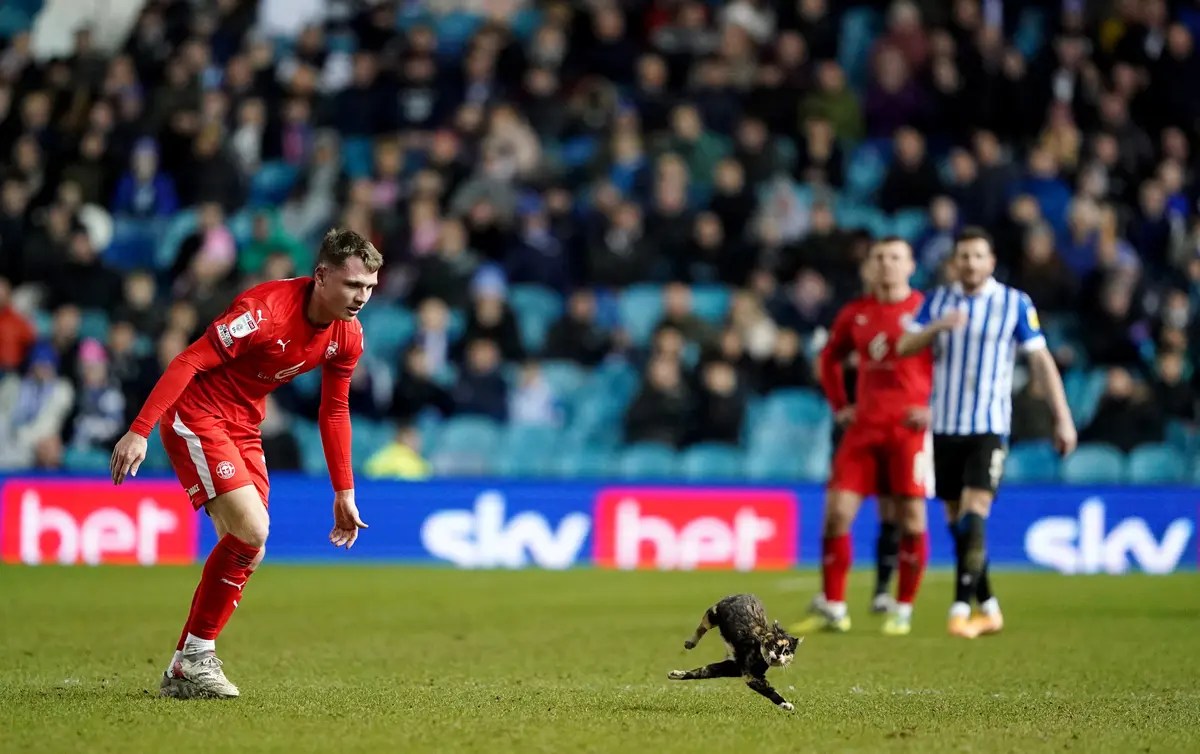
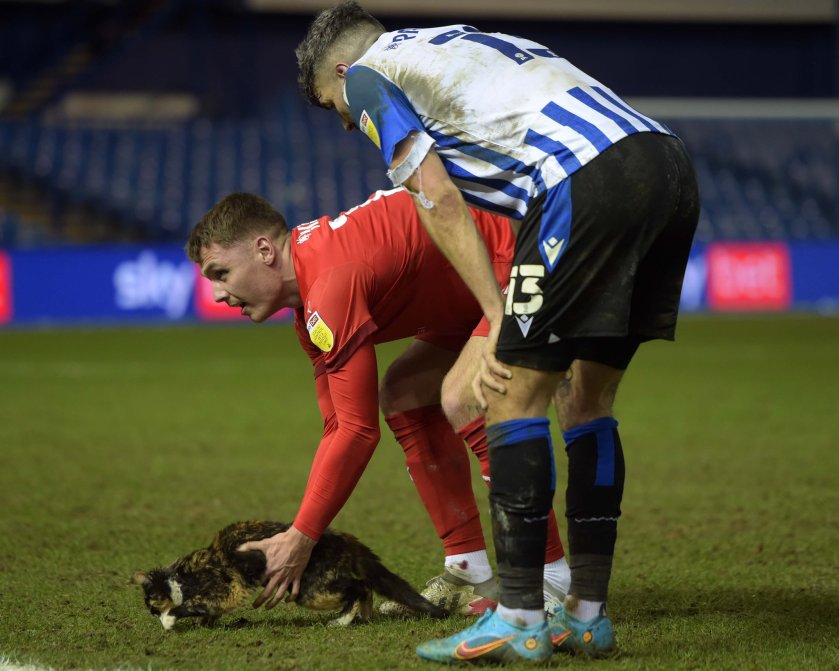
Then in the 94th minute of a Feb. 8 match between Sheffield and Wigan Athletic, a familiar-looking tortoiseshell dashed onto the field. Wigan’s Jason Kerr risked a penalty to catch and calm the clearly distressed cat while the crowd erupted in cheers.
“My daughter-in-law rang me last night and said, ‘Are you watching the football match?'” Jubb said. “I said ‘No,’ and she said ‘There’s a cat that ran on the football pitch and it just looks like Topsey.’ And I sort of laughed it off because I thought it won’t be.”
But the veterinarian rang the next day and, to Jubb’s surprise and delight, said the Sheffield woman’s cat had been identified via a microchip scan.
One of Sheffield’s season ticket holders happened to be a veterinarian, and when he offered to examine the terrified feline at the stadium, he realized she had serious injuries and brought her to a nearby clinic.
Topsey in better times before she went missing. Credit: Alison Jubb
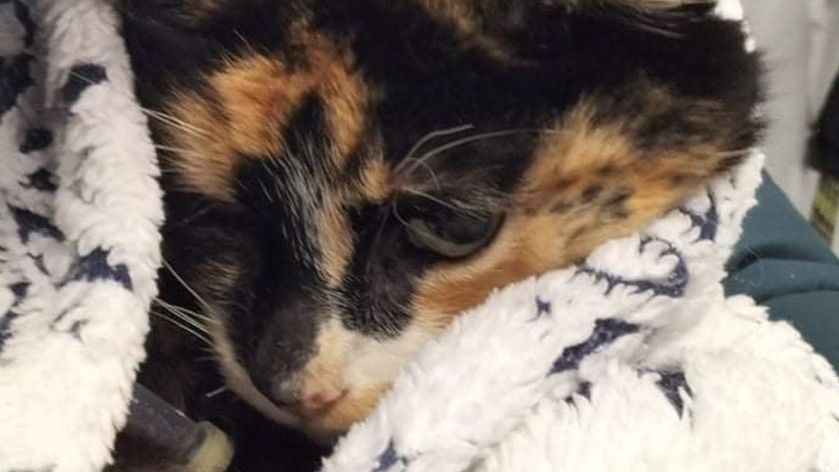
Topsey had survived her harrowing eight-months away and her bloodwork was okay, but the veterinarian said the tough little kitty had endured an attack by a dog or another larger animal, who picked her by her neck and shook her in its jaws. Topsey suffered broken bones, a damaged spine and had teeth marks on her neck.
The veterinary bill is hefty: Jubb was told she’s looking at about £10,000, or more than $13,000 in US dollars, to cover the exams, scans, surgeries and other necessities to relieve Topsey’s pain and mend her little body.
Generous cat lovers and soccer fans helped Jubb and Topsey reach that goal in just a few days. The campaign’s donations sit at £11,585 as of Feb. 19, and any money left over from Topsey’s veterinary care will be donated to a local rescue.
Topsey can’t walk properly because of her injuries, and in the 11 days since she was rescued, she’s been in veterinary care, recovering and scarfing down food after so many lean months left her malnourished.
Topsey’s swaddled up in the care of a veterinarian. Credit: Alison Jubb
Despite the severity of her injuries, Topsey is “very comfy and she’s doing really well,” Jubb told the BBC.
Jubb says Topsey is constantly purring and is no doubt thrilled to be reunited with her humans and on the mend.
“Everybody has been brilliant, – my phone’s not stopped all day, it’s amazing,” Jubb said after Topsey was recovered. “And the players, I’d just like to say ‘thank you’ for being so gentle and kind with her and everybody who looked after her [on Feb. 8] because they’ve all been so nice with her and that’s lovely.”
Plus: The 1878 origin story of Siamese cats in America!
Sterling the cat is a cute and playful little guy, and no doubt would have his fans among those who love chonksters, but he has to lose weight.
That was the gist of the message posted by staff at the Humane Society of Huron Valley in Michigan, who wanted to find a home for Sterling but also wanted to make sure his new human(s) would be dedicated to his health.
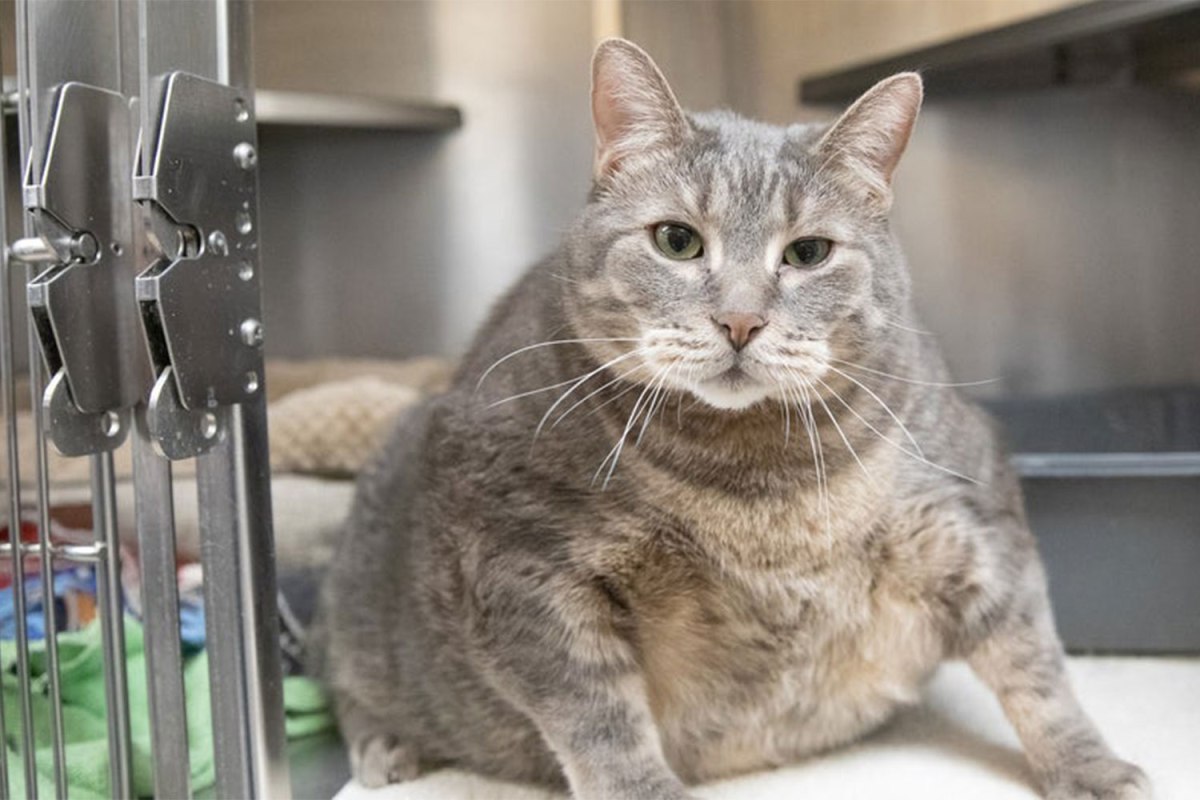
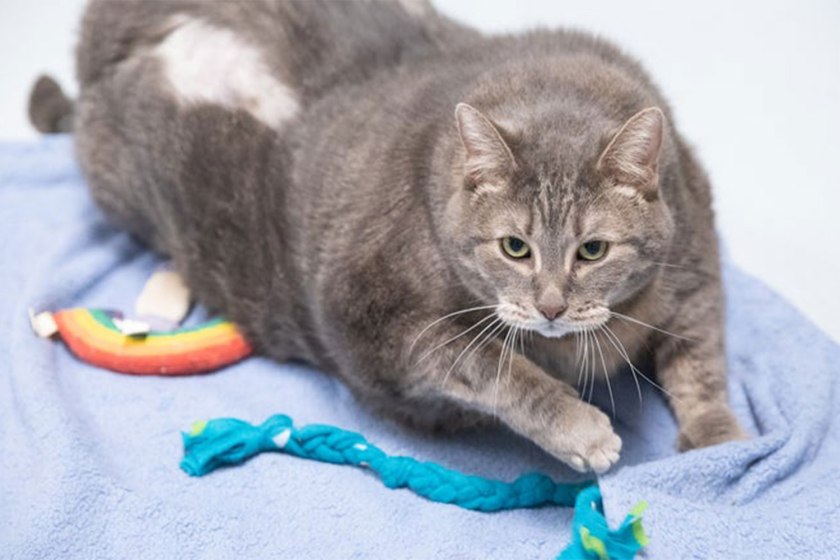
The silver tabby with a Buddesian coat pattern tips the scales at 30 pounds. Not only is the weight unhealthy, but it makes life as a cat difficult.
“We know, those plump cheeks are adorable. But obesity is terribly unhealthy for cats,” Humane Society staff wrote on Instagram. “Sterling is fastidious about hygiene, but can’t groom himself properly (we had to shave matted fur off his back). He’s so lively and playful, but can’t chase after toys. He’s curious about the world, but can’t jump up to look out the window. He’s so affectionate, but can’t comfortably snuggle with his people.”
An adopter has stepped up to the plate and given Sterling a new family, a deal that includes committing to working with a veterinarian to get the kitty to slim down. The Humane Society haven’t said who the adopter is, but Sterling’s adoption profiles disappeared shortly after the shelter’s impassioned plea on Feb. 9.
Sterling weighs about 30 pounds. Credit: Humane Society of Huron Valley.
Zouma gets another shot
Kurt Zouma, the Premiere League footballer who earned himself worldwide condemnation over the last week for uploading a video showing him abusing his own cat, won’t lose his job due to the scandal.
West Ham United Coach David Moyes said Zouma’s actions were “completely out of character from Kurt” and compared the abuse incidents to drunken driving.
“He’s a really good lad and we’re going to get him some help,” Moyes told reporters. “Just like people with drink-drive offences have to go to classes to learn the reasons and the damage that can be done, the RSPCA are going to provide some courses for Kurt to understand about animals and how to treat them.”
Moyes says Zouma has repeatedly apologized, and he thinks the French national is sincerely contrite.
“But what do you do?” the coach asked. “Do you keep punishing people or do you give them a chance to make things right? All of us in life need second chances sometimes, and we’re going to give Kurt a second chance.”
The controversy flared up immediately after the UK Sun published a story about three short clips showing Zouma drop-kicking, slapping and throwing a shoe at his cat. The clips were filmed by Zouma’s brother, who can be heard laughing in the background, and involved Zouma’s son.
In his apology, Zouma said the abuse was “an isolated incident,” but said there was “no excuse” for his actions.
“I also want to say how deeply sorry I am to anyone who was upset by the video,” the soccer pro said.
Zouma was fined £ 250,000 — equal to about $330,000 — which is the maximum amount the club could fine him under league rules. He also lost his primary sponsorship with Adidas, which issued a terse statement and immediately dropped the center-back from its roster, and insurance company Vitality pulled its sponsorship from the entire team. Two other sponsors said they would meet with the club to discuss the issue.
Scotsman Jason Kerr of Wigan gently scoops up Topsey, a house cat who interrupted play on Tuesday night by running onto the pitch in a match between Wigan and West Ham United.
Zouma also surrendered both of his cats — the one who was abused in the video and a second feline — to the RSPCA, which is conducting an investigation. Like the SPCA in the US, which has its own law enforcement division, the RSPCA has the ability to file criminal charges in cases involving animal abuse and neglect.
The felines of 1600 Pennsylvania Avenue
Did you know the first Siamese cat to reach America’s shores was probably Siam, who belonged to First Lady Lucy Webb Hayes?
Back when Thailand was called Siam, U.S. ambassador David B. Sickels read that Mrs. Hayes — wife of Rutherford B. Hayes — was a cat lover and sent one of the now-famous Asian cats to the White House.
“I have taken the liberty of forwarding to you one of the finest specimens of Siamese cats that I have been able to procure in this country,” Sickels wrote to the First Lady in 1878. “I am informed that this is the first attempt ever made to send a Siamese cat to America.”
While we’ve written quite a bit about the famous cats who have occupied the White House over the years, the Hayes story and others are also detailed in a new article from Smithsonian Magazine, which marked the occasion of Willow the cat’s arrival by revisiting presidential pet history. It’s well worth a read if you like the idea of kitties roaming the halls of power and even sitting on one president’s lap during state dinners, eating at the table like humans.





 Pain In The Bud